REVIEW · MUSEUM OF ANCIENT GREEK TECHNOLOGY
Athens: Kotsanas Museum of Ancient Greek Technology Ticket
Book on GetYourGuide →Operated by Kotsanas Museum · Bookable on GetYourGuide
Ancient Greek technology was far more inventive than marble temples and measuring rods. At the Kotsanas Museum, you can see working models of machines that include an early analog computer, automatic devices, hydraulic clocks, theater mechanisms, and even a robot servant. The Antikythera mechanism is the star attraction, but the wider collection gives you a much fuller picture.
I like the museum’s hands-on displays, since you can operate some mechanisms instead of simply peering at them behind glass. I also like its central location, only about five minutes on foot from Syntagma Metro Station. The main drawback is that your ticket does not include a guided tour, so you will rely on labels, diagrams, videos, and your own curiosity.
In This Review
- Key points at a glance
- Why ancient Greek technology feels surprisingly modern
- Entering the Art Nouveau museum near Syntagma
- The Antikythera mechanism and ancient calculation
- Robots, automatic figures, and mechanical theater
- Hydraulic clocks and the science of time
- Interactive displays make the difference
- What the visit is like without a guide
- How much time and money should you allow?
- Who will enjoy this museum most?
- Should you book the Kotsanas Museum?
- FAQ
- Where is the Kotsanas Museum of Ancient Greek Technology?
- What does the admission ticket include?
- Is a guided tour included?
- Is the museum available in English?
- What can I see at the museum?
- Can I interact with the exhibits?
- Is the museum wheelchair accessible?
Key points at a glance
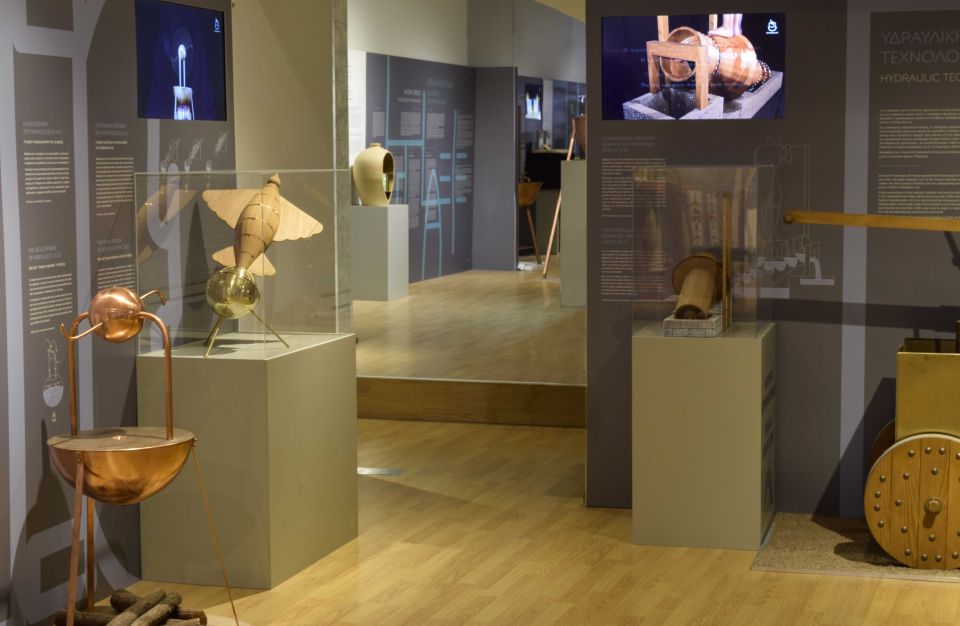
- About 100 working models: See reconstructed machines linked to ancient Greek science, theater, timekeeping, and automation.
- The Antikythera mechanism: Examine a model of the ancient calculating device often described as the world’s oldest analog computer.
- Hands-on learning: Operate selected mechanisms and watch the systems work in front of you.
- Central Athens setting: Reach the museum in roughly five minutes from Syntagma Metro Station.
- English support: Use English explanatory material, videos, animations, and documentaries throughout the exhibition.
- Accessible visit: The museum is wheelchair accessible, but food and drinks are not allowed inside.
Why ancient Greek technology feels surprisingly modern
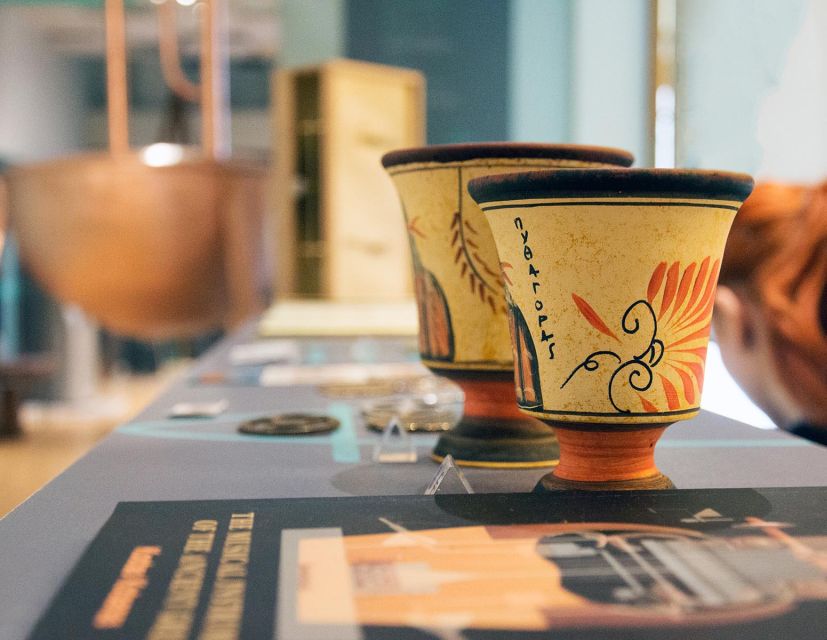
The Kotsanas Museum focuses on an aspect of Greek culture that is easy to miss. Ancient Greece is usually presented through sculpture, drama, philosophy, and politics. Here, you get motors, gears, automatic doors, theatrical effects, clocks, calculating machines, and mechanical figures.
That change of subject is the museum’s main strength. You are not just looking at old objects. You are being shown how people used mathematics, pressure, water, air, gears, weights, and programmed movement to solve practical problems or create entertainment.
The models also make old ideas easier to grasp. A written description of a hydraulic clock can feel dry. A working model, with water controlling movement and time, gives you something concrete to follow. The same applies to the theater devices and automatic figures. Once you see a mechanism operate, the cleverness becomes clear.
You should keep one point in mind: the museum displays operating models and reconstructions of ancient inventions. It is not a room filled entirely with original ancient machines. That is not a weakness, but it shapes the visit. The value comes from seeing how these devices may have worked, not from standing beside fragile archaeological artifacts.
Entering the Art Nouveau museum near Syntagma
The museum occupies a historic Art Nouveau building on Pindarou 6, in central Athens. Its exhibition area covers about 700 square meters, which is large enough for a substantial collection but still manageable in one visit.
From Syntagma Metro Station, the walk takes about five minutes. That makes this a useful stop if you are already exploring central Athens. You do not need to arrange a separate excursion or spend time crossing the city. You can fit it between major sights, use it as a break from outdoor sightseeing, or make it your main indoor activity for part of the day.
Your ticket is valid for one day, with available starting times shown when you book. Check the time options before you commit, especially if you are building a tight Athens schedule. The experience begins and ends at the museum, so there is no transport segment or meeting point away from the exhibition.
The setting helps the visit feel different from a standard modern museum. The building itself has historic character, while the displays inside focus on machines and experiments. You get a change of pace from Athens’ ancient ruins without leaving the city center.
The Antikythera mechanism and ancient calculation
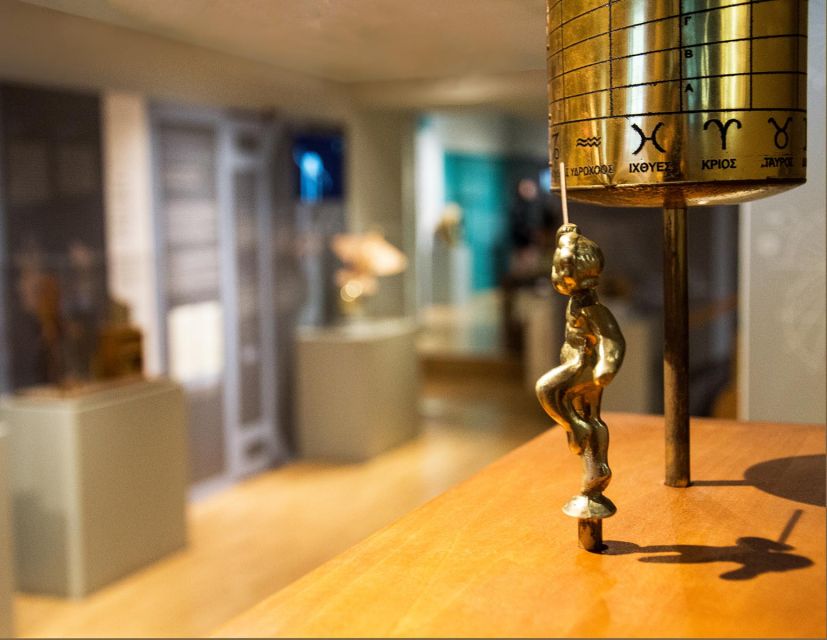
The Antikythera calculating mechanism deserves your early attention. It is presented through a working model, allowing you to see why this device is so important in the story of ancient science.
The mechanism is often described as the oldest analog computer in the world. That phrase can sound exaggerated until you see what the machine was designed to do. Its gears represented and calculated astronomical cycles, turning complex observations into a mechanical system.
At the museum, the model gives you a way to follow those ideas without needing advanced technical training. The explanatory material, diagrams, photos, and video presentations help break the machine into parts. You may not understand every gear immediately, but you can see that ancient engineering included planned calculation, precision movement, and linked mechanical functions.
I would allow extra time here rather than treating it as a quick photo stop. The Antikythera mechanism is one of the exhibits that rewards slow looking. If you hurry past it, you may notice only a box of gears. If you pause for the diagrams and animation, you gain a better sense of what it was built to accomplish.
This is also the museum’s best example of how modern the ancient world can seem. The machine does not resemble a computer in appearance, but its purpose, to process information through a complex system, feels familiar.
Robots, automatic figures, and mechanical theater
The collection moves beyond calculation into automatic movement and entertainment. You can see models of the robot servant associated with Philon and the automotive-puppet show linked with Heron.
These inventions matter because they show that ancient engineering was not limited to farming tools or military equipment. Mechanical systems could also entertain, perform tasks, and create surprise. A moving figure or automated servant would have seemed astonishing in its own time, much as a convincing machine can still catch you off guard today.
The automotive-puppet show is especially useful for understanding how mechanics and storytelling worked together. Rather than treating theater as a purely artistic form, the ancient designers used movement, timing, and controlled action to create a performance.
The museum also includes what is described as the cinema of Philon. Here, you can consider how early visual storytelling depended on a sequence of images and mechanical presentation. The exact experience will depend on which model is operating when you visit, but the exhibit gives you another way to connect ancient ideas with later technology.
Do not expect a large live performance or a full theatrical show. These are museum models, and the visit is self-guided. Their purpose is to show the mechanism and explain its operation.
Hydraulic clocks and the science of time
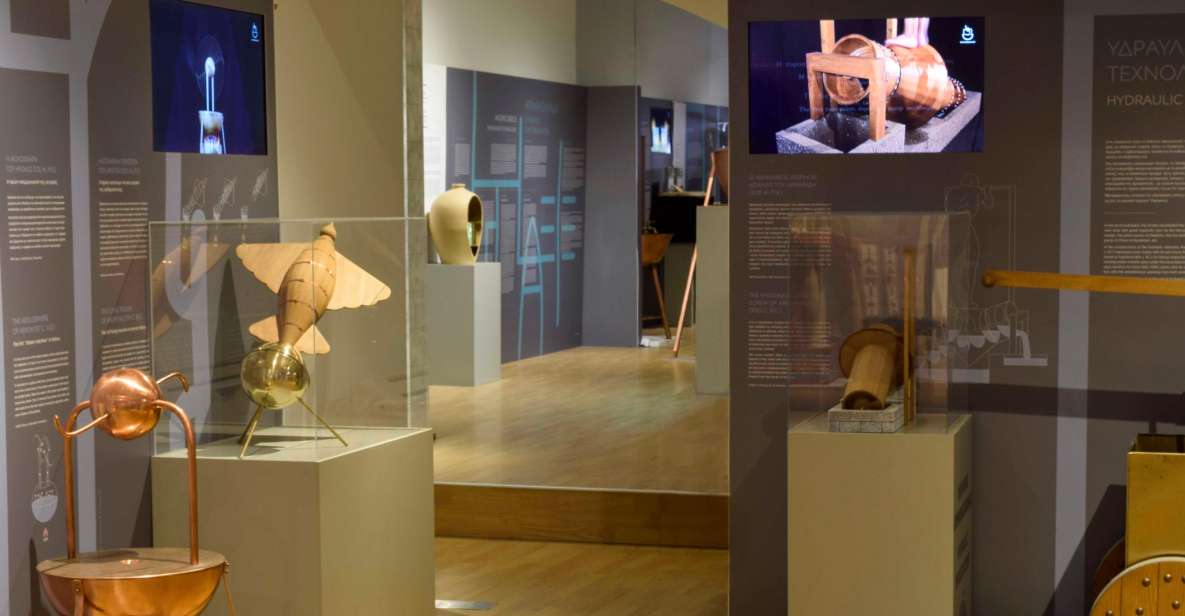
Timekeeping is another major part of the exhibition. The hydraulic clock of Ktesibios shows how water could regulate a clock and control a series of movements.
A clock is easy to take for granted because you check the time dozens of times a day. In an ancient setting, however, building a reliable system for measuring time required careful control of water flow, motion, and intervals. The model makes those challenges visible.
This section is a good reason to use the diagrams and video stations rather than relying only on the object itself. You can watch a documentary or animation, then return to the model with a better idea of what each part is doing.
The museum’s approach works well for families and for anyone who prefers to learn by seeing a process. You do not need to arrive with a background in engineering. The exhibits are designed to explain the mechanisms through labels, diagrams, photos, and audiovisual material.
Interactive displays make the difference
Some museum technology collections can feel passive. You look at an object, read a paragraph, and move on. Kotsanas takes a more active approach. Many models are accompanied by interactive features, and you can put some mechanisms into use with your own hands.
That hands-on element gives the visit its best rhythm. You read a short explanation, watch a projection or animation, then test part of the system. The ancient invention becomes a problem you can observe rather than a fact you must memorize.
You should still expect a self-guided experience. No guided tour is included with the entry ticket. An English-speaking host or greeter is available, and the museum provides English material, but the main learning comes from the displays.
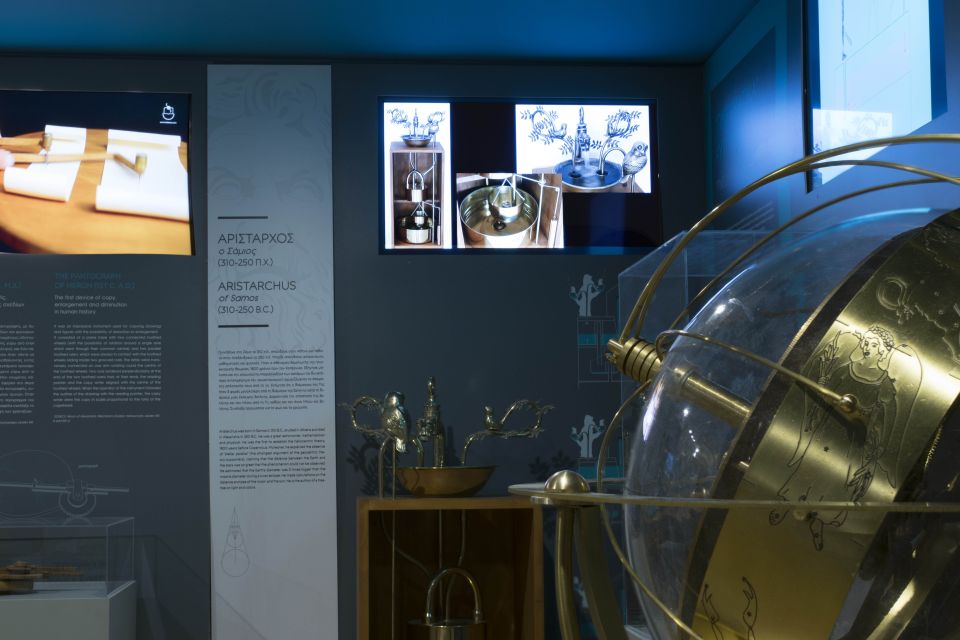
Audio-visual content is available in Greek and English. You can use explanatory labels, large posters, detailed diagrams, photographs, full bibliographical references, projected video, animations, and documentaries in which the mechanism and its use are explained.
The quantity of information may feel heavy if you want only a quick look. That is the tradeoff. The museum gives you more background than a simple attraction, but you will get the most from it if you are willing to read and watch rather than rush through the rooms.
What the visit is like without a guide
Because the ticket covers entry only, you should plan on exploring at your own pace. That suits you if you enjoy stopping where your interest takes you. You can spend longer with the Antikythera model, move quickly through a display that feels technical, or return to an interactive device after watching its explanation.
It is less ideal if you want a guide to connect every invention into one continuous story. The information is there, but you must assemble the story yourself.
For a first visit, I would use a simple approach. Begin with the broad exhibition explanations so you understand the themes. Then focus on three groups of machines: the Antikythera mechanism, the automatic and theatrical devices, and the hydraulic clock. After that, use the remaining time for the hands-on models that catch your attention.
This approach prevents the museum from becoming a blur of gears and labels. It also gives you a clear sense of the range of ancient Greek technology.
How much time and money should you allow?
The ticket costs about $7.90 per person. For central Athens, that is a modest admission price, particularly if you have an interest in science, engineering, archaeology, or the history of inventions.
The value comes from the working models. You are not paying simply to view static displays. You are paying for access to a collection that explains how unusual ancient mechanisms functioned, with interactive components and English audiovisual material.
The ticket is valid for one day, but the supplied information does not give a fixed visit length. Check the available starting times and plan your schedule around the time shown during booking. Since the museum is close to Syntagma, it is easy to combine with other central Athens plans.
Free cancellation is available up to 24 hours before the activity for a full refund, and you can reserve now and pay later. Those terms are useful if your Athens schedule is still changing, but the main booking decision is simpler: pay a small admission fee for a focused museum visit rather than a guided tour.
Who will enjoy this museum most?
I would recommend the Kotsanas Museum to you if you like understanding how things work. It is a strong choice for visitors who want something beyond the usual ancient temples and statues.
It also suits families, especially if children enjoy machines and interactive exhibits. The ability to operate selected mechanisms gives younger visitors a reason to stay engaged, although the amount of written information may be more than small children want to read.
Science and technology enthusiasts will find the Antikythera mechanism and timekeeping displays especially worthwhile. The museum also suits history fans who want a broader view of ancient Greek life and thought.
You may want to skip it if your Athens schedule is extremely short and you are interested only in major archaeological sites. It is also not the best match if you want a live guide explaining every exhibit. The museum rewards self-directed exploration.
The venue is wheelchair accessible. Food and drinks are not allowed inside, so plan to finish snacks before entering.
Should you book the Kotsanas Museum?
Book it if you want a compact, affordable Athens attraction with real educational value and working models you can interact with. The central location, English material, wheelchair accessibility, and low price make it easy to add to a day in the city.
Give it priority if the Antikythera mechanism, ancient automation, clocks, or mechanical theater interest you. I would not choose it as a replacement for Athens’ major archaeological sites, but it adds an unexpected and highly practical side of ancient Greek culture.
The best reason to go is simple: you will leave thinking differently about the ancient world. These inventions show that Greek ingenuity was not only about ideas carved in stone. It also moved, calculated, measured, entertained, and solved problems with machines.
FAQ
Where is the Kotsanas Museum of Ancient Greek Technology?
The museum is at Pindarou 6, Athina 106 71, Greece. It is about a five-minute walk from Syntagma Metro Station.
What does the admission ticket include?
The ticket includes entry to the museum and its exhibition of approximately 100 operating models.
Is a guided tour included?
No. A guided tour is not included with the entry ticket. You explore the museum using labels, diagrams, audiovisual material, videos, animations, and documentaries.
Is the museum available in English?
Yes. The museum has English explanatory material, and the host or greeter language is English. Some audiovisual material is provided in Greek and English.
What can I see at the museum?
You can see models of inventions such as the Antikythera calculating mechanism, the robot servant of Philon, the cinema of Philon, the automotive-puppet show of Heron, and the hydraulic clock of Ktesibios.
Can I interact with the exhibits?
Yes. Many exhibits are interactive, and you can operate some mechanisms with your own hands.
Is the museum wheelchair accessible?
Yes. The museum is wheelchair accessible. Food and drinks are not allowed inside.