REVIEW · KROUSSONAS
Cooking Lesson in Heraclion by Baxes
Book on GetYourGuide →Operated by Boxes Cretan Guide · Bookable on GetYourGuide
Krousonas village is where this cooking lesson earns its keep. You do not simply sit at a counter and follow a fixed recipe. You choose from seasonal dishes, pick vegetables and fruit from the orchard, feed goats and sheep, then cook beneath a grapevine before eating on a terrace above the valley.
I like the freedom to choose your menu, which makes the lesson feel personal rather than mass-produced. I also like the farm visit, especially the chance to learn about capers, olives, figs, fruit trees, and herbs from Sevi and her family. The main catch is location: Krousonas is outside central Heraklion, so you must arrange transportation.
In This Review
- Key points to know before booking
- Why this is more than a standard cooking class
- Arriving at Baxes in Krousonas
- Start with meze, drinks, and the menu
- Walk the orchard and meet the animals
- From freshly picked produce to Cretan cooking
- The meal on the veranda
- The value of $117 per person
- Who will enjoy this most
- Useful planning details
- Should you book the Krousonas cooking lesson?
- FAQ
- Where does the cooking lesson take place?
- How long does the experience last?
- Can I choose what I cook?
- Are drinks and food included?
- Can children take part?
- What should I bring?
Key points to know before booking
- Choose your own Cretan menu: Select from seasonal appetizers, salads, main dishes, and desserts, with vegetarian and vegan options available.
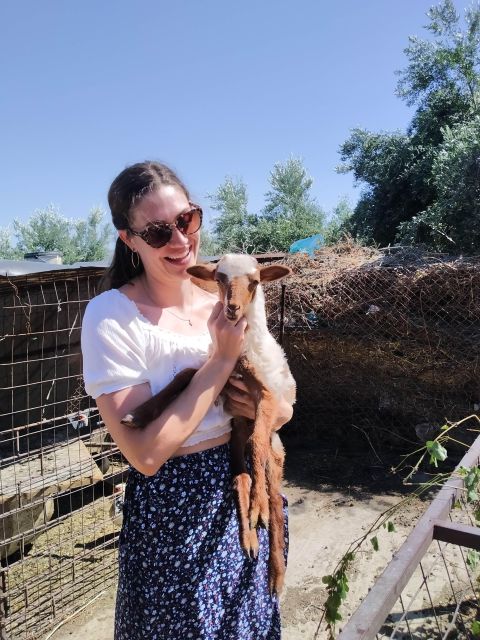
- Farm time is part of the lesson: Walk through the orchard, gather produce, and feed the goats and sheep. In summer, milking may also be possible.
- A small group means real participation: The class is limited to eight people, and smaller groups may receive especially direct instruction.
- Eat beneath the grapevine: Your finished meal is served on the veranda, with local drinks and a view across olive groves and the valley.
- Plan the ride carefully: The activity takes place in Krousonas village, not Heraklion city center.
- Bring practical clothes: Comfortable shoes matter because the program includes walking around the farm and orchard.
Why this is more than a standard cooking class
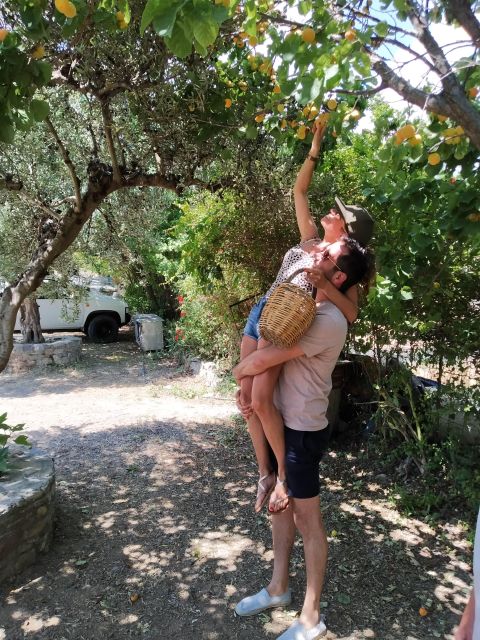
Many cooking lessons begin with ingredients already measured and waiting on a work surface. Here, the first lesson is where the food comes from. You walk through the property, see what is growing, and collect some of the ingredients you will later prepare.
That change of pace matters. Cretan cooking is closely tied to season, soil, family habits, and careful use of simple produce. Picking vegetables or fruit gives you a better sense of why local food can taste so direct. You are not just learning a recipe. You are seeing the chain from garden to table.
The setting also makes this a good choice for families. Children can feed the animals, explore the orchard, and take part in straightforward kitchen tasks. Adults get the food and local context, while younger visitors have something active to do between courses.
The activity has a five-star rating from 14 bookings, and the praise is especially consistent about the warm family welcome, the food, and the chance to choose dishes. That pattern tells you what this experience does best: it creates a relaxed afternoon around people, produce, and a shared meal.
Arriving at Baxes in Krousonas
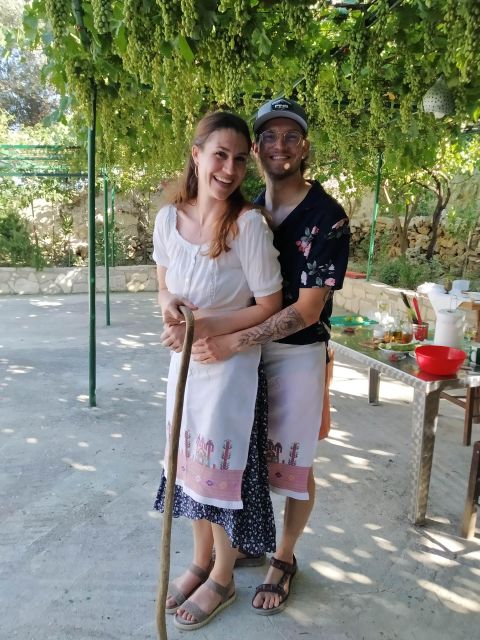
The meeting point is a stone building filled with flowers and trees, located above the central road in Krousonas. That description is useful because this is not a city-center class with an obvious commercial storefront.
You should treat transportation as part of your planning. Krousonas is not in central Heraklion, and the activity does not include a transfer in the information provided. Check your route before booking, allow time to reach the village, and do not assume you can walk from Heraklion.
The class lasts at least four hours, so it is best treated as a half-day outing rather than a quick stop between city sights. Starting times depend on availability. You receive a welcome drink and small meze on arrival, which gives the group time to settle in before choosing the menu.
Sevi is the main host, and her mother may help with parts of the cooking, including dessert. English is the teaching language. The small group limit is eight people, although a smaller booking can make a real difference because you have more room to handle ingredients and ask questions.
Start with meze, drinks, and the menu
The opening welcome includes Cretan treats and refreshments. Local drinks, soft drinks, water, and sodas are included, so you are not watching the clock or counting extra charges as the meal gets underway.
The menu is not fixed in advance. You choose from seasonal options, including vegetarian and vegan dishes. The available choices can include several appetizers, salads, main courses, and desserts, though the exact dishes depend on the time of year.
This is one of the strongest parts of the experience. A fixed class can be a problem if someone in your group dislikes a key ingredient or follows a meat-free diet. Here, the group makes the decision together. You can shape the meal around your interests and dietary preference, though it is wise to state your needs clearly when booking or in your messages with Sevi.
The choice also gives the lesson a social feel. You are not only following instructions. You are discussing what the group wants to eat, then seeing how those choices affect the work that follows.
Walk the orchard and meet the animals
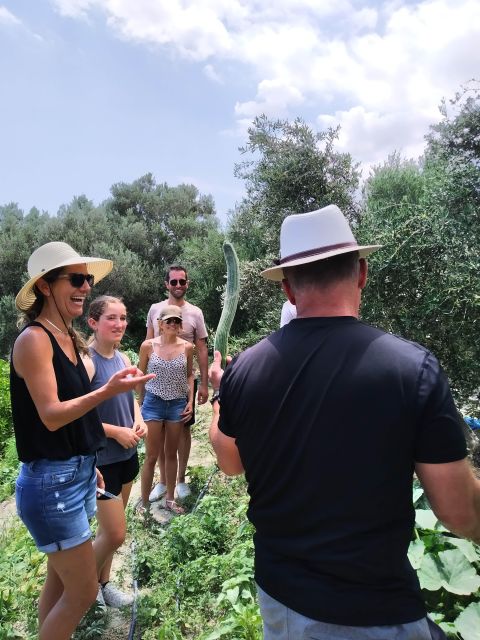
After the menu is chosen, Sevi takes you around the farm. The walk includes explanations about the trees, plants, herbs, fruits, vegetables, capers, and olives growing on the property.
This portion can be particularly valuable if you are interested in food beyond the finished plate. You learn when different fruit trees produce, how ingredients are used, and why some local foods need preparation before they are eaten. Olives and capers, for example, must be pickled before eating.
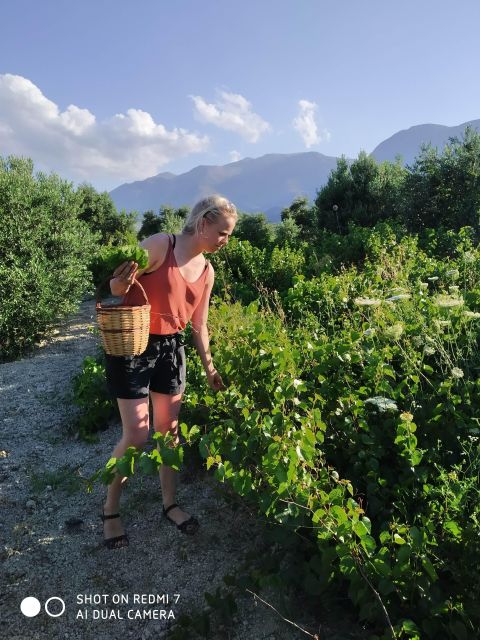
You also gather organic vegetables and fruit for the meal. The activity description specifically points to fresh produce from the orchard, while direct experience of the property has included figs, pomegranates, herbs, and other seasonal growth. The exact harvest changes with the season, so do not arrive expecting one particular fruit.
The animal visit adds a welcome change from the kitchen. You can feed the goats and sheep, and there may also be a chance to feed an animal such as a donkey. In summer, goat milking may be available, but this is seasonal rather than guaranteed.
Wear shoes that can handle uneven outdoor ground and clothes you do not mind working in. The class is held under the shade of a grapevine, but the farm walk is still an outdoor activity.
From freshly picked produce to Cretan cooking
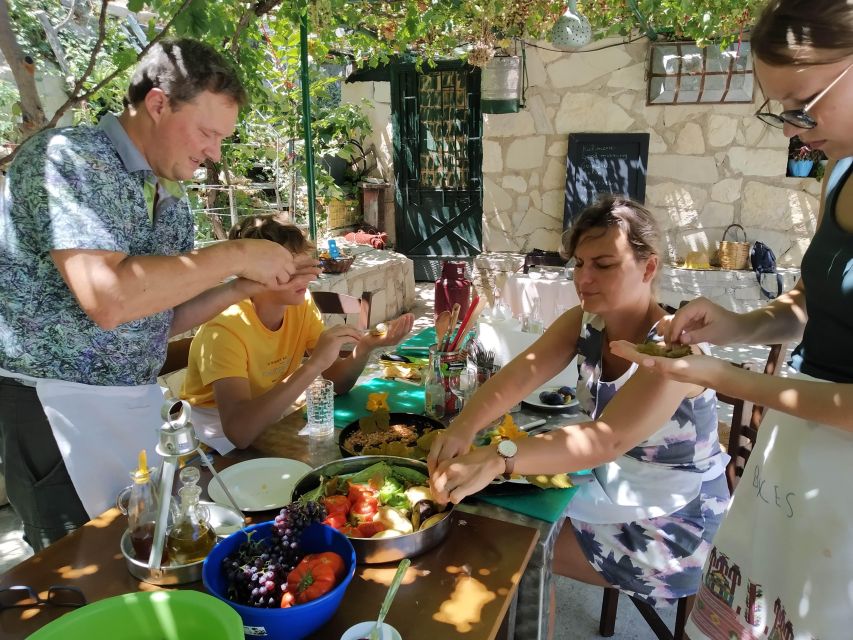
Once the ingredients are collected, Sevi explains how they are used in the kitchen. You learn about quantities, preparation, cooking methods, and the role each ingredient plays.
The teaching seems designed for ordinary home cooks rather than professional chefs. That is a strength. You get reasons for each step instead of a blur of rapid instructions, and the English instruction is clear. The focus is on practical Cretan food you can understand and potentially repeat later.
The food itself is the center of the afternoon, but the class does not treat recipes as isolated formulas. You connect the dish to the orchard, the season, and the family kitchen. That makes the lesson useful even if you are not an experienced cook.
Small groups are important here. With eight people, you should still have a manageable class, but the experience can feel more hands-on when fewer people book. A particularly small group may allow everyone to take part in nearly every preparation step.
You should also keep your expectations sensible. The exact menu is seasonal, and the class is not advertised as a professional certification or advanced culinary course. It is a family-style introduction to Cretan cuisine, with food, stories, and participation taking priority over technical precision.
The meal on the veranda
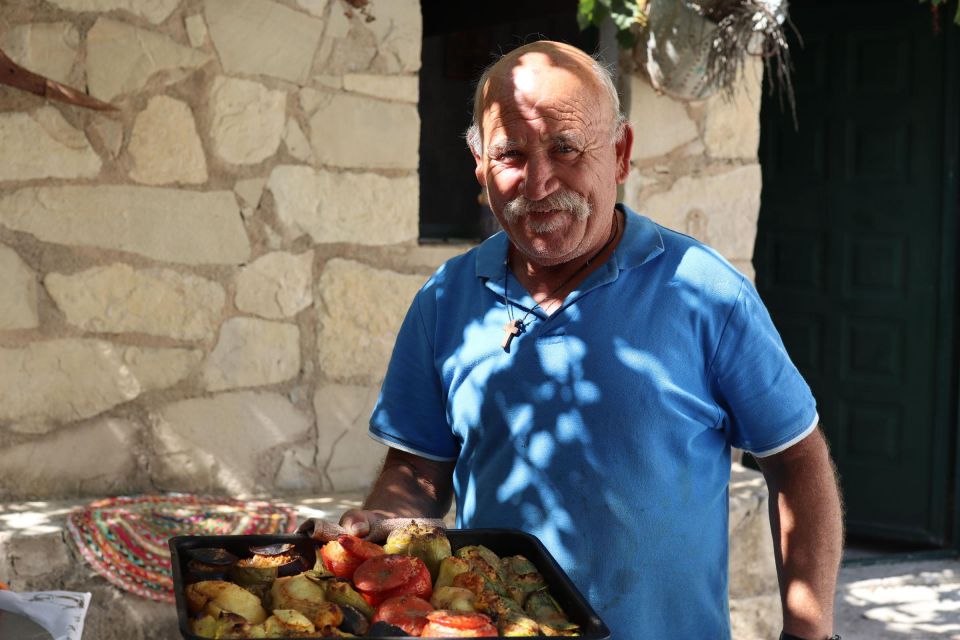
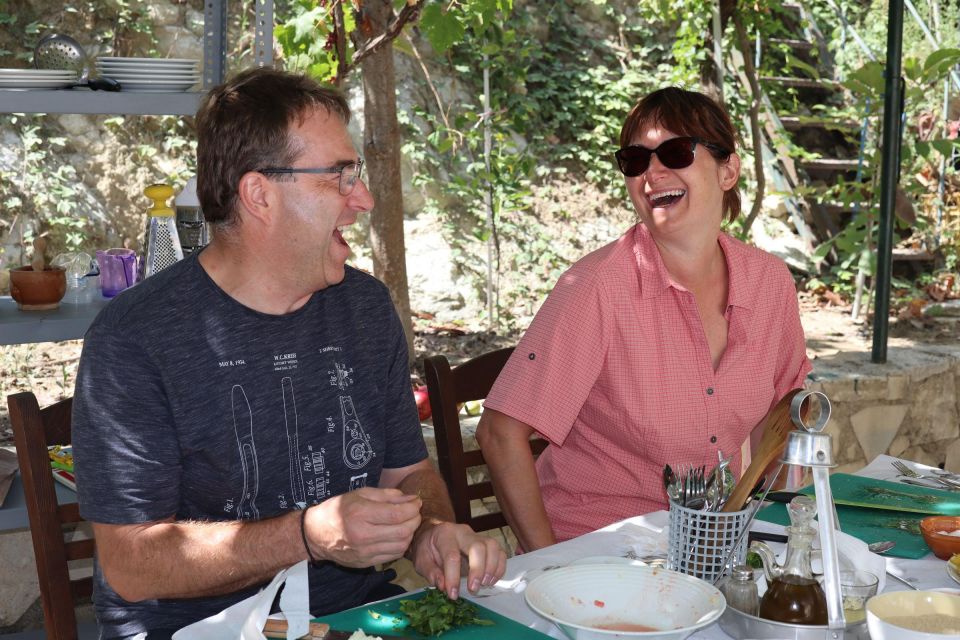
When the cooking is finished, you eat what the group prepared on the veranda. The setting looks across the valley and olive groves, and the meal is served under the grapevine shade.
This is where the four-hour format makes sense. You have time to sit, talk, and enjoy the food instead of rushing through a tasting before the next appointment. The meal becomes the payoff for the orchard walk and the work in the kitchen.
The view is a major part of the pleasure. The property looks toward mountains and olive groves, giving you a countryside setting far removed from Heraklion’s urban center. It is not just decoration. It changes the pace of the day and gives the meal a strong sense of place.
Local drinks are included, and the meal itself is part of the activity. Some bookings have also ended with small parting gifts, photographs, recipes for the wider menu, and warm farewells. These extras are not listed as guaranteed inclusions, so consider them a pleasant possibility rather than something to book for.
The value of $117 per person
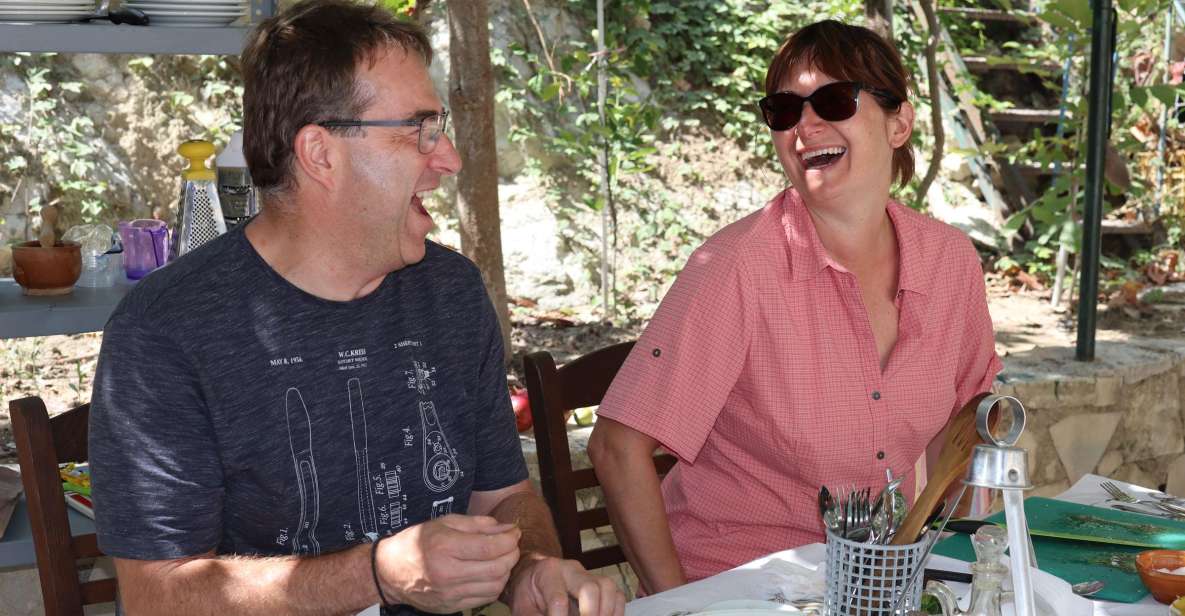
At $117 per person, this is not a budget meal or a basic one-hour demonstration. The price makes more sense when you count the full four-hour program: welcome refreshments, menu planning, the farm tour, animal feeding, gathering produce, cooking instruction, the meal, and included drinks.
You are also paying for a small-group setting and a family-run experience rather than a large food workshop. If you want the cheapest way to learn one Cretan recipe, this will be more than you need. If you want an afternoon that combines a countryside visit, a meal, and hands-on cooking, the cost is easier to justify.
The menu choice adds value because the food is not completely predetermined. You help decide what the group prepares, and the meal reflects those choices. Vegetarian and vegan options make the price more useful for mixed groups, although you should confirm your needs ahead of time.
I would compare this with the cost of arranging separate transportation, a countryside outing, and a restaurant meal. The experience does not remove the need to get to Krousonas, but it combines several activities into one organized visit.
Who will enjoy this most
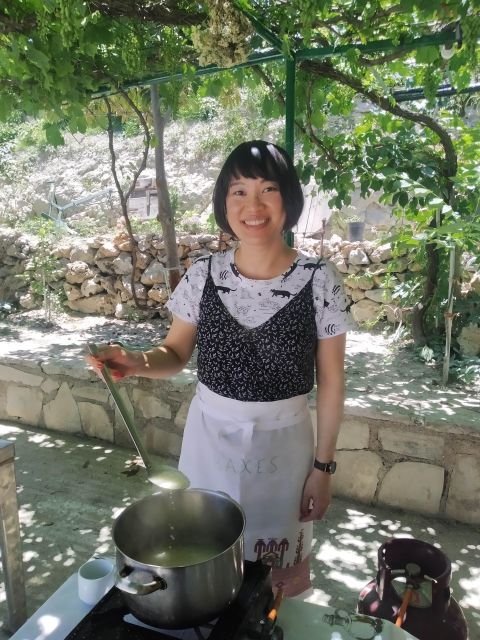
This works best for families, couples, small friend groups, and anyone who prefers food experiences with a local setting. Children have the farm and animals, while adults get a meal and an introduction to Cretan ingredients.
It is also a good choice if you want a slower break from museums, archaeological sites, and city streets. The program gives you fresh air, a garden walk, and a long meal without requiring a full day away from the Heraklion area.
Food-focused visitors should enjoy the chance to choose recipes and collect ingredients. The class is also useful for people who want to understand why Cretan cooking relies so much on vegetables, herbs, fruit, olives, and seasonal produce.
You may want to skip it if your schedule is tight, you dislike group decisions, or you want a highly technical cooking course. The location also makes it less convenient for someone staying in central Heraklion without access to transportation.
The activity is listed as wheelchair accessible, but the program includes a farm and orchard visit. If you use a wheelchair or have mobility concerns, ask for specific details about the outdoor route and surfaces before booking.
Useful planning details
Book with enough time to arrange transportation to Krousonas. The village location is the single practical issue most likely to affect your day.
Wear comfortable shoes and casual clothes. You will walk around the property, gather produce, feed animals, and cook, so this is not the place for dress shoes or delicate clothing.
English is available for instruction. The group is capped at eight people, and the activity lasts at least four hours. Starting times depend on availability, so check the schedule before building the rest of your day.
Free cancellation is available up to 24 hours before the activity for a full refund. You can also reserve and pay later, which helps if your Crete plans are still changing.
Should you book the Krousonas cooking lesson?
I would book this if you want food tied to place. The best parts are not only the recipes, but also the orchard, the animals, the seasonal choices, and the long meal with a valley view.
The strongest reason to choose it is the personal format. Sevi and her family create a home-and-farm setting, and the menu gives you a voice in what you cook. The main drawback is the ride from Heraklion, plus the relatively high price for anyone seeking only a short cooking demonstration.
For a family or small group that can manage the transportation, $117 buys a full half-day of cooking, eating, and rural Cretan life. For a rushed city break, it may be too much time and effort. Make the call based on your schedule, then bring comfortable shoes and an appetite.
FAQ
Where does the cooking lesson take place?
It takes place in Krousonas village, outside central Heraklion. The meeting point is a stone building filled with flowers and trees above the central road.
How long does the experience last?
The program lasts at least four hours. Starting times vary, so check availability for the date you want.
Can I choose what I cook?
Yes. After the welcome refreshments, you choose from seasonal menu options. Choices can include appetizers, salads, main dishes, and desserts, with vegetarian and vegan options available.
Are drinks and food included?
The welcome drink, small meze, meal, local drinks, soft drinks, water, and sodas are included.
Can children take part?
Yes. The activity is described as family-friendly, and children can take part in the farm visit and feed the goats and sheep.
What should I bring?
Bring comfortable shoes and wear practical clothes suitable for walking around a farm and cooking.