REVIEW · ADELIANOS KAMPOS
Crete Wine & Olive Oil Tour
Book on Viator →Operated by CRETE LUXURIOUS TOURS & TRANSFERS · Bookable on Viator
Crete’s best flavors come with a sense of place, and this private outing takes you straight to one of the island’s most interesting sources: Agia Triada Monastery, where monks produce wine, organic olive oil, honey, vinegar, and olive-oil soap. You taste five monastery wines with dako, cheese, tomato, olives, and oregano, then add a stroll through Chania’s old lanes and harbor.
I like the private vehicle and flexible pickup, especially if you are coming from a hotel, airport, or cruise port. I also like the mix of food, farming, religious history, and city walking. The main catch is cost: at $544.07 per group of up to four, it is good value for a full group, but expensive for one or two people. The monastery entrance fee and an optional tour guide are extra.
In This Review
- Key points to know before booking
- Why Agia Triada makes a fine food stop
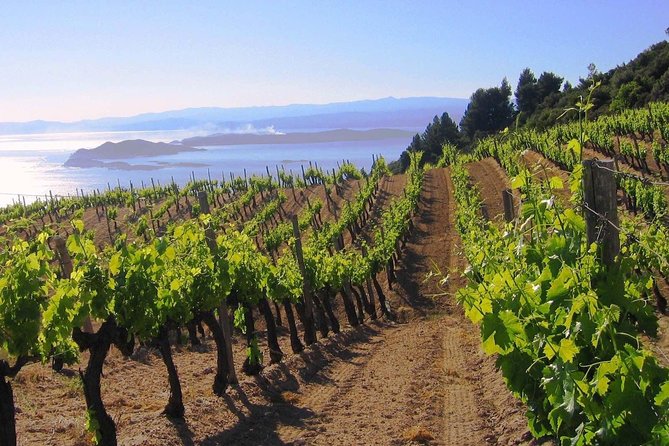
- Walking through the vineyards and olive groves
- What you see inside the monastery and museum
- The food tasting is generous for a half-day tour
- Chania Old Town gives the tour a strong finish
- Private transport matters more than it first appears
- How the timing works
- Is $544.07 a fair price?
- Who will enjoy this Crete tour most
- Should you book the Agia Triada and Chania outing?
- FAQ
- Where does the Crete Wine and Olive Oil Tour take place?
- How long does the tour last?
- How many people can join the private tour?
- Is hotel or port pickup available?
- What food and drinks are included?
- Is a tour guide included?
- Is the monastery entrance fee included?
- Can I cancel the booking?
Key points to know before booking
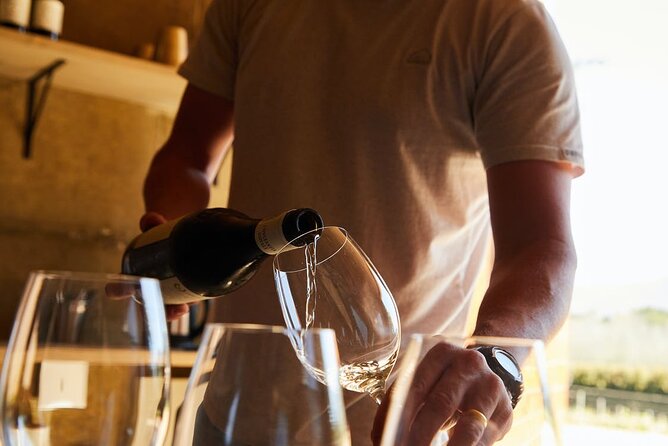
- Five monastery wines: Taste Romeiko in white, red, and sweet styles, along with wines made from Trebbiano, Muscat of Alexandria, Cabernet Sauvignon, and Merlot.
- Food is part of the lesson: Dako, local cheeses, tomato, cucumber, olives, smoked ham, and monastery olive oil give you a proper taste of Cretan table culture.
- The monastery produces more than wine: You can see how olive oil, honey, vinegar, and soap made from olive oil connect religious life with local trade.
- A private tour for up to four: Your group rides together in an air-conditioned vehicle with an English-speaking driver and bottled water.
- Chania adds a city finish: The Venetian harbor, lighthouse, narrow alleys, mansions, fountains, and churches provide a change of pace after the rural visit.
- Allow close to five hours: The planned stops total about five hours, though the advertised duration is given as one to five hours.
Why Agia Triada makes a fine food stop
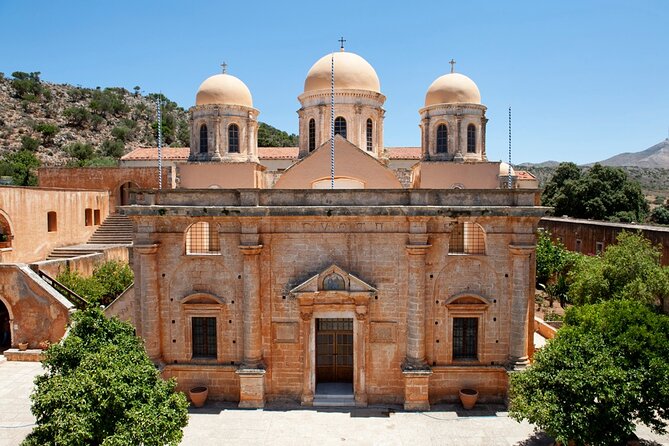
Agia Triada, also called the Holy Trinity Monastery of Tzagarolon or Mourtara, is not simply a place where you stop for a glass of wine. It is a working religious and agricultural center. The monastery still has a role in Crete’s religious and economic life, and its products are made for sale and export.
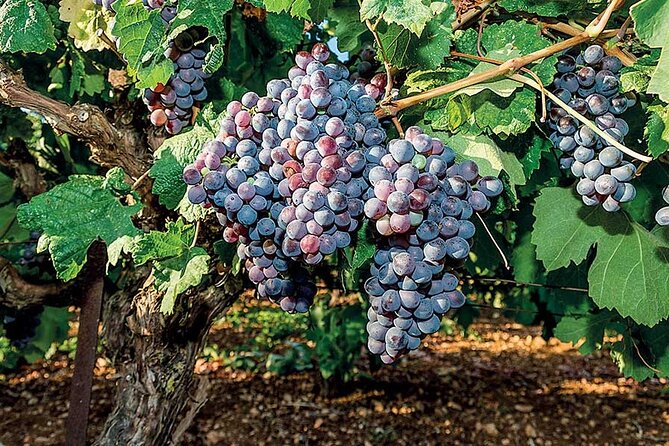
That matters because your tasting has a clear connection to the land around you. The monastery cultivates 17 hectares of vineyards, and its wine selection reflects both local tradition and newer plantings. The local Romeiko grape is the distinctive choice here, made as a dry white, dry red, and sweet wine.
You also taste wines made from Trebbiano, Muscat of Alexandria, Cabernet Sauvignon, and Merlot. These grapes have adapted to the area’s microclimate, producing a collection of 11 monastery wines. You do not need to know much about wine to enjoy this part. The point is to compare styles and learn how a Cretan producer uses both native and international varieties.
The tasting comes with more than a few crackers. Expect dako, a dry Cretan bread topped or served with tomato, feta, olives, and oregano. You also get bread with the monastery’s organic extra virgin olive oil.
The wider Cretan food plate includes two local cheeses, tomato, cucumber, olives, and smoked ham. Olive oil is served with oregano, lemon, and salt. This is useful for understanding how Cretan food works: simple ingredients, sharp seasoning, and good oil do most of the work.
You can also read our reviews of more tours and experiences in Adelianos Kampos.

Walking through the vineyards and olive groves
A visit to Agia Triada can include a look at the vineyards and olive groves, giving you a better sense of where the tasting begins. The tour description allows time for the farming side of the monastery, not just the finished products on the table.
I like this part because it gives the wine a physical setting. Instead of treating the bottles as isolated souvenirs, you can connect them with the monastery’s fields and the climate that shapes the grapes.
The same idea applies to olive oil. The monastery produces organic extra virgin olive oil, and the visit explains how olive oil is made alongside other products such as honey, vinegar, and soap. The information provided does not promise a detailed production demonstration at every visit, so think of this as an opportunity to observe and learn rather than a factory tour with a fixed technical program.
The rural setting is also a good counterpoint to Chania. You start with agriculture and monastic life, then finish among Venetian buildings and harbor views. That change makes the day feel broader than a standard tasting.
What you see inside the monastery and museum
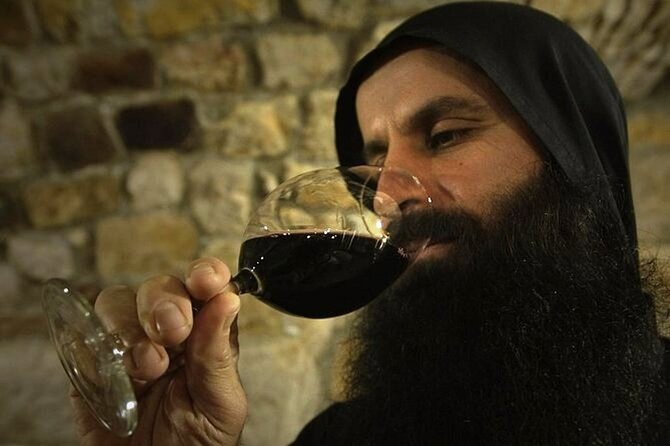
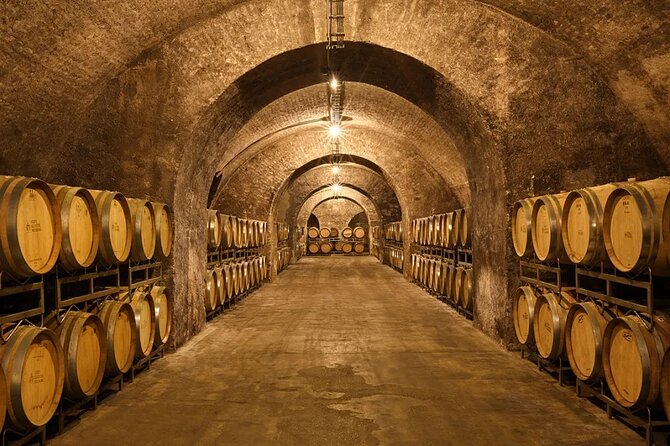
The monastery is described as one of Crete’s most important and beautiful monastic sites. Its small folklore museum adds another layer to the stop, with exhibits tied to local culture and the monastery’s long role on the island.
Your visit includes a tour of the monastery and museum, but the tour guide is optional. The English-speaking driver provides transport and is listed as part of the experience, while a dedicated guide costs extra if you want fuller commentary at the site.
That distinction is worth noting. If you enjoy looking around at your own pace, the driver-led setup may be enough. If you want detailed explanations of the monastery’s architecture, religious role, museum objects, and production methods, ask about adding a guide before booking.
An entrance fee to the monastery is not included. The information also lists the stop with no admission ticket included in the basic experience, so confirm the current charge and payment method before you go. This is a small detail, but it prevents a surprise on an otherwise carefully priced private outing.
The food tasting is generous for a half-day tour
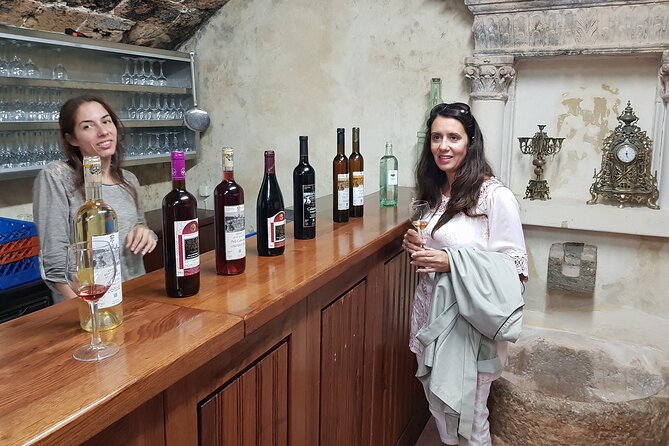
The included snacks are a real part of the experience, not a token drink and a bite. You receive Cretan specialties with olive oil, oregano, lemon, and salt, plus a plate that can include two local cheeses, tomato, cucumber, olives, and smoked ham.
The dako is especially useful for first-time visitors to Crete. Its dry bread has a firm texture and works well with tomato, feta, herbs, and oil. It is humble food, but it shows how Cretan meals rely on pantry staples and produce rather than elaborate cooking.
Bottled water is provided for each person in the vehicle. That is practical during a warm day, especially when you are combining a rural visit with a walk around Chania. The vehicle is air-conditioned, another welcome feature during the hotter months.
You should not book this as a full restaurant lunch unless the operator confirms otherwise. It is a substantial tasting of local delicacies, but the published inclusions call it snacks and a dish of Cretan foods. If you need a large meal, plan one separately.
Chania Old Town gives the tour a strong finish
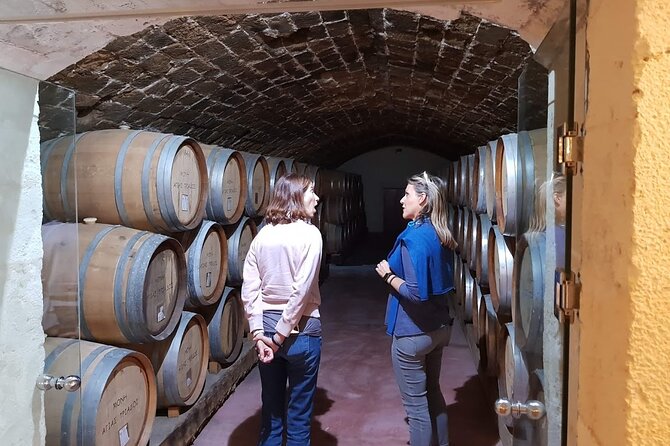
The Chania stop lasts about one hour. That is enough for a focused walk, not enough for a complete city visit.
The Venetian harbor is the visual center. You can see the lighthouse at the harbor entrance and walk through the old waterfront area before turning into the narrow streets. The old town has retained its Venetian character, with mansions, fountains, churches, and preserved monuments.
I like having Chania included because it prevents the outing from becoming too specialized. Wine and olive oil fans get the main event, while anyone interested in architecture or port cities gets a short introduction to one of Crete’s most memorable places.
Keep your expectations sensible. One hour lets you get your bearings and see the main character of the old town. It does not leave much room for museums, long shopping stops, or a relaxed harbor meal. If Chania is your main goal, book a separate city tour or plan more time there.
The maze-like lanes can also make a short visit feel full. Your driver can point you toward the central sights, but the exact walking route may depend on your pickup point and schedule.
Private transport matters more than it first appears
The private format is one of the strongest reasons to consider this experience. Only your group participates, and the vehicle is air-conditioned. Pickup is offered, with transfers available from a hotel, port, airport, or other agreed location.
This makes the outing useful for cruise passengers with a tight shore schedule. One booking was arranged for about five hours between disembarkation and the need to return to the ship. The driver, Antonis, organized the timing so the group could see the monastery and Chania without feeling rushed, then return with time to spare.
That does not guarantee the same schedule for every departure, but it shows why a private transfer can be valuable. You avoid coordinating a larger group, waiting for unrelated pickups, or managing public transport between rural sites and Chania.
Another account praised Kostas as a friendly driver and good source of information. Driver assignments can change, so do not book on the assumption that Kostas or Antonis will personally lead your outing. Still, the service includes an English-speaking driver, and the examples show the importance of having someone who can manage both roads and timing.
The private setup is also helpful if your group has different interests. One person can focus on wine, another on olive oil, and another on Chania’s architecture, all within one compact day.
How the timing works
The planned schedule gives about two hours at Agia Triada for wine tasting and the monastery, two hours for the Tsagkarolon monastery and folklore museum experience, and one hour in Chania. Together, that is roughly five hours.
The published duration also says one to five hours, so the final length may depend on your pickup point, traffic, port schedule, and the amount of time arranged at each stop. Confirm the exact departure and return plan, especially if you have a flight or cruise deadline.
The opening period provided for this experience runs from May 1, 2025, through June 16, 2026, with hours listed daily from 10 a.m. to 3 p.m. Those hours make a morning or early afternoon departure the sensible choice.
A private outing can sometimes adjust its pace, but the available information does not promise unlimited customization. Ask before booking if you want more time in Chania, a longer vineyard visit, or a different stop order.
Is $544.07 a fair price?
The price is $544.07 per group of up to four people. At the maximum group size, that works out to about $136 per person.
For four people, the price includes private transportation, hotel, airport, or port pickup options, an air-conditioned vehicle, an English-speaking driver, water, Cretan snacks, the food tasting, and the wine and olive oil experience. That is a reasonable package if you value door-to-door service and do not want to arrange separate transport.
For two people, the cost rises to about $272 each. For one person, it is a costly way to visit the monastery and Chania. The private format explains much of the price, so this experience makes the most sense for families or small groups sharing the vehicle.
Remember to budget for the monastery entrance fee and any optional guide. Those costs are not included in the advertised price. The tasting snacks are included, which helps reduce extra spending during the outing, but the package is still not a complete day of meals.
The tour is booked an average of 32 days ahead, so popular cruise dates and peak travel periods may require planning. Confirmation is received at booking, and free cancellation is available up to 24 hours before the start time. Poor weather can lead to a new date or full refund.
Who will enjoy this Crete tour most
I would choose this for a small group that wants several sides of Crete in one outing. It fits people who like wine, olive oil, local food, religious sites, museums, and old-town streets, but do not want to organize the connections themselves.
It is also a strong option for cruise passengers. The private vehicle and direct return plan can matter more than squeezing every possible sight into the day.
Families and mixed-interest groups should find the format practical. The tasting has familiar foods such as tomato, cucumber, cheese, olives, and bread, while Chania offers a change of scenery for anyone less interested in production methods.
I would think twice if your main goal is a long wine education session. Five wines are included, but the whole outing also covers the monastery, museum, production facilities, and Chania. It is a broad introduction, not a specialist tasting day.
I would also hesitate if you are staying far from the pickup area and the transfer adds a large amount of time. The available information names Adelianos Kampos as the location, but you should confirm pickup coverage and travel time from your exact hotel.
Should you book the Agia Triada and Chania outing?
Book it if you have up to four people, want private transport, and like the idea of tasting products where they are made. The best parts are the five-wine tasting, organic monastery olive oil, Cretan food plate, and the contrast between the quiet agricultural site and Chania’s Venetian harbor.
Ask two questions before paying: how much is the monastery entrance fee, and do you need a separate guide for the level of explanation you want? If your schedule is tight, also confirm the exact return time.
For a couple, the price is harder to justify. For four people sharing the vehicle, it becomes a practical way to combine rural Crete, local food, and Chania without wasting time on transport. It is a good, focused introduction to the island’s tastes and traditions, provided you treat it as a half-day sampler rather than a full Chania visit or a dedicated winery tour.
FAQ
Where does the Crete Wine and Olive Oil Tour take place?
The experience is based in Adelianos Kampos, Greece, and visits Agia Triada, also called the Holy Trinity Monastery of Tzagarolon or Mourtara, plus Chania Old Town and its Venetian harbor.
How long does the tour last?
The advertised duration is approximately one to five hours. The planned stops allow about two hours at Agia Triada, two hours for the monastery and museum experience, and one hour in Chania, for a total of about five hours.
How many people can join the private tour?
The price covers one private group of up to four people. Only your group participates in the activity.
Is hotel or port pickup available?
Yes. Transfers are available from hotels, ports, airports, or another agreed pickup location. The vehicle is air-conditioned and private.
What food and drinks are included?
You receive bottled water for each passenger, Cretan snacks with olive oil, oregano, lemon, and salt, plus a plate of local delicacies such as two cheeses, tomato, cucumber, olives, and smoked ham. Dako with tomato, feta, olive, and oregano is also part of the wine tasting.
Is a tour guide included?
An English-speaking driver is included. A separate tour guide is optional and is not included in the listed price.
Is the monastery entrance fee included?
No. The entrance fee to the monastery is listed as not included. Confirm the current fee before departure.
Can I cancel the booking?
You can cancel for a full refund up to 24 hours before the experience start time. Changes or cancellations made less than 24 hours in advance are not accepted for a refund. If poor weather causes the activity to be canceled, you can receive a different date or a full refund.