REVIEW · MYKONOS
Delos Tour from Mykonos
Book on Viator →Operated by Let's Book Travel · Bookable on Viator
Delos in a half day feels like cheating. You get a quick hop from Mykonos to the island tied to Apollo and Artemis, then a guided sweep through standout ruins and the museum collection. It’s the kind of trip that makes Greece’s ancient “center of the world” story feel real.
I especially like the guided approach at Delos—your stop-by-stop route helps you see more than you would on your own, and you’ll be able to pick out the major areas like the Agora and the House complexes. I also like that there’s a wireless headset system, which matters when you’re walking outside and wind is doing its own thing.
One thing to watch: the day can feel tight and weather-prone. Delos is exposed with little shade, and if rain or high crowds hit, you’ll move faster and have less time to linger.
In This Review
- Key points before you go
- Delos Tour from Mykonos: why this 5-hour format works
- Getting to Delos: boat ride, meeting point, and what timing feels like
- Delos highlights on foot: Agora, Lions Terrace, and the feel of daily life
- Cleopatra’s House and the House of Dionysus: mosaics and standout art
- Temple of Isis and the Roman water system: what to look for
- Delos Museum stop: mosaics and statuary in a more forgiving setting
- Guide quality, wireless headsets, and group size reality
- Price and entrance fees: getting the value math right
- What to pack for Delos day: heat, rain, and walking shoes
- Who should book this Delos from Mykonos tour?
- Final verdict: should you book?
- FAQ
- How long is the Delos Tour from Mykonos?
- Is hotel pickup included?
- Does the tour include boat tickets to Delos?
- Is the tour guided in English?
- Is the Delos site entrance fee included?
- Will I have headsets on the tour?
- Where does the tour start and end?
- What’s the maximum group size?
- What happens if weather is poor?
- How far in advance should I book?
Key points before you go
- Short 45-minute boat ride from Mykonos to Delos means more time on the ruins
- Wireless guided system helps you follow the guide while moving between sites
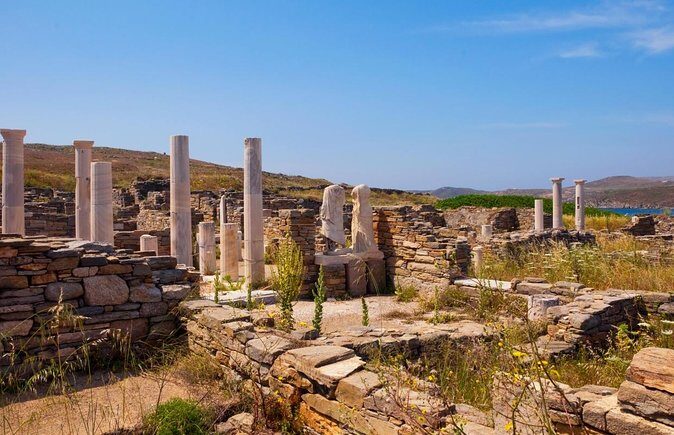
- Major Delos highlights are packed in: Agora, Lions Terrace, Cleopatra’s House, Dionysus area, and the Temple of Isis
- Delos Museum stop is a smart way to see mosaics and statuary when the weather turns
- Limited time for self-exploration: plan on walking and photos, not a slow museum-and-ruins day
- Site entrance may cost extra (a €20 per-person fee is listed separately)
Delos Tour from Mykonos: why this 5-hour format works
If you only have a single day on Mykonos, this is one of the cleaner ways to see Delos. You’re not losing your whole day to transit. The boat ride is about 45 minutes, and you’re dropped on the island that feels like an open-air classroom: sacred ground, trading hub, and the kind of place where the “ruins” are still vivid.
Delos was believed to be the birthplace of Apollo and Artemis, and the island’s big role in the ancient Cyclades connects directly to its location—right in the center of the Aegean routes. That’s why merchants, sailors, and cultures kept crossing paths here. When your guide points out the Agora marketplace, the theater area, and the house quarters, the story becomes less textbook and more street-level.
The best part of this format is that you get structure. Delos is not laid out like a modern park. Without a route, you can wander for hours and still miss the connections between areas (religion, daily life, art, and water systems). With a guide, you start seeing patterns: mosaics showing daily taste, water engineering supporting a growing settlement, and religious sites anchoring the whole island.
You can also read our reviews of more tours and experiences in Mykonos.


Getting to Delos: boat ride, meeting point, and what timing feels like
This experience starts and ends at Mykonos Harbour (Mykonos Harbour View, Unnamed Road, 846 00). Pickup is offered at an extra charge, but transfers to and from your hotel or ship are not included in the base package.
Why that matters: on a port day, small timing issues can ripple. You’ll want to arrive early at the harbor meeting point, not just on time. Even when everything runs smoothly, you’re dealing with crowds, people boarding in waves, and the reality that once the boat leaves, you’re committed to that schedule.
The tour company also caps group size at 50 travelers. That’s not “private,” but it’s manageable—especially with the wireless headset system. Still, expect the day to move. Delos is a walk-heavy site and the route is designed to fit multiple highlights, so you’re not strolling at museum speed.
If you’re cruising (or arriving late from another activity), build in slack. The day is built around the boat schedule, and you don’t want a separate timetable chasing you at the last minute.
Delos highlights on foot: Agora, Lions Terrace, and the feel of daily life
Your guided time on Delos focuses on the places that make the island unforgettable: the big public spaces and the art-filled homes that show how people lived. One of the first things you’ll appreciate is the Agora, the ancient marketplace area. It’s not just “ruins with columns.” It’s the beating heart of how a trading island kept working—where people met, sold, negotiated, and planned routes.
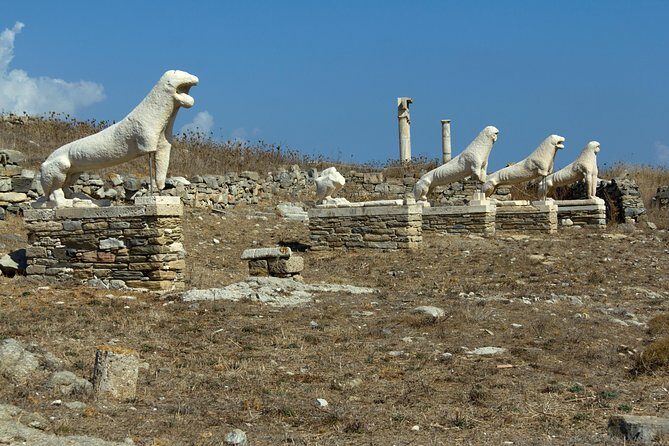
Then comes one of Delos’s most recognizable sights: the Lions Terrace, tied to the Naxos lions. Even if you’ve seen lion statues elsewhere, these connect to Delos’s reputation as a prestige site in the ancient world. The guide’s explanations help you understand these aren’t random decorations—they’re signals of influence, identity, and status.
You’ll also hear about the holy lake and the religious landscape—how sacred spaces coexisted with commercial life. That mix is a big deal at Delos. It’s one reason the island feels unique compared to other Greek archaeological sites: you’re seeing religion, commerce, and art in the same breath.
For the “daily life” aspect, keep an eye out for the house quarters around the main routes. The highlights include the theater area and well-known residences such as the House of Dionysus and Cleopatra’s House. When you stand near these remains, you start to understand why mosaic floors became the stars of the museum collection.
Practical note: Delos is exposed. Bring your patience—and your sun protection—because there isn’t much shade to hide in while you wait for the group to catch up.
Cleopatra’s House and the House of Dionysus: mosaics and standout art
Two of the most memorable named stops are Cleopatra’s House and the House of Dionysus. These aren’t just labels to tick off. They’re your clue that Delos wasn’t only a religious destination—it was also a place where art mattered in everyday rooms.
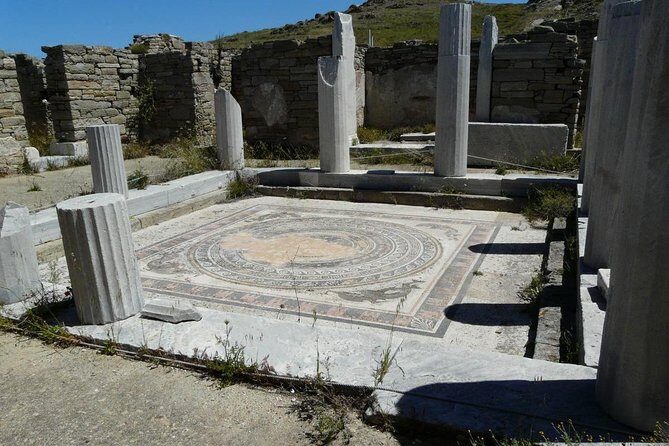
In the house areas, you’ll hear about mosaic decorations and the way decorative art was used to make spaces feel luxurious and personal. Specific themes tied to Delos include mosaics connected with figures and motifs like the Trident and Masks, and the Dolphins mosaic tradition. The details can be hard to interpret from far away, but this is exactly where a good guide helps: you’ll learn what you’re looking at and why it mattered to the people living there.
Cleopatra’s House is often treated like the headline name, but what makes the stop worth your time is the larger picture. It helps you connect elite domestic spaces to Delos’s broader role—this was an international crossroads long before the modern term existed. The art in these areas reflects that mixing of tastes and influences.
For the House of Dionysus area, you’ll also get a sense of why Dionysus was such a big theme: wine, festivity, theater, and storytelling. If you like mythology, this is where it turns from a word on a museum label into a visual language you can walk through.
One caution: these are not full reconstructions. You’re seeing remnants and layout clues. If you go in expecting every room to be intact, you’ll be disappointed. If you go in expecting archaeology—partial floors, wall bases, and the “shape” of a home—you’ll get a lot more out of it.
Temple of Isis and the Roman water system: what to look for
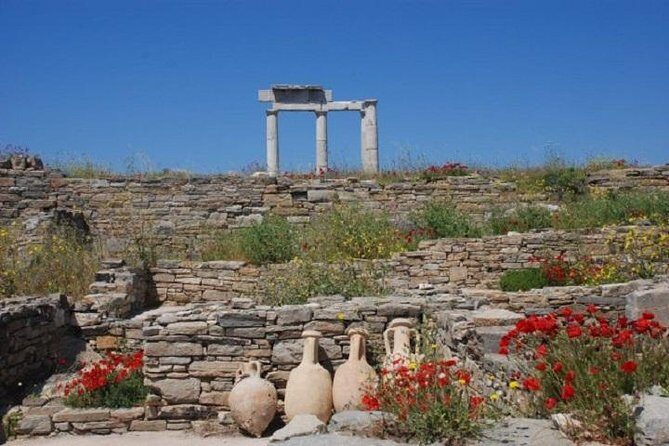
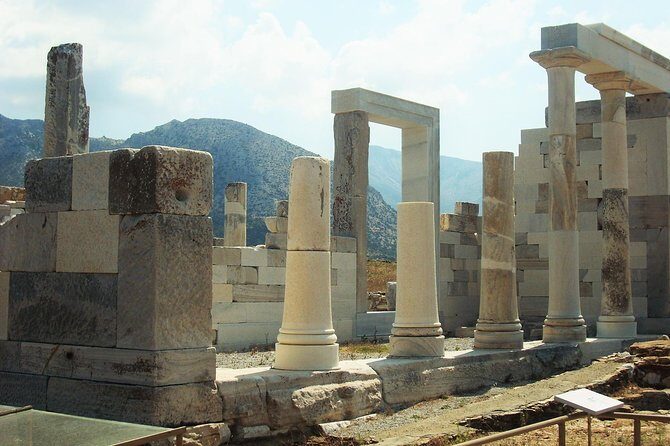
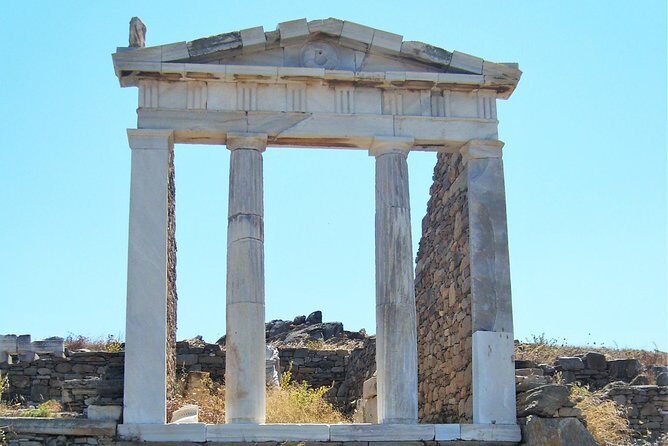
The Temple of Isis is the kind of stop that makes Delos feel even more layered. Isis is an Egyptian goddess, and her presence here is part of Delos’s identity as a multicultural meeting place. You’re not just touring Greek mythology. You’re seeing how beliefs traveled with merchants and visitors.
Right nearby, the guide’s stories often connect religious space to city infrastructure. Delos also includes the Roman water system and cisterns—a reminder that people had to keep water moving and stored, especially on an exposed island. When you understand that, you start reading the ruins differently. A cistern isn’t just “a hole in the ground.” It’s a survival system.
Here’s the practical way to enjoy this part of the route:
- Look for the structure and layout cues, not only the most famous name.
- Pay attention to how your guide explains the relationship between sacred spaces and public infrastructure.
- Keep moving at a steady pace, because weather and crowding can slow you down quickly.
Also, plan for heat. Even when it’s not scorching, Delos tends to feel brighter and hotter than the streets of Mykonos because you’re out in the open.


Delos Museum stop: mosaics and statuary in a more forgiving setting
The Delos Museum is a strong match for a guided day. When you’ve been outside walking over the island’s layout, the museum gives you context—and it often makes the art click.
You’ll see pieces like mosaics and statuary connected to what you walked past in the archaeological area. That connection is what makes the museum stop valuable. Instead of seeing museum items as separate objects, you see them as part of the island’s original artistic world.
One small rule can affect your comfort: no food or drink is allowed inside the site areas. So if you’re the type who likes to snack mid-walk, plan your timing. Bring water for outside walking, and save meals for before or after the museum.
If you’re sensitive to weather, the museum can be a mental reset. It’s also the part of the day where you can slow down just a bit—use it to catch your breath, then go back out and focus on the big named ruins one last time.
Guide quality, wireless headsets, and group size reality
This tour is built around your guide and how well they keep the group together. That sounds obvious, but Delos punishes weak guidance. Wind is often a factor. Crowds are often a factor. If you can’t hear the key points, you’ll feel like you’re only moving between stones.
That’s why I’m glad this tour includes a wireless guided tour system. Headsets can make a noticeable difference when you’re outdoors and the group is packed in.
You’ll also appreciate that the guide format aims for a real explanation rather than just walking from one sign to the next. In the best versions of this experience, the guide is energetic and answers questions in plain language—like history should be told on vacation. When the day runs rough due to weather, a good guide also knows how to keep the plan from collapsing.
Group size is capped at 50 travelers, which helps. Still, you’ll want to stay flexible. In crowded ruins, you might not always get the exact angle you want. If you’re bringing a tripod or expecting lots of quiet moments, temper expectations.
Price and entrance fees: getting the value math right
The listed price is $129.77 per person for a tour that runs about 5 hours and includes professional guiding, boat tickets, and the wireless system. On paper, that looks like a fair bundle—boat transport to a specific site plus on-island guidance is not cheap, and you’re saving yourself time versus figuring it out from scratch.
Now, here’s the part you should double-check before you go: the data you receive includes a note that the Delos archaeological site entrance fee is €20 per person and also mentions admission tickets included. That overlap can be confusing.
So use a simple approach:
- Assume the €20 site entry may apply to your day.
- Bring a credit card or cash just in case there’s a payment needed on arrival or during check-in.
If you’re the kind of traveler who values time and hates ticket-line stress, this tour can still be worth it even with an extra fee. But if you’re traveling on a tight budget, price-comparing with a self-guided plan becomes smart.
What to pack for Delos day: heat, rain, and walking shoes
Delos is a rough playground for comfort. It’s windy. It’s exposed. And it can get wet fast even when Mykonos looks calm.
Based on the kinds of weather issues people run into on this route, I’d pack like this:
- Light rain jacket (not an umbrella you have to fight in wind)
- Sunglasses and sunscreen, even in shoulder seasons
- Water—there may be vending options in the museum area, but you’ll feel better if you carry your own
- Sturdy shoes with grip (ruins walks can be uneven)
- A hat or cap for sun and wind
Also, think about pacing. You’re going to be moving between multiple named areas and trying to keep up with the guide. If you stop too long, you’ll end up feeling rushed later.
And if you’re traveling with limited mobility, the overall walking distance and the lack of shaded resting spots can change the experience. This tour says most travelers can participate, but it doesn’t mean it’s stroller-friendly in practice.
Who should book this Delos from Mykonos tour?
Book this tour if you want:
- A structured Delos day without spending hours trying to map the route yourself
- A guided explanation of the island’s biggest themes: sacred origins, daily life, art, and infrastructure
- A convenient boat connection from Mykonos and a museum stop built into the schedule
- A realistic day plan for a site that’s hard to appreciate fully without context
Skip it (or plan differently) if:
- You need a lot of quiet time in each area. Delos is too big for “slow wandering” in a short tour window.
- You’re highly sensitive to crowds and sound issues. Even with wireless systems, outdoor group tours can be noisy.
- You absolutely must have full control of timing and return transport. This experience runs on a set schedule, and that’s the point.
Final verdict: should you book?
I think this Delos Tour from Mykonos is a strong choice for most people who want the “greatest hits” of Delos without turning your vacation into a logistics project. The wireless guided system, the guided route through major named areas (Agora, Lions Terrace, Cleopatra’s House, Dionysus area, Temple of Isis), and the museum focus on mosaics and statuary are a smart combo for a half-day format.
Just go in with eyes open. Delos doesn’t do comfortable lounging. You’ll walk, you’ll follow the group, and you’ll be at the mercy of wind and weather. If you’re ready for that, you’ll come away feeling like you understood Delos—not just visited it.
FAQ
How long is the Delos Tour from Mykonos?
It runs for about 5 hours (approx.).
Is hotel pickup included?
Pickup is offered at an extra charge. Transfers to and from your hotel/ship are not included in the base details provided.
Does the tour include boat tickets to Delos?
Yes. Boat tickets to Delos island are included.
Is the tour guided in English?
Yes, it’s offered in English.
Is the Delos site entrance fee included?
The included info mentions admission tickets, but the additional details also list entrance fees to the archaeological site of Delos (€20 per person) as not included. Plan for a possible €20 per-person fee.
Will I have headsets on the tour?
Yes. A wireless guided tour system is included.
Where does the tour start and end?
It starts at Mykonos Harbour View and ends back at the same meeting point.
What’s the maximum group size?
The tour has a maximum of 50 travelers.
What happens if weather is poor?
This experience requires good weather. If it’s canceled due to poor weather, you’ll be offered a different date or a full refund.
How far in advance should I book?
On average, it’s booked about 55 days in advance, so booking ahead is a good idea.