REVIEW · DRIOS
Greek Cooking Class with a Local Chef, Wine, & Meal in Drios
Book on GetYourGuide →Operated by Maria Anousaki - Anezina Village · Bookable on GetYourGuide
Six dishes, wine, and dancing in one afternoon.
This Greek cooking class in Drios is built around a local chef’s family recipes, plus a welcome sip of Greek wine and souma at Anezina Village. I love how hands-on it is right from the start, not a passive demo.
I also like the clear flow: you’ll make an appetizer, a fresh salad, three mains (meat, fish, and vegetarian), and a sweet dessert. With guidance from the chef and her crew (names like Maria Anousaki and team members such as Vivian, Panos, and Abdul show up again and again), you get real technique, not just chopping.
One possible consideration: transportation isn’t included, so you’ll want to plan how you reach the meeting spot in Drios (Anezina Village by the main road).
In This Review
- Key Things to Know Before You Go
- Drios, Paros, and the Anezina Village Meeting Point
- Your 3.5 Hours: Aperitif, Cooking Stations, and Group Dinner
- The Six Dishes You’ll Cook (And What Each Course Teaches)
- Appetizer and Salad: Start with Flavor Foundations
- Three Mains: Meat, Fish, and Vegetarian Without Guesswork
- Dessert: The Sweet Finish With Familiar Greek Notes
- Greek Wine, Souma, and the Pairing That Makes the Meal Feel Like a Night Out
- Learning Syrtaki-Style Dancing Between Courses
- What Makes the Chef’s Family Recipes Worth It
- Food Prep Setup: Clean, Organized, and Built for Participation
- The Recipes You Take Home (So You Can Cook It Again)
- Who This Cooking Class Is Perfect For
- Value for $136: Why the Price Makes Sense
- Should You Book This Greek Cooking Class in Drios?
- FAQ
- How long is the Greek cooking class in Drios?
- What does it cost?
- What’s included in the experience?
- Where do I meet the group in Drios?
- Can they accommodate dietary restrictions like vegetarian or gluten free?
- Is the class taught in English?
- What are the cancellation and payment options?
Key Things to Know Before You Go
- Family-recipe cooking: the dishes reflect what the chef learned in her own family kitchen.
- A full 6-dish meal: you cook, then eat what you make as a proper sit-down course experience.
- Wine and souma included: the aperitif and the meal pairing are part of the experience.
- Dancing is built in: you learn traditional steps (Syrtaki-style) before dinner.
- Dietary needs are handled: the menu can change for allergies or preferences like vegetarian and gluten free.
- Recipes are sent to you: you’ll leave with instructions you can actually use at home.
Drios, Paros, and the Anezina Village Meeting Point
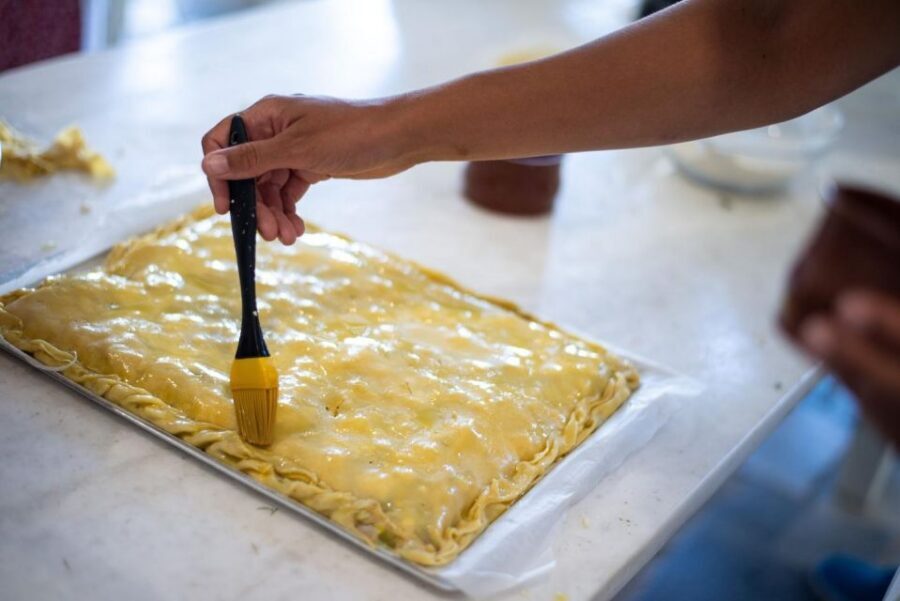
Drios is the kind of village where the pace feels slower, and that matters because this class is more than food—it’s a social night with a rhythm. The cooking happens at Anezina Village, and the meeting point is easy to follow: look for the Anezina Village sign on the main road in Drios.
Once you reach Anezina Hotel & Village, check in with the staff. Since transportation isn’t included, I recommend you build in a little buffer time so you’re not rushing right when the group is starting the welcome drink and settling in.
If you’re the sort of traveler who enjoys local rhythm—small-town Greece, people talking, and a shared meal—this setting fits perfectly. If you need a quiet, head-down activity, it may feel a bit party-like because the atmosphere is openly energetic.
Your 3.5 Hours: Aperitif, Cooking Stations, and Group Dinner
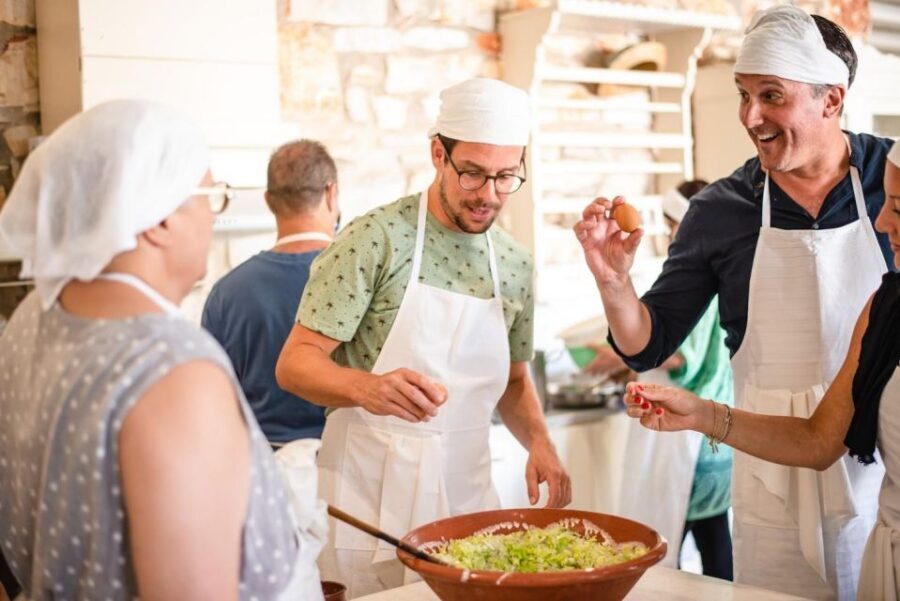
This experience runs about 3.5 hours, which is long enough to learn real steps and short enough that the evening never drags. The pacing is designed like this: a welcome aperitif, hands-on cooking, a short break for traditional dancing, then you eat.
The start is the aperitif. You’ll sip Greek wine and souma, with some background on what you’re drinking and why it matters in Greek wine-making culture. Souma, in particular, is made from the remnants of the winemaking process—so it’s one of those local products that feels practical, old-school, and tied to how people actually live off what the land produces.
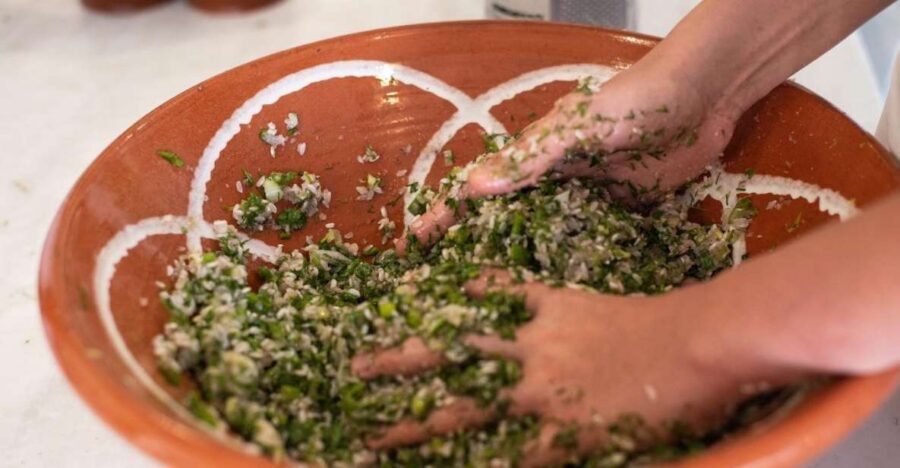
Then comes the work. You’ll be guided step-by-step as you move through preparing the different dishes. Many people appreciate that the format pushes you to participate rather than just watch, and the chef and team keep things moving so you don’t get stuck waiting around.
At the midpoint, you’ll learn a traditional Greek dance before eating. Expect Syrtaki-style group dancing rather than a long lesson—more like a fun reset that keeps the mood light while the food finishes.
Finally, you sit down for the full meal: the six dishes you helped make, paired with more local wine. It’s a simple trick that works: you do the work, then your meal feels earned.
The Six Dishes You’ll Cook (And What Each Course Teaches)
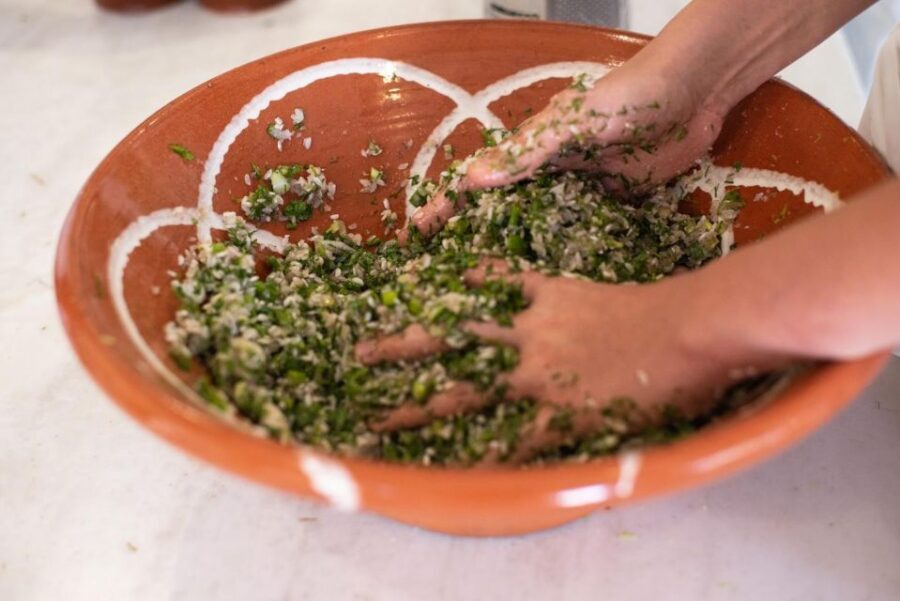
This isn’t a class where you make one plate and call it a night. You’ll help prepare a complete 6-course spread: an appetizer, a salad, three mains (meat, fish, vegetarian), and a sweet dessert.
Here’s how that translates into value for you:
Appetizer and Salad: Start with Flavor Foundations
You begin with an appetizer plus a fresh salad. These early courses matter because they teach the Greek approach to balance—salt, acid, herbs, and texture working together. You also get comfortable with the kitchen flow before the mains.
Three Mains: Meat, Fish, and Vegetarian Without Guesswork
The big strength here is variety. You’ll make:
- a meat main
- a fish main
- a vegetarian main
That structure helps you build confidence. Even if you don’t plan to cook everything at home, you’ll come away with technique you can reuse—how to season, how to time cooking, and how to think about ingredients in Greek combinations.
I like that the vegetarian option is treated as a real main dish, not a side consolation. And if you have dietary needs, the menu can be adjusted when allergies or preferences require it.
Dessert: The Sweet Finish With Familiar Greek Notes
The dessert is part of the same cooking session, not a last-minute handoff. You’ll get a guided finish that rounds out the meal and makes the evening feel complete.
For people who love to cook, the dessert step is often the most memorable because you can taste the difference between a generic sweet and a Greek-style finish made from real, local ingredients.
Greek Wine, Souma, and the Pairing That Makes the Meal Feel Like a Night Out
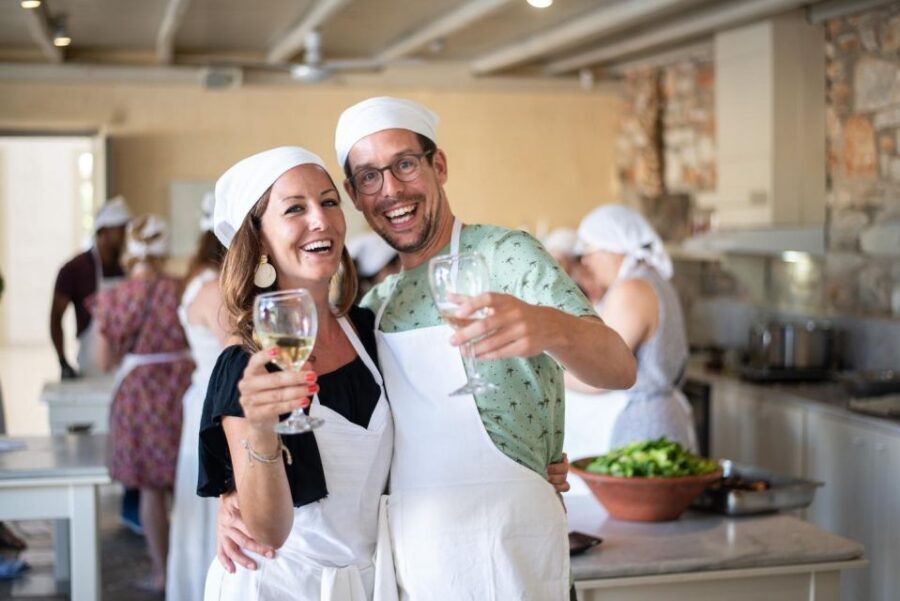
The drinks aren’t an afterthought. A welcome aperitif includes Greek wine and souma, and then the meal comes with additional local wine pairing.
Souma is the standout for many people because it’s local and tied to winemaking leftovers. It gives the evening a distinct Paros flavor that you won’t get if you stick to international beverage routines.
A practical note: this is an alcohol-included experience, so if you’re avoiding drinking entirely, you’ll want to check what options are possible for you ahead of time. Even if you do drink, pacing is reasonable for a 3.5-hour evening because cooking and dancing naturally break up the intake.
Learning Syrtaki-Style Dancing Between Courses
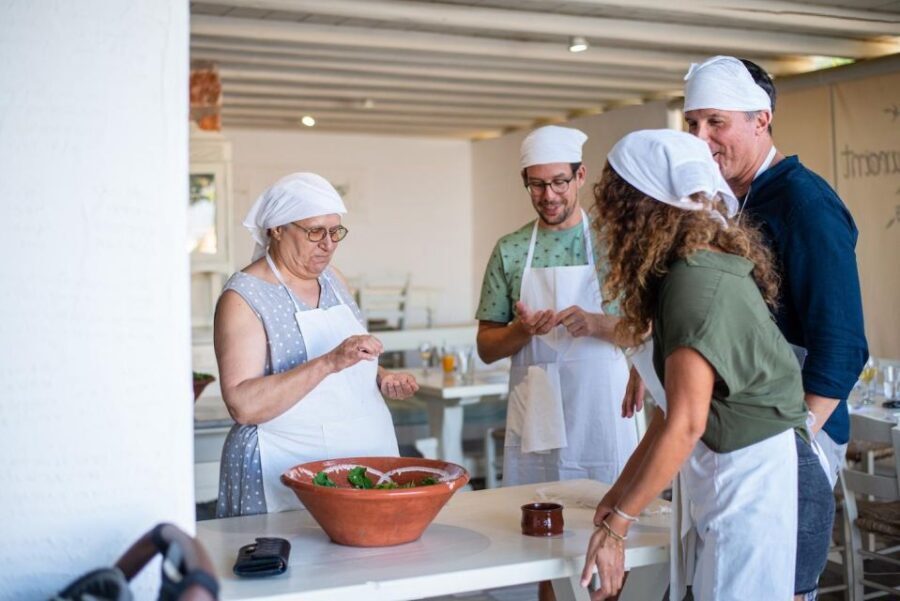
Food classes can blur together. Here, the traditional dance lesson gives your brain a reset and turns the kitchen into a shared cultural moment.
You’ll learn traditional steps with the group, and it’s not about performance. It’s about joining in, laughing at mistakes, and keeping the evening moving while the last dishes finish.
If you’re traveling with friends or family, this moment is often the memory you replay later. If you’re solo, it’s also an easy way to connect without forcing conversation—people naturally cheer, mimic steps, and end up chatting.
What Makes the Chef’s Family Recipes Worth It
The headline promise is the family-recipe angle, but the real value is how it shows up in the details.
A local chef (with Maria Anousaki as the provider name linked to Anezina Village) brings recipes that aren’t generic. The class is framed as recipes used in the chef’s family—so you’re learning how these dishes are actually cooked, not just how they’re plated for tourists.
This is especially meaningful if you’ve ever taken a cooking class and felt like it was mostly technique with no story. Here, the cooking connects to real habits: ingredient choices, seasoning instincts, and the practical order of steps that makes dishes taste the way they’re supposed to.
It also helps that the staff experience comes through in how the class is run. From the energy and patience described in past sessions, you can expect an environment that keeps people involved—especially during busier moments like seasoning and timing.
Food Prep Setup: Clean, Organized, and Built for Participation
A big part of whether a cooking class feels good is the working space. The experience is set up with clean food prep areas and a guided workflow, so you’re not dodging mess or standing around.
In this class, you’re part of the action through multiple cooking stages. Even if you’re not an experienced cook, the step-by-step support keeps you from feeling lost.
And because you’re cooking across several dishes, you get multiple “wins” rather than one long slog. That matters for confidence. By the time you sit down to eat, you’re not just tasting—you’re reading the flavors you helped create.
The Recipes You Take Home (So You Can Cook It Again)
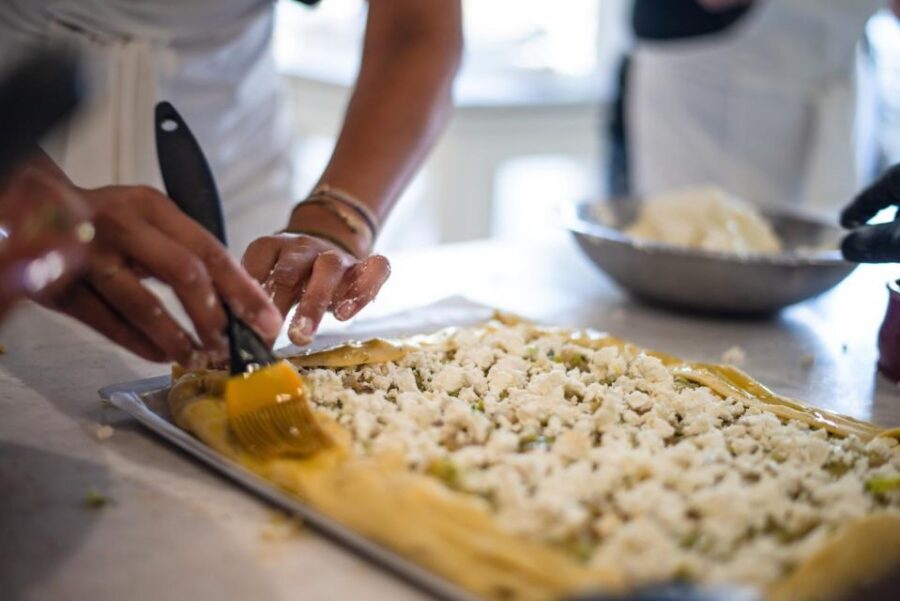
One of the most practical parts: you get recipes after the class. These are sent to you so you can recreate the dishes at home.
In addition, at least some sessions include a broader set of recipes than the exact dishes cooked during class. That’s a big deal if you want to cook beyond the six plates from the night.
If you’re worried about cookbooks collecting dust, this approach is smarter. You’re getting instructions built around the same flavors you tasted, not random Greek ideas that never quite match what you remember.
Who This Cooking Class Is Perfect For
This fits best if you want an evening that mixes hands-on cooking with local culture. It’s a strong choice for couples, groups of friends, and even solo travelers who enjoy shared activities.
You’ll especially enjoy it if:
- you like cooking more than just eating
- you want a structured way to learn Greek dishes (appetizer → salad → mains → dessert)
- you’re excited by local drinks like souma
- you enjoy group energy and don’t mind dancing as part of the program
It may be less ideal if you want a quiet meal with minimal interaction, or if you’re very strict about avoiding alcohol. Also, because there’s no transportation included, make sure you’re comfortable getting yourself to Anezina Village in Drios.
Value for $136: Why the Price Makes Sense
At $136 per person for about 3.5 hours, you’re paying for more than a cooking lesson. You’re paying for:
- a local chef-led class
- hands-on time across six dishes
- included meal built from your work
- included Greek wine and souma
- recipes you can use later
If you compare this to a normal dinner plus a separate workshop, the value gets clearer. You’re not just buying food—you’re buying participation, guidance, and a take-home “how to” package.
This is one of those experiences where you feel the cost in a good way because you leave with both skills and ingredients-based confidence. Even if you don’t cook all six dishes at home, you’ll remember flavors and techniques you can reuse.
Should You Book This Greek Cooking Class in Drios?
Yes, if you want a high-participation evening with strong local flavor, real family-recipe context, and a meal you helped make. The combination of six-course cooking, included wine and souma, and a short dance lesson gives you more than the usual “cook one dish” format.
Book it especially if you:
- want a fun, social activity that doesn’t feel like a show
- care about learning actual recipes you can repeat
- have dietary needs and want a menu that can be adjusted (for vegetarian and gluten free, for example)
Skip it if you want transportation handled for you, or if you prefer quiet, no-dancing plans. And if you avoid alcohol, you should plan to ask your questions first so the experience fits your needs.
Overall, this is the kind of Paros night that turns Greece from scenery into something you can taste and cook.
FAQ
How long is the Greek cooking class in Drios?
The experience lasts 3.5 hours.
What does it cost?
The price is $136 per person.
What’s included in the experience?
It includes a local chef and a cooking class (appetizer, salad, meat main, fish main, vegetarian main, and dessert), plus local wine and souma. You also get a meal made from the dishes you prepare and recipe materials.
Where do I meet the group in Drios?
Look for the Anezina Village sign on the main road in Drios. Once you reach Anezina Hotel & Village, check in with the staff.
Can they accommodate dietary restrictions like vegetarian or gluten free?
Yes. Changes can be made to the menu for allergies and dietary needs, including vegetarian and gluten free options (and other dietary requirements as needed).
Is the class taught in English?
The instructor team offers English and Greek. The activity is also listed as wheelchair accessible.
What are the cancellation and payment options?
You can cancel up to 24 hours in advance for a full refund. You can also reserve now and pay later.