REVIEW · CRETE
Heraklion: Hop-on Hop-off Open Top Bus Sightseeing Tour
Book on GetYourGuide →Operated by ATHENS OPEN TOUR · Bookable on GetYourGuide
Heraklion’s best feature is its compact mix of ancient, Venetian, and modern Crete, and this 48-hour open-top bus ticket gives you an easy way to connect the pieces. You can ride past the port, old town, Venetian Walls, Knossos Palace, and Ammoudara Beach without sorting out every bus route yourself.
I like the freedom to use the ticket over two days, and I like the high view from the upper deck when you want a quick sense of the city. The commentary helps put Heraklion’s buildings and Cretan past into context, while helpful staff such as Athina can make boarding and route choices less confusing.
The main catch is timing. Buses may come every 45 minutes in summer, and the complete loop takes about an hour, so a missed bus can eat into your sightseeing. The beach section also feels less useful for a full visit, since the final return bus may leave too early for a relaxed afternoon.
In This Review
- Key points to know before boarding
- What the Heraklion bus tour really gives you
- Starting near the port and getting your bearings
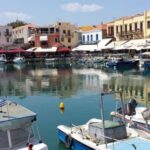
- Old Port Square and the Venetian waterfront
- The Archaeological Museum and Knossos pairing
- The Historical Museum area and Heraklion’s cultural side
- Venetian Walls and the grave of Nikos Kazantzakis
- Jesus Gate and the old town connections
- Ammoudara Beach: useful add-on or weak link?
- Audio commentary, comfort, and bus condition
- How to use the 48 hours wisely
- Is $22.58 good value?
- Who should book this Heraklion tour?
- FAQ
- How long is the ticket valid?
- How often does the bus run?
- Which main stops are included?
- Are entrance fees included?
- What languages are available for the audio commentary?
- Is the bus wheelchair accessible?
- Should you book it?
Key points to know before boarding
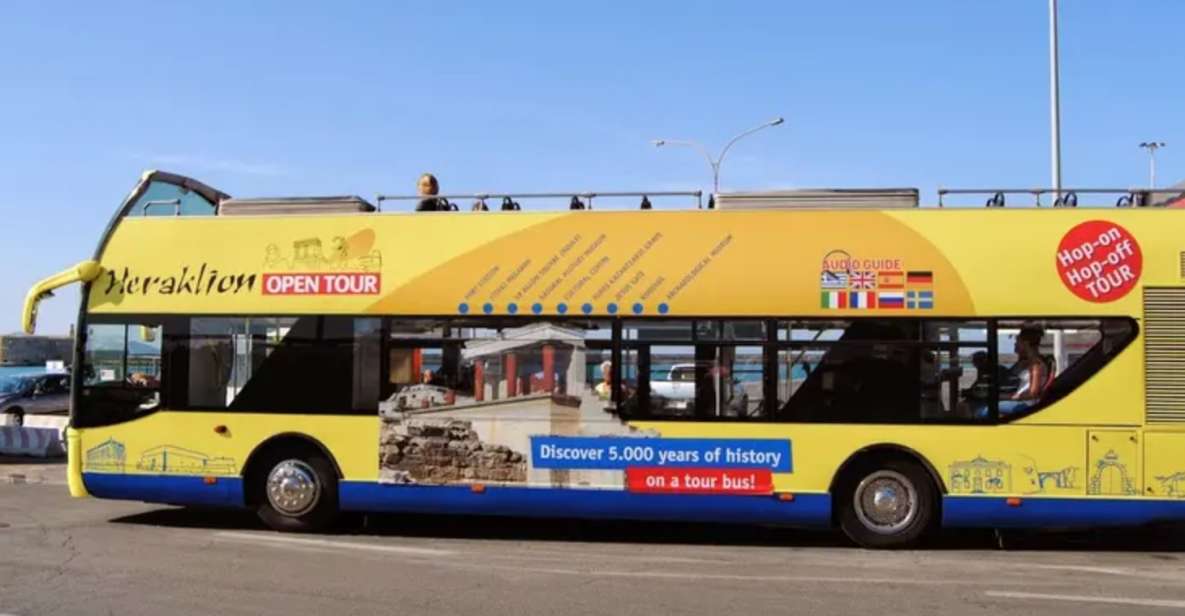
- The 48-hour ticket starts with your first activation: Ride it on two calendar days from that first use, not simply on any two separate dates.
- Knossos Palace is on the route: You can combine the bus with Heraklion’s most famous archaeological site, but entrance is not included.
- The Archaeological Museum makes a strong companion stop: It gives you a better setting for understanding objects and periods connected with Knossos.
- The route includes eight listed stops: These include Old Port Square, the Historical Museum area, Knossos, the Archaeological Museum, Nikos Kazantzakis’s grave, the Venetian Walls, the port bus station, and Jesus Gate.
- Ammoudara Beach is included, but plan carefully: The beach run can work as a quick outing, though the schedule may not suit a long swim.
- Upper-deck views come with practical limits: Older buses, occasional broken seats, litter, and faulty audio sockets have been reported, so check your seat and headset before settling in.
What the Heraklion bus tour really gives you

At $22.58 per person, this is less a guided tour than a moving introduction to Heraklion. You are paying for transport, orientation, and the ability to pause at several important places. The value rises if you use the ticket across both days and get off at two or three major stops.
The bus runs roughly every 45 minutes from 09:15 to 17:30 during the summer season. The full circuit takes about 60 minutes. That sounds simple, but it shapes your day: you need to allow the ride itself, time at each stop, and a possible wait for the next bus.
I would not treat it as a fast taxi service. I would use it as a framework. Ride once to see where everything sits, then return to the stops that matter most to you. Heraklion is easier to understand once you see how the port, old center, walls, museum, and road to Knossos fit together.
The open upper deck is the main pleasure. You get a broad view of streets and buildings instead of peering through a car window. Bring protection from the sun, and remember that an open bus is exposed to weather. If the upper deck is untidy or full, the lower level may be the more comfortable choice.
You can also read our reviews of more tours and experiences in Crete.


Starting near the port and getting your bearings
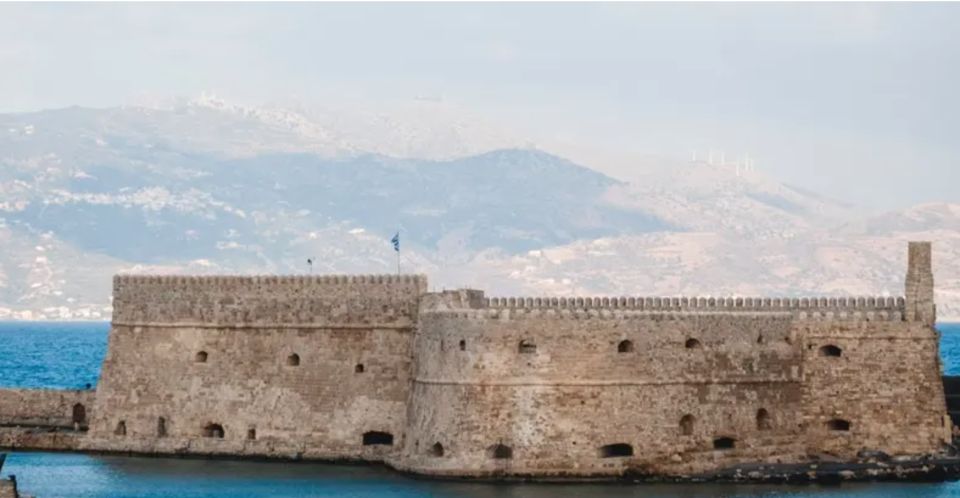
Cruise passengers have an obvious starting point at the Port Cruise Terminal. Other listed boarding areas include Fitaki Megaron, 18 Agglon Square, the Natural History Museum, the Cultural Center, the Grave of Nikos Kazantzakis, Jesus Gate, Knossos, and the Archaeological Museum.
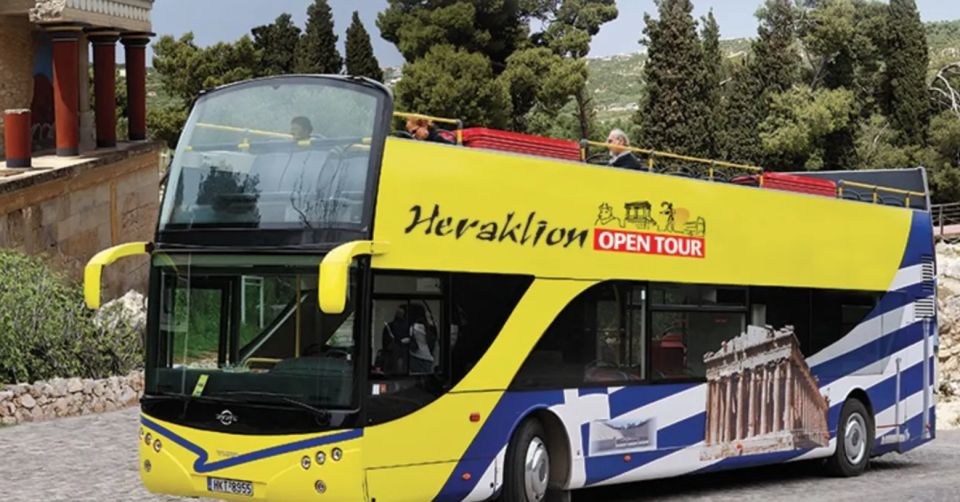
Look for the yellow signs with black lettering marked Heraklion Open Tours. This matters because the stops are not described as a single central office. You need to identify the marked stop, especially if you are boarding near a busy port or unfamiliar city street.
The port section is useful for a first ride. It introduces Heraklion as a working city rather than only a museum town. You can see where cruise passengers arrive and how close the historic core is to the waterfront. Old Port Square then brings you closer to the city’s Venetian character and the start of a good walking route.
If you have only a few hours before a ship departure, avoid ambitious hopping. A missed connection can cost more time than expected. For a full day or two, the port is a practical place to begin, especially if you want a broad first look before choosing your stops.
Old Port Square and the Venetian waterfront
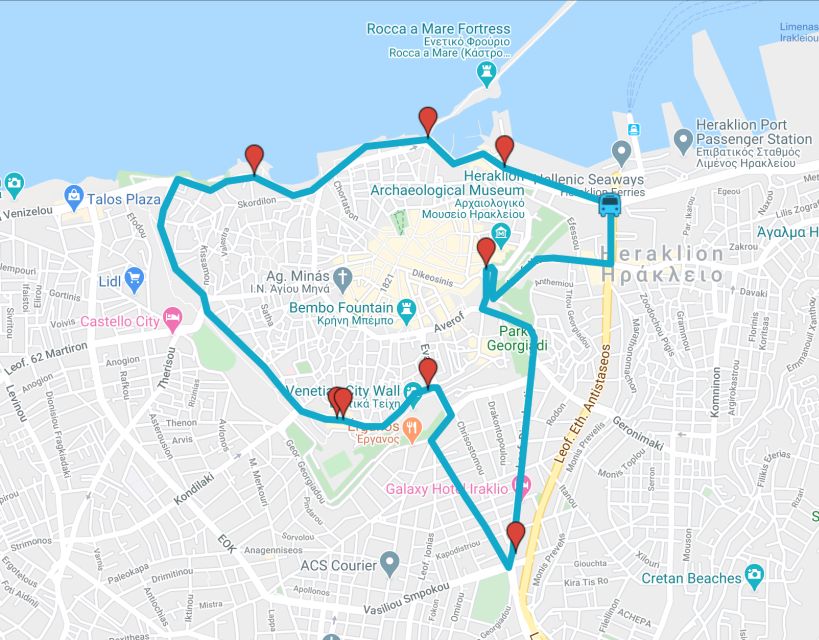
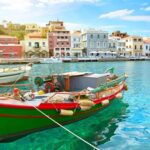
Old Port Square is one of the more useful stops for a first walk. From here, you can combine the waterfront with the old town, shops, museums, and traditional restaurants. The appeal is not one single attraction. It is the chance to move from the bus into Heraklion’s older streets and explore at your own pace.
The Venetian presence is one of the city’s defining layers. The port and fortifications help you see why Heraklion developed as an important harbor city. The bus commentary can add basic context while you ride, but I would leave the headset on only when you are passing something you want explained. Once you get off, your own walking time matters more.
The nearby old town is where the ticket earns its keep as an orientation tool. You can use the bus to reach the center, then walk among shops, museums, and places serving Cretan food. The information provided does not promise a guided walking route, so do not expect a host to lead you through the lanes.
This stop is also a good place to pause for a meal. You are not tied to the bus once you hop off, but you are tied to its operating hours if you plan to ride again. Check the time of the next bus before you start a long lunch.
The Archaeological Museum and Knossos pairing
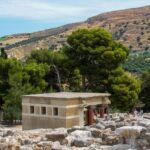
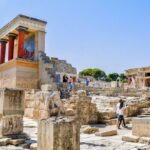
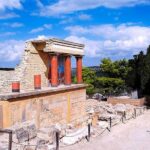
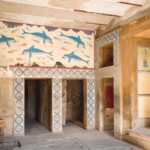
Knossos Palace is the headline stop. It is the place most people associate with ancient Crete, and the bus makes the journey easier to fit into a city visit. Entrance is not part of the ticket, so budget separately for the archaeological site.
The most sensible plan is to treat Knossos and the Archaeological Museum as a pair. Knossos gives you the site itself, while the museum helps place Cretan objects and civilization in a wider setting. You do not need to visit them in one rushed block, though. The two-day validity gives you room to split them between separate days.
The stop at Knossos is particularly useful for visitors staying in Heraklion or arriving by cruise ship. Instead of arranging separate transport for the site, you have a direct sightseeing connection within the route. Still, do not assume the bus will wait while you visit. The 45-minute service interval means you must plan for the next departure.
The full loop lasts about an hour, and this is where the timetable becomes important. If you hop off at Knossos, your return journey depends on the next bus rather than on your own preferred departure time. I would photograph or note the schedule when you arrive and leave enough time for the site itself.
The audio commentary is offered in eight languages, with English, German, French, Italian, Spanish, Greek, and Russian listed among the choices. Headsets are included. Check the socket before the bus moves, since not every audio connection has worked reliably on every vehicle.
The Historical Museum area and Heraklion’s cultural side
The Historical Museum of Crete stop gives you another way to explore the city’s past. It is a good choice if you want more than the ancient world and prefer to see how Crete’s story continues through later periods.
The bus does not include admission to museums. That keeps the ticket price fairly low, but it also means you need to choose your paid attractions carefully. At $22.58, the pass can be worthwhile if you use it for transport between several sights. It is less compelling if you simply ride one loop and do not get off.
The museum area also helps balance a visit focused on Knossos. Ancient Crete is a major draw, but Heraklion is not only an archaeological stop. The old town, port, walls, and museums show different parts of the city. I like having the option to use the bus as a short ride between these areas instead of walking every connection in the midday heat.
If your priority is a detailed museum visit, allow it its own time. The bus is a link between sights, not a replacement for the museums. The commentary gives you an overview, but it cannot match time spent inside an attraction.


Venetian Walls and the grave of Nikos Kazantzakis
The Venetian Walls are one of the route’s strongest historical stops. Walking across or beside them gives you a physical sense of Heraklion’s defenses. This is more satisfying than seeing the fortifications only from a moving bus, so plan to hop off if the walls interest you.
The stop at the Grave of Nikos Kazantzakis adds a literary note. It is a quieter kind of visit than Knossos or the port, and it broadens the route beyond the usual ancient and Venetian landmarks. If you know Kazantzakis’s work, this stop may carry extra meaning. If not, the commentary can at least tell you why the site is included.
These stops are also useful for spreading your sightseeing over two days. You can spend one day on Knossos and the museum, then use the second for the walls, old center, port, and other cultural stops. That is a better use of the ticket than trying to force the whole city into one circuit.
Keep the bus schedule in mind after getting off. One direct report put the wait at around an hour on a red-line service and longer on a blue-line service. The supplied operating information gives a 45-minute summer interval, so service can vary by route or period. Either way, be at the stop early.
Jesus Gate and the old town connections
Jesus Gate is another route point near the historic defenses and older parts of the city. It can suit you if you want to walk around the walls or connect the old center with less port-focused sightseeing.
The stop list uses several names and areas, and the meeting-point information includes both broad landmarks and specific locations. That makes the printed map important. You receive a map showing the bus stops, so keep it with you rather than relying on memory.
This is the kind of stop where the tour works best as a practical city tool. You can hop off, walk, take in the architecture, and then return to a marked stop. You are not limited to the standard sightseeing sequence, but you do need to respect the bus frequency.
For independent visitors, that flexibility is the strongest argument for booking. You decide how long to stay at the walls, when to eat in the old town, and which museum deserves your entrance fee. For someone who wants a continuous spoken tour with a guide beside them, the experience may feel thin.
Ammoudara Beach: useful add-on or weak link?
Ammoudara adds a different side of Heraklion. The sandy beach offers swimming and beach activities, giving you a break from monuments and city streets. If you are staying nearby or want a short seaside stop, the inclusion is convenient.
I would not build an entire beach day around this bus. The route may feel like a drop-off service for hotels, and the return schedule can force you to leave around 15:00. That is not much time if your idea of a beach visit includes a long swim, lunch, and a relaxed afternoon.
A regular public bus may be a better choice for the beach portion. It can give you more control over departure times, according to the practical advice attached to this experience. Use the open-top route for the city sights, and consider ordinary local transport if Ammoudara is your main goal.
The beach stop still has value as an option. You do not have to use every part of the route, and the two-day ticket lets you choose. Just treat Ammoudara as a bonus rather than the reason to buy the pass.
Audio commentary, comfort, and bus condition
The audio commentary is included, along with headsets, and covers the city’s old and modern sides in multiple languages. This is useful when you are riding past a wall, gate, museum, or neighborhood and want a little context without joining a fixed walking group.
The quality of the listening experience may depend on the bus. Some sockets have not worked, and reports include two broken seats on one vehicle. Check your headset as soon as you board and move seats if needed.
Cleanliness also appears uneven. The upper deck has had rubbish such as masks, paper, and plastic bottles. That does not change the route, but it can affect your comfort, especially on a sunny ride when you plan to sit for the full loop.
The buses can seem old. I would set expectations accordingly. This is an inexpensive sightseeing vehicle, not a polished luxury coach. The route and staff support are more important here than a spotless interior or perfect equipment.
One bright point is the ease of use. Staff can help you understand where to board and how to navigate the route. Athina is specifically praised for being kind and helpful, a useful sign for anyone who feels unsure about the stops or connections.
How to use the 48 hours wisely
Activate the ticket on your first ride, then use the next two days to avoid rushing. You might begin with a full loop for orientation, but only if you have enough time and are not trying to reach a timed attraction.
A practical plan looks like this:
- Use the first ride to understand the route and note the stops you want.
- Visit Knossos on one day, allowing for entrance time and a wait for the next bus.
- Pair the Archaeological Museum with the ancient-site visit, either on the same day or separately.
- Use another period for the Venetian Walls, Jesus Gate, Old Port Square, and old town.
- Add Ammoudara only if the bus schedule fits your swimming plans.
Do not assume every bus will arrive just as you finish sightseeing. Service is listed at roughly 45-minute intervals in summer, and the full circuit takes 60 minutes. Arrive early at the stop, especially if you have a ship departure, a restaurant booking, or limited time in Heraklion.
The pass is wheelchair accessible, which makes the sightseeing option more practical for visitors who need an accessible bus. Specific details about access at individual attractions are not included, so check each site separately before relying on the complete route.
Is $22.58 good value?
The price is reasonable if you use the bus as transport between major parts of Heraklion over both valid days. A single ride around the city offers views and commentary, but it does not make the strongest financial case. The value comes from combining several stops and avoiding separate transport arrangements.
The ticket does not cover Knossos Palace, the Archaeological Museum, or other attraction entrances. You should add those costs to your day’s budget. Still, the bus can reduce the need to arrange separate rides to Knossos and connect the archaeological site with the city center.
I would buy it for a first visit when I want a clear overview and do not want to decode local routes. I would think twice if I planned to walk the old town, visit only one museum, and spend most of the day at Ammoudara. In that case, the pass may offer more route than you need.
Free cancellation up to 24 hours before the activity and reserve-now, pay-later booking make the purchase easier to fit around changing plans. Those policies help, but the real question is how much of the 48 hours you will use.
Who should book this Heraklion tour?
This suits you best if you are visiting Heraklion for the first time, arriving by cruise ship, traveling with family, or wanting a simple link to Knossos. It also works for anyone who likes to see a city from above before choosing where to walk.
The tour is less suitable if you want a quiet, polished vehicle, exact on-demand departures, or a fully guided visit at every attraction. You will need patience with waits, occasional equipment problems, and a timetable that may not match your preferred pace.
FAQ
How long is the ticket valid?
The ticket is valid for 48 hours from the time you first activate it.
How often does the bus run?
During the summer season, the bus operates at roughly 45-minute intervals from 09:15 until 17:30. The full loop takes about 60 minutes.
Which main stops are included?
The listed stops include Old Port Square, the Historical Museum of Crete, Knossos Palace, Heraklion Archaeological Museum, the Grave of Nikos Kazantzakis, Venetian Walls, the port bus station, and Jesus Gate.
Are entrance fees included?
No. Entrance fees to Knossos Palace, the Archaeological Museum, and other attractions are not included.
What languages are available for the audio commentary?
Audio commentary is included in eight languages. The named language options include English, German, French, Italian, Spanish, Greek, and Russian.
Is the bus wheelchair accessible?
Yes, the activity is listed as wheelchair accessible.
Should you book it?
Book this tour if you want a flexible two-day overview of Heraklion and plan to visit several areas, especially Knossos, the Archaeological Museum, the old town, and the Venetian Walls. At $22.58, it offers useful structure without forcing you into a fixed guided schedule.
Skip it if Ammoudara is your main goal, if you will use the bus for only one short ride, or if long waits will frustrate you. For most first-time visitors, the best approach is to use the ticket for the historic sights and Knossos, then choose ordinary local transport for a longer beach outing.