REVIEW · CRETE
Heraklion: Knossos Palace, Zeus Cave & Oil Mill Private Tour
Book on GetYourGuide →Operated by Tours in Heraklion · Bookable on GetYourGuide
Knossos Palace and the Lasithi Plateau give you two very different views of Crete in one day. You move from Minoan kings and old legends to mountain villages, olive groves, windmills, pottery, and family-run food stops. The best part is the local angle, especially with guides such as Spyros, who grew up in the area and can connect the sights to everyday Cretan life.
I like the private transport and flexible pace, especially for families or anyone who dislikes large coach groups. I also like the food-and-farm side of the day: olive oil on fresh bread, Cretan coffee, raki, wine, and seasonal produce make the plateau feel lived in, not staged.
The main drawback is clear: Zeus Cave is currently closed, reportedly since earthquake damage, so you will see the Dikteon Cave area rather than enter the cave. Knossos entrance and an optional palace guide also cost extra, and eight hours on winding mountain roads is a full day.
In This Review
- Key points to know before booking
- Why this Crete day works so well
- Pickup, vehicle, and the shape of the day
- Malia and the first mountain views
- Lasithi Plateau and its 16 villages
- Zeus Cave, with an important change
- The olive oil factory and Cretan tastes
- Pottery, villages, and the human side of the route
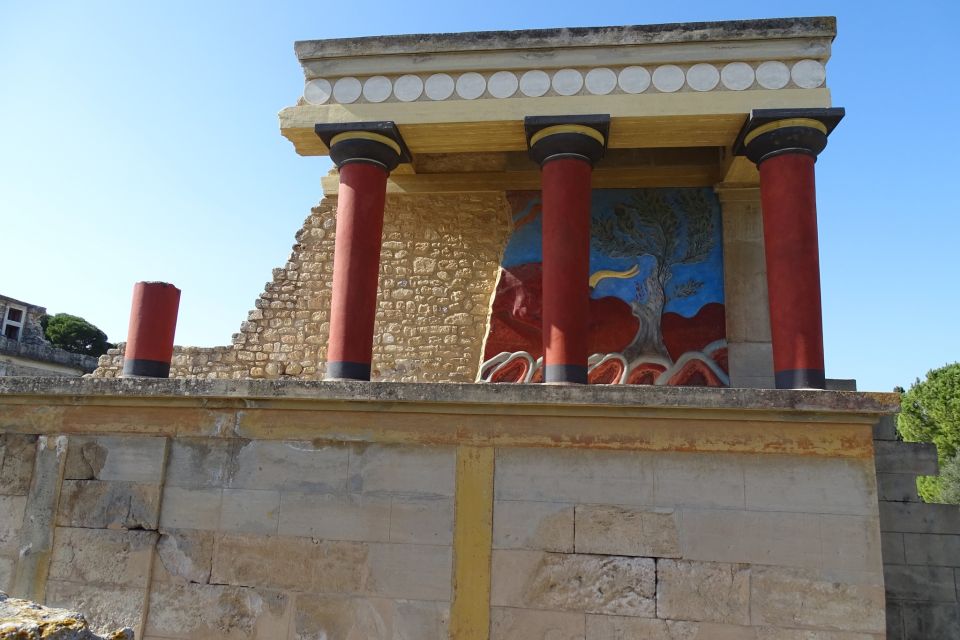
- Knossos Palace and the Minoan story
- What the $108 price really buys
- Who should book this day
- Should you book the Knossos and Lasithi tour?
- FAQ
- How long is the tour?
- Where can pickup take place?
- Is hotel and port drop-off included?
- Is Zeus Cave open?
- Is the Knossos entrance ticket included?
- Can I hire a guide inside Knossos?
- Is lunch included?
- What language is the tour offered in?
- Is the tour private?
- What should I bring?
Key points to know before booking
- Knossos and Lasithi in one day: Pair Crete’s best-known archaeological site with mountain villages and farmland.
- A local guide makes the difference: Spyros and Dimitris are named guides associated with the tour, and Spyros grew up in the region.
- Zeus Cave is closed: Expect the plateau and cave area, but not an underground visit at present.
- Olive oil is part of the experience: Learn how Cretan oil is made and sample extra-virgin oil with bread.
- The price has extras: The $108 rate includes transport and taxes, but not the $20 Knossos ticket, optional $120 palace guide, or lunch.
- You get a private or small-group day: Pickup and drop-off are available at hotels, ports, and Heraklion Airport.
Why this Crete day works so well
Many Crete excursions focus on one subject. You might spend a morning at Knossos, or a day in the mountains, or visit a few food producers. This outing links all three: archaeology, countryside, and local traditions.
That mix matters because Knossos can feel intense. The site is large, exposed, and full of names, dates, myths, and reconstructed walls. Afterward, the Lasithi Plateau gives you open views, quiet roads, farming villages, and time to slow down.
I particularly like the way the route connects three stories. Knossos introduces the Minoan civilization. The Dikteon Cave area brings in the myth of Zeus. The villages and farms show how Cretan traditions continue in ordinary daily life.
This is not a simple transfer between attractions. You are in an air-conditioned vehicle with a driver-guide, stopping for photographs, short walks, drinks, local products, and views. The day has variety, but you should still expect a fairly active schedule with considerable time on the road.
You can also read our reviews of more private tours in Crete

Pickup, vehicle, and the shape of the day
Pickup is available from a long list of locations, including Heraklion, Ammoudara, Hersonissos, Malia, Agios Nikolaos, Elounda, Agia Pelagia, Rethimno, Gouves, Milatos, and Bali. Port and airport pickup are also listed. At Heraklion Port, the driver waits at the passenger terminal with a name card.
The stated duration is eight hours. Your exact driving time depends on the starting point, since Rethimno and Bali are much farther from the central sights than Heraklion or Hersonissos. Ask for a precise pickup time if you are staying outside Heraklion.
The vehicle is private or arranged for a small group, with air conditioning. That is useful in Crete, where summer heat can make open archaeological sites tiring. You also avoid the stop-and-go feel of a large bus, and the guide can give more attention to your questions.
The route includes several short stops and one longer break. Comfortable shoes and clothes are sensible. You will walk at Knossos, stroll around village or workshop areas, and may walk on uneven ground near viewpoints or the cave site.
Malia and the first mountain views
The day includes a stop in Malia for about 30 minutes. This is described as a break, photo stop, guided visit, and shopping opportunity, so the exact emphasis can vary.
Malia gives you a chance to stretch your legs before the more rural section of the trip. It also adds a different side of Crete, one shaped by resort life and the coast. If your main interest is archaeology or village culture, this may feel like a brief pause rather than a major highlight.
After Malia, the road turns toward the high country. The itinerary includes several short scenic stops, including a 10-minute break for photographs and views. These brief pauses are useful on a long day, though you should not expect every stop to become a full guided attraction.
The mountain drive is part of the point. The scenery changes from developed coastal areas to open farmland and high-country views. If you suffer from motion sickness, tell the driver early. One particularly helpful detail is that the driving has been praised for being smooth, with enough breaks to make the route manageable for people who often feel unwell in cars.
Lasithi Plateau and its 16 villages
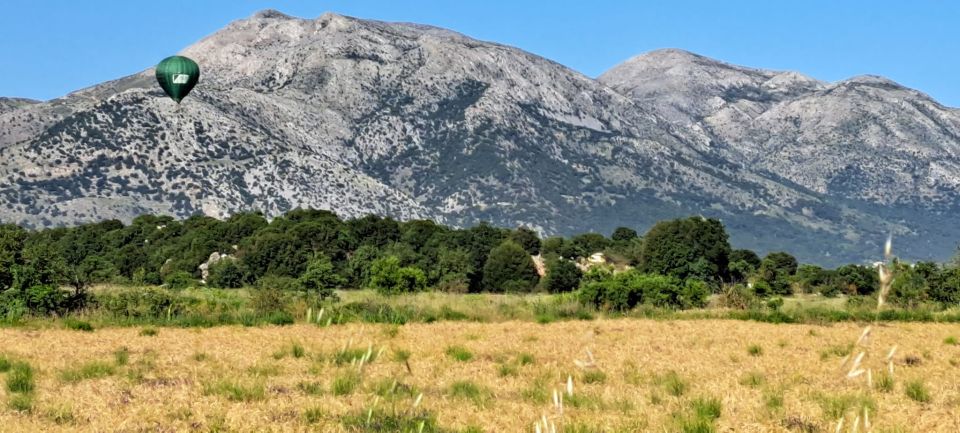
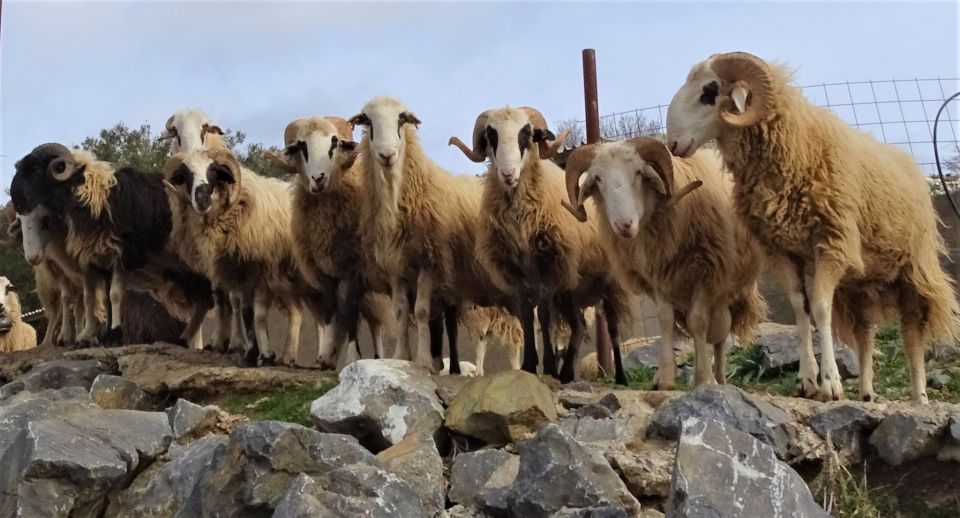
The Lasithi Plateau is the heart of the countryside portion. You see a broad mountain basin with farms, village communities, olive trees, and seasonal crops. The tour presents the area through its 16 picturesque villages, rather than treating the plateau as one single viewpoint.
That village focus gives the day more substance. You can see how local life is tied to farming and small businesses. Depending on the exact route and timing, you might pass olive, apple, strawberry, chestnut, walnut, grape, tomato, cabbage, thyme, sage, or anise plants. These details help you understand the region through what grows there, not just through scenery.
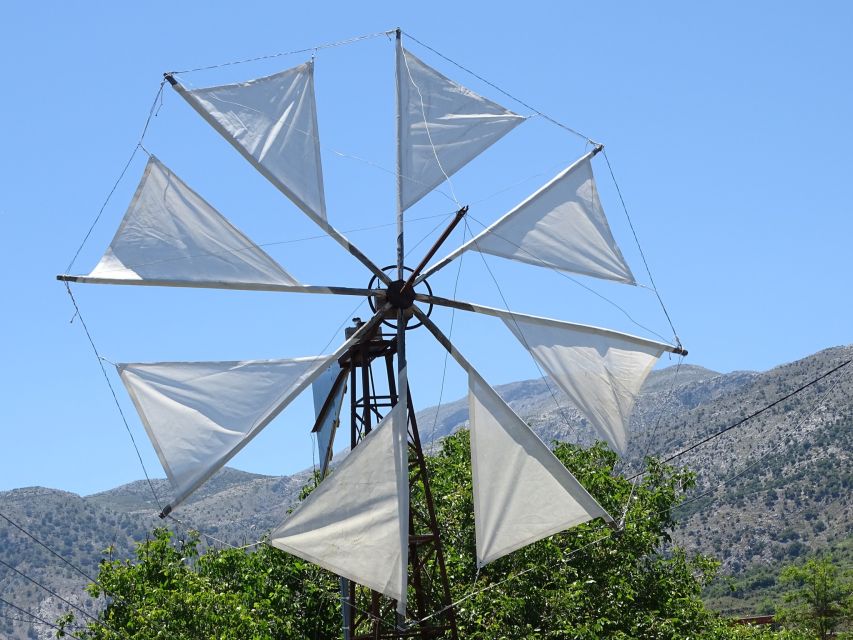
The tour also includes views of old windmills. These structures are important symbols of the plateau and offer an easy way to discuss older farming methods and the region’s relationship with water and agriculture. You will not simply photograph them from a highway. The experience is designed to bring you close enough to learn about their history and purpose.
A short plateau stop is listed for about 15 minutes, followed by a longer 80-minute visit in the wider area. The longer stop may include walking, shopping, scenic views, and time at local sites. That is where the private format helps. You can ask for more time at a pottery workshop, a village, or a food stop if the schedule allows.
Zeus Cave, with an important change
The Dikteon Cave, commonly linked with the story of Zeus, is a major reason people choose this excursion. Ancient mythology places the birth or upbringing of Zeus in this area, making the cave an important part of the route’s story.
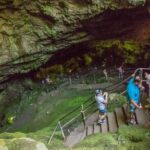
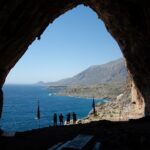
At present, the cave is closed. The tour information does not give a reopening date, so you should not book this day expecting to go underground. You can still visit the surrounding area, take photographs, enjoy the plateau, and hear the connection between Cretan geography and Greek mythology.
This closure changes the value of the stop, but it does not remove the wider mountain experience. Previous departures have used the extra time for village visits, fresh produce, pottery, and views. Still, if entering the cave is your main goal, wait for confirmation before booking or choose a dedicated cave visit once access returns.
The area may involve walking, and comfortable footwear remains important. A guide can also make the mythology more meaningful by placing it alongside the farming communities and mountain setting instead of presenting it as an isolated legend.
The olive oil factory and Cretan tastes
The olive oil visit is one of the strongest parts of the day for anyone interested in food. You learn how Cretan olive oil is made at a local factory, then have the chance to taste extra-virgin oil with fresh bread.
This is more useful than simply buying a bottle in a shop. You can ask how the oil is produced, how to taste it, and why olive oil is central to Cretan cooking. The tasting also gives you a direct connection to the groves you see along the road.
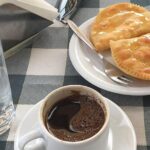
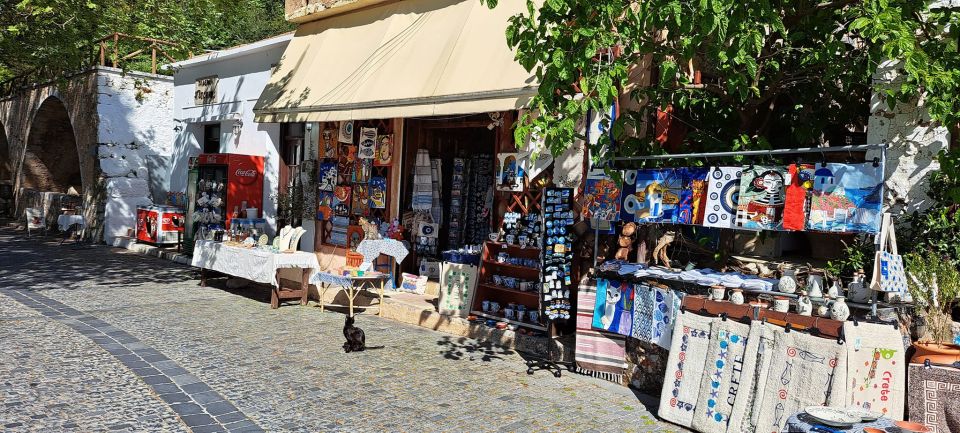
The food stops can include more than oil. The experience has featured raki, wine, strawberries picked fresh, traditional Greek coffee, and biscuits. These are small servings rather than a formal meal, but they add warmth to the day and give you a chance to try familiar Cretan staples in their local setting.
Keep in mind that lunch is optional and not included in the tour price. A family taverna lunch can include Cretan flavors, but you should budget separately. If you have dietary needs, tell the company when booking, since the available meal choices are not specified.
There is no food allowed in the vehicle, so use the scheduled stops for snacks and drinks. Coffee and refreshments are included, but personal purchases are not.
Pottery, villages, and the human side of the route
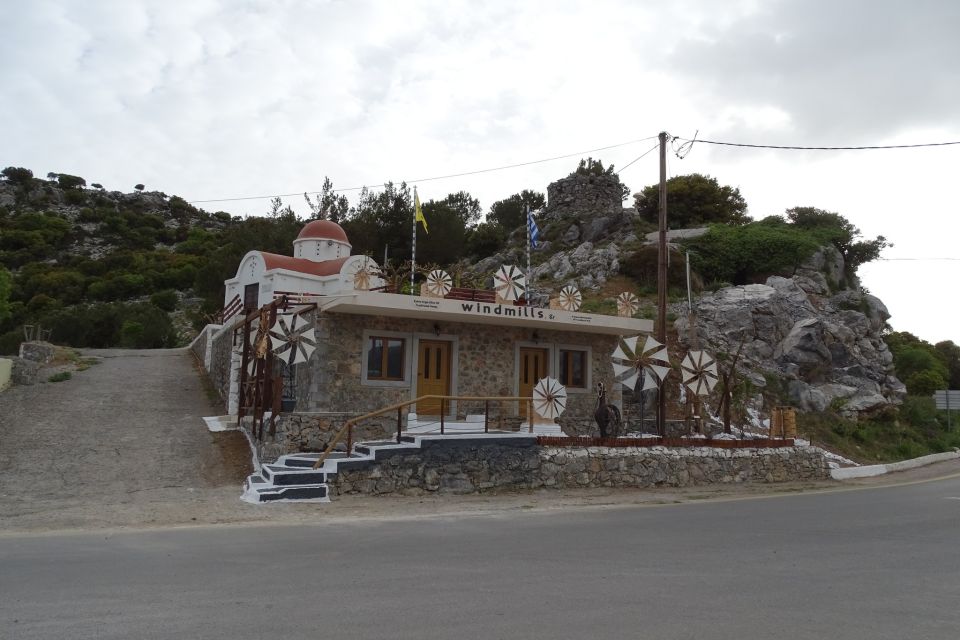
The itinerary includes a pottery visit, and the experience can be hands-on. One departure included the chance to make a small piece of pottery. That is a useful stop for families, since children often remember shaping clay more clearly than a long explanation at an archaeological site.
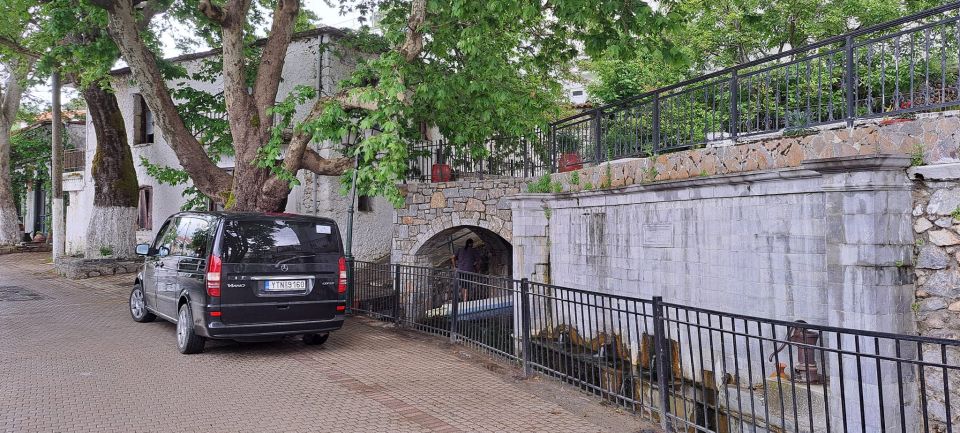
You may also meet local residents during village stops. The point is not a staged folk show, but a look at the people and trades that still give the plateau its character. A guide who grew up in the area can help explain what you are seeing and recommend where to pause.
This is where Spyros has been especially useful. He is described as having grown up in Crete and knowing the area from personal experience. Dimitris is also named as a driver-guide, and the tour is available in English or Greek.
A good driver-guide matters on this route. You need someone who can manage the winding roads, keep the day moving, answer questions, and adjust the balance between major sights and small local stops. The strongest experiences have included off-route village corners, local shops, farm products, and help with practical needs such as finding a pharmacy or arranging a restaurant reservation.
That kind of assistance is valuable, but it also means your exact day can depend on the guide, weather, opening hours, and local conditions. Ask at the start how much time is planned for Knossos, lunch, and the plateau.
Knossos Palace and the Minoan story
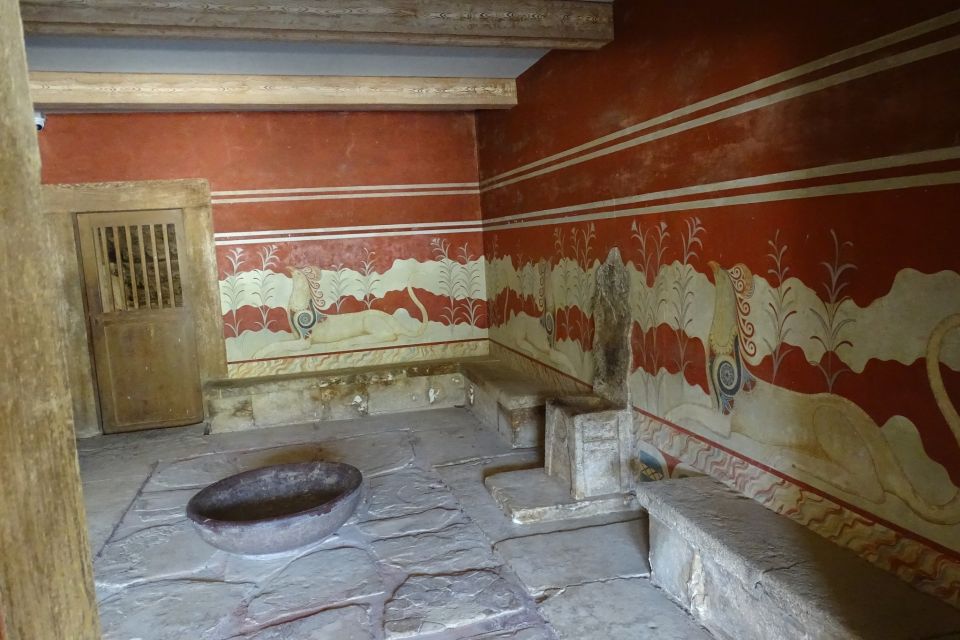
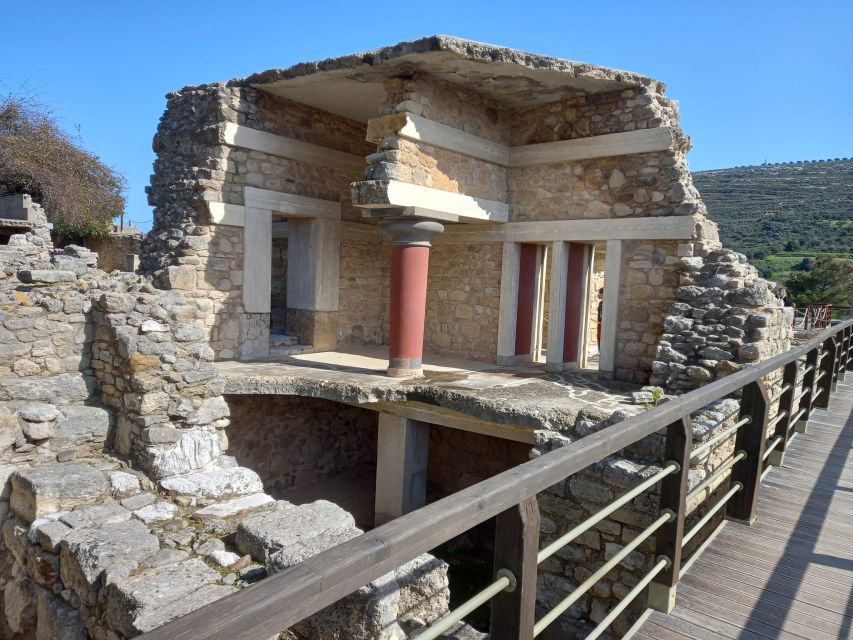
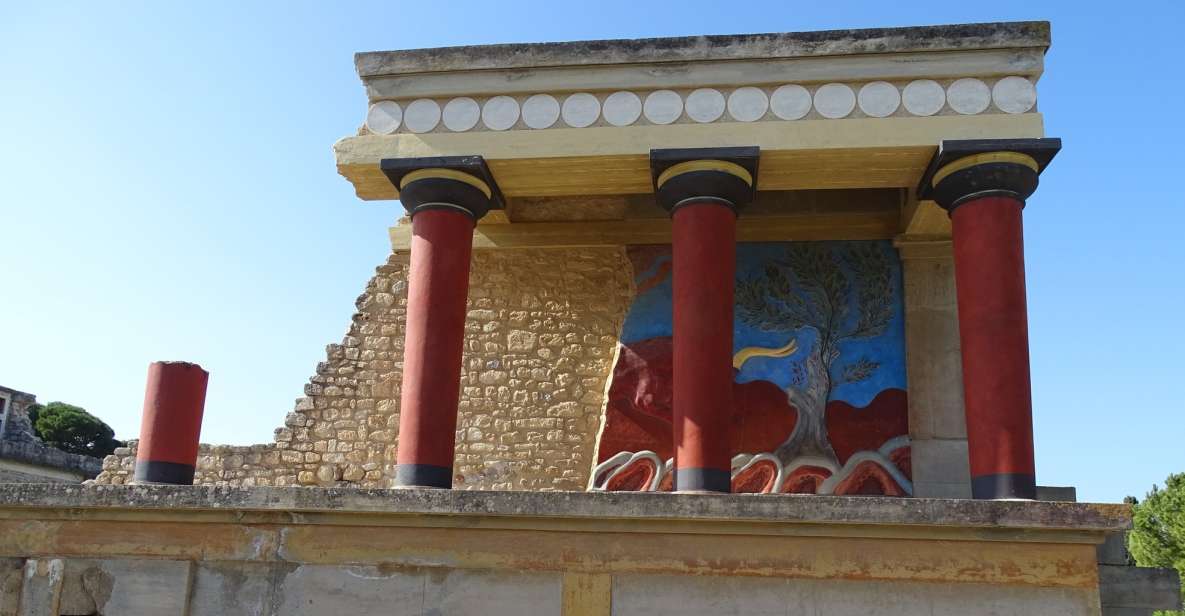
Knossos is the final major stop and receives about 90 minutes. That is enough for a focused visit, but not enough to examine every corner at a slow archaeological pace.
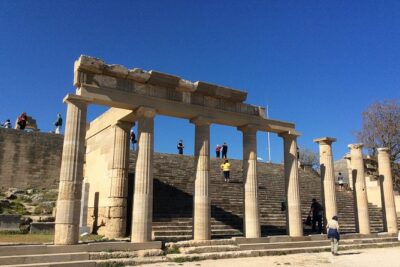
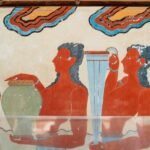
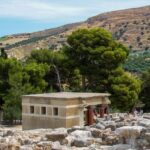
The palace is usually presented as Europe’s oldest civilization site, and it is the historical anchor of the day. You will see the remains associated with Minoan Crete, hear about the palace complex, and connect the site to stories such as the Minotaur and labyrinth.
A 90-minute visit works best if you arrive with a plan. You can focus on the main palace areas, listen to the driver-guide’s overview, and take photographs without trying to absorb every detail. If archaeology is your top interest, consider paying for the optional professional palace guide, listed at 120 euros per group.
That extra guide is not included, so compare the cost with your group size. For a larger private group, 120 euros divided among several people may be reasonable. For two people, it is a more significant addition to the $108 per-person tour price.
The Knossos entrance fee is also separate at 20 euros per person. Add both the entrance and any palace guiding before deciding that the headline price tells the whole story.
What the $108 price really buys
At $108 per person, the tour offers solid value if you want a private day with hotel or port transport. The included package covers the air-conditioned vehicle, driver-guide, coffee or refreshments, insurance, taxes, and pickup and drop-off.
That removes several costs and planning jobs. You do not need to rent a car, work out the mountain roads, or arrange separate transport between Knossos and the plateau. You also receive a local introduction to food, farming, villages, and windmills rather than paying only for admission to one monument.
The price becomes less attractive if you count on a fully guided Knossos visit and a substantial lunch. Add 20 euros per person for the palace entrance, 120 euros per group for the optional palace guide, and the cost of food. The private format is best value for families or small groups that can share the vehicle and guide cost.
The eight-hour length also saves you from splitting the area across separate excursions. You give up some flexibility, but you gain a broad picture of central and eastern Crete in one day.
Who should book this day
I would recommend this tour to you if you want a broad introduction to Crete rather than a single-site visit. It suits families, first-time visitors, photographers, food lovers, history fans, and people who want local contact without giving up private transport.
It is also a good choice if you are staying in or near Heraklion and want to combine the city’s main archaeological attraction with a quieter mountain area. Pickup from many coastal resorts makes it practical for a wider part of the island.
You may want a different plan if you dislike winding roads, have only a short time at Knossos, or mainly want to enter Zeus Cave. The cave closure is the biggest practical issue, and the route’s many stops mean no single location receives a full day.
Free cancellation up to 24 hours before departure and reserve-now, pay-later booking make the plan easier to adjust. Just confirm the starting time, cave status, pickup point, and expected lunch arrangement before you commit.
Should you book the Knossos and Lasithi tour?
Book it if you want one well-rounded day that joins Minoan archaeology with working villages, mountain scenery, olive oil, pottery, and Cretan food. The guide is central to the experience, so request Spyros or ask which driver-guide is available if that matters to you.
Do not book it solely for Zeus Cave, since it is closed for now. Also price in the Knossos ticket, optional palace guide, lunch, and personal purchases.
For a private group that values local stories and easy transport, the $108 starting price is reasonable. For solo visitors focused only on Knossos, a simpler archaeological visit may cost less and leave more time at the palace.
FAQ
How long is the tour?
The tour lasts eight hours, including transportation, stops, visits, and drop-off.
Where can pickup take place?
Pickup is available from listed hotels and locations in Heraklion, Agios Nikolaos, Agia Pelagia, Hersonissos, Rethimno, Elounda, Malia, Milatos, Bali, Gouves, Ammoudara, and other stated resort areas. Port and airport pickup are also included.
Is hotel and port drop-off included?
Yes. Pickup and drop-off from hotels, ports, and Heraklion Airport are included.
Is Zeus Cave open?
No. Zeus Cave is currently closed. You can still visit the surrounding area and explore the Lasithi Plateau.
Is the Knossos entrance ticket included?
No. The Knossos entrance fee is 20 euros per person and is paid separately.
Can I hire a guide inside Knossos?
Yes. An optional guide at Knossos costs 120 euros per group.
Is lunch included?
No. Lunch at a family taverna is optional and costs extra.
What language is the tour offered in?
The live tour guide service is available in English and Greek.
Is the tour private?
Private or small-group options are available. The booking should specify the group format available for your chosen date.
What should I bring?
Bring comfortable shoes and comfortable clothing. Pets, smoking in the vehicle, and food in the vehicle are not allowed.