REVIEW · LEFKADA
Lefkada: Blue Cave Kayak Tour with a Taste of Greece
Book on GetYourGuide →Operated by Trekking Hellas Ionian Islands · Bookable on GetYourGuide
Blue water, sea caves, and a kayak workout. Starting from Mikros Gialos, you paddle Rouda Bay, enter the Blue Cave for snorkeling, and finish with a Greek picnic on a secluded beach.
The tour is weather-dependent; if wind picks up, paddling and cave time can feel tougher, so I’d aim for the morning slot when possible.
In This Review
- Key takeaways before you go
- Kayaking Lefkada’s Rouda Bay: the calm-water route to real cave time
- Mikros Gialos Beach start: what your first hour feels like
- Entering the Blue Cave: electric turquoise light and stalactites
- Snorkeling for red starfish: why the water time is the point
- Peristera dove stop and the Greek picnic: food that earns its place
- Return paddle and the wind factor: how to finish strong
- Who this Lefkada Blue Cave kayak tour suits best
- Price and value: is $70 worth a 4-hour sea-kayak day?
- Practical tips that make a real difference
- Should you book Lefkada’s Blue Cave Sea Kayak Tour with Greek picnic?
- FAQ
- Where is the meeting point?
- How long is the tour?
- What’s included in the price?
- What should I bring?
- Do I need to know how to snorkel?
- Is this tour suitable for children?
- Who is this tour not suitable for?
- How far do you paddle?
- Is cancellation free and do I have flexible payment options?
- What languages are the guides?
Key takeaways before you go
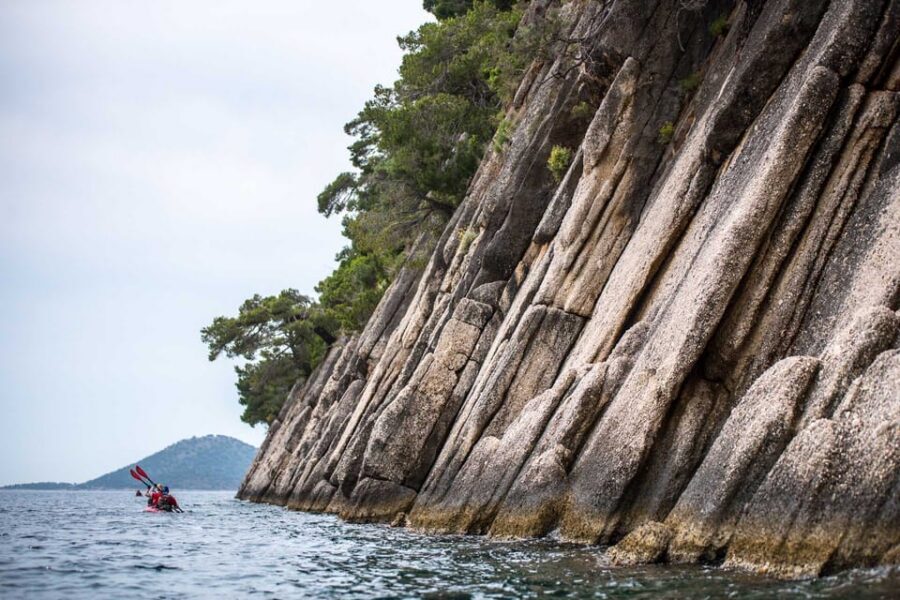
- Rouda Bay by kayak: you get close to sea cliffs and coves at a pace you control
- Blue Cave snorkeling: electric turquoise light, stalactites, and time in the water
- Sea life moments: you can swim over a seabed noted for red starfish
- Peristera by sea: a stop tied to a wildlife cave called dove
- Food that feels local: snacks + picnic break on a small beach
- Guides who manage safety and fun: many runs include taking group photos for later sharing
Kayaking Lefkada’s Rouda Bay: the calm-water route to real cave time
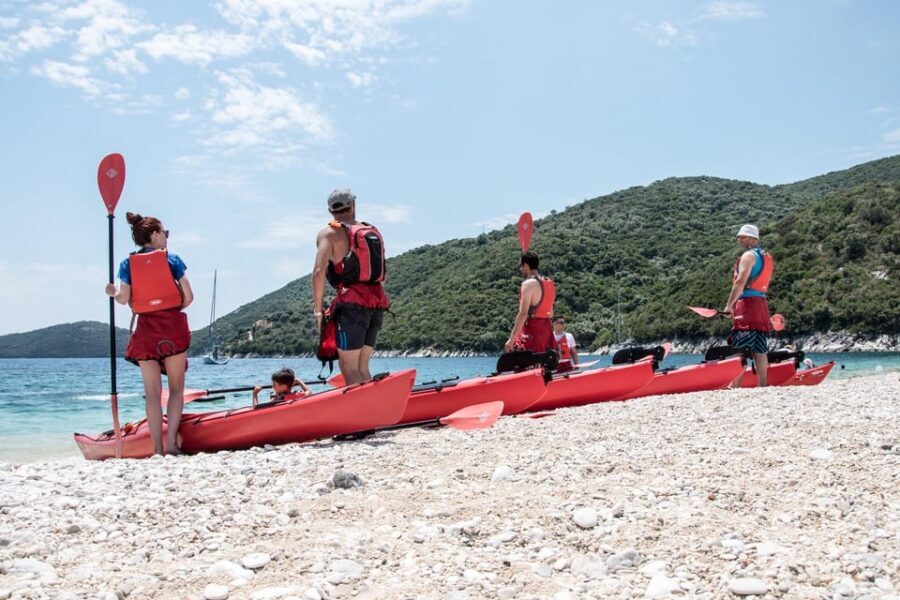
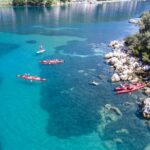
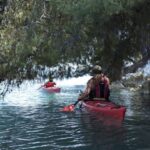
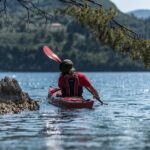
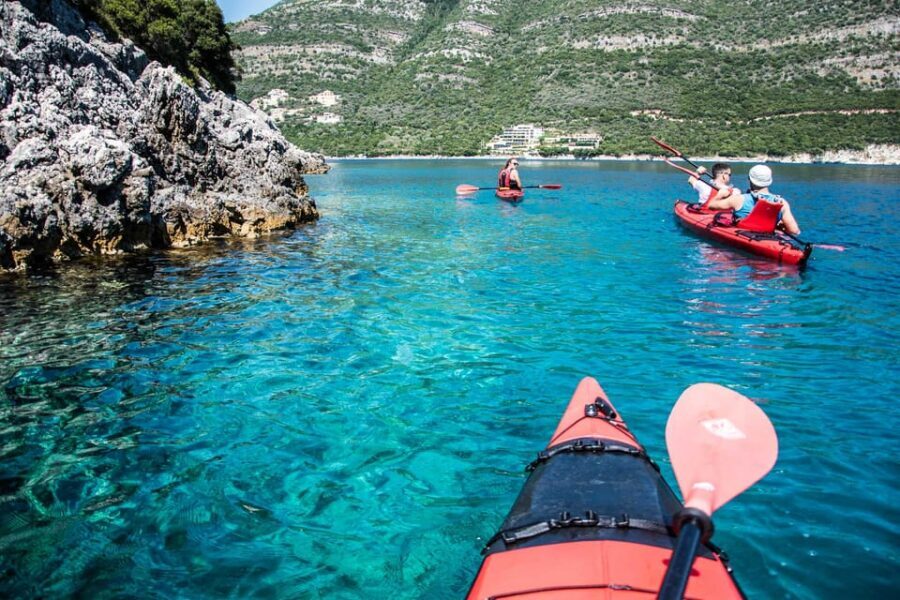
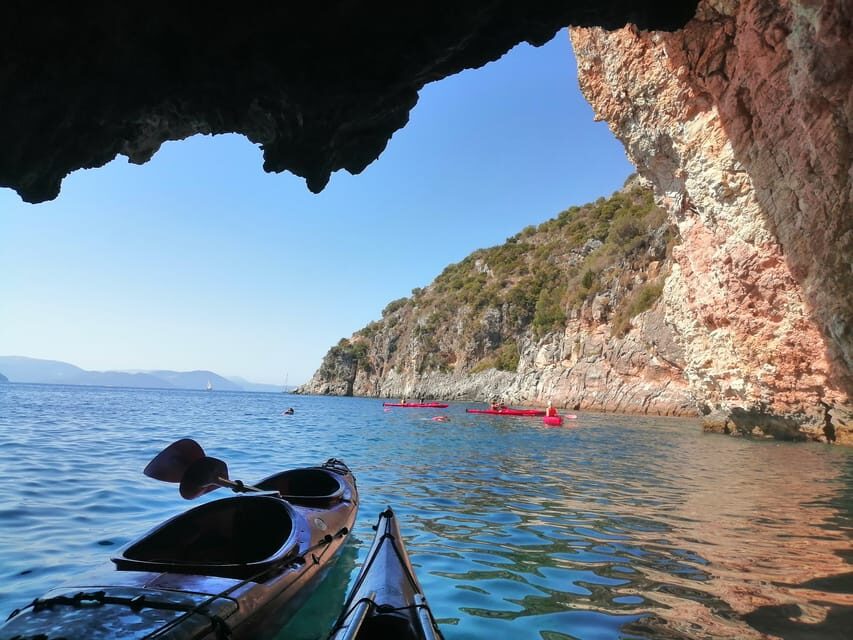
Lefkada’s coastline looks great from shore, but kayaking changes the scale. You’re not just watching sea cliffs and openings—you’re gliding alongside them, then heading into the kind of cave features you usually only see on boat tours. If you like your sightseeing to include motion (and a little effort), this format works.
I like that the pace stays active without turning into a race. You paddle, you swim, you snorkel, then you rest on a beach. That rhythm is a big reason so many people rate it so highly: it keeps you entertained even when you’re tired from paddling.
The main consideration is simple: you need to handle some wind and open-water conditions. One of the practical upsides of going earlier in the day is that you’re more likely to face calmer water.
A few more Lefkada tours and experiences worth a look
Mikros Gialos Beach start: what your first hour feels like
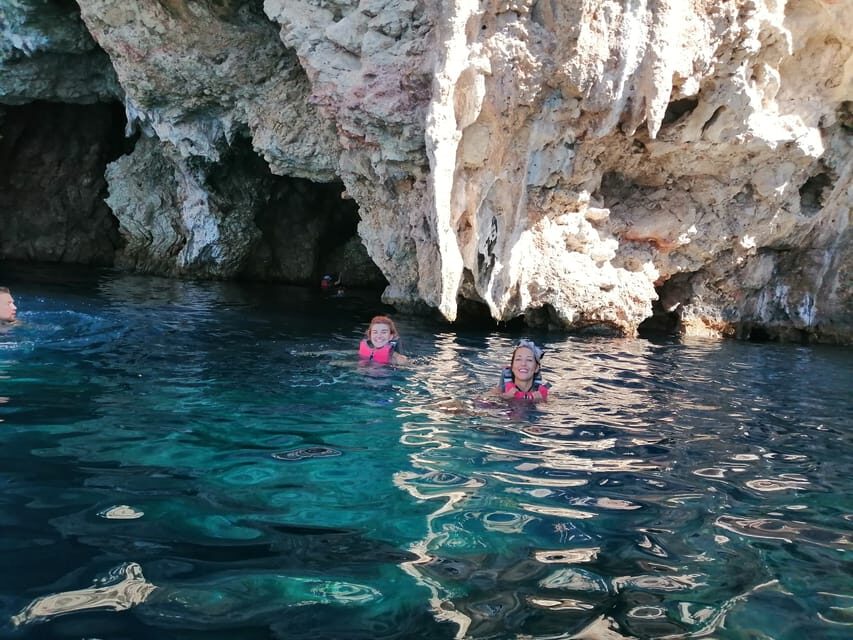
You meet at Mikros Gialos Beach, near Poros village. The first stretch is about getting settled: getting geared up, learning how to manage the kayak, and understanding hand signals and safety rules from the guide.
This is also where you start building confidence. The trip is short—about 4 nautical miles total—so you’re not stuck on the water all day. Instead, you get enough distance to feel like you’re doing something, but not so much that it becomes a grind.
From what I see in the day-to-day flow, the guides do a lot of “keep everyone together” work. That matters if you’re not an experienced paddler, because the group’s ability to sync affects when you reach cave areas and swim stops.
Entering the Blue Cave: electric turquoise light and stalactites
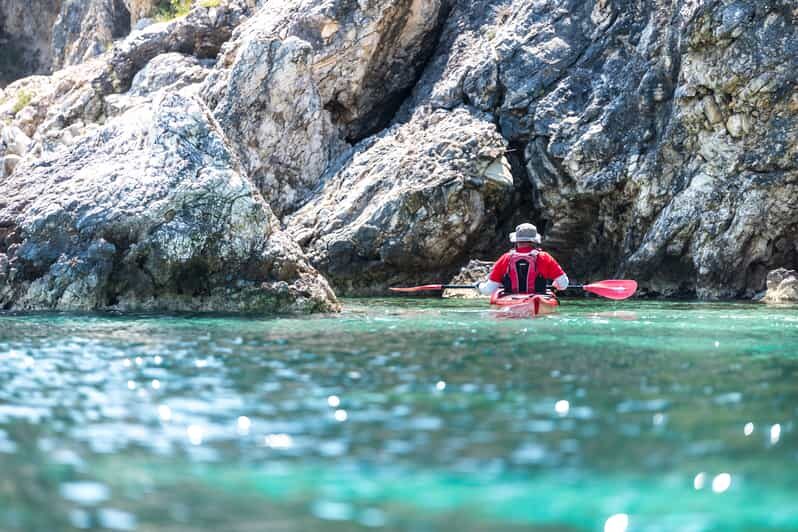
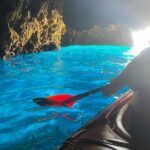
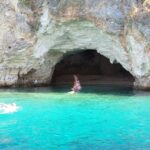
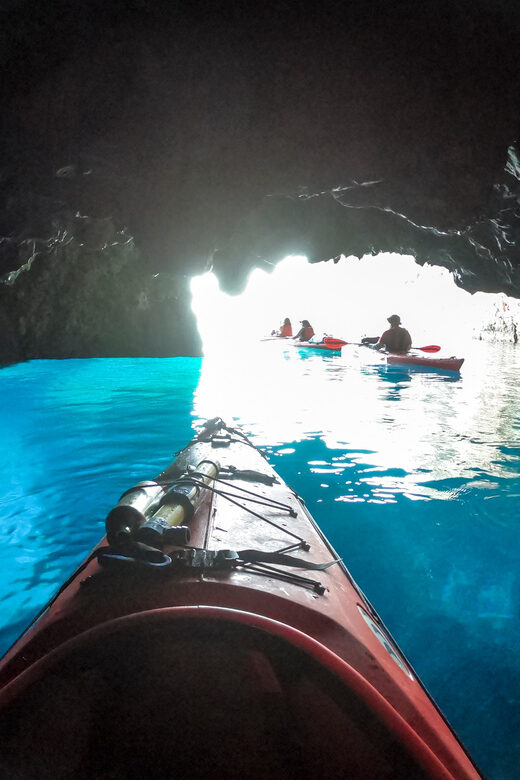
The Blue Cave is the headline. You’ll go in by kayak, then switch to snorkeling when it’s time to see what’s happening underwater. The cave is known for electric turquoise light, and there are stalactites visible in the cave interior.
This is one of those spots where the guide’s timing helps you more than you’d think. You want the water and light to be good, and you want your group to be ready to go in together. That’s why the tour structure matters: it’s built around hitting the cave with enough calm to make the snorkeling worthwhile.
What surprised me most from the shared experience of past participants is how much time you get for swimming and snorkeling once you’re there. People don’t describe it as a quick peek—they describe it as real water time, with gear provided by the hosts.
Snorkeling for red starfish: why the water time is the point
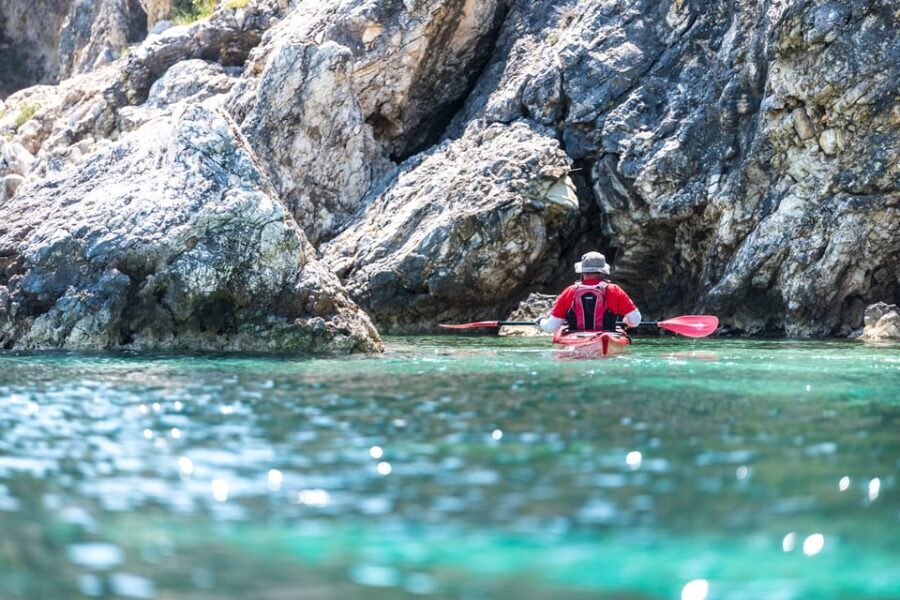
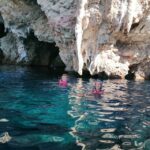
Snorkeling is not just a bonus here. The trip is specifically set up so you can swim over clear seabeds and look for marine life—people even mention seeing red starfish. That’s the kind of detail that’s hard to get from a boat ride, because you need to be low in the water with time to look.
The snorkeling setup is straightforward: snorkeling gear is included, and guides help you get comfortable with masks and how to move in the water. If you’re a first-timer, this kind of guided entry is a big deal; you’ll spend less time worrying and more time looking.
One practical note: bring sunscreen and manage water access. You’ll be out in sun, you’ll get wet, and you’ll still want to keep your skin protected during the paddle segments between stops.
Peristera dove stop and the Greek picnic: food that earns its place
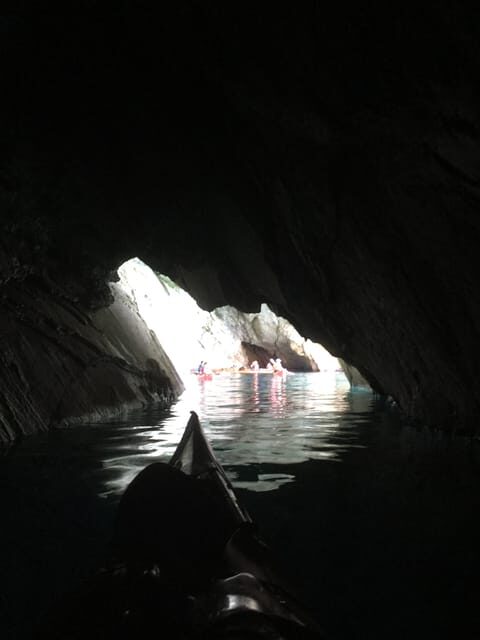
After the cave area, you head toward a beach stop called Peristera, associated with a wildlife cave referred to as dove and described as accessible only by sea. Even if you don’t focus on the wildlife angle, the “only by sea” access tells you something important: this is built to be a quiet water-friendly place, not a crowded viewpoint.
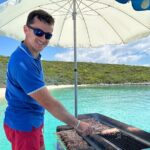
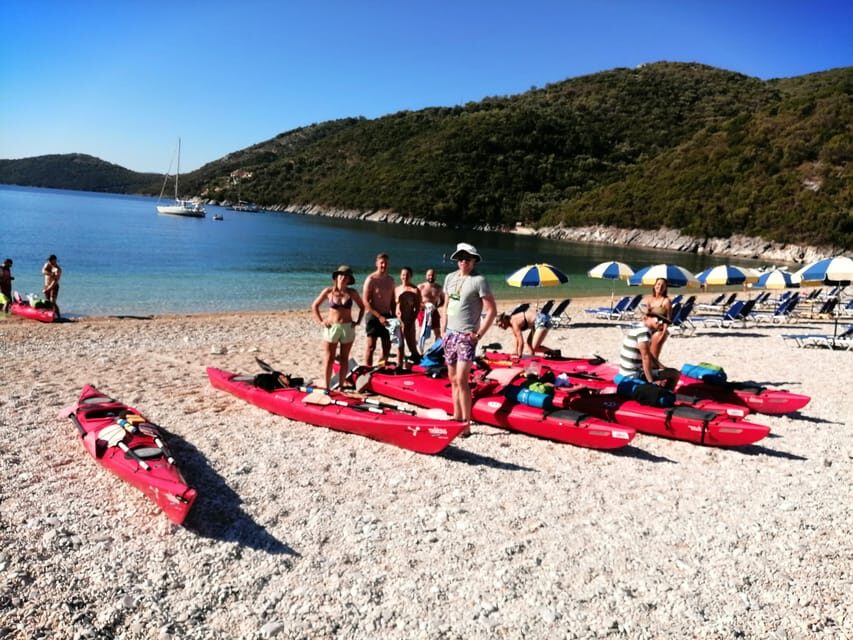
Then comes the part you’ll feel in your body. Paddling uses your arms, core, and shoulders. So the break isn’t just for fun—it’s recovery. The picnic and snack spread is Greek and genuinely filling, and people mention dakos (Greek dry bread topped with olive oil, tomato, and feta) plus other traditional snacks.
I also like that the stop isn’t just eating and leaving. People describe time to relax, swim, and snorkel in the area, which turns the meal into a real reset instead of a quick intermission.

Return paddle and the wind factor: how to finish strong
The tour ends back at the meeting beach. The return paddle is shorter than the full adventure may feel at first, but it’s still where conditions can change. One review-style theme shows up often: wind can make kayaking harder later, especially if you’re trying to enter the cave area or keep a smooth pace.
This is why morning matters. If you can choose a time, I’d pick the earlier slot to reduce wind and rougher water risk. Even when the guides are great—and they are—the goal is less stress for you, not more.
One neat touch: guides take photos during the trip, and you can get them later via air-drop. It’s a small thing, but after you’ve spent hours focusing on the water, it’s nice not to worry about missing moments while you’re trying to paddle and snorkel.
Who this Lefkada Blue Cave kayak tour suits best
This is best for people who can swim and are comfortable wearing a life/boat setup while they move in the sea. The activity is suitable for everyone aged over 8 with swimming ability.
It’s also a good fit if you want a balance: guided enough for confidence, independent enough that you’re the one controlling the kayak path. Many people mention feeling safe and supported while still getting that hands-on “I’m out there” feeling.
It’s not a fit for everyone. The tour is not suitable for pregnant women and not suitable for people with mobility impairments. If any part of that affects you, skip this and look for a different type of tour.
Price and value: is $70 worth a 4-hour sea-kayak day?
At $70 per person for 4 hours, the value depends on what you’d otherwise do. If you’re considering a boat tour, this kayak format gives you more control and more water time. You’re also getting more than sightseeing: equipment is included, snorkeling gear is included, and you get Greek snack + picnic.
So the cost isn’t just for the “cave view.” You’re paying for guided instruction, safety management, the gear, and the structured breaks. For many people, that’s the difference between a “pretty half-day” and a memory that lasts.
One last cost angle: transfers aren’t included. If you’re already near Poros / Mikros Gialos, you’re set. If you’re farther away on the island, plan that time so the start doesn’t feel rushed.
Practical tips that make a real difference
I’d pack for comfort and sun first, not for looks. Bring a sun hat, sunglasses, a towel, swimwear, and sunscreen. Also bring a water bottle (and at least 1 liter per person is a smart baseline).
Water shoes come up a lot for a reason. You’ll be getting in and out of the water and landing at rocky areas. If you don’t want sore feet, wear something you can trust.
For phones: the water is gorgeous, but your camera will be the vulnerable part. If you want photos without worry, plan a waterproof solution or keep your phone secured.
If you’re choosing a slot, consider going earlier to reduce wind. And if it’s your first time kayaking, don’t be surprised if your arms feel it later. That’s the workout part—and it’s also why the cave and swim time feels extra rewarding.
Should you book Lefkada’s Blue Cave Sea Kayak Tour with Greek picnic?
I’d book it if you want a small, guided, water-based experience that mixes kayaking, snorkeling, and a real Greek food break. It’s especially worth it if you care about seeing the cave and underwater life up close instead of just passing by.
Skip it if you don’t meet the swimming requirement, if pregnancy or mobility issues make the activity unsafe for you, or if you know you’ll struggle with wind and open-water conditions. And if you’re sensitive to sun, plan to protect yourself—because you’ll be outdoors, paddling and floating, for the full half-day.
FAQ
Where is the meeting point?
You meet at Mikros Gialos Beach, near Poros village on Lefkada island, and you return there at the end.
How long is the tour?
The experience lasts 4 hours.
What’s included in the price?
It includes an experienced English-speaking guide, all necessary equipment, snorkeling gear, a traditional Greek snack and picnic, and taxes.
What should I bring?
Bring sunglasses, a sun hat, swimwear, a towel, sunscreen, water (plus your personal water bottle), and a daypack.
Do I need to know how to snorkel?
The tour provides snorkeling gear and is set up for guided snorkeling during the stops, but you do need the swimming ability required for the activity.
Is this tour suitable for children?
It’s suitable for everyone aged over 8 as long as they have swimming ability.
Who is this tour not suitable for?
It is not suitable for pregnant women or for people with mobility impairments.
How far do you paddle?
The distance covered is approximately 4 nautical miles.
Is cancellation free and do I have flexible payment options?
Yes. You get free cancellation up to 24 hours in advance for a full refund, and there’s a reserve now & pay later option.
What languages are the guides?
The tour is guided in English and Greek.