REVIEW · PAPINGO
Megalo Papingo: Canyoning with Rappel Section B
Book on GetYourGuide →Operated by Alpine Zone · Bookable on GetYourGuide
The best part of this Nefeli Gorge canyoning trip is the steady build in action. You begin with an easy walk from Megalo Papingo, then work through eight rappels, a waterfall slide, a small jump, cold river water, and a final 30-meter descent. It feels like a full mountain day, not a quick photo stop with one rope.
I like the family-friendly pace and the way the route mixes activities instead of repeating one trick. I also like the serious safety focus: guides such as Angel, Christos, Nikos, and Simos have been praised for patience, clear instruction, and careful supervision. The main consideration is height. If you dislike exposed drops, the 30-meter rappel and several smaller descents may test you.
In This Review
- Key points to know before you book
- From Megalo Papingo to the Voidomatis River
- The first three rappels: a useful introduction
- The 17-meter fourth rappel changes the mood
- Five more rappels, with the highest reaching 30 meters
- What the river, slide, and jump add
- Safety gear and the guide team
- Is seven hours and $117 a fair deal?
- Who will enjoy Section B most
- Practical preparation for a wet mountain day
- The final walk back to Papingo
- Should you book this canyoning trip?
- FAQ
- Where does the canyoning trip meet?
- How long does the activity last?
- How many rappels are included?
- Do I need previous canyoning experience?
- What equipment is provided?
- What should I bring?
- Who should not take part?
Key points to know before you book
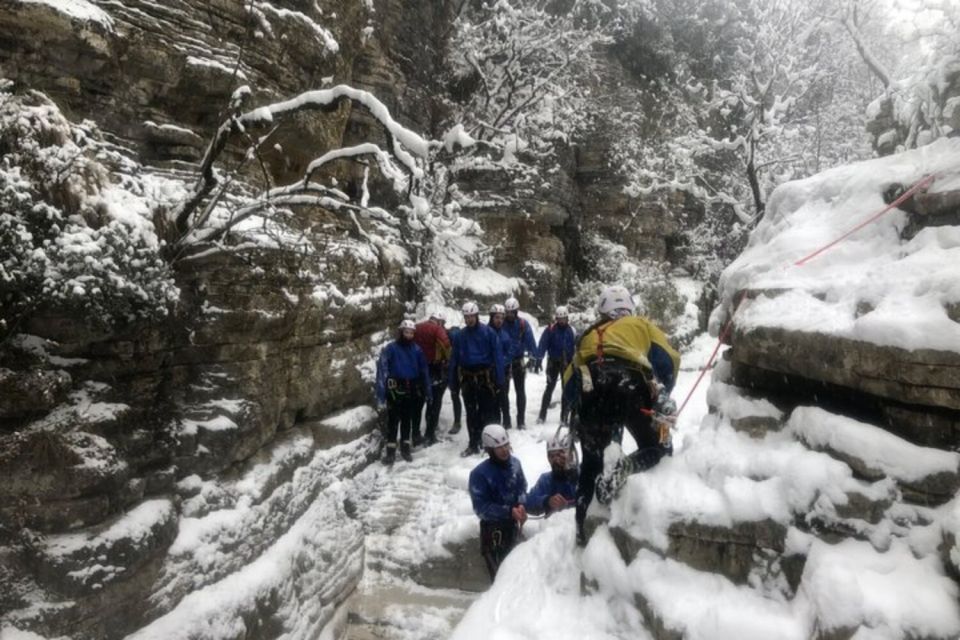
- Eight rappels build from 4 meters to 30 meters, with the fourth descent marking the first real jump in difficulty.
- The route combines hiking, swimming, waterfall rappelling, a slide, and a small jump, so the day keeps changing.
- You reach the first rappel after only about 10 to 15 minutes on foot from the meeting point near Megalo Papingo.
- Families can take part, including a group with five children from age five, but children under four are not accepted.
- All technical equipment is supplied, including a neoprene suit and helmet. You must bring suitable closed-toe hiking shoes.
- The $117 price covers a seven-hour outing, guide service, safety gear, water, an energy supplement, photos, and return to the meeting point.
From Megalo Papingo to the Voidomatis River
You meet before entering Megalo Papigo village, at the parking area on the left. The listed meeting point is also identified as the Municipality parking Papingo, so check the exact pin when booking and arrive ready to walk. Pick-up and drop-off are included at this meeting point, rather than from a wide network of hotels.
The approach is refreshingly short. From the village church area, you follow a path toward the sources of the Voidomatis River. After roughly 10 to 15 minutes of easy walking, you reach the canyon and begin the technical part of the day.
That short approach matters if you are bringing children or simply want to save your legs for the rope work. You still get a taste of the wild scenery around Zagori, but you do not spend the first hour slogging uphill with a helmet and wetsuit. The final return is more demanding in one sense: after the rappels, you walk for about 45 minutes along a path back to the starting point.
The route is not a sightseeing walk with a little adventure added. Once you enter the gorge, the river and waterfalls become the setting for the whole activity. You should expect wet feet, cold water, rock underfoot, and a day in which your attention stays on both the guide and the next move.
You can also read our reviews of more tours and experiences in Papingo.
The first three rappels: a useful introduction
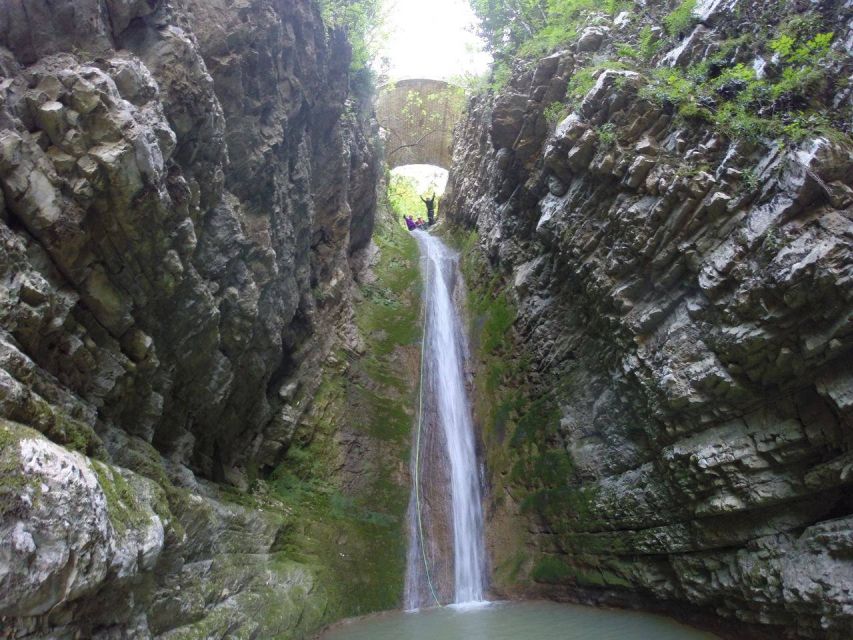
The opening three rappels are close together, each about 4 to 7 meters high. These smaller descents give you time to learn how the equipment feels and how to control your pace without immediately facing the biggest drop.
That makes Section B a good choice for a first canyoning trip. You do not need previous experience, and the instructor handles the technical setup while explaining what you need to do. Still, beginner-friendly does not mean effortless. You will need to listen, keep your footing, and manage a little natural fear when you look over the edge.
The group moves through the first section at a measured pace. You may find the early rappels more about getting comfortable than chasing thrills. That is useful, especially for children and adults who have never used a descender before.
The route also includes water-based fun rather than rope work alone. A slide and a small jump break up the rappels, giving the day a playful feel. The jump is described as small, but anyone uneasy with heights or cold water should tell the guide before taking part.
The 17-meter fourth rappel changes the mood
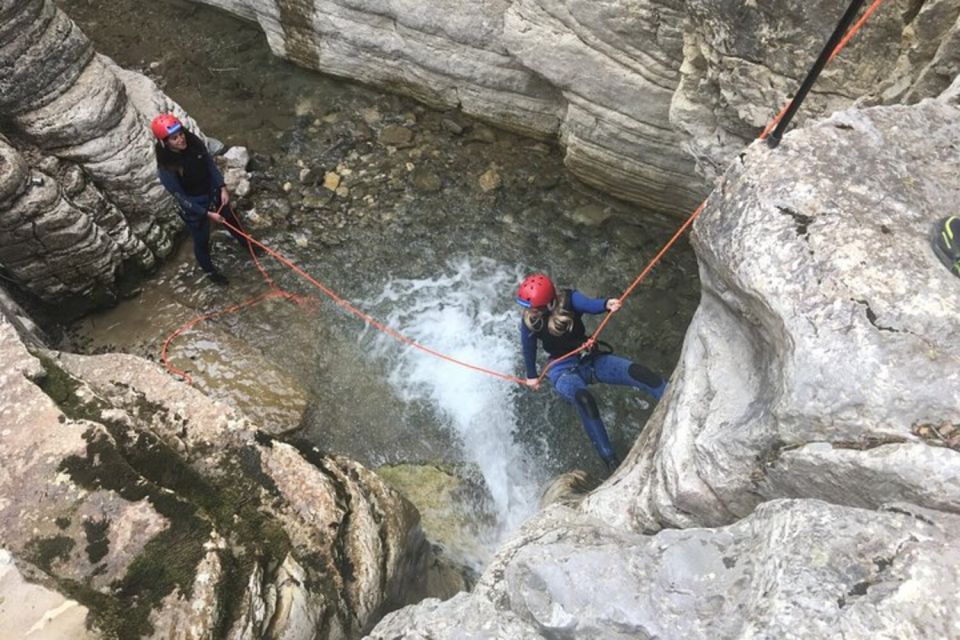
The fourth descent reaches 17 meters and is the first section described as notably harder. This is the point where you move from practice-sized drops to a proper waterfall rappel.
You will likely notice the difference in exposure and time on the rope. The descent is long enough to require more control, but it comes after three easier attempts, so you have already had a chance to learn the basic technique.
This is also where the instructor’s style matters most. The guiding team has been praised for being professional, funny, and patient, including with children and people learning new techniques. That mix is valuable in canyoning. You want firm instructions when safety matters, but a relaxed tone can stop the day from feeling like an exam.
The provided equipment includes a neoprene suit, helmet, and the other necessary canyoning gear. The wetsuit is especially helpful because the river water is cold. You should not expect it to feel warm, but it makes extended contact with the water much more manageable.
Five more rappels, with the highest reaching 30 meters
After the 17-meter descent, five further rappels follow close together. These are a little more demanding, and the highest reaches 30 meters. The route therefore saves its biggest moments for the second half, after you have already learned the basics.
A 30-meter rappel is the main reason to choose Section B instead of a shorter, gentler canyoning option. You get a fuller day and a stronger sense of progression. At the same time, you should be honest with yourself before booking. People afraid of heights are specifically advised not to take part.
The drop does not require previous canyoning experience, but it does require willingness to follow instructions and remain calm on the rope. Guides set up and manage the technical equipment, while you take part in the descent under their direction. The close spacing of the final rappels keeps the action moving, though it can also make the middle and later part of the day feel physically tiring.
The strongest praise for this outing focuses on safety. Families who completed the longer route with children from age five were particularly impressed by the care taken with each participant. That does not remove the physical demands, but it gives parents a useful sign that the guides pay attention to more than just the fastest members of a group.
What the river, slide, and jump add
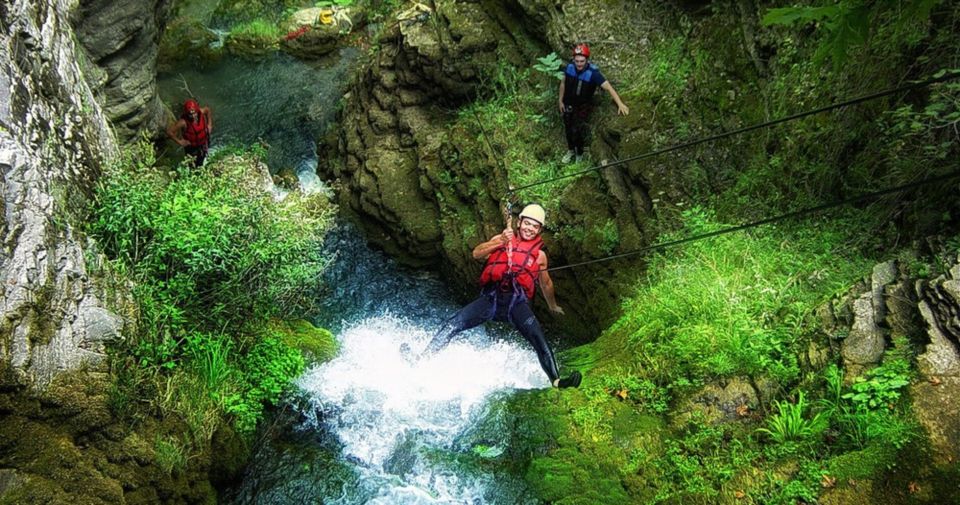
Canyoning works best when it feels like a journey through water and rock, not a series of isolated rope descents. This route succeeds on that point by adding river swimming, a slide, and a small jump to the rappels.
The waterfall slide is one of the more playful sections. It can also be challenging, since the rock and water create a different sensation from a standard slide. Follow the guide’s directions closely, and do not treat it as an ordinary water park ride.
The river swim brings a different kind of challenge. The wetsuit helps with the cold, but you should still expect a brisk shock when you enter the water. Bring swimwear and a towel, and accept that you will spend much of the day wet.
Your phone is not likely to be useful in the gorge. The guides take photos during the trip, and the images are sent afterward, which means you can focus on the route instead of worrying about water damage. This is a real plus for a canyoning day, since carrying a phone through rappels and swims is awkward at best.
Safety gear and the guide team
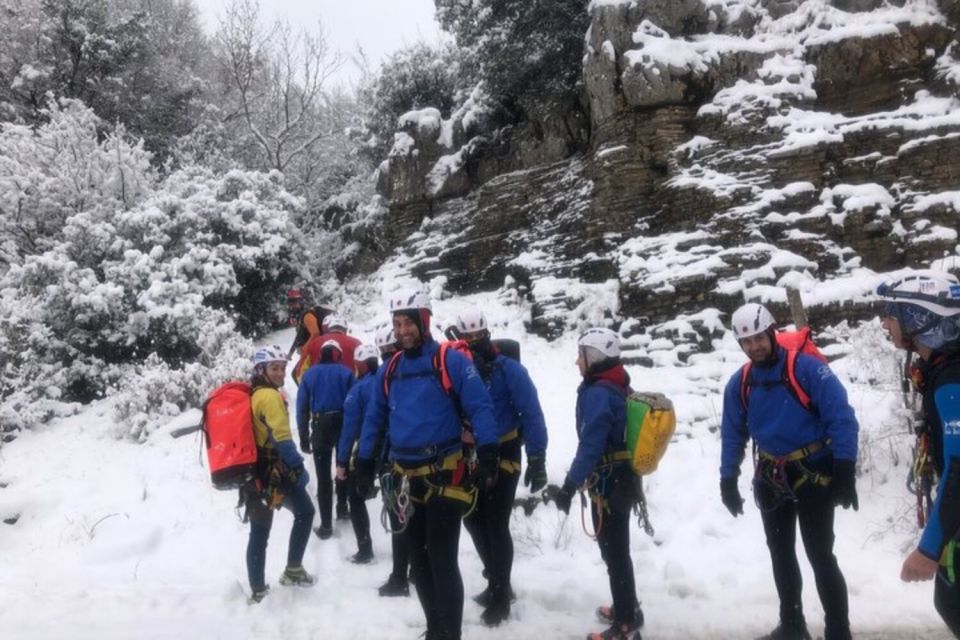
Alpine Zone supplies the technical and personal canyoning equipment, including the neoprene suit and helmet. You provide your own footwear, which is the one equipment detail you should not overlook.
Wear sturdy hiking shoes with closed toes. Open-toed shoes are not allowed, and ordinary loose footwear is a poor match for wet rock. The instructions also list sports shoes, but hiking shoes are the clearest choice for the approach and the 45-minute walk out.
You must send the height, weight, and shoe size for every participant before the trip. This lets the team arrange the right equipment, so have those details ready for your whole group rather than only the person who made the booking.
The activity runs in Greek and English. Named guides including Angel, Christos, Nikos, and Simos have led groups with a style that combines technical care, humor, and patience. The guide names are worth noting if you later receive a choice of team, though the available staff can vary by date.
Weather controls the final decision to run the trip. Canyon conditions are not something an operator can simply ignore, so keep your schedule flexible enough to handle a change if conditions do not allow a safe outing.
Is seven hours and $117 a fair deal?
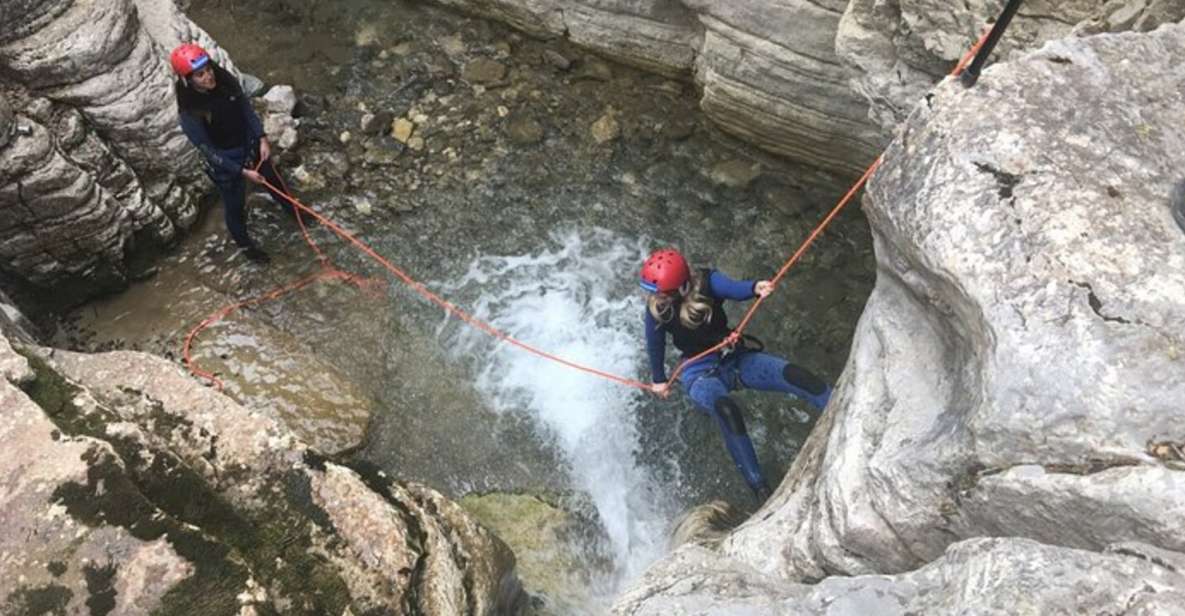
At $117 per person, this is not a cheap add-on activity. It is a substantial day with about seven hours of guide time, eight rappels, a 30-meter high point, swimming, a slide, a jump, equipment, water, an energy supplement, photos, and return to the meeting point.
The value improves if you would otherwise need to rent canyoning equipment or arrange a separate guide. You are paying for the technical setup as well as the scenery and action. The included photographs also have practical value, since you may not want to carry your own camera into the river.
The price is harder to justify if you want only a short introduction to canyoning. Section B is the longer route, and the day can take around eight hours for some groups, despite the stated duration of seven hours. If your group includes young children or first-timers, allow some flexibility rather than planning a tight evening reservation afterward.
The energy supplement and water are welcome, but you should still eat a proper meal beforehand if possible. No meal is listed as included, so do not assume lunch is provided.
Who will enjoy Section B most
I would choose this trip for an active family, a mixed-age group, or a first-time canyoning party that wants a full day without needing prior rope experience. It suits people who enjoy trying several kinds of activity in one setting and who like a little controlled fear with their mountain scenery.
The family angle is genuine, but parents should read the limits carefully. Children under four cannot take part, and the route includes cold water, wet rock, a 17-meter descent, and a 30-meter descent. A child may be accepted by age and still find the day tiring or intimidating.
This is not suitable for pregnant women, people with mobility impairments, or people afraid of heights. The route requires walking, scrambling or moving through a natural gorge, and repeated rope descents. If your concern is simply lack of experience, that is different. No previous canyoning experience is required.
Adults who want a hard-core technical canyon may find the family-friendly framing slightly soft. The five later rappels and 30-meter drop still provide real adrenaline, but the route is designed to be accessible under instruction, not to function as an extreme expedition.
Practical preparation for a wet mountain day
Bring swimwear, a towel, hiking shoes, and closed-toe sports shoes. The footwear wording is repetitive, but the message is simple: bring secure shoes that can handle the walk to and from the gorge, and do not arrive in sandals.
Wear clothing that can be changed easily afterward. Your clothes will get wet, and the cold river makes a dry set of clothes useful once you return to the parking area. The supplied neoprene suit covers the main water exposure, but it does not replace a towel or dry clothing.
Tell Alpine Zone the height, weight, and shoe size of everyone in your group before the day. This is particularly important for families, where children may need carefully fitted equipment.
Plan for a long outing. The core schedule is seven hours, while one family group completed the longer route in about eight hours. The duration can depend on the group’s pace, so avoid booking an evening activity that starts immediately after the expected finish.
Cancellation is flexible up to 24 hours before the start for a full refund, and you can reserve now and pay later. That is useful in Zagori, where weather can affect canyon conditions, but it does not mean you should ignore the forecast. The trip runs only when conditions permit.
The final walk back to Papingo
When the rappelling ends, the adventure does not finish at the bottom of the last waterfall. A path on the left leads back toward the start, taking about 45 minutes.
This walk gives you time to dry out mentally and take in more of the area around Megalo Papingo. It also means you should save some energy for the exit. The route is not simply rope work followed by an immediate vehicle transfer.
You return to the same municipality parking area near Papingo. Since pick-up and drop-off at the meeting point are included, the logistics remain simple once you have found the correct parking location.
Should you book this canyoning trip?
Book Section B if you want a full-day introduction to canyoning with a clear progression from small rappels to a 30-meter waterfall descent. The combination of river swimming, a slide, a jump, and hiking makes it more varied than a basic rappel session, while the supplied gear and attentive instruction remove much of the planning burden.
I would be more cautious if your group includes anyone uneasy with heights, anyone with limited mobility, or children who are not comfortable in cold water. The family-friendly label describes the support and route design, not a completely gentle outing.
For active families, first-time canyoners, and anyone looking for an unusual day in Epirus, the $117 cost is reasonable for the amount included. Go prepared with proper shoes, dry clothes, accurate participant measurements, and enough time in your schedule. The biggest reward is not just the highest rappel. It is the feeling of moving through a real river gorge under your own effort, with the next waterfall always waiting around the corner.
FAQ
Where does the canyoning trip meet?
The meeting point is in the Municipality parking Papingo, before entering Megalo Papigo village on the left, near the parking lot.
How long does the activity last?
The stated duration is seven hours. One group completed the longer Section B route in about eight hours, so you should keep some extra time available.
How many rappels are included?
The route includes eight rappels. The highest is 30 meters, and the first three are approximately 4 to 7 meters high.
Do I need previous canyoning experience?
No. Previous experience is not required, and the instructor provides guidance and all necessary technical equipment.
What equipment is provided?
You receive canyoning equipment including a neoprene suit, helmet, and other necessary technical and personal gear. Water, an energy supplement, and photos from the trip are also included.
What should I bring?
Bring swimwear, a towel, and hiking or sports shoes with closed toes. Open-toed shoes are not allowed.
Who should not take part?
The activity is not suitable for children under four, pregnant women, people with mobility impairments, or people afraid of heights. The trip also depends on suitable weather conditions.