REVIEW · KALAMBAKA
Meteora: Guided Sunset Tour with Monasteries & Caves Visit
Book on GetYourGuide →Operated by Meteora Trip · Bookable on GetYourGuide
Sunset in Meteora feels unreal. This guided sunset tour lines up the monasteries, the Bandovas hermit caves, and the Byzantine Church of the Dormition of the Virgin Mary, then lands at the best view point right as the light turns magical.
I also love the pace: you see a lot for one evening outing, including viewpoints at multiple monasteries, plus enough time to step inside one monastery for the real feel of the place.
The main catch is simple: entrance fees are extra and cash-only, and you can’t count on touring every monastery interior on a sunset schedule.
In This Review
- Key things worth your attention
- Sunset Meteora: why this time of day is the move
- From Kalabaka or Kastraki: the easiest way to do the circuit
- The monastery-and-caves route: what happens at each stop
- St. Stephen’s Monastery: the best first taste inside
- Holy Trinity Monastery: quick views that still matter
- The Byzantine Church of the Dormition: where the stories click
- Bandovas hermit caves: the quieter side of Meteora
- The monastery viewpoint sweep: St. Nicholas, Rousanou, Great Meteor, Varlaam
- Sunset viewpoint: the payoff with photo time built in
- Dress code, cash-only fees, and what you should budget
- What you pay in addition to the tour price
- Dress rules you can’t ignore
- Interior time is limited by the sunset format
- The guide: the real reason people rate this tour so high
- Photo stops and timing: how to get the sunset shots without stress
- Value check: is $35 worth it for Meteora at sunset?
- Who this tour is best for (and who should do something else)
- Should you book this Meteora sunset tour?
- FAQ
- What’s the price and length of this Meteora sunset tour?
- Where does the tour pick up and drop off?
- How many monasteries do you visit?
- Do you get to go inside monasteries?
- Are there additional entrance fees?
- What’s the dress code for monastery entry?
- Does the tour include audio options?
- Is the tour private or shared?
- What happens on Mondays in peak summer?
Key things worth your attention
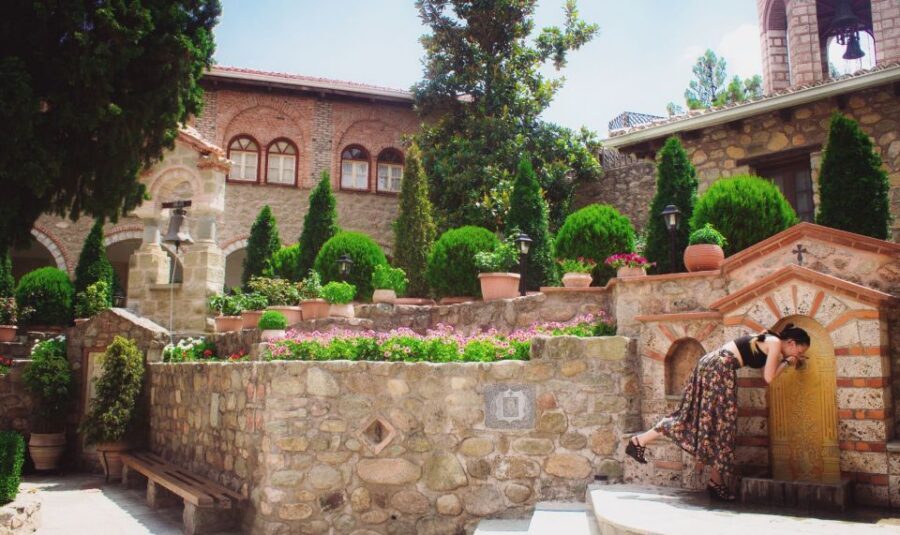
- Hotel pickup + air-conditioned minibus to save time on the winding roads
- Bandovas hermit caves for a quieter, more off-the-beaten-path feeling
- One monastery interior plus several exterior viewpoints, so you still get the atmosphere fast
- Cash-only entrance fees for monasteries and the Byzantine church
- Sunset viewpoint timing designed for photos, even when weather isn’t perfect
- Local storytelling from guides like Nikolas and Katerina that makes the rocks and churches click
Sunset Meteora: why this time of day is the move
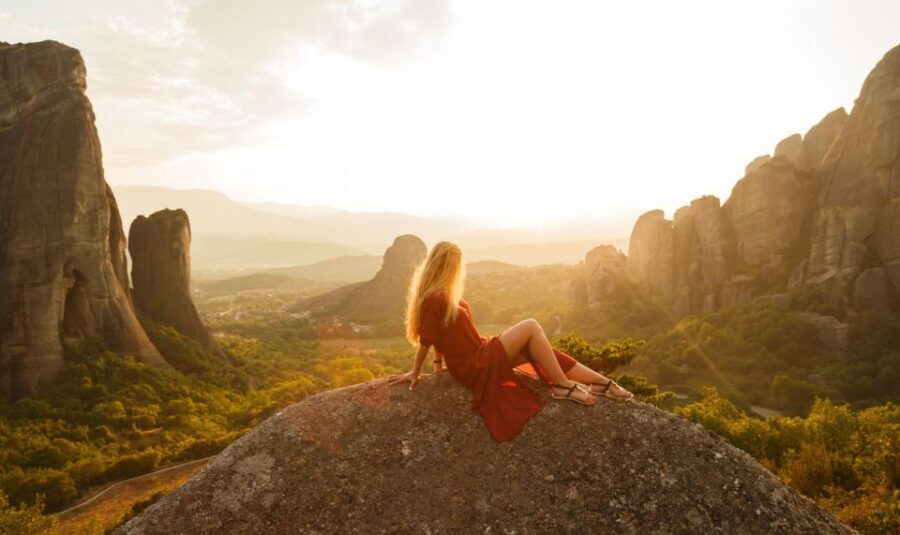
Meteora isn’t just a list of big monasteries perched on cliffs. At sunset, the whole setting changes. The rock faces cool down, shadows settle in the caves and passageways, and the monasteries look less like buildings and more like they’re part of the landscape itself. You’re not only seeing the sites—you’re seeing the mood shift.
This tour is built around that idea. You’re not stuck at one viewpoint for an hour while everything else passes by. Instead, you’re cycling through major spots and “in-between” places, so by the time you reach the sunset stop, you already understand where you are and why it matters.
And yes, the sunset stop is the big finish. The light can be dramatic enough that the photos look like they’ve been retouched—especially with the cliffs and monasteries framing the view.
You can also read our reviews of more tours and experiences in Kalambaka.

From Kalabaka or Kastraki: the easiest way to do the circuit
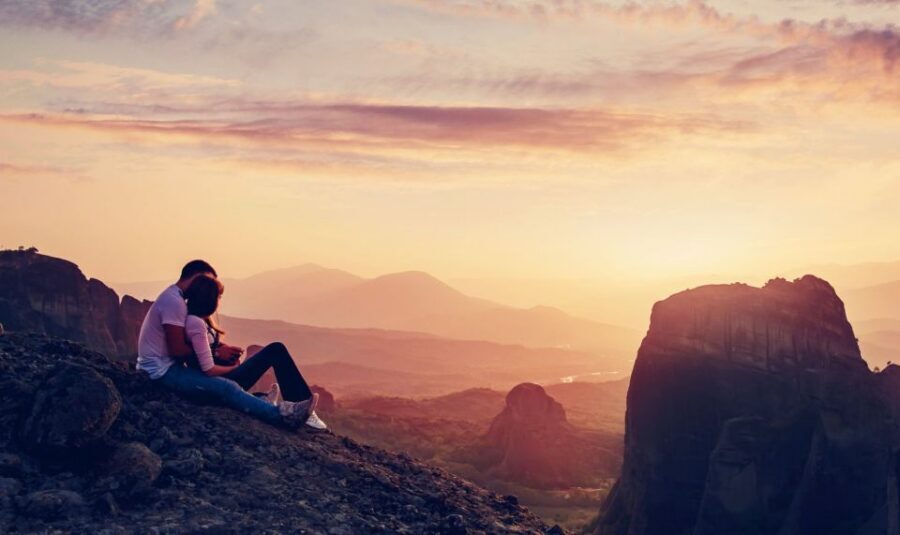
I like that you start with pickup. If you’re staying in Kalabaka or Kastraki, you don’t have to figure out parking, timing, or which road gives you the best angles. You climb into an air-conditioned minibus and let the day run like a plan.
The format also helps with energy. Meteora involves uneven steps and pathways around the monasteries. Even if you’re fit, it’s the kind of sightseeing that adds up fast. Having a driver handle the turns means you can focus on walking the short distances that matter most at each stop.
A small group feel is another plus. Reviews mention a smaller bus size, and that matters: you hear the guide more easily, and photo stops don’t feel like a slow shuffle across a crowd.
The monastery-and-caves route: what happens at each stop
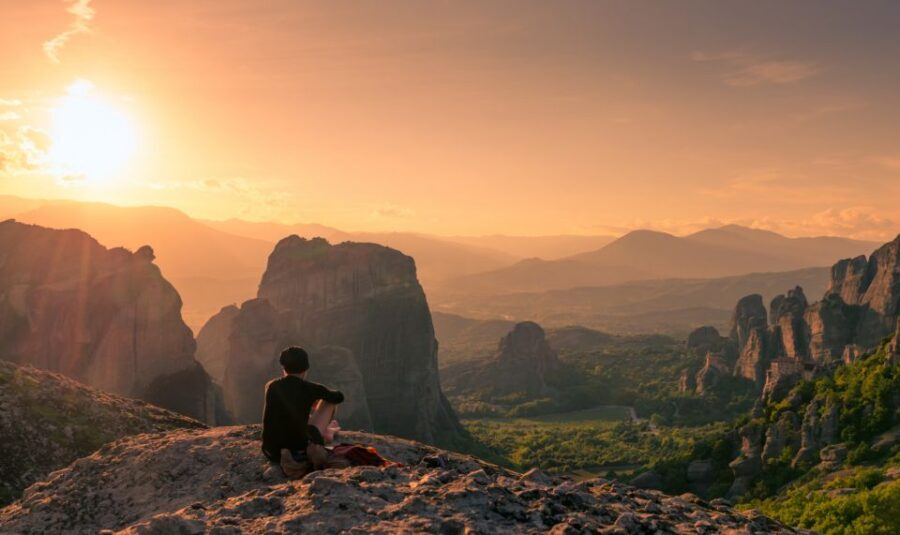
This tour is structured to pack in the essentials without turning it into a sprint. Think of it like a guided circuit where each stop adds one layer.
St. Stephen’s Monastery: the best first taste inside
Your first major stop is Monastery of St. Stephen, with about 45 minutes there. You’ll see the monastery from key angles, and you also get one interior window—time that usually isn’t enough if you’re traveling on your own, but is perfect on a sunset schedule.
This is also where the dress code is real. It’s not a suggestion. Men need long trousers, and women need a skirt below the knee with shoulders covered. A long scarf wrapped around the waist is enough to meet the requirement for shoulders/coverage needs.
If you’re coming straight from a casual morning, you’ll appreciate having that one solid “inside” block early, when you’re still fresh.
Holy Trinity Monastery: quick views that still matter
Next is Holy Trinity Monastery at Meteora, but with a short sightseeing window (around 15 minutes). You won’t have time to go deep here, but that’s not the point. The value is getting exterior perspectives that show how these monasteries relate to each other—how the rock towers set the stage for the whole system.
For photographers, these quick stops can be gold. You can catch angles without waiting around for someone to finish a longer interior visit.
The Byzantine Church of the Dormition: where the stories click
Then comes Holy Church of the Dormition of the Virgin Mary for about 45 minutes. This stop often lands as a standout because it adds religious context in a way that exterior-only visits can miss.
You’ll also get to absorb the guide’s explanations about what you’re seeing—plus the cultural logic of why monastic life took this shape in Meteora. In reviews, guides like Nikolas and Katerina get praise for connecting the stones to myths and real-life history, so the church doesn’t feel like a random stop. It feels like a keystone.
Bandovas hermit caves: the quieter side of Meteora
After the church, you go to the ancient hermit caves of Bandovas, with around 45 minutes. This is the part that shifts the mood. Instead of big public monastery structures, you get a sense of solitude and survival in rock-cut spaces.
The walk isn’t described in detail in your info, but you should assume there’s some stair climbing and uneven footing. Comfortable shoes matter here. If you’re someone who loves the “less obvious” parts of places, this is where you’ll feel it most.
The monastery viewpoint sweep: St. Nicholas, Rousanou, Great Meteor, Varlaam
The remainder of the route is a series of shorter sightseeing moments (around 15 minutes each) at major monasteries:
- Monastery of St. Nicholas Anapavsa
- Monastery of Rousanou
- Great Meteor Monastery
- Monastery of Varlaam
These stops are brief, but they’re not filler. They give you that big-picture understanding: each monastery is a piece of a larger spiritual and geographic puzzle. Short windows also protect the overall schedule so you still arrive at sunset with time to settle in.
One practical note: monastery operations can vary. Some monasteries close on different days, so you may end up visiting a monastery that differs from what’s advertised. That’s common in Meteora, and the tour is designed to keep you moving through the main highlights anyway.
Sunset viewpoint: the payoff with photo time built in
Finally, you reach the view point for sunset, with about 30 minutes. You’ll have time for photos and for just standing there letting the light do its thing.
Weather can change the experience. On one occasion, a storm disrupted sunset timing, but the tour still ran and the views stayed stunning once conditions improved. If it’s cloudy, you may not get a perfect sunset, but you’ll still be in the right place for dramatic cliff views and golden-hour colors.
Dress code, cash-only fees, and what you should budget
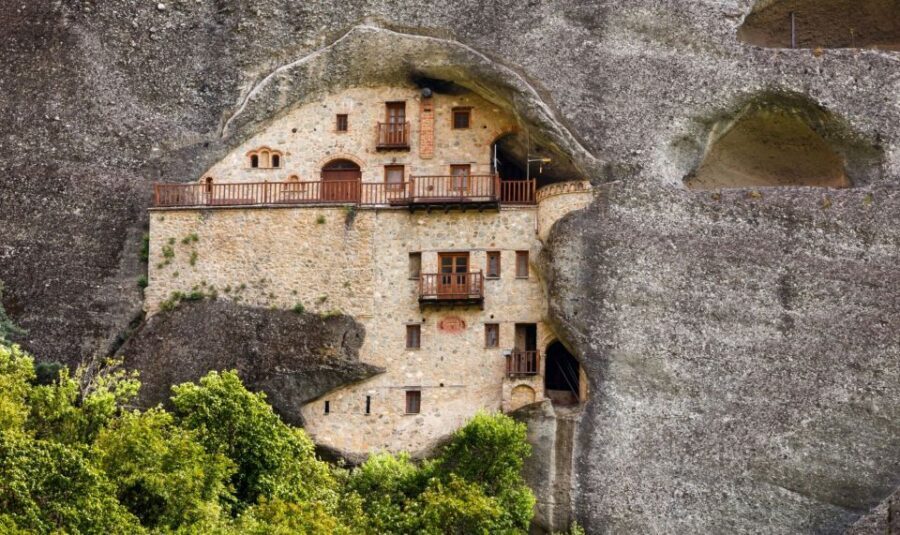
Here’s where I want you to plan with clear expectations.
What you pay in addition to the tour price
The tour price is $35 per person, and that covers pickup, minibus transport, guide, audio options, photo stops, water, and the stops around Meteora. But you still need to budget for entrances:
- Monastery entrance fee: €5 per person (cash only)
- Byzantine church entrance fee: €2 per person (cash only)
So, your real on-the-ground total is likely around $35 plus those cash fees. If you arrive without cash, you’ll slow down the day or risk missing entry.
Dress rules you can’t ignore
Monasteries enforce the dress code at the door:
- Men: long trousers
- Women: long skirt below the knee and covered shoulders
- A long scarf around the waist can be sufficient for monastery entry
I’d pack a scarf even if you think you already have the right clothes. It’s the easiest way to avoid stress when you’re trying to get through quickly.
Interior time is limited by the sunset format
You get free time to visit the interior of one monastery. That’s normal for a 4-hour sunset tour, and it’s one reason this works for people with limited time.
If you want multiple interiors, plan extra monastery time in the morning or on a separate day. This tour is about seeing everything at once and understanding the place in context.
The guide: the real reason people rate this tour so high
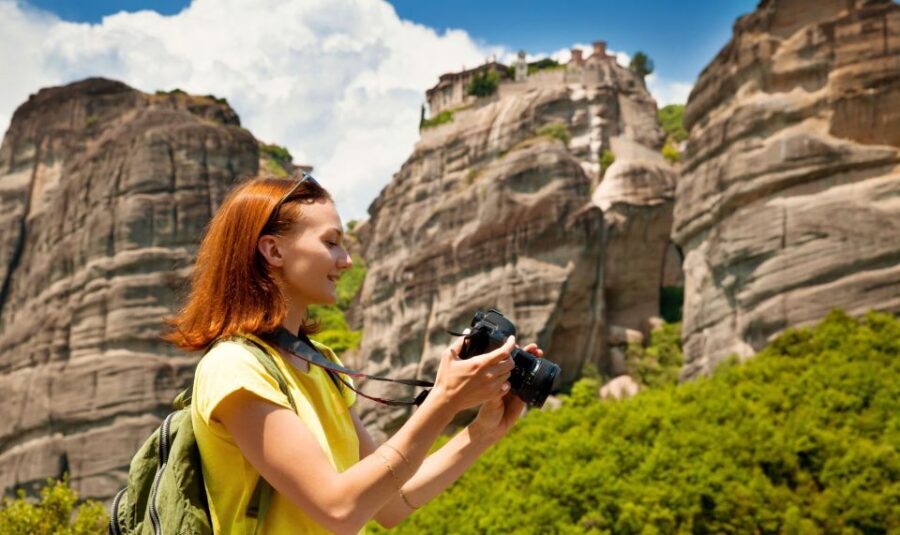
What keeps coming up in the reviews is how much the guide adds. Names like Nikolas, Nicolas, Katerina, Julia, and George appear again and again, and the praise pattern is consistent: clear storytelling, answers to questions, and a pace that feels organized rather than rushed.
This matters because Meteora can be confusing if you only look at buildings. The guide helps you connect:
- why monks lived here in the first place,
- how the monasteries relate to each other across the rocks,
- and what the myths and religious tradition add to the experience.
Even the photo moments feel smarter with a good guide. You get pointed toward viewpoints and you learn when to stop, where to stand, and how to frame the monasteries in a way that makes the cliff scale obvious.
Photo stops and timing: how to get the sunset shots without stress
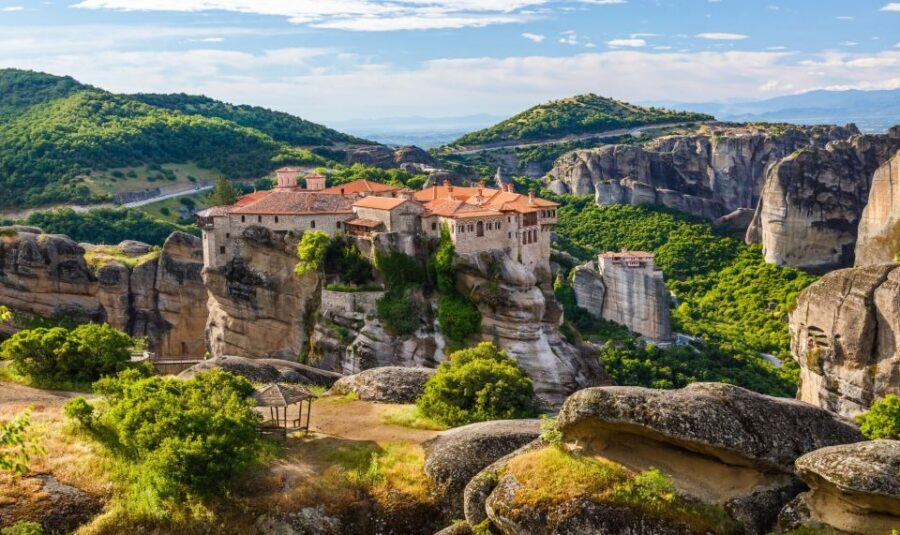
The tour includes panoramic photo stops, and there’s enough time at the viewpoint to work for photos rather than just pose and move on.
I’d use the timing like this:
- At each monastery stop, take a few wide shots first. You want to capture the scale.
- Then switch to details—arches, stonework, and any interior glimpses you’re allowed to see.
- At the sunset viewpoint, slow down. The best color shift happens quickly, and the tour gives you time to wait for it.
If you’re traveling with kids or you’re managing limited mobility, the organized route helps. One more thing: guides are often happy to help with group photos. That’s not a guarantee, but it’s a common theme in positive feedback.
Value check: is $35 worth it for Meteora at sunset?
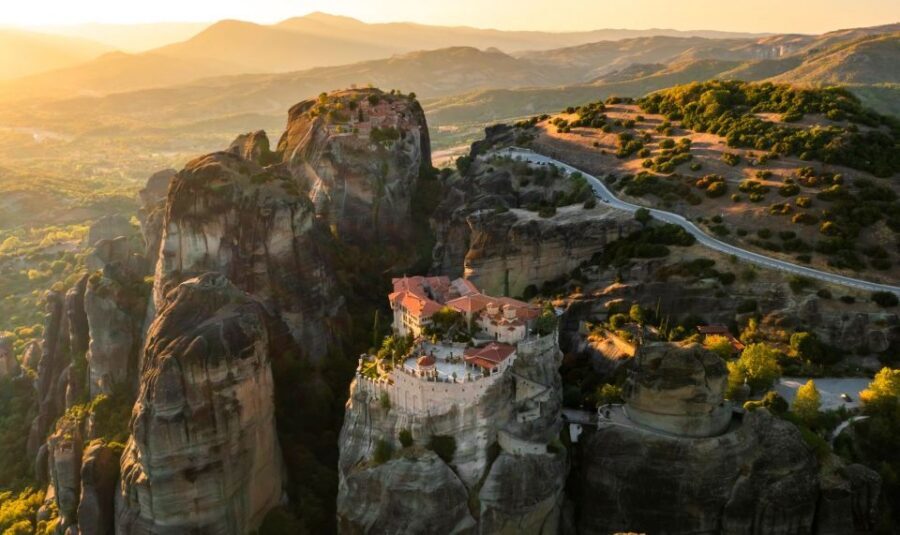
In my book, this tour earns its price if you value three things:
- Transport and route planning without driving yourself
- A guide who explains what you’re seeing (not just where to stand)
- A schedule that gets you to the sunset viewpoint on time
For $35, you get hotel pickup/drop-off, air-conditioned minibus, a local English-speaking guide, free audio guides in several languages, WiFi onboard, and water. The only “extra” is the cash-only entrance fees and the fact that you only tour one interior.
So it’s not “cheap,” but it is efficient. If you’re short on time in Meteora, the cost per hour is reasonable because the tour does the hard part—linking lots of sites into one smooth evening.
If you have your own car and you’re comfortable planning around opening days, you could DIY. But for many people, the guided circuit is the difference between a good evening and a smooth, satisfying one.
Who this tour is best for (and who should do something else)
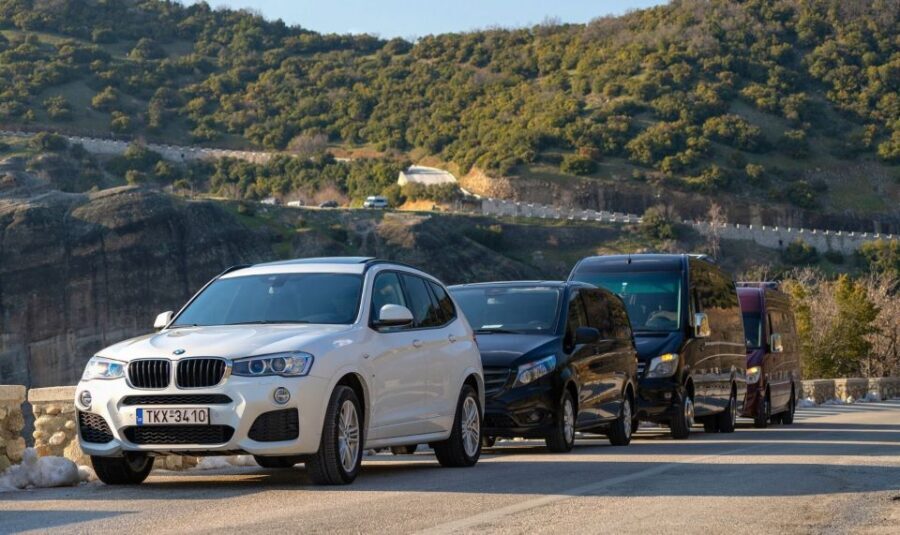
This sunset tour is ideal if:
- you only have a few hours and want the main Meteora highlights,
- you want guided context (history, myths, religious setting) rather than just photos,
- you care about the sunset viewpoint and don’t want to worry about timing or roads.
It’s less ideal if:
- you want to spend long hours inside many monasteries,
- you don’t like walking stairways and uneven paths,
- you don’t carry cash (because entrance fees are cash-only).
Families and couples tend to do well here, partly because it’s structured but not chaotic. Plus, a small group usually makes questions easier.
Should you book this Meteora sunset tour?
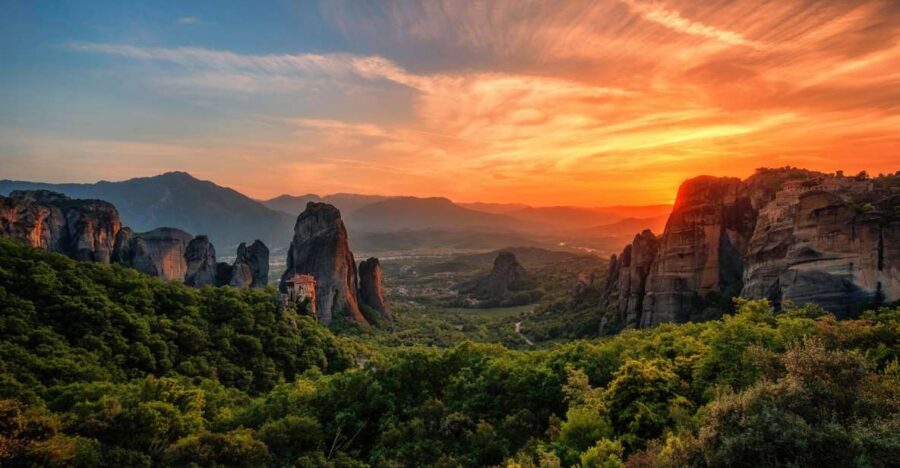
Yes—if sunset is a priority and you want a guided circuit that covers a lot without feeling like you’re sprinting.
Book it if you’re staying in Kalabaka or Kastraki, because pickup makes the day simple. Bring cash, wear comfortable shoes, and pack something that meets the dress code so you can enter smoothly. If you’re the type who loves stories as much as scenery, choose this over a self-drive day.
One smart strategy: consider doing one extra monastery visit earlier in the day if you can. This tour gives you the overview and the sunset payoff; a morning visit can give you deeper interior time at your favorite monastery.
FAQ
What’s the price and length of this Meteora sunset tour?
It’s listed at $35 per person and lasts about 4 hours.
Where does the tour pick up and drop off?
Pickup is included from your accommodation in Kalabaka or Kastraki. Drop-off options include Kalabaka, Kastraki, and Trikala.
How many monasteries do you visit?
You’ll stop at multiple monasteries across the route, including St. Stephen, Holy Trinity, St. Nicholas Anapavsa, Rousanou, Great Meteor, and Varlaam, plus the Byzantine Church of the Dormition and the Bandovas hermit caves.
Do you get to go inside monasteries?
You get free time to visit the interior of one monastery. A guided tour inside monasteries is not included.
Are there additional entrance fees?
Yes. Monastery entrance fees are €5 per person, and the Byzantine Church entrance fee is €2 per person. These entrance fees require cash.
What’s the dress code for monastery entry?
Men need long trousers. Women need a long skirt below the knee and their shoulders covered. A long scarf wrapped around the waist is also sufficient to enter the monasteries.
Does the tour include audio options?
Yes. There are free audio guides available, and you’ll need your smartphone and earphones to use them.
Is the tour private or shared?
It’s offered as a small group tour with the option for a private group.
What happens on Mondays in peak summer?
Every Monday from 01 July to 31 August, the tour starts at 16:00 and visits St. Nicholas Monastery instead of St. Stephen (since St. Stephen will be closed).