REVIEW · MILOS
Milos Experience Archaelogical and Cultural Experience
Book on Viator →Operated by Milos Experience · Bookable on Viator
One route on Milos hits culture and coastline fast. This small-group half-day tour strings together big sights like the Ancient Roman Theatre and Sarakiniko, plus stops that explain why Milos draws pilgrims and pre-Bronze Age settlers. You also get a real sense of island life in Plaka and Mandrakia, not just photos from the bus window.
I especially liked how the timing feels tight but not rushed, and how the guide work makes each stop click. The best part for me was the mix of archaeology + scenery in one continuous loop. The main drawback to consider: some entrance fees aren’t included, so you’ll want a little cash or card for tickets.
If you’re worried about getting your bearings on Milos, this is a smart way to start. The group cap (up to 8) means more time for questions, and the driver-and-guide team keeps things moving smoothly, like when Nickolas—who’s lived on Milos for over 30 years—gives context you can actually use. One more heads-up: it depends on good weather, and the tour has a firm non-refundable policy.
In This Review
- Key highlights worth your attention
- Why Milos in Four Hours Works
- Getting There: Van Comfort, English-Only, and Pickup Reality
- Stop 1: Ancient Roman Theatre Over Milos’s Natural Port
- Stop 2: The Catacombs of Milos and the Pilgrimage Story
- Stop 3: Plaka’s Venetian Castle, Museums, and Photo Views
- Stop 4: Mandrakia’s Fishermen’s Syrmata
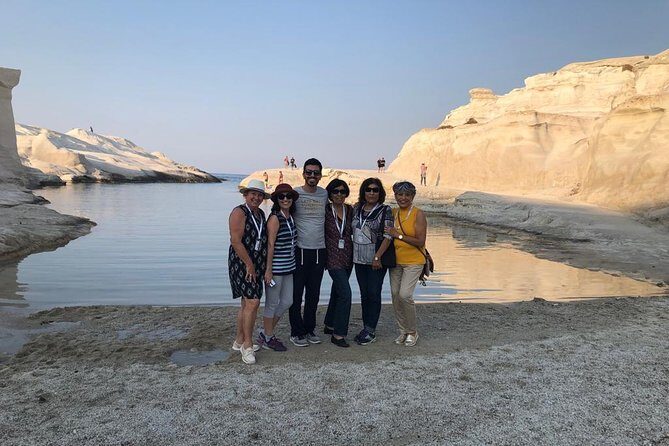
- Stop 5: Sarakiniko’s White Volcanic Rocks
- Stop 6: Phylakopi Bronze Age and Pollonia’s Ferry Life
- Food, Wine, and What You Pay Extra For
- Price and Value: Is $210 Worth It?
- Best Fit: Who Should Choose This Tour
- Small Details That Make the Day Easier
- Should You Book This Milos Experience Tour?
- FAQ
- How long is the tour?
- What time does the tour start?
- Is pickup available?
- How many people are in the group?
- What language is the tour in?
- What’s included in the price?
- Are entrance fees included?
- What happens if the weather is bad?
Key highlights worth your attention
- Up to 8 people: a small group that keeps the experience personal
- Ancient Roman Theatre + Venus connection: a stunning start with a global art link
- Catacombs of Milos: a rare pre-Christian site with a pilgrimage story
- Plaka walk and museum time: Venetian-era castle vibes plus everyday island history
- Sarakiniko’s volcanic sculpture: an hour of dramatic rock formations
- Optional lunch and tastings: you can build in food if you want it
Why Milos in Four Hours Works
Milos is the kind of island where you can spend all day driving and still only scratch the surface. This tour is built for the opposite problem: you’ve got limited time, but you still want the island’s key story—people, faith, and geology—tied together in one loop.
The pace makes sense for most visitors. You’re in the van/4×4 for quick transfers, then you get focused chunks of time at each stop. That matters because Milos isn’t just scenery; it’s scenes. The beaches, villages, and archaeological areas each need a different mood, and the tour keeps switching gears so you don’t feel stuck in one type of place.
The other win is the cap of 8 people. It’s not a giant scramble for photos. You can actually hear what the guide is saying and still have time to look around at your own speed.
You can also read our reviews of more tours and experiences in Milos.
Getting There: Van Comfort, English-Only, and Pickup Reality
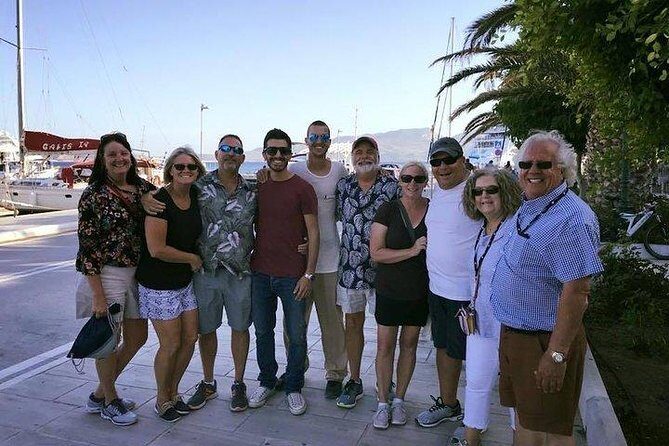
This is a half-day tour that starts at 10:00 am, and it ends back where you meet. The day’s flow is simple: short morning start, then a full circuit, then you’re back before the afternoon gets fully chaotic.
Transport is handled in an air-conditioned van or a 7-seat SUV/4×4. That’s useful on Milos, where some roads can feel twisty or uneven. The tour also includes bottled water and refreshments, plus the guide provides soft drinks and water along the way, with maps included.
Pickup is available, but there’s a catch: there’s an extra charge for pickup/drop-off areas except for Adamantas. If you’re staying in a more remote place, double-check the pickup zone so you don’t get surprised by the fee.
One more practical note: the tour is offered in English, and confirmation comes within 48 hours of booking (subject to availability). It’s also set up as a private tour/activity, meaning it’s just your group.
Stop 1: Ancient Roman Theatre Over Milos’s Natural Port
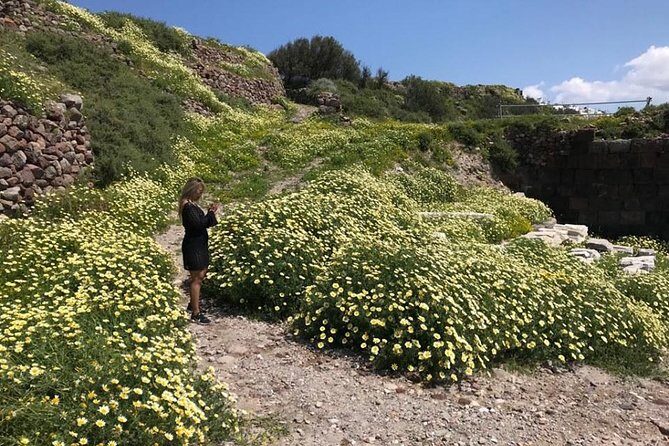
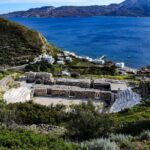
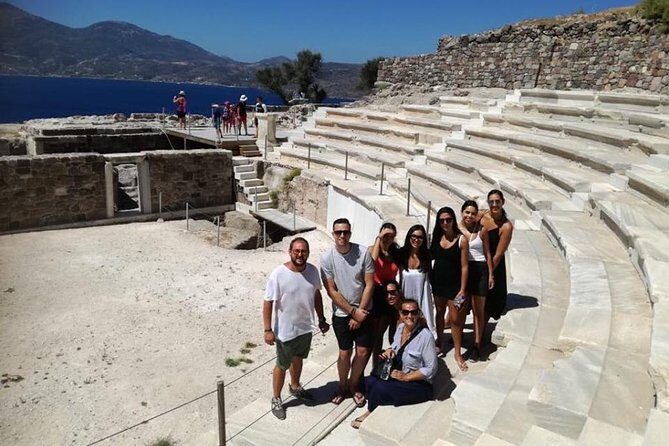
You start at the Ancient Theatre of Milos, on the east side near the narrow entrance of the gulf. The location alone sets the tone: you’re looking down toward the island’s big natural port, with the surrounding villages (Tripiti and Klima) below you.
This stop lasts about 20 minutes, and the admission ticket is included. Even if you’re not a hard-core ancient-site person, you’ll probably feel something here. It’s a clear reminder that Milos wasn’t always about beaches and tavernas; it’s been a crossroads for centuries.
There’s also a neat art connection tied into the site visit. The route passes by the area where the Venus of Milos was discovered—an iconic statue now housed in the Louvre in Paris. You don’t need to be an art museum person to appreciate that moment. It helps you think bigger than island geography.
A small drawback: this first stop is early in the day, and it can be a bit exposed. If you’re sensitive to sun, plan on sunscreen and a hat even in spring or early summer.
Stop 2: The Catacombs of Milos and the Pilgrimage Story
Next is the Catacombs of Milos, where you’ll spend about 30 minutes. The admission ticket isn’t included, so budget extra for tickets here.
What makes this stop more than just another underground attraction is the story attached to the site. The catacombs are described as the second most remarkable pre-Christian monument worldwide, after Rome. That reputation matters because it helped shape Milos into what’s described as a Holy Island in 2014, with Milos recognized as a World Pilgrimage Centre.
You’ll likely get a clearer feel for why the island has spiritual momentum beyond modern tourism. It’s one thing to see a cave-like site. It’s another to learn how it fits into a longer pattern of faith and identity.
How to enjoy it better: wear good walking shoes. Even on a “short” stop, underground spaces tend to be cooler and can be damp or uneven. Bring a layer if you run cold easily.
Stop 3: Plaka’s Venetian Castle, Museums, and Photo Views
Then you head to Plaka, Milos’s capital, for the Plaka Castle experience (described as the Venetian Castle of Milos). This part lasts around 1 hour, and the admission ticket isn’t included for the museum portion.
You’ll visit the folklore and archaeological museum first. This is a smart bridge between the ancient sites and the island you’ll see on the drive. It gives you context for traditional life—how people lived, worked, and built their daily world.
After the museum time, you walk through Plaka’s narrow streets with small shops. The goal isn’t shopping pressure; it’s atmosphere. You’re walking like a person who lives there, not like someone hunting a single landmark.
The tour ends this segment at Marmara, the yard of the church of Panagia Korfiotissa—a point used as a major photo spot. If you only remember one village view from the day, it might be this one. It’s the kind of vantage that makes Milos feel like a place you’ll want to return to.
Possible drawback: Plaka streets can be tight. If you have mobility limits, keep that in mind and take your time in the walking parts.


Stop 4: Mandrakia’s Fishermen’s Syrmata
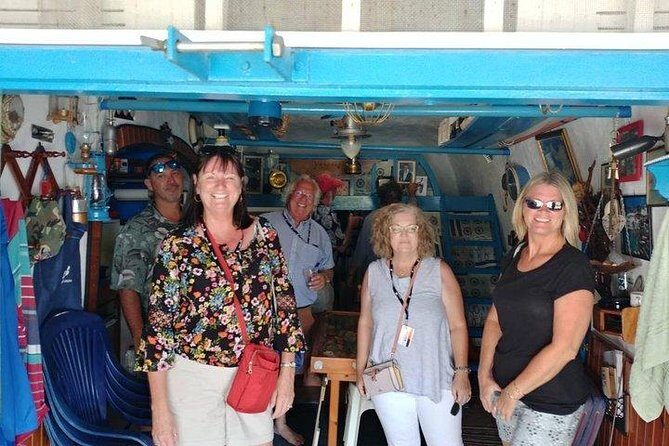
After Plaka, the tour swings to the coast at Mandrakia beach, with about 20 minutes on site and admission included.
Mandrakia is described as a scenic fisherman’s village, with two small docks. What catches attention is Milos’s Syrmata—colorful underground buildings used by fishermen to keep boats.
This stop is short, but it’s memorable because it explains how people adapted to the island’s coastline. You’re not just looking at water. You’re learning how a working port hides practical structures in the earth.
Tip for timing: if you want photos, stand back for a minute and let your eyes adjust before you shoot. The Syrmata details show up after a moment of slow looking, not instant snapping.
Stop 5: Sarakiniko’s White Volcanic Rocks
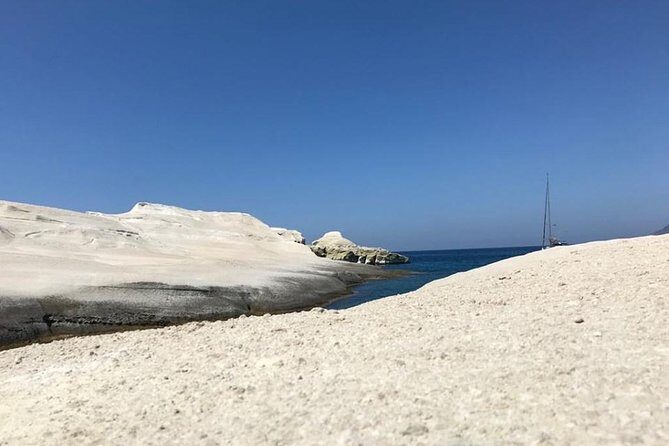
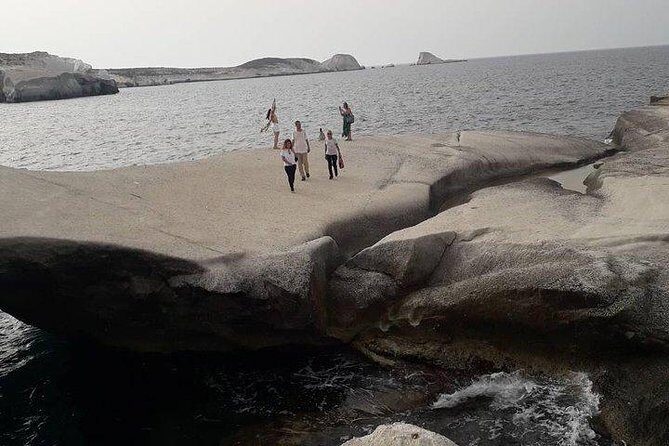
Then comes the headline everyone’s heard of: Sarakiniko Beach. You’ll get about 1 hour, and the admission ticket is included.
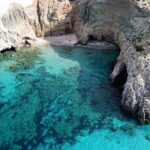
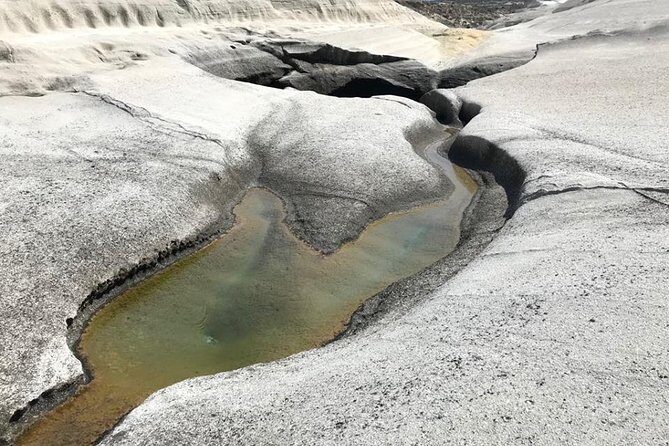
Sarakiniko is famous for its white volcanic rock formations—shaped over time into a surreal, sculpture-like coastline. It’s one of those places where you can walk a little, find a new angle, and then realize the shore looks different from every step.
If you like dramatic terrain (and not just a normal beach), this stop delivers. The rocks also make the area feel like a natural set for wide-angle photos. But don’t only shoot. Pause and read the shapes. It’s geology you can see without needing a textbook.
A consideration: the white rocks can get hot in direct sun. If you’re going in high season, plan a water top-up during the walk, and consider a quick shade break if you’re prone to overheating.
Stop 6: Phylakopi Bronze Age and Pollonia’s Ferry Life
On the north side, you visit the archaeological site of the prehistoric city of Phylakopi. This is described as the most important prehistoric city of the Aegean Sea, with signs of people living there from the early Bronze Age, around 3,000 B.C. Admission isn’t included for this stop.
This is your “time travel” moment of the day. Sarakiniko is the island’s geological drama; Phylakopi adds human drama. You’re seeing evidence of settlement patterns deep in time, before the island became the Milos you’re standing on today.
After that, you relax with time in Pollonia, described as one of Milos’s best-known tourist destinations and a port connection to Kimolos. You get about 50 minutes here, and the admission ticket isn’t included.
Pollonia gives you a calmer payoff after the archaeology and rock formations. It’s a chance to cool down, watch boats, and reset before heading back.
Who will love this ending most: people who like a mix of “walk and look” with an actual break to sit, snack, and soak in the coastal rhythm.
Food, Wine, and What You Pay Extra For
Food is part of the deal, but not automatically in your base price. The tour highlights mention a traditional Greek island lunch and a wine tasting at an extra fee, while the “not included” list also notes that lunch and wine/creamery tastings aren’t included.
So think of it this way: your tour already covers key comfort items like bottled water and refreshments. If you want the full island-food experience, you may add the lunch and tastings. That’s a good option if you’re the type who likes to try local flavors while you’re still in context—after learning about island life and local history.
One useful clue from real experience: there can also be small food surprises along the route, like a quick bakery stop that someone found especially tasty. If you’re a snack person, keep a little budget flexibility for those small moments.
Price and Value: Is $210 Worth It?
At $210.27 per person, you’re paying for a focused half-day with a lot of “transport + guide + organization” built in. The tour includes an air-conditioned vehicle, bottled water, refreshments, maps, and guide support (including soft drinks and water in the mini bar). Plus, the group is capped at 8, which usually means more conversation time and less waiting around.
The big value question is what’s not included. Museum and archaeological entrances aren’t fully covered. For example, the catacombs admission and parts of the Plaka museum experience are listed as not included, and the wine tasting/lunch aren’t included either. So your total day spend may climb depending on what you add.
Still, the structure makes sense. You’re not paying separately for a guide for each stop. You’re also saving time. With Milos driving being its own part of the vacation, getting this loop handled for you can be worth the price even before you factor in the history context.
If you’re the type who hates rushing between sites on your own, this cost feels more reasonable. If you’re on a strict budget and want only free-to-enter viewpoints, you may find you’re paying mostly for guided access and convenience.
Best Fit: Who Should Choose This Tour
This works especially well if you:
- Have limited time on Milos and want key sights efficiently
- Like a blend of archaeology, village life, and beach scenery
- Want a small group so the guide can actually talk and you can ask questions
- Prefer the safety and comfort of organized driving, rather than piecing routes together yourself
It’s also a solid choice for couples or small groups who want something structured. The private setup helps keep the atmosphere calmer than a larger bus-style day.
Small Details That Make the Day Easier
Here are a few “you’ll feel it later” touches:
- Mobile ticket: fewer paper hassles.
- English guide: easier explanation at each stop, not just signposting.
- Maps and refreshments: it’s not a dry, self-managed experience.
- Van/4×4 choice: likely helps with comfort on uneven roads.
- Returns to the meeting point: no end-of-day navigation stress.
Also, note the tour requires good weather. If weather is poor, the operator offers a different date or a full refund. That’s important on islands where conditions can change quickly.
Should You Book This Milos Experience Tour?
I think you should book this if you want a high-quality overview of Milos without turning your vacation into a driving project. The small-group cap, the variety—from catacombs to Sarakiniko—and the clear village-to-coast flow make it a practical way to see a lot in a half day.
You might skip it or book with eyes open if you:
- Don’t want to pay extra for multiple ticketed sites
- Prefer to roam independently with no schedule
- Are very weather-sensitive and can’t be flexible on dates
For most people, this tour earns its price by bundling the guide experience and smart routing, then letting you enjoy Milos’s most distinctive stops in manageable chunks.
FAQ
How long is the tour?
It runs about 4 hours.
What time does the tour start?
The start time is 10:00 am.
Is pickup available?
Pickup is offered, but there’s an extra charge for pickup and drop-off areas except Adamantas.
How many people are in the group?
The tour is capped at 8 travelers, and it’s set up as a private tour for your group.
What language is the tour in?
It’s offered in English.
What’s included in the price?
Bottled water and refreshments, an air-conditioned vehicle (luxurious van or a 7-seat SUV/4×4), and a guide with a mini bar including soft drinks, water, and maps.
Are entrance fees included?
Not all of them. Admission is included at the Ancient Roman Theatre, Mandrakia, and Sarakiniko. Catacombs, the Plaka museum portion, and other sites listed are not included in admission fees.
What happens if the weather is bad?
The experience requires good weather. If it’s canceled due to poor weather, you’ll be offered a different date or a full refund.