REVIEW · RHODES
Mountain Biking Red Water
Book on Viator →Operated by Rhodes Roads · Bookable on Viator
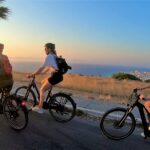
The best part of this Rhodes mountain-biking tour is how quickly it leaves the resort coast behind. From Haraki, you ride through olive groves, orange trees, village lanes, river country, and old military sites before finishing beside the sea at Agia Agathi Beach. It is a fine way to see rural Rhodes without spending the day in a tour bus.
I like the well-kept Specialized bikes and the careful pacing. I also like the route’s variety: a church courtyard, the Red Water gorge, a 1930s bridge, old battlements, and a beach swim all fit into one outing. The main consideration is that the Red Water route is mostly flat, rough terrain, so serious cyclists may find it less demanding than the name suggests.
In This Review
- Key points at a glance
- Riding from Haraki into rural Rhodes
- Massari’s olive trees and Malona’s orange groves
- Following the Gadoura River to Red Water
- The 1930s bridge and old wartime defenses
- A church courtyard lunch in the shade
- An old airport, Agia Agathi, and Feraklos Castle
- How hard is the Red Water bike ride?
- What the $102.13 price includes
- Group size, timing, and practical details
- Who should book this Rhodes cycling tour?
- Should you book Mountain Biking Red Water?
- FAQ
- Where does the Mountain Biking Red Water tour take place?
- How long does the tour last?
- Is hotel or port pickup included?
- What equipment is provided?
- Is food included?
- Does the tour finish at a beach?
- How difficult is the bike ride?
- Is the tour suitable for children?
- What is the cancellation policy?
Key points at a glance
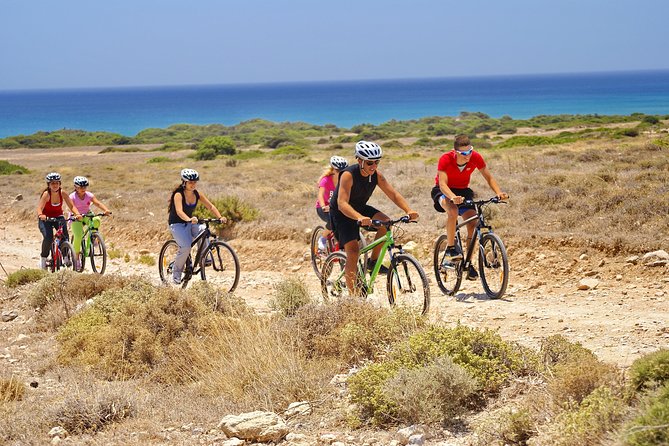
- Haraki start: Begin at a small fishing village and follow the coast before turning into rural Rhodes.
- A varied route: Expect country paths, trails, village roads, olive groves, orange orchards, a gorge, bridges, and castle views.
- Good support: Specialized bikes, helmets, bottled water, snacks, a light Greek meal, guiding, and transfers are included.
- Cultural stops: Pause at a village church, old Italian bridge, Second World War battlements, and Feraklos Byzantine and medieval castle.
- Beach finish: End at Agia Agathi Beach with time for a refreshing swim in the sea.
- Small-group feel: The maximum group size is 20, and past departures have sometimes been much smaller.
Riding from Haraki into rural Rhodes
Your day begins with a coach pickup outside your hotel or accommodation, generally between 8:00 and 8:45. Cruise ship passengers are collected about 30 minutes after docking, while airport and port pickup can also be arranged. The exact time depends on your location, so keep your phone available before departure.
The ride begins around 9:20, after the bikes are fitted to your body type. The tour uses Specialized mountain bikes, and helmets are supplied. That matters here because the route mixes paved rural roads with rough tracks and trails. A properly sized bike makes the day more comfortable, especially when the surface changes.
Haraki is a pleasant place to begin. It is a small fishing village with a beach setting, but this tour does not simply keep you on the waterfront. You soon move into the countryside, where the pace is slower and the scenery is shaped by working olive and orange groves rather than hotel development.
You will have guides with you throughout the ride. Dimitris handles the operation and transfers, while Nicos has led rides and is noted for explaining local plants, geology, history, and village life. The guiding is not just about keeping the group on course. Stops are used to explain what you are seeing, which gives the ride more purpose than a simple bike rental.
You can also read our reviews of more cycling tours in Rhodes

Massari’s olive trees and Malona’s orange groves
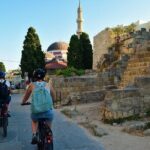
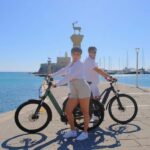
One of the early highlights is the ancient olive grove near Massari. Rhodes has a long olive-growing tradition, and the old trees give you a strong sense of how agriculture has shaped the island. Some trees seen on the route are estimated at up to 2,000 years old, although the tour does not turn this into a formal archaeological visit.
The grove is best appreciated at an easy pace. You are not racing from one checkpoint to the next, and the route includes regular pauses. In hot weather, those breaks are important. Rhodes can be intense under the sun, and the support vehicle and guides keep water available during the ride.
The route then passes through Malona’s orange groves. This is a pleasant change from the silvery olive trees. You get a more varied view of the island’s farm country, with the scent and form of citrus trees adding another layer to the ride.
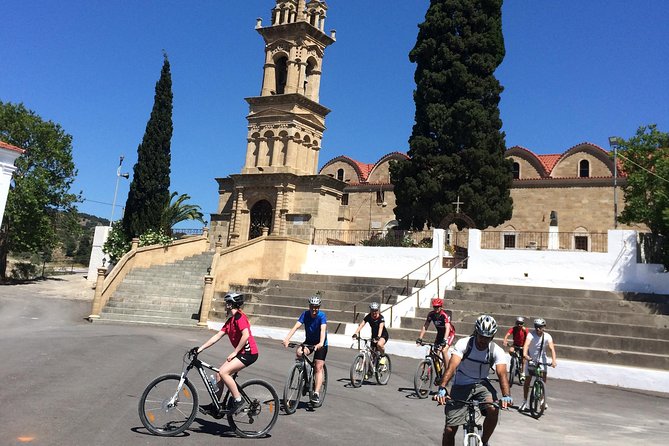
A stop at the village’s main church allows time for a short stroll and a rest. You also receive a Greek snack here, and the included food helps keep the day from becoming a long stretch of exercise on an empty stomach. The stop is simple, but it is exactly the kind of pause that makes an active tour work well for a mixed group.
Following the Gadoura River to Red Water
After the church and village stop, the ride follows the course of the Gadoura River toward its source. Do not picture a broad, constantly flowing river. This is a drier Mediterranean setting, and the river course forms part of the route through the valley.
The approach to the small Red Water gorge is one of the most distinctive sections. The gorge is not described as a vast canyon, but it is impressive in scale relative to the surrounding countryside. You may walk into the canyon as part of the stop, giving you a chance to leave the saddle and look more closely at the rock and vegetation.
This is also where the route feels most removed from the coast. You trade beach views for rough tracks, trees, and the quieter interior. The ride is mainly on flat, uneven terrain, with enough changes in surface to keep it interesting without making it a technical mountain-bike challenge.
The tour material describes the route as suitable for most participants, and that matches the reported pacing. Guides keep the group together, stop often, and adjust the speed to the conditions. One ride included an optional 800-meter climbing section for stronger cyclists, but the Red Water route is generally presented as a moderate day rather than a hard endurance test.
If you want steep climbs and demanding descents from start to finish, this may not be the right outing. If you want a countryside ride with time to look around, the easier profile is an advantage.
The 1930s bridge and old wartime defenses
Leaving the river source behind, you continue through more olive and orange trees toward Gadoura Bridge. The bridge was built in the 1930s, adding a clear piece of modern island history to a route otherwise shaped by ancient agriculture and medieval sites.
You also stop near an old Italian bridge. These structures reflect the period when Rhodes was under Italian rule, and they help explain why the island contains infrastructure that looks different from the older Greek villages around it. The bridge stop is a good chance to rest before continuing.
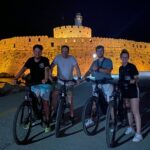
Nearby, old battlements from the Second World War provide another reminder that this quiet countryside was once part of a strategic military zone. They are not presented as a polished museum site. You are seeing remains along the route, which is part of the appeal and also means you should expect a more informal visit.
The guides add value here. Nicos has explained local history as well as the plants and geology along the route. That sort of commentary is useful because the remains can be easy to overlook if you pass them without context.
A church courtyard lunch in the shade
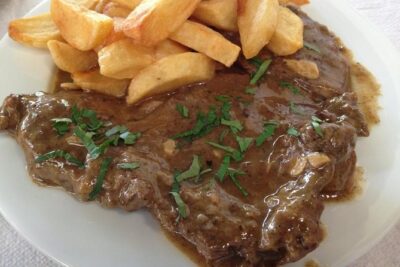
Food is included, though drinks beyond the supplied water are not. The day includes a light Greek meal and snacks, with one lunch stop taking place in the courtyard of a large church or old monastery, in the shade.
This is an especially practical feature. You are not forced to search for food while wearing cycling gear, and you can eat in a setting that feels tied to the local community rather than a standard restaurant stop. The meal has been described as filling and refreshing, which is what you need after several hours on the road.
Bring your own extra drinks if you prefer something other than water. Bottled water is supplied, and the guides have been careful about keeping riders hydrated, but the tour does not include other beverages. In Rhodes’ warm conditions, sun protection and suitable clothing are just as important as the bike itself.
The tour operates in all weather, so dress for the forecast. Light clothing, secure shoes, and protection from the sun are sensible choices. You should also be comfortable riding on uneven ground for much of the day.
An old airport, Agia Agathi, and Feraklos Castle
The later part of the route brings a change of scenery. You pass the runway of an old airport, an unusual sight that adds another layer to the island’s recent past. It is not a conventional sightseeing stop, but it gives the ride a sense of place and variety.
From there, the route heads toward the coast and Agia Agathi Beach. This is the payoff for a day spent inland. The beach is used as the finish point, and you can cool off with a swim in the sea before returning to the coach.
The route also passes Feraklos Byzantine and medieval castle. Its position above the coast gives you a link between the island’s medieval past and its modern beach life. The tour does not promise a long castle visit or an extensive archaeological walk, so consider it a landmark along the ride rather than the central attraction.
The sea stop is particularly welcome after the rougher inland tracks. You may want to bring swimwear under your cycling clothes or pack it where it is easy to reach. The tour includes use of the bicycle and helmet, but personal beach items are your responsibility.
How hard is the Red Water bike ride?
The most useful thing to understand is that this is an active sightseeing day, not a race. The Red Water route is mainly flat rough terrain through a valley and along the coast. There are trails and rural roads, but the ride is not described as especially arduous.
Still, six to eight hours is a long day. Even with frequent stops, you should be comfortable sitting on a bike for several hours and handling uneven surfaces. Children must be accompanied by an adult, and the group leaders can help keep the pace suitable for the people taking part.
Different route choices may offer an easier or harder ride. One outing gave riders the choice of an easier route or a more difficult option, including a substantial climb for stronger cyclists. Ask about the exact route and climbing on your date if the level of effort matters to you.
The support is one of the tour’s strongest practical features. Guides monitor the group, avoid letting riders become too spread out, and provide cold water at several points. In the event of a minor fall, the guide team has also been able to give immediate care for small scrapes.
What the $102.13 price includes
At $102.13 per person, this is not the cheapest way to rent a bike for a few hours. It is a different product. The price covers transport from your hotel, port, or airport, the bike and helmet, activity guiding, bottled water, snacks, and a light Greek meal.
That bundle makes the cost easier to judge. You are paying for a full day of transport and support as well as the ride itself. You also avoid arranging a bike independently, finding the rural route, carrying enough water, and locating food along the way.
The value is strongest if you are staying outside Haraki or arriving by cruise ship. Pickup and return remove a major hassle, and the operators have been punctual with cruise passengers while allowing enough time for the return to the ship.
The value is less clear if you are an experienced cyclist who wants many hours of hard climbing and technical riding. In that case, the moderate Red Water route may feel more like a scenic cycling excursion than a serious mountain-biking workout.
Group size, timing, and practical details
The maximum group size is 20, though some departures have had only eight riders with two guides. A smaller group gives you more room to ask questions and makes it easier for the guides to watch everyone on rough sections.
Plan on leaving your hotel in the morning and returning around 15:30. Cruise passengers are scheduled to return about 40 minutes before departure, but you should confirm the timing carefully with the operator if your ship’s schedule is tight.
The experience is offered in English and uses a mobile ticket. Confirmation is sent within 48 hours of booking, subject to availability. Free cancellation is allowed up to 24 hours before the start time. If the minimum number is not reached and the tour is canceled, you are offered another date or experience, or a full refund.
Most people can take part, but this is not a passive coach excursion. You should be prepared for a full day outdoors, active riding, heat, and changing road surfaces. Children need an accompanying adult.
Who should book this Rhodes cycling tour?
I would choose this tour if you want to see a quieter side of Rhodes and prefer a day with several kinds of stops. The mix of agriculture, village life, military remains, a gorge, a castle, and a beach gives you more than a standard coastal ride.
It also suits cruise passengers who want an organized active day with port pickup and a reliable return. Families with older children may appreciate the manageable pace, regular breaks, food, and swimming finish, provided everyone is comfortable cycling for several hours.
I would think twice if your main goal is a demanding mountain-bike challenge. The route is mainly flat, and its appeal comes from scenery, local stories, and variety rather than sustained climbs. Also, because the tour runs in all weather, you should be ready for conditions that may make the ride less comfortable.
Should you book Mountain Biking Red Water?
Book it if you want a well-supported ride through parts of Rhodes that are easy to miss from a beach resort or tour bus. The Specialized bikes, plentiful water, careful guides, included food, and hotel or port transfers give the $102.13 price solid value for a full day.
Choose it with the right expectation: this is a countryside adventure with a refreshing swim at the end, not an extreme cycling test. For a first look at rural Rhodes, especially with guides such as Nicos explaining the plants, old structures, and local history, it is a smart and active choice.
FAQ
Where does the Mountain Biking Red Water tour take place?
The ride starts in Haraki, Rhodes, and continues through country paths, trails, rural roads, villages, olive and orange groves, the Gadoura River area, Red Water gorge, and the coast.
How long does the tour last?
The experience lasts approximately six to eight hours. Pickup begins in the morning, the ride starts around 9:20, and hotel return is planned for about 15:30.
Is hotel or port pickup included?
Yes. Pickup and drop-off are included from hotels or accommodations, the port, and the airport. Hotel pickup takes place outside the reception, while cruise passengers are collected about 30 minutes after docking.
What equipment is provided?
The tour includes use of a Specialized bicycle and a helmet. Bikes are selected according to your body type.
Is food included?
Yes. Snacks, bottled water, and a light Greek meal are included. Other drinks are not included.
Does the tour finish at a beach?
Yes. The route finishes at Agia Agathi Beach, where you can enjoy a swim in the sea.
How difficult is the bike ride?
The Red Water route is mainly flat rough terrain through a valley and along the coast. It is an active full-day ride, but it is not described as particularly arduous. Some route options may include more challenging climbs.
Is the tour suitable for children?
Children must be accompanied by an adult. Most participants can take part, but everyone should be comfortable cycling for several hours on country paths, trails, and rural roads.
What is the cancellation policy?
You can cancel at least 24 hours before the start time for a full refund. Cancellations or changes made less than 24 hours before the experience are not refunded or accepted.