REVIEW · MYKONOS
Mykonos Cooking Class of Local Specialties
Book on Viator →Operated by Delos Private Tours · Bookable on Viator
Mykonos is famous for beaches, whitewashed lanes, and expensive dinners. This three-hour cooking class gives you a different way into the island: you work with local ingredients, prepare old-fashioned dishes, and sit down to eat what you made. The food is strongly Mykonian, with spicy kopanisti cheese, tirovolia, onions, pork, herbs, honey, and ouzo all playing a part.
I like the private format, which lets the chef adjust the lesson to your group instead of rushing through a fixed demonstration. I also like the personal feel created by hosts such as George, Jorgi, Chef Alex, and Christina, whose family connections to cheese making and Mykonian cooking add useful context. The main drawback is the price, $238.28 per person, which is a lot for three hours, especially if your group prefers watching rather than cooking.
In This Review
- Key points to know before booking
- From Ornos to a Mykonian kitchen
- Meeting George, Jorgi, Alex, and Christina
- Starting with Mostra, tzatziki, and Greek salad
- Making kremidopita with local cheese
- Mixing Mykonian keftedakia
- Finishing with rafiolia, honey, and cinnamon
- A long dinner built from simple ingredients
- Is $238.28 per person good value?
- Who will enjoy this Mykonos cooking class?
- Practical details for your afternoon
- Should you book it?
- FAQ
- Where does the Mykonos cooking class start?
- What time does the class begin?
- How long does the cooking class last?
- Is transportation included?
- Is the class private?
- What language is the class offered in?
- What food will I prepare?
- Can I request beef instead of pork?
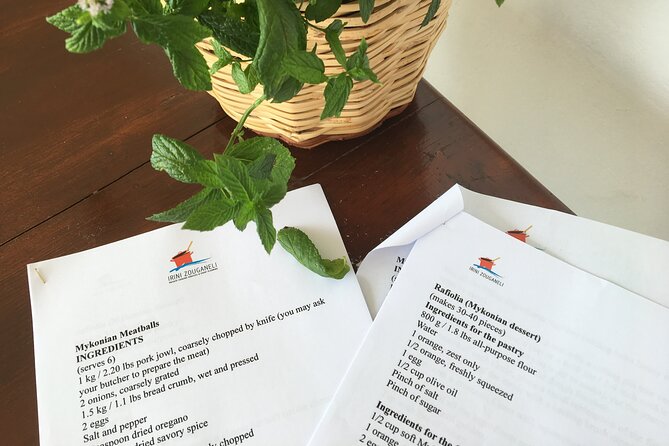
- Are recipes provided after the class?
Key points to know before booking
- Private instruction: Only your group takes part, with attention suited to your cooking level.
- A full Greek meal: You prepare starters, main dishes, dessert, and Greek salad, then eat everything with local wine.
- Distinctive Mykonian flavors: Kopanisti, tirovolia, ouzo, dill, mint, honey, and cinnamon make this more specific than a generic Greek cooking class.
- Helpful family stories: George and Jorgi are linked to local cheese making, while Alex and Christina have been praised for their friendly, patient approach.
- Recipes to take home: Written recipes give you a practical souvenir rather than just a few photographs.
- Plan around the afternoon: Meet in Ornos at 4:30 pm, and the activity ends back at the meeting point.
From Ornos to a Mykonian kitchen
You meet at Ornos at 4:30 pm, then are taken to the place where the class is held. The activity lasts about three hours and ends back at the meeting point, so you should allow the rest of the evening to remain fairly open.
The exact cooking venue is presented as a special place connected with Mykonos Farmers in some of the hosting arrangements. That matters because this is not simply a cooking lesson in a hotel kitchen. The setting and the people help connect the meal to island life, especially the role of cheese, home cooking, and simple ingredients.
The activity is offered in English and includes a mobile ticket. Since it is private, you do not have to share the work with an unrelated group. That makes a real difference for couples and families. You can ask questions freely, let younger cooks take part, or spend more time watching a tricky step.
You can also read our reviews of more cooking classes in Mykonos


Meeting George, Jorgi, Alex, and Christina
The people leading the class are a major part of its appeal. George has been described as a delight, with a family background in cheese making and plenty of cheese woven into the meal. Jorgi is associated with Mykonos Farmers and brings a warm, personal connection to the place.
Chef Alex has been praised for being kind, humorous, and even-tempered. Those qualities are especially useful when teenagers are involved or when several people are trying to cook at once. Christina has also helped lead the class, sharing the cooking traditions of women born and raised on Mykonos.
The names and roles may vary depending on the hosting team for your date, so I would not book this expecting one guaranteed chef unless the provider confirms it. What you can reasonably expect is a local-led lesson rather than a lecture delivered by someone with no connection to the island.
The style can also vary within a private group. One family of six found that two people helped while four watched, which worked well for them. If you want everyone to have an active role, say so at the start. The private setting gives you a better chance of arranging that.
Starting with Mostra, tzatziki, and Greek salad
The class begins with dishes that teach the basic character of Mykonian food without requiring complicated equipment or advanced technique.
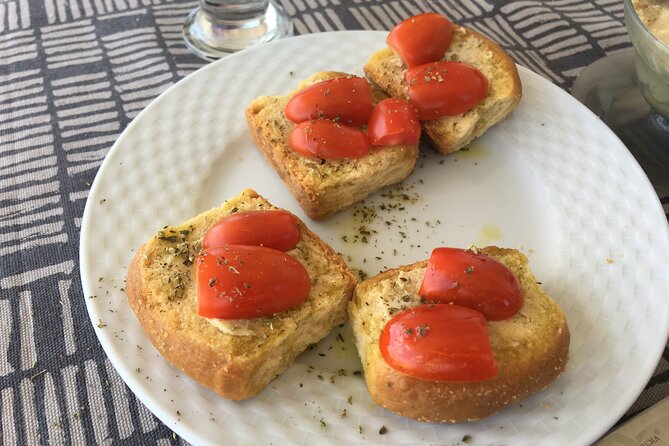
Mostra is a simple rusk or piece of bread spread with kopanisti, a spicy local cheese. You add tomato, oregano, and extra virgin olive oil. The dish is small, but it says a lot about island cooking: sturdy bread, sharp cheese, ripe tomato, dried herbs, and good oil do the work.
Kopanisti gives Mostra a stronger flavor than the mild feta found in many familiar Greek dishes. If you enjoy salty, spicy cheese, this may be one of the most memorable bites of the class. If you prefer gentle flavors, ask how much cheese to use before assembling your portion.
The tzatziki is more familiar, but making it yourself shows why the texture matters. Thick yogurt is combined with drained cucumber, olive oil, garlic, mint, lemon juice, and salt. Draining the cucumber keeps the dip from becoming watery, and balancing the garlic, lemon, and mint is a useful lesson you can repeat at home.
You also prepare Greek salad with tomatoes, cucumbers, onions, green bell peppers, feta, oregano, and olive oil. It is the internationally famous dish, but that does not make it filler. In a cooking class, it gives you a chance to taste how a few fresh ingredients depend on cutting, seasoning, and restraint.
Making kremidopita with local cheese
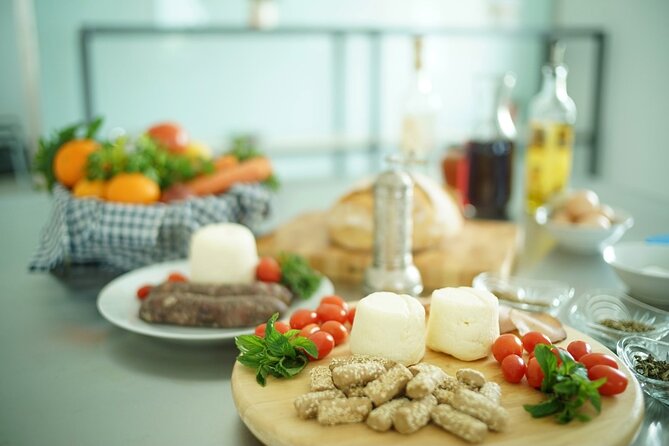
The main savory lesson is kremidopita, an onion and cheese pie. The onions bring a sweet, tangy flavor, while tirovolia, a creamy local cheese, softens the mixture. Dill and other herbs give the filling its final lift.
This is one of the dishes that makes the class feel tied to Mykonos. You are not just learning how to make a general Greek pie. You are using an island cheese and a recipe built around inexpensive ingredients that can feed a family.
Some classes may also include making filo dough. One family prepared filo for onion pie, cookies, rafiolia, bread sticks, and pizza, so the hands-on work can be broader than the sample menu suggests. The precise selection may vary, but filo work is likely to be one of the more useful skills if it is included.
Filo can be fiddly. That is part of the value of learning it with a chef, but it is also where the class may shift toward demonstration. A group of six found that a mix of hands-on work and watching suited them. If you want to roll and shape the dough yourself, make that preference clear.
Mixing Mykonian keftedakia
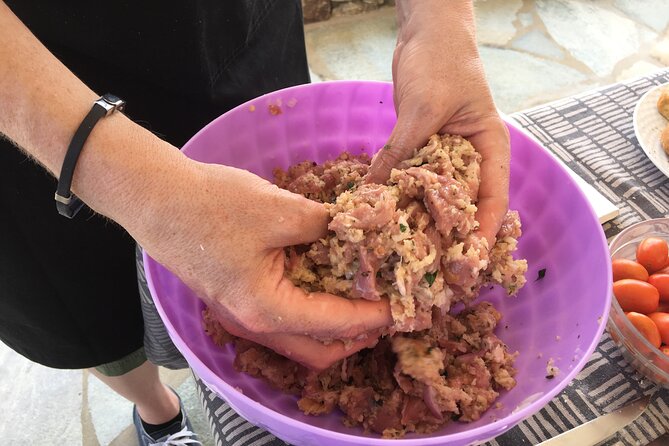
The other main dish is keftedakia Mykonou, pork meatballs made with hand-minced meat. The mixture includes grated onions, bread, eggs, oregano, mint, olive oil, and ouzo. Beef can be used on request, which is worth arranging before the class if you do not eat pork.
The ouzo is not there to make the meatballs taste like a drink. It adds a distinct anise note and links the dish to the flavors of Greece. Mint and oregano keep the meatballs from feeling heavy, while grated onion helps them stay tender.
This is a good dish for shared work. You can mix the ingredients, shape the meatballs, and learn how the texture changes depending on how firmly you handle the mixture. Because this is a private lesson, a chef can correct your technique without making you feel as if you are holding up a larger class.
The experience is not recommended for vegans. That warning is important because cheese, yogurt, eggs, meat, and honey appear throughout the menu. Vegetarians should ask about possible adjustments before booking, as only the use of beef instead of pork is specifically confirmed.
A few more Mykonos tours and experiences worth a look

Finishing with rafiolia, honey, and cinnamon
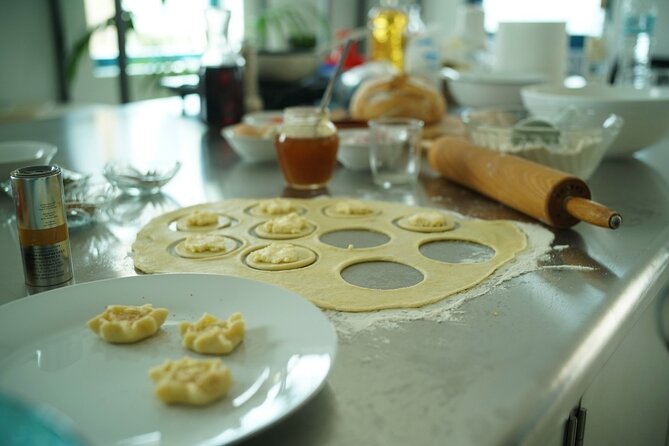
Dessert is rafiolia, fried dough that may contain tirovolia cheese. The finished sweets are topped with honey, orange, and cinnamon.
Rafiolia gives the meal a proper island finish: crisp dough, creamy cheese when used, bright orange, warm cinnamon, and honey. It also makes the class more than a lesson in savory food. You leave having worked through a complete meal from first bite to dessert.
The dessert can be especially appealing to families because shaping dough is easy to share. Younger cooks can take part without needing to manage a hot pan or complicated timing, while the chef handles the more technical parts.
As with the other dishes, the pleasure comes from eating what you have made. The class is not a quick tasting with a token cooking activity attached. You prepare enough food for a substantial dinner, and the meal is accompanied by local wine.
A long dinner built from simple ingredients
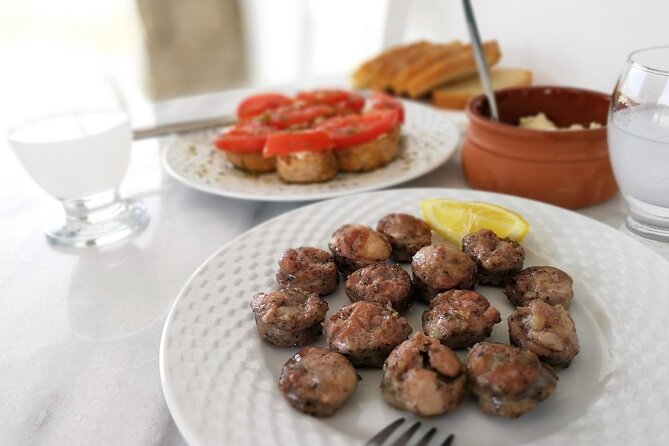
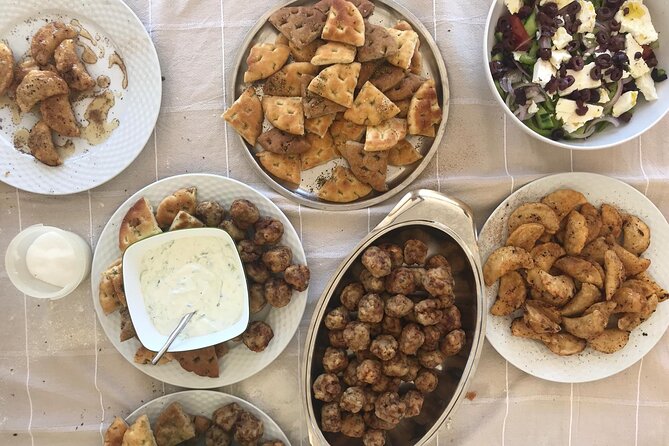
By the time the food is ready, you have a spread that can include Mostra, tzatziki, Greek salad, kremidopita, keftedakia, and rafiolia. The sample menu lists two starters, two main dishes, dessert, and salad, so you should arrive ready for a filling meal.
The local wine is included as part of the feast. That helps turn the class into a social evening rather than a cooking demonstration that ends at the stove. You can sit with your group, taste each dish, and compare the results while the chef explains the food.
I particularly like the way this format connects cooking and conversation. The strongest part of the experience is not a single recipe. It is the chance to see how a family-style Mykonian meal comes together from bread, cheese, vegetables, herbs, dough, and meat.
Still, you should be realistic about the amount of active cooking. Private does not always mean every person works every minute. With a larger group, some people may help while others watch. That is fine if your goal is a relaxed family evening, but less ideal if everyone expects a formal, hands-on culinary workshop.
Is $238.28 per person good value?
At $238.28 per person, this is a premium activity. You are paying for a private class, local instruction, a full dinner, wine, transport from the meeting point to the venue, and written recipes. You are also paying for personal attention rather than a large class where the chef must follow the same pace for everyone.
For a couple or a small group that values food and local contact, the price may make sense. The class can replace a restaurant dinner while giving you several hours of activity, conversation, and instruction. The recipes add lasting value, since you can recreate at least some of the meal at home.
For a larger family, the total cost rises quickly. One group of six found the class excellent but still felt it was somewhat expensive. That is the fair criticism here. The food itself is based on simple ingredients, so the price is not justified by rare products or an elaborate restaurant setting alone.
I would judge the value by your priorities. If you want the cheapest way to eat Greek food, choose a taverna. If you want a private evening with local hosts, a complete meal, and a better understanding of Mykonian home cooking, the cost is easier to defend.
Who will enjoy this Mykonos cooking class?
This class suits couples who want a shared activity beyond sightseeing. It also works well for families, including teenagers, because the menu offers several kinds of tasks: mixing, shaping, assembling, rolling dough, and tasting.
It is a good choice for anyone who wants to bring part of Mykonos home. The written recipes mean you do not have to rely on memory after returning from Greece. You can try the tzatziki, meatballs, onion pie, or rafiolia in your own kitchen.
Food lovers who care about local cheese should pay special attention. Kopanisti and tirovolia are central to the menu, and the connection to family cheese making adds a local thread that a standard Greek food class may not offer.
I would be more cautious if your group dislikes pork, dairy, eggs, honey, or strong cheese. Vegans should not book this activity as described. Groups looking for a fast, polished demonstration may also prefer another option, since the best parts involve conversation and shared work.
Practical details for your afternoon
The meeting point is in Ornos, and the start time is 4:30 pm. You are taken to the cooking location, then returned to the meeting point when the activity ends. The total duration is about three hours.
Confirmation is received when you book, and the mobile ticket is useful for keeping the details on your phone. The class is offered in English, and only your own group participates.
Plan this as an afternoon-to-evening activity rather than something to squeeze between beach time and an early dinner. The meal is substantial, so you probably will not want to reserve a full dinner immediately afterward.
Free cancellation is available if you cancel at least 24 hours before the start time. Cancellations or changes made less than 24 hours before the 4:30 pm start are not refunded or accepted, with cut-off times based on local time.
Should you book it?
Book this class if you want personal contact, local food, and a full meal rather than a quick cooking photo opportunity. The private format, family links to Mykonian cheese, patient instruction, wine, and take-home recipes make it a strong choice for couples and families who enjoy lingering over food.
Think twice if $238.28 feels high for a three-hour activity, or if you want every person in a large group actively cooking at all times. The value is strongest when you treat the class as a private cultural evening with dinner included, not as a low-cost meal or a professional cooking course.
FAQ
Where does the Mykonos cooking class start?
The activity starts at the meeting point in Ornos, Mykonos.
What time does the class begin?
The class starts at 4:30 pm.
How long does the cooking class last?
The activity lasts approximately three hours.
Is transportation included?
You meet in Ornos and are taken to the place where the class is held. The activity ends back at the meeting point.
Is the class private?
Yes. Only your group participates in this private activity.
What language is the class offered in?
The class is offered in English.
What food will I prepare?
The sample menu includes Mostra, tzatziki, Greek salad, kremidopita, keftedakia Mykonou, and rafiolia.
Can I request beef instead of pork?
Yes. Beef can be used instead of pork for the keftedakia on request.
Are recipes provided after the class?
Yes. Written recipes are provided so you can make the dishes at home.