REVIEW · EGGARES
Naxos: A Riverbank Adventure (Kinidaros – Eggares villages)
Book on GetYourGuide →Operated by Trekking Hellas Naxos · Bookable on GetYourGuide
A river walk plus village life on Naxos. I love the quiet riverbank scenery that cools down your hike fast, and I love that this tour pairs walking with real local culture in Kinidaros and Eggares. The only real catch: this is not a flat stroll, and you’ll want solid hiking shoes and decent fitness for the ups and downs.
You get convenient roundtrip pickup from your hotel and a small group limited to 12 people, so it feels personal instead of chaotic. The whole experience runs about 5.5 hours, ending with a traditional meal that actually tastes like the island (and not like a restaurant prepared for tourists). Expect a day that mixes history, water, shade, and good food.
In This Review
- Key highlights you’ll care about
- First stop: Kinidaros, where music matters
- From marble quarries to the first descent
- The Mill of Hadji: your cool riverbank transition
- Aghios Georgios, watermills, and the Pradouna Elders tower
- Eggares: quiet farming village energy
- The meal: family-style food that ends the day right
- How long is the hike, and what pace to expect
- What to pack (and the water rule that saves you)
- Transportation and small-group feel: how it makes the day easier
- Guides you might meet, and why their details matter
- Price and value: is $129 worth it?
- Who should book this Naxos riverbank hike
- Who should skip it
- Should you book the Naxos Riverbank Adventure?
- FAQ
- What is the duration of the Naxos riverbank hike?
- Where does the hike start and end?
- Is hotel pickup and drop-off included?
- How big is the group?
- What’s included in the price?
- What should I bring for the hike?
- Is this tour suitable for children or reduced mobility?
Key highlights you’ll care about
- Kinidaros music culture before the hike starts, with locals keeping Cycladic folk traditions alive
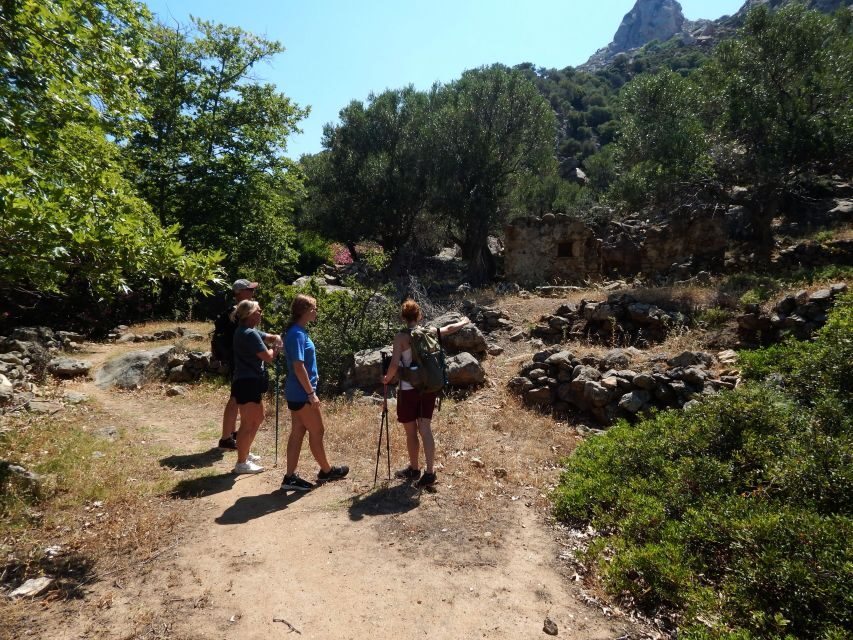
- Riverbank shade, ravines, lagoons, and abandoned watermills framed by a cool stone bridge
- A stop at the Eggares Olive Press Museum, including how olives were processed for village life
- Two village contrasts: Kinidaros quarry-and-music energy, then Eggares farmland calm
- A family-style meal at the end, plus a snack during the day
- Small-group pace with time for photos and breaks (not a speed-walk)
First stop: Kinidaros, where music matters
Most Naxos walking tours start with views. This one starts with character.
Kinidaros sits amid towering marble quarries, and at one time or another many residents worked those quarries. But the village is famous for something different: music. In Kinidaros, people don’t just listen to folk songs, they play. The result is that the opening feels less like a lecture and more like a living snapshot of the Cyclades.
What I like about starting here is that it puts the rest of the day in context. When you later pass churches, water mills, and farm settlements, it helps to know this is a working island with strong local traditions. You’re walking through places that once shaped daily life, not just past scenic backdrops.
One practical note: the activity is not suitable for kids under 12, and it’s not a fit choice if you have mobility limitations or low fitness. The walking sections are real.
You can also read our reviews of more tours and experiences in Eggares.

From marble quarries to the first descent
After Kinidaros, you leave the village on a dirt trail. This section is short but important because it gives you a distance look at the marble quarries above and around you. Then the path becomes cobblestoned as you gradually work your way down toward the river.
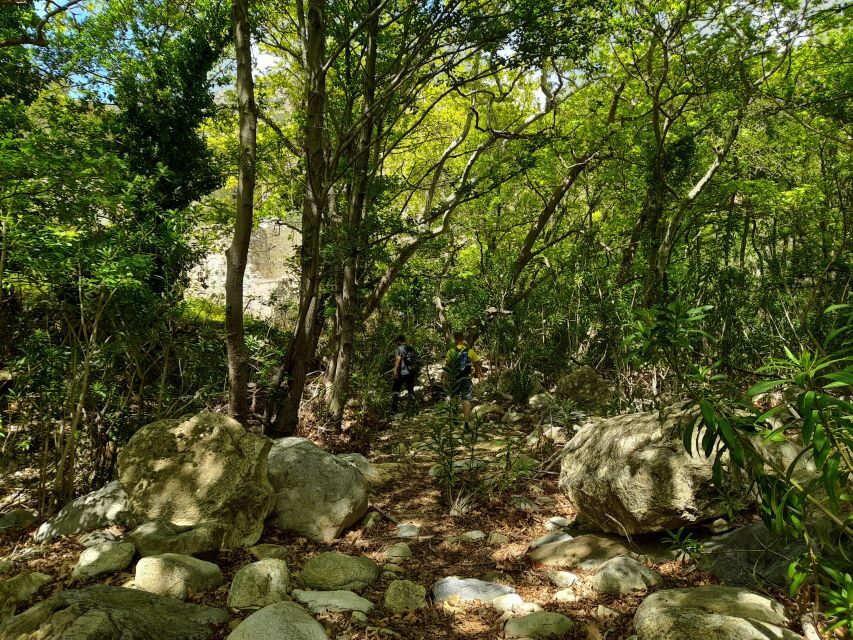
This is where you start to feel a change in the air. As the route drops into the ravine area, it gets cooler, shadier, and greener. Even if the top of the trail is sun-forward, the riverbank stretches bring relief.
The terrain also shifts. The trail actually traverses a small ravine, so you’ll be paying attention where you step, not just where you point your camera. If you’re tempted to wear trainers that are worn-out, don’t. Hiking shoes matter here.
The Mill of Hadji: your cool riverbank transition
Soon you reach the riverbanks, and everything changes again.
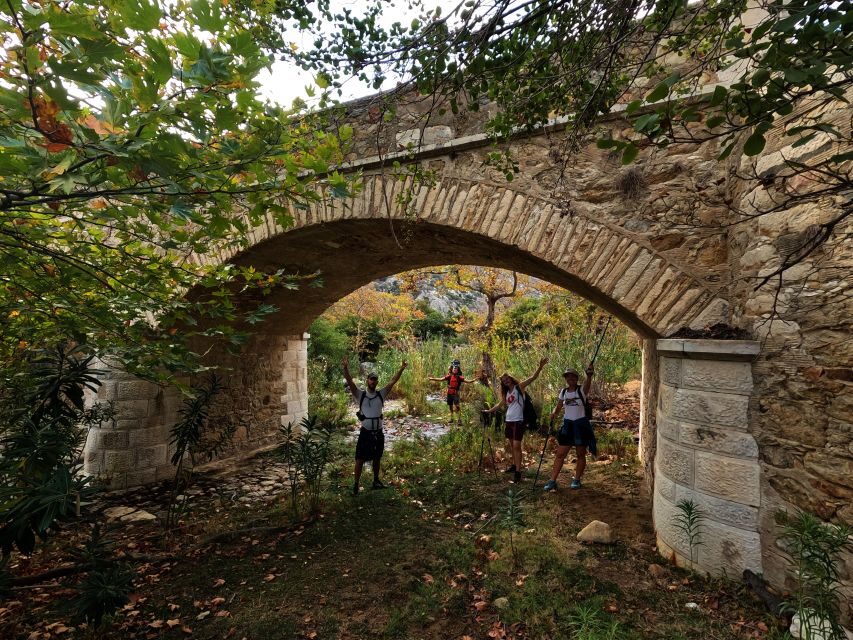
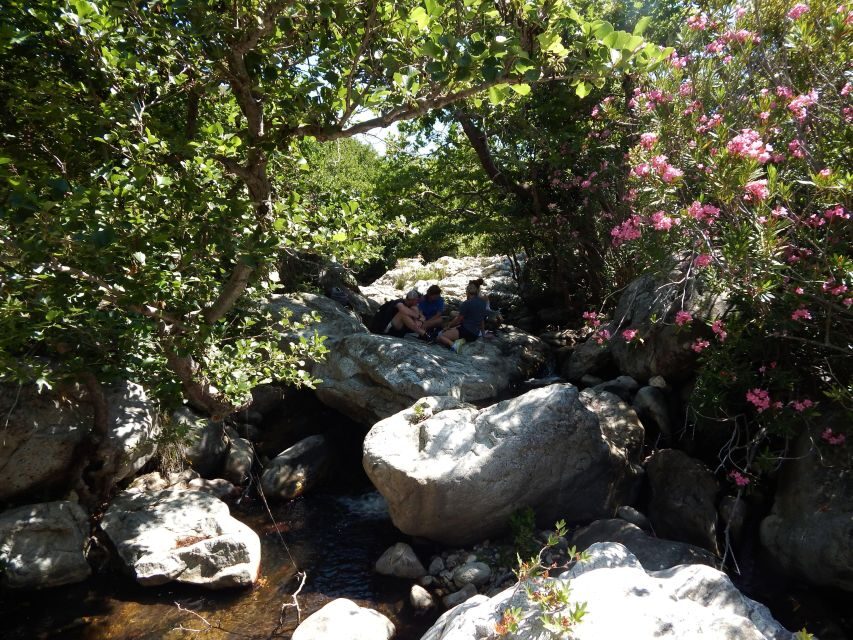
You pass the Mill of Hadji, a double-arch stone bridge built in the 18th century. It’s one of those structures that makes you slow down, because it feels like it belongs to a different rhythm of time. After that, you’ll notice the difference instantly: the air is cooler, shady spots appear, and vegetation thickens beside the water.
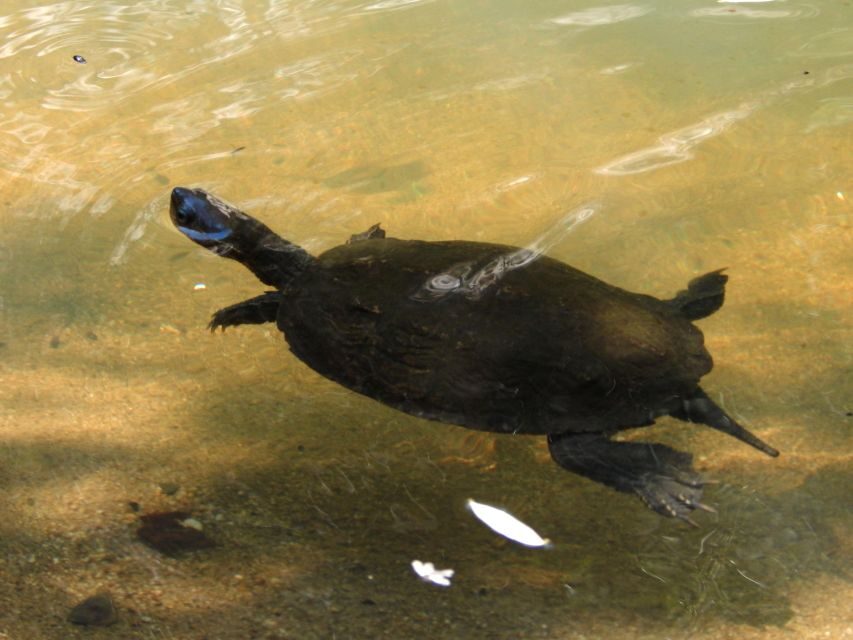
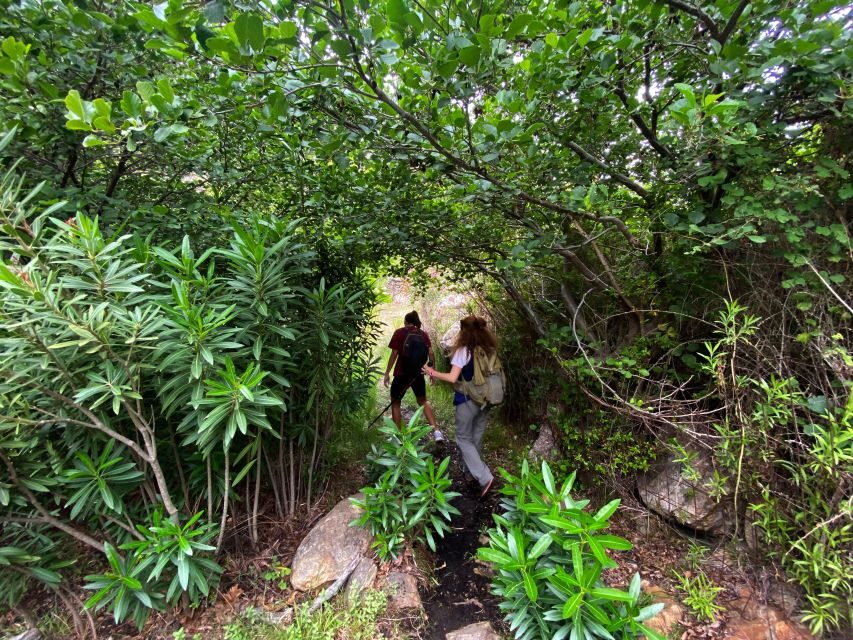
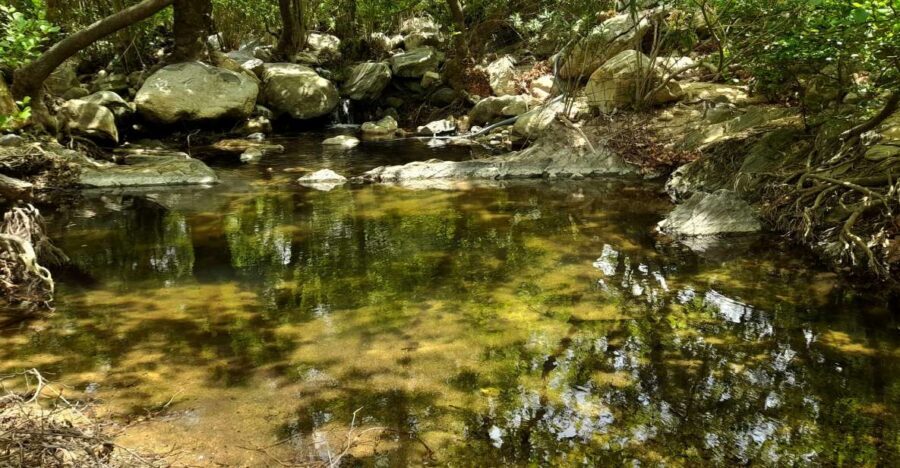
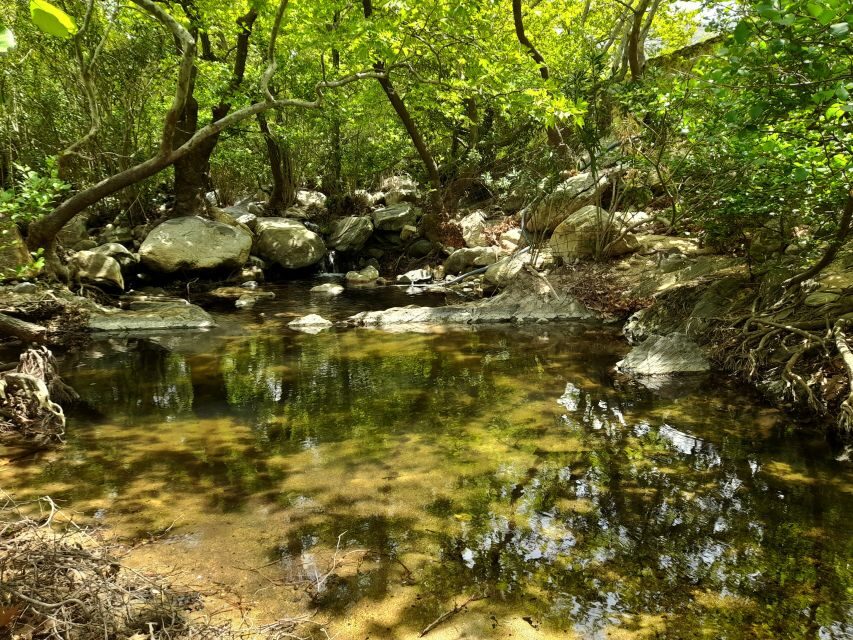
This is also where the day turns into a mix of water and leftovers. You’ll see abandoned watermills, lagoons, and small waterfalls. And around the water’s edge, you might spot wildlife like crabs and water turtles, plus plants such as oleander and plane trees.
For me, the value is simple: this is the part of Naxos that feels less “photogenic from afar” and more “alive up close.” You’re not just looking at a river system, you’re walking through it.
Aghios Georgios, watermills, and the Pradouna Elders tower
After the riverbank section, the trail continues past the serene country church of Aghios Georgios in the fertile Lagada area. Even if you’re not the type who stops for every church, this one works because it marks a shift from water-driven scenery to farmland. The surroundings feel productive, not just pretty.
Next comes a majestic four-arch water mill, followed by stretches through plane trees and reed beds. This repeated pattern is one reason the hike doesn’t get boring: you keep moving between slightly different “micro-worlds.”
As you go, you also pass the 18th-century tower of the Pradouna Elders. It’s a strong landmark that helps you orient yourself while the trail keeps moving. Then the route enters the traditional farm settlement of Mesa Geitonia.
Mesa Geitonia is where the hike stops feeling like a scenic route and starts feeling like a walk through how people lived off the land. You’re moving through settlements that grew around agriculture and water access, which is why the watermills matter so much. They weren’t random ruins, they were the island’s infrastructure.
Eggares: quiet farming village energy
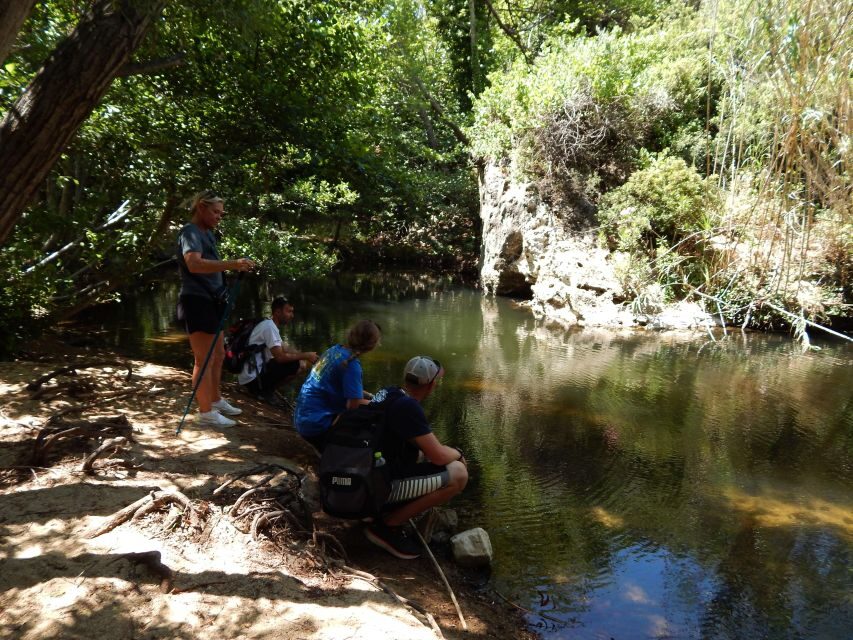
Eventually, you arrive in Eggares, an older farming village set in a fertile plain. This is a calmer ending than Kinidaros, and it’s a nice contrast: quarry-and-music up top, farmland stillness down here.
At Eggares, you visit one of Naxos’s oldest remaining olive mills: the Eggares Olive Press, recently renovated. The press dates back at least to the late 1800s and was used by the village community to process locally grown olives.
I like this stop because it answers the question you’re probably already asking while hiking beside mills and water: how did people actually turn plants into something they could store and share? The olive press museum gives that practical story. It’s not just an object, it’s proof of how agriculture supported daily life year after year.
The meal: family-style food that ends the day right
The hike ends with a leisurely meal at a traditional tavern in Eggares. It’s family-style, so you get a variety of home-style dishes instead of a single plate you can forget by dinner.
If you care about food, this is one of the best parts of the tour. You’ll be finishing on the “right note” because you’ve been walking through olive-growing terrain and watermill country all day. It doesn’t feel random. It feels earned.
Some guides also build in small tastings along the route when seasonal plants are available, and you may find yourself sampling things like figs, wild almonds, grapes, or blackberries during the walk. The day can also include tasting olive oil products such as chocolate-infused olive oil, depending on the route and what’s available. Either way, you’ll leave with that classic feeling: I ate like I was supposed to be here.
How long is the hike, and what pace to expect
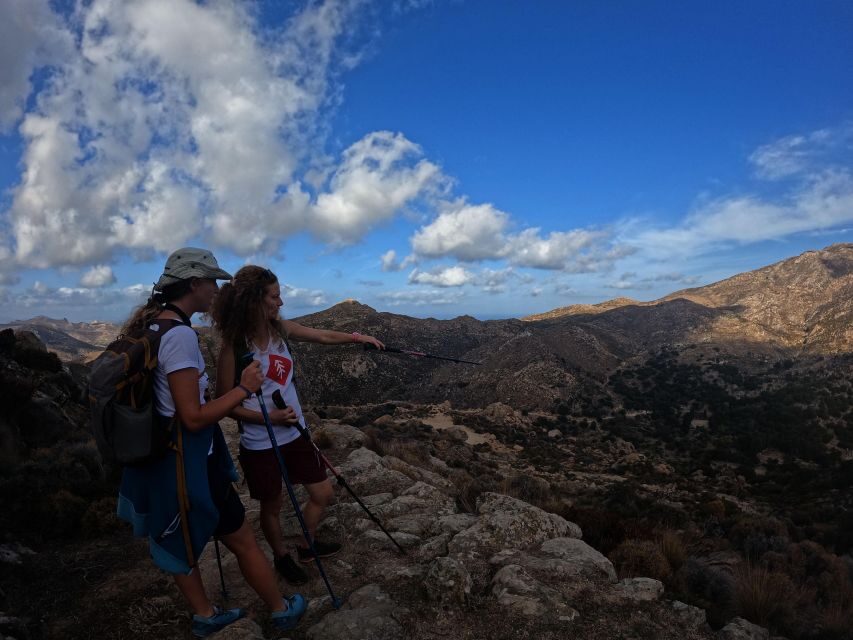
The total duration is about 5.5 hours, including the walking, stops, the olive press visit, and the meal. One useful detail to plan around: the route is roughly 10 km of walking with up-and-down sections.
This is why the tour isn’t a fit for low fitness or mobility-impaired travelers. Even if you’re in good shape, you should think of it as a true hike day, not a casual stroll.
You’ll benefit most if you’re comfortable with:
- uneven cobbles and stone sections
- a dirt trail portion early on
- stretches through ravine and riverbank areas where you’ll want steady footing
- walking in heat if you’re touring during warmer months
What to pack (and the water rule that saves you)
Bring the basics and bring them on purpose. The tour recommends:
- hiking shoes
- a daypack
- sunscreen, sunglasses, and a hat
- a windbreaker (for breezy riverbank moments)
- comfortable clothes
- water
You should bring your own personal water bottle. The recommendation is at least 1.5 liters per person, and the tour uses an environmental policy to eliminate plastic water bottles. Plan ahead so you’re not stuck buying water at the start.
A small tip: if you pack snacks or electrolytes, keep it simple. This tour already includes a snack, and you’ll have a proper meal at the end.
Transportation and small-group feel: how it makes the day easier
One of the smartest parts of this experience is the logistics done for you.
The tour includes roundtrip hotel pickup and drop-off, with you asked to wait outside your accommodation about 5 minutes before the pickup time. You’ll get the exact pick-up time by email the day before. That alone removes a lot of hassle on Naxos, where “getting there” can easily eat half your energy.
The group is limited to 12 participants, and that small size matters on a hike. You move together, the guide can watch the pace, and you’re less likely to feel like you’re being rushed through every stop.
Guides you might meet, and why their details matter
The tour uses English-speaking Trekking Hellas guides, and live guidance can include Greek, English, and Russian.
From past experiences on this route, guides like Nick and Anastasia have led groups, and their strength is explaining what you’re walking through: the island’s history and mythology, local vegetation, and what animals or birds you might notice along the trail. That kind of guidance turns a scenic hike into a story you can actually remember.
Price and value: is $129 worth it?
At $129 per person for about 5.5 hours, this tour is priced like a full-service outing, not a cheap add-on. What makes it feel worth it is the combination of items that are usually extra on other tours:
- English-speaking guides
- hotel pickup and drop-off
- traditional meal at the end
- olive press museum visit
- a snack during the day
- first aid kits and necessary equipment
- liability insurance and taxes included
In other words, you’re paying for guided time plus real “in-between” costs like transport and meals. If you’re visiting Naxos without a rental car, the pickup and drop-off can be a big chunk of the value by itself.
If you’re already carrying your own snacks and planning to hike on your own, you could reduce cost. But you’d lose the olive press museum stop and the guided explanation that ties the watermills, towers, and villages together.
Who should book this Naxos riverbank hike
This tour makes the most sense for you if you want:
- a guided hike that mixes villages, water, and farming rather than only viewpoints
- a cultural stop at an olive press museum that explains daily island life
- a small-group day with a finishing meal you don’t have to plan
It’s especially good if you like practical stories. This route naturally connects marble quarries, watermills, and olive production. Even when you don’t consider yourself a history person, you’ll start to see the logic of the place.
Who should skip it
Skip this one if:
- you want a flat, low-effort walk
- you have limited mobility
- you’re traveling with children under 12
- you’re over 70 or you know you’ll struggle with 10 km and uneven terrain
This isn’t meant to be gentle. It can be pleasant, but it still demands real hiking effort.
Should you book the Naxos Riverbank Adventure?
Yes, if you want a half-day that feels like inner Naxos, not just coastlines and selfies. The riverbank shade, the mill-and-water storytelling, and the olive press visit make the day coherent. Add in the family-style meal and the hassle-free hotel pickup, and you get good value for $129.
If you hate uneven ground, plan to hike more than 5 km, or you’re traveling with limited fitness, you might be happier choosing something shorter or flatter. But if you can handle a true 10 km hike with ups and downs, this is a memorable way to see Naxos beyond the obvious.
FAQ
What is the duration of the Naxos riverbank hike?
The tour lasts about 5.5 hours.
Where does the hike start and end?
You start in the village of Kinidaros and finish in Eggares, where you also have your olive press visit and meal.
Is hotel pickup and drop-off included?
Yes. The tour includes roundtrip local transportation with pickup and drop-off from your hotel or accommodation.
How big is the group?
The group is small, limited to 12 participants.
What’s included in the price?
Included items are English-speaking Trekking Hellas guides, local transportation (pickup and drop-off), a traditional meal, a visit to the olive press museum, a snack, first aid kits and necessary equipment, liability insurance, and taxes.
What should I bring for the hike?
Bring hiking shoes, sunscreen, sunglasses, a hat, a windbreaker, water (at least 1.5 liters per person is recommended), comfortable clothes, and a daypack.
Is this tour suitable for children or reduced mobility?
No. It’s not suitable for children under 12, people with mobility impairments, people with low level of fitness, or people over 70.