REVIEW · CORFU
Small-Group Food and Cultural Tour in Corfu
Book on Viator →Operated by Corfu Walking Tours · Bookable on Viator
Corfu tastes better with a guide’s story. This UNESCO Old Town walk pairs real sights with real food, from Greek brunch pies to a full seated meal with pastitsada and ouzo. I like that it’s organized for small groups (so you can actually hear answers), but the trade-off is lots of on-foot time on narrow streets—wear grippy shoes.
If you want Corfu in one easy afternoon, this is a strong pick. You’ll hit major landmarks like the Old Fortress, Spianada (with Liston), and the Holy Church of St. Spyridon, then slow down for tastings that make the island’s flavors make sense. Guides such as Nausica, Alice, Valia, and Electra are mentioned in standout experiences, and that local enthusiasm is a big part of why the tour works.
In This Review
- Key Highlights to Expect
- Where the Tour Starts: Old Fortress to Spianada Without the Confusion
- Spianada and Liston: The Square, the Cafés, and the Cricket Quirk
- St Michael and St George Palace: English Rule, Now Asia on Display
- Holy Church of St. Spyridon: A Short Stop That Lands a Big Cultural Note
- The Old Town Hall (San Giacomo Theatre): Venetian Neighborhood Layers
- Evraiki (Jewish Quarter): Where the Alleys Tell a Harder Story
- Eating Your Way Through Corfu: Brunch, Olive Oil, and Pastitsada With Ouzo
- How the Pace Works: Walking Time, Rain, and the Real-World Group Size
- Price and Value: Is $108.89 Worth It?
- Who This Tour Suits (and Who Might Want a Different Option)
- Should You Book This Corfu Food and Cultural Tour?
- FAQ
- How long is the Small-Group Food and Cultural Tour in Corfu?
- What food is included?
- What major sights will we see?
- Is it a small group?
- Where do I meet the guide?
- Is the tour in English?
- Does weather affect the tour?
Key Highlights to Expect
- Small-group Old Town pace with stops you can actually linger at
- Spianada + Liston for the town’s public-square, café-life vibe
- St Michael and St George Palace and Corfu Museum of Asian Arts (15,000 works)
- Evraiki (Jewish quarter) for a different side of Old Town’s layout
- Brunch-to-meal flow featuring pies, yoghurt, ginger beer, and pastitsada
- Olive oil and spice tastings with vendor context you can take home
Where the Tour Starts: Old Fortress to Spianada Without the Confusion
You start on Agoniston Politechniou in Kerkira, and the guide meets you in front of the Old Fortress at the statue of Schulemburg. It’s a clear landmark start, and you’ll get a short intro about the monument before you move into the historical center. That outside briefing matters: it helps you stop seeing the fortress as just scenery and start understanding it as part of how Corfu defended itself and stayed connected to different empires.
From there, you work toward Spianada, the heart of the town’s public space. Expect an easy-to-moderate walking rhythm, but don’t underestimate how much ground you cover. Old Town streets are narrow, and you’ll be turning corners often. If it’s raining, you can still do the tour—you’ll just want a hooded layer and shoes that don’t slip.
You can also read our reviews of more food & drink experiences in Corfu
Spianada and Liston: The Square, the Cafés, and the Cricket Quirk
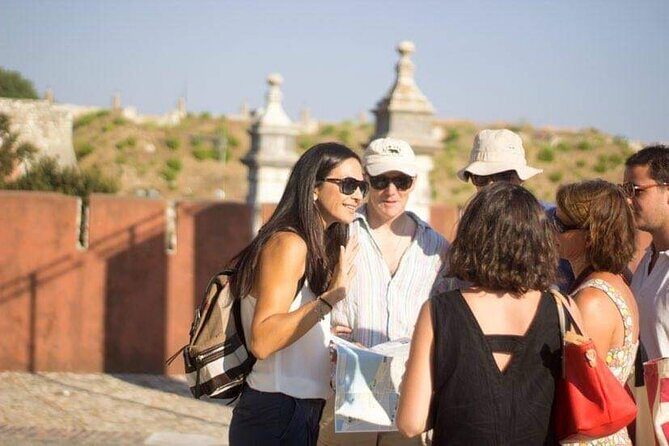
Spianada is the kind of place you recognize even if you’ve never been to Corfu before. It’s the town’s biggest open square area, historically tied to Venetian influence (the word behind it is linked to a Venetian term for an open flat space). The square also carries French influence, since the French helped shape it into the public square it feels like today.
Look closely at Liston, the arcaded side lined with cafés and restaurants. Even if you don’t stop to eat there yet, it’s worth watching the way the space “frames” the street life. That’s the point of bringing you here during a walking food tour: it’s not just history trivia—it’s the living backdrop for how Corfiots eat, meet, and people-watch.
One extra detail I love here: cricket matches happen on the Esplanade, and Corfu is the only place in Greece where the sport is played. It’s a small fact, but it captures the island’s habit of absorbing outside influences and making them its own.
St Michael and St George Palace: English Rule, Now Asia on Display
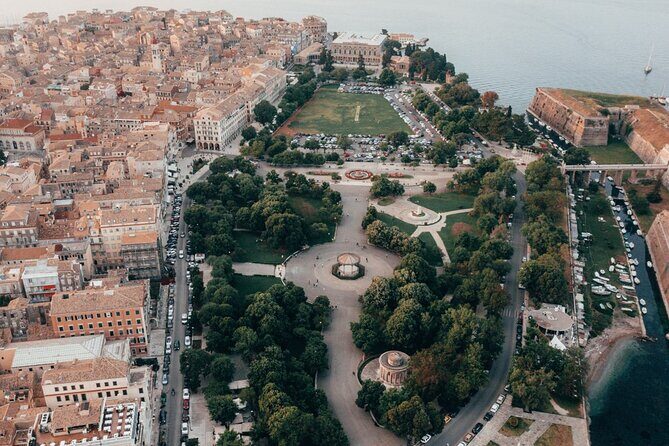
A big reason this tour feels more than just snack stops is that you also get architecture with a story. On the northern part of Corfu’s Old Town square area is the Palace of Saint Michael and Saint George. It’s a major building from the English rule period (1814 to 1864), built at the request of British Lord High Commissioner Sir Thomas Maitland.
What I like: you’re not only told that the British were here—you’re shown what their authority looked like in stone and layout. Today, the palace houses the Corfu Museum of Asian Arts, a museum focused on art and antiquities from the Far East and India. It’s founded in 1928, and the collection is around 15,000 works.
Even if you don’t plan to spend hours inside a museum on a food tour, the stop adds depth. You’ll understand why Corfu’s connections weren’t only Mediterranean—there were global threads too.
Holy Church of St. Spyridon: A Short Stop That Lands a Big Cultural Note

You’ll visit the Holy Church of Saint Spyridon, Corfu’s patron saint and known as a miracle worker. The timed element is clear: about 15 minutes, and admission is free.
This is a “short but meaningful” kind of stop. The benefit for you is that you get the religious and cultural identity of the island without turning the tour into a long museum day. It’s also a good moment to slow down, take a breath, and get context before you get back into the walking-and-tasting rhythm.
The Old Town Hall (San Giacomo Theatre): Venetian Neighborhood Layers

As you move through the narrow lanes, you pass Town Hall Square and the Old Town Hall building, linked with San Giacomo Theatre. This area was once the exclusive Venetian neighborhood with opera house and noble villas around it. Later, in 1720, the building hosted the Noble Theatre of Saint Giacomo of Corfu, and by 1903 it had become the town hall.
The stop is around 30 minutes, with free admission. I like how this part of the route reinforces a key point: Corfu’s Old Town isn’t a single story. It’s overlapping chapters—Venetian to British to modern civic life—all sitting in the same streets.
A few more Corfu tours and experiences worth a look


Evraiki (Jewish Quarter): Where the Alleys Tell a Harder Story
Then you reach the Jewish quarter, historically the Venetian “ghetto,” still called Evraiki in Greek. The layout you’ll see is worth noticing: alleyways lined with faded, multistoried houses, with the kind of dense street pattern you associate with Venice.
One reality the tour brings up is that the area lost its urban unity due to bombardments during the Second World War. It’s not a long stop, but it adds weight. After the café squares and fortress views, you get a more human map of what survived—and what changed.
If you prefer your historical learning to come through place rather than long lectures, this is one of the better segments. You can stand in the street and connect the architecture to the island’s more complex past.
Eating Your Way Through Corfu: Brunch, Olive Oil, and Pastitsada With Ouzo
Now for the part you’re really booking: eating.
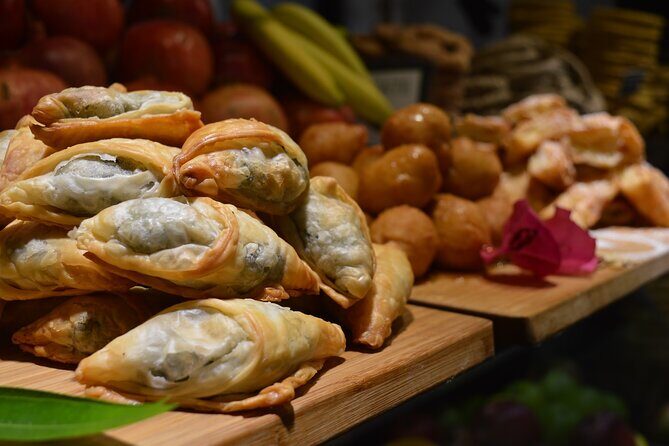
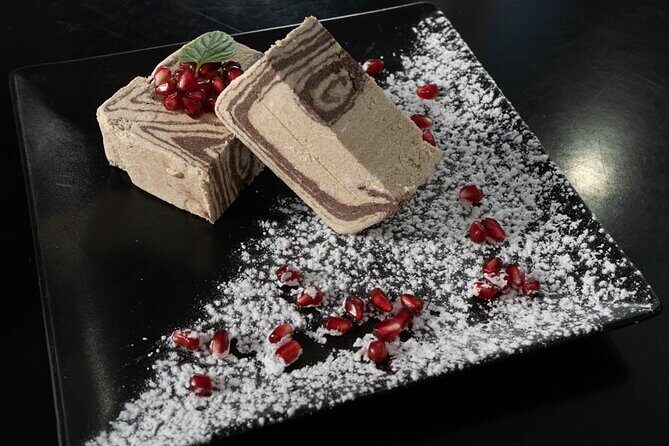
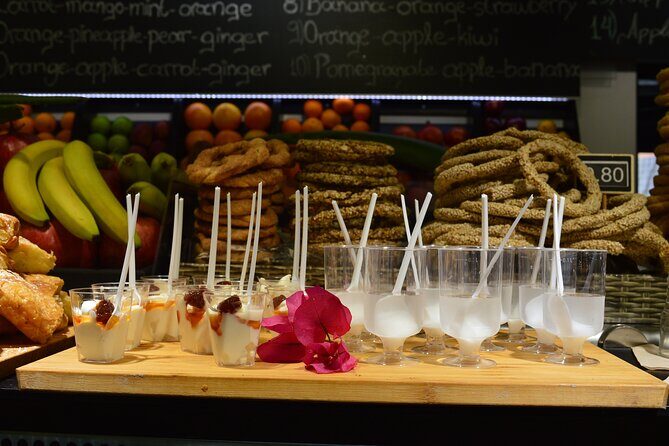
The tour begins with a Greek brunch stop. Think spinach pies, cheese pies, Greek yoghurt, and ginger beer. This early set is smart. It’s light enough that you’re not stuffed before the walking begins, yet it introduces classic Corfu flavors right away.
From there, you add snacks and guided tastings. One of the most praised moments is an olive oil tasting where a local vendor introduces you to the history of olives and offers the local spices used in Corfiot cooking. This is the kind of stop that changes how you shop later. Olive oil and spices stop being generic pantry items and become something tied to the island’s daily cooking choices.
Then you’ll reach the seated lunch portion. The featured main dish is pastitsada—stewed beef with tomatoes and spices like cinnamon, cloves, black pepper, sweet paprika, and hot paprika, served with pasta. You’ll also get Greek salad and ouzo.
A couple of useful notes based on real experiences: people often come in thinking they’ll taste a little. Then the portions add up. One review-style takeaway I’d give you: show up hungry, because the total food amount is more “meal day” than “samples only.”
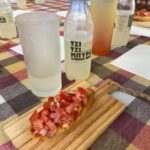
Also, the tour has a reputation for drink variety at stops—some experiences mention tastings like kumquat liqueur and limoncello, and the sit-down meal portion paired with wine. Exact offerings can vary by stop, but the direction is consistent: you’re not just eating; you’re sampling.
How the Pace Works: Walking Time, Rain, and the Real-World Group Size

This is marketed as a small-group experience. Two details matter here:
- There’s a maximum of 20 travelers overall.
- The Old Town portion is specifically described as a group of maximum eight.
In practical terms, that smaller Old Town segment is what protects the vibe. You can hear the guide’s explanations without competing with 30 other people funneling around the same corner.
Expect a fair amount of walking. Old Town isn’t built for long, wide sidewalks, so you’ll be moving at a steady pace with breaks for tastings and short sight stops. On rainy days, the tour still runs, and you can dodge the heaviest showers—just be prepared for wet stone and the kind of weather that makes a hooded jacket worth it.
Price and Value: Is $108.89 Worth It?
At $108.89 per person for about 3 hours, you’re paying for three things at once:
- Guided Old Town routing that takes you to major sights in a logical order.
- A built-in food progression (brunch, tastings, then a fuller seated meal).
- Local vendor time, especially around olive oil and spices, which is where the tour goes from eating to learning.
If you were to do this DIY—find the Old Fortress meeting point, navigate Spianada, fit in St. Spyridon, squeeze in Evraiki, then plan multiple food stops—you’d spend a lot of energy and still might miss the “why” behind the flavors. Here, someone handles the chain for you.
One more value clue: the tour is booked, on average, about 53 days in advance. That doesn’t mean you can’t get a spot last minute, but it does suggest it’s popular enough that you should lock it in earlier if your dates are fixed.
Who This Tour Suits (and Who Might Want a Different Option)
This is ideal if you:
- Want a short, guided Old Town experience without turning it into a full-day sightseeing marathon.
- Like your history connected to everyday life—food, markets, and architectural layers.
- Appreciate tasting stops led by local shopkeepers, especially olive oil and spice vendors.
You might choose something else if you:
- Have limited mobility or hate walking on uneven, narrow street sections. The tour is manageable for most people, but it is still a walking tour.
- Prefer mostly museums or mostly viewpoints. This is history plus food first, not a pure sightseeing crawl.
Should You Book This Corfu Food and Cultural Tour?
Yes, if you want Corfu in one efficient hit: UNESCO Old Town landmarks paired with real eating, plus context that makes the flavors feel tied to place. The strongest reason to book is how well the format balances sights + food in a small-group pace, ending with a proper meal rather than a snack parade.
I’d book it when:
- You’re in town for a short stay and want to cover Old Town quickly.
- You want to learn how Corfiot food reflects the island’s outside influences.
- You like experiences that leave you full and with a few new things to look for when you shop.
Bring comfortable shoes, and do yourself a favor: keep your appetite open. This tour is designed for people who are ready to eat.
FAQ
How long is the Small-Group Food and Cultural Tour in Corfu?
The tour runs for about 3 hours.
What food is included?
You’ll get a brunch with spinach pies, cheese pies, Greek yoghurt, and ginger beer. The lunch includes pastitsada, Greek salad, and ouzo. You’ll also have snack stops such as an olive oil tasting and a guided introduction to local spices.
What major sights will we see?
You’ll explore Corfu’s Old Town with stops that include the Old Fortress area, Spianada, the Palace of Saint Michael and Saint George (Corfu Museum of Asian Arts), the Holy Church of Saint Spyridon, the Old Town Hall (San Giacomo Theatre), and the Jewish quarter known as Evraiki.
Is it a small group?
Yes. The Old Town part is described as a group of maximum eight, and the overall tour has a maximum of 20 travelers.
Where do I meet the guide?
Meet at Agoniston Politechniou, Kerkira 491 00, Greece, specifically in front of the Old Fortress at the statue of Schulemburg. The tour ends back at the same meeting point.
Is the tour in English?
Yes, it’s offered in English.
Does weather affect the tour?
Yes. The experience requires good weather. If it’s canceled due to poor weather, you’ll be offered a different date or a full refund.