REVIEW · RHODES
Winery Tour, Tasting and cooking with the Winemaker in Rhodes
Book on Viator →Operated by Curioseety SRLS · Bookable on Viator
A glass of wine is only part of this Rhodes outing. You also walk among the vines, cook traditional dishes, eat the food you helped make, and learn how local tsipouro is distilled. It is a hands-on visit rather than a quick tasting-room stop.
I like the way the experience connects wine with the food on the table. I also like the small maximum of 15 people, which should give you a better chance to ask questions and work directly with Jason, the guide and winemaker. The main consideration is the fixed 11:00 a.m. start and the need to reach the meeting point in Paradisi yourself.
In This Review
- Key points at a glance
- Why this Rhodes winery visit feels different
- Starting among the vines at 11:00 a.m.
- Five wines at the outdoor bar
- Cooking traditional Rhodes dishes with Jason
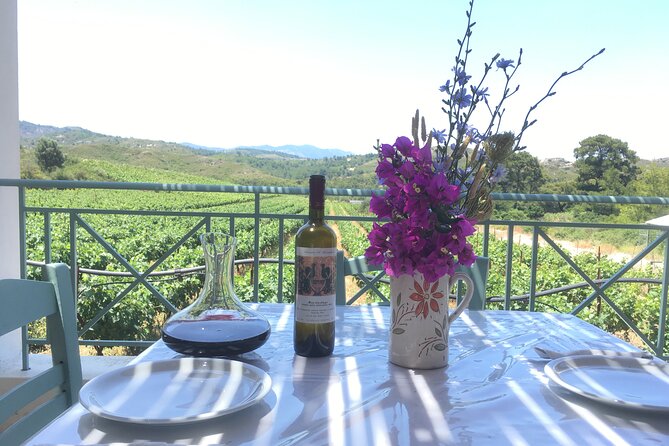
- A generous meze meal overlooking the vineyard
- Learning how Rhodes makes tsipouro
- What the $94.93 price includes in practical terms
- Timing, meeting point, and cancellation details
- Who will enjoy this experience most
- Should you book the Rhodes winery and cooking tour?
- FAQ
- Where does the winery experience begin?
- What time does the tour start?
- How long does the activity last?
- Where does the activity end?
- How many wines are included in the tasting?
- Is the cooking class required?
- What food is served during the meal?
- What is tsipouro?
- Is the experience offered in English?
- What is the cancellation policy?
Key points at a glance
- Five wines in one guided tasting: Learn what you are drinking and how each wine is made, rather than simply receiving a lineup of glasses.
- Cooking with Jason: Help prepare traditional Greek dishes, with recipes sent by email afterward.
- A full meze meal: Expect bread, salads, dips, and other mostly vegetarian specialties, not just a few sample bites.
- A vineyard walk first: See local grape varieties and hear about sustainable growing, fermentation, and aging.
- Tsipouro to finish: Visit the distillery area, learn how grape distillate is made, and taste it as a traditional digestive.
- A compact half-day outing: The visit lasts about three hours and returns to the same meeting point.
Why this Rhodes winery visit feels different
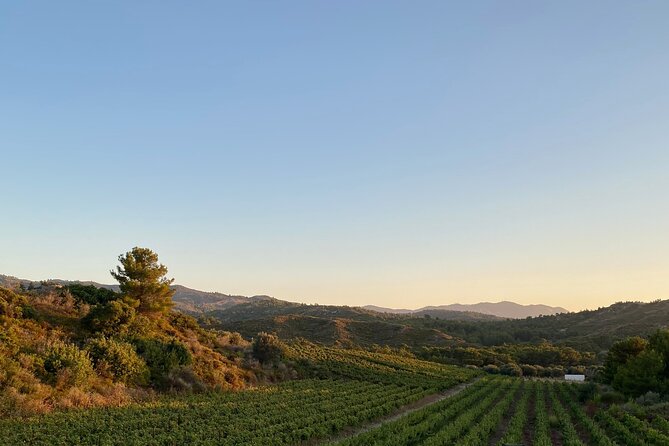
Many winery visits ask you to stand at a bar, taste a few pours, and listen to a short explanation. This one gives you several ways to take part. You walk through the vineyard, sit down for a structured tasting, cook with the host, share a meal, and finish with a distillate tasting.
That sequence matters. Wine makes more sense when you see where the grapes grow and how they move through the production process. It also makes more sense when you taste it beside Greek foods such as tzatziki, eggplant salad, and tirokafteri.
I especially like that the meal is not treated as an afterthought. The food is part of the lesson. You prepare traditional dishes inspired by local recipes and seasonal ingredients, then eat them in the restaurant area overlooking the vines.
The tone appears to be relaxed and social. Jason is described as patient, funny, and very well informed about wine. That combination suits a cooking class well. You can ask basic questions without feeling out of place, while people who already care about wine should still find useful detail in the production explanations.
You can also read our reviews of more food & drink experiences in Rhodes



Starting among the vines at 11:00 a.m.
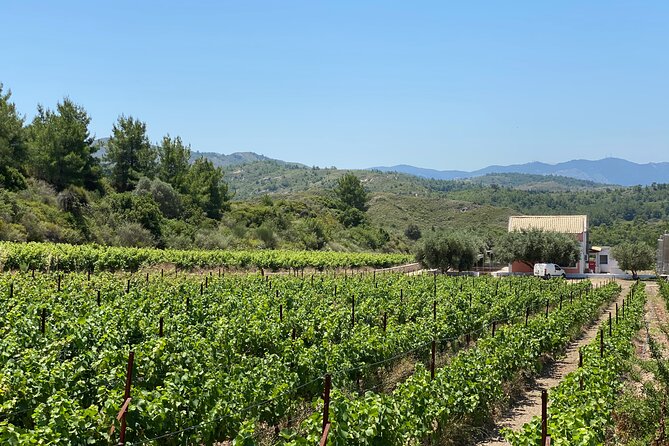
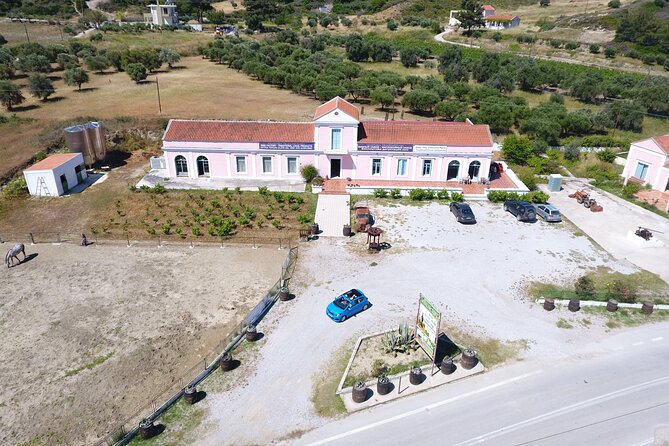
The tour begins at Epar.Od. Kalamonas-Psinthou 6 in Paradisi, Rhodes, at 11:00 a.m. You should plan this first stop carefully, since the activity starts and ends at the same location.
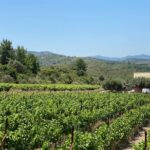
The opening vineyard walk gives you a look at local grape varieties and the way the winery approaches sustainable viticulture. You also hear about traditional vinification methods, from cultivation through fermentation and aging.
This is the part that gives the tasting some useful context. Instead of hearing only that a wine is dry, fresh, or full-bodied, you learn about the work before it reaches your glass. The host explains each stage of production, so you can connect the vines, the cellar, and the finished wine.
The walk may be less appealing if you want a seated tasting from the first minute. It is also worth keeping the timing in mind if you are sensitive to heat or prefer a late-day wine visit. The start is in the morning, and the first section takes place outdoors.
Still, I would not skip it. The vineyard walk is where the outing becomes specific to Rhodes. A tasting could happen in many places. Seeing the local grapes and hearing how they are grown gives this one a stronger sense of place.
Five wines at the outdoor bar
After the vineyard visit, you settle at the outdoor wine bar for a guided tasting of five wines. The point is not simply to count the pours. You learn about the winemaking and oenological choices behind the labels.
That makes this a good fit for someone who wants to understand wine without signing up for a formal course. You can ask why a wine tastes the way it does, how fermentation affects it, or what aging contributes. The exact wine lineup is not provided, so you should not book expecting a particular grape, vintage, or style.
I like the balance here. Five wines is enough variety to notice differences, but the tasting remains part of a wider visit rather than taking over the whole morning. You then have the cooking and meal ahead, so you are not spending three hours on technical wine talk alone.
The outdoor setting also helps keep the tasting informal. Still, this is not a private tasting for a couple or a specialist wine consultation. With up to 15 people, the pace and amount of individual attention can vary.
Jason’s role is important. The strongest comments about the outing focus on his patience, humor, and ability to explain wine clearly. He also tells jokes, which can make technical material easier to follow. The tour is offered in English, so you should be comfortable taking part in that language.
Cooking traditional Rhodes dishes with Jason
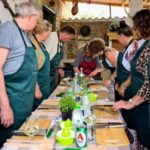
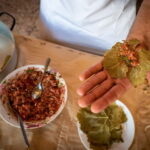
The cooking session is interactive, though participation is optional. I would join in. You get more from the class when you chop, mix, season, or assemble the food yourself, and the cooking gives you a better sense of how the wines work with Greek flavors.
The recipes draw on local traditions and seasonal ingredients. The precise dishes prepared during the class are not guaranteed in the information provided, but the meal includes familiar Greek staples and other regional specialties.
This is not presented as a long professional cooking lesson. It is a social food activity tied to the winery. You learn enough to make the dishes, then sit down to eat them with the wines. That keeps the class accessible for people who enjoy food but do not want a demanding kitchen session.
A useful extra is that recipes for the dishes you make are sent by email afterward. That small touch gives the experience some value after you return home. You can try to repeat part of the meal instead of leaving with only photographs and a vague memory of the flavors.
The cooking portion should suit couples, friends, and families who like to take part rather than watch. It may be less suitable if you want a quiet tasting with no group activity. Participation is optional, but the experience makes the most sense when you treat the kitchen as part of the main event.
A generous meze meal overlooking the vineyard
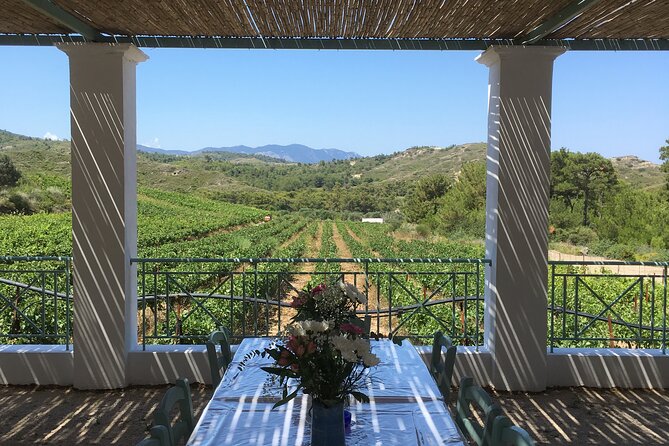
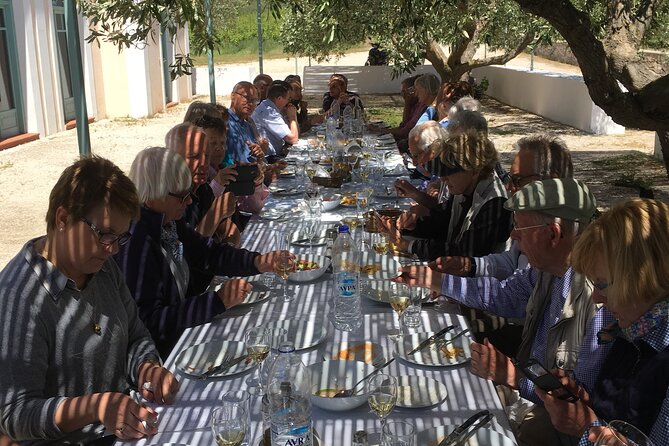
The meal is one of the biggest reasons to consider this tour. It is served in a restaurant area overlooking the vineyards and follows the cooking session. The menu is mostly vegetarian and is built around shared plates.
You can expect local bread, Greek salad, tzatziki, tirokafteri, eggplant salad, and other traditional specialties. The portions are described as generous, so this is not a tasting where you should plan to find lunch immediately afterward.
The meze format is ideal for wine. You can try a little of several dishes, compare how the flavors change each wine, and return to the foods you like best. Creamy tzatziki, spicy tirokafteri, eggplant, salad, and bread all bring different textures and levels of seasoning to the table.
The mostly vegetarian menu is a strength for many people, but it is also something to note before booking. The provided menu does not list meat, seafood, allergy accommodations, or substitutions. If you have dietary restrictions, confirm what can be adjusted before you go rather than relying on the standard spread.
I like the meal because it gives the visit a proper ending instead of treating food as decoration. You sit down, talk, and enjoy the setting. The wine tasting becomes more memorable when it is tied to a generous local meal.
You can also read our reviews of more cooking classes in Rhodes



Learning how Rhodes makes tsipouro
The final part takes you into the distillery area. Here you learn about distillation and taste tsipouro, a local grape distillate traditionally served as a digestive.
This is a useful contrast with the wine tasting. Wine is made through fermentation, while tsipouro comes from distillation. Seeing both processes in the same visit helps explain how grapes can become very different drinks.
Tsipouro can be stronger and more direct than wine, so take the tasting at your own pace. The description does not state the amount served or offer a nonalcoholic alternative. If you do not drink spirits, you may want to ask the host what your options are.
The distillery visit also adds a local custom that you might not encounter on a standard Rhodes sightseeing tour. It is a short final lesson, but it gives the day an extra layer of character.
What the $94.93 price includes in practical terms

At $94.93 per person, this is not the cheapest way to taste Greek wine. It is also more than a basic vineyard walk. The price covers a three-hour package with the vineyard visit, a five-wine tasting, cooking instruction, a substantial meze meal, and tsipouro.
The value depends on what you would otherwise book separately. If you paid for a winery tasting and then bought a full lunch, the cost would rise quickly. Here, the wine, food, instruction, and setting are combined in one short outing.
I see the strongest value in the food. A few wine samples alone would not justify this price for many people, but a generous meal and a cooking class make it a fuller half-day activity. The recipe follow-up also gives you something practical to take home.
The group limit of 15 is another positive. It is not a private tour, but it is small enough to feel more personal than a large coach stop. You should still expect to share the kitchen, tasting, and table with other people.
The tour is booked an average of 33 days ahead, so I would not leave it until the last minute if it fits your Rhodes plans. That booking pattern suggests you should reserve early, especially if you have only one open morning.
Timing, meeting point, and cancellation details
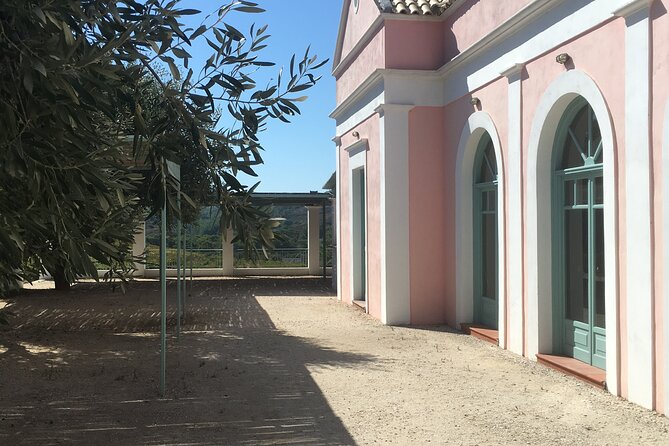
The activity lasts about three hours, begins at 11:00 a.m., and ends back at Epar.Od. Kalamonas-Psinthou 6, Paradisi 851 06, Greece. Mobile tickets are accepted, and confirmation is provided when you book.
Because no pickup information is provided, arrange your own way to the meeting point and allow enough time to arrive before 11:00 a.m. The exact transport options are not stated, so check your route from your hotel before committing.
Most people can participate, and the maximum group size is 15. The activity is offered in English.
Free cancellation is available up to 24 hours before the local start time for a full refund. Cancellations or changes made less than 24 hours before the start are not accepted for a refund.
Who will enjoy this experience most
I would choose this for you if you like food as much as wine. The cooking class and meze meal give the outing more substance than a simple tasting, while the vineyard and distillery sections keep it tied to local production.
It is also a strong choice for first-time wine tasters. Jason’s patient teaching style and humor should help make the subject approachable. You do not need to arrive with technical wine knowledge to take part.
Experienced wine lovers may enjoy the chance to sample five labels and discuss production methods, though the experience is not described as an advanced tasting seminar. If you want rare vintages, a private cellar visit, or a long technical workshop, this may feel too broad.
The activity suits couples and small groups who enjoy shared food and relaxed conversation. It may not suit you if you dislike group cooking, prefer an evening schedule, or want a tour focused only on wine.
The mostly vegetarian menu is another decision point. It is appealing if you enjoy Greek vegetables, dips, salads, and bread. If you require specific food substitutions, ask ahead because the standard menu does not list them.
Should you book the Rhodes winery and cooking tour?
I would book this if you want a practical taste of Rhodes in one compact outing. You get local grapes, five wines, traditional cooking, a generous meze meal, and tsipouro, all at one winery and with an English-speaking host.
The best reason to book is the combination. You are not only looking at vines or listening to a tasting talk. You are involved in preparing the food, then eating it with the wines. Jason’s humor and clear explanations add warmth to the technical parts.
Skip it if you want a private experience, an evening start, or a wine program built around specific vintages. For everyone else, the $94.93 price is reasonable for three hours of instruction, food, and drinks, particularly if you value a full meal and hands-on cooking.
FAQ
Where does the winery experience begin?
It begins at Epar.Od. Kalamonas-Psinthou 6, Paradisi 851 06, Greece.
What time does the tour start?
The start time is 11:00 a.m.
How long does the activity last?
The experience lasts about three hours.
Where does the activity end?
It ends back at the meeting point in Paradisi.
How many wines are included in the tasting?
The guided tasting includes five wines.
Is the cooking class required?
Participation in the cooking class is optional, but it is strongly encouraged.
What food is served during the meal?
The mostly vegetarian meze meal includes local bread, Greek salad, tzatziki, tirokafteri, eggplant salad, and other traditional specialties.
What is tsipouro?
Tsipouro is a local grape distillate. You learn about its production in the distillery area and taste it as a traditional digestive.
Is the experience offered in English?
Yes. The experience is offered in English.
What is the cancellation policy?
You can cancel at least 24 hours before the local start time for a full refund. Cancellations or changes made less than 24 hours before the start are not accepted for a refund.