REVIEW · CRETE
WWII – The Battle of Crete Day Tour
Book on Viator →Operated by GS TOURS CHANIA LTD · Bookable on Viator
Six hours, four WW2 sites, lots of meaning. This WWII Battle of Crete day trip from Chania uses a comfortable minivan to put you on the ground where the fighting unfolded, from Maleme to Souda Bay and the graveyards that still shape the island’s memory.
What I like most is the practical setup: hotel pickup/drop-off across the Chania region and an English-speaking local escort/driver that keeps the story clear and on schedule. I also really like that it’s a small group (max 15), so you can ask questions without shouting over everyone in the van.
The main drawback to consider is time. It’s only around 6 hours, and you may spend more of the day at key vantage points and memorial sites than walking every step of the battlefield action.
In This Review
- Key points before you go
- Why this Battle of Crete tour works from Chania
- Maleme: where the story starts (and why that matters)
- Tavronitis Bridge: movement, infrastructure, and the German route
- German Military Cemetery: quiet gravity and why it hits
- Souda Bay War Cemetery: Commonwealth sacrifice and closure
- The private collection stop: why hands-on stories stick
- Price and value: what $114.89 buys you (and what you avoid)
- A practical 6-hour plan: timing, comfort, and what to bring
- Who should book this WWII Battle of Crete tour?
- Should you book this tour?
- FAQ
- How long is the WWII – Battle of Crete day tour?
- What stops are included in the tour?
- Is transport included from Chania?
- What language is the tour offered in?
- Is the entrance fees cost included?
- What time does it start?
- What happens if weather is poor?
- Is there free cancellation?
Key points before you go
- Maleme to Souda Bay in one day: you’ll connect the opening moves to the island’s aftermath without stitching together multiple buses.
- Cemeteries with both sides represented: German Military Cemetery plus the British Commonwealth cemetery at Souda Bay.
- Tavronitis Bridge stop: a focused look at how infrastructure and movement mattered during the campaign.
- English guidance that answers real questions: guides like Giannis, Yannis, and Babis (names vary by spelling) are often praised for clarity and responsiveness.
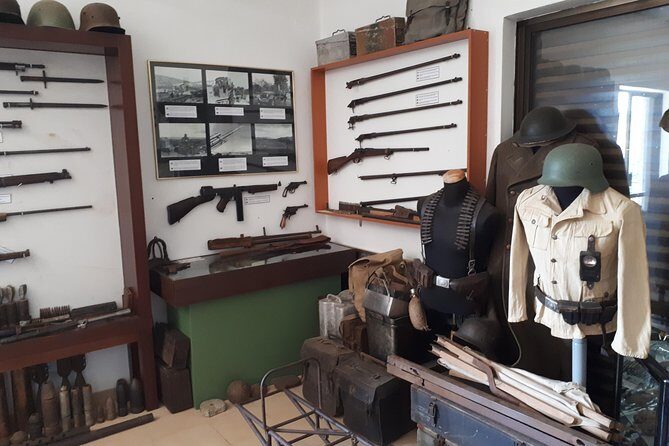
- Optional extra that many love: some days include a stop at a private WWII memorabilia collection, which can add a personal, human layer to the history.
- Value built in: entrance fees, snacks, bottled water, and transport by air-conditioned minivan are included.
Why this Battle of Crete tour works from Chania
Crete can feel like it has endless history. The trick is picking a route that gives you context without turning the day into a hopscotch of car rentals, timed tickets, and awkward directions. This tour is built for that: you start at 9:00 am, ride in an air-conditioned minivan, and return at the end of the day to your meeting point with the key WWII sites grouped into a realistic 6-hour format.
You’ll also get something that’s hard to DIY: a guide who can connect what you’re seeing with what was happening nearby. In reviews, guides such as Giannis, Yannis, and Babis are repeatedly singled out for turning facts into a story you can follow—especially the way they explain both the German operation and the impact on Cretans and Allied forces.
The day’s pacing is deliberately tight. Maleme gets almost an hour, but other stops are around 30–40 minutes each, so you’ll want to treat this as a strong orientation and grounding, not as a multi-day campaign study.
You can also read our reviews of more tours and experiences in Crete.
Maleme: where the story starts (and why that matters)
Maleme is where the tour begins for a reason. The campaign’s first moments aren’t just names on a map—they shape everything that follows. You’ll have about 50 minutes here, and it’s a good chunk of time for orientation: you can take photos, look around, and absorb the guide’s explanation of why Maleme became such a focal point.
If you want to get more from the stop, go in with one simple mindset: try to picture the terrain as a real obstacle, not just scenery. The island’s geography affected movement, supply, visibility, and timing. A good guide will help you hold those cause-and-effect threads in your head as you move from place to place.
One practical advantage: the tour’s format keeps you from losing time figuring out logistics. You’re dropped into the site, the guide sets the context, then you’re moved on while the story is still fresh.
Possible watch-out: if you’re expecting long museum-style time, you might find Maleme just the start of a broader route. It’s enough to get your bearings, not enough for a deep dive into every sub-topic.
Tavronitis Bridge: movement, infrastructure, and the German route
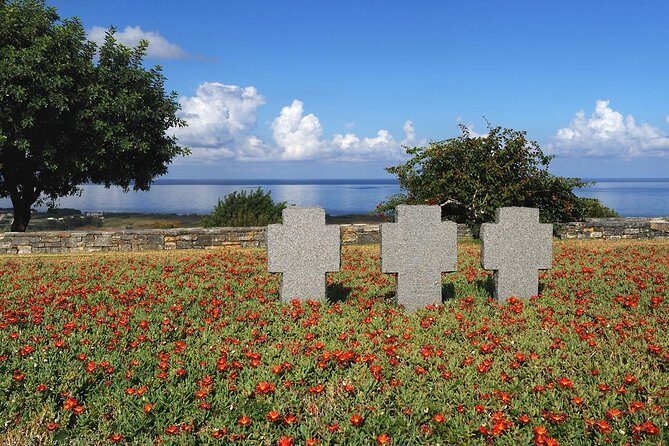
After Maleme, you’ll visit Tavronitis Bridge. This is a 40-minute stop that can feel small at first glance—until the guide puts it back into the logic of the battle. Bridges and crossings are the quiet heroes of warfare. They determine where forces can concentrate, where they can move quickly, and where defenders can slow momentum.
This is also where the tour’s “you’d miss it alone” value shows up. If you were driving yourself, you might stop, take a quick photo, then move on. Here, you get a guided explanation of why the crossing mattered during the campaign and how it ties into surrounding positions.
If you’re the type who likes structure—maps, routes, and sequence—this stop usually clicks. Reviews often praise guides for being able to explain what happened across the broader invasion timeframe, and the bridge is a natural place to talk about movement rather than just events.
Comfort note: it’s not a long walk-heavy segment based on the stop time. Plan for some uneven outdoor ground, though, since memorial and battlefield-adjacent sites are rarely perfectly level.
German Military Cemetery: quiet gravity and why it hits
Next comes the German Military Cemetery, with about 30 minutes on site. Cemetery stops can sound like a “sad checkpoint” on a schedule, but the best tours use them as a chance to understand the human cost behind strategies and headlines.
Here’s what you can realistically expect: guided context about who is buried there and why the site matters to the campaign’s legacy. This is the kind of stop that often changes how people interpret the day. The battle becomes less abstract. Even if you’ve read books about the Battle of Crete, standing in a cemetery forces your brain to slow down.
One thing I appreciate about this kind of WWII route is balance. Seeing a German military cemetery right after a discussion of the invasion helps you understand the scale of what both sides endured, not just one narrative angle.
Drawback to consider: 30 minutes feels short when you’re struck by the place. If you tend to linger at memorials, you’ll probably enjoy having your questions answered quickly so you’re not left rushing alone through the most emotionally heavy moment of the tour.
Souda Bay War Cemetery: Commonwealth sacrifice and closure
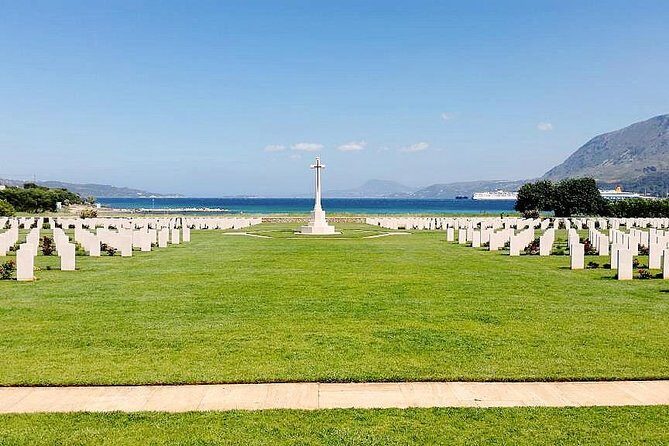
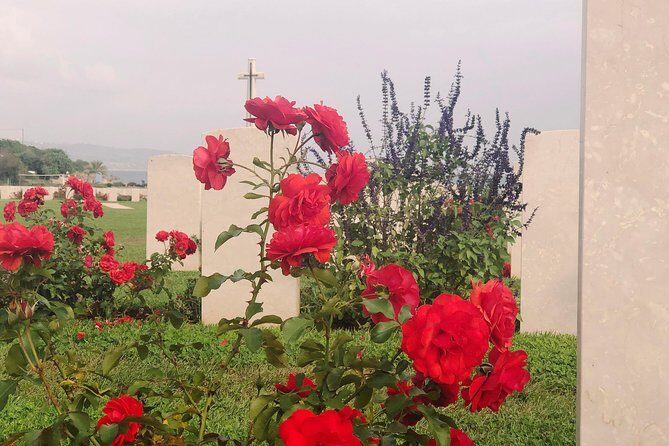
At Souda Bay War Cemetery, the mood continues, but the focus shifts. You’ll spend about 30 minutes, and this is the stop for the British Commonwealth war cemetery.
Souda Bay is a powerful location because it’s tied to evacuation and the endgame of the island’s battle phase. The guide’s explanation matters here: it helps you connect what happened earlier at Maleme and the bridge crossings to the larger outcome and the Allied experience on Crete.
This is also one of the stops where the tour can feel extra memorable in small ways. A couple of reviews describe special moments arranged by the guide around this area, like a flypast by Greek air force fighters. Don’t expect that on every day, but it does give you a sense that the guide team takes the experience seriously, not just the route.
Practical tip: bring any final questions you have before Souda Bay. This is a strong “wrap your head around it” moment. If you’re trying to understand the full flow of the battle across 1941, the guide usually helps you tie threads together here.
The private collection stop: why hands-on stories stick
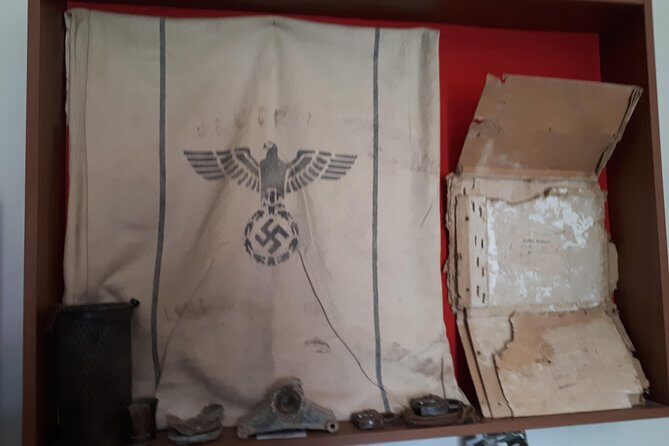
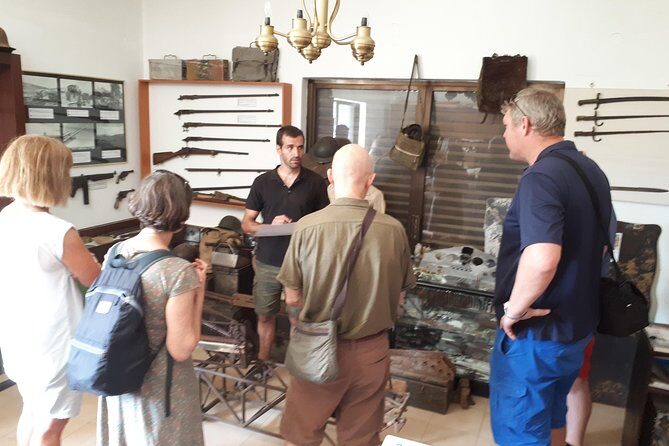
One of the most praised parts of this day is the chance to connect history to objects and personal storytelling. Several people mention a stop at a private collector’s museum or collection connected to the battle. In reviews, guests talk about seeing WWII memorabilia and items associated with the conflict, and some even describe the sense of stepping closer to the era through the collector’s explanations.
Even if you don’t care about military gear, this kind of stop works because it adds texture. It turns a battlefield route into something more personal. You’re not just learning where things happened; you’re seeing how people preserve those stories afterward.
That said, there’s a practical consideration. Not every history-focused traveler wants this. If you prefer strictly graves-and-vistas, you might still enjoy the collection stop—but it may feel like an extra layer rather than a core “battlefield map” moment.
If you do like stories, ask questions during this stop. Reviews mention guides and collectors who are open and enthusiastic. Use that time to clarify anything you didn’t fully understand earlier in the day.
Price and value: what $114.89 buys you (and what you avoid)
At $114.89 per person, this isn’t the cheapest day tour. The real question is whether you’re paying for convenience and context, and in this case, yes.
Here’s what’s built into the price:
- entrance fees
- air-conditioned minivan transport
- English-speaking local driver/escort
- pickup and drop-off from specific places in the Chania region
- snacks and bottled water per person
- all taxes, fees, and handling charges
- a small group size (max 15)
Now compare that to DIY. If you drive yourself, you still need to pay entrance fees. You also need to manage your own timing between multiple stops, and you’ll miss the guided context that helps sites make sense in sequence. Hiring a guide for the whole day can add up fast too, especially when you factor in the time spent moving between sites.
This is a good deal if:
- you want a guided WWII orientation without driving
- you’d rather spend your energy asking questions than reading every sign alone
- you’re traveling with someone who appreciates a story but doesn’t want a complicated plan
If you’re the kind of traveler who loves planning every last detail and doesn’t care about narration, you might see DIY as cheaper. But for most people, this format buys back time and mental energy.
A practical 6-hour plan: timing, comfort, and what to bring
The tour starts at 9:00 am and runs for about 6 hours total. The day is structured around a few longer stops and several shorter ones:
- Maleme: about 50 minutes
- Tavronitis Bridge: about 40 minutes
- German Military Cemetery: about 30 minutes
- Souda Bay War Cemetery: about 30 minutes
- plus additional stops you may not find as easily on your own (including the Galatas area mentioned as part of the experience)
Between locations, you’re in an air-conditioned minivan. That matters in Crete heat. Even if you handle walking well, the day still includes outdoor time and standing around memorial sites.
What to pack:
- sunscreen and a hat
- comfortable shoes for uneven outdoor ground
- a light layer in case the coast breeze feels chilly later
- water bottle? You’ll get bottled water, but it never hurts to be extra prepared
- a note on photos: cemeteries are quiet spaces, so keep your phone manners on and wait for the guide’s cues
If you want the best experience, show up with at least a basic awareness of the Battle of Crete story. One review noted that having a rough idea beforehand helps the tour click faster. If you haven’t studied the campaign yet, no worries—you’ll still get the key points—but you’ll get more out of it if you bring curiosity.
Also, this is a small-group format, which usually means you’ll have time to ask questions and get clarifications. That’s one of the big reasons people recommend it so strongly.
Who should book this WWII Battle of Crete tour?
This tour is a strong fit if you want:
- a guided, chronological feel for the Battle of Crete using real sites
- a mix of invasion-era movement explanations and memorial context
- a day trip that’s easy to join without renting a car
- English guidance and the ability to ask questions in a small group
It’s especially good for:
- first-time WWII visitors to Crete
- military history students or anyone who appreciates seeing how geography shapes events
- couples and friends who want a shared, meaningful day
You might not love it if you:
- need long, unbroken time in one single museum
- want a pure walking tour where you’re on every battlefield footpath for hours
- dislike that cemeteries are part of the route (they are, and they’re handled respectfully)
Should you book this tour?
I think you should book if you want a fast, reliable way to understand the Battle of Crete with real stopping points and English narration, without turning the day into a logistics project. The value is strongest when you factor in transport, entrance fees, and small-group guiding—plus the fact that guides like Giannis, Yannis, and Babis are often praised for answering questions and making the story understandable.
If you’re especially sensitive to cemeteries, schedule your expectations kindly. This isn’t a casual sightseeing loop—it’s a memorial-focused WWII route. If you can handle that, it’s one of the most worthwhile history days you can do from Chania.
FAQ
How long is the WWII – Battle of Crete day tour?
The tour lasts about 6 hours.
What stops are included in the tour?
The route includes Maleme, Tavronitis Bridge, the German Military Cemetery, and the Souda Bay War Cemetery (British Commonwealth). Galatas is also mentioned as part of the experience.
Is transport included from Chania?
Yes. The tour includes air-conditioned minibus/minivan transport and pickup and drop-off from specific places in the Chania region.
What language is the tour offered in?
The tour is offered with an English-speaking local driver/escort.
Is the entrance fees cost included?
Yes. Entrance fees are included.
What time does it start?
The start time is 9:00 am.
What happens if weather is poor?
The tour requires good weather. If it’s canceled due to poor weather, you’ll be offered a different date or a full refund.
Is there free cancellation?
Yes. You can cancel up to 24 hours in advance for a full refund. If you cancel less than 24 hours before the experience starts, the amount paid isn’t refunded.