REVIEW · ATHENS
Acropolis Delights: Private Acropolis & Food Tour
Book on Viator →Operated by Greeking.me · Bookable on Viator
The best idea here is the pairing: ancient Athens first, Greek food second. You begin among the Propylaea, Parthenon, and Caryatids, then trade marble ruins for market stalls, pastries, coffee, herbs, and slow-cooked meat. It gives you two strong ways to understand Athens in one morning.
I like the private format, especially for families, since the guide can adjust the pace and explanations to suit your group. I also like that the tastings are substantial enough for lunch, rather than a few token bites. The main catch is cost: at $328.43 per person, this is a premium outing, and Acropolis admission is not included.
In This Review
- Key points to know before booking
- Why this Acropolis and food combination works
- The Acropolis from the Propylaea to the Parthenon
- From ancient stones to Athens Central Market
- Finishing in Monastiraki Square
- What the private format changes
- Timing, transport, and practical planning
- Who will get the most from this tour
- Should you book Acropolis Delights?
- FAQ
- How long does the Acropolis Delights tour last?
- Is the Acropolis entrance fee included?
- What food and drinks are included?
- Can vegetarian substitutions be provided?
- Where does the tour start and end?
- Is this a private tour?
Key points to know before booking
- Two sides of Athens in four hours: Ancient monuments and everyday Greek food share one compact morning.
- A private guide leads the way: Your group gets focused attention, with the tour adaptable for children.
- The Acropolis ticket costs extra: Skip-the-line tickets can be pre-purchased, but confirm the added price.
- The market stop is a real meal: Tastings include home-style dishes, meat, koulouri, loukoumades, coffee, and other local favorites.
- The tour starts early: Meet near the Acropolis at 8:00 a.m., when an early start helps you use the morning well.
- It ends in Monastiraki: You finish near the flea market and historic sights, with easy access to continue exploring.
Why this Acropolis and food combination works
Athens can feel like two cities at once. One is made of temples, myths, and political ideas. The other is noisy, practical, and full of food being bought, prepared, and eaten. This tour places those two sides next to each other instead of treating the Acropolis as an isolated monument.
That matters because the Acropolis can be easy to visit badly. You walk uphill, pass grand stones, take photographs, and leave without understanding why the buildings mattered. A private guide gives the site a clear thread, from the sacred entrance to the Parthenon and Erechtheion.
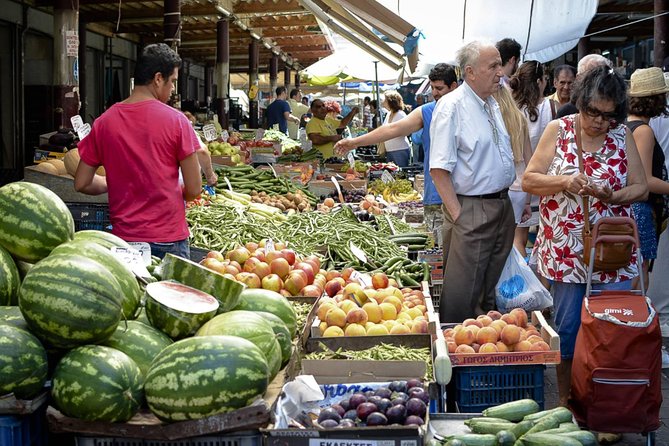
Then the setting changes. At the Central Market, you see meat, fish, fruit, vegetables, herbs, spices, and condiments in a working city market. The food stop adds a sensory part to the morning that a standard archaeological tour cannot provide.
You should still know what this is not. It is not a slow, full-day food crawl, and it is not a private car tour. You walk between the main stops, and the Acropolis requires a moderate level of fitness. For a first morning in Athens, though, the plan is efficient and nicely balanced.
You can also read our reviews of more food & drink experiences in Athens

The Acropolis from the Propylaea to the Parthenon
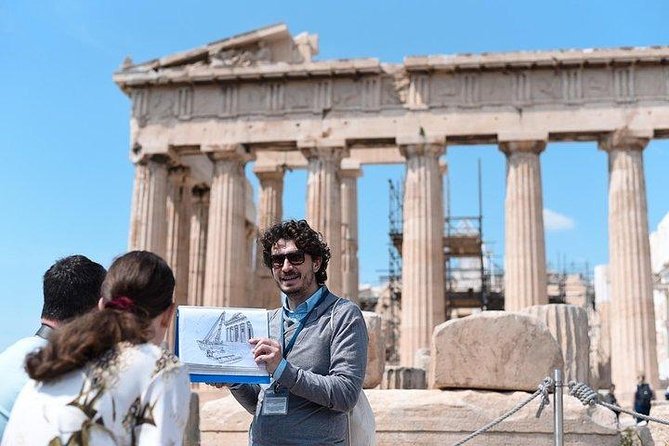
The tour begins at 8:00 a.m. near the Acropolis. The early meeting time is useful. You have a better chance of making the most of the cooler part of the day, and you start before the morning schedule gets away from you.
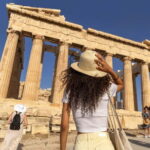
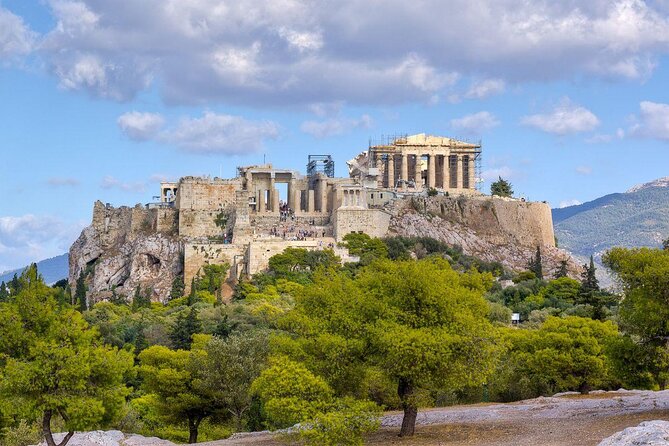
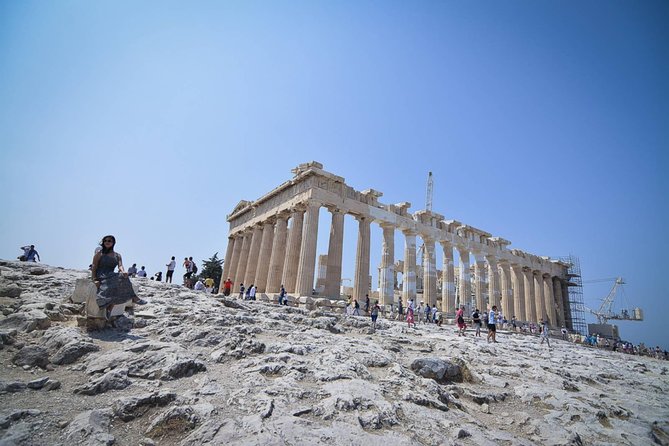
The first major approach is through the Propylaea, the monumental marble gateway to the sacred hill. This is not just an entrance to walk through on the way to the Parthenon. It establishes the scale and ambition of the site, and your guide can explain how the Acropolis functioned as a place of worship and civic meaning.
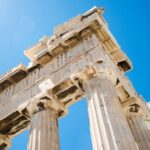
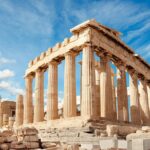
From there, the Parthenon takes over the view. Its columns and surviving structure are familiar from photographs, but the on-site experience depends heavily on context. Your guide discusses its construction, the worship connected with it, and the damage and changes it has endured over time.
The tour also covers the long story of the hill, including periods of destruction and changing religious use. That helps you see the Acropolis as a living part of Athens’ past rather than a perfect monument frozen in one age. The stonework has survived, but the site itself has not stayed unchanged.
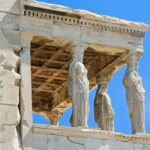
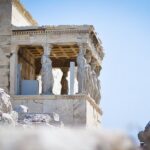
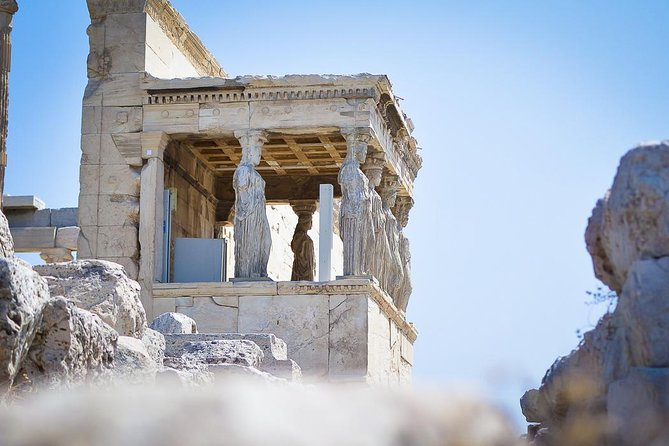
The Erechtheion provides a different mood. Its graceful form and famous Caryatids, the sculpted maidens serving as architectural supports, contrast with the Parthenon’s broad authority. This is one place where a guide can help you notice details that are easy to miss when you are moving with a crowd.
The view is another major reason to take your time here. From the hill, you look across Athens and out toward the Aegean Sea. The setting helps explain why this rocky height mattered so much. It was a religious center, a political symbol, and a place from which the city could be understood at a glance.
The discussion also reaches the origins of democracy and political philosophy. That subject can become vague if presented as a grand slogan, so listen for concrete explanations from your guide. The value of the private format is that you can stop and ask questions instead of simply following a large group from one landmark to the next.
The Acropolis portion lasts about two hours. Admission is not part of the listed price. The operator can pre-purchase skip-the-line tickets for you, which may simplify the morning, but you should check the additional charge before booking.
This is also the most physically demanding part. You need to manage the uphill approach and uneven ancient surfaces, and the tour operates in all weather. Wear suitable shoes and clothing. The tour information calls for moderate physical fitness, so it is worth taking that seriously if anyone in your group has mobility concerns.
From ancient stones to Athens Central Market
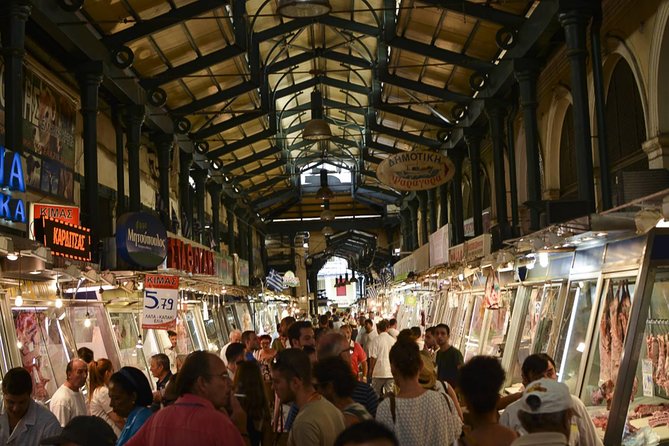
After the Acropolis, the tour shifts from monumental Athens to ordinary Athens. The Central Market is a useful stop because it shows food as part of daily life, not as a polished restaurant experience built only for visitors.
You can expect to see displays of fresh meat, fish, vegetables, and fruit. Specialist stalls add herbs, spices, and condiments, while food producers show the work behind their products. The point is not only to eat. You also get a look at the ingredients and habits that shape Greek cooking.
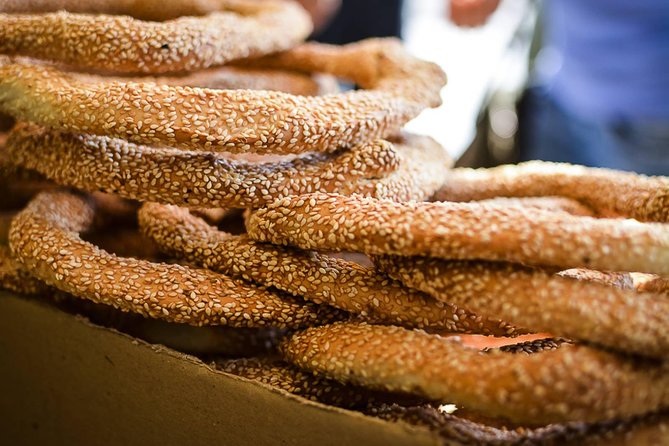
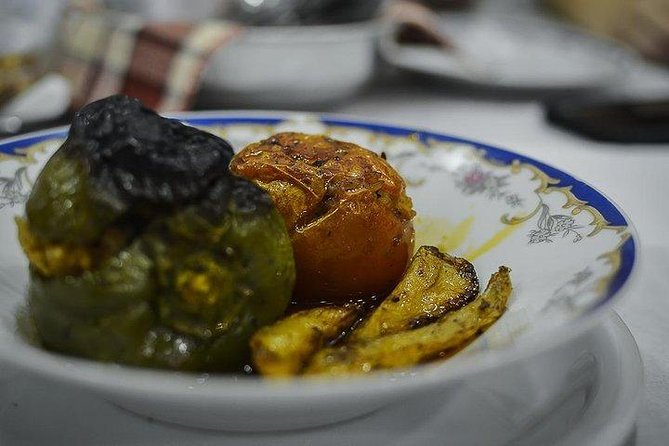
The tastings include home-made dishes and local favorites such as koulouri, the ring-shaped bread sold across Greece, and loukoumades, sweet fried dough often served as a treat. The program also includes savory slow-cooked meat, pastries, and aromatic coffee. The exact selection can vary, but the stated tastings are intended to provide enough food for lunch.
That lunch-sized portion is important when you assess the price. You are not paying only for a short stop at a bakery or one sample at a market stall. The morning combines guiding, food, and a private group experience. Still, $328.43 per person is a serious amount, especially once you add the Acropolis entrance fee.
The market visit lasts about one hour and 50 minutes, nearly as long as the Acropolis portion. That tells you where the tour places its emphasis. You get time to taste, look around, and learn about the effort involved in producing traditional foods rather than rushing through a quick snack stop.
Vegetarian food substitutions can be provided. You should request them when arranging the tour rather than waiting until the market visit begins. No other dietary substitutions are specified, so anyone with allergies or strict food requirements should ask the operator what can be accommodated before payment.
The market may appeal most to people who want food with a sense of place. You are not simply seated at a restaurant while someone explains Greek cuisine. You see ingredients in their working setting and meet artisans connected with the products. That makes the stop more useful for curious eaters who want to understand how food fits into city life.
Finishing in Monastiraki Square
The tour ends in Monastiraki, an area where old Athens and present-day city life meet. The final stop lasts about 10 minutes, enough for an orientation rather than a second guided tour.
Your guide introduces Monastiraki Square, the flea market, and important historic monuments in the area. This is a practical ending because you are not dropped at an isolated meeting point. You can continue exploring on foot, browse the market, find a café, or make your own way to another Athens sight.
The short finish also keeps the tour focused. The main value is in the Acropolis and Central Market, while Monastiraki serves as a natural handoff to the rest of your day. If you want detailed shopping advice or a long tour of the neighborhood, this experience does not promise that.
What the private format changes
A private tour is particularly useful when your group has mixed interests. One person may want more mythology, another may care about architecture, and children may need shorter explanations and regular breaks. The guide can adjust the presentation based on the ages of the children, which is more useful than a fixed script.
A private group also avoids the common problem of standing at the back of a large crowd while trying to hear. You can ask why a building looks the way it does, how a myth connects to the site, or what a food is made from. The experience can remain conversational instead of becoming a lecture.
Guide Ava received especially warm praise for being fun, delightful, and strong on the Acropolis and food sections. You cannot guarantee a particular guide unless the operator confirms it, but the feedback gives you a helpful clue about the intended style: serious about the subject without making the morning stiff.
The tradeoff is price. Solo visitors and couples may find the per-person cost difficult to justify. Families or small groups may see more value because they receive exclusive guiding, flexible attention, and a full food stop without sharing the schedule with strangers. Group discounts are available, so check how the final total changes for your party.
A few more Athens tours and experiences worth a look




Timing, transport, and practical planning
The experience lasts about four hours, with roughly two hours at the Acropolis, one hour and 50 minutes at the Central Market, and 10 minutes in Monastiraki. The schedule is compact but not rushed on paper.
Private transportation is not included. Plan to reach the starting point near Acropoli, Athens 117 42, on your own. The tour is near public transportation, and it ends at Monastiraki Square, at Apollonos 21. Since the start and finish are in different parts of central Athens, the route works best if you want to continue your day from Monastiraki.
Bring water, wear comfortable shoes, and dress for the forecast. The tour runs in all weather conditions. The Acropolis has limited shade and uneven ground, so sun protection and sensible clothing will make the morning easier.
The mobile ticket is convenient for booking and access details, but it does not mean the Acropolis entrance is included. Read the final booking terms carefully and confirm whether you want the operator to arrange skip-the-line admission.
Free cancellation is available if you cancel at least 24 hours before the local start time. Cancellations or changes made inside that window are not refunded or accepted. That is a fair policy, but the 8:00 a.m. start makes the deadline easy to overlook.
Who will get the most from this tour
I would recommend this experience to first-time visitors who want a strong introduction to Athens without spending a whole day on a single subject. It also suits food-focused visitors who do not want to choose between the Acropolis and the city’s everyday cooking.
Families are a good match, especially if children benefit from a guide who can adapt the explanations. The private setup lets you keep the group together and move at a pace that makes sense for your own ages and interests.
History fans should enjoy the myths, religious changes, political ideas, and architectural details. Food lovers will appreciate the market, especially if they prefer seeing ingredients and producers rather than eating only in formal restaurants.
I would think twice if you dislike walking, need a fully accessible route, or want private transportation. I would also compare the price carefully if you are traveling alone. The food included is substantial, but the Acropolis ticket remains an extra expense.
Should you book Acropolis Delights?
Book it if you want a well-shaped first morning in Athens, with serious attention to the Acropolis and enough food to carry you through lunch. The private guide, family flexibility, Central Market tastings, and Monastiraki finish give the tour a clear practical advantage over a monument-only visit.
Skip it if you want a low-cost group tour, a full-day archaeological study, or a dedicated food crawl. For everyone else, the strongest case is the combination: one guide helps you connect the Parthenon’s ideas with the food, people, and daily rhythms of modern Athens. Check the entrance fee, ask about your guide, and request vegetarian substitutions in advance.
FAQ
How long does the Acropolis Delights tour last?
The experience lasts approximately four hours. The Acropolis visit takes about two hours, the Central Market stop about one hour and 50 minutes, and the Monastiraki ending about 10 minutes.
Is the Acropolis entrance fee included?
No. Acropolis admission is not included in the listed price. The operator can pre-purchase skip-the-line tickets for you.
What food and drinks are included?
Included tastings can feature home-made dishes, slow-cooked meat, koulouri, loukoumades, pastries, coffee, and other Greek specialties. The food is intended to be enough for lunch.
Can vegetarian substitutions be provided?
Yes. Vegetarian food substitutions can be arranged. Request them when booking or before the tour begins.
Where does the tour start and end?
The tour starts near the Acropolis at Acropoli, Athens 117 42, at 8:00 a.m. It ends at Monastiraki Square, Apollonos 21, Athens 105 57.
Is this a private tour?
Yes. Only your group participates. The guide can customize the experience, including adjustments based on children’s ages.
![Eat & Crete Food Tour [non-touristy] Chania Villages - Therisos Gorge roads and a tiny village that feels frozen in time](https://1.greeceescapes.com/wp-content/uploads/eat-crete-food-tour-non-touristy-chania-villages-300x200.jpg)