REVIEW · ATHENS
Athens: Acropolis, Parthenon & Acropolis Museum Guided Tour
Book on GetYourGuide →Operated by Athenian Tours · Bookable on GetYourGuide
The Acropolis works best with a guide. This Athens tour gets you up the hill and into the Acropolis Museum with live, English-language storytelling and priority ticket handling, so you spend more time looking and less time waiting. I especially like how the visit ties monuments to the people and myths that made them matter, from the Theater of Dionysus onward.
The second big win is the museum itself: you’ll see major originals with natural light and spot archaeology preserved under glass floors and walkways. My one caution: it’s still a lot of walking on uneven ground, and there’s no elevator up the Acropolis Hill—so it’s not a great match if you have mobility limits or heart issues.
In This Review
- Key moments that make this tour worth it
- Why the Acropolis and New Museum are a perfect pair
- Ticket lines, separate entrances, and what you should actually plan for
- The hilltop route: from Dionysus to the temples you came for
- Propylea, Nike Temple, Erechtheion, and the Parthenon
- A quick reality check about terrain
- Photo time, small breaks, and how the pacing really feels
- New Acropolis Museum: Caryatids, glass-floor archaeology, and natural light
- The Caryatids and the Parthenon frieze
- Price and value: what $40 buys you in Athens time
- Who this tour is best for (and who should rethink it)
- A quick checklist before you go
- Should you book this Acropolis and Museum guided tour?
- FAQ
- How long is the Acropolis, Parthenon, and Acropolis Museum guided tour?
- Is this tour shared or private?
- Do I get skip-the-line tickets?
- Is there a separate entrance to skip the line at the Acropolis itself?
- What’s included in the price?
- What should I bring?
- Are elevators available on Acropolis Hill during the tour?
- Who is this tour not suitable for?
- What items are not allowed?
- What if I choose the option without tickets?
Key moments that make this tour worth it
- Licensed live guide stories that turn stone ruins into scenes and characters
- Skip-the-line ticket handling at ticket offices (and a separate entrance for the museum)
- Theater of Dionysus and the age-old roots of drama and tragedy
- Propylea, Nike Temple, Erechtheion, and Parthenon with clear stop-by-stop context
- New Acropolis Museum displays with natural light and glass-floor archaeology
- Small breaks built in, including time to use the bathroom before the museum
Why the Acropolis and New Museum are a perfect pair

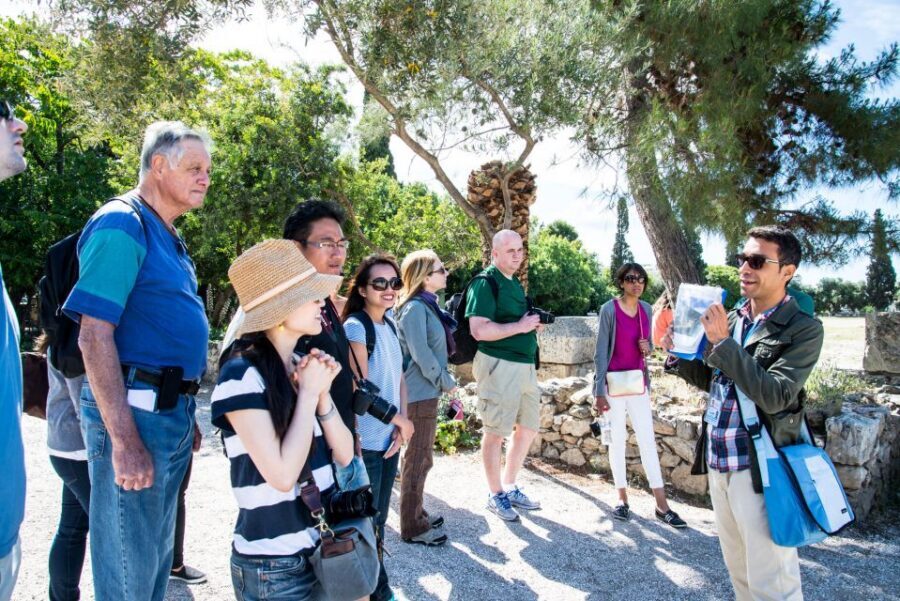
If you’ve ever stood at the Acropolis with a guidebook and felt a little lost, this kind of tour fixes that fast. On the hill, you need help with scale and alignment: temples, terraces, and viewpoints all connect in a way your eyes can’t always read without context. A good guide does that job—turning the site into a map you can actually understand.
Then you drop into the New Acropolis Museum, which is built for exactly this moment. The museum doesn’t just show artifacts; it helps you connect what you saw up on the rocks to what’s preserved and studied inside. One reason this works so well is that the museum design uses natural light, so sculptures and architectural fragments don’t feel like they’re trapped in a dim, museum-only world.
My favorite part of pairing these two stops is the mental reset. Up on the hill you’re working with geography and ruins; in the museum you get material proof—what survived, what was found, and what it all likely looked like in place. You end up seeing the whole story instead of isolated highlights.
You can also read our reviews of more guided tours in Athens



Ticket lines, separate entrances, and what you should actually plan for
Priority matters in Athens. The Acropolis and museum area can get crowded enough that the wrong timing turns your “fast visit” into a slow one. This tour includes skip-the-line ticket handling if you select that option, plus disposable earphones for groups larger than 8.
There’s one detail to keep straight: the separate entrance skip isn’t guaranteed for the Acropolis itself. The info you get is clear that there’s no skip-the-line separate entrance to the Acropolis, even though you can skip ticket-office lines. In practice, that usually means you reduce the biggest queue pain point, but you still move through the general entry flow.
Also keep your timing flexible in your head. The order of sites may shift depending on weather and comfort, so don’t treat this like a rigid checklist where everything happens in one exact sequence every day. A licensed guide will adjust the pace so you can keep moving without baking in the sun.
The hilltop route: from Dionysus to the temples you came for
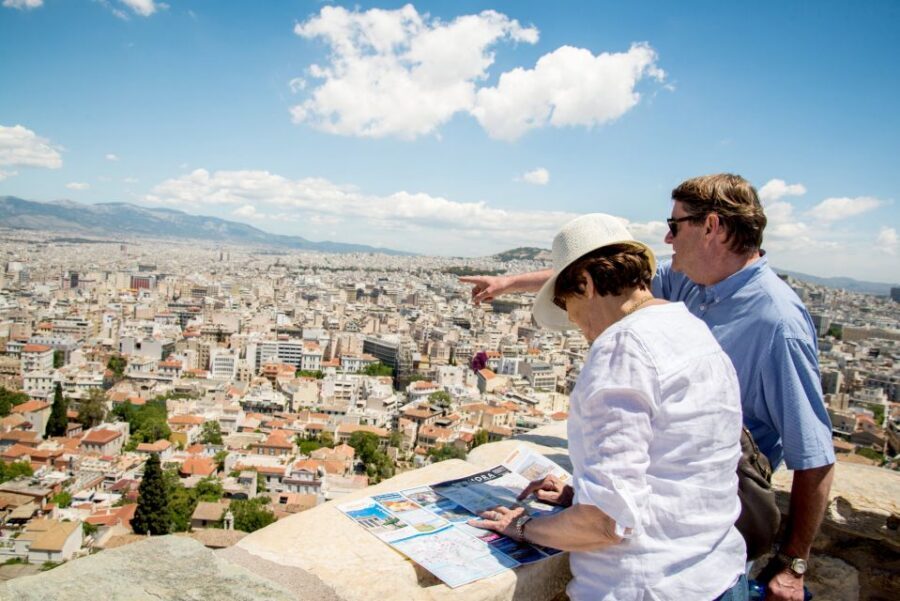
The tour typically starts with the “why” of the Acropolis. You’re not just walking between famous structures; you’re learning what each place was for. Expect stops that connect myth, civic life, and religion—so when you finally reach the Parthenon, it feels like the climax, not just a photo spot.
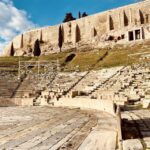
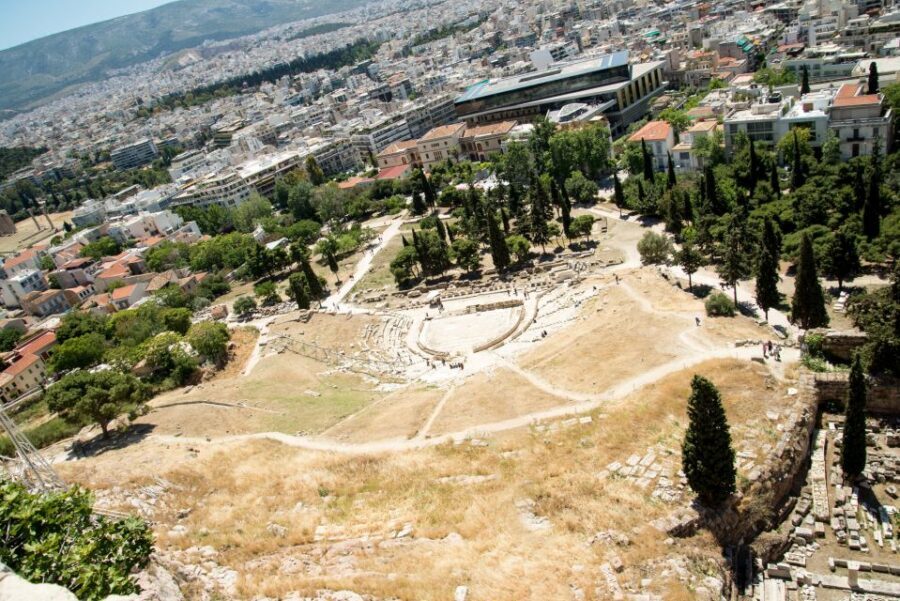
One of the most interesting early stops is the Theater of Dionysus, described as the first theater of humanity. That phrase is dramatic, but the idea is useful: this is where Greek drama and tragedy first took shape as a public art form. When you know that, the whole Acropolis complex starts looking less like random stone and more like a designed cultural engine.
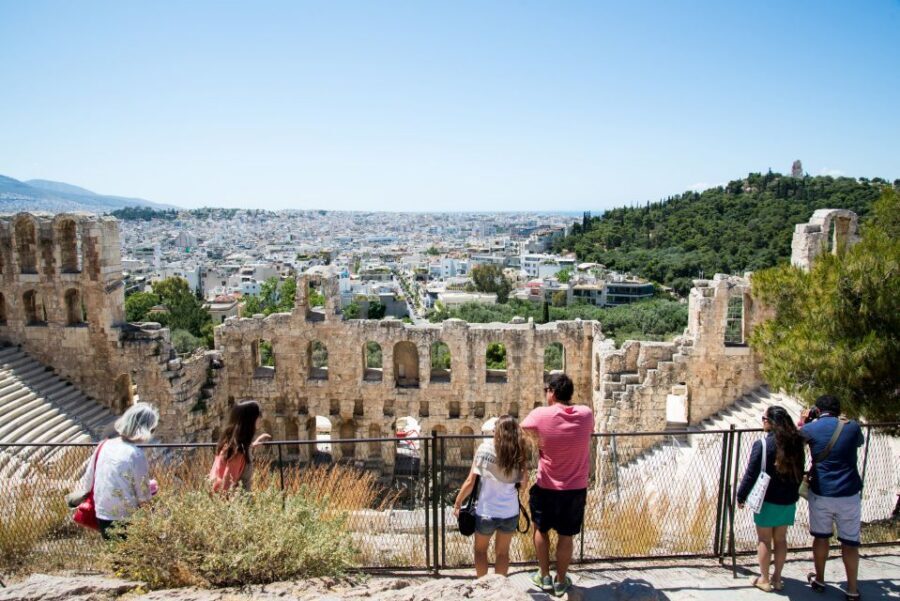
From there, you’ll walk past and around other major landmarks, including the Odeon of Herodes Atticus and the sanctuary of the healing god Asclepius. Even if you’re not a theater history fanatic, these stops give you variety. They help you see that the Acropolis wasn’t only about temples—it was also a place where people gathered for performance, belief, and healing.
Propylea, Nike Temple, Erechtheion, and the Parthenon
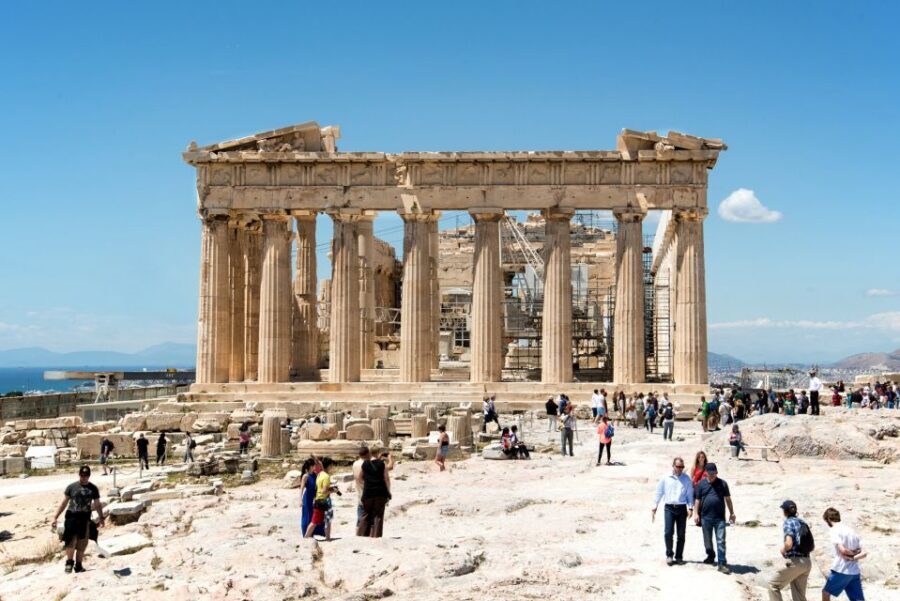
Once you’re higher up, the tour hits the architectural icons in a way that’s easier to remember. You’ll see the Propylea, the Temple of Nike, and the Erechtheion before you land at the Parthenon.
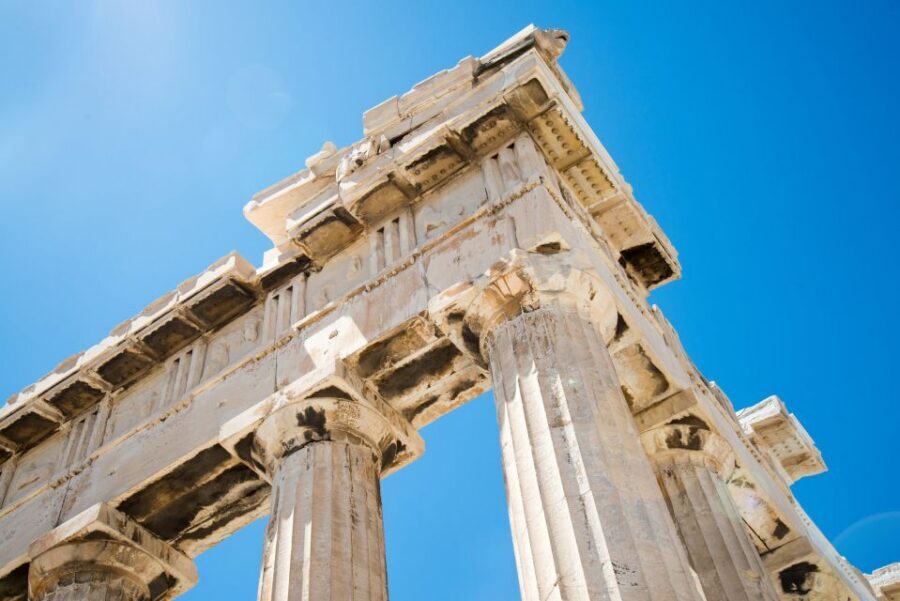
Here’s what I like about focusing on these specific structures: they’re tied to clear themes. The Parthenon gets framed as a symbol of democracy and Western civilization, dating to the 5th century—so you can place it in the story of Pericles’ golden age. Even if you’ve heard those lines before, a guide’s stop-and-explain approach helps the symbolism stick.
The Erechtheion is a great example of why a guided pace helps. Without explanation, you might focus on the big name and miss why the building is distinctive. With the guide’s pointing and timing, you can spot what makes it important and why it’s often paired with conversations about sacred spaces and the mythic geography of Athens.
A quick reality check about terrain
This part of the tour is where comfort matters. You’re walking on uneven, ancient ground with steep climbs. The tour also notes that it isn’t suitable for wheelchair users, and there’s no elevator access on the hill.
If you can handle stairs and uneven steps for a few hours, you’ll probably be fine. If you can’t, the museum alone can be a smoother choice—but this specific guided route is designed around seeing the hill.
You can also read our reviews of more museum experiences in Athens
Photo time, small breaks, and how the pacing really feels
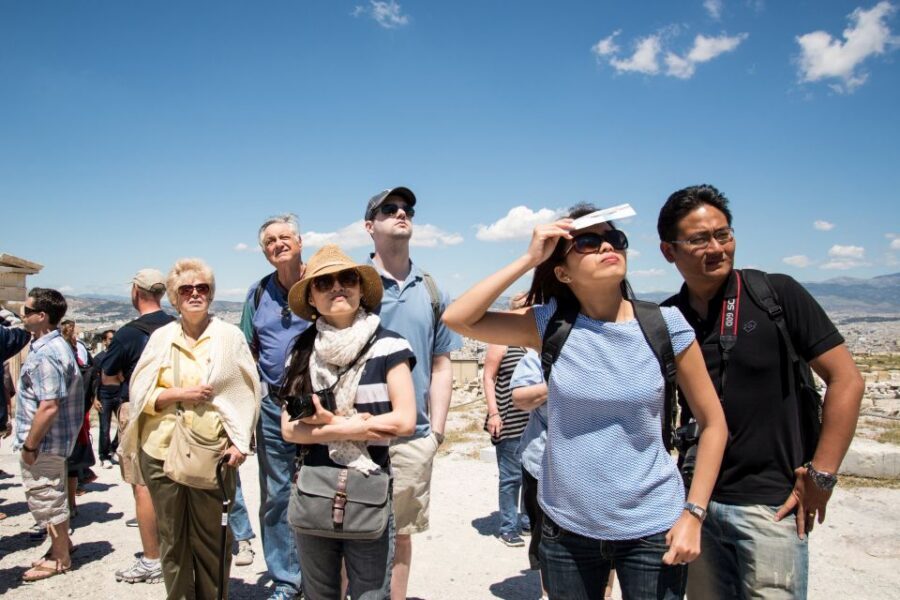
A lot of people worry that “2–4 hours” means you’ll feel rushed or bored. In this tour, pacing is built to avoid both. The tour lasts about 3 to 4 hours depending on the group’s speed and weather, and guides may change the order of sites to avoid discomfort.
One practical plus: there’s a short break before you head to the museum. That pause is specifically mentioned as a chance to use the bathroom, so you’re not scrambling later when you’re tired and the lines are longer. It sounds minor until you’ve tried to time bathroom breaks at a major heritage site.
On the hill, the guide is also giving you permission to look—not just hear. The better guides build in breathing room for photos and personal wandering, so you can pause after a key explanation and actually process what you’re seeing.
New Acropolis Museum: Caryatids, glass-floor archaeology, and natural light
If the Acropolis is the outdoor classroom, the New Acropolis Museum is where the lesson becomes tangible. You’ll get skip-the-line access at the museum and enter through a separate entrance, which can save real time at peak hours.
The museum’s design is part of the magic. It displays the original surviving masterpieces from the Acropolis temples using natural light, which changes how you perceive details. In a standard dark gallery, you can lose the feeling of surface and proportion. Here, light makes the sculptures and architectural elements easier to read at a glance.
You’ll also see excavation discoveries visible under glass floors and walkways. This is one of the most satisfying things for anyone who likes evidence. You’re not just looking at objects placed neatly after the fact—you’re seeing traces of what was found and where.
The Caryatids and the Parthenon frieze
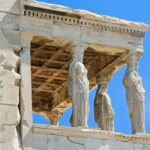
On the museum’s first floor, you’ll run into the Caryatids—with five of the originals in this museum and the sixth located in the British Museum. That fact is useful because it turns the Caryatid story into a real-world geography, not a random museum label.
Then comes the big finish area: the top floor includes the Parthenon frieze and a recreation of the Parthenon, plus a view back toward the Acropolis. Even if you don’t study art, the recreation is a strong way to understand how the pieces might have sat together.
The best value here is the “compare and connect” effect. You’ll see details up on the hill, then confirm or question them in the museum. You leave with clearer mental images of scale, placement, and purpose.
Price and value: what $40 buys you in Athens time
At around $40 per person, this tour can be a very good value if you want both sites with a guide and don’t want to fight the lines. The price matters less than what’s bundled: a licensed guide, ticket handling options, and museum priority entry all reduce friction.
The museum time alone can feel slow if you’re wandering without context. Add the Acropolis hill with a guide, and you effectively get two learning moments in one organized block. That’s also why the “2–4 hours” range is important: you’re buying a focused window that keeps the day from turning into a scattered, self-planned day of hoping you timed everything right.
The separate entrance for the museum is especially meaningful. It can shave off waiting time when the museum area is busy. Just keep in mind what’s not included: hotel pickup or drop-off, food and drinks, and no elevator use on the Acropolis hill.
If you’re the type who likes structure, a guided combo like this often ends up being cheaper than you expect in stress, not just in money. You’re paying for someone to translate the site in real time and keep the pacing sensible.
Who this tour is best for (and who should rethink it)
This tour is well suited for adults and kids over 6 who can handle several hours of uneven walking. It’s also a good fit if you want English-language storytelling that explains myths and civic meaning—not just facts.
It’s not suitable for:
- people with mobility impairments or wheelchair users
- people with heart problems
- anyone who relies on an elevator up the hill, since elevator access isn’t included
If you’re sensitive to sound, note that audio can be affected by other groups’ equipment during crowded times. The earphones help, but you might still notice interference when the area gets noisy.
As for guides, the names that show up again and again for this kind of experience include Sotos, Jason, Chrysa, Giota, Ioannis, and Julia. The recurring theme is consistent: guides keep explanations clear and attention held, with storytelling that makes you feel like Athens has a voice.
A quick checklist before you go
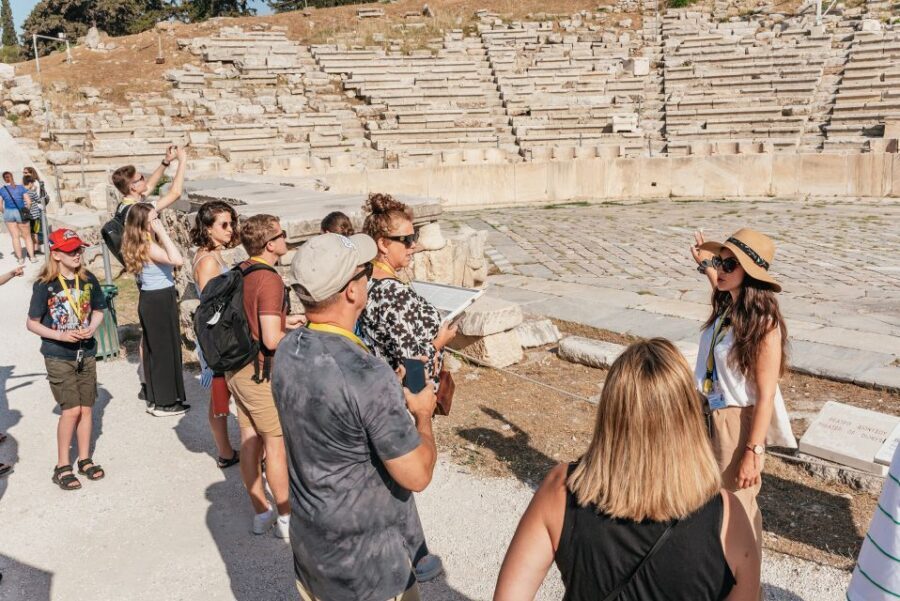
Bring comfortable shoes first. You’re on rough surfaces and steep paths. Bring water and wear comfortable clothes that can handle sun and wind. A hat is one of those small items that pays off immediately.
Don’t plan on bringing extra stuff. Pets, baby strollers, and luggage or large bags aren’t allowed. Travel light, and give yourself room to move.
Finally, if you’re booking the option without tickets, make sure you plan ahead. You should buy Acropolis and museum entry tickets at least one day before the tour, and confirm appropriate time slots. If you don’t buy ahead, the tour operator can supply full-priced adult tickets at the meeting point, paid in cash.
Should you book this Acropolis and Museum guided tour?

Book it if you want the fastest path to feeling oriented at the Acropolis and understanding what you’re seeing—then continuing with a museum visit that explains the artifacts in context. The guide factor is the core value, and the “skip ticket office lines + museum entry help” is a practical time-saver.
Skip it or consider a different setup if you know you can’t handle steep uneven walking, or if mobility and heart-related concerns are a risk for you. Also, if you love solitary exploration more than guided explanation, you might prefer a self-paced plan.
For most people, though, this is one of the best ways to turn Athens’ most famous ruins into a story you can actually follow—from drama at Dionysus to marble in the museum with natural light.
FAQ
How long is the Acropolis, Parthenon, and Acropolis Museum guided tour?
The tour lasts 2 to 4 hours, and it typically runs about 3 to 4 hours depending on the group’s pace and weather conditions.
Is this tour shared or private?
You can choose private or shared group options depending on what you book.
Do I get skip-the-line tickets?
The tour includes skip-the-line ticket handling at the ticket offices if you select that option. For the Acropolis Museum, you also enter through a separate entrance.
Is there a separate entrance to skip the line at the Acropolis itself?
No. The information provided states there is no skip-the-line separate entrance to the Acropolis, even though you can skip lines at ticket offices (depending on the option selected).
What’s included in the price?
Included items include a live English guide, private or shared tour (based on option), Acropolis and museum tickets if you select the skip-the-line ticket option, and disposable earphones for groups larger than 8.
What should I bring?
Bring comfortable shoes, a hat, water, and comfortable clothes.
Are elevators available on Acropolis Hill during the tour?
No. The tour notes that elevator use on Acropolis Hill is not included.
Who is this tour not suitable for?
It’s not suitable for children under 6, people with mobility impairments, people with heart problems, and wheelchair users.
What items are not allowed?
Pets, baby strollers, and luggage or large bags aren’t allowed.
What if I choose the option without tickets?
If you choose the option without tickets, you should purchase Acropolis and museum entry tickets at least one day before the tour and contact the operator first to confirm appropriate time slots. If you do not purchase ahead of arrival, full-priced adult tickets may be available at the meeting point paid in cash. Reduced/free tickets require passport or ID.
You Might Also Enjoy




More Guided Tours in Athens


More Tours in Athens


More Tour Reviews in Athens
- All Day Cruise -3 Islands to Agistri,Moni, Aegina with lunch and drinks included
★ 5.0 · 4,958 reviews