REVIEW · ATHENS
Athens: Acropolis, Parthenon & Acropolis Museum Guided Tour
Book on GetYourGuide →Operated by Athens Walks Tour Company · Bookable on GetYourGuide
Ancient Athens is easier to see with a guide. This Acropolis, Parthenon & Acropolis Museum tour pairs archaeologist-led storytelling with a smart walking route up the south slope, then backs it up inside the New Acropolis Museum so you understand what you’re looking at.
I really like two parts of the experience: the skip-the-line access (so your morning stays about monuments, not queues) and the wireless hearing devices (you can actually catch the details in busy spots). If you get a guide like Petros or Dionissos, the group pace is steady and the explanations stay clear and practical.
One thing to consider: this is a walking tour on uneven ancient stone, and it’s not suitable for wheelchair users or people with mobility impairments. Wear grippy shoes and expect some uphill effort.
In This Review
- Key things I’d watch for
- Porinou 5 Meeting Point and Why the South Slope Route Works
- Theater of Dionysus: The Part That Makes the Acropolis Feel Alive
- Odeon of Herodes Atticus and the Athens Festival Connection
- Propylaea, Temple of Athena Nike, and Quick Photo Stops You’ll Actually Use
- Parthenon Time: How You Get More Than the Usual View
- Erechtheion: Caryatid Power and the Architecture Mindset
- Acropolis Break Time: Where Your Eyes Catch Up
- New Acropolis Museum: The Glass Floor and Everyday Life Galleries
- Guides, Earbuds, and Group Pace: What You’ll Notice During the Walk
- How Much Time You Really Get (and How to Use It)
- Price and Value: Is $41 Worth It?
- Practical Stuff: What to Bring and What Not to Bring
- Who This Tour Fits Best
- Should You Book This Acropolis + Acropolis Museum Tour?
- FAQ
- Where is the meeting point?
- How long is the tour?
- Is the guide English-speaking?
- Does the tour include entrance to the Acropolis Museum?
- Is skip-the-line entrance included for both sites?
- Are food and drinks included?
- Do I need my passport or ID?
- Is pickup or drop-off included?
- Is this tour suitable for wheelchair users?
- What’s not allowed on the tour?
- Can I cancel for a refund?
Key things I’d watch for
- Archaeologist-led route that links ruins to real daily life, not just myths
- South-slope entry that sets context before you reach the Parthenon
- Theater and medical sites included (Theater of Dionysus, Asclepius healing temple)
- Wireless hearing devices for clear audio even in crowds
- New Acropolis Museum with glass-floor archaeology for a different kind of wow
- Parthenon + Erechtheion included, so you see more than one postcard view
Porinou 5 Meeting Point and Why the South Slope Route Works

The tour meets at the Athens Walks office on Porinou 5 (ground floor). From there, you start with a route that’s designed for flow: you move toward the Acropolis without wasting time, and you enter the hill from the south slope.
That matters because it changes how the Acropolis lands in your mind. Starting from the south side gives you a sequence: you get the bigger “why this place was built” picture first, then the famous monuments click into place as you climb. You’re not just hopping from one highlight to the next—you’re learning the logic of the site as you go.
Bring your ID or passport, and wear shoes you trust on stone. A sun hat helps too. The tour is offered in English, and you’ll have wireless headsets so you can keep up even when the crowd thickens.
You can also read our reviews of more guided tours in Athens



Theater of Dionysus: The Part That Makes the Acropolis Feel Alive
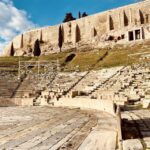
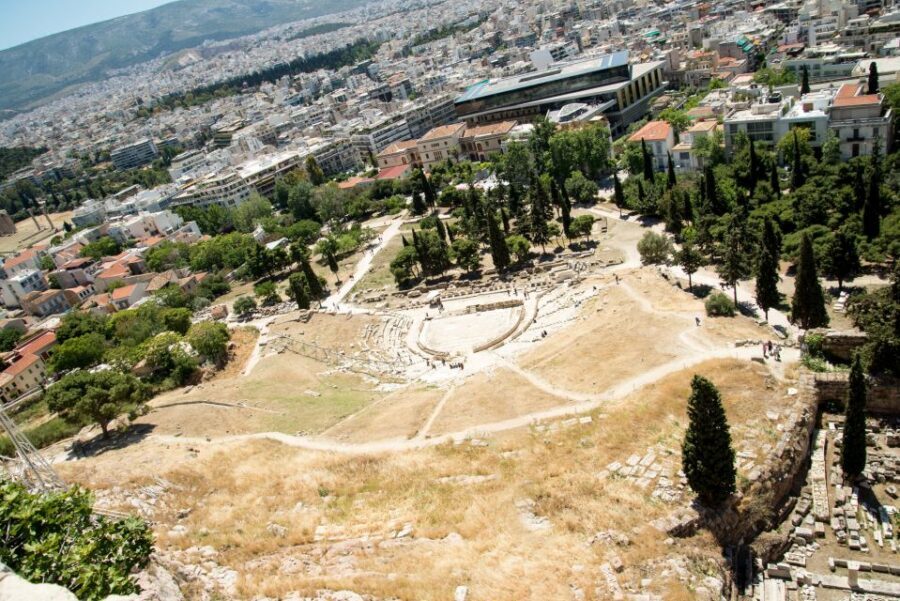
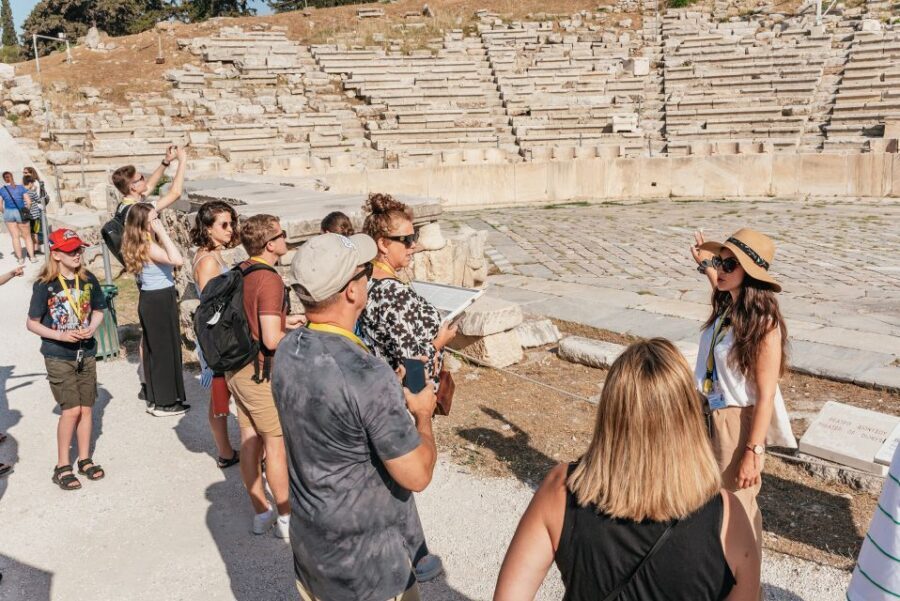
Before the Parthenon grabs the spotlight, you’ll stop at the Theater of Dionysus. This amphitheater is often described as a birthplace of performing arts, and the point of the stop is bigger than theatre history. You begin to understand that the Acropolis wasn’t only a religious showpiece—it was part of public life, with gatherings, performances, and ceremonies tied to the city.
You’ll likely sit on a stone seat (when possible) to help you imagine the sightlines and sound. That simple “pause and picture it” moment is one of the best ways to turn ruins into something human.
If you’re the type who likes context, this is your payoff. Guides often bring up how famous Greek playwrights fit into this world—Aeschylus, Sophocles, and Euripides come up as anchors for why these spaces mattered.
Odeon of Herodes Atticus and the Athens Festival Connection
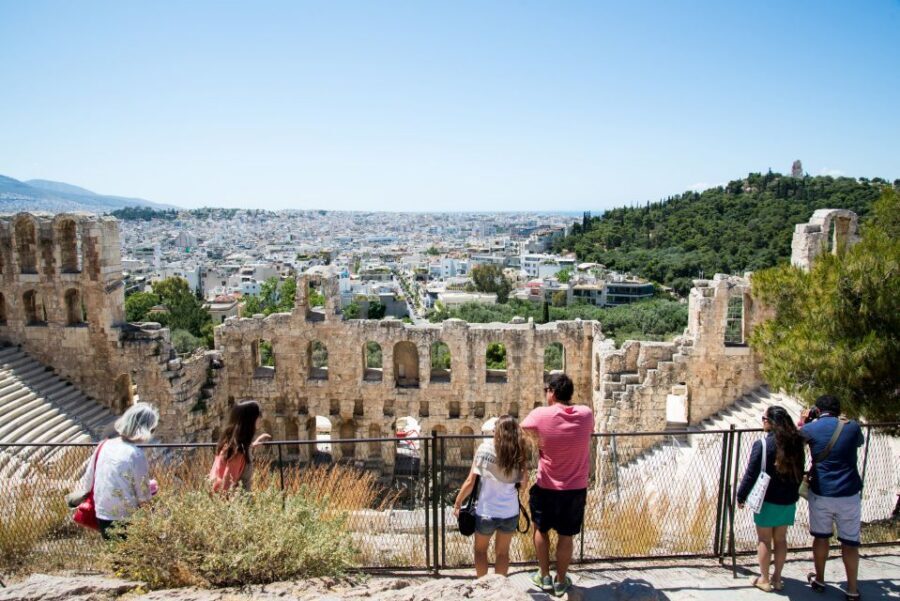
Next up is the Odeon of Herodes Atticus. What makes this stop special is that it isn’t just a historic structure frozen in time. The theater is still used today during the Athens Festival, running roughly May to October.
So as you walk past, you’re doing something rare at archaeological sites: you’re seeing continuity. Ancient architecture doesn’t always stay in use, and when it does, it helps your brain stop treating the Acropolis as a museum piece and start treating it like part of living Athens.
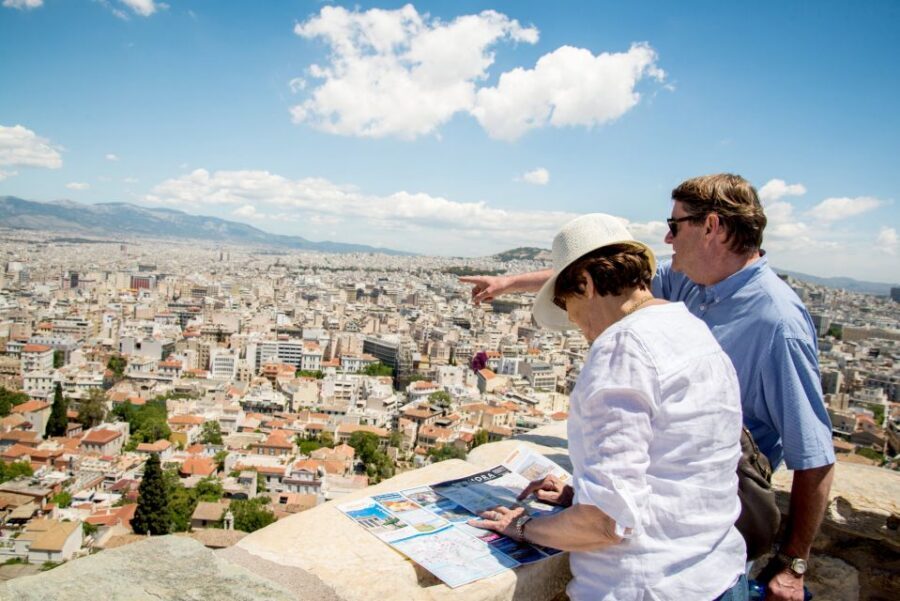
Photo-wise, you’ll be working from angles that show how the city folds around the hill. On clear days, the skyline views become a background feature, not just the main event.
Propylaea, Temple of Athena Nike, and Quick Photo Stops You’ll Actually Use
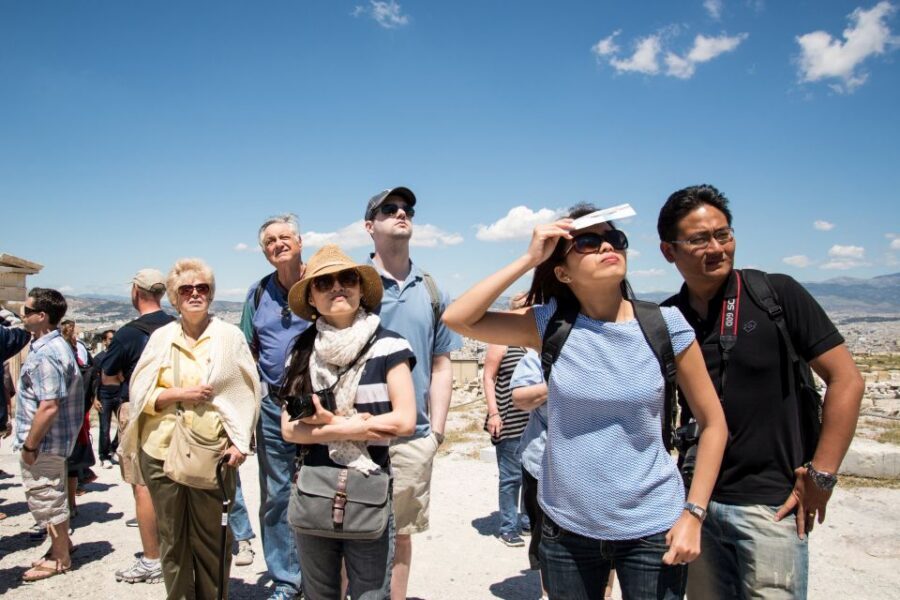
As you continue toward the core monuments, you pass Propylaea—the gateway area—and you’ll have a short photo stop here. This is a useful moment because it often gives you a clean view back toward the city before the climb tightens and the monuments dominate.
Then you’ll reach the Temple of Athena Nike. Even if you’ve heard of the Parthenon a hundred times, this stop helps you understand how many “mini-celebrations” of Athena and civic identity were woven into the Acropolis complex.
The walking breaks here are also strategic. One of the hidden values of a guided route is not rushing the photos until you’re exhausted. A quick pause beats a frantic scramble.
Parthenon Time: How You Get More Than the Usual View
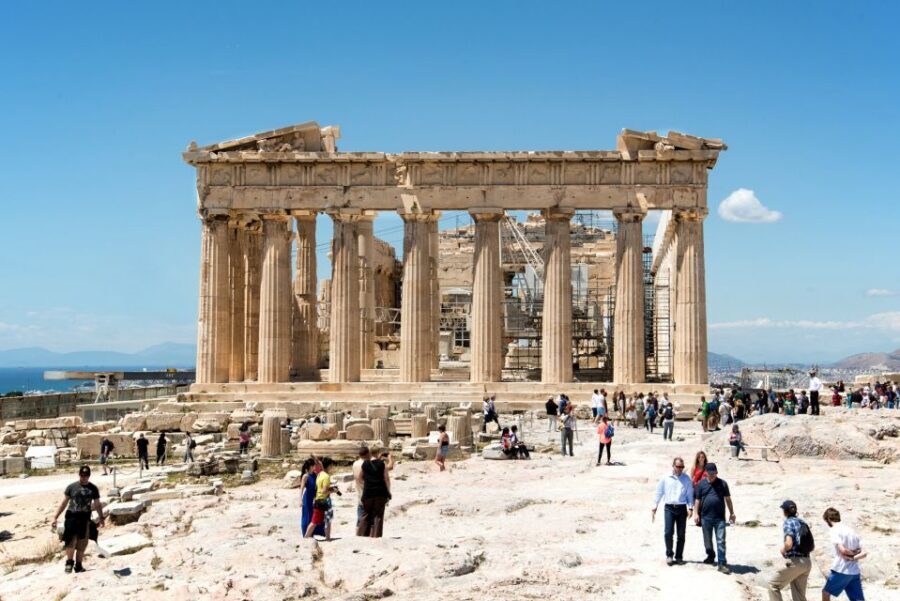
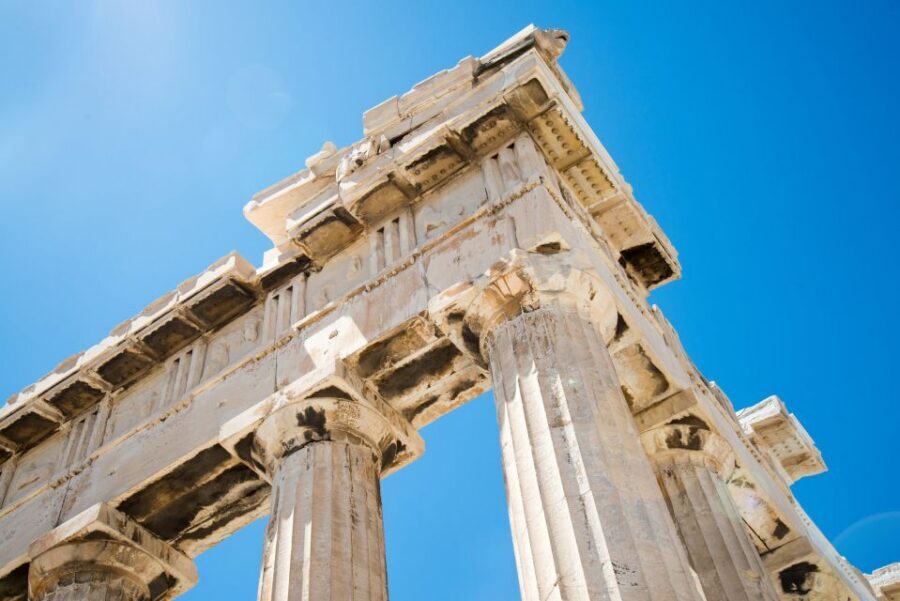
Yes, you’ll visit the Parthenon. But the value isn’t only the classic view from the top—it’s what you learn right there among the columns and stone joints.
A good guide will help you notice details and explain what they mean, including how later appearance differs from how the monument originally functioned. You’ll typically spend enough time to look, listen, and take photos without the “ten minutes and out” feeling.
If you want a practical tactic: when you’re near the Parthenon, pick one spot to stand and let the explanation sink in. Then take your photos after the facts, not before. You’ll understand what you’re photographing instead of just collecting another image.
You can also read our reviews of more museum experiences in Athens
Erechtheion: Caryatid Power and the Architecture Mindset
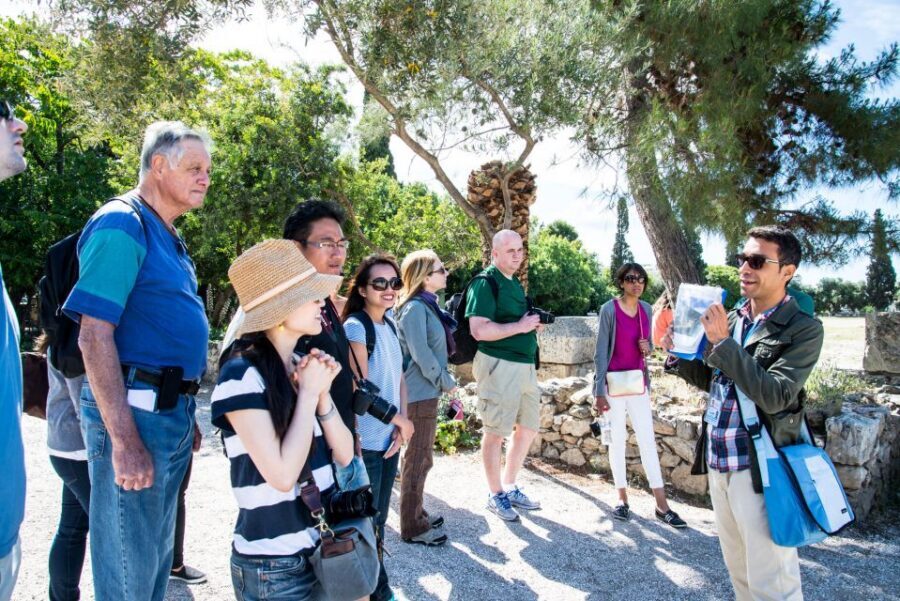
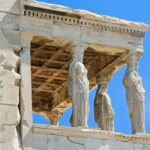
After the Parthenon, you’ll reach the Erechtheion. This is one of the stops that often becomes a turning point for people who thought the Acropolis was only about the big temple.
Erechtheion changes the mood because the structure is different in character and it pushes you to look at the site like an architectural puzzle—how each sacred space relates to its neighbors, and how design supports meaning.
If you’re a detail person, this is where the Acropolis starts rewarding you even more. The guide can point out how the building is organized and why those forms mattered to the people who used them. And it’s a great lead-in to what you’ll see upstairs at the museum, since the museum helps you connect stone fragments to full stories.
Acropolis Break Time: Where Your Eyes Catch Up
At a certain point you’ll get a brief break, photo stop, and free time on the Acropolis. This is important because the hill is mentally busy. You’ve been walking, listening, and absorbing.
Use the free moment for two things:
- Re-check your favorite view and take slower photos now that you know what you’re seeing.
- Don’t cram in extra exploring beyond your comfort. You want to finish the tour feeling fresh for the museum part.
If you’re traveling in cooler months, you might feel more energetic on the hill. In warmer months, you’ll be glad that the museum sits nearby as a place to reset with air-conditioned walls and a slower pace.
New Acropolis Museum: The Glass Floor and Everyday Life Galleries
The second half of the tour is where everything starts to click. You’ll head to the Acropolis Museum for a guided session (about 1.5 hours). This is also where you get a different kind of wow: statues and artifacts arranged to help you see the Acropolis as a living place with layers.
One standout is the Gallery of the Slopes of the Acropolis, where a glass floor can reveal an archaeological excavation site beneath. It’s a physical reminder that the museum isn’t just storing objects—it’s showing you the ground truth of what’s been found.
The museum galleries focus on more than big heroic monuments. You’ll get context for everyday life at the Acropolis, including how people interacted with the spaces and what kinds of items were used or displayed. That’s a huge reason the guided portion is worth it here: without explanation, it’s easy to wander from statue to statue without understanding why each group matters.
You’ll also have the option of a cafe break, with drinks and snacks available at your own expense. This can be a good time to cool down before you continue.
Guides, Earbuds, and Group Pace: What You’ll Notice During the Walk

The tour is led by a live English guide, and the experience is designed to keep groups together without feeling like cattle. Wireless hearing devices help a lot. It means you’re not constantly turning your head to find the guide, and you’re less likely to miss details in crowded lanes.
From what I’ve seen in how guides operate on this kind of route, one key difference is timing. Great guides keep you moving between major points, but they also build in little pauses so you can look and absorb. Names that come up often include Petros, Dionissos, Anna, Demos, Petro, and Artemis—and the common thread is storytelling plus steady pacing.
If you have questions, this tour format tends to handle them well, especially because the guide is walking you through the same space you’d otherwise be trying to decode on your own.
How Much Time You Really Get (and How to Use It)
On paper, the duration is 2 to 4 hours. In real life, it can feel longer when your guide spends extra moments on questions, when the pace is adjusted for crowd flow, or when you linger at the Parthenon and museum galleries.
That timing range is a good sign if you want the highlights but don’t want to commit to a full day. It’s also why comfortable shoes matter. This is a hill route with stops. You’ll feel it in your legs if you’re not used to stairs and uneven ground.
If you’re short on time in Athens, this is a smart way to hit the core monuments and still understand them afterward in the museum.
Price and Value: Is $41 Worth It?
At about $41 per person, the cost is appealing for a tour that includes:
- a licensed guide,
- guided time at the Acropolis monuments and Parthenon,
- skip-the-line entry (when you select the option with tickets),
- and skip-the-line entry to the Acropolis Museum,
- plus wireless hearing devices.
Your biggest “value lever” is the museum guide. Without one, you can still see great objects, but you lose the structure—why pieces are grouped, how the Acropolis story develops, and what you’re meant to notice. That’s exactly what the tour tries to give you in a compact window.
You pay more than self-guided sightseeing, but you save time in lines and you buy back meaning. For a first trip to Athens, that often feels like the better trade.
Practical Stuff: What to Bring and What Not to Bring
This tour asks you to bring:
- Passport or ID card
- Comfortable shoes
- Sun hat
Don’t bring:
- pets
- oversize luggage
- baby strollers
- anything that counts as luggage or large bags
Also plan for site rules around items you carry. One common reality at the Acropolis is that glass bottles are not allowed, so it’s smart to travel light and avoid carrying glass at all.
No pickup or drop-off is included, so you’ll start from the meeting point and handle your own way back.
Who This Tour Fits Best
I think this works especially well if:
- it’s your first time seeing the Acropolis and you want the story tied together,
- you like archaeology but also enjoy myth and civic life (the stops cover both),
- you want the Parthenon plus more than just the Parthenon,
- you’d rather spend your time looking and listening than figuring out what to prioritize.
It’s less suitable if:
- you use a wheelchair or have mobility limitations, since the route is not designed for wheelchair access,
- you hate uphill walking or uneven stone.
Should You Book This Acropolis + Acropolis Museum Tour?
If your goal is to see the top sites and understand them in one efficient run, I’d book it. The guide-led route hits the Parthenon and Erechtheion, then uses the museum to explain the “so what” behind the stones. Skip-the-line entry and wireless hearing devices are practical perks that make the day feel smoother.
Skip this only if you’re determined to go fully independent, you’re avoiding any uphill walking, or you need a very relaxed pace with lots of wandering time. Otherwise, this is one of the best ways to make your Acropolis visit feel like a real education instead of a photo hunt.
FAQ
Where is the meeting point?
The meeting point is at the Athens Walks tour office on Porinou 5, ground floor.
How long is the tour?
It runs about 2 to 4 hours, depending on the departure and pacing.
Is the guide English-speaking?
Yes, the live tour guide is listed as English.
Does the tour include entrance to the Acropolis Museum?
Yes, museum entry is included, and there is also skip-the-line entry for the Acropolis Museum.
Is skip-the-line entrance included for both sites?
Skip-the-line entrance tickets are included if you select the option with tickets. Skip-the-line entry to the Acropolis Museum is also included.
Are food and drinks included?
No. Food and drinks are not included, though there is a cafe break inside the museum area where you can buy refreshments at your own expense.
Do I need my passport or ID?
Yes. You should bring your passport or ID card.
Is pickup or drop-off included?
No. Pickup and drop-off are not included.
Is this tour suitable for wheelchair users?
No. It is not suitable for people with mobility impairments or wheelchair users.
What’s not allowed on the tour?
Pets, oversize luggage, baby strollers, smoking, and luggage or large bags are not allowed.
Can I cancel for a refund?
Free cancellation is available up to 24 hours in advance for a full refund.