REVIEW · ATHENS
Ancient Athens E-Bike Tour
Book on Viator →Operated by AyoToursAthens · Bookable on Viator
Athens in motion beats Athens in sweat.
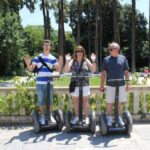
This Ancient Athens E-Bike style tour uses a standing motorized Trikke so you can cover a lot of ground fast, hitting major landmarks like the Acropolis and Ancient Agora without long uphill walks. I like that it keeps things efficient—short stop times, good viewpoints, and a route that helps you understand where everything fits together. I also like the practical safety extras: a helmet plus costumer insurance (and the bikes are easy to learn). One thing to consider: the big archaeological tickets are not included, so your total cost will rise if you plan to enter the paid sites.
You get an intimate small-group feel (up to 12 people) while still packing in serious history.
The route is built around seeing the dramatic theater spaces, hilltop areas linked to democracy, and the markets and neighborhoods that shaped daily life. A possible drawback is timing and heat: it runs during daytime hours, and it requires good weather—so if Athens is baking or conditions are poor, you’ll want flexibility.
In This Review
- Key points before you go
- What this tour is really like (and who it’s for)
- Price and value: $72.09 plus site tickets
- The riding experience: easy, fun, and safety-first
- Route overview: how the stops build the story of ancient Athens
- Theatre origins: Theatre of Dionysus and Odeon of Herodes Atticus
- Acropolis close-side viewing: Parthenon on top
- Pnyx and the politics of place: where democracy began
- National Observatory of Athens: a science stop with a view
- Ancient Agora: the market heart you can picture
- Keramikos and ceramics: the city’s craft link
- Monastiraki and Plaka: ending with Athens-as-a-city
- How long is the tour, and when does it run?
- Group size, guide style, and flexibility
- Weather and day-planning reality check
- Should you book the Ancient Athens e-trike tour?
- FAQ
- FAQ
- How long is the Ancient Athens E-Bike tour?
- What’s included in the tour price?
- Are archaeological site tickets included?
- Which places have listed admission prices?
- What’s the meeting point?
- What time does the tour operate?
- How many people are in each group?
- What language is the tour offered in?
- What if the weather is bad?
Key points before you go
- Standing motorized Trikke riding makes steep ancient areas easier, with no pedaling required
- Top sights in ~2 hours: Acropolis, Odeon of Herodes Atticus, Ancient Agora, Plaka, and more
- Small group (max 12) so the guide can adjust and keep things smooth
- Helmet + insurance included for a safer, less-stress ride
- Archaeological tickets are mostly not included, so budget for entry fees
- English-speaking guide with route help if you’ve already seen parts of Athens
What this tour is really like (and who it’s for)
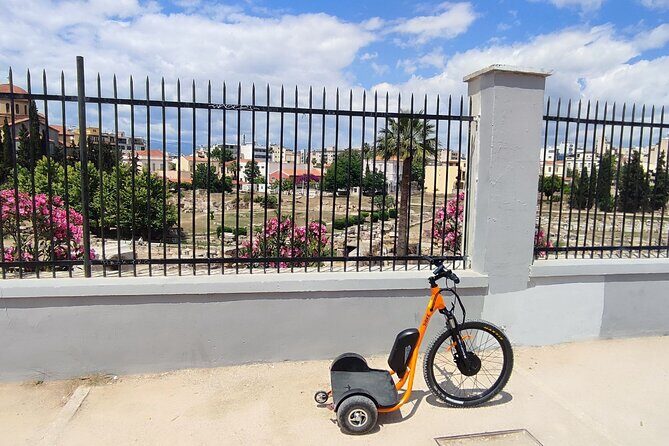
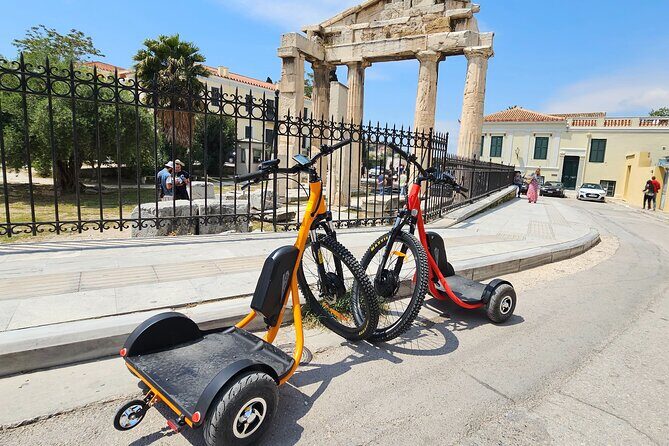
This is a “see the classics fast” tour. You’re not trying to master Athens by foot. Instead, you ride a standing motorized Trikke (often described as an e-bike style experience) with a helmet and insurance, moving between key ancient sites and central neighborhoods in about two hours.
I like this format because it respects your energy. Athens has real hills, uneven ground, and long sightline distances. A standing e-trike lets you get your bearings fast, then come back later on your own time if you want to linger.
You’ll get the most out of it if:
- You want a strong overview in a short window (first-time visit, limited time, or jet lag).
- You’re okay with a “highlights with context” pace rather than a deep museum day.
- You want an easy way to visit the Acropolis area and ancient ruins without turning your day into a stair workout.
If you prefer to wander slowly, take lots of photos without moving on, or you want a long stop inside each site, this might feel brisk. The tradeoff is that you’ll cover more in less time.
You can also read our reviews of more cycling tours in Athens


Price and value: $72.09 plus site tickets

The tour price is $72.09 per person for about two hours, and it includes:
- Use of the Trikke
- Helmet
- Costumer insurance
Tickets to the archaeological areas are not included. Based on the listed site fees, you should mentally add:
- Odeon of Herodes Atticus: 20€
- Acropolis hill: 20€
- Ancient Agora of Athens: 4€
- Roman Agora: 4€
That comes to about 48€ total in paid admission fees for the sites that list a price. Some parts of the route are free (like Pnyx and Keramikos), and at least one stop lists admission as included (National Observatory of Athens).
Here’s how I’d think about the value: you’re paying for transportation and for the guide’s ability to connect the dots across the Acropolis, agora areas, theaters, and neighborhoods. If you already planned to buy entry tickets anyway, the e-trike aspect becomes more like a “money-saving on effort” purchase. If you only want a quick look from the outside, you might question the ticket add-ons—but the tour is set up to include the big hits.
The riding experience: easy, fun, and safety-first

You stand, you steer, you follow the guide. Since it’s motorized and described as not requiring pedaling, you don’t have to budget strength for hills. A helmet is included, and the operator also provides costumer insurance. That matters because you’ll be moving through busy areas and around archaeological sites where people may stop suddenly.
From a practical standpoint, the key is comfort and control:
- Wear the helmet as instructed and don’t adjust it once you’re rolling.
- Keep your turns smooth and slow when other pedestrians appear.
- Plan for quick stop-and-go moments—ancient areas can feel crowded even when you’re “outside.”
The tour is also capped at 12 travelers, which helps the group stay manageable. Fewer people means less chaos at tight turns and a better shot at the guide keeping everyone together.
Route overview: how the stops build the story of ancient Athens
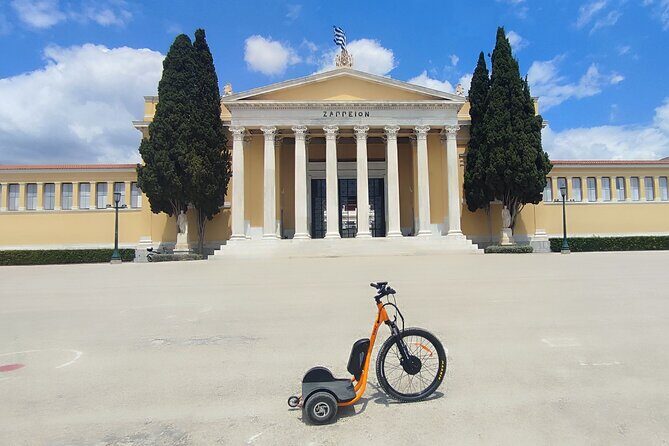
This isn’t just a list of landmarks. The order matters. You start with theater culture, rise into the Acropolis zone, shift to democracy-linked Pnyx, then slide into the civic and market heart of the city, finishing with neighborhood Athens—where life continued long after the statues fell.
Stops are timed (often around 10–20 minutes). That’s intentional: you get a viewpoint, you get context, and you move on before you lose the energy that makes the whole route work.
Theatre origins: Theatre of Dionysus and Odeon of Herodes Atticus
The tour includes a stop connected to what’s described as the most important theatre in ancient Greece—where theatre is said to have started. The ticket for the Acropolis Hill is also described as including the Theatre of Dionysus, so if you’re paying for the big Acropolis admission, you’ll likely see this piece too.
Then you move to Odeon of Herodes Atticus, a Roman-era theatre still used for shows. It was created in the second century A.D., described as a memorial for the death of Herod Atticus’ wife. This stop is also listed with a 20€ admission ticket (not included) and a short time on site.
Why this stop is worth your time: theaters are culture hubs. Athens didn’t treat drama as a separate hobby; it was part of civic life and public identity. Seeing these spaces early helps you understand why the Acropolis and civic sites connect to performance, ritual, and public gatherings.
A drawback: theatres can feel less “hands-on” than a temple. You’re looking, imagining, and absorbing. If you want guided interpretation where you can stand inside ruins for long stretches, this short format may feel like a taste rather than a meal.
A few more Athens tours and experiences worth a look






Acropolis close-side viewing: Parthenon on top
Next is the Acropolis. The approach here is about getting a close side view of the hill and its most famous temple area. The Parthenon sits at the top, and the tour is designed to help you see the scale quickly from a viewpoint that’s easier to reach than on foot.
The Acropolis hill admission is listed at 20€ (not included), and the stop time is about 10 minutes. That sounds short, but remember: this is an overview tour. The goal is to orient you—so you can come back later with a clearer sense of where to focus.
Tip: if the Acropolis is packed, take your photos from the safer crowd-friendly angles the guide directs. With a standing e-trike, you’re not trying to stop for every frame. Instead, you’re capturing the big shapes: hill lines, temple placement, and how the city wraps around the ruins.
Pnyx and the politics of place: where democracy began
You then reach Pnyx, described as the place where democracy started. It sits inside an archaeological area that’s also a park. Admission is listed as free, and the stop is around 15 minutes.
This is one of those stops where you’ll feel the geography doing the teaching. Standing on a hill tied to political life makes it easier to visualize how public decision-making looked and sounded. If you’re the kind of traveler who likes to connect history to landscape—without needing a museum ticket for everything—Pnyx hits that sweet spot.
The time is short, but the payoff is the sense of “this is where people gathered to decide.”
National Observatory of Athens: a science stop with a view

The National Observatory of Athens is another hilltop stop, listed as admission included. It’s described as the first observatory of Athens, and the surrounding area is part of an archaeological park setting tied to the hill of Nymphs.
Stop time is around 15 minutes. You’re not going to a planetarium-style show here—you’re using the location to understand how the city layers knowledge onto old places.
If you like your history to be more than dates and names, this stop can give you a different lens: the same land that mattered for civic life also became a place for observing the world.
Ancient Agora: the market heart you can picture
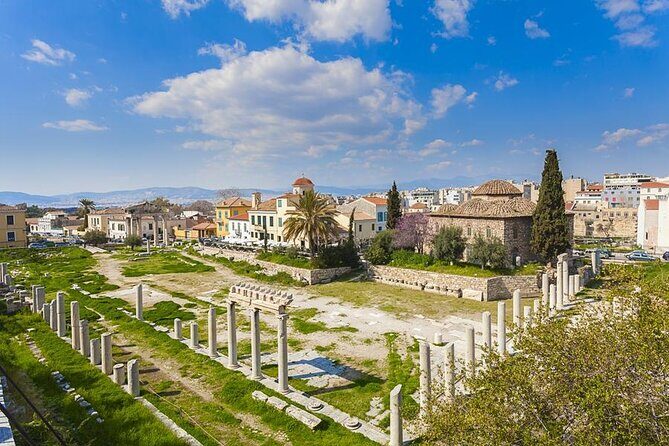
Then comes Ancient Agora of Athens, the main market area of ancient society. This stop is about 20 minutes and lists admission as included. The Agora is one of the best stops on any Athens day because it’s where you can imagine everyday life: commerce, conversations, and civic activity.
Why it’s valuable even with a short stop:
- You can connect “the big political story” (Pnyx and civic culture) to the lived reality (markets and public meetings).
- It gives you a mental map for where later neighborhoods and street life feel like descendants.
If you want to go deeper, plan to return later. But as a moving overview stop, it works well.
Keramikos and ceramics: the city’s craft link
Near the Agora is Keramikos, described as an archaeological area where ceramics were produced—so the neighborhood name makes sense. Admission is free, and the stop time is about 10 minutes.
This is a quiet intermission in the route. It’s less “wow temple” and more “how people made things.” If you’re trying to balance mythic monuments with practical ancient life, Keramikos is a solid match.
Monastiraki and Plaka: ending with Athens-as-a-city
After ancient sites, the tour flows into Monastiraki, described as the second most crowded square in Athens and often treated like the heart of the city due to bars, restaurants, and nearby options. Admission is listed as included, and the stop is about 10 minutes.
Then you ride to Plaka, described as a traditional neighborhood that looks like a Greek island—picturesque, central, and very photogenic. Kerameikos and the Agora give you ancient Athens; Monastiraki and Plaka give you what Athens looks like when it kept evolving.
This is a smart ending because it lets you switch from ruins brain to food and wander brain.
How long is the tour, and when does it run?
Duration is about 2 hours. The tour runs from 10:00 AM to 4:00 PM, Monday through Saturday, for the date range listed (2023 through 2026).
It’s also a mobile-ticket experience, and you receive confirmation at booking time. The meeting point is:
Leof. Andrea Siggrou 22, Athina 117 42, Greece
The activity ends back at the meeting point.
That matters for planning. You don’t need a complicated second commute. You can also use the first two hours to build a route for the rest of your day.
Group size, guide style, and flexibility
The group is kept small, up to 12 travelers, which helps with safety and pacing. The tour is in English.
One of the best practical advantages here is the guide’s ability to adjust. You may see guide names such as Dimitris (and there are also mentions of other guides like Kevin), and the guiding approach is described as upbeat and adaptable—especially if you’ve already seen certain spots.
If you’re arriving in Athens for the first time, that flexibility is huge. It means you can avoid repeating parts you already covered elsewhere, and instead get pointed toward angles and details that help you understand the city’s layout.
Weather and day-planning reality check
This experience requires good weather. If it’s canceled due to poor conditions, you’ll be offered a different date or a full refund. That’s important for Athens, where heat and sudden weather swings can change how pleasant outdoor walking is.
Also, because the route involves riding and stopping in outdoor areas, you’ll want to dress for the moment—sun protection, water, and comfortable shoes for any brief walking around sites.
Should you book the Ancient Athens e-trike tour?
I think you should book it if you want:
- A fast, structured overview of the Acropolis area, theaters, Agora, and central neighborhoods in about 2 hours
- A low-effort way to handle hills using a standing motorized Trikke
- Helmet + insurance included, with a manageable small group size
I’d pause before booking if:
- You hate tight time windows and want lots of long, slow interior exploring
- You’d rather avoid paying extra archaeological admission fees on top of the tour price
- Your schedule can’t handle a possible weather reschedule
FAQ
FAQ
How long is the Ancient Athens E-Bike tour?
It lasts about 2 hours.
What’s included in the tour price?
The tour includes use of the Trikke, a helmet, and costumer insurance.
Are archaeological site tickets included?
No. Tickets to the archaeological areas are not included.
Which places have listed admission prices?
Odeon of Herodes Atticus is listed at 20€, the Acropolis hill is 20€, Ancient Agora is 4€, and Roman Agora is listed with a 4€ price. Other stops like Pnyx and Keramikos are listed as free.
What’s the meeting point?
The meeting point is Leof. Andrea Siggrou 22, Athina 117 42, Greece.
What time does the tour operate?
It runs Monday to Saturday, 10:00 AM to 4:00 PM.
How many people are in each group?
The maximum group size is 12 travelers.
What language is the tour offered in?
The tour is offered in English.
What if the weather is bad?
The experience requires good weather. If canceled due to poor weather, you’ll be offered a different date or a full refund.