REVIEW · ATHENS
Athens: Philosophy Experience at Plato’s Academy Park
Book on GetYourGuide →Operated by Hellas Revival · Bookable on GetYourGuide
Plato’s Academy Park is more than an ancient site to photograph. It becomes your classroom in this small-group workshop, where you gather clues at the digital museum, walk among the old Academy grounds, and test your ideas through conversation and debate. You do not need a background in philosophy. The session uses plain English and starts at the beginner level.
I like the hands-on format, especially the way you do not simply listen to a lecture about Plato. I also like the chance to visit the free Digital Museum and then connect what you see there with the ruins of the ancient Gymnasium. The main consideration is that the museum’s hours can change, and archaeological work may limit how close you get to the ruins.
In This Review
- Key points at a glance
- Why Plato’s Academy Park makes a fine classroom
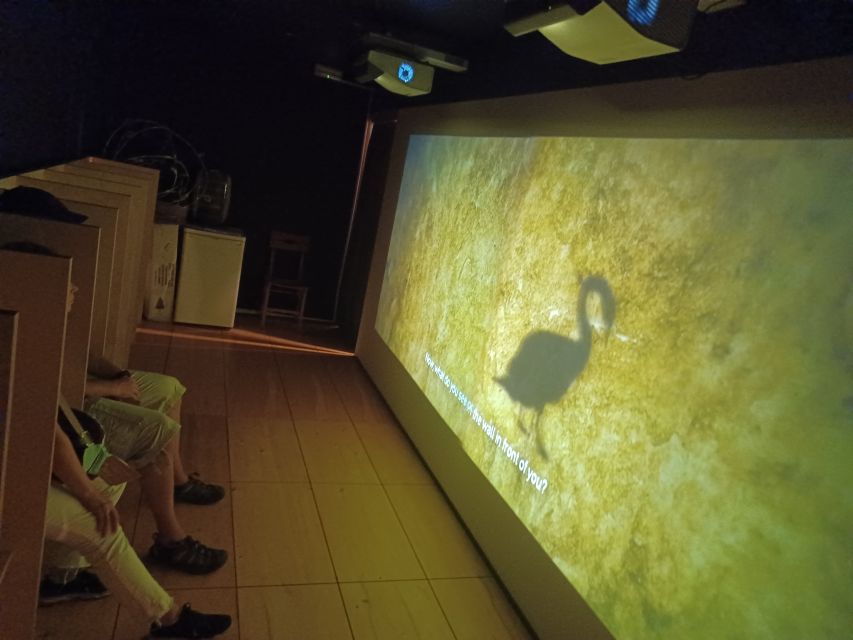
- Starting at the Plato’s Academy Digital Museum
- Walking through the ancient Academy grounds
- The Allegory of the Cave without the textbook fog
- Socrates’ maieutic art in practice
- Finishing with a modern debate game
- What the $90 price includes
- Timing, comfort, and practical details
- Who will get the most from this workshop?
- Should you book the Plato’s Academy philosophy experience?
- FAQ
- How long does the Plato’s Academy philosophy experience last?
- Where do I meet the facilitator?
- Is the Digital Museum entry included?
- Do I need previous knowledge of philosophy?
- Is this a guided tour of Plato’s Academy?
- Can I cancel or pay later?
Key points at a glance
- A philosophy class in Plato’s own neighborhood: Explore the site of the first Academy and discuss how learning worked in ancient Athens.
- A free museum visit with a task: Gather specific details about Plato and his school instead of simply passing through the displays.
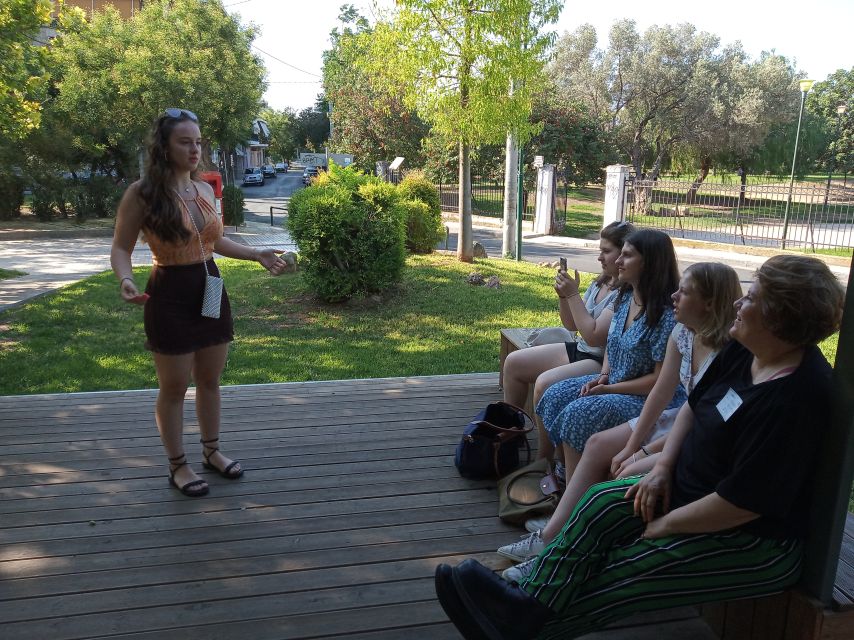
- Socratic questioning in the open air: Use questions, conversation, and personal examples to examine your own assumptions.
- Plato’s Allegory of the Cave made practical: Connect the famous story to decisions, beliefs, and modern daily life.
- A short debate to finish: Take a position on a modern case study based on Plato’s view of a philosopher’s duty.
- Beginner-friendly and personal: The English-language workshop is available for private or small groups and lasts two hours.
Why Plato’s Academy Park makes a fine classroom
The appeal of this activity begins with the setting. Plato founded his Academy in this part of Athens, and the park preserves the sense of a place devoted to study, exercise, and discussion. You are not visiting a grand monument with towering columns. Instead, you are walking through an archaeological park where the remains require explanation and imagination.
That is exactly why the workshop format helps. Without context, the ruins can be easy to overlook. With a facilitator guiding the conversation, the ground beneath you becomes part of the lesson. You can think about how a philosopher might have taught, argued, listened, and challenged others in ancient Athens.
The session is not a conventional guided tour. Your facilitator does not lead you through a long sequence of dates and architectural details. The focus is an interactive philosophy workshop, with questions, shared opinions, and short activities. If you prefer to stand back and absorb information quietly, this may feel more demanding than a standard sightseeing stop.
If you enjoy talking through ideas, the approach has real value. You are asked to connect Plato’s work with your own experiences rather than treat philosophy as a subject locked inside a textbook.
You can also read our reviews of more tours and experiences in Athens.

Starting at the Plato’s Academy Digital Museum
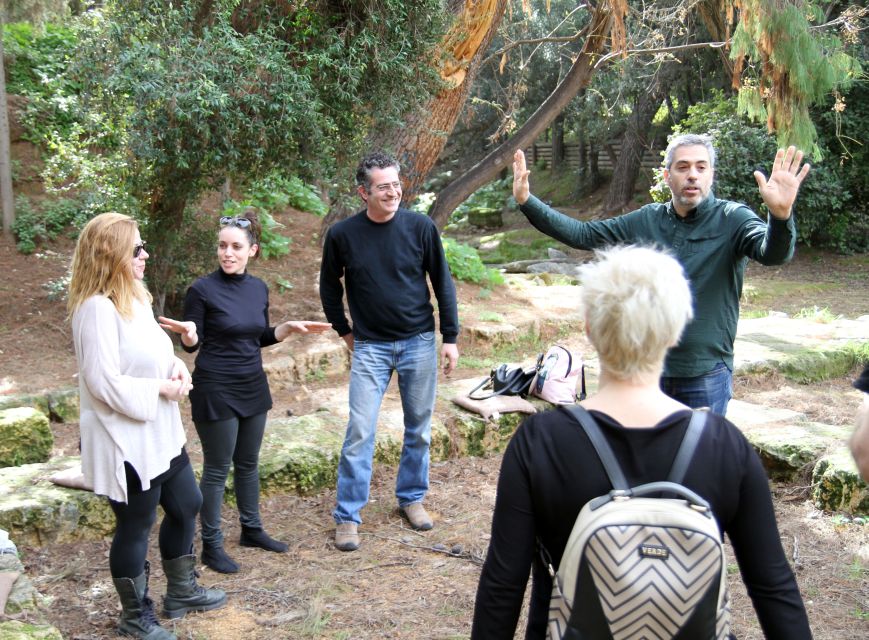
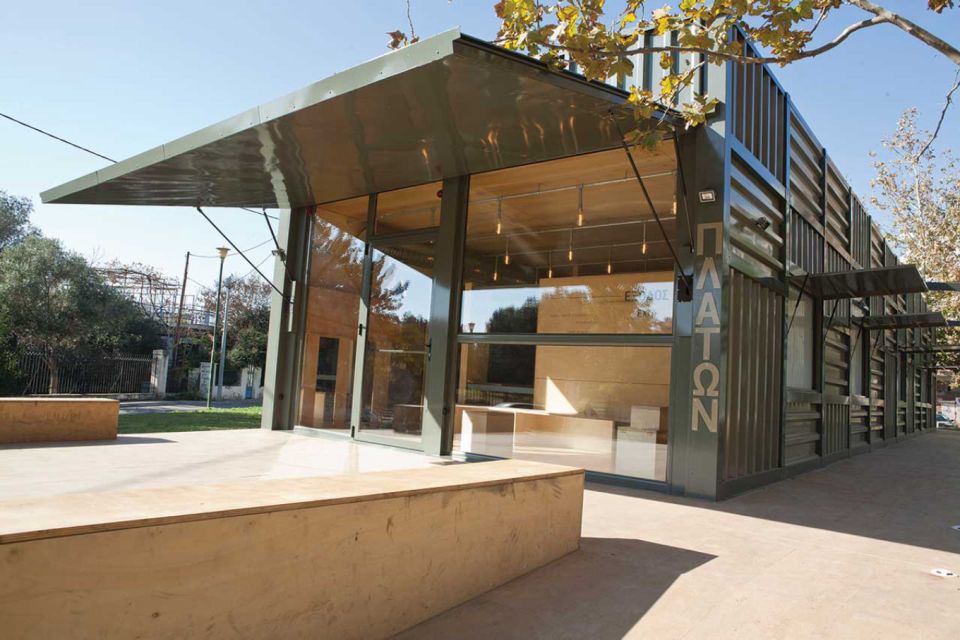
You meet the facilitator outside Plato’s Digital Museum, at the entrance, where the instructor will hold a Hellas Revival sign. The museum entrance is free when the museum is open and operating, but its schedule changes often. It can also close without notice, so you should treat the museum portion as an important possibility rather than a guaranteed stop.
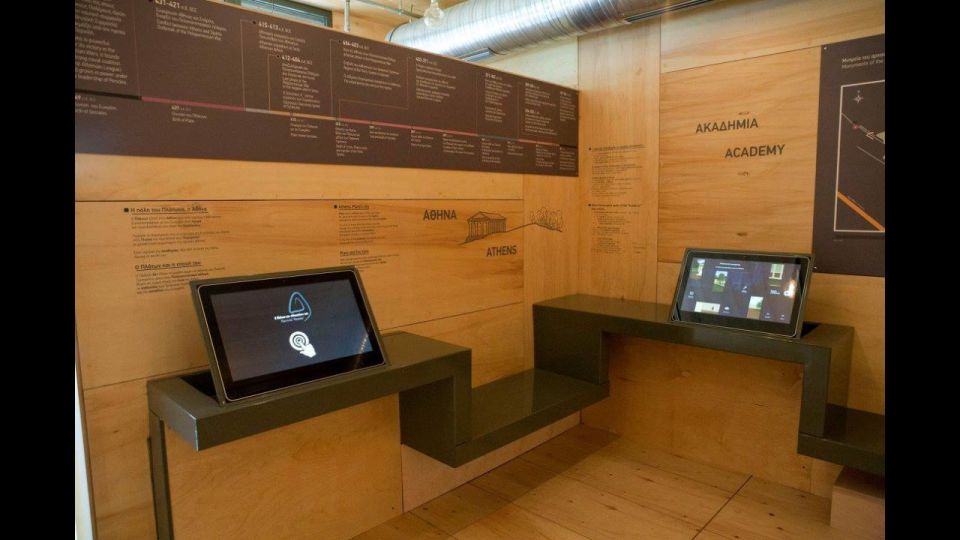
When it is open, your visit has a clear purpose. You receive specific information to find about Plato’s life, his writings, and the Academy. This turns the museum visit into a small research task. Instead of wandering from display to display, you look for details that will help with the discussion later.
I like this design because it gives you something to do before the outdoor session begins. It also makes the activity feel less like a passive lecture. You gather material, remember what you found, and then use it in conversation.
The museum is described as a digital museum, so you should not expect a large traditional collection of ancient objects. Its value is in helping you get basic facts in place before the workshop moves to the park. If the museum is closed, the activity can continue at another location in the park, but you may miss this introductory research element.
Walking through the ancient Academy grounds
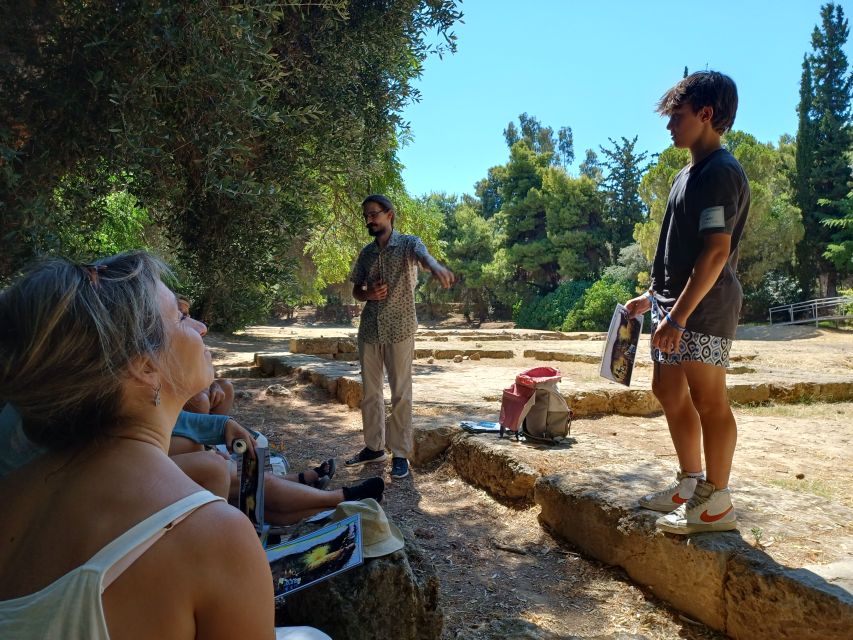
After the museum, you move into Plato’s Academy Park. The exact route and stopping place can change if archaeological excavation is taking place. When work is underway, you may see the ancient Gymnasium ruins from a short distance and settle in another part of the park.
This is worth knowing before you book. The activity is not built around guaranteed close access to every archaeological feature. Its main purpose is discussion in a meaningful historical setting. The park gives the conversation a strong sense of place, even if excavation work changes the view.
The ancient Gymnasium matters because education in ancient Greece was not limited to reading and writing. The gymnasium was tied to physical training, social life, and intellectual exchange. The workshop uses the ruins as a prompt for considering what it meant to become a well-rounded person in Athens.
You will have time to reveal the information gathered at the museum and talk about what it was like to be a philosopher in ancient Athens. This part helps connect Plato’s ideas with the social world around him. Philosophy was not merely a private hobby. It involved public conversation, education, civic life, and the difficult work of deciding how people should live.
You may find the park quieter and less visually dramatic than Athens’ major ancient monuments. That is part of its appeal, but it also means the experience depends heavily on your willingness to listen, think, and participate.
The Allegory of the Cave without the textbook fog
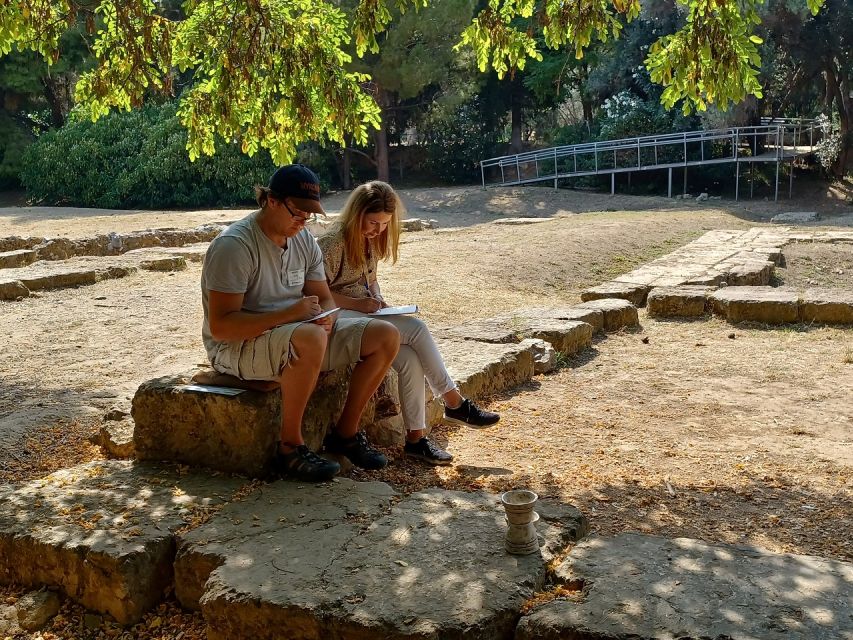
The central lesson uses Plato’s famous Allegory of the Cave. In the story, people mistake shadows for reality because they have never seen anything else. One person begins to move toward the light, discovers a larger truth, and faces the problem of returning to those still inside the cave.
You do not simply hear a summary of the story. The facilitator uses dialogue to help you examine its meaning. What counts as reality? How do you know that your beliefs are sound? What happens when a person learns something that challenges the group?
These questions can feel surprisingly current. The workshop asks you to bring your own views, experiences, and assumptions into the discussion. You might consider how people form opinions, how social pressure affects judgment, or how difficult it can be to change your mind.
The strength of this section is its practical tone. You are not expected to memorize philosophical terms or explain Plato’s entire system. The activity is designed for beginners, with plain English and no difficult terminology. That makes it suitable if you have always been curious about philosophy but have avoided academic classes.
It also works for people who already know some Plato. A mixed group can discuss the same passage at different levels, with beginners asking direct questions and more experienced participants exploring wider interpretations. The structure gives both kinds of people room to contribute.
Socrates’ maieutic art in practice
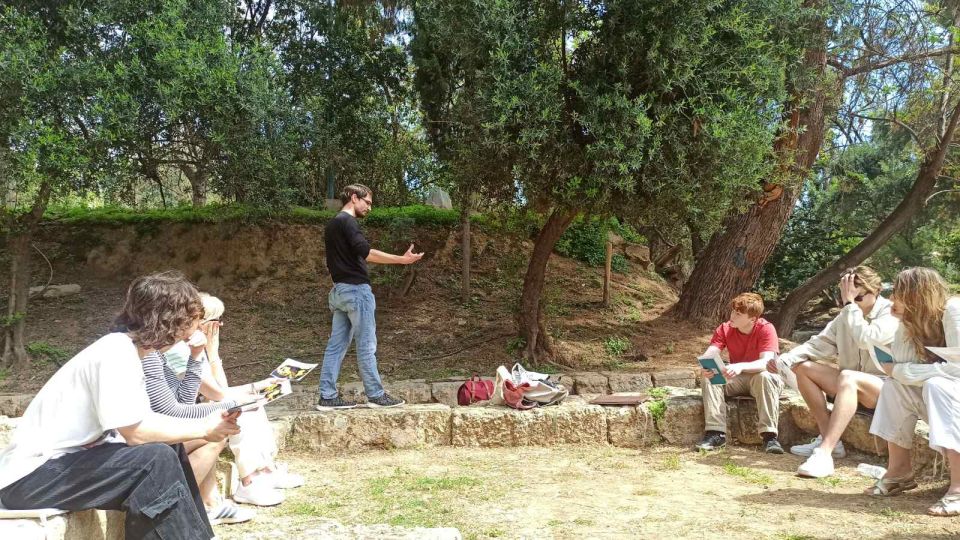
The facilitator uses Socrates’ maieutic method, sometimes described as the art of midwifery. Socrates compared his work to helping another person give birth to an idea. Instead of handing you a final answer, he asks questions that help you examine and clarify your own thinking.
This matters because the session is not meant to tell you what to believe. The facilitator guides the exchange and keeps the conversation productive, but you are expected to do some of the intellectual work yourself. You may be asked to explain why you hold an opinion, consider an opposing view, or notice a weakness in your first answer.
The method can be joyful, but it is not entirely passive or effortless. You will need to speak, listen, and respond. In a private or very small group, that can create a warm and focused atmosphere. It can also mean that there is little opportunity to hide at the back of the room.
I appreciate the emphasis on self-awareness and critical thought. Those goals sound grand, but here they are handled through simple actions: answering questions, testing an idea, and listening carefully when someone sees the issue differently.
The facilitator is described as friendly, engaging, humble, and well informed. The experience depends on that person’s ability to encourage discussion without turning it into a performance. Based on the format, you should expect a conversation rather than a formal academic presentation.


Finishing with a modern debate game
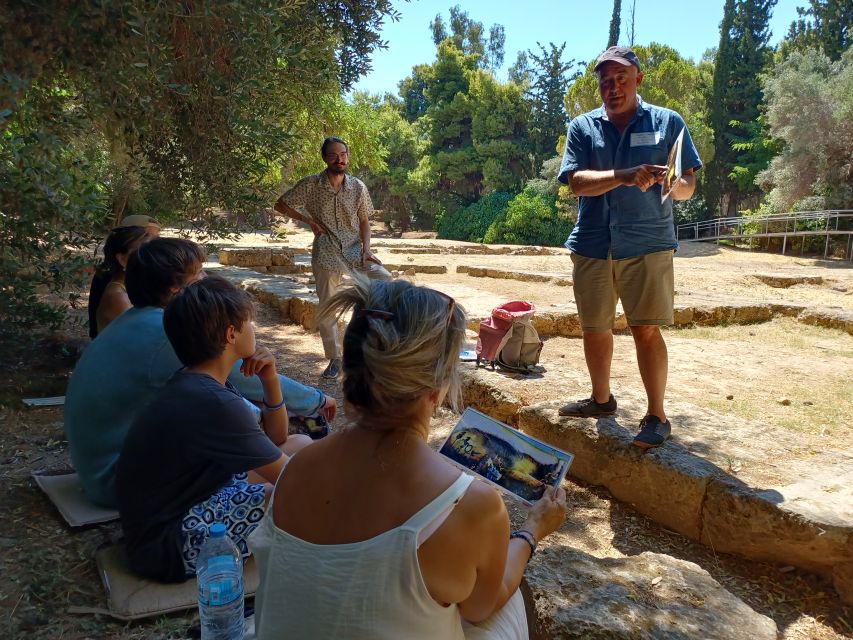
The final section is a short debate based on a modern-life case study. You consider how a philosopher should act, using Plato’s ideas as a starting point. This gives the workshop a clear finish and lets you put the earlier discussion into practice.
A debate game can be useful for people who learn by doing. You are no longer only interpreting an ancient story. You must choose a position, explain it, and respond to another point of view. The activity helps show why Plato’s questions still matter outside an archaeological site.
You do not need to be a skilled public speaker. The point is not to win through clever rhetoric. It is to make an argument and examine it. The facilitator’s role is to keep the exchange respectful and focused.
This may be the most memorable part for some participants, but it can also be the part that makes shy people nervous. If you dislike speaking in a group, you should know that the workshop’s interactive nature is central to the experience. You can still participate at your own level, but this is not a silent walk through a park.
What the $90 price includes
At $90 per person, this is not a low-cost way to see Plato’s Academy Park. You are paying for a two-hour educational session with an expert facilitator, prepared materials, and local taxes. The museum entry is free, so the price is mainly for the guided teaching and small-group format.
The value depends on what you want from the site. If you only want to view the ruins, you may find the price high, particularly because excavation work can change what you see. You could visit the park independently and spend less.
If you want a structured introduction to Plato, the cost makes more sense. The session gives you preparation at the museum, a walk through the archaeological park, guided discussion, close reading of the Allegory of the Cave, and a final debate. That is a lot of intellectual activity in two hours, especially for someone who would not know how to approach the site alone.
Private and small-group options are available. A smaller group generally matters here because the workshop depends on conversation. You have more room to ask questions and explain your position, though the exact group arrangement and price may depend on the option you select.
The strongest value comes for anyone who wants to understand the ideas rather than just identify the ruins. This is an experience you book for context, interaction, and reflection.
Timing, comfort, and practical details
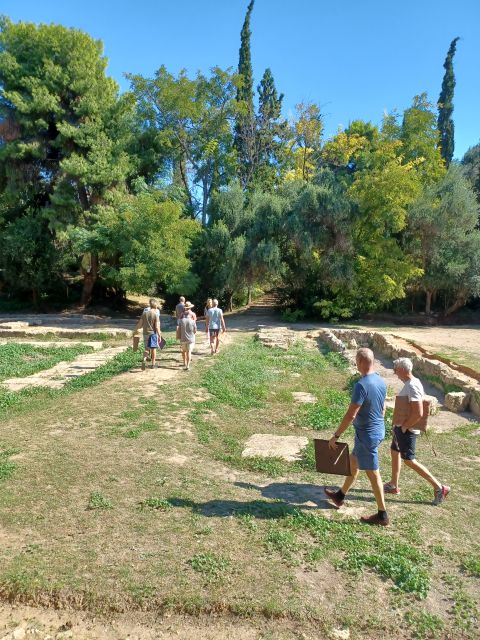
The activity lasts two hours, with starting times shown according to availability. Plan to arrive at the Digital Museum entrance, where the facilitator will be waiting with the Hellas Revival sign. The activity ends back at the meeting point.
Wear comfortable shoes and clothes. You will walk through the park and may spend part of the session standing or settling in an outdoor area. A sun hat and water are sensible, especially in warm weather. The archaeological setting offers limited protection from the sun, so comfort can affect how much attention you give to the discussion.
The workshop is conducted in English. The material is intended for beginners and uses plain language rather than specialist vocabulary. If English is not your first language, the conversational format may still require concentration, particularly during the debate, but the activity is not designed as an advanced university seminar.
The site is wheelchair accessible. You should still be aware that archaeological parks can have changing conditions when excavation is active. The supplied information confirms accessibility, but it does not provide a detailed route description.
You must follow respectful conduct rules because the workshop takes place at a historical site. Dress appropriately, keep the area clean, avoid disruptive noise, and follow instructions about photography and video. The facilitator can end your participation without a refund if you behave disrespectfully.
Photo and video recording may take place in this public-space activity, including possible future publication. If you do not want to appear, withdraw your consent in writing before the workshop.
Free cancellation is available up to 24 hours before the activity, and you can reserve now and pay later. Those terms are useful if your Athens schedule is still changing, but the museum schedule remains the bigger practical uncertainty.
Who will get the most from this workshop?
I would choose this for a curious first-time philosophy student who wants more than a standard sightseeing stop. You will get the most from it if you are happy to speak in a small group and connect ancient ideas with modern situations.
It also suits students, educators, and adults who already know a little about Plato and want a fresh way to discuss him. The blend of museum research, archaeological setting, Socratic questioning, and debate gives the subject a human scale.
Families with older children or teenagers might also consider it, provided they are comfortable with a discussion-based activity in English. The session is not described as a children’s program, so very young children may find the pace and subject difficult.
I would not pick it if you want a conventional guided tour, a long list of archaeological facts, or guaranteed access to the ruins at close range. It is explicitly an educational workshop, not a standard tour. You should also think twice if the idea of sharing opinions with strangers makes you uncomfortable.
The small-group design is a major advantage for people who like conversation. It creates the chance to ask questions and follow an idea further, but it also means your attention and participation matter.
Should you book the Plato’s Academy philosophy experience?
Book it if you want Plato’s Academy to become more than a name on an Athens map. The setting, the museum task, and the discussion of the Allegory of the Cave work together well, and the final debate gives the two hours a clear purpose.
Keep your expectations realistic. The Digital Museum may be closed, excavation may change the park stop, and the session does not promise a traditional site tour. At $90, the experience is best value for people who want a thoughtful, interactive lesson rather than a quick look at ruins.
If that sounds like your kind of afternoon, this is a smart way to approach one of Athens’ less immediately obvious ancient sites. Bring water, wear comfortable shoes, and arrive ready to ask why you believe what you believe.
FAQ
How long does the Plato’s Academy philosophy experience last?
The workshop lasts two hours. Starting times vary, so you need to check availability when booking.
Where do I meet the facilitator?
Meet outside Plato’s Digital Museum at the entrance. The facilitator will be holding a Hellas Revival sign.
Is the Digital Museum entry included?
Yes. Entrance is free when the Plato’s Academy Digital Museum is open and operating. Its schedule changes often, and it may sometimes close without notice.
Do I need previous knowledge of philosophy?
No. The workshop is designed for beginners, uses plain English, and avoids difficult words or specialist terminology.
Is this a guided tour of Plato’s Academy?
No. It is an educational, interactive philosophy workshop rather than a conventional guided tour. You will explore the park, discuss Plato, take part in dialogues, and join a short debate.
Can I cancel or pay later?
You can cancel up to 24 hours in advance for a full refund. You can also reserve your place and pay later, subject to the booking terms.