REVIEW · NAXOS
Bus Tour Around the island of Naxos
Book on GetYourGuide →Operated by MTM Experiences · Bookable on GetYourGuide
Naxos reveals its best side once you leave the port. This 8-hour island circuit links an ancient temple, working village traditions, marble lanes, mountain scenery, and the quiet northern coast in one day. You get a useful first look at the island without having to puzzle out the roads or bus connections.
I especially like the visit to the traditional pottery workshop and olive press in Damalas, and the chance to swim or relax beside the sea in Apollonas. The trade-off is time: with so many stops, Chalki and Apeiranthos may feel rushed if you want long café breaks or serious village wandering.
In This Review
- Key points to know
- Why this bus tour works for seeing Naxos
- Demeter’s Temple and a look at ancient Naxos
- Damalas, pottery, and the old olive press
- Chalki’s neoclassical streets and citron tradition
- Apeiranthos, the marble village
- Apollonas and the northern coast
- The unfinished Kouros statue
- The return along Naxos’s northwestern coast
- What the $35 price really includes
- Who should book this Naxos island tour?
- My verdict on the Naxos bus tour
- FAQ
- How much does the Naxos bus tour cost?
- How long does the tour last?
- Where is pickup available?
- What language is the tour conducted in?
- Is transportation included?
- Are entrance tickets included?
- Are food and drinks included?
- Can I swim during the tour?
- Can I cancel the booking for a refund?
Key points to know
- A full Naxos circuit: See central, mountain, and northern parts of the island in one organized day.
- Ancient sites with real variety: Visit Demeter’s Temple, its archaeological museum, and the unfinished Kouros statue.
- Village life, not just monuments: Damalas offers pottery and olive-press demonstrations, while Chalki has a citron distillery and museum.
- Apeiranthos is the photo stop: Marble-paved lanes and mountain scenery make this Naxos’s most distinctive village visit.
- Apollonas adds seaside time: Swim, sit at a café, or simply enjoy a slower pause at the northern edge.
- Good value at $35: Transport and a local multilingual escort are included, but entrance fees, food, and drinks cost extra.
Why this bus tour works for seeing Naxos
Naxos is too large to understand from Chora and the nearby beaches alone. The island’s interior has old farming villages, marble-built homes, mountain roads, ancient sanctuaries, and a very different pace from the waterfront.
This tour gives you that wider view in one day. At $35 per person, it is priced more like practical island transport with guiding than a luxury sightseeing excursion. You are paying for the route, the driver, the escort, and the time saved organizing several distant places yourself.
The route also has a pleasing rhythm. You begin with an important ancient monument, move into the villages of the Tragea valley, continue to the marble lanes of Apeiranthos, reach the sea at Apollonas, and finish with another major ancient statue before returning to Chora.
That variety is the main appeal. You will not spend eight hours looking at similar ruins or sitting in one resort town. You will see how the island changes from the fertile center to the high villages and then to the northern coast.
Recent departures have featured Jacob as the guide. His role is more than pointing out the next stop. He provides stories and explanations during the drive, and his friendly, humorous style has been singled out as part of what made the day enjoyable. The driver also receives strong praise, which matters on a long route with winding island roads.
You can also read our reviews of more tours and experiences in Naxos.



Demeter’s Temple and a look at ancient Naxos
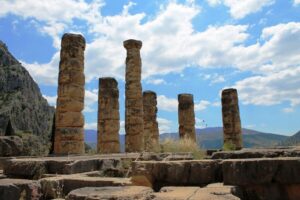
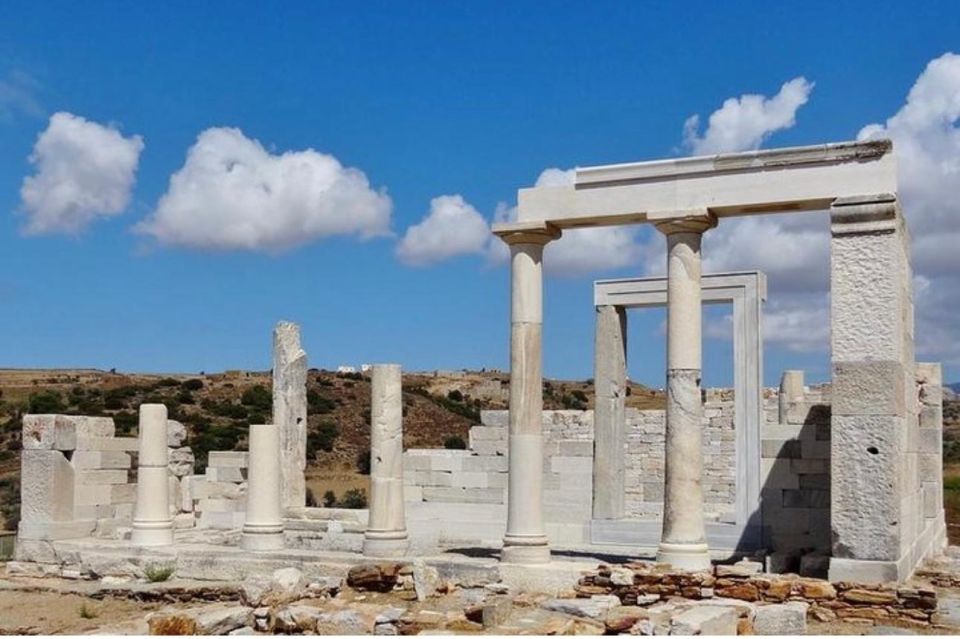
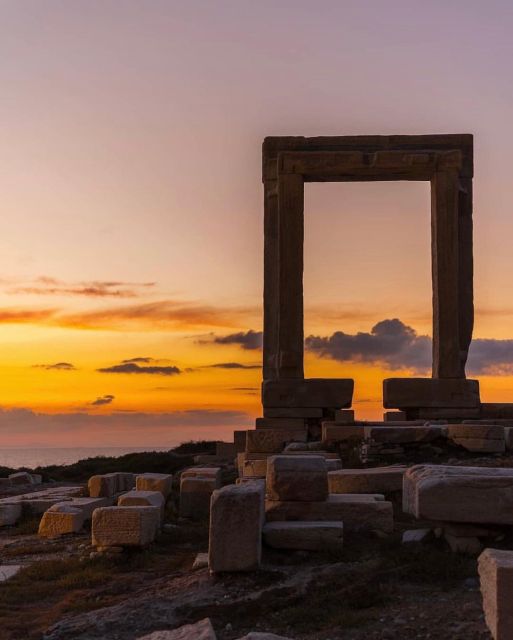
The first stop is Demeter’s Temple, an ancient sanctuary dating to about 530 BC. It has been recently restored, so you can make out the structure more clearly than at many partly collapsed Greek sites.
The temple is especially interesting because it was built from fine marble and belongs to an early period of Greek architecture. You get a more focused ancient-site visit here than you would at a large archaeological complex. The setting also helps you see that Naxos was not only a place of beaches and ferry arrivals, but an important center long before modern tourism.
An archaeological museum is located in the same area. Entrance tickets are not included in the tour price, so check the current admission arrangement before you go. If the museum is open during your visit, it gives useful context through finds from the site rather than leaving you to guess what the sanctuary once looked like.
Allow yourself time to look closely before returning to the bus. This is one of the stops where a little attention pays off. The building is not enormous, but its age, restoration, and setting make it a strong opening to the day.
Damalas, pottery, and the old olive press
Damalas is a small village in the Tragea valley, an area known for its agricultural character. The stop shifts the focus from ancient stone to local work and household traditions.
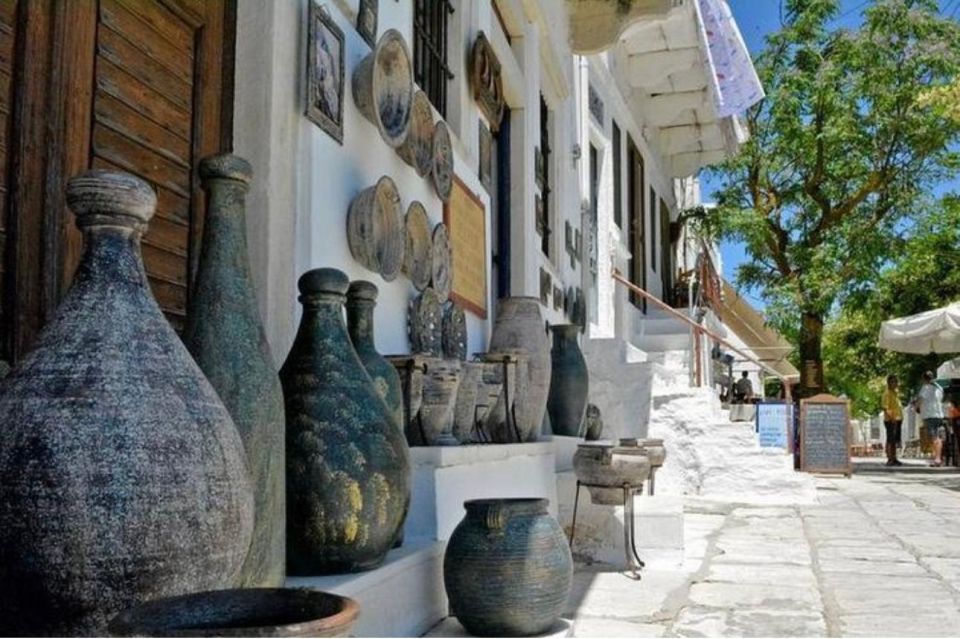
The tour includes a demonstration at the only remaining traditional pottery workshop in the village. That detail gives the visit a practical edge. Instead of simply walking past shuttered homes and taking photos, you see a craft linked to everyday island life.
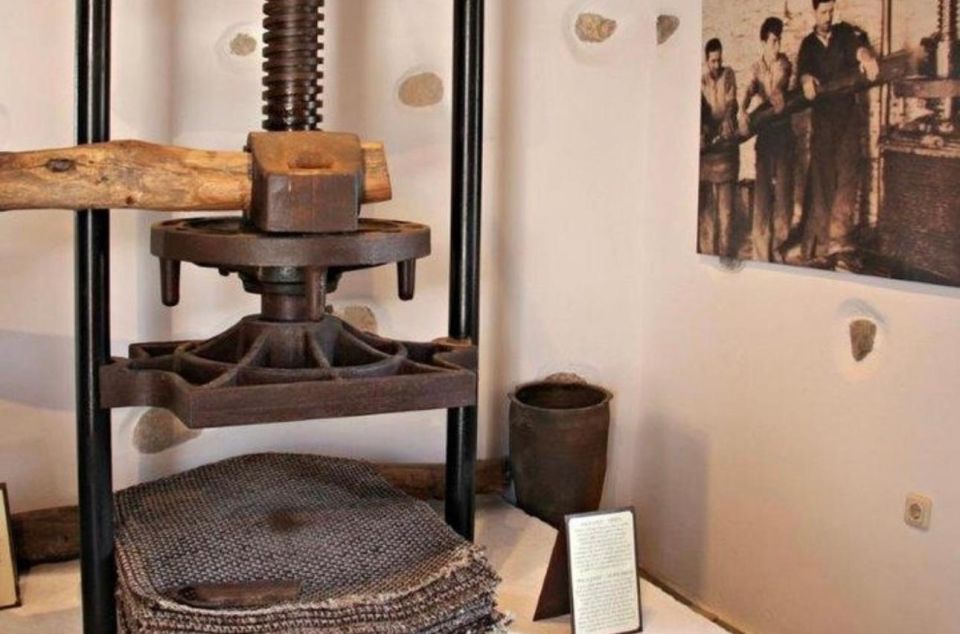
You also visit a restored traditional olive press. Olive oil has long been part of rural life in Greece, and an old press helps explain how village production once worked. The building is not just a decorative stop. It shows the tools and process behind a product you will see throughout Greek cooking.
Damalas is likely to appeal most if you enjoy small-scale cultural experiences. It is not a large attraction with a long list of displays. Its value comes from seeing a working tradition and a preserved piece of village equipment in a compact setting.
Chalki’s neoclassical streets and citron tradition
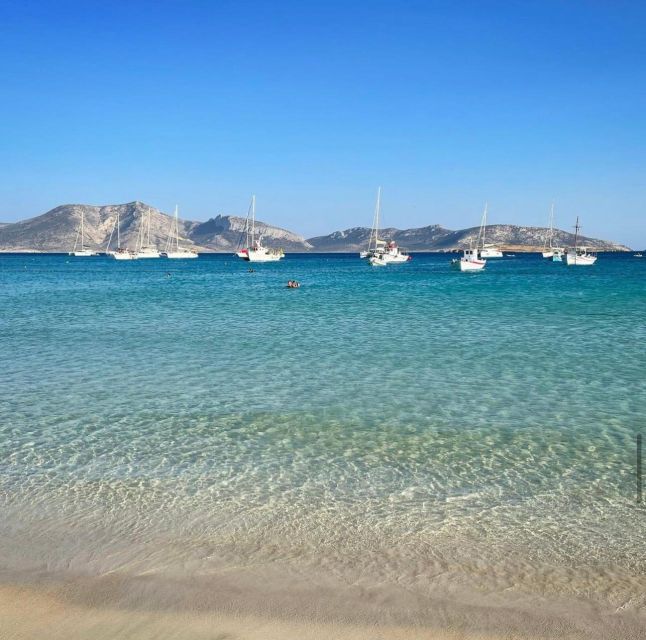
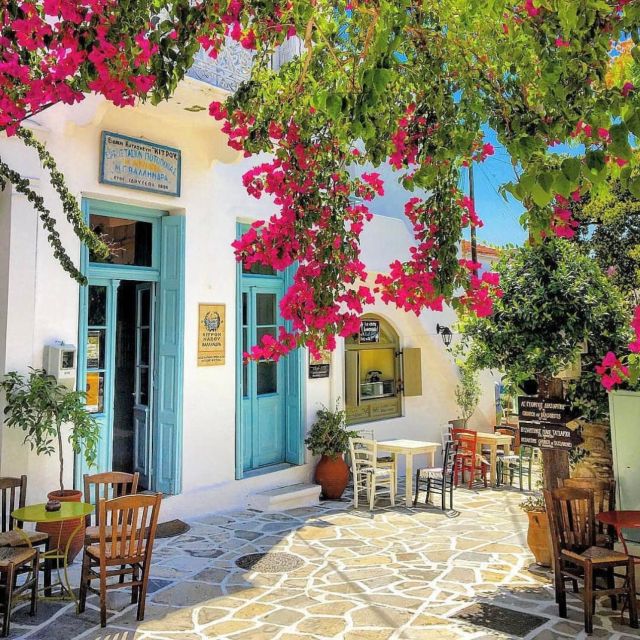
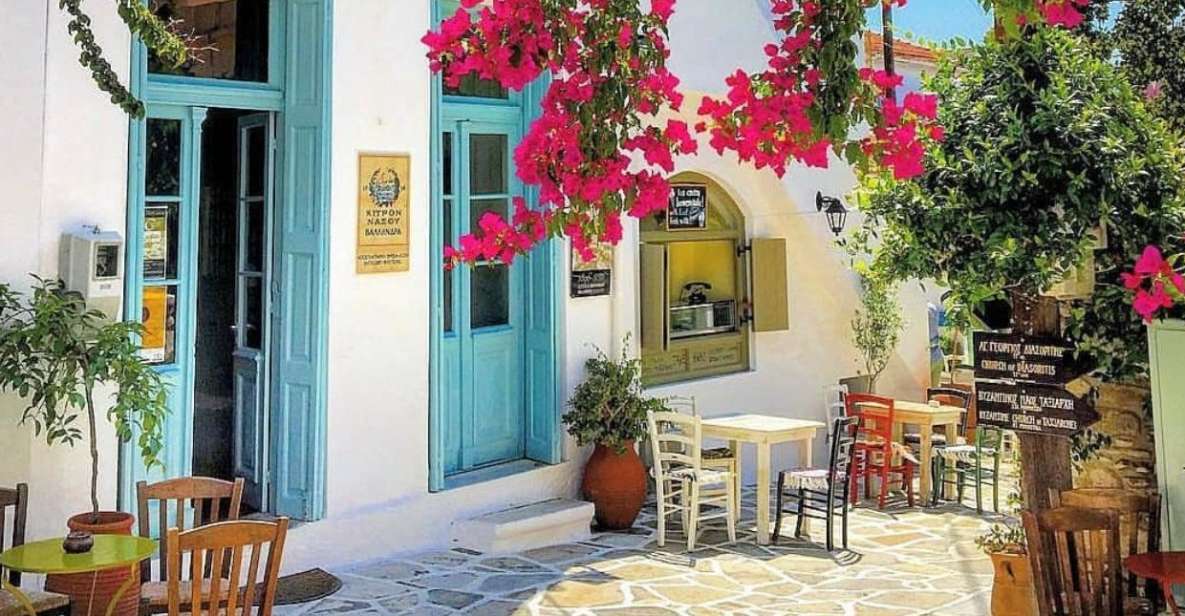
The next stop is Chalki, a neoclassical village in the valley. Here, the pleasure comes from slowing down and looking around. You can walk through picturesque lanes, notice the older architecture, and visit a traditional citron distillery and museum.
Citron is a citrus fruit used in a well-known Naxos liqueur. The distillery visit gives you a local flavor in the most literal sense, although drinks and personal purchases are not included in the $35 price.
You also have time for an espresso. That may sound like a small detail, but it gives the day a needed pause. Eight hours of stops and bus travel can become tiring, and a café break in a handsome village is more pleasant than rushing from one monument to another.
The main limitation is the schedule. One recent account specifically wished for more time in Chalki and Apeiranthos. You should treat Chalki as an introduction rather than a full village visit. If you want to linger over coffee, browse shops, and inspect every lane, the stop may not be long enough.
Apeiranthos, the marble village
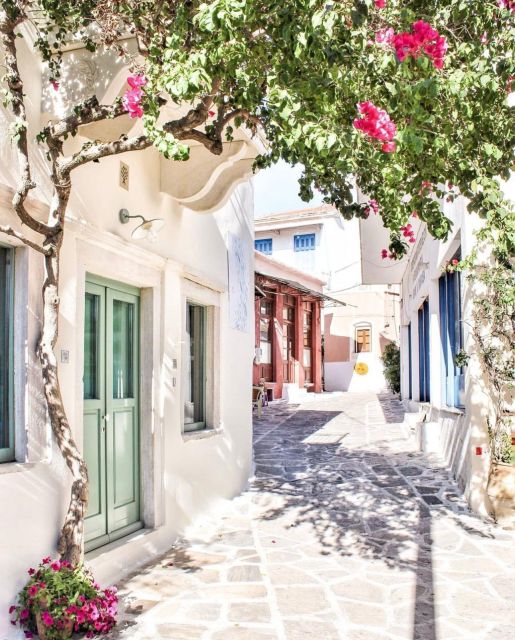
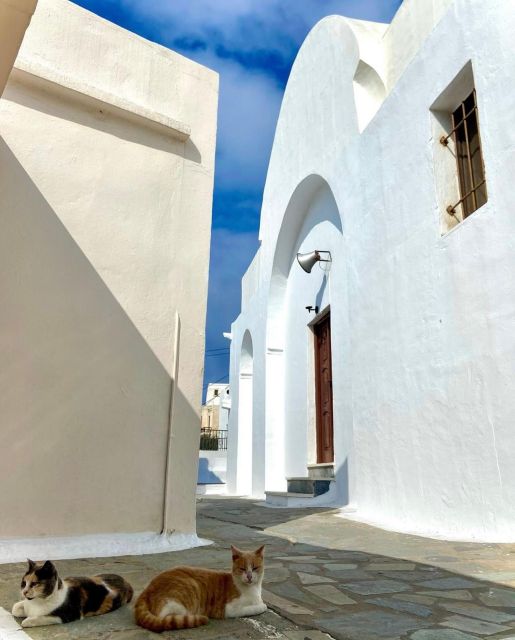
Apeiranthos is often the visual highlight of the route. This mountain village is known for its marble-paved streets, and the pale stone gives the lanes a distinctive look.
You can stroll through the village, photograph the paving and traditional buildings, and enjoy the cooler feel of a settlement set higher in the island’s interior. The narrow streets are made for wandering, but remember that this is one scheduled stop among several. Keep an eye on the meeting time.
Apeiranthos is valuable because it shows a side of Naxos that a beach-based holiday can easily miss. The village feels shaped by mountain geography and local materials, not by modern resort planning. Even a short walk can give you a strong sense of place.
At the same time, do not book this tour expecting an unhurried afternoon here. The route continues north to Apollonas, so your time in Apeiranthos is designed for a walk and photos rather than a full exploration of every lane.


Apollonas and the northern coast
From the mountain villages, the bus continues toward the northern part of Naxos and ends at Apollonas. This small Cycladic seaside village provides the day’s most relaxed stop.
You can swim, sit at one of the cafés by the water, or simply rest and look out across the coast. Food and drinks are not included, so bring money if you want a café stop or a meal. The schedule gives you a useful change of pace after the inland villages and ancient sites.
Apollonas is also a good reason to bring swimwear if you like the idea of a quick dip. The tour information identifies swimming as an option, but it does not promise a set amount of beach time or specific facilities. Think of it as a chance to enjoy the sea, not a dedicated beach day.
This stop will suit you if you appreciate variety. You can spend the whole day collecting historical and cultural sights, then finish with a seaside break before the return journey.
The unfinished Kouros statue
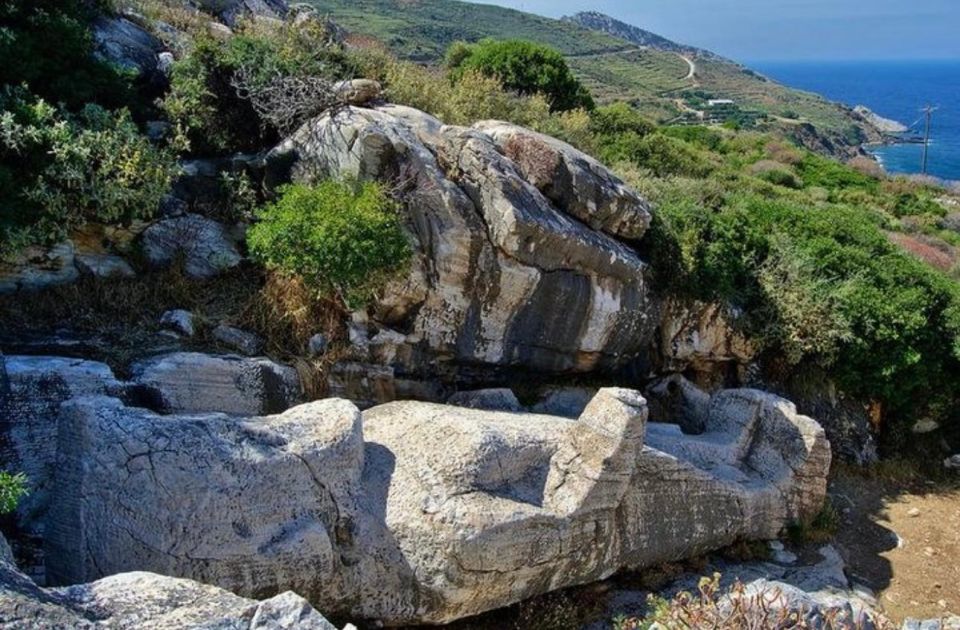
On the way back, the bus stops at a colossal unfinished Kouros statue dating from the 6th century BC. It is an arresting sight because the figure remains attached to the stone in its original working state.
You can see how ancient sculptors began shaping a massive marble figure before it was ever moved into place. The unfinished surface gives you a better sense of the labor involved than a polished statue does. It also leaves room for questions: why was it abandoned, and how could anyone have transported such a piece?
The Kouros adds a second ancient stop with a very different mood from Demeter’s Temple. The temple shows a restored architectural form, while the statue offers a direct look at a work in progress that never reached completion.
This is another place where comfortable shoes help. The supplied details do not specify the walking distance or ground conditions, so avoid assuming every stop is a flat, paved stroll.
The return along Naxos’s northwestern coast
The final drive follows the north-northwestern coast toward Chora. Along the way, you can look for views of Agia Tower and the northern Cyclades islands.
This part of the day is not a formal sightseeing stop, but it completes the picture of Naxos. You have crossed the interior and reached the far north, then return by a coastal route with open views. Sit on the side of the bus with the best view when possible, and keep your camera ready.
A long return drive can feel tiring after a full day, but it also lets you review how varied the island is. The route covers much more ground than a short town excursion, and the changing scenery is part of the experience.
What the $35 price really includes
At $35, this tour offers strong value if your priority is seeing many parts of Naxos in one day. You receive pickup and drop-off from Naxos Town, Stelida, Agios Prokopios, Agia Anna, and Plaka, along with a local multilingual escort and transport around the island.
You do not pay for a private vehicle or a custom route. The low price reflects a shared bus experience with a fixed schedule. That is a good fit for solo visitors, couples, and anyone without a rental car who wants to cover the island efficiently.
Budget separately for entrance tickets, lunch, coffee, drinks, and personal expenses. The tour price does not include those costs. Since Apollonas is a possible swimming stop and Chalki offers a café break, you may want to carry a little extra cash for the day.
The tour also offers free cancellation up to 24 hours before departure and a reserve-now, pay-later option. Those policies are useful if your ferry or weather plans are still moving around, but you should still check the available starting time when booking.
Who should book this Naxos island tour?
I would choose this tour if you have only a short stay on Naxos, do not want to drive, or prefer having someone else handle the route. It is also a good first-day orientation because it introduces the island’s villages, ancient sites, and northern coast in one sweep.
It suits you especially well if you like:
- Ancient monuments mixed with local traditions
- Short walks through traditional villages
- Scenic bus travel without driving
- A full day with many different stops
- A flexible seaside pause in Apollonas
- Explanations and stories from an English-speaking guide
It may be less suitable if you want long, independent visits in Chalki or Apeiranthos. The route covers a lot, and the schedule cannot give every village the time of a private tour.
You should also consider your tolerance for a full day on the road. The tour lasts eight hours, with several stops and a long return from the north. That is the price of seeing so much of a large island in one outing.
My verdict on the Naxos bus tour
Book this tour if you want a practical, affordable way to see beyond Chora. The strongest parts are the range of stops, the visit to Demeter’s Temple and the Kouros, the pottery and olive-press demonstration in Damalas, and the contrast between Apeiranthos and Apollonas.
I would not book it as a substitute for a slow village holiday. You will get an excellent overview, but you will need to accept fixed timing and limited free exploration in some places.
For $35, that is a fair compromise. You get the broad outline of Naxos in one day, plus a guide such as Jacob to add stories and direction along the way. If your main goal is to understand the island’s character quickly, this is a sensible choice.
FAQ
How much does the Naxos bus tour cost?
The tour costs $35 per person.
How long does the tour last?
The tour lasts 8 hours.
Where is pickup available?
Pickup and drop-off are available in Naxos Town, Stelida, Agios Prokopios, Agia Anna, and Plaka.
What language is the tour conducted in?
The live tour guide speaks English. The local escort is described as multilingual.
Is transportation included?
Yes. The bus transportation for the island tour, along with pickup and drop-off in the listed areas, is included.
Are entrance tickets included?
No. Entrance tickets are not included in the tour price.
Are food and drinks included?
No. Food, drinks, and personal expenses are paid separately.
Can I swim during the tour?
Swimming is possible at Apollonas village, although the tour information does not specify how much time is set aside for swimming.
Can I cancel the booking for a refund?
Yes. You can cancel up to 24 hours in advance for a full refund. You can also reserve now and pay later.