REVIEW · ATHENS
From Athens: 4-Days Classical Tour with Meteora
Book on GetYourGuide →Operated by G.O.TOURS · Bookable on GetYourGuide
Four days, five ancient worlds. This Athens-to-Meteora tour strings together the classical highlights with the big, cinematic moment at Meteora. I like that it hits the major sites you actually came for, with a real guide keeping the story straight across centuries.
My other favorite part is the mix of big names and hands-on details, like the Theatre of Epidaurus and the practical timing of hotel overnights. The only drawback I’d plan around is the human side of travel: some Meteora hotel rooms can be noisy or tight, and elevators aren’t guaranteed; plus a larger group on the coach can mean tighter seating.
In This Review
- Key Things to Know Before You Go
- Why This Athens–Peloponnese–Delphi–Meteora Route Works
- Day 1: Corinth Canal, Epidaurus Theatre, Nafplio Photos, Mycenae, and Olympia
- Day 2: Olympia Ruins, Zeus Sanctuary, Torch Spot, and the Ride to Delphi
- Day 3: Delphi Oracle Site + Museum, Then Kalambaka and Meteora Views
- Day 4: Meteora Monasteries on Giant Rocks, Plus Thermopylae’s Leonidas Monument
- Hotel Reality Check: Stairs, Noise, and the Overnight Tax at Check-Out
- Coach Time, Group Flow, and How Seating Affects the Day
- Price and Value: What $776 Really Buys You
- Who Should Book This Tour (and Who Might Feel Cramped)
- Should You Book This Tour?
- FAQ
- What’s included in the tour price?
- Are meals besides breakfast and dinner included?
- Where do I go on the last day before returning to Athens?
- Which languages are the guides?
- Do I need to pay an accommodation tax?
- Is lunch included during site visits?
Key Things to Know Before You Go
- Meteora is the main character. You get monastery views perched on huge rock formations with Byzantine art you can actually look at.
- Epidaurus is more than a stop. The theatre is famous for acoustics, and it’s worth paying attention to how it works.
- You’re doing a lot by coach. Expect long stretches on roads across Peloponnese and central Greece, with a few short picture stops.
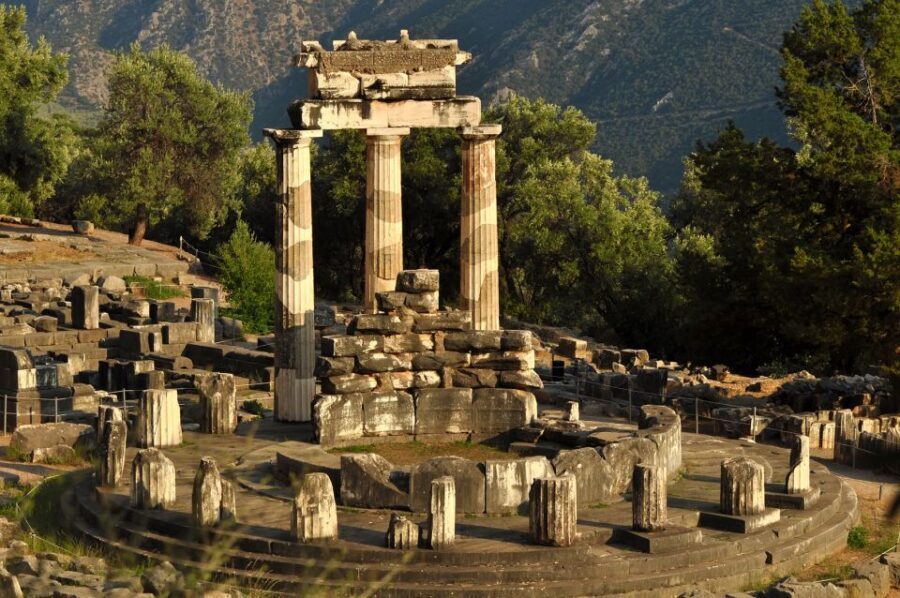
- Delphi isn’t just ruins. The Delphi museum plus the oracle site pairing helps you understand what you’re seeing.
- Olympia gives context, not just stones. You’ll cover the Sanctuary of Olympian Zeus area, the stadium, and the torch-lighting spot.
- Hotels come with small surprises. Some properties may have stairs only, and you’ll pay an overnight tax at check-out.
Why This Athens–Peloponnese–Delphi–Meteora Route Works
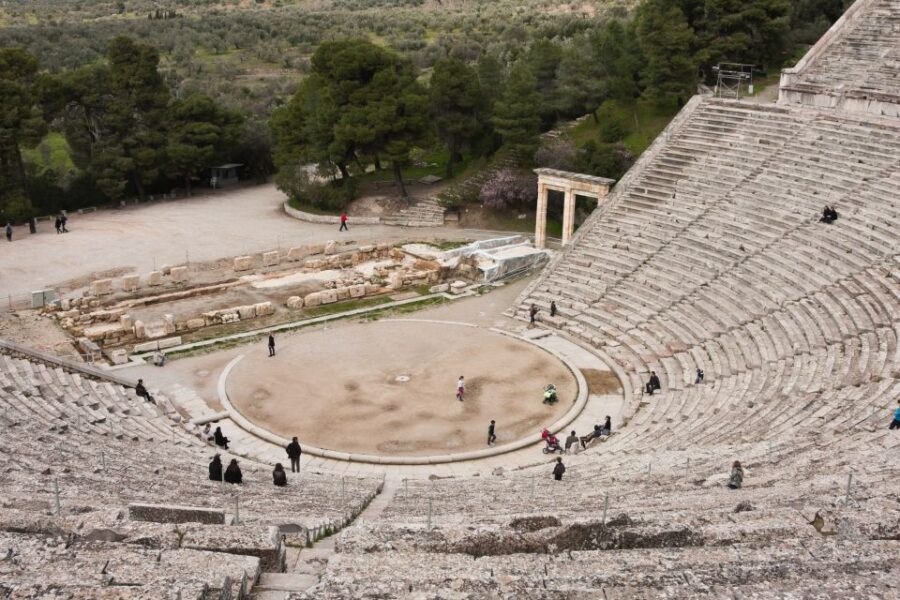
This tour is built for travelers who want the “greatest hits” of southern Greece without trying to plan a car route or juggling multiple tickets. In four days, you’ll move from the Peloponnese’s ancient power centers to the spiritual center of Delphi, then finish with Meteora’s gravity-defying monasteries.
The value is in the structure: a professional guide, a luxury air-conditioned coach, included entrance fees, and breakfasts plus dinners. That removes a lot of decision fatigue, so you can spend your energy on the sites instead of logistics.
You can also read our reviews of more tours and experiences in Athens.
Day 1: Corinth Canal, Epidaurus Theatre, Nafplio Photos, Mycenae, and Olympia
Day 1 starts with the coastal road approach and a short stop at the Corinth Canal. Even if you’ve only seen photos, the canal’s narrow, engineered feel makes the geography real fast.
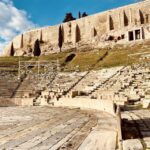
Next you visit the Theatre of Epidaurus, one of the places where Greece feels oddly modern. The theatre is famous for its acoustics, so it’s not just “old rocks and seats.” If your guide points out sightlines and the way sound carries, that’s when the stop clicks.
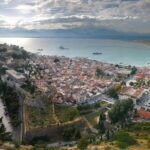
You’ll have a brief photo stop in Nafplio. This isn’t a long explore, but it’s a nice palate cleanser before the heavier ancient sites. Think of it as time to reset your eyes—then you roll on toward Mycenae.
Mycenae is the big myth-and-history stop of the afternoon: you’ll see the archaeological site and the Tomb of Agamemnon. The payoff here is scale and mood. Even when you’re moving with the group, you get that feeling that this was a real seat of power, not just a backdrop for stories.
Then you head into central Peloponnese toward Olympia, stopping through towns like Tripolis and Megalopolis along the way. You arrive for an overnight in Olympia, with dinner provided—use that dinner time to rest early, because Day 2 is another full day.
Day 2: Olympia Ruins, Zeus Sanctuary, Torch Spot, and the Ride to Delphi
Day 2 begins in Olympia with a packed-but-logical route through the core areas. You’ll visit the Sanctuary of Olympian Zeus, the ancient stadium, and the spot where the torch of the modern Olympic Games is lit. That combo helps you connect ancient ritual with what you’ve seen on TV.
After the stadium areas, you also visit the Archaeological Museum. Museums matter on a tour like this because they fill in the missing pieces—inscriptions, objects, and context that make the ruins more readable instead of just impressive.
From there, you drive through the plains of Ilia and Achaia and reach a dramatic modern crossing: the bridge crossing the Corinthian Bay from Rion to Antirion. This is one of those moments where you get a quick reminder that Greece layers eras—ancient across ruins, modern across water.
As you continue, you pass picturesque towns like Nafpactos (Lepanto) and Itea. These are mostly “see it from the coach” moments, so if you love strolling, you’ll want to save deeper Nafpactos and Itea exploration for another trip.
You arrive in Delphi for dinner and overnight. Delphi is where the tour starts to feel more reflective and focused, which is perfect after two intense days.
Day 3: Delphi Oracle Site + Museum, Then Kalambaka and Meteora Views
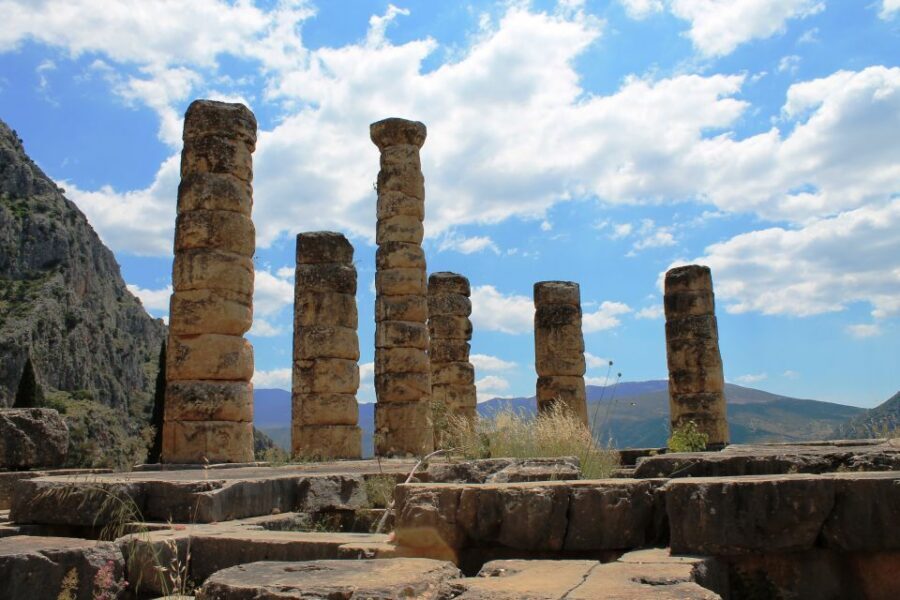
Day 3 is the Delphi day, and it’s a strong one. In the morning you visit the archaeological site and the museum. The pairing is the key: the oracle reputation is famous, but the museum helps you understand the setting and why people came from far away.
Delphi can feel a little abstract if you only glance at the ruins. With a guide in front, you’re more likely to connect the architecture and artifacts to the idea of a sanctuary and an oracle. It turns the place from a “name you heard” into something you can picture.
After Delphi, you head toward Kalambaka, the town at the foot of Meteora. The drive matters here because Meteora doesn’t land all at once. It grows on you as the giant rock pillars start to dominate the horizon.
You stay overnight near Meteora, with dinner included. That night is your chance to prep for the final-day monastery visits—plan for walking and stairs, and wear shoes that won’t complain when the ground gets uneven.
Day 4: Meteora Monasteries on Giant Rocks, Plus Thermopylae’s Leonidas Monument
Day 4 is Meteora’s spotlight. You’ll visit the monasteries perched on huge rock formations that look suspended in mid-air. It’s one of those places where photos can’t fully explain the scale, because the rocks change your sense of distance and height.
The monasteries also come with Byzantine art, and that’s a big part of the value beyond the scenery. The architecture and wall details reward a slower look, so I’d focus on a couple of key stops and let the guide guide what’s most important.
After Meteora, you head back to Athens. On the way you’ll pass through Trikala and Lamia, and you’ll have a short stop near Thermopylae to see across the road to Leonida’s Monument. This isn’t a museum deep-dive; it’s a quick way to connect the modern stop with the story most people learned in school.
You arrive back in Athens early in the evening, which is a real quality-of-life win. It beats the “arrive at midnight” end to a whirlwind trip.
- All Day Cruise -3 Islands to Agistri,Moni, Aegina with lunch and drinks included
★ 5.0 · 4,958 reviews


Hotel Reality Check: Stairs, Noise, and the Overnight Tax at Check-Out
The biggest practical variable on this tour is the hotel experience. The itinerary includes overnight accommodation in Olympia, Delphi, and Kalambaka (three nights total across the trip). That means you’re living with location and building details for multiple days, not just one.
One traveler reported problems in the Meteora hotel area: a bed that was uncomfortable, too much noise, and no elevator—plus staff who asked for cash for the hotel tax, requiring an ATM detour. That’s not guaranteed, but it’s enough that I’d treat it as a “bring your plan” situation.
Also plan for the hotel tax. The accommodation tax is paid by guests at the hotel before check-out, and it depends on the hotel star category:
- 5 star: 4.00 € per overnight per room
- 4 star: 3.00 € per overnight per room
- 3 star: 1.50 € per overnight per room
If you’re budgeting, the easiest approach is to assume you’ll pay the tax at each hotel night. And if you want to avoid last-minute stress, have some cash on hand just in case a card isn’t accepted for the tax payment at a specific property.
Coach Time, Group Flow, and How Seating Affects the Day
Coach tours work best when you’re flexible. The upside is comfort: a luxury air-conditioned coach and Wi‑Fi onboard. The downside is time. You’ll be driving between major regions, so your day becomes a rhythm of site visits plus road travel.
One review issue that’s worth taking seriously: on a bus that runs at capacity, seating can get complicated. If you care about sitting with a partner or you’re traveling with family, you’ll likely want to book early when choices exist, and be ready to adapt once everyone boards.
That said, a good guide can make the travel days feel shorter by explaining what you’re seeing as you ride. Guides you may meet on this tour include George, Thomas, and Antonio, and each name shows up connected to efficient, lively guiding in different runs.
Price and Value: What $776 Really Buys You
At $776 per person, you’re paying for more than “a bus and a ticket.” The price includes:
- Overnight accommodation
- Professional guide
- Transport by luxury air-conditioned coach
- Breakfast and dinner (as per itinerary)
- Entrance fees
- Free Wi‑Fi on the bus
Lunch and drinks are not included, so budget for that daily. If you like to eat leisurely or you’re someone who needs a mid-day coffee and snack, factor in a real lunch allowance, not a “maybe” budget.
Then there’s the accommodation tax at check-out, which depends on hotel category. Because it’s a per-overnight per-room charge, your total cost will scale with how many nights you stay and which hotel star level you get.
Overall, this price makes the most sense if you value:
- A guided route that reduces planning work
- Entrance fees being handled for you
- Hotel nights and most meals being bundled
If you’re the kind of traveler who wants independent timing, extra hours in museums, and no coach rides, you might feel constrained. But if you want a guided sprint through the classic sites, this is a practical deal.
Who Should Book This Tour (and Who Might Feel Cramped)
This tour fits best if you love a structured itinerary and you want to check off big, iconic Greece stops in one go. You’ll especially enjoy it if you like understanding context—why Epidaurus is famous, what makes Olympia matter beyond the stadium, and why Delphi was a pilgrimage destination.
It may feel cramped if:
- You hate long coach days
- You get restless when you can’t linger at each site
- You’re sensitive to noise in hotels or struggle with stairs
- You need lots of control over meal timing (lunch isn’t included)
Also think about footwear. Meteora involves walking and climbing in a place where ground can be uneven. Bring shoes you trust.
Should You Book This Tour?
If you want an efficient, guided route that hits Corinth Canal, Epidaurus, Mycenae, Olympia, Delphi, and Meteora—with hotels and entrance fees handled—this is a solid choice. I’d book it if you’re comfortable with the pace, can manage stairs in older hotel buildings, and you’re happy with coach travel between regions.
I’d hesitate if you’re picky about hotel comfort, strongly prefer quieter rooms, or you dislike sharing a full coach day with strangers who may not match your travel pace. In that case, you might get a better trip by planning a slower route with more flexibility.
FAQ
What’s included in the tour price?
The tour includes overnight accommodation, a professional guide, luxury air-conditioned coach transport, breakfast and dinner as per the itinerary, entrance fees, and free Wi‑Fi on the bus. Lunch and drinks are not included.
Are meals besides breakfast and dinner included?
No. Lunch and drinks aren’t included. You’ll have breakfast and dinner based on the day’s program.
Where do I go on the last day before returning to Athens?
On Day 4, you visit Meteora monasteries, then return to Athens via Trikala and Lamia with a short stop to see across the road to Leonida’s Monument near Thermopylae.
Which languages are the guides?
The live tour guide is available in French, English, and Italian.
Do I need to pay an accommodation tax?
Yes. There is an accommodation tax guests must pay at the hotel prior to check-out. The amount depends on the hotel star category (1.50 €, 3.00 €, or 4.00 € per overnight per room).
Is lunch included during site visits?
No. Lunch isn’t included, even on days when you have multiple major stops.
If you tell me your travel month and whether you prefer earlier starts or relaxed days, I can help you decide if this pace will feel fun—or if you’d be happier with a slower version.