REVIEW · ATHENS
5 Days Private Ancient Cities Tour of Greece from Athens
Book on Viator →Operated by Olive Sea Travel · Bookable on Viator
The best thing about this five-day private journey is its sweep. In one carefully packed trip, you can trace Greece from the Olympic sanctuary at Olympia to Byzantine Mystras, medieval Monemvasia, Mycenaean Mycenae, and the Roman world of Corinth. Your driver handles the long roads, while you decide how much help you want inside each site.
I like the private format, since your group can shape the pace and ask for changes. I also like the mix of famous ruins and less expected stops, especially the olive-oil museum in Sparta and the living fortress town of Monemvasia. The main thing to consider is the amount of driving and the fact that the included drivers are not licensed to guide you inside the archaeological sites.
In This Review
- Key points to know before booking
- A five-day route through the Peloponnese
- Day 1: Corinth Canal and the birthplace of the Olympics
- Day 2: Mystras, Sparta, and the story of Greek olive oil
- Day 3: Monemvasia, a medieval town still alive
- Day 4: Nemea, Mycenae, Tiryns, and an evening in Nafplio
- Day 5: Healing at Epidaurus and Paul’s Corinth
- How the private setup affects the experience
- Who will get the most from this route
- Cost, inclusions, and the real value
- Should you book this five-day Greece tour?
- FAQ
- Is hotel accommodation included in the tour price?
- Are entrance fees included?
- Can I hire a licensed guide?
- Where can pickup and drop-off take place?
- What time does the tour start?
- Is this a private tour?
Key points to know before booking
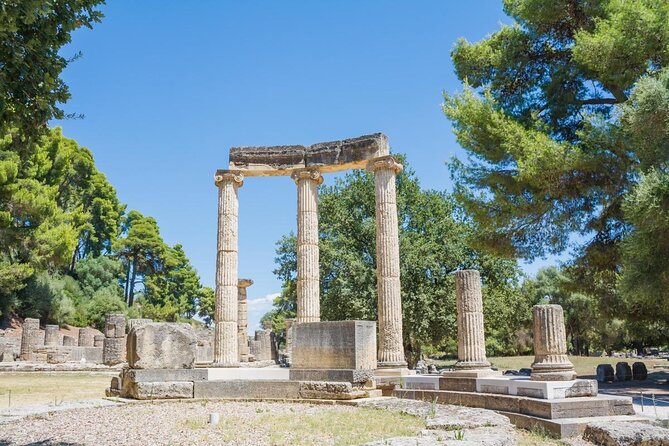
- Olympia comes with three separate visits: the archaeological site, the main museum, and the museum devoted to the ancient Olympic Games.
- Mystras rewards sturdy shoes: you walk downhill through a large fortified Byzantine settlement with churches, palaces, and steep paths.
- Monemvasia adds living medieval Greece: its narrow streets, churches, homes, and old walls are still part of an inhabited town.
- Mycenae and Tiryns bring Homeric Greece to life: you see the Lion Gate, royal tombs, massive walls, and another Mycenaean citadel.
- Nafplio provides a welcome change of pace: after several ancient sites, you get a picturesque harbor city, a sea-side meal, and an overnight stay.
- The price depends on what you add: private transport, water, and pickup are included, while lodging, entrance fees, and licensed guides may cost extra.
A five-day route through the Peloponnese
At $1,735.23 per person, this is a serious purchase, but it covers far more than a single day trip. You are paying for private transportation, a five-day route, pickup and drop-off from an Athens hotel, Airbnb, or port, and the ability to tailor the experience to your group.
Accommodation and breakfast are included only according to the booking option you select. Entrance fees are not included, and a licensed guide is an extra-cost addition. Check those details carefully before comparing the price with a group tour or a self-drive holiday.
The tour begins at about 8:00 a.m. Each day is approximate, since traffic and the time spent at sites can change the schedule. That flexibility is useful, but you should not expect every stop to run like a train timetable.
You can also read our reviews of more private tours in Athens

Day 1: Corinth Canal and the birthplace of the Olympics
The first road south follows the coast, with views of seaside villages and Salamis, the island linked to the famous naval battle between the Athenians and Persians. The opening stop is the Corinth Canal, a modern engineering project completed in 1892.
You get time to walk across a pedestrian bridge and look straight down the narrow waterway. The visit is brief, around 15 minutes, but it breaks up the drive well. Bungee jumping may be available on some days, though it is not part of the standard experience.
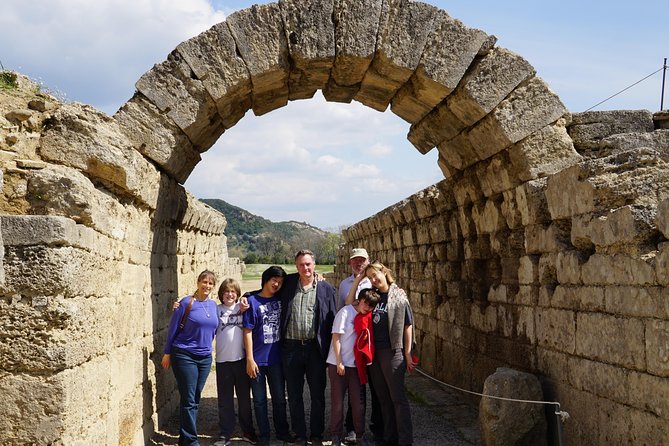
The main event is Olympia, one of Greece’s largest archaeological sites. This was the sanctuary of Olympian Zeus and the birthplace of the Olympic Games. You walk past the Gymnasium, Palaistra, Phidias’ workshop, and the Temple of Zeus before reaching the stadium where ancient competitors sought glory for their cities.
The scheduled visit to the ruins lasts about an hour. That is enough for a useful first look, but not enough for a slow study of every building. If ancient sport and Greek architecture matter greatly to you, ask in advance about adding time or a licensed guide.
The Archaeological Museum of Olympia adds another hour. Its best-known work is the Hermes of Praxiteles, a graceful statue that gives the ancient site a human scale. You can also see tools associated with the sculptor Phidias, who created the gold-and-ivory Zeus statue once counted among the Seven Wonders of the ancient world.
A short visit to the Museum of the Olympic Games follows. Its collection includes 463 ancient objects from Olympia and other parts of Greece, covering the period from the second millennium BC to the fifth century AD. The displays explain how the Games developed as an institution, with visual material that helps if the ruins alone feel hard to picture.
You finish the day with lunch in the village. The schedule is full, but the sequence makes sense: canal, sanctuary, museum, and Olympic competition. The drawback is that Olympia is a long way from Athens, so this day is not light on the road.
Day 2: Mystras, Sparta, and the story of Greek olive oil
The second day heads into the southern Peloponnese through mountain country. Mystras changes the tone completely. Instead of classical temples and open athletic grounds, you enter a fortified Byzantine settlement with churches, homes, mansions, palaces, and Frankish features.
Mystras is often called a ghost city, but that label can mislead you. The settlement is abandoned in many areas, yet several monasteries remain in use. The site is spread over a hillside, and the route usually begins high near the citadel before continuing downhill toward the palaces and royal courtyards.
Allow about two hours here. You will want time for the views, the churches, and the surviving details of daily life. At the Chapel of St. Demetrios, a two-headed eagle is preserved on the floor. This Byzantine symbol marks the place connected with the crowning of Constantine Palaiologos, the last Byzantine emperor.
Good walking shoes are important at Mystras. The route is not a flat museum visit, and the downhill direction can be tiring on knees and ankles. The reward is a more personal sense of medieval Greece, since the site includes ordinary houses as well as grand religious and royal buildings.
Sparta follows, offering a sharp contrast. Ancient Sparta was organized around military discipline and a political system led by two kings. The city is tied to Helen of Troy, Menelaus, Leonidas, and the 300 Spartans who faced the Persian army at Thermopylae in 480 BC.
The ancient acropolis and theater receive about 20 minutes, followed by a brief stop at the Leonidas Monument. The statue marks the endpoint of the Spartathlon, a 245.3-kilometer race from Athens to Sparta. These are short visits, so you should treat them as historical waypoints rather than a full archaeological study.
The Museum of the Olive and Greek Olive Oil takes around 20 minutes. It is a small but useful addition, since olive production is tied closely to Greek food, farming, and daily life. This stop gives you a break from stones and legends and explains one of the products you will see throughout the country.
Day 3: Monemvasia, a medieval town still alive
Monemvasia is one of the strongest reasons to choose this route. The old town occupies a rocky island joined to the mainland, and its name refers to the single entrance through which you pass. Unlike many archaeological sites, Monemvasia is still inhabited.
You have around two hours to walk through narrow lanes, old houses, mansions, churches, gates, and fortifications. The town was once a prosperous Byzantine center, and later influences can be seen in its buildings. You can also have lunch by the sea, potentially beside the old wall, which makes this a calmer day than the large site-hopping days around it.
The route includes Agia Sofia, or St. Sophia’s Church, in the upper town. The Byzantine church sits at the edge of a cliff above the bay. Inside, look for the dome, carved marble capitals, and surviving pieces of 13th-century frescoes.
This stop calls for sensible expectations. Two hours is enough to get a feel for Monemvasia, but not enough for every lane, church, and viewpoint. The upper town also requires uphill walking. If your priority is atmosphere rather than checking off monuments, you may want to ask the operator if the private schedule can give Monemvasia more time.
Day 4: Nemea, Mycenae, Tiryns, and an evening in Nafplio
Day four has the largest concentration of ancient sites. At Nemea, Greek mythology places Heracles’ victory over the Nemean Lion. In historical times, the area hosted the Nemean Games, athletic contests celebrated in the poems of Pindar.
The archaeological site and museum each receive about 30 minutes. The sanctuary of Zeus and the stadium are the key sights. The stadium is especially rewarding because athletes entered through preserved tunnels, and the field sits on a higher level than the sanctuary.
Nemea is also known for vineyards. The area has long been associated with grape growing and has more wineries than any other part of Greece. The tour does not promise a wine tasting, so treat the vineyards as useful context rather than a scheduled activity.
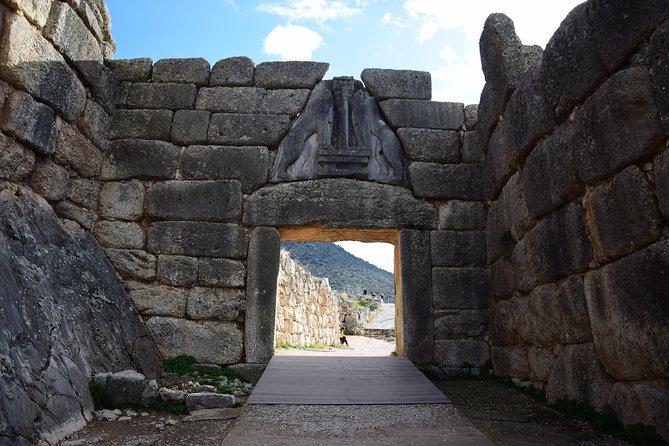
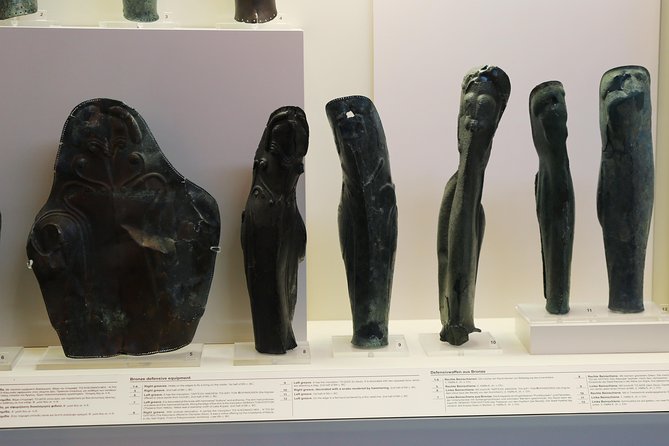
Mycenae is the day’s major ancient site. Dating from the second millennium BC, this citadel gives its name to the Mycenaean era associated with Agamemnon, Achilles, and Helen of Troy. You pass through the Cyclopean walls and see Burial Circle A and the remains of the palace.
The Lion Gate is the famous entrance, with its carved lions above the doorway. The site also includes a modern museum with finds from the citadel. A short stop at the Treasury of Atreus adds one of the finest surviving examples of a Mycenaean tholos tomb. It is often called Agamemnon’s Tomb, though the ancient identification is not certain.
The schedule gives about an hour at the main site, 30 minutes at the museum, and only 10 minutes at the Lion Gate and Treasury of Atreus. Since these locations are part of one broad visit, the times should be read as rough planning marks, not strict limits.
Tiryns follows with another Mycenaean citadel, linked in mythology to Heracles and his twelve labors. A one-hour visit gives you more room to appreciate the massive walls and the relationship between the citadel and the surrounding plain.
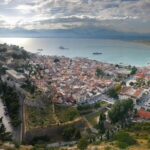
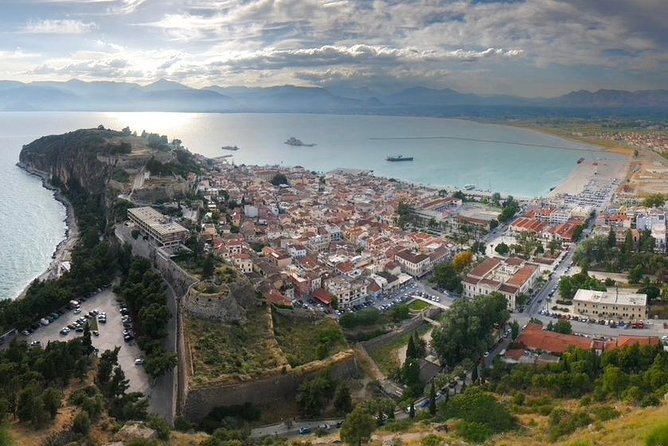
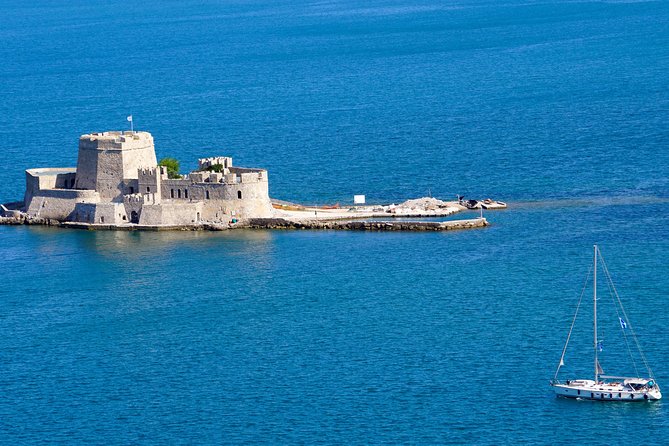
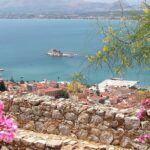
The final major stop is Nafplio, one of the most attractive towns on the route. It served as Greece’s capital until 1834 and combines harbor views with Venetian, neoclassical, and eastern architectural details. You can walk through the old town, see the setting of Palamidi and Bourtzi fortresses, and eat at a traditional tavern by the sea.
You spend the night in Nafplio according to the accommodation option you book. That overnight stay matters. It prevents the day from becoming a forced return to Athens after Nemea, Mycenae, and Tiryns.
A short drive up to Acronauplia gives you a broad view of Nafplio. Bourtzi, the small fortress on an islet in the harbor, is also part of the town’s character, though the standard schedule does not specify a boat visit or interior tour.
A few more Athens tours and experiences worth a look


Day 5: Healing at Epidaurus and Paul’s Corinth
The fifth day begins at the Sanctuary of Asklepios, an ancient center devoted to Asklepios, the god of healing and medicine. The sanctuary spreads across a hilly area, and the stop offers a useful reminder that ancient Greek sites were not only temples. They could also be places for treatment, ritual, and recovery.
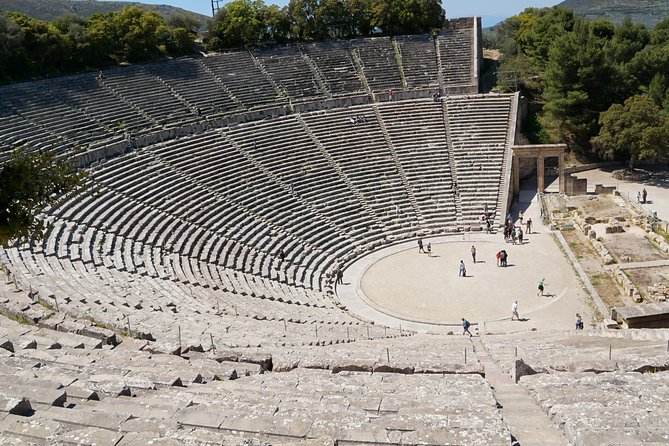
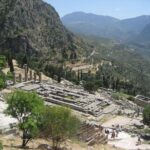
The Ancient Theatre of Epidaurus is the highlight. Built in the fourth century BC, it is among the best-preserved Greek theaters. You can climb toward the upper seats, close your eyes, and test the famous acoustics by speaking or listening from different points.
The visit is scheduled for about 30 minutes. That is enough to hear the sound carry and take in the shape of the theater, but you may want more time if you care about performance spaces or the sanctuary itself.
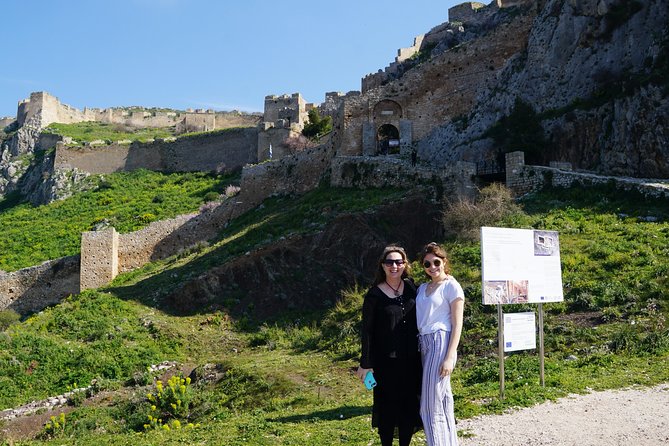
The route then turns toward Corinth. A quick photo stop at Acrocorinth gives you a view of the oldest and largest castle in southern Greece. The hill dominates the area, and the stop helps you understand why Corinth was so strongly defended.
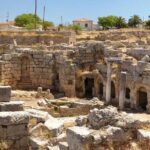
At Ancient Corinth, you walk through the Roman Agora, see the Temple of Apollo, and visit the small museum. Corinth also carries an important Christian connection. The Apostle Paul preached here, faced judgment by the tribunal in the Agora, and helped establish one of the early Christian churches.
The Temple of Apollo dates to about 560 BC and is one of the earliest Doric temples on the Greek mainland and in the Peloponnese. Only part of the structure survives, but its monolithic limestone columns still show the importance Corinth once held.
After about an hour at Ancient Corinth and a brief look at Apollo’s Temple, you return to Athens. Traffic can affect the arrival time, so avoid booking a tight flight or fixed evening appointment on the final day.
How the private setup affects the experience
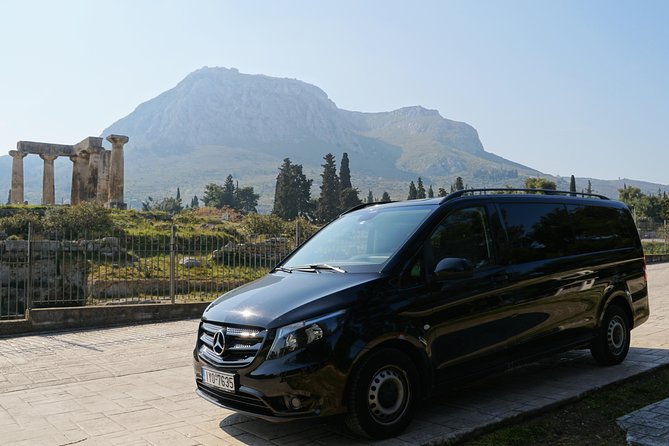
The private vehicle is the practical heart of this tour. The Peloponnese covers a wide area, and public transport would make this exact sequence difficult. Pickup and drop-off are available from an Athens hotel, Airbnb, or port, and bottled water is included.
Your driver has strong historical knowledge but is not licensed to accompany you inside sites or museums. That distinction matters. You will receive useful context during the drives, but the standard arrangement does not give you a formal guided tour at each ruin.
You can add a licensed guide for an additional fee. I consider that upgrade most useful at Olympia, Mycenae, Epidaurus, and Ancient Corinth, where a guide can explain what remains and help connect mythology, archaeology, and later history.
The private structure also lets you request changes. The operator has arranged custom routes before, and the tour is presented as adjustable to your interests. That is useful if you want more time in Monemvasia, less time at museums, or a different balance between ruins and towns. Confirm any changes before departure, especially if they affect overnight lodging or admission costs.
Who will get the most from this route
I would choose this tour if you want to see a large section of the Peloponnese without renting a car. It suits couples, families, and small groups who value their own vehicle and want a route built around their interests.
It is also a good match if you want more than classical Athens. Olympia, Mycenae, Corinth, and Epidaurus cover major ancient subjects, while Mystras and Monemvasia add Byzantine and medieval Greece. Nafplio gives you food, harbor views, and an evening in a real town.
I would be cautious if you dislike long drives, steep walking, or quick visits. Several days combine multiple sites, and many admission fees are extra. Independent visitors who prefer to spend half a day at one ruin may find the pace too brisk.
The tour has received a top overall rating from a small number of published ratings. The strongest praise centers on the itinerary, comfortable and safe vehicles, good accommodation, and personal service. Andreas has been described as proud of Greek culture and engaging in his explanations, while George is noted for careful driving and a friendly manner. Dimitra is involved in organizing tailored holidays. Staff assignments can change, so confirm who will accompany your group.
Cost, inclusions, and the real value
The listed price is $1,735.23 per person. That figure can represent good value for a private five-day trip, particularly if you are splitting the vehicle cost among several people and using the included pickup, transport, and drop-off.
Do not compare that number with a bare-bones group bus price without adding the same services. At the same time, calculate the extras before booking:
- Accommodation and breakfast depend on the option selected.
- Archaeological and museum admission fees are not included.
- A licensed site guide costs extra.
- Lunches and other personal spending are not listed as included.
The best value comes when you want control. You can travel with only your own group, adjust the schedule, and avoid handling a complicated web of roads and overnight stops. If you only want Olympia or Mycenae, a shorter tour may be a better buy.
Cancellation is generous only if you act early. You can receive a full refund by canceling at least three full days before the local start time. Inside that window, refunds are not offered and changes are not accepted.
Should you book this five-day Greece tour?
Book it if you want a broad, private introduction to southern Greece and prefer a driver to a rental car. The route covers an impressive range: Olympic origins, Byzantine churches, medieval fortifications, Mycenaean palaces, Greek theater, Roman Corinth, and a pleasant overnight in Nafplio.
Before paying, ask for a clear total that includes your hotel choice, entrance fees, and any guide service. Ask how much time can be adjusted at Monemvasia, Mycenae, and Olympia. If those answers suit you, this is a strong choice for seeing the Peloponnese in one organized trip, with enough personal control to make it feel like your own route.
FAQ
Is hotel accommodation included in the tour price?
Accommodation and breakfast are included according to the booking option you select. They are not included in every option, so confirm your selection before booking.
Are entrance fees included?
No. Entrance fees for archaeological sites and museums are not included in the stated inclusions.
Can I hire a licensed guide?
Yes. A licensed tour guide can be arranged for an additional cost. The regular drivers are not licensed to accompany you inside sites or museums.
Where can pickup and drop-off take place?
Pickup and drop-off are offered from an Athens hotel, Airbnb, or port.
What time does the tour start?
The stated start time is 8:00 a.m. The exact duration of each day can change with traffic and the time spent at each stop.
Is this a private tour?
Yes. Only your group participates in the private activity.