REVIEW · ATHENS
Private Biblical Tour Ancient Corinth & Isthmus Canal from Athens
Book on Viator →Operated by Ancient Greece Tours & Transfers · Bookable on Viator
Corinth turns scripture into street-level reality. You get a full-day, private outing with pickup and drop-off, using an air-conditioned vehicle with Wi-Fi, plus a driver who ties the sights to the Apostle Paul’s story. Two things I especially like: the hotel or port pickup makes it feel effortless, and the day is built around Paul’s routes and key places (including the Bema area) instead of random stops.
The main trade-off is that your money mostly covers transport and guidance, while entrance tickets for the Ancient Corinth site and the museum are extra (plus an optional inside-site licensed guide upgrade costs more).
In This Review
- Key Highlights That Matter
- A Private Athens-to-Corinth Day That Fits Real Travel Pace
- Isthmus Canal Stops: Engineering Meets the Peloponnese Shortcut
- Diolkos: The Ancient Ship-Dragging Road That Explains the Region
- Acrocorinth and Hadgimoustafa Spring: Views, Fortifications, and Myth Details
- Ancient Corinth Churches: Where Corinthians Themes Show Up in Stone
- Museum and Major Ruins: Temple of Apollo to the Roman Agora Bema Area
- Lunch Break and Kenchreai: When You Follow Paul to the Port
- Price and Value: What $301.72 Covers (and What Adds Up)
- Who Should Book This Biblical Corinth Tour (and Who Might Not)
- Should You Book This Biblical Corinth and Isthmus Canal Tour?
- FAQ
- Is hotel pickup in Athens included?
- How long is the tour?
- Are entrance fees included for Ancient Corinth and the museum?
- Is an extra licensed guide required inside the museum?
- Is lunch included?
- What if I need to cancel?
Key Highlights That Matter
- Hotel/Airbnb/Port pickup in Athens (or Corinth) saves you from buses, taxis, and timing stress.
- Isthmus Canal + Diolkos connect modern engineering to the ancient ship-transport system.
- Acrocorinth delivers big views and myth-and-history details, including Hadgimoustafa spring.
- Paul’s story is tied to place, including the Bema area tied to Acts and Corinthians themes.
- Time in the museum and major ruins helps you see Greek, Roman, Byzantine, and Ottoman layers in one day.
- Different guides bring different strengths; names like Yannis, Tas, Peter, Giannis, and Christina show up in top-rated experiences.
A Private Athens-to-Corinth Day That Fits Real Travel Pace
This is the kind of tour you book when you want a full “biblical geography” day without doing logistics gymnastics. With pickup at your Athens hotel or Airbnb, you don’t have to coordinate rides to Corinth on your own. The vehicle is air-conditioned and equipped with Wi-Fi, which matters on an 8-hour day when the drive is part of the experience.
The tour is also truly private, meaning it’s just your group. That flexibility shows up in how stops can be paced, and in the way your driver-guide can respond to your questions as you go. In several accounts, guides like Yannis and Tas (and others such as Peter and Giannis) are praised for staying comfortable and un-rushed, including quick restroom support when needed.
One practical note: this is a long day. You’ll be walking at multiple Ancient Corinth points, and Acrocorinth is steep/rocky, so you’ll want good shoes and a realistic energy budget.
You can also read our reviews of more private tours in Athens


Isthmus Canal Stops: Engineering Meets the Peloponnese Shortcut
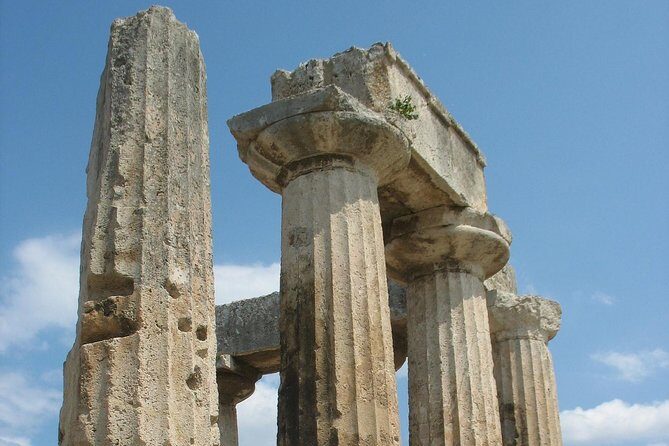
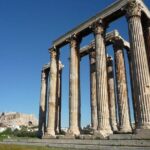
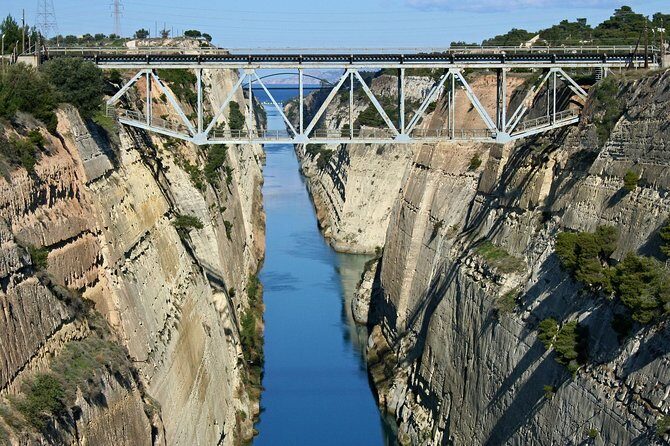
You start by heading out of Athens toward Corinth’s world, with a quick canal-area stop along the way. Then you get dedicated time at the Corinth Canal, one of Greece’s most famous “how did they do that” sites.
What I like about this part is that it’s not just a scenic pause. The canal is presented as a major 19th-century engineering project that reshaped Mediterranean trade. Your guide can connect that modern shipping logic to what people needed before the canal existed: the long detours around the Peloponnese and the importance of moving goods efficiently between sea routes.
Practical tip: treat this as a photo-stop with time to actually look. If you’re the kind of person who likes to understand how a place works, ask your driver to explain what you’re seeing at the canal—some guides specifically focus on how boats pass through and the local maritime history.
Diolkos: The Ancient Ship-Dragging Road That Explains the Region
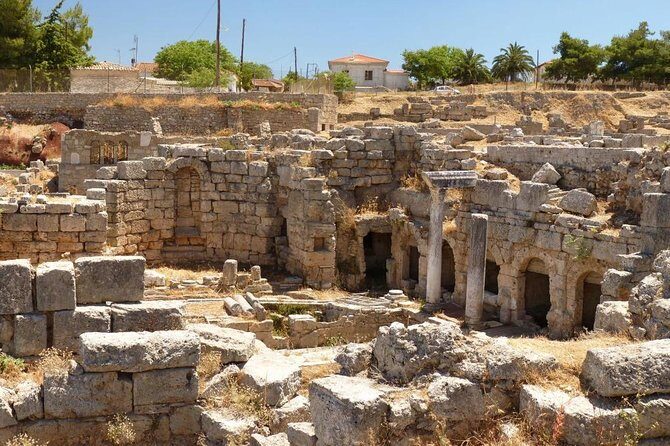
Next up is the Diolkos, an ancient limestone route used to haul boats across the isthmus. This is one of the most interesting stops on the day because it turns a geography fact into a real mental picture: boats weren’t always sailing all the way around.
You’ll hear how this mattered for Corinth’s control over trade and the movement of people and goods, with references to the broader Greek world. The big bonus is that it sets up why Corinth mattered to Paul later. When you understand how the area functioned as a hub, Paul’s long stay starts to make more sense. You’re not just visiting ruins—you’re learning the “system” behind the story.
Timing is tight here (about half an hour), so keep it simple: take in the concept, then use your driver’s explanation to connect Diolkos to later Corinth—especially if you care about the Acts timeline.
Acrocorinth and Hadgimoustafa Spring: Views, Fortifications, and Myth Details
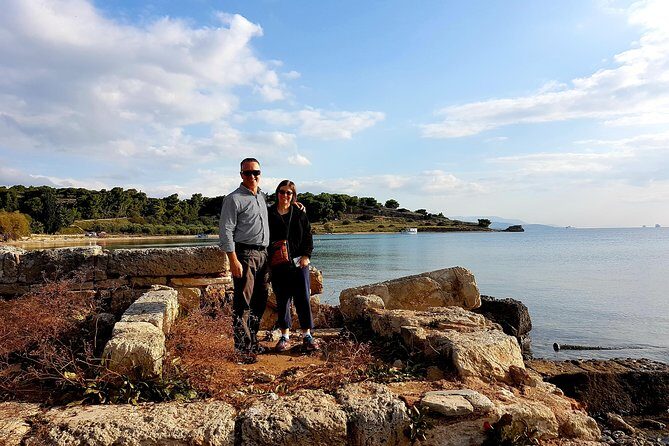
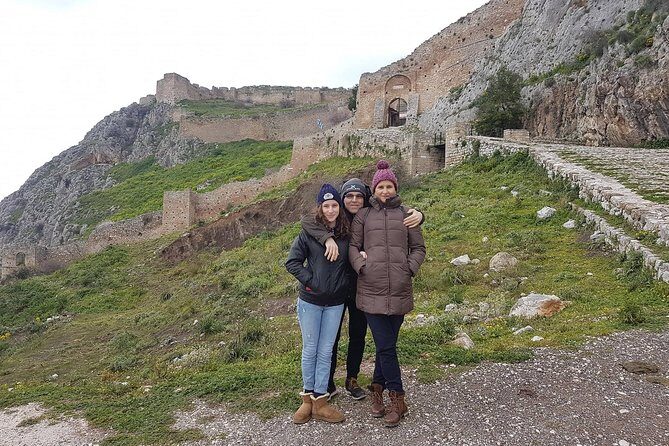
Acrocorinth is the acropolis of ancient Corinth, and it’s hard to overstate how dominant that hill feels in real life. You’re going up to a massive fortification zone, described as a monolithic rock towering high above sea level, with long walls and gates that once controlled the region.
Your visit includes more than just walls. You’ll get stops connected to churches and mosques, cisterns, and the temple area associated with Aphrodite. There are also myth ties, including the story element of Pegasus, and the guide may add the visual of the Frankish tower and the outlook over the Corinth and Saronic seas.
There’s also time for Hadgimoustafa spring, a fountain built during the Ottoman period (1555 AD). If you like when history has a practical, everyday side, this is it: running water that’s still flowing.
Here’s the consideration you’ll want to plan for: Acrocorinth is steep and rocky. One of the most consistent pieces of advice from these kinds of experiences is to wear sturdy shoes with grip and to expect areas with limited handrails. If you’re traveling with mobility issues, you may want to confirm how much walking your driver expects on your specific day.
Ancient Corinth Churches: Where Corinthians Themes Show Up in Stone
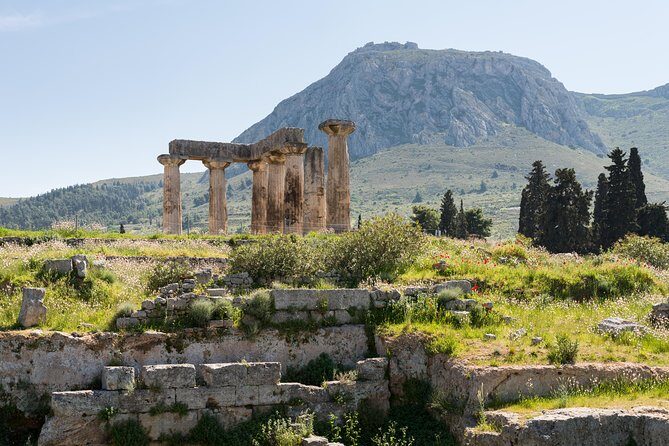
This portion is focused on Paul’s world, but it’s not all “ancient ruin.” You’ll also see Neo Byzantine churches connected to Paul and to the Corinthians texts. In particular, there’s a church area with marble plaque references to 1 Corinthians 13—the hymns of love and the line about love being the greatest. That’s a clever way to see how scripture was remembered and displayed long after Paul’s time.
There’s also a church dedicated to the apostle Paul, where the tour may include analysis of Paul’s “vision,” plus details of his life in Corinth. A praised highlight is a mosaic depicting Saul’s journey on the way to Damascus, which helps tie Paul’s transformation to what he later did in Corinth.
Then the guide can connect events from Acts, including the discussion around Paul’s hardship in the city and the “judgment” associated with Gallio. If you’re the type who likes knowing the “what happened next” thread, this part is where the day starts to feel like a story with chapters.
A small practical note: this stop is relatively short, so if you want time for deeper questions, bring them up early. Good guides—like the ones mentioned by name, such as Yannis and Giannis—tend to answer in a way that keeps the day moving but not rushed.
- All Day Cruise -3 Islands to Agistri,Moni, Aegina with lunch and drinks included
★ 5.0 · 4,958 reviews


Museum and Major Ruins: Temple of Apollo to the Roman Agora Bema Area
The day becomes very “there it is” when you reach the Archaeological Museum of Corinth and the key ruin zones. The museum visit is timed at about 1 hour 40 minutes, with the big museum admission cost not included in the base price.
What I like about this section is the mix of layers. The museum approach helps you understand why Corinth isn’t just Greek and Roman. You’ll see material tied to Greek, Roman, Byzantine, and Ottoman eras. That matters because Paul’s era sits inside a longer timeline of people building, rebuilding, and reusing space.
Then the major ruin portion is where the biblical anchor points show up more clearly. Expect highlights like:
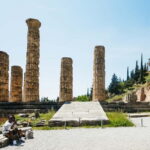
- Temple of Apollo, including rare monolithic Doric columns for the region, dating around 560 BCE.
- Roman Agora, with central shops and market-space features.
- Roman theaters/structures, including an amphitheatre and an Odeon.
- Fountains and baths, plus streets like the Lechaion road.
- The Bema area, described as the platform where Paul was presented officially and where he preached to Greeks and Romans as a Roman citizen (connected to Acts 18).
This is also a spot where an upgrade can matter. The tour offers an optional licensed tour guide to accompany you inside the site and museum, with a stated fee of €190 per booking. If your main goal is archaeological detail and verse-level interpretation in the museum spaces, that upgrade is the difference between a guided drive-by and a more technical, site-embedded experience.
Lunch Break and Kenchreai: When You Follow Paul to the Port
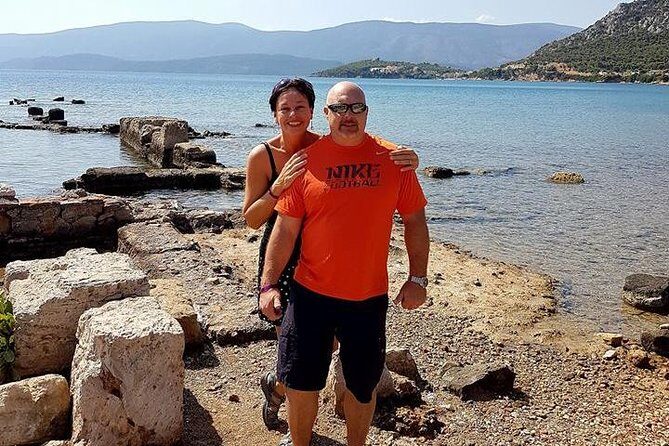
After all the ruins, the tour builds in time for lunch in Ancient Corinth. The plan includes either a village-style lunch in the area or a seaside option around the Baths of Helen of Troy. Meal timing is about 1 hour 20 minutes, but the tour’s food and drinks are listed as not included—so you’re budgeting for your own lunch.
Then you end at the Ancient Port of Kenchreai (Cenchreae). This matters because Corinth wasn’t just a city; it was a crossroads with maritime routes. Here, you trace Paul’s footsteps in the context of his departure, sailing to Ephesus with Aquila and Priscila (as referenced for the timeline around 53 AD).
You’ll also hear about the Nazarite vow detail connected to hair-cutting (from Acts 18:18). Even if you’ve read Acts before, it hits differently when you can stand at a place tied to the travel route itself.
The day wraps with the drive back to Athens (about 70 minutes).
Price and Value: What $301.72 Covers (and What Adds Up)
The base price is $301.72 per person for about 8 hours, with private transport, Wi-Fi, bottled water, and driver-guide service. For many people, the value is simple: you’re paying to replace a stressful day of trains/taxis with a door-to-door plan plus expert context.
But do your math with the extras clearly in mind:
- Ancient Corinth site and museum entrance tickets are not included. The stated cost is €15 per person, purchased at the site.
- An optional licensed guide upgrade inside the museum/site is €190 per booking.
- Food and drinks are not included, even though lunch time is built in.
- Tips aren’t included.
So the best value strategy is to decide what kind of depth you want. If you’re satisfied with a driver-guide explaining the biblical and historical context as you go, the base package can feel like a great deal. If you want maximum detail inside the museum and across exhibits, plan for the licensed guide upgrade as the main “spend more” option.
Also, note the social proof: the experience is rated 4.9 with 762 reviews, and about 98% of travelers recommend it. That kind of repeat positivity usually means the day runs smoothly and the guide quality stays consistent.
Who Should Book This Biblical Corinth Tour (and Who Might Not)
Book it if you want a Paul-centered day that links scripture to geography. This tour fits Christians, history lovers, and even curious skeptics who just want to understand why Corinth became such a big deal in early sea-trade and early Christianity.
It’s especially good if you dislike rushing and like question time. Multiple accounts praise drivers who keep the day relaxed, handle rest stops, and adjust timing when conditions change (rain can happen, but the better guides rework the order to keep you seeing what matters).
You might want a different style if:
- You only want major ruins and zero biblical framing.
- You require long, slow archaeological coverage inside every exhibit (this is a one-day circuit, so an upgrade may be your best move).
Should You Book This Biblical Corinth and Isthmus Canal Tour?
If your goal is a meaningful, well-paced day connecting the Isthmus Canal and ancient maritime logic to Paul’s Corinth story, I’d say yes. The big win is the private, air-conditioned, door-to-door setup plus a driver-guide who can connect sites to Acts and to themes from Corinthians.
Go for it if you’re okay paying the on-site entrance fee and you understand that lunch is on your own. And if you care about deeper museum interpretation, consider the optional licensed guide upgrade so you can turn artifacts and inscriptions into real context.
FAQ
Is hotel pickup in Athens included?
Yes. Your driver picks you up from your Athens hotel, Airbnb, or apartment, then returns you to the same place after the tour. Port pickup is also available, with the driver meeting you in the arrivals area with a name sign.
How long is the tour?
It’s listed as about 8 hours total.
Are entrance fees included for Ancient Corinth and the museum?
No. Entrance tickets for the Ancient Corinth site and the Archaeological Museum are not included. The price given is €15 per person, and you buy them at the site.
Is an extra licensed guide required inside the museum?
No, it’s optional. The tour offers an optional licensed tour guide for the site and museum at €190 per booking, paid directly to the guide.
Is lunch included?
The schedule includes time for lunch in the Ancient Corinth area or by the Baths of Helen of Troy area, but food and drinks are listed as not included.
What if I need to cancel?
You can cancel for a full refund if you cancel at least 24 hours before the experience start time.