REVIEW · ATHENS
Athens Private Walking City Tour : Acropolis, Ancient Agora and The Agora Museum
Book on Viator →Operated by CRISPY LOCAL MONOPROSOΡΙ Ι.Κ.Ε. · Bookable on Viator
The most rewarding part of this Athens walk is the change in scale. You begin among monumental temples and theaters on the Acropolis, then head down into the Ancient Agora, where ordinary civic life, trade, debate, and philosophy unfolded. It is a useful way to connect famous stones with the people who used them.
I like the private format, since your guide can shape explanations around your group rather than follow a fixed speech. I also like the route’s clear story, from religious monuments to the places where Socrates and Plato taught and lectured. The main drawback is price: at $289.40 per person, you still pay separately for both entrance tickets.
In This Review
- Key points to know before booking
- Starting beneath the Acropolis at Dionysus Zonar’s
- The Acropolis: theater, temples, and the climb through history
- Walking down to the Ancient Agora
- The Attalos Museum and the small details of daily life
- What the private format is worth at $289.40
- Who will get the most from this Athens walk
- Should you book this private Acropolis and Agora tour?
- FAQ
- Where does the tour start?
- Where does the tour end?
- How long does the experience last?
- Is the tour private?
- Is an experienced guide included?
- Are Acropolis tickets included?
- Is Ancient Agora admission included?
- Can children participate?
- Can I cancel for a full refund?
Key points to know before booking
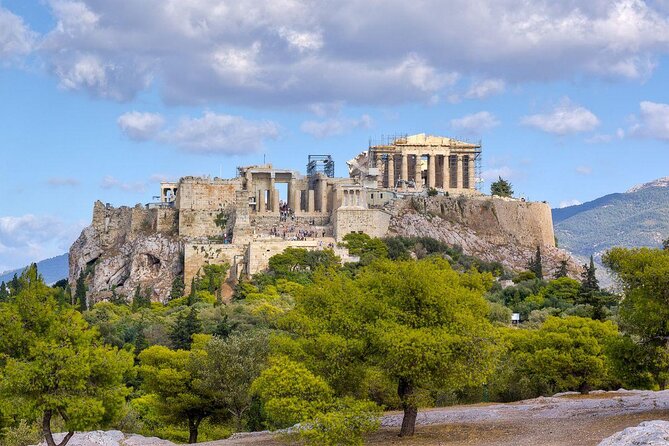
- Two major archaeological areas in one walk: The route covers the Acropolis and Ancient Agora, then finishes at the Attalos Museum.
- Private certified guide: Only your group participates, and Ourania is one guide associated with this experience.
- Strong choice for families: The tour has been tailored successfully for children, making the ancient sites easier to follow.
- A useful contrast in Athens: You see grand temples first, then the practical center of ancient Athenian life.
- Tickets are extra: Acropolis and Ancient Agora admission are not included in the listed price.
- Three to four hours on foot: The route is focused, but you should be ready for sustained walking around archaeological sites.
Starting beneath the Acropolis at Dionysus Zonar’s
The meeting point is Dionysos Zonar’s on Rovertou Galli 43, near the Acropolis area. From here, the tour begins on foot and spends about two hours around the Acropolis before continuing downhill toward the Agora.
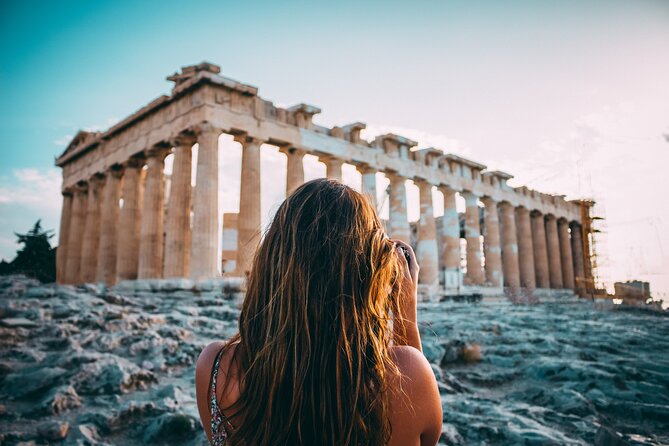
That starting location matters because the first part of the walk is not just a quick photo stop at the Parthenon. Your guide takes you through several important monuments, building a picture of how religion, theater, public ceremony, and political life fitted together in ancient Athens.
You should allow time to meet your guide and have your admission arrangements ready. The tour price does not include the Acropolis ticket, so check the booking details carefully and budget for that extra cost. The same applies to the Ancient Agora entrance later in the walk.
The private setting is especially useful here. The Acropolis can feel like a list of names if you are moving quickly: theater, temple, gate, monument. A guide can explain why each place matters and pause when your group needs a clearer explanation. If you are traveling with children, that flexibility is a real advantage.
You can also read our reviews of more walking tours in Athens



The Acropolis: theater, temples, and the climb through history
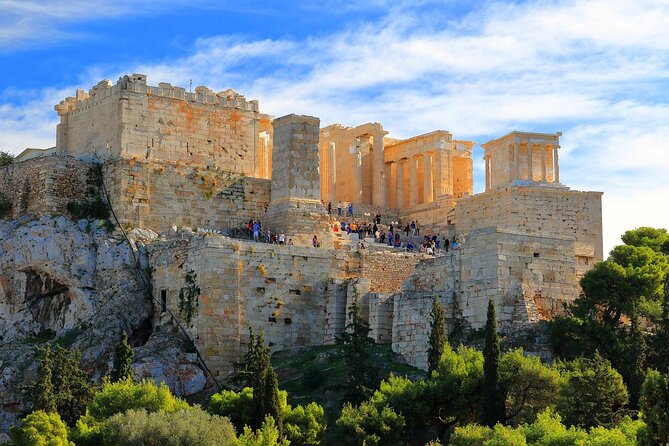
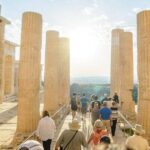
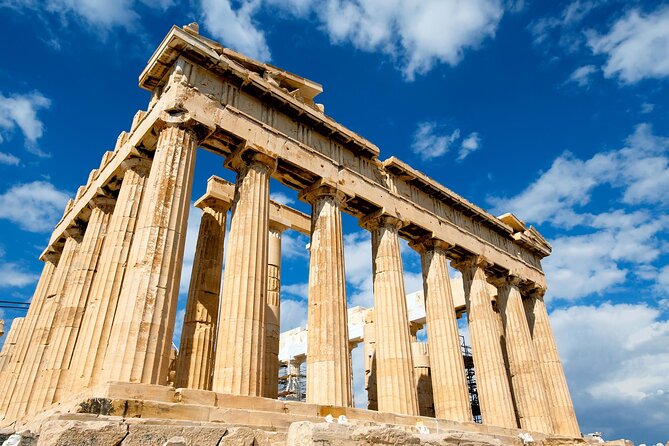
The first stop includes the Theatre of Dionysus, the Temple of Asclepius, the Odeon of Herodes Atticus, the Propylaia, the Temple of Athena Nike, and the Erechtheion.
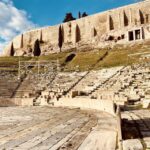
The Theatre of Dionysus gives the Acropolis visit a human beginning. Before you focus on temples and columns, you see the setting for public performances in ancient Athens. This helps explain that the hill was not only a religious center. It was tied to the city’s shared ceremonies and public culture.
The nearby Temple of Asclepius adds another layer. Its presence points to the importance of healing and religious practice in ancient life. You might find that these smaller or less famous sites become more memorable once your guide explains their role, since they are easy to overlook when the larger monuments dominate the view.
The Odeon of Herodes Atticus is another highlight of the approach. Its scale and setting make it easy to understand why performance mattered so much to the city. The tour does not treat the Acropolis as one isolated building. Instead, it shows you a group of spaces with different purposes.
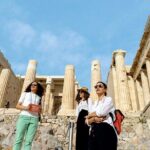
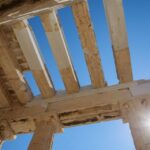
The Propylaia is the formal gateway to the Acropolis. It is a useful place to pause and consider the experience of entering the sacred hill in ancient times. Your guide can also help you make sense of the route through the site, which is valuable when the ruins appear as a series of walls, stairs, and columns.
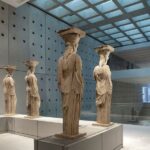
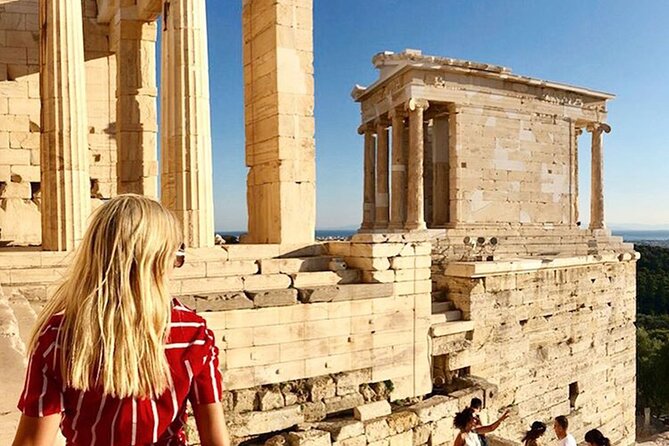
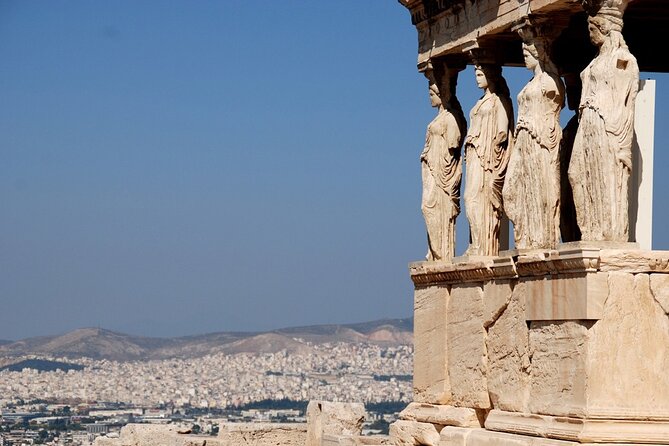
The Temple of Athena Nike is smaller than the main monuments, but its position gives it importance. It was dedicated to Athena in her role as a bringer of victory. You will also see the Erechtheion, known for its unusual design and the famous Caryatid figures. The building’s uneven layout reflects the complicated sacred traditions attached to the hill.
The Acropolis portion lasts about two hours. That is enough time for a guided look at the named monuments, but not so much time that the entire morning disappears. Still, you should expect walking over uneven archaeological ground and time outdoors. The experience is not a casual stroll through a museum.
The biggest practical issue is that the admission ticket is separate. Since the Acropolis is the centerpiece of the outing, confirm exactly how tickets are handled before the start. A private guide is included, but entrance is not.
Walking down to the Ancient Agora
After the Acropolis, the route continues to the Ancient Agora. This shift is one of the best reasons to choose this particular combination of sites.
The Acropolis presents Athens from above, through temples, rituals, and grand public monuments. The Agora brings you down to the city’s working center. It was a place for civic business, trade, social contact, and public discussion. It is also linked with the lectures and public life of philosophers such as Socrates and Plato.
I like this part because it gives the tour a useful balance. If you only visit the Acropolis, ancient Athens can seem like a city of temples. At the Agora, you get a better sense of how citizens met, argued, bought goods, worshipped, and dealt with the ordinary business of life.
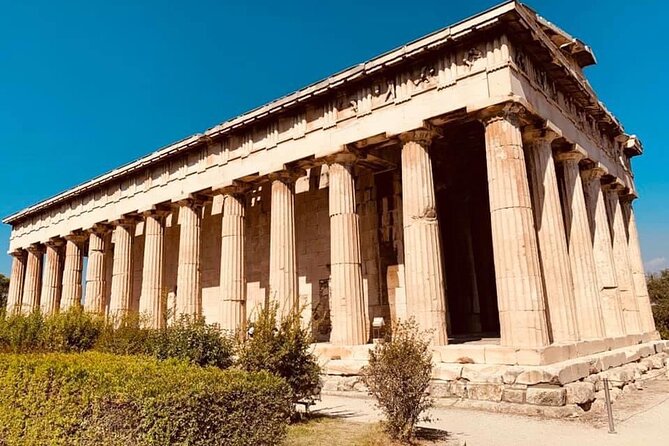
The itinerary includes the Temple of Hephaestus, described as the best-preserved Greek temple from the fifth century BC. Its condition makes it easier to understand the form of a classical temple than at a site where only foundations remain. You can see how the columns and structure work together rather than having to reconstruct everything in your head.
The Church of the Twelve Apostles shows that the Agora continued to matter long after classical Athens. It is a reminder that this ground was used across different periods, not frozen in the fifth century BC.
You will also see the Temple of Apollo Patroos, the Stoa of Zeus, and the Altar of Zeus. These names can blur together without context, so this is where a private guide earns much of the tour’s value. Ask your guide to separate religious spaces from civic spaces and to explain how people moved through the Agora.
The Ancient Agora portion lasts about one hour. That gives you a focused visit rather than an exhaustive archaeological study. If you are fascinated by classical Athens, you may want more time on your own afterward. For a first visit, though, the one-hour guided section creates a sensible overview without adding another long block to an already active day.
Entrance to the Agora is also excluded. You will need to account for that when comparing the total cost with other guided options.
The Attalos Museum and the small details of daily life
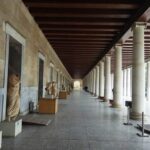
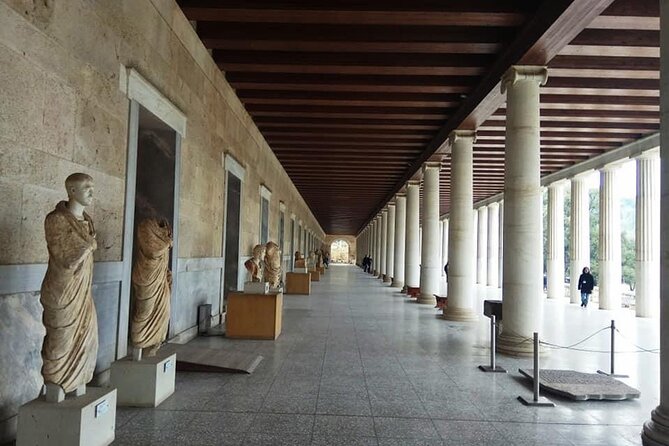
The final stop is the Museum of the Ancient Agora, housed in the Stoa of Attalos. The visit lasts about 30 minutes and shifts attention from large ruins to objects connected with daily administration and public life.
The museum includes ancient Greek identification cards and the original weights and measures used by market inspectors. These are the sort of objects that make the Agora easier to picture. Temples and stoas tell you about architecture, but an identification card or market measure hints at how the city organized its people and commerce.
This short museum visit is well placed at the end. After seeing the Agora outdoors, you can use the objects to fill in some of the practical details. The stop is not a substitute for a large Athens museum, and you should not expect a full day of displays. Its value comes from its close connection to the ground you have just walked.
The tour finishes at the Ancient Agora of Athens, at Athens 105 55. There is no return transport included, so plan the rest of your day from the Agora rather than assuming you will be brought back to your hotel or starting point.
What the private format is worth at $289.40
The listed price is $289.40 per person, with group discounts available. That is a serious cost, especially because both major entrance tickets are extra. The right question is not simply whether the tour is expensive. Ask how much you value a private guide who can connect three different kinds of places in a short period.
For a group of family or friends, the price may make more sense than it does for one person. You are paying for a private activity, an experienced certified guide, and a route that links the Acropolis, Agora, and museum without requiring you to plan the sequence yourself. Group discounts may also change the calculation, so check the final price for your party.
I would be cautious about booking this if you want a low-cost orientation walk or prefer to explore ruins at your own pace. You will still need to pay admission, and the three to four hours are spent walking. The tour is better suited to someone who wants interpretation and a clear route, not just access to the sites.
The private format also helps with family travel. One guide, Ourania, is associated with the experience, and the tour has been tailored for children. That does not mean every child will enjoy three hours of archaeology, but the ability to adjust explanations and pacing can make a major difference.
The rating shown for the experience is 5 out of 5 from three reviews, with one particularly strong point being the guide’s success in making the Acropolis and Agora work for children. That is encouraging, though the small number of reviews means you should treat it as a helpful signal rather than a broad performance record.
You can also read our reviews of more city tours in Athens





Who will get the most from this Athens walk
I would choose this tour if you are visiting Athens for the first time and want the two most important archaeological areas explained together. The route gives you the grand monuments of the Acropolis, the civic life of the Agora, and a small museum with practical objects.
It also suits families and small private groups. Children often respond better to stories about theaters, philosophers, markets, and city life than to a long list of architectural terms. A guide can adjust the level of detail and keep the focus moving.
History-focused visitors may also appreciate the range of the route. You are not simply seeing the most famous hill in Athens. You are connecting religion, theater, philosophy, government, commerce, and household-scale administration within one morning or afternoon.
I would think twice if you have limited mobility or strongly dislike uneven ground and extended walking. The supplied information says most travelers can participate, but the activity takes place through major archaeological sites and lasts three to four hours. Specific accessibility details are not provided, so ask before booking if that affects your plans.
Free cancellation is available when you cancel at least 24 hours before the local start time. Changes or cancellations made inside that period are not accepted for a refund. That policy gives you some room to adjust plans, but Athens schedules can be tight, so do not leave the decision until the last day.
Should you book this private Acropolis and Agora tour?
Book it if you want a focused private introduction to ancient Athens, especially if your group includes children or people who prefer explanations to guidebooks. The connection between the Acropolis and Agora is the strongest feature: you move from sacred monuments and public performance to the practical center of city life, then see objects that make the Agora more personal.
Skip it if the $289.40 price per person feels high once the two entrance fees are added, or if you want a slower, self-guided visit. For the right group, the private guide and tightly organized route can justify the cost. For a solo budget visitor, it is harder to call good value.
FAQ
Where does the tour start?
The meeting point is Dionysos Zonar’s, Rovertou Galli 43, Athens 117 42, Greece.
Where does the tour end?
The tour ends at the Ancient Agora of Athens, Athens 105 55, Greece.
How long does the experience last?
The tour lasts approximately three to four hours. The Acropolis section takes about two hours, the Ancient Agora about one hour, and the Attalos Museum about 30 minutes.
Is the tour private?
Yes. This is a private activity, and only your group participates.
Is an experienced guide included?
Yes. The tour includes a private experienced certified tour guide.
Are Acropolis tickets included?
No. Acropolis entrance tickets are not included in the tour price.
Is Ancient Agora admission included?
No. Entrance to the Ancient Agora is also not included.
Can children participate?
Yes. Most travelers can participate, and the tour has been tailored for children. Specific age limits are not provided.
Can I cancel for a full refund?
Yes, if you cancel at least 24 hours before the experience start time. Cancellations or changes made less than 24 hours before the start are not refunded or accepted.