REVIEW · VOLOS
Cook like a local Greek Cooking lesson in Mt Pelion Greece
Book on Viator →Operated by Karaiskos Farm - Cooking Lesson in Mt. Pelion · Bookable on Viator
Making phyllo by hand is the star here. At Karaiskos Farm, you’ll gather vegetables and herbs from the garden, prepare spanakopita, fry zucchini balls, and sit down to eat what you made. I like the private format and the farm setting, where animals, gardens, and mountain scenery turn a cooking lesson into a broader Greek experience.
I also like that Effie and Anita guide the class in English and send you home with recipes. The main thing to consider is timing: the class starts at 11:00 a.m., lasts about three and a half hours, and requires at least two people, so it suits a planned morning rather than a quick stop between sights.
In This Review
- Key points to know before booking
- Why the phyllo lesson is worth your morning
- Arriving at Karaiskos Farm in Portaria
- From the garden to the kitchen
- Preparing spanakopita the traditional way
- Zucchini balls and garden-fresh tzatziki
- Sitting down to eat what you made
- What the private format changes
- A good fit for families and curious eaters
- Recipes you can take home
- Planning the day from Volos
- Should you book the Karaiskos Farm cooking lesson?
- FAQ
- Where does the cooking lesson take place?
- What time does the experience start?
- Is transportation included?
- Is this a private cooking class?
- What food will I prepare?
- Is the lesson offered in English?
- Can I cancel for a full refund?
Key points to know before booking
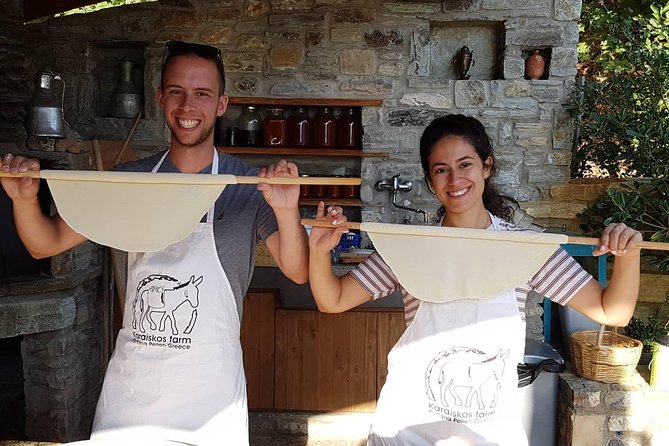
- Handmade phyllo is the main event: You’ll stretch the dough in the traditional way for a vegetable pie.
- The ingredients come from the farm garden: Fresh vegetables and herbs go straight from the garden into the meal.
- It is private for your party: Only your group takes part, with a minimum booking of two people.
- The meal is part of the lesson: You eat the spanakopita, zucchini balls, tzatziki, salad, bread, and wine together.
- Volos and Portaria are connected: Transportation between the two is included in the experience details.
- The farm works well for families: Animals, gardens, and the hands-on food preparation give children plenty to watch and do.
Why the phyllo lesson is worth your morning
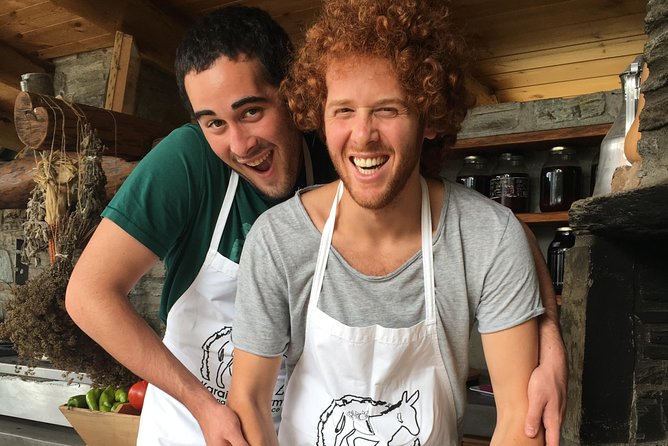
Many Greek cooking classes focus on mixing ingredients and following a recipe. This one gives you the trickier old-fashioned skill: opening phyllo dough by hand.
That matters because phyllo is easy to buy in a Greek supermarket, but handmade dough shows you how traditional pies get their character. You’ll work the dough for spanakopita, then fill it with vegetables and herbs collected from the farm garden.
You should expect a little challenge. The dough may not behave perfectly on your first try, and that is part of the point. You get practical coaching rather than a polished demonstration where you simply watch someone else do the work.
The class is conducted in English. Effie and Anita guide the process, and the cooking is described as easy to follow with their help. You do not need to think of yourself as a serious cook to enjoy it.
The menu is also sensible for a group. The vegetable pie gives you the main hands-on project, while the zucchini balls and tzatziki add two smaller preparations that keep the pace moving while the pie bakes.
You can also read our reviews of more tours and experiences in Volos.

Arriving at Karaiskos Farm in Portaria
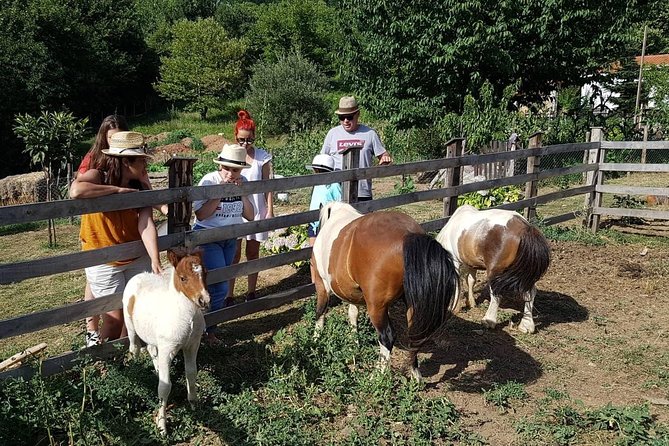
The meeting point is Karaiskos Farm, Portaria 370 11, Greece. The experience begins at 11:00 a.m. and ends back at the same meeting point.
Portaria is in the Mt Pelion area, so this is not a cooking lesson in the middle of Volos. The experience information includes transportation between Volos and Portaria, which is useful if you are staying in Volos and want the farm visit built into your day.
The details also list transportation to and from attractions as not included. I would read that carefully when planning: the Volos to Portaria connection is part of the stated experience, but you should confirm exactly how it applies to your own pickup and return plans before booking.
The start time is well chosen for a long meal. You begin before the hottest part of the day, then have lunch when the cooking is finished. One family specifically found 11:00 a.m. comfortable because it was not yet too hot.
Allow the full three and a half hours. This is not a one-hour lesson followed by a rushed tasting. The farm visit, food preparation, baking time, and meal all form one continuous activity.
From the garden to the kitchen
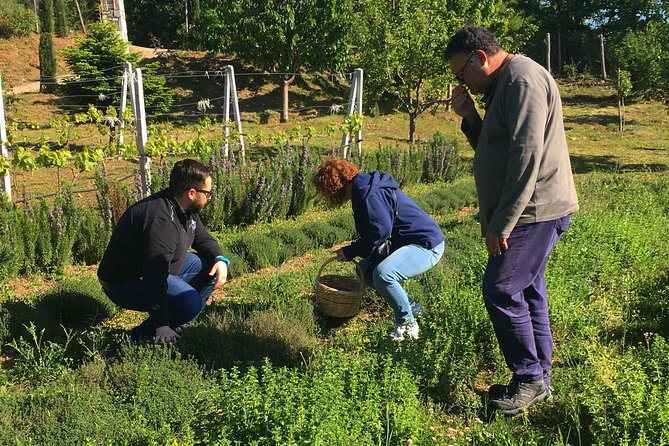
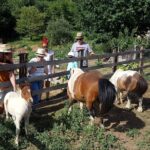
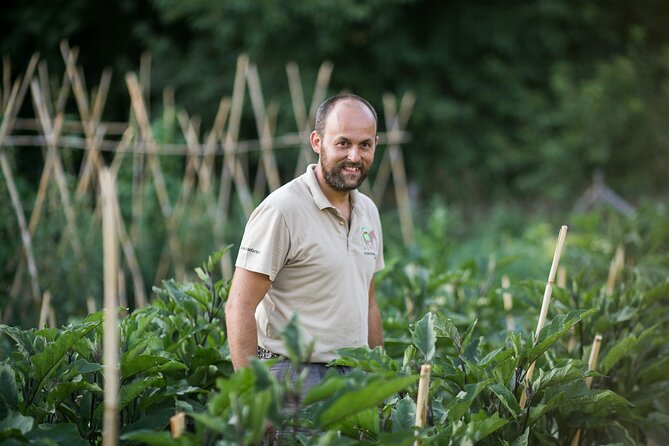
The day begins with the farm setting itself. The property includes a vegetable garden, fruit trees, animals, and open views around Portaria.
The farm visit gives the food a clear connection to its source. Rather than beginning with bowls of anonymous ingredients, you collect vegetables and herbs from the garden. You may also see farm animals and learn about organic farming during this part of the experience.
That is especially useful for families. Children can take interest in the animals and garden while adults focus on the cooking. The setting gives them something real to look at, not just a counter and a recipe sheet.
The garden also shapes the meal. The filling for the pie uses fresh vegetables and herbs gathered there, and the tzatziki includes aromatic herbs from the garden. Seasonal availability matters, so the exact vegetables or salad ingredients may vary.
You should not expect a formal agricultural tour with a long lecture. The garden visit supports the cooking lesson. It helps you understand why Greek food often depends on simple produce, herbs, olive oil, and careful preparation rather than complicated sauces.
Preparing spanakopita the traditional way
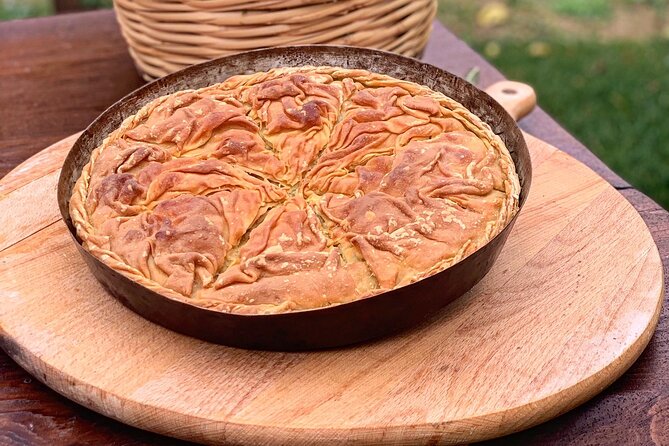
Spanakopita is usually translated as spinach pie, but this version is described more broadly as a vegetable pie with handmade phyllo. You prepare the filling with fresh vegetables and herbs, then place it inside the dough before baking.
The key lesson is opening the phyllo. You work the dough by the traditional method instead of relying only on ready-made sheets. This takes more effort, but it gives the class its strongest sense of place.
I like this part because it teaches a technique you can remember. You are not simply copying a finished dish. You are seeing how the pastry is made, how it is filled, and how it changes in the oven.
The class has a good rhythm because the pie needs time to bake. That pause allows the group to prepare the other dishes instead of standing around waiting.
The result may not look like a professional bakery pie. That is fine. The value is in learning the method, working with the ingredients, and eating a dish made by your own group.
Zucchini balls and garden-fresh tzatziki
While the vegetable pie bakes, you prepare kolokythokeftedes, or fried zucchini balls. They are served as a starter and give you a second cooking task with a different texture and technique.
The zucchini balls provide a nice contrast to the phyllo. The pie depends on pastry work and baking, while the fritters are about mixing and frying. Together, they make the meal feel like a proper Greek table rather than a single cooking exercise.
You also prepare tzatziki, the cool cucumber and yogurt dip. Fresh herbs from the garden add aroma, and the dip brings a refreshing element to the meal.
A seasonal salad accompanies the main dish. Bread and wine are also part of the meal, according to the experience details. Bottled water, coffee, tea, and snacks are included as well.
The welcome drink is either hot mountain tea or homemade sour cherry juice. That small choice gives the visit a local touch before the cooking begins, and it is a pleasant way to settle into the farm setting.
Sitting down to eat what you made
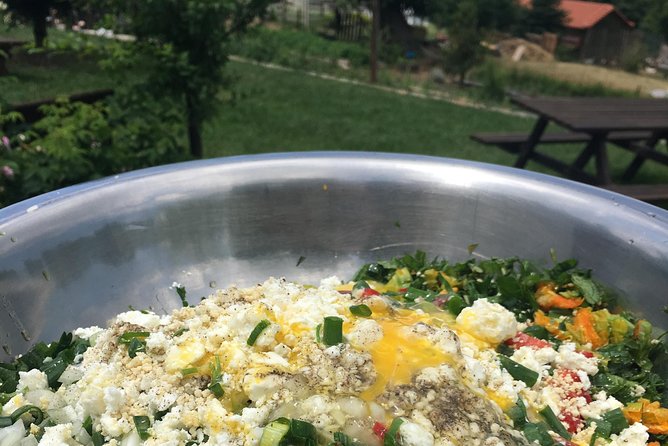
The meal is not an afterthought. Once the pie is ready, the food you prepared is served at the table with seasonal salad and wine from a Greek vineyard.
The menu includes:
- Vegetable pie with handmade phyllo
- Fried zucchini balls
- Tzatziki
- Seasonal salad
- Bread
- Wine
This shared meal is where the separate tasks make sense. You can taste the garden vegetables in the pie, compare the crisp zucchini balls with the cool tzatziki, and see how the homemade dishes work together.
The format also suits couples, families, and small groups who want time to talk. Since the booking is private, you are not placed with a large public class. Only your own group takes part.
There is one small point to clarify. The description lists alcoholic beverages as included, but if anyone in your group does not drink, the welcome options include mountain tea or homemade sour cherry juice. Bottled water, coffee, and tea are also included.
What the private format changes
A private class can be worth more than a cheaper group lesson if you want personal help. Here, your party is the only group participating, and the minimum booking is two people.
You can work at your own pace within the fixed three-and-a-half-hour schedule. That is helpful during the phyllo stage, when some people may need more coaching than others.
The private format is also useful for families. Children can take part in gathering produce and preparing food without being lost in a large class. The farm animals add another layer of interest for younger participants.
The tradeoff is price. At $118.29 per person, this is not a budget lunch. You are paying for the guide, the lesson, the farm setting, ingredients, the complete meal, drinks, and the private arrangement.
I see the price as reasonable for someone who wants more than food. If you only want to eat spanakopita, a taverna will cost less. If you want to learn a traditional technique, visit a farm, prepare several dishes, and enjoy a long lunch, the package has stronger value.
Group discounts are available, so the cost may work better for a larger private party. Check the final price for your group when booking.
A good fit for families and curious eaters
You do not need professional cooking skills. The activities are hands-on but guided, and the English instruction makes the steps accessible.
This is particularly well suited to people who enjoy learning through food. You will get more from it if you are willing to handle dough, collect produce, and take part in several simple preparations.
Families should give it serious thought. The animals and garden make the experience broader than a kitchen class, and the farm layout has been described as especially enjoyable for children.
Couples can also use it as a relaxed half-day outing from Volos. The private format gives you time together, and the final meal replaces the need to find lunch elsewhere.
It may be less suitable if you dislike group cooking, fried food, wine, or a set late-morning schedule. It is also not the best choice if you are looking for a short activity that leaves most of the day free.
The class is offered in English. Service animals are allowed, but the available information does not give further details about paths, kitchen access, or other mobility arrangements. If those issues matter to you, ask the provider before booking.
Recipes you can take home
The recipes are one of the most useful parts of the experience. You leave with instructions for traditional Greek food rather than only a pleasant memory and a full stomach.
The dishes are practical enough to repeat at home: a vegetable pie with handmade phyllo, zucchini balls, and tzatziki. The phyllo may take the most practice, but that is also the skill most likely to remind you of the class.
I would take notes during the lesson even though recipes are provided. Write down the feel of the dough, the herbs used, and any small adjustments the guides make during preparation.
The farm ingredients may not be identical to what you find at home. That does not make the recipes less useful. The lesson shows you the basic method, while your own seasonal produce can supply the filling later.
Planning the day from Volos
The experience is based in Portaria, with transportation between Volos and Portaria included in the stated highlights. The meeting point and end point are both Karaiskos Farm.
Because the activity starts at 11:00 a.m., plan your morning around reaching the farm on time. Confirmation is provided when you book, so use those details to verify the transportation arrangements and exact meeting instructions.
Do not schedule a major attraction immediately after the class. The advertised duration is approximately three hours and 30 minutes, and the meal is part of the experience. A little extra time is sensible if you want to enjoy the farm without watching the clock.
The cancellation policy is flexible if your plans change early. You can cancel for a full refund up to 24 hours before the local start time. Changes or cancellations made less than 24 hours before the start are not accepted for a refund.
Should you book the Karaiskos Farm cooking lesson?
I would book this if you want a hands-on Greek food experience with a real farm setting, not just a demonstration. The handmade phyllo, garden gathering, private group format, and meal with wine give the morning a clear purpose.
It is also a strong choice for families, couples, and small groups staying in or near Volos. The animals and gardens add variety, while the recipes give you something useful to take home.
I would skip it if your priority is the lowest-cost meal, a quick class, or complete flexibility about timing. At $118.29 per person, the value depends on taking part in the full package.
For most food-minded visitors with half a day available, this is a satisfying way to connect Greek cooking with the place where the ingredients grow. Book it for the phyllo lesson, stay for the lunch, and leave room in your schedule for the farm itself.
FAQ
Where does the cooking lesson take place?
The activity takes place at Karaiskos Farm in Portaria, Greece. The meeting point is Karaiskos Farm, Portaria 370 11, Greece.
What time does the experience start?
The cooking lesson starts at 11:00 a.m. The full experience lasts approximately three hours and 30 minutes.
Is transportation included?
Transportation between Volos and Portaria is listed among the highlights. Transportation to and from attractions is listed as not included, so confirm the exact arrangements for your plans when booking.
Is this a private cooking class?
Yes. This is a private activity for your party only. A minimum of two people is required per booking.
What food will I prepare?
You will prepare a vegetable pie with handmade phyllo, fried zucchini balls called kolokythokeftedes, and tzatziki. The meal also includes a seasonal salad, bread, and wine.
Is the lesson offered in English?
Yes. The experience is offered in English, with guidance from the cooking hosts, including Effie and Anita.
Can I cancel for a full refund?
Yes. You can cancel at least 24 hours before the local start time for a full refund. Cancellations or changes made less than 24 hours before the start are not accepted for a refund.