REVIEW · LOUTRAKI
Corinth Canal: Passage By St. Andreas Glass-Bottom Boat
Book on GetYourGuide →Operated by Thalassia Chelona Maritime Company · Bookable on GetYourGuide
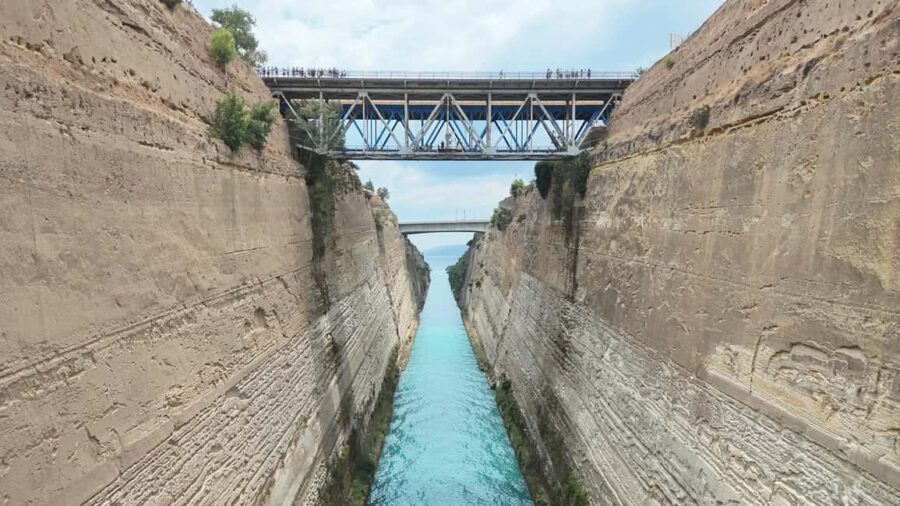
A canal ride is never just about boats. The Corinth Canal passage is a rare mix of tight engineering, big cliffs, and a shortcut in time—ancient dream, modern cut. You’ll slide through a narrow man-made channel that links the Corinthian and Saronic Gulfs, with rock walls rising up to around 80 meters.
I especially like the scale-for-the-time ratio here: at $47 for about 90 minutes, you get one of Greece’s most dramatic waterways without committing to a full day. I also like the glass-bottom angle, because it adds a hands-on twist to the views (even if it’s not what your imagination might picture).
One thing to watch: the “glass-bottom” may not deliver crystal-clear views. One past booking pointed out that the glass can look like a frosted hatch and may be less transparent than expected, and the cruise may feel more like scenic touring than a guided lecture.
In This Review
- Key things to know before you go
- Corinth Canal from the water: why this short cruise feels big
- The Agios Andreas / St. Andreas boat: comfort, capacity, and the “glass” factor
- Where the cruise actually starts: Isthmia port and your Corinth transfer
- The 90-minute flow: what you’ll see during the canal passage
- The engineering miracle: connecting gulfs and conquering a long dream
- Geological formations and the sea-below perspective
- Price and value at about $47: is it worth it?
- Weather, comfort, and how to plan for a smooth experience
- Who should book this Corinth Canal glass-bottom cruise?
- Should you book it?
- FAQ
- How long is the Corinth Canal cruise by the St. Andreas glass-bottom boat?
- Where does the cruise start?
- Is transfer included from Corinth Train Station?
- What is the price?
- What boat is used for the cruise?
- How many guests can the boat accommodate?
- Is a meal included?
- Is the glass-bottom view clear?
Key things to know before you go
- Corinth Canal, not a detour: You’re actually passing through the canal during your cruise time.
- 80-meter cliffs close in: The channel feels narrow in the best way—like the rock walls are pressing toward you.
- Short on time, long on wow: 90 minutes is enough to feel the thrill without draining your day.
- Glass-bottom expectations: Plan for a hatch-style viewing panel, which may not be perfectly clear.
- Transfers from Corinth: You’re picked up from Corinth Train Station area and brought to the Isthmia start.
- Ancient plans, modern reality: You’ll hear about long-running attempts, including ideas tied to Periander and Nero, finally realized in the 19th century.
Corinth Canal from the water: why this short cruise feels big
If you’ve only seen the Corinth Canal from land, this experience changes everything. From the water, the canal’s purpose is obvious: it’s a human-made throat cutting through the Isthmus, designed to connect the two gulfs. And when you’re moving through it, you feel how tight the space really is.
This is one of those stops that can’t be replicated by a photo. The cliffs—up to about 80 meters—create a kind of instant canyon effect. Even if you’re not a “boat person,” you’ll get a strong sense of scale because the walls keep shifting past you in real time.
There’s also the story element, and it’s not just trivia. The canal is tied to a roughly 2,400-year-old dream, with early efforts associated with ancient rulers like Periander and Nero. The final breakthrough came later, in the 19th century. That timeline turns a quick cruise into something you can actually think about while you’re still inside it.
You can also read our reviews of more tours and experiences in Loutraki.


The Agios Andreas / St. Andreas boat: comfort, capacity, and the “glass” factor
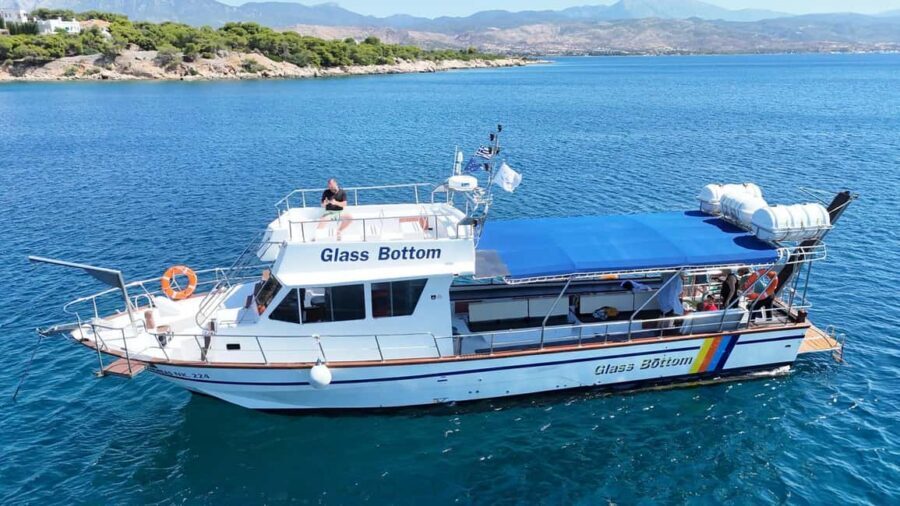
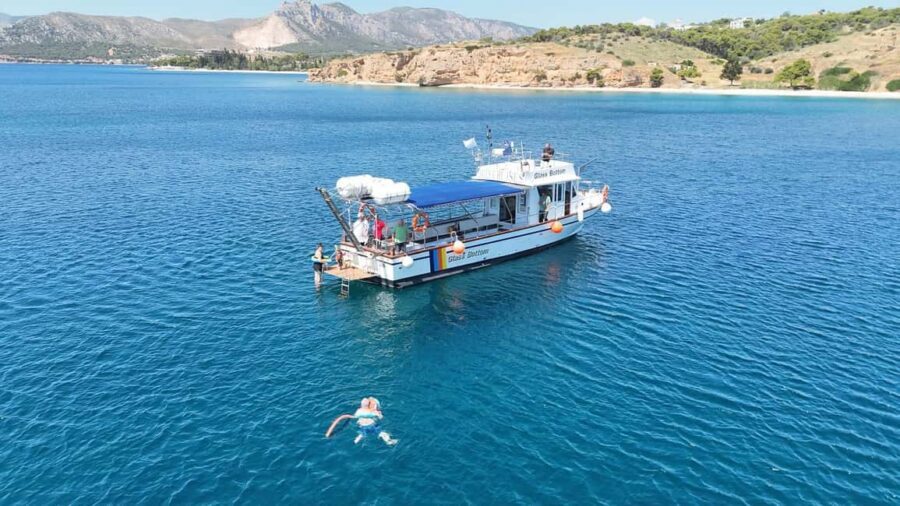
The cruise runs on the Agios Andreas vessel (a 17-meter boat) designed for up to about 50 guests. That size is a sweet spot: large enough to feel stable and comfortable, small enough that you can get good sightlines around the canal.
Now for the glass-bottom expectation. The name suggests you’ll be looking straight down at the water. But one verified booking called out that the setup can feel more like a viewing hatch with heavily frosted or dirty glass, not a crystal-clear window. Translation for your planning: treat the glass-bottom as a fun bonus, not a guarantee of seabed-level clarity.
I’d still count it as worth it—because even when the glass isn’t perfectly transparent, the surrounding scenery is the main event. The canal walls, the narrow channel, and the feel of moving through a cut in the rock are the big payoff.
Where the cruise actually starts: Isthmia port and your Corinth transfer
Your day centers on Isthmia port. The cruise begins there, and you’re included in the transfer from Corinth Train Station, which is a big help if you’re basing yourself in Athens.
You’ll want to be on time for the scheduled meeting windows. The first meeting point is listed at 10:00 with pickup from Corinth Train Station. There’s also a second meeting point at 10:15 at the Yachting diesel service Kapsalakis Corinth Canal Isthmia location tied to the St. Andreas Glass Bottom Boat. That means you should plan to arrive early enough to handle parking, getting oriented, and any small delays.
If you’re coming from Athens, you have a straightforward rail option described clearly: get to Larissa Station by metro, bus, or taxi, then take the suburban railway toward Kiato. The train ride is about 1 hour and 15 minutes, and it offers impressive views as the train crosses the Isthmus of Corinth. When you arrive at Corinth Station, a company bus is waiting to transfer you onward.
The 90-minute flow: what you’ll see during the canal passage
Your cruise is about 90 minutes total, and most of that time is spent on the canal passage. Once you’re on board at Isthmia port, you’ll start moving through the canal itself—this is not a distant viewpoint or a short detour cruise.
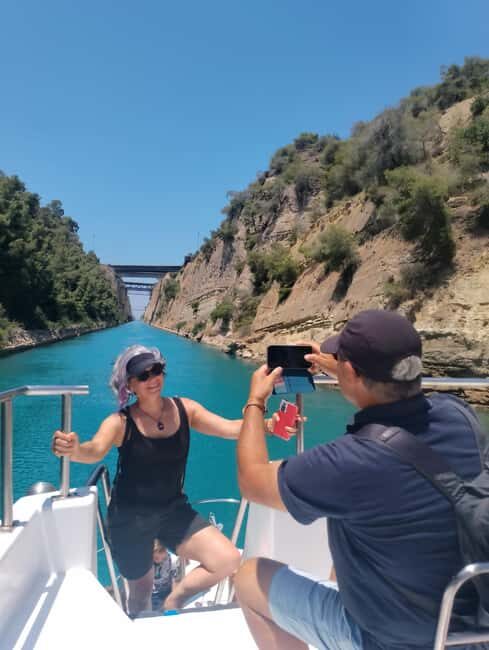
As you pass through, the canal’s design becomes very real. It’s narrow, and you can feel that the boat is threading through a man-made channel with towering rock faces close on either side. Those walls can reach around 80 meters high, so even a short passage has a “gravity” to it. The effect is part engineering, part geography.
You’ll also get the geological angle. The information provided focuses on geological formations, and from the water you’re in a position to notice how the rock changes tone and texture along the canal walls. Even if you don’t catch every “scientific detail,” you’ll feel the setting’s physical weight, because the rock is right there beside you.
A final note on content style: while the activity description frames it as an educational experience—ancient attempts, engineering challenges, and the idea of 2,400-year persistence—one review explicitly said there’s no guide. So go in expecting sightseeing plus basic factual context, not necessarily a full guided narrative.
The engineering miracle: connecting gulfs and conquering a long dream
The big reason the Corinth Canal feels special is the problem it solves. By connecting the Corinthian and Saronic Gulfs, it cuts across the Isthmus in a way that reduces the need for longer routes. From the boat, the canal reads as a practical solution to a geographic bottleneck.
And the human story matters. There were attempts tied to antiquity, with names like Periander and Nero mentioned in the background. That’s a rare kind of travel context: you’re watching a modern channel, knowing people dreamed about it for centuries before it became reality. Then the description adds a key time marker: the dream finally became reality in the 19th century.
What you get, then, is more than “something impressive.” You get perspective on why this canal exists: it took repeated attempts and massive engineering work to make the idea survive long enough to be built.


Geological formations and the sea-below perspective
The canal’s geology is one of the silent highlights. Even without a professor on board, you can see why this area is interesting: rock walls rise fast, and the canal cuts through them with a man-made precision you can feel in motion.
The glass-bottom component is meant to put “the sea below” into the experience. In practice, the glass-bottom panel may be less transparent than you’d hope based on the name alone. One booking described the view as looking through a hatch with strongly soiled frosted mat glass. If you’re coming specifically for seabed viewing, I’d adjust your expectations in advance.
If the glass is clear enough for you, you’ll likely enjoy seeing how the water and shadows shift beneath the boat. But even when the “below” view isn’t perfect, the canal walls and the way the light hits them usually give you plenty to look at.
Price and value at about $47: is it worth it?
At about $47 per person for a 90-minute canal passage with transfers, I think this can be a good-value outing—especially if you’re staying in Athens and want a high-impact experience without a full day of driving.
Here’s why the value works for many people:
- You’re paying for a focused experience: one canal passage, not a long multi-stop day.
- Transfers from Corinth Train Station are included, which saves you time and planning.
- You’re getting a unique viewpoint that you can’t recreate from a roadside pull-off.
Where value might not match expectations: if you’re expecting a truly clear, “wow, I can see every detail under the boat” glass-bottom experience, you could feel disappointed if the viewing panel is frosted or dirty. In that case, think of it as a canal cruise first, glass-bottom second.
Also, note the duration: you’re not losing half your vacation day. If your schedule is tight or you’re balancing multiple Athens-area sights, this is one of those easy wins.
Weather, comfort, and how to plan for a smooth experience
One review mentioned heavy rain on the day of sailing, and the experience was still described as top. That’s useful information because it suggests the cruise can operate through typical bad-weather conditions.
I’d still plan sensibly: bring something to keep dry, and expect wind near water even if the boat is comfortable. Because this is a short trip, you don’t want to spend the whole ride worrying about your clothes.
Group size is capped around 50 guests, so you shouldn’t feel swallowed by a huge crowd. You’ll still want to show up on time and move efficiently at boarding so you get your preferred viewing spot quickly.
Who should book this Corinth Canal glass-bottom cruise?
This is a strong fit if you want:
- a short, high-impact outing with big scenery,
- a “from the water” viewpoint of one of Greece’s most famous engineering projects,
- a day plan that doesn’t require hours of extra travel after you reach Corinth.
It’s also a good choice for couples and small groups who want a shared experience and don’t need a private guide. If you’re traveling with kids who love boats, the thrill of moving through a narrow channel usually lands well.
If you’re the type who cares deeply about glass-bottom clarity, adjust your expectations. Also, if you’re looking for a lecture-level guide experience, keep in mind at least one booking reported no guide, so you might want to read up on the canal’s story beforehand.
Should you book it?
I’d book this if you want a direct Corinth Canal passage with minimal time cost. The combination of narrow-channel sensation, 80-meter rock walls, and the long dream behind the canal makes it more meaningful than a generic boat ride.
Skip or reconsider if your main goal is a perfectly clear glass-bottom view and you’re expecting that the seabed will be sharply visible for the whole cruise. In that case, you might still enjoy the canal, but the “glass” promise could feel inflated.
If you like practical value—getting in, seeing the key thing, getting out—this one makes sense.
FAQ
How long is the Corinth Canal cruise by the St. Andreas glass-bottom boat?
The cruise duration is 90 minutes.
Where does the cruise start?
The cruise starts at Isthmia port.
Is transfer included from Corinth Train Station?
Yes. Transfer from Corinth Train Station is included.
What is the price?
The price is listed as $47 per person.
What boat is used for the cruise?
The activity is described as using the Agios Andreas vessel (a 17-meter boat). It’s also referred to as the St. Andreas glass-bottom boat.
How many guests can the boat accommodate?
The boat capacity is given as 50 guests.
Is a meal included?
No meal is included.
Is the glass-bottom view clear?
The experience includes a glass-bottom element, but one booking noted the glass may be more like a hatch with frosted or strongly soiled mat glass, so you should expect the view may be limited.