REVIEW · LOUTRAKI
Ancient Corinth, acrocorinth castle and Thermal Spa Day
Book on GetYourGuide →Operated by PAPILLON EXPERIENCE Ι.Κ.Ε. · Bookable on GetYourGuide
Ancient Corinth gives this day trip its real weight. You get Roman ruins, Saint Paul’s preaching place, a dramatic hilltop castle, the Corinth Canal, and a warm-water spa in Loutraki, all in one long day from Athens. Pan and Costas are the named guides associated with this experience, and both bring patient, personal explanations to the road.
I like the mix of serious history and a soothing spa stop. I also like the small group limit of eight, which makes questions and photo stops easier than they are on a big coach. The catch is the pace: you cover a lot of ground, and lunch, site admission, and the optional hydromassage cost extra.
In This Review
- Key points to know before booking
- Why this Athens day trip covers so much
- Daphni Monastery begins the morning
- The Corinth Canal marks the crossing
- Acrocorinth puts the castle above the plain
- Ancient Corinth connects ruins with Saint Paul
- Lunch comes after the ruins, not inside the ticket price
- Loutraki’s 32°C thermal water changes the mood
- Is $169 a fair price?
- What the small group and guide add
- Practical planning for a long day
- Who should book this Corinth experience?
- Should you book it?
- FAQ
- How long does the Ancient Corinth and thermal spa tour last?
- Where does the tour begin and end?
- Is lunch included in the tour price?
- Is admission to the archaeological site included?
- How much does the thermal spa hydromassage cost?
- Can children under 15 use the thermal spa?
Key points to know before booking
- A full Peloponnese sampler: See Daphni Monastery, the Corinth Canal, Acrocorinth, Ancient Corinth, and Loutraki in about 10 hours.
- The castle requires walking: Acrocorinth includes sightseeing on foot for about an hour, so bring sensible shoes.
- Spa access is partly extra: The water is 32°C, while the one-hour hydromassage costs €16.
- Ancient Corinth has a strong Saint Paul connection: You visit the place where he lived and taught, including the platform linked with his speech to the Corinthians.
- The group stays small: The white van holds no more than eight participants, with an English-speaking host or guide.
- Bring practical items: Pack flip-flops and a passport or ID card. A copy is accepted.
Why this Athens day trip covers so much
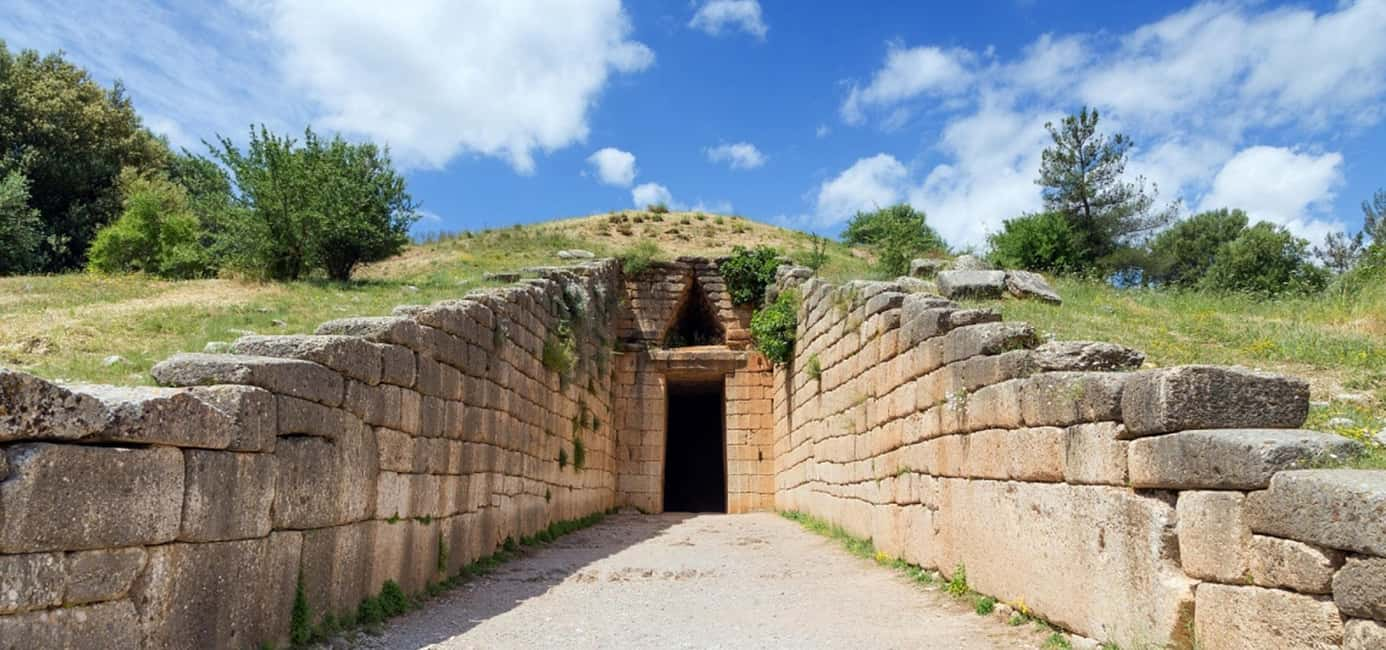
This is not a quick ruin-and-back excursion. It links several layers of Greek history with a modern pleasure: soaking in thermal water at Loutraki. You begin in Athens, cross into the Peloponnese, visit one of Greece’s major ancient cities, climb toward a famous castle, and finish with two hours at a spa.
The day lasts about 10 hours, so you should think of it as a substantial outing rather than an easy half-day. The payoff is variety. One hour you are looking at ancient columns and the next you are gazing across the Corinth Canal or resting in warm water.
The white van and small group matter here. With a maximum of eight people, the outing has a more personal feel than a full-size bus tour. Pan is described as patient and willing to put in extra time, while Costas is praised for making the historic sites feel connected to family heritage. Since the guide is your main source of context between stops, those personal qualities are important.
You can also read our reviews of more tours and experiences in Loutraki.
Daphni Monastery begins the morning
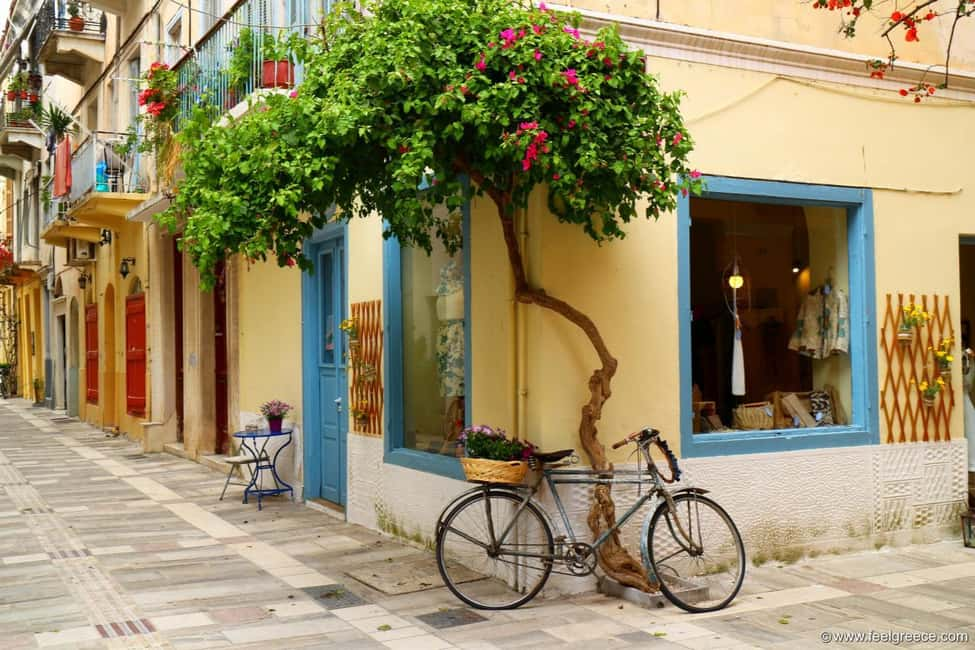
The first stop is Daphni Monastery, about 25 minutes after pickup in Athens. You have around 20 minutes here, so this is an introductory visit rather than a long study of the complex.
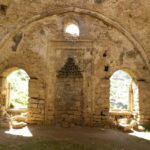
The monastery dates from the 11th century. That alone gives the morning a useful shift in focus. Instead of going directly from modern Athens to ancient Corinth, you begin with Byzantine Greece and then move through later periods as the day unfolds.
The short visit also sets expectations. You will see several important places, but none receives unlimited time. If Daphni Monastery is a personal priority, you may want to confirm the exact schedule with the guide at the start of the day. Otherwise, treat it as a compact historical stop that adds another period to the story.
The Corinth Canal marks the crossing
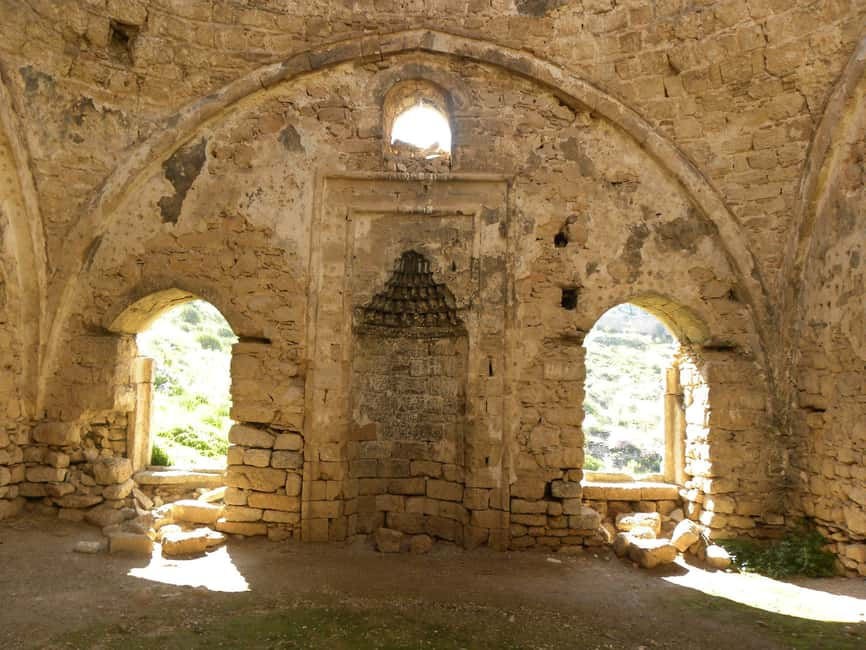
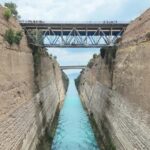
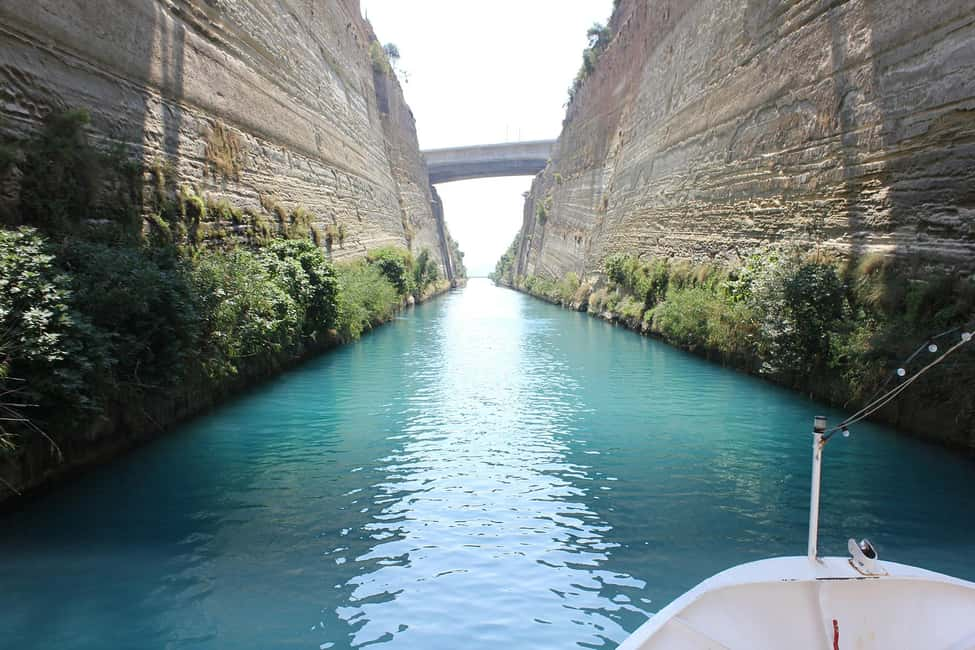
After about 40 minutes in the van, you stop at the Corinth Canal for roughly 15 minutes. This is one of the day’s best photo points, not because you need a long explanation, but because the engineering is easy to grasp at a glance.
The canal is the entrance to the Peloponnese, cut through the narrow land bridge that connects the mainland with the peninsula. The view gives you a clear sense of the divide, and the project represents a remarkable 19th-century feat of engineering.
Fifteen minutes is enough for photographs and a quick look. It is not enough for a slow walk or a detailed technical visit. Keep your camera ready, and do not expect this stop to feel like a separate attraction with extended free time.
Acrocorinth puts the castle above the plain
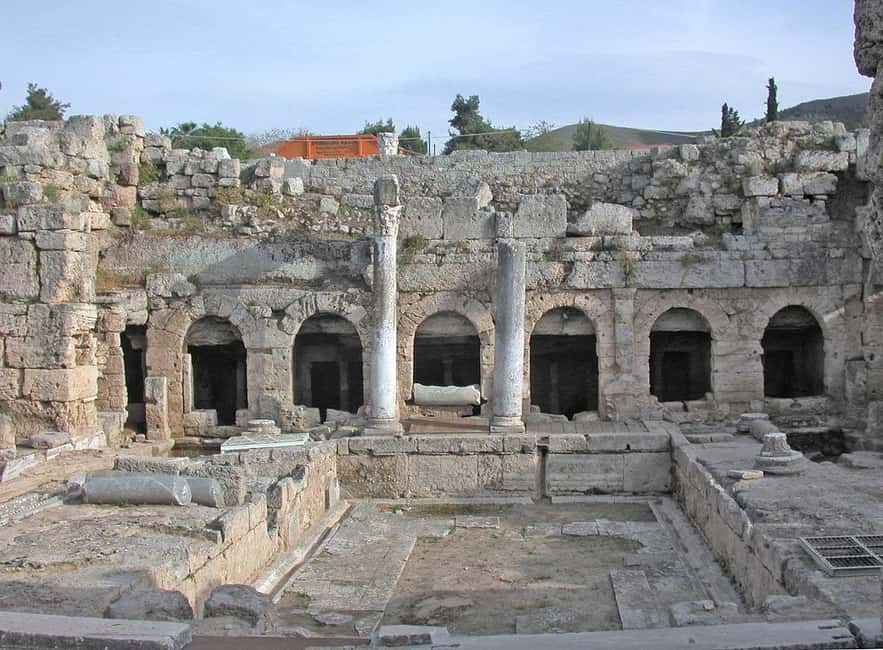
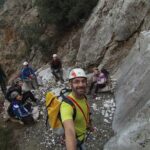
From the canal, the van continues for about 30 minutes to Acrocorinth. You have approximately one hour for sightseeing and walking here. This is one of the day’s most dramatic settings, but it is also the part that calls for the most attention to footwear and energy.
Acrocorinth is an impressive fortified site with layers linked to ancient Greeks, Byzantines, Venetians, Ottomans, and Knights Templar. The tour also connects the location with mythical figures such as Pegasus and Hercules. That mix of legend and recorded history is part of the appeal. You are not looking at a single-period monument. You are seeing a place reused and reshaped across centuries.
The castle’s position gives the visit visual force. You can look out over the surrounding area and understand why this high point mattered to so many rulers. The information provided does not give a precise trail condition or accessibility details, so you should plan for walking over uneven ground and ask the guide what route is practical on the day.
An hour is enough to see the main areas at a steady pace, but it may feel brief if you like to examine fortifications slowly. I would give Acrocorinth your full attention rather than treating it as a quick photo stop. It is the site where the day’s mythology, military history, and wide views come together.
Ancient Corinth connects ruins with Saint Paul
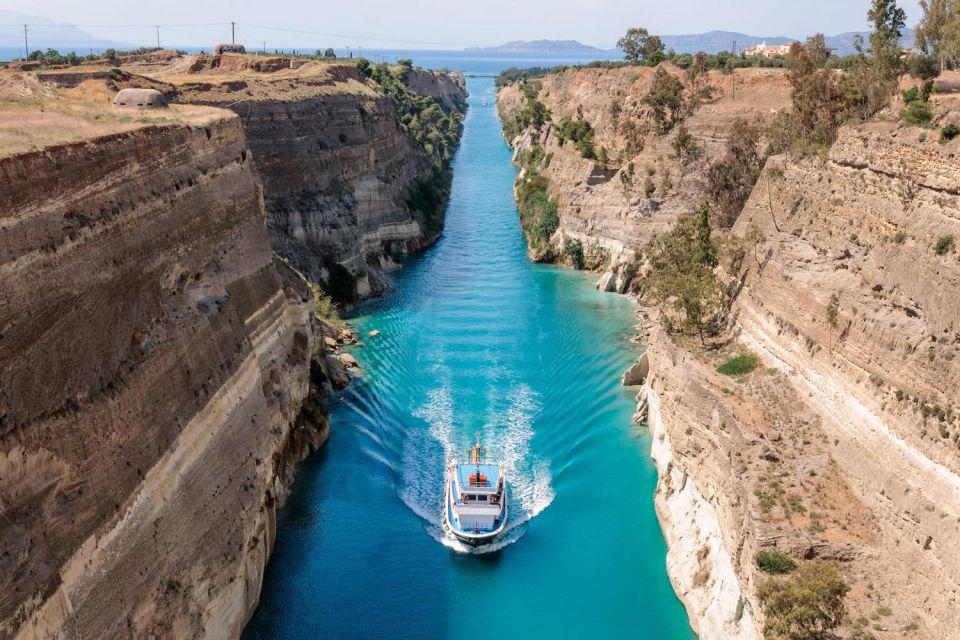
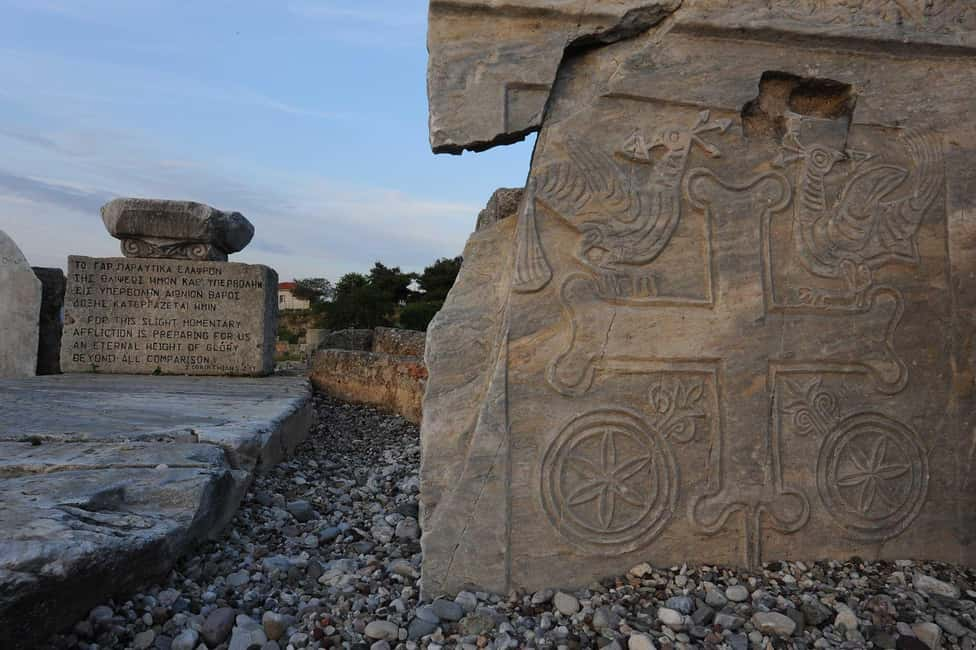
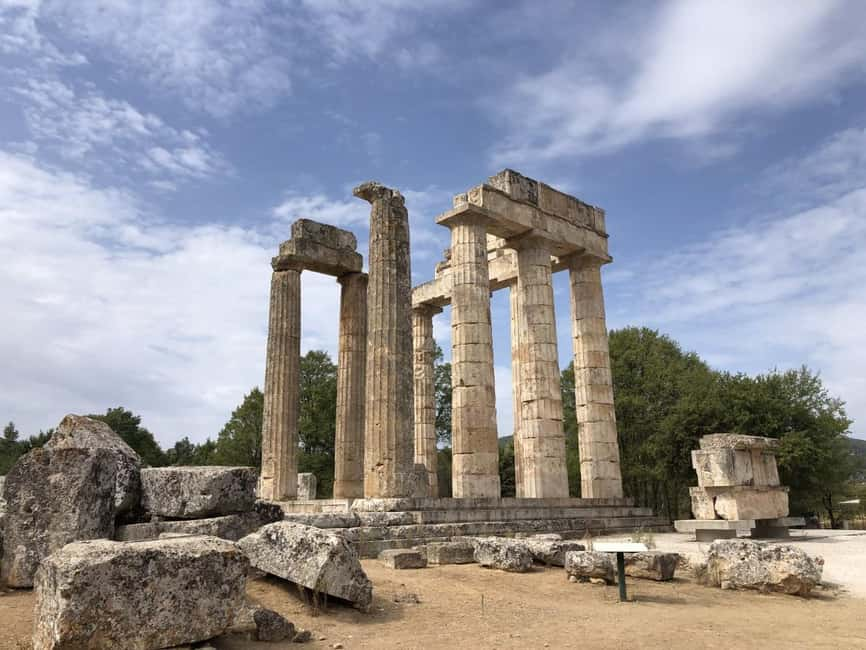
The next stop is the archaeological site and museum of Ancient Corinth, with about an hour for photographs, sightseeing, and the visit. Corinth was considered the richest city of ancient Greece, and its position made it important for trade, travel, politics, and religion.
The site also carries a direct Christian connection. Saint Paul lived and taught here, and you see the platform associated with his speech to the Corinthians. That detail gives the ruins a human voice. You are not only looking at temples and streets. You are standing in a place tied to one of the best-known episodes in early Christian history.
The Temple of Apollo is another major part of the visit, along with the remaining archaeological features and museum displays. The site shows how many cultures left their mark on Corinth. Romans, Byzantines, Venetians, Ottomans, and others passed through the wider region, adding layers to an already important city.
Admission is not included. The listed cost is €4 for a reduced ticket or €8 for a full ticket. Since the wording of the ticket information is brief, check which category applies to you before budgeting. This is a modest extra compared with the total tour price, but it is still useful to know that the advertised $169 does not cover every entry.
The one-hour visit works best if you listen closely as the guide explains what you are seeing. Pan is described as patient with questions and generous with historical detail, while Costas is praised for connecting the sites to personal heritage. That style suits Corinth, where a bare ruin can be difficult to read without help.
Lunch comes after the ruins, not inside the ticket price
Lunch follows the Ancient Corinth visit and lasts about one hour. It is not included in the $169 price, so you should plan for a separate meal budget.
The timing makes sense. You see the archaeological site first, then eat directly after leaving it. That keeps the main sightseeing together and gives you a proper break before the spa. The supplied information does not name the restaurant, set a menu, or state the exact price, so do not book this tour expecting a prepaid meal or a fixed dining plan.
I like that lunch remains an option rather than being folded into a package with a marked-up menu. It gives you some control over what you spend. The tradeoff is less certainty, so ask your guide early in the day how the lunch stop will work.
Loutraki’s 32°C thermal water changes the mood
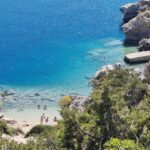
The final major stop is Loutraki Thermal Spa, where you have around two hours for swimming. The water temperature is listed as 32°C, or 89.6°F, which is warm enough for a relaxing soak without being described as a very hot bath.
The spa is a smart contrast to the morning. Acrocorinth asks you to walk and look upward. Ancient Corinth asks you to focus on stones, columns, and history. At Loutraki, you can slow down and rest.
Towels are included, which removes one annoying item from your packing list. You still need flip-flops. The optional hydromassage in the swimming pools costs €16 for one hour, so the basic spa visit and the hydromassage should be treated as separate expenses.
Children under 15 are not allowed to swim at the thermal spa. That makes this a poor choice for a family whose younger children need pool time. The activity is also not suitable for children under 15 according to the tour information, so check the age rule before booking rather than assuming a child can simply wait beside the pool.
Two hours gives you enough time to use the spa without rushing straight back into the van. The return drive to Athens takes about an hour. Towels are supplied, but you should bring swimwear and flip-flops. Swimwear is an obvious need for a swimming stop, though only flip-flops are specifically listed among the items to bring.
Is $169 a fair price?
At $169 per person, this is not the cheapest way to see Corinth. It can still be fair value if you want several stops in one day and prefer a small group with an English-speaking guide.
The price covers pickup from Athens, transport in a white van, the guided sightseeing, drinks such as water and soda lemonade, and towels for the spa. It does not cover lunch, Ancient Corinth admission, or the €16 hydromassage. Those exclusions are not unusual for a multi-stop day tour, but they mean the final cost will be higher than the headline figure.
The value is strongest for someone who would otherwise need to arrange several separate transfers. You get Daphni Monastery, the canal, Acrocorinth, Ancient Corinth, and Loutraki without having to coordinate the route yourself. The small group also helps justify the price compared with a basic large-bus outing.
The value is weaker if your main goal is only the archaeological site. In that case, a focused Corinth visit may give you more time among the ruins and a lower total cost. This experience earns its price through variety, transport, and guide attention rather than through long stays at one location.
What the small group and guide add
A group capped at eight people is one of the strongest features of this outing. You have a better chance to hear explanations clearly, ask follow-up questions, and move through short stops without the slow shuffle of a large coach group.
Pan is noted for patience, a local point of view, and a willingness to spend extra time helping the group. Costas is described as gracious and effective at making the history feel personal. Those details suggest that the guide’s character is a major part of the experience, not just a minor service feature.
The tour language is English. If you want a day built around explanations rather than simply being dropped at viewpoints, that matters. You should also be ready for a guide-led rhythm. The schedule is planned around several transfers, so you will not have complete freedom to extend one stop whenever you wish.
Practical planning for a long day
Pickup is in Athens, and the return is also to Athens. The drive portions include about 25 minutes to Daphni Monastery, 40 minutes to the canal, 30 minutes to Acrocorinth, and about one hour back after the spa, with other short transfers between stops.
Wear shoes suited to walking at Acrocorinth and Ancient Corinth. Bring flip-flops for the spa, plus a passport or ID card. A copy of the document is accepted.
Keep some money available for the archaeological ticket, lunch, and the optional hydromassage. Water and soda lemonade are included, so you do not need to rely entirely on buying drinks during the day.
The cancellation rule is generous: you can cancel up to 24 hours before departure for a full refund. You can also reserve now and pay later, which helps if your Athens schedule is still shifting.
Who should book this Corinth experience?
I would recommend it to you if you want a broad taste of the Peloponnese without renting a car or planning the route yourself. It suits adults and older teens who enjoy history but also want time for a swim and a proper lunch.
It is especially useful for a first visit to Greece when you want mythology, ancient ruins, Byzantine history, Christian heritage, engineering, and thermal water in the same day. The guide’s explanations are important because several stops are short and benefit from context.
I would hesitate if you dislike long days, prefer slow museum visits, or want a quiet spa retreat. The outing covers a lot, and the combination of driving, walking, sightseeing, and swimming can feel full. Families with children under 15 should choose another activity because of the spa age rule.
Should you book it?
Book this tour if you value variety, small-group transport, and a strong guide more than a low base price. The itinerary gives you a memorable mix: Daphni Monastery, the canal, the high fortress of Acrocorinth, Saint Paul’s Corinth, and warm water in Loutraki.
Skip it if you want to spend most of the day at Ancient Corinth or if extra costs bother you. Before booking, budget for lunch, the €4 reduced or €8 full archaeological ticket, and the optional €16 hydromassage. For the right kind of visitor, this is a busy but rewarding day that gets you well beyond Athens.
FAQ
How long does the Ancient Corinth and thermal spa tour last?
The activity lasts about 10 hours, including pickup in Athens, sightseeing, transfers, lunch, and the return journey.
Where does the tour begin and end?
Pickup is provided in Athens, and the tour returns to Athens after the Loutraki thermal spa visit.
Is lunch included in the tour price?
No. Lunch is not included and takes place after the visit to Ancient Corinth.
Is admission to the archaeological site included?
No. The listed ticket prices are €4 for a reduced ticket and €8 for a full ticket.
How much does the thermal spa hydromassage cost?
The optional hydromassage in the swimming pools costs €16 for one hour.
Can children under 15 use the thermal spa?
No. Children under 15 are not allowed to swim at the thermal spa, and the activity is not suitable for children under 15.