REVIEW · HERAKLION REGIONAL UNIT
Crete: Lassithi Plateau & Kera Monastery Tour with Ceramics
Book on GetYourGuide →Operated by TOURLINE · Bookable on GetYourGuide
One mountain day beats a beach day. This Kera Kardiotissa Monastery stop and the pottery workshop turn a simple bus ride into something you can actually see and feel. I also like how the guide weaves myth, Cretan life, and plain facts together as you go. One catch: it’s a long 10-hour day, and the drive time matters, especially from farther pickup points.
You’ll spend your day in the Dikti Mountains world: Lasithi Plateau at over 800 meters, the famous old windmills idea, and the quiet village feel of the plateau communities. There’s also a strong Zeus thread as you pass through Psychro, plus time to wander Tzermiado, the plateau’s biggest and oldest village.
You’ll be on your feet. Even when the stops are timed well, you’ll want comfortable shoes for walking paths and steps around viewpoints and churches, and you’ll move with the group pace.
In This Review
- Key highlights that make this tour worth your time
- How the day flows: bus time, stops, and why timing feels tight
- Entering Panagia Kera Kardiotissa: monastery views and 14th-century icons
- Zeus-area connection: the steep climb to the cave and your best options
- The Lassithi Plateau at 800+ meters: windmills, ditches, and village life
- Psychro: where Zeus gets linked with real craftsmanship
- Tzermiado for lunch: big views, old village bones, and a set-menu option
- The ride experience: why the driver and air-con matter in Crete
- Price and value: what $44 gets you, and what it doesn’t
- Who should book this tour (and who should skip it)
- Should you book the Lassithi Plateau & Kera Monastery tour with ceramics?
- FAQ
- FAQ
- Is the Kera Monastery entrance included in the tour price?
- What’s included with lunch, and is it optional?
- How long is the tour day?
- Where does the tour pick up and drop off?
- What language is the guide available in?
- Who shouldn’t book this tour?
Key highlights that make this tour worth your time
- Panagia Kera Kardiotissa Monastery: nuns run the place, with a miraculous icon of the Virgin Mary and frescoes/icons reaching back to the 14th century.
- Lasithi Plateau windmill country: see the famous 10,000 windmills story and Venetian-style drainage ditches that shaped how this place worked.
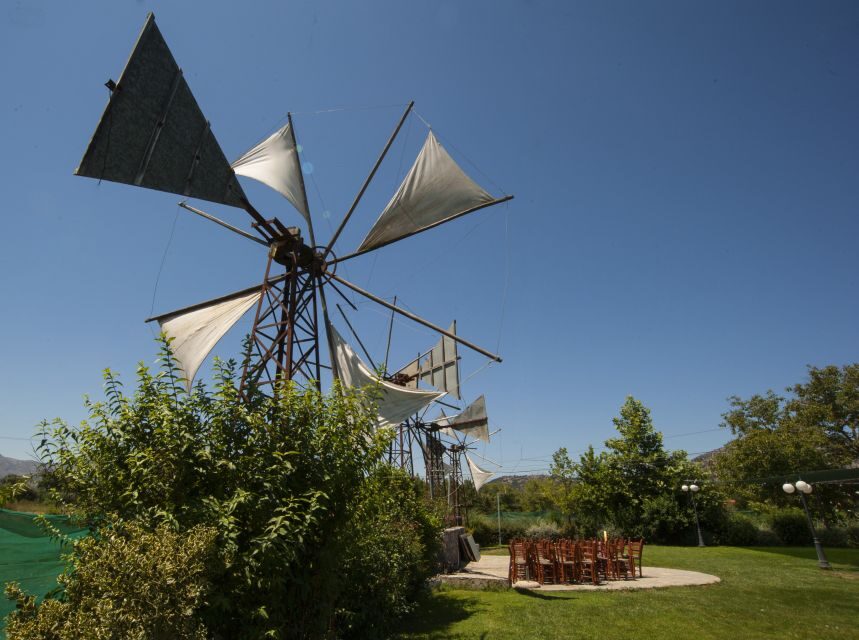
- Minoan windmills photo moment: the bus can’t stop at the peak, so you’ll be slowed for photos as you look out over the old windmill area.
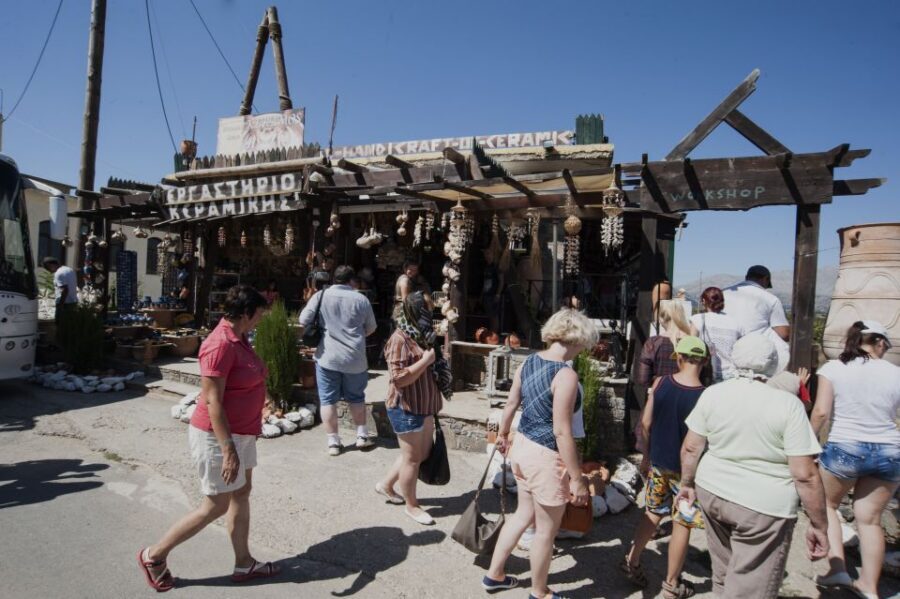
- Psychro pottery and local ceramics: the workshop is the kind of souvenir you’ll actually want, because you watch it happen.
- Tzermiado village time: traditional architecture and big views, with time to relax and eat at a local taverna.
- A guided day that saves you from logistics: round-trip transport with an experienced driver and live guide in English, French, and German.
How the day flows: bus time, stops, and why timing feels tight
This tour is built as a full loop out of the Heraklion area, with pick-up from multiple main-road spots (including Ammoudara, Stalida, Heraklion, Malia, Analipsi, Gouves, Kokkini Hani, and more). You’re on a modern air-conditioned bus, and you’ll get live guide interpretation during the ride.
The pacing is the point: you’re not trying to camp out on one view. You’re collecting several “this is why Crete matters” moments in one day—monastery art, plateau scenery, craft, and village life. That’s great for first-timers, but it also means you should expect shorter time windows than a DIY road trip.
Also, Crete roads can slow things down. There are no highways in the way you might expect on mainland Greece, so bus travel takes longer. Add traffic during pickup windows, and you’ll feel the 10-hour duration more than the marketing says.
You can also read our reviews of more tours and experiences in Heraklion Regional Unit.
Entering Panagia Kera Kardiotissa: monastery views and 14th-century icons
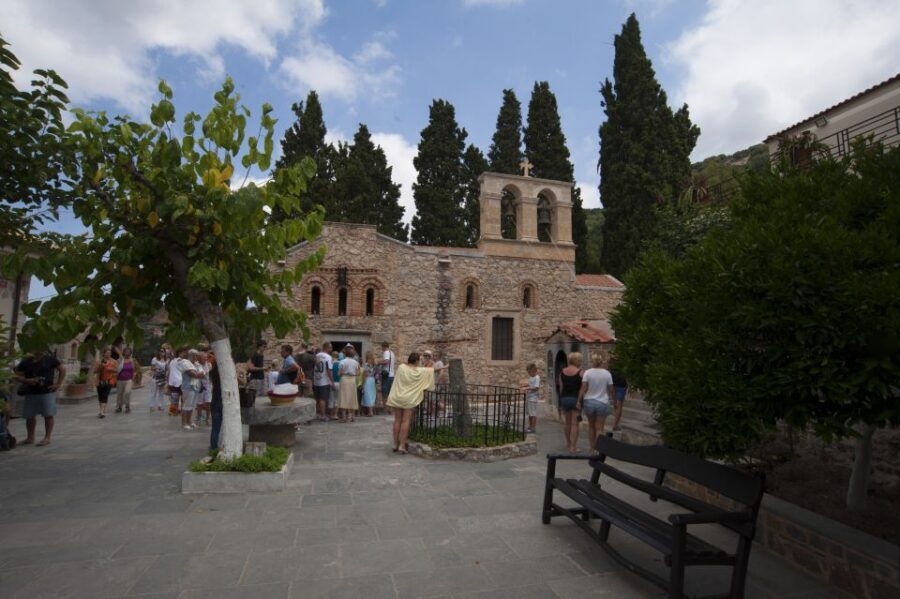
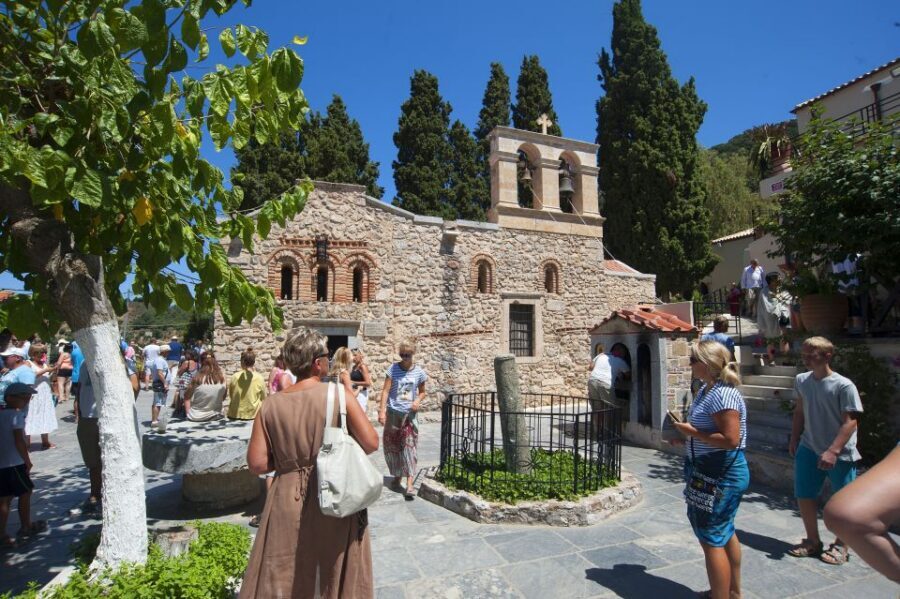
Your first real stop is the Panagia Kera Kardiotissa Monastery, run by nuns in a striking mountain setting. You’ll get time for sightseeing and free time, and you’ll see why people treat this place as more than a quick photo stop.
What I like here is the mix of art and atmosphere. You’re looking for the miraculous icon of the Virgin Mary, plus frescoes and icons dating back to the 14th century. The monastery setting also gives you a calm break from bus-and-sun-tour mode—quiet chapels, garden-like corners, and that slow “stand, look, and respect the space” rhythm.
One practical note: the monastery itself isn’t included, so budget for the entrance fee if you want to go in. You’ll also want to dress respectfully (shoulders covered is a good idea in many religious sites), because this is a living religious place.
Zeus-area connection: the steep climb to the cave and your best options
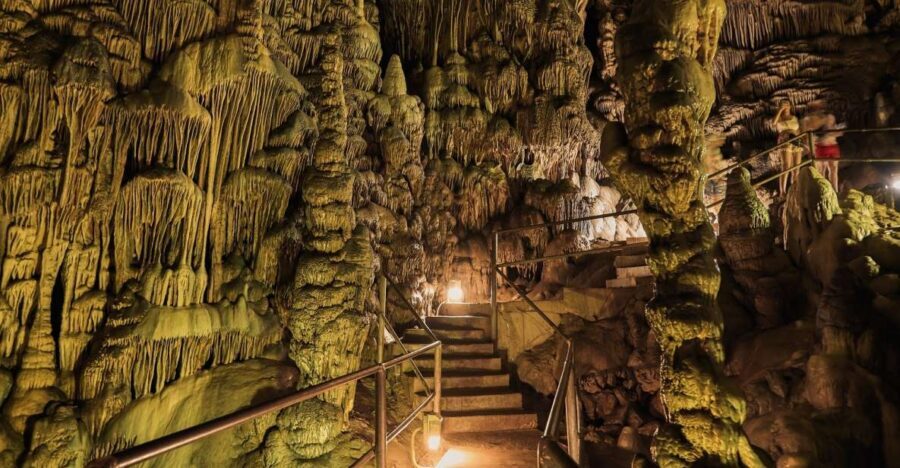
A big theme of the day is Zeus. The program’s Zeus connection is strongest around the area linked with Diktaion Cave (people call it the Cave of Zeus). Even if you’re not hunting every myth detail, the cave stop adds real drama to the day.
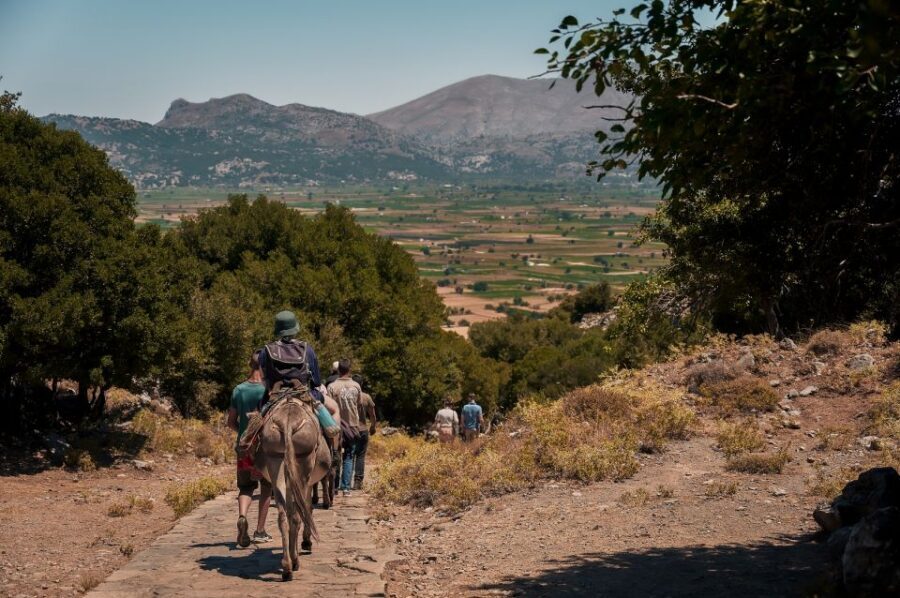
Here’s the practical part: from the car park it’s described as about a 15-minute walk up a steep path if you move fast, with lots of steps. On hot days, that effort adds up quickly—so wear shoes with solid grip.
You also have options. One cost detail that came up clearly: a donkey ride is available for about €10 each way. If you’re traveling with someone who wants to see the cave but can’t handle a steep walk, this option can be a lifesaver. If you’re eligible, the cave can be free for European citizens with a valid ID card under certain age conditions (under 25, over 65, or children). The exact rule is tied to your document, so bring ID.
Once you get inside, the cave experience is about scale and light. Reviews described it as big and well lit, which helps if you’re not into spelunking. The area around the cave also has spots for food and drink, so you can manage your timing without panicking.
The Lassithi Plateau at 800+ meters: windmills, ditches, and village life
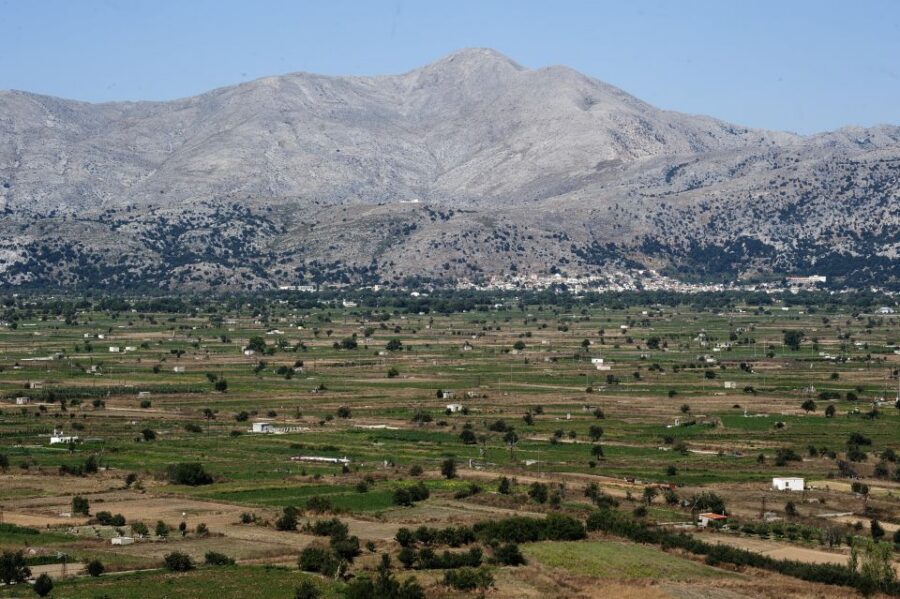
Then you hit Lasithi Plateau, and it feels like stepping into a different tempo. This is one of the few Mediterranean areas where people live at over 800 meters, surrounded by the Dikti Mountains.
You’ll hear about the legendary 10,000 windmills—a story tied to the plateau’s agricultural survival. You’ll also see the Venetian ditches, which were used to help drain the land. Even if you only get a few photo minutes here and there, it helps to know these features existed for a reason, not just decoration. They’re part of how this high plateau “worked.”
Photo tip: at the peak before the descent, you’ll spot the old windmill area (often described as the Minoan windmills). The bus can’t stop at that exact moment, but you’ll drive slowly so you can grab photos from the bus window and then slow down for a look when safe.
You’ll also get time on the plateau itself:
- A shorter window for sightseeing and shopping/arts & crafts style browsing
- A longer stretch later for lunch and free time
This is where the tour scores points for balance. You’re not sprinting nonstop; you get at least some room to look around, take in the calm, and enjoy the views for what they are—wide, quiet, and high.
Psychro: where Zeus gets linked with real craftsmanship
On the way through the plateau world, you’ll pass Psychro, known as the birthplace of Zeus. This isn’t just a myth label on a sign. Psychro is also tied to practical, everyday skill: handmade ceramics.
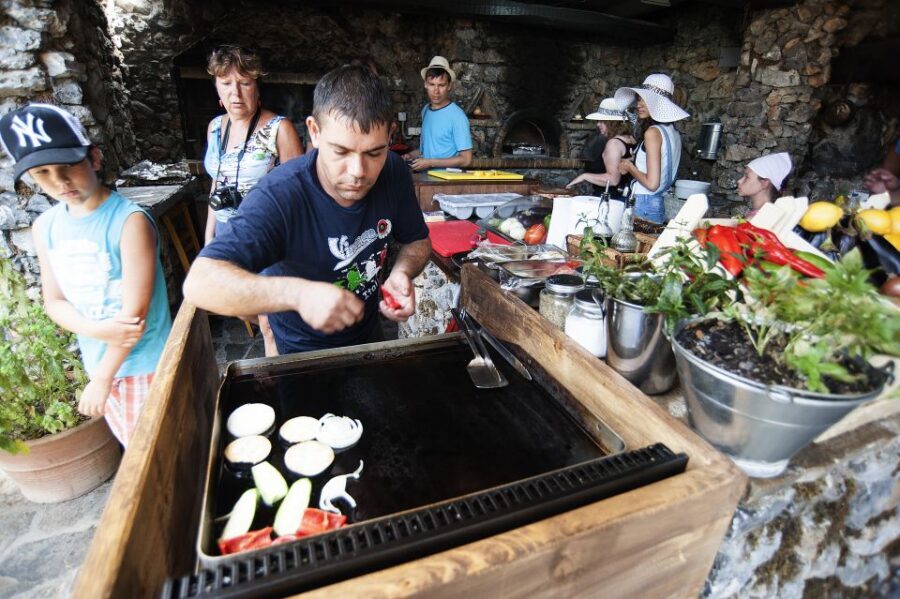
What I like about this stop is that it connects story to craft. You’re not buying souvenirs at a random stall and calling it cultural. Instead, you’ll visit a traditional pottery workshop, where you can see how ceramic making works—craft that’s rooted in the place, not imported for tourism.
You can treat this as a shopping moment, sure. But it’s more valuable as an “aha” moment: you understand why the ceramics look the way they do, and why people keep making them long after the first tourists arrived. If you want a Cretan souvenir that feels earned, this is the part.
Tzermiado for lunch: big views, old village bones, and a set-menu option
Your final village time is Tzermiado, the plateau’s capital and the biggest and oldest village on Lasithi Plateau. Expect traditional village architecture and photo-friendly viewpoints. The tour also gives you time to relax and enjoy the scenery.
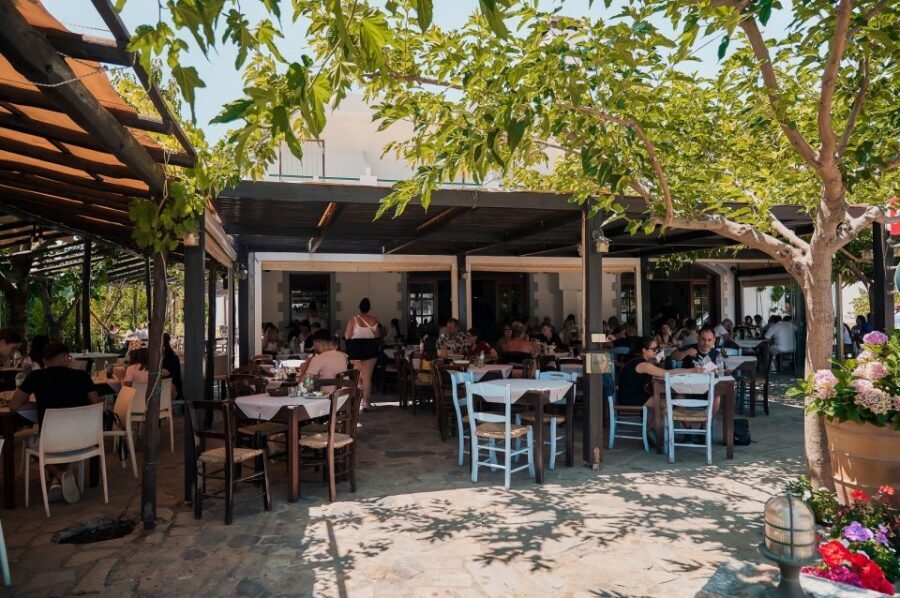
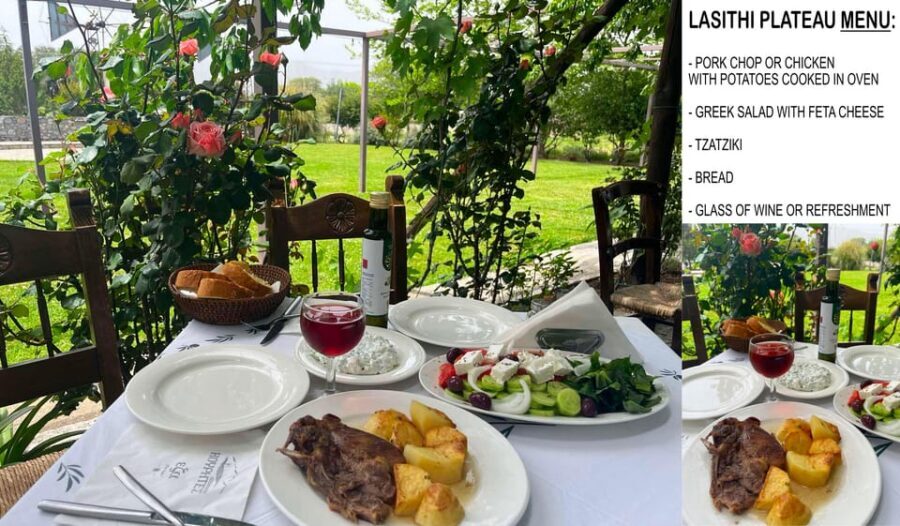
Lunch is where you’ll decide how adventurous you want to be. The tour mentions a taverna lunch with an option tied to a preorder system. There’s also a clear set menu described for an optional lunch package (cost listed as 14 euros): pork chop or chicken with potatoes cooked in the oven, Greek salad with feta, tzatziki, bread, and either a glass of wine or a non-alcoholic drink.
That’s a good value structure if you like straightforward choices and don’t want to hunt for a place while everyone waits. The trade-off is you’re working within the tour’s food plan, so you won’t have the full freedom to pick any menu item you want on the spot.
If you’re picky about food or have dietary needs, don’t guess. Use the ordering info you’re given and check what’s included before you commit.
The ride experience: why the driver and air-con matter in Crete
This kind of day lives and dies by transport quality. One detail that came up strongly in experience ratings: the coach is clean and the air conditioning works. On Crete in warm weather, that can be the difference between a day that feels smooth and a day that feels like you’re being cooked.
The roads also matter. Mountain driving here means hairpin bends and slow climbs, and you need a driver who handles it confidently. The tour’s experienced driver component isn’t marketing fluff. It affects how tired you feel before your stops, especially if you have walking plans later.
Another practical thing: the pickup/drop-off is partly from exits of hotels off the main road. That helps convenience, but it can also stretch total travel time. If your accommodation is not directly on a main road, build in extra buffer and expect the schedule to breathe a little.
Price and value: what $44 gets you, and what it doesn’t
The price is listed at $44 per person for a 10-hour guided day. For that cost, you’re paying for:
- Round-trip transportation on a modern air-conditioned bus
- A live guide
- A full set of scenic and cultural stops across the Heraklion area
- Basic logistics support (pickup and drop-off coordination)
- Taxes and fees
What’s not included:
- Entrance fee to the Kera Monastery
- Lunch and drinks (with lunch described as an optional set-menu at 14 euros)
- Some extra items connected to meals (wine vs non-alcoholic is included only in the set option)
Is it a bargain? For a day that mixes monastery + plateau + craft + a Zeus-linked cave area (with optional donkey help), $44 can be solid—especially if you don’t want to rent a car or deal with parking and timing on mountain roads. If you’re the type who hates preset lunch menus, then the value depends on how you handle that decision.
Who should book this tour (and who should skip it)
I think this tour fits best if:
- You want one organized day that hits several big Crete highlights without renting a car
- You like a mix of myth + real-world craftsmanship
- You’re okay with walking stairs/steep paths in mountain air (and bringing good shoes)
It may not fit you if:
- You need step-free options. The tour is not suitable for people with mobility impairments.
- You dislike guided group pacing and would rather spend longer in just one place (like only the monastery, or only the plateau villages).
If you’re traveling as a couple, this is also a good “first Crete day” plan. You get context fast, and it helps you decide what you want to explore slower later.
Should you book the Lassithi Plateau & Kera Monastery tour with ceramics?
If your goal is to see Cretan variety in a single day, I’d say yes—especially for first-timers around Heraklion. The standout strengths are the Kera Monastery (nuns, iconic art, quiet atmosphere), the Lasithi Plateau high-altitude feel with windmill history and ditches, and the chance to visit a pottery workshop tied to Psychro’s culture.
Think twice only if you’re very sensitive to long drives, or if the idea of a set-menu lunch option sounds restrictive. If you’re flexible and comfortable on your feet, you’ll walk away with more than photos—you’ll have a chain of places that actually connect myth, craft, and daily life on Crete.
FAQ
FAQ
Is the Kera Monastery entrance included in the tour price?
No. The tour price includes the guided experience and transport, but the entrance fee to Kera Monastery is not included.
What’s included with lunch, and is it optional?
Lunch and drinks are not included by default. You have an optional 14-euro meal option with a set menu (pork chop or chicken with potatoes, Greek salad with feta, tzatziki, bread, and either a glass of wine or a non-alcoholic drink). The meal selection is described as needing preorder.
How long is the tour day?
The duration is listed as 10 hours.
Where does the tour pick up and drop off?
Pick-up and drop-off are listed from main road areas across the Heraklion region, including places like Ammoudara, Stalida, Heraklion, Malia, Analipsi, Gouves, Kokkini Hani, and others. The exact pickup time is communicated by the operator the previous day.
What language is the guide available in?
The live tour guide is available in English, French, and German.
Who shouldn’t book this tour?
The tour is not suitable for people with mobility impairments.