REVIEW · PIRAEUS
From Piraeus: The Best Athens Small-Group Shore Excursion
Book on GetYourGuide →Operated by Vexperio · Bookable on GetYourGuide
Athens packs an astonishing amount into six hours, and this shore excursion gives you a useful first look without making you wrestle with port taxis or city traffic alone. You’ll see the Acropolis, the Panathenaic Stadium, Syntagma Square, Monastiraki, and Plaka, with port pickup and return built into the day.
I like the small-group minibus, which keeps the outing more personal than a large coach tour, and I like the practical route through both ancient sights and lived-in neighborhoods. The main caution is the Acropolis itself: steep steps, slippery marble, and summer heat make it a demanding stop for anyone with limited mobility.
In This Review
- Key points to know before booking
- Why this Athens shore trip works well
- Meeting your minibus at Piraeus
- Piraeus harbors and the road into Athens
- The Panathenaic Stadium and ancient athletic life
- Entering the Acropolis and facing the climb
- Areopagus Hill and the Herodion alternative
- Syntagma Square and the changing guards
- Neoclassical Athens by minibus
- Monastiraki for food and shopping
- Plaka at the foot of the Acropolis
- Guides, group size, and the value of the service
- Who should book this six-hour Athens outing
- Should you book it?
- FAQ
- Where does the tour begin?
- Where does the tour end?
- How long does the excursion last?
- Is the Acropolis entry ticket included?
- Can I visit the Acropolis independently?
- What can I do if I cannot manage the Acropolis climb?
- How many people are in each group?
- Is transportation included?
- What happens if my ship cannot dock?
Key points to know before booking
- The Acropolis visit is optional in practice: Your guide walks you to the entrance, but you explore the site independently after that.
- Port logistics are handled: Meet the VEXPERIO team outside your ship’s Terminal A, B, or C, then return to the same meeting point.
- The route mixes famous sights with city life: Ancient temples share the day with Monastiraki’s shops and Plaka’s narrow streets.
- The maximum group is fairly modest: Round-trip tours allow up to 19 people per guide, while disembark tours allow up to 15.
- The entry ticket costs extra: Budget another 30€ per person for the Acropolis.
- A guide and driver can make the difference: Evangello has been singled out for entertaining commentary and photography, while Paul was praised for safe driving.
Why this Athens shore trip works well
A cruise stop in Piraeus gives you a narrow window for Athens. You need to reach the city, see enough to make the trip worthwhile, and return to the ship on time. This tour is built around that problem.
The six-hour schedule does not try to turn Athens into a full archaeological survey. Instead, it gives you the major symbols first, then leaves room for streets, shops, food, and people-watching. That balance is sensible. The Acropolis explains the city’s ancient importance, while Monastiraki and Plaka show you how Athens feels today.
At $123 per person, the price is not bargain-basement. Still, it includes transport from the port, an English-speaking local guide, a modern air-conditioned minibus, a bottle of water, and a guaranteed return to the ship on time. If you would otherwise pay for a taxi, arrange a separate guide, and worry about port traffic, the package can make good financial sense.
The extra Acropolis ticket matters. Add 30€ per person to the advertised cost if you plan to enter. You can still follow the guide to Areopagus Hill and see the Acropolis from outside if you decide the ticket or the climbing is not right for you.
You can also read our reviews of more tours and experiences in Piraeus.


Meeting your minibus at Piraeus
Your ship may dock at Terminal A, B, or C. After leaving the ship, stay at the entrance to your assigned terminal. Look for a team member holding a VEXPERIO sign with your name.
This is a small but important detail. Piraeus is a working port, not a single tidy arrival plaza. Staying at the correct terminal entrance saves time and avoids the usual shore-excursion confusion.
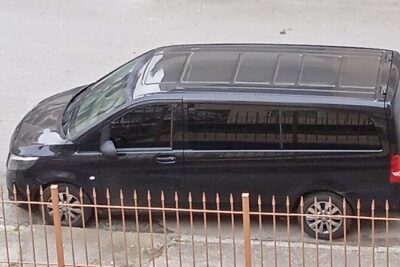
You’ll ride in a modern, air-conditioned minibus. That matters during Athens’ hot months, especially after a long walk on exposed stone. The round-trip version allows up to 19 people per guide. That is smaller than a standard cruise bus, though it is not an intimate private tour. A private group is available if you want more control over the pace.
The company sends final joining instructions a few days before the outing. Check your inbox before leaving the ship, and pay attention to any timing update. If your ship is delayed, the tour start is postponed to match the docking schedule.
Piraeus harbors and the road into Athens
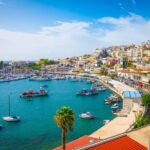
The first part of the ride gives you a quick look at Piraeus, Greece’s main port city. The route passes harbors lined with yachts and sailing boats, offering a glimpse of the area’s long connection with the sea.
If traffic allows, the driver may stop for photographs. Treat this as a bonus rather than a promise. Athens traffic can easily change the timing, and the tour’s main purpose is to get you through the city and back to the ship safely.
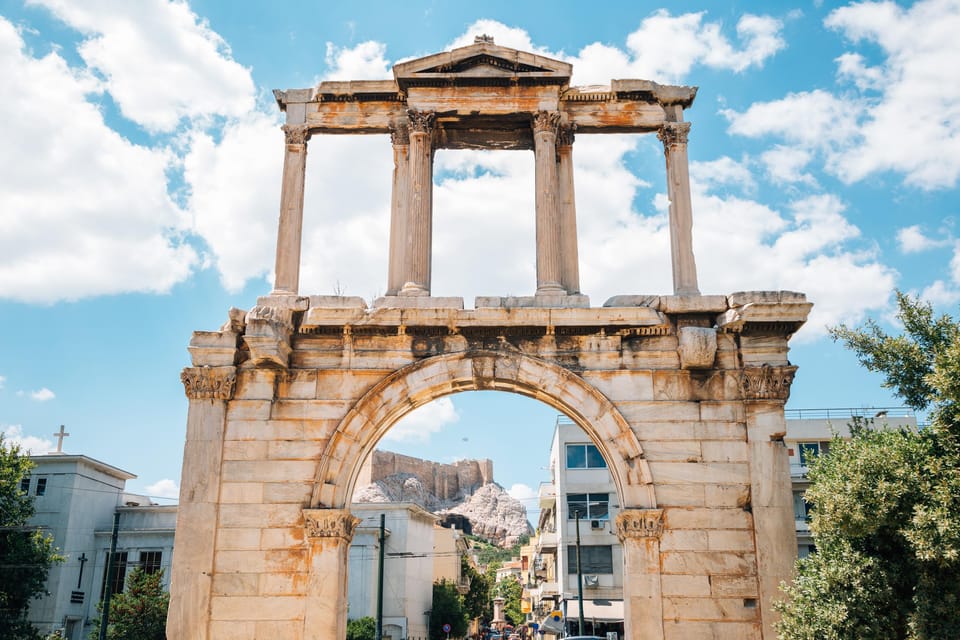
The minibus then passes several important sights. You’ll see the Temple of Olympian Zeus, marked by its huge Corinthian columns, and the Arch of Hadrian, a monumental gateway built in honor of Emperor Hadrian. These are drive-by or brief-stop highlights, so you should not expect a long archaeological visit at each one.
That is one of the trade-offs of a six-hour port tour. You get a broad introduction, but some sights are viewed from the vehicle or handled as short photo stops. If you want lengthy time at every monument, a private full-day itinerary would be a better fit.
The Panathenaic Stadium and ancient athletic life
The Panathenaic Stadium is one of the most rewarding short stops because its shape is easy to understand at a glance. Built almost entirely of white marble, it recalls the Panathenaic Games and Greece’s athletic traditions.
The stadium also connects ancient Athens with the modern Olympic story. You can take in the sweeping seats and long track without needing a lengthy explanation to appreciate the setting.
Your time here will be limited, but the stop gives you a different view of Athens from the Acropolis. Instead of temples and religious ceremonies, you’re looking at public sport and civic celebration. It helps make the ancient city feel less like a collection of ruins and more like a place where people gathered for shared events.
Bring your camera, but keep an eye on the clock. The day includes several short stops, and the city’s traffic can eat into the schedule.
Entering the Acropolis and facing the climb
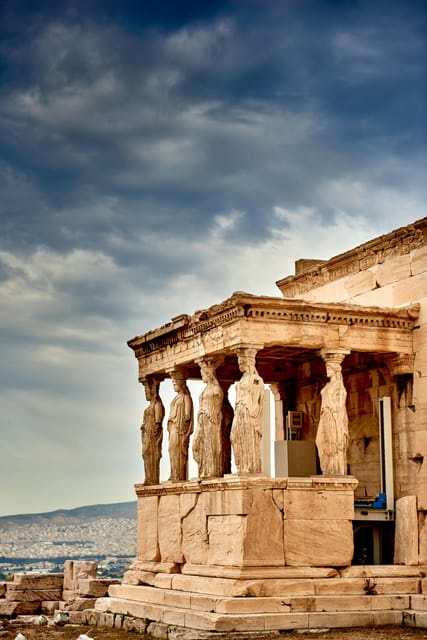
The Acropolis is the centerpiece of the day. Your guide escorts you to the entrance, then you explore the UNESCO World Heritage Site independently. The Parthenon is the obvious prize, but the wider hill and its other monuments make the visit more than a single-building photo stop.
You should plan for serious walking. The entrance includes 75 steps, followed by uneven and sometimes slippery marble paths. The site can be especially strenuous in summer, when heat and crowds add pressure. Wear sturdy shoes and carry the complimentary bottle of water, though one bottle may not be enough for everyone in hot weather.
The independent portion has both advantages and limits. You can move at your own pace and focus on the monuments that interest you most. On the other hand, you will not have the guide beside you for every explanation inside the site, so listen carefully before entering and confirm the regrouping plan.
The Acropolis entry ticket is not included. It costs 30€ per person according to the supplied tour details. That separate charge can affect the value calculation, especially for families or larger parties.
If you have limited mobility, do not treat the Acropolis as a casual stroll. The tour specifically says it is not suitable for people with mobility impairments or wheelchair users. Mobility scooters, non-folding wheelchairs, and electric wheelchairs are not allowed.

Areopagus Hill and the Herodion alternative
If the Acropolis climb is not practical, follow the guide to Areopagus Hill. From here, you’ll get broad views toward the Acropolis and across Athens while learning about the city’s past.
Areopagus is not a substitute for walking through the Acropolis, but it is a smart alternative. You still see the Parthenon from a strong viewpoint, and you avoid committing to steep steps and uneven stone. Ask about the walking surface before choosing your route.
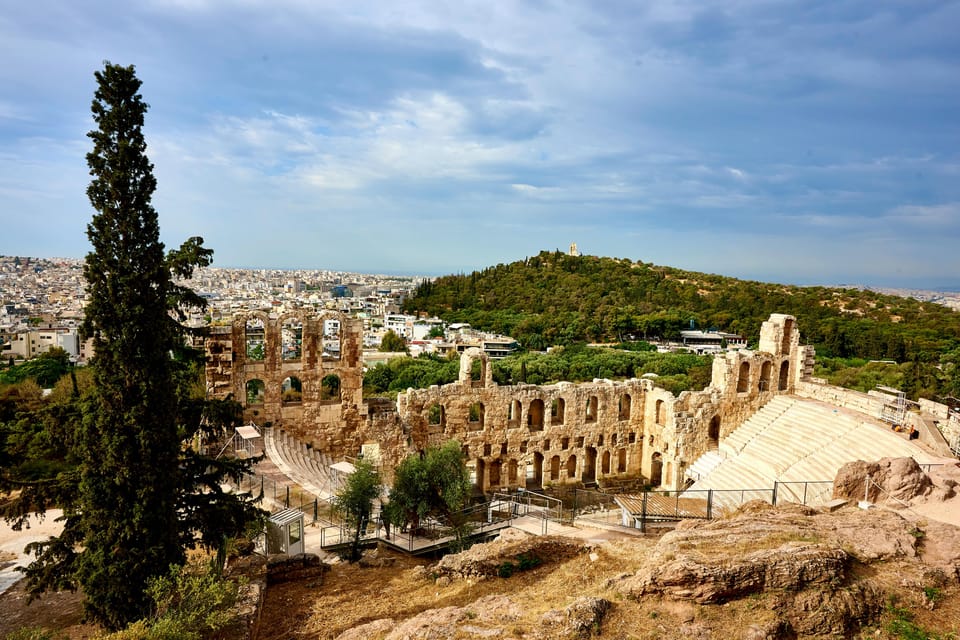
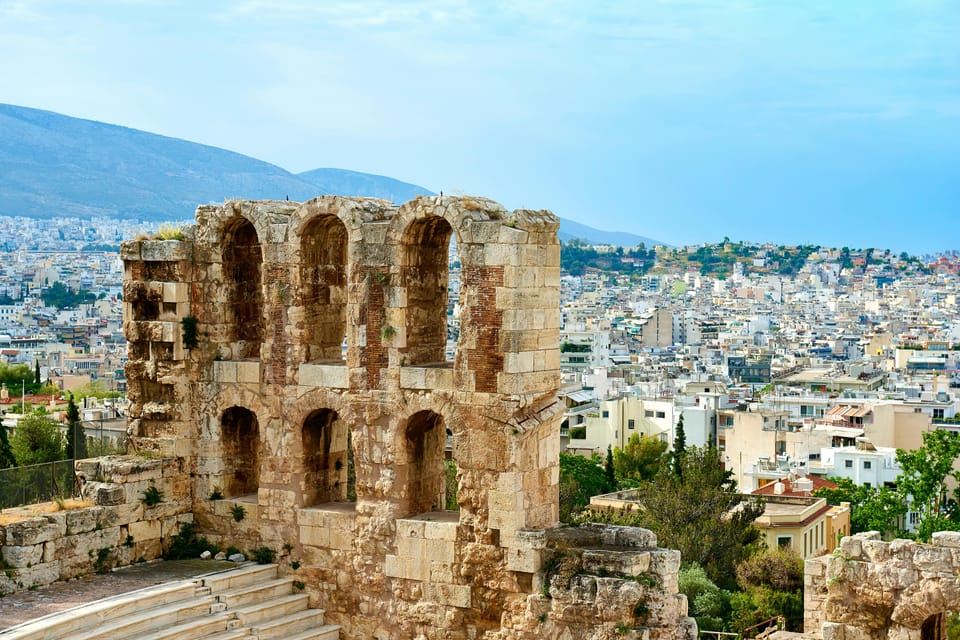
Nearby, the Odeon of Herodes Atticus, often called the Herodion, adds another memorable ancient sight. This stone theater is a dramatic reminder that Athens’ old monuments were built for music, speeches, and public gatherings, not just for looking at from a distance.
The alternative route also helps keep the group together. People who choose not to enter the Acropolis can spend meaningful time in the same historic area rather than waiting without a plan.
Syntagma Square and the changing guards
After the Acropolis area, the tour regroups and continues to Syntagma Square, the broad civic center in front of the Hellenic Parliament. Here you have the chance to see the famous changing of the guard ceremony.
The ceremony is one of Athens’ most recognizable public traditions. It is worth seeing, but timing matters. The itinerary gives you the chance to witness it, not a guarantee that the formal change will take place during your exact stop. Traffic and the ship’s schedule shape the day.
Syntagma also gives you a useful look at modern Athens. The square is not simply a backdrop for photographs. It is a central public space, and the Parliament building links present-day Greek government with the national identity represented by the guards.
Your guide can help you position yourself and explain what you’re seeing. Stay close and listen for instructions, since the stop is likely to be short.
Neoclassical Athens by minibus
The route also passes the University of Athens, the National Library, and the Academy of Athens. These neoclassical buildings give the city a different face from the ancient temples.
The Academy is especially photogenic, with statues of famous philosophers placed outside. Photo stops may happen if traffic permits. Again, think of these buildings as a moving introduction rather than a formal architectural tour.
I like this part of the route because it prevents the day from becoming ancient-site overload. Athens is not only columns and archaeological stones. Its later public buildings show how Greece has used classical ideas in its modern national image.
If you are interested in architecture, sit where you can see out the windows and keep your camera ready. The minibus may not stop for long, but even a passing view adds context to the city.
Monastiraki for food and shopping
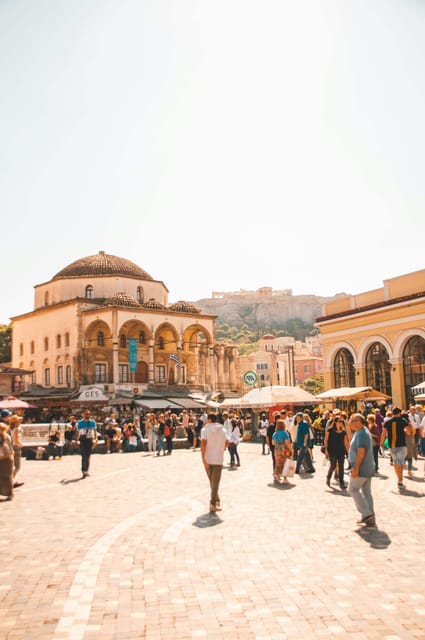
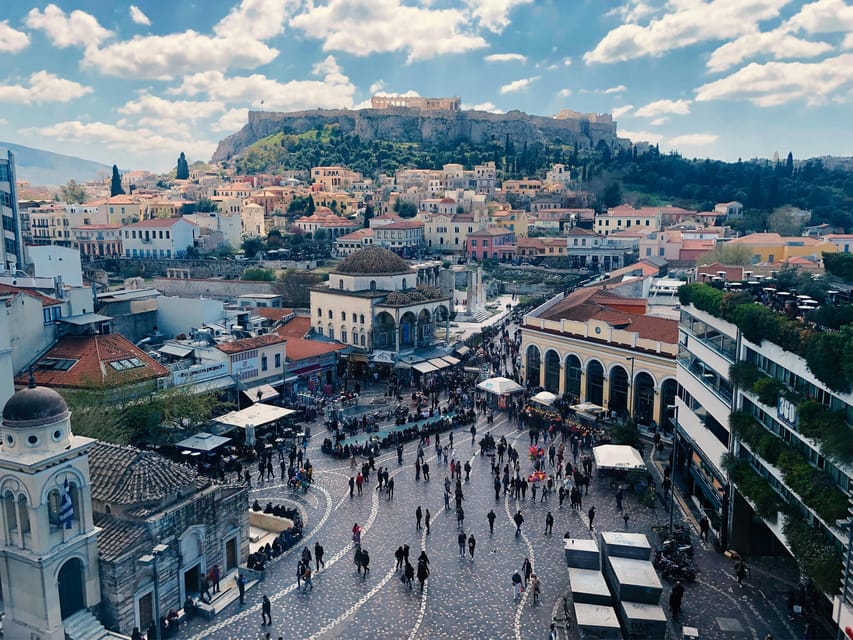
Monastiraki is where the pace changes. The square and surrounding streets are known for traditional shops, markets, cafés, restaurants, crafts, and souvenirs.
You’ll have free time here for a quick meal and shopping. This is not enough time for a slow restaurant experience, so choose something simple and keep the return time in mind. Greek food is part of the pleasure of being in Athens, but a long lunch could put pressure on the rest of the itinerary.
The shopping can be appealing if you want a small reminder of the city. You might find handmade crafts and other souvenirs, but compare prices and avoid letting browsing swallow the afternoon. The point is to get a taste of Monastiraki’s character, not to conduct a full shopping expedition.
This stop is valuable because it puts the monuments into a living city setting. You can have a coffee, look through shop windows, and see Athens as a place where people work, eat, and meet, not just as an open-air museum.
Plaka at the foot of the Acropolis
Plaka is the final neighborhood stop before returning to Piraeus. Often called Athens’ Old City, it lies beneath the Acropolis and is known for narrow lanes, traditional architecture, small shops, and a relaxed feel.
I would save a little energy for Plaka. After the Acropolis, it is a gentler way to finish the city visit. You can stroll, take photographs, and look for a quiet corner without the pressure of another major monument.
The neighborhood is also useful for anyone who wants atmosphere more than a checklist. The ancient stones are the headline, but Plaka helps you sense the scale of old Athens at street level.
Time is still limited. You should not expect to explore every lane or settle into a long meal. Use the stop for a short walk and a final coffee or souvenir, then return promptly to the agreed meeting point.
Guides, group size, and the value of the service
A good guide matters on a compressed Athens outing. You need clear directions, sensible timing, and enough context to make the ruins meaningful without turning every stop into a lecture.
Evangello is the guide name associated with especially strong feedback for this experience. He is described as entertaining, helpful with photographs, and well informed about the city’s monuments. Driver Paul is praised for making passengers feel safe. Guide quality can vary by date, but those details show the kind of service to hope for.
The group limits are reasonable for a port excursion. Up to 19 people per guide on the round-trip tour means you may not get constant personal attention, but the group should be easier to manage than a large coach party. The disembark version is limited to 15 people per guide and includes storage for one piece of luggage per person.
If you have more than one piece of luggage, contact the operator before booking. That detail applies to the disembark option and could save you a problem at the port.
The excursion includes 24-hour customer support and help with other arrangements or tours. You also receive one bottle of water per person. These are modest inclusions, but they are useful on a tightly timed day.
Who should book this six-hour Athens outing
I would recommend this tour to cruise passengers who want the major Athens sights without arranging transport themselves. It suits first-time visitors who want a guided overview, a chance to enter the Acropolis, and a little free time in Monastiraki and Plaka.
It is also a good choice if returning to the ship on time is your main concern. The tour is designed around cruise docking times, and the operator guarantees the return to the ship. That peace of mind has real value in Piraeus.
You should think twice if you want a slow archaeological day. The schedule covers a lot of ground, and some attractions are brief photo stops or drive-bys. A private group would give you more control, but the price and pace may change.
The tour is not suitable for babies under one year, wheelchair users, or people with mobility impairments. If you can walk comfortably but want to avoid the Acropolis steps, the Areopagus and Herodion option gives you a more manageable way to enjoy the area.
Free cancellation is available up to 24 hours before departure, and you can reserve now and pay later. Those terms help if your cruise plans are still shifting.
Should you book it?
Book this excursion if you want an efficient first taste of Athens, especially the Acropolis, and you value a planned port return more than a leisurely schedule. The combination of ancient landmarks, Syntagma Square, Monastiraki, and Plaka gives you a broad sample of the city in one day.
Before paying, add the 30€ Acropolis ticket to the $123 tour price and decide if the physical demands suit you. If you can manage the climb and want a reliable shore-day framework, this is a practical choice. If you prefer long museum visits, extended meals, or complete control over the route, choose the private option or arrange a slower day.
FAQ
Where does the tour begin?
Meet the VEXPERIO team at the entrance of your ship’s assigned terminal, A, B, or C, after disembarking. Look for a sign with VEXPERIO and your name.
Where does the tour end?
The tour ends back at the meeting point at your cruise terminal.
How long does the excursion last?
The excursion lasts six hours. Starting times vary, so check availability for the schedule connected to your ship.
Is the Acropolis entry ticket included?
No. The Acropolis ticket costs 30€ per person and is paid separately.
Can I visit the Acropolis independently?
Yes. Your guide escorts you to the entrance, and you can then explore the Acropolis independently.
What can I do if I cannot manage the Acropolis climb?
You can follow the guide to Areopagus Hill for views of the Acropolis and Athens. The nearby Odeon of Herodes Atticus is another highlight in the area.
How many people are in each group?
The round-trip tour allows up to 19 people per guide. The disembark tour allows up to 15 people per guide. A private group is also available.
Is transportation included?
Yes. You ride in a modern, air-conditioned minibus, with pickup and drop-off at the port.
What happens if my ship cannot dock?
You receive a full refund if your ship cannot dock. You can also cancel up to 24 hours in advance for a full refund.