Athens reveals itself best on foot, where a grand monument can sit beside a café, market lane, or ordinary city street. This private two-hour walk links the Acropolis area, Areopagus Hill, the Agora, Roman Forum, Monastiraki, and Plaka without taking you inside the monuments.
I like the personal format, since only your group participates, and I like the guide’s focus on both ancient sites and present-day Athens. You also get practical suggestions for places to eat and drink. The main caution is that the tour may not deliver much beyond basic site information: one guest found the guide kind and engaging but felt the promised humor and unusual facts were limited.
In This Review
- Key points to know before booking
- Why this Athens walk can be useful early in your stay
- Starting near the Acropolis metro station
- Areopagitou Street and the Acropolis Museum exterior
- The Areopagus Hill view
- Ancient Agora and the Roman Forum
- Monastiraki Square and the shift to modern Athens
- Plaka, the Neighborhood of the Gods
- Finishing around Makrygiani Street
- What $40.55 per person buys you
- Who should book this private Athens walk
- Should you book Highlights and Hidden Gems of Athens?
- FAQ
- How long does the Athens tour last?
- Where does the tour start?
- Where does the tour end?
- Does the tour enter the Acropolis or other monuments?
- Are admission tickets included?
- Is this a private tour?
- Is a mobile ticket available?
Key points to know before booking

- A private walk through central Athens: Your group has the guide to itself, which makes questions and pacing easier.
- More than 15 archaeological sites and monuments: You see major landmarks across the historic center, but you do not enter them.
- A strong photo stop at Areopagus Hill: The rocky hill gives you broad views around the Acropolis area.
- Local food and café advice: The guide offers suggestions for dining and other things to do during your stay.
- A useful first-day orientation: The route connects several central neighborhoods and landmarks in two hours.
- Basic admission is not part of the price: At $40.55 per person, the value depends on how much context and personal advice you want.
Why this Athens walk can be useful early in your stay
This experience works as a quick introduction to Athens rather than a full archaeological visit. In two hours, you move through the city’s central historic zone and get a sense of how the Acropolis, ancient civic spaces, shopping areas, and residential lanes fit together.
The tour is led by an accredited archaeologist, which gives it a stronger foundation than a simple orientation walk. The guide is expected to explain myths and facts connected with the monuments, while also talking about modern Athens, local habits, places to eat, and current city talk.
That mix is the main reason to consider it. You are not choosing between an ancient-history lesson and a modern city walk. You get some of both, though the short duration means neither subject can receive great depth.
The private setup is another advantage. Your group is the only group taking part, so you can ask questions about a site, pause for photographs, or request more advice about food and nightlife. The value is less about admission savings and more about having someone help you make sense of the center before exploring on your own.
Still, keep your expectations measured. This is a walking tour around the monuments, not an inside visit to the Acropolis, the Acropolis Museum, the Ancient Agora, or the Roman Forum. You will need separate tickets if you want to enter those places.
You can also read our reviews of more tours and experiences in Athens.


Starting near the Acropolis metro station
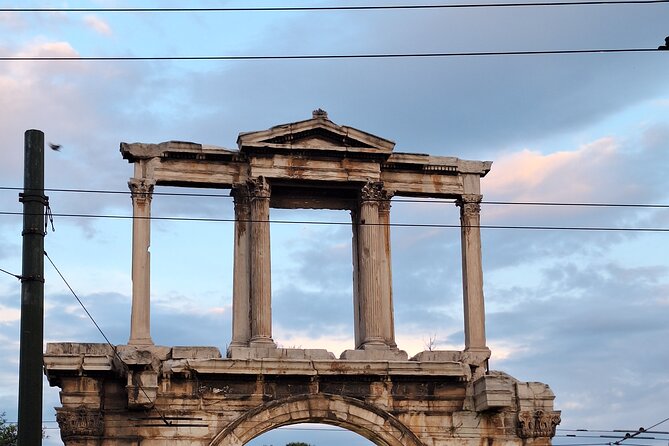
The meeting point is in the Acropolis area, at Acropoli, Athens 117 42, Greece, in front of the metro station. That is a practical place to begin because it puts you close to the city’s most famous archaeological sights and near public transportation.
Starting here lets the guide establish the setting quickly. You are already in the zone where modern Athens and ancient Athens overlap. From this point, the route moves toward Areopagitou Street, the broad pedestrian promenade beside the Acropolis.
Because the walk lasts about two hours, wear comfortable shoes and arrive ready to keep moving. The route includes streets, plazas, and the rocky surface of Areopagus Hill. The tour is open to most participants, and service animals are allowed, but the information does not promise a fully step-free route.
Areopagitou Street and the Acropolis Museum exterior
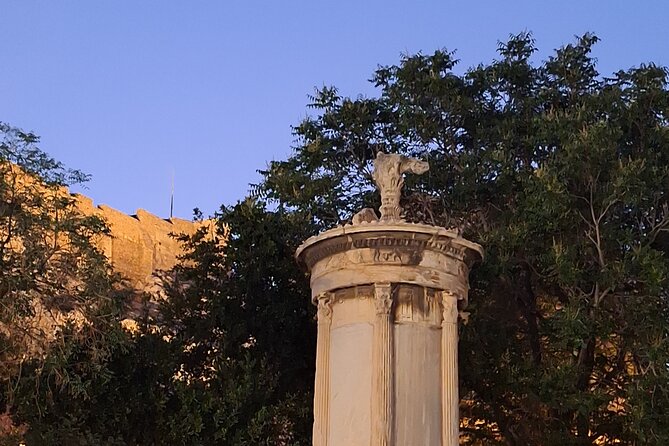
Areopagitou Street is one of the visual highlights of the walk. It is described as one of Athens’s most scenic pedestrian routes, and it gives you a pleasant way to approach the Acropolis area without dealing with regular traffic.
Along the way, you see the New Acropolis Museum from outside. The museum is one of the city’s major cultural landmarks, but this tour does not include entry. That distinction matters. If the museum is high on your list, treat this walk as a preview and schedule a separate visit.
The benefit of seeing it with an archaeologist is context. Instead of simply passing a modern building, you can ask how it relates to the ancient monuments nearby and how it fits into a visit to the Acropolis area. The guide may also help you decide how to organize your own museum visit, though the exact depth of that explanation depends on the person leading your tour.
The route also approaches the Odeion of Herodes Atticus. This ancient theater is another major sight connected with the Acropolis, and its exterior gives the walk a strong early focus. You get the setting, the architecture, and the historical frame without spending time in a ticket line.
The Areopagus Hill view

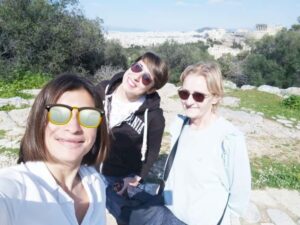
Areopagus Hill is likely the best stop for photographs. It is presented as the site of the ancient world’s oldest law court, and its high position gives you a broad view of the surrounding city.
This stop adds variety to the walk. You are not only looking at ruins from street level. You climb onto a rocky vantage point and see how the historic center spreads around the Acropolis. The view helps you understand the closeness of the main sites, which can be hard to grasp from a map.
Take care on the uneven rock. The supplied details do not promise special assistance or a smooth path, so choose footwear with a secure sole. If you have limited mobility, ask before booking whether the route suits you.
The hill is also a natural place to ask questions. You might find the guide’s explanation of Athenian law, myths, and civic life more useful here than in a crowded square. But the one detailed comment about the experience raises an important point: the advertised promise of unusual facts and humor may not always be fully met. You should expect a pleasant and informative introduction, not a guaranteed stream of surprising discoveries.
Ancient Agora and the Roman Forum
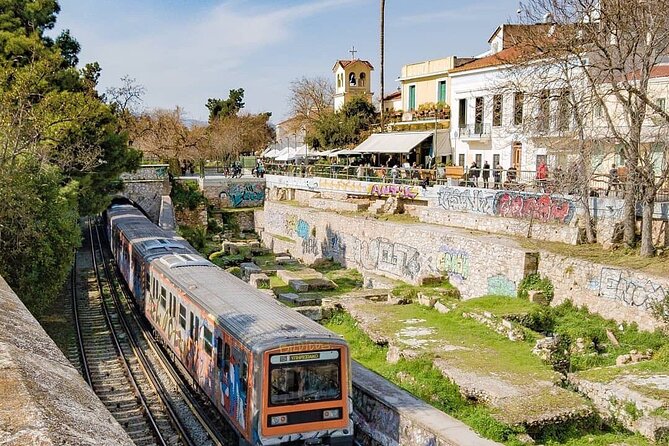
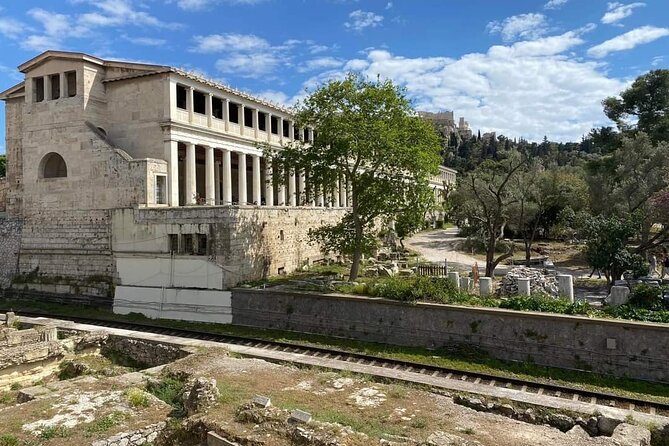
The route continues through the heart of ancient Athens, including the Ancient Agora and the Roman Forum. These sites help show how the city worked as a place of public life, government, trade, and Roman administration.
You approach these places rather than entering them. That keeps the tour moving, but it also limits what you can see. From outside, the guide can point out the main remains and explain their role. You will not get the slower, closer look that comes from walking through the archaeological grounds with an admission ticket.
This is where the tour’s value depends most on the guide. A skilled explanation can make a street corner or distant ruin meaningful. A short, general description may leave you wanting more. Since one detailed assessment found the information fairly basic, I would book this tour for orientation and conversation rather than for specialist archaeological study.
If you plan to visit the Agora separately, this walk can help you recognize it and decide how much time to allow. If you only have a short stay in Athens, seeing the exterior with a guide may be a reasonable compromise, but it does not replace entering the site.


Monastiraki Square and the shift to modern Athens

Monastiraki Square changes the tone of the walk. After the ancient monuments and formal archaeological spaces, you reach a lively central area associated with shopping, street life, and everyday Athens.
This part helps fulfill the tour’s promise to connect ancient and modern Greek culture. You are no longer looking only at ruins. You are seeing how the historic center functions now, with cafés, shops, transport links, and people moving through the same area that has drawn residents for centuries.
The guide is also expected to discuss current city trends and local places to eat and drink. That advice could be especially useful if Athens is your base for several days. Ask for specific recommendations based on the kind of meal or café you want, since general suggestions are less useful than a clear neighborhood or street.
Do not expect a dedicated food tour. Dining advice is included as part of the conversation, not as a series of tastings or restaurant visits. You pay for the guide’s recommendations, not for food or drinks during the walk.
Plaka, the Neighborhood of the Gods
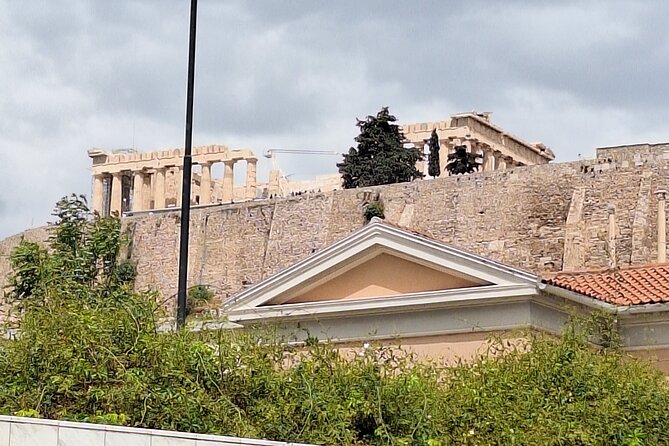
From Monastiraki, the route reaches Plaka, often called the Neighborhood of the Gods. Its narrow streets and historic setting offer a softer finish than the large archaeological sites.
Plaka is a good place to hear about the city as a lived-in place. The guide can point out tucked-away corners and explain how the neighborhood fits into the historic center. You may also get suggestions for cafés and restaurants to try after the tour.
This is the part most likely to satisfy someone looking for atmosphere rather than a formal lecture. It is also the part where expectations need care. The tour description promises local corners and a funny approach, but the detailed feedback available describes the guide as pleasant and engaging while finding the humor and unusual content less convincing.
That does not make Plaka a poor stop. It simply means your experience may feel more like a standard Athens introduction than a sharply original walk. If you already know the center well, the route may not offer enough new material.
Finishing around Makrygiani Street
The stated route finishes on Makrygiani Street, close to the Acropolis metro station. This is a useful ending point because you are near cafés and familiar restaurants, with easy access to continue sightseeing or return by public transportation.
The tour details also state that the activity ends back at the meeting point, so confirm the exact endpoint when you receive your booking information. The two descriptions point to the same Acropolis area, but a precise meeting and end location is worth checking, especially if you have a timed museum visit afterward.
Finishing near food options is practical. You can use the guide’s recommendations immediately instead of trying to remember them later. It also makes the walk a sensible choice before an evening meal, though no restaurant visit is included.
What $40.55 per person buys you
At $40.55 per person, this is not an admission package. No museum or monument ticket is included, and you do not go inside the sites. The price pays for a private, two-hour guided walk with an accredited archaeologist, plus advice about restaurants, cafés, and other activities.
That can be fair value for a small group that wants a personal introduction to Athens. A private guide is more useful when you have specific questions or want advice shaped around your stay. It is also a good fit if you prefer a short walk that covers many landmarks rather than spending half a day inside one archaeological site.
The value is weaker if you mainly want access to the Acropolis or the museum. You will still have to buy those tickets separately, and the tour does not provide a substitute for exploring the interiors.
The experience has an average rating of 3.5 from two submitted scores, so there is not enough evidence to treat it as a sure thing. The strongest positive point is the guide’s personal manner: kind, engaging, and pleasant. The clearest weakness is that the information may remain at a basic level and may not include as many fresh facts or jokes as promised.
Who should book this private Athens walk
I would consider this tour if you want:
- A compact first look at Athens’ historic center
- A private guide instead of a large group
- A mix of ancient monuments and present-day neighborhoods
- A scenic viewpoint for photographs
- Local suggestions for eating and drinking
- A walk led by an accredited archaeologist
I would look elsewhere if you want entry to the monuments, a long archaeological lecture, or a highly specialized tour focused on one period. You should also be cautious if the words hidden corners and funny facts are the main reason you are booking. The available feedback suggests that the guide may be friendly without always delivering the promised originality.
The tour suits a first visit best. You can use it to learn the layout, mark places for later, and ask where to eat that evening. It may be less useful on a return visit unless you value the private format and local conversation.
Should you book Highlights and Hidden Gems of Athens?
Book it if you want a short private orientation led by an accredited archaeologist, with views from Areopagus Hill and a route through the Acropolis area, Agora, Monastiraki, and Plaka. The local dining advice adds practical value, especially early in your stay.
Skip it if you need inside access or expect a steady supply of rare archaeological details and sharp humor. At $40.55 per person, the experience makes the most sense as a personal introduction to central Athens, not as a complete cultural tour. Confirm the exact endpoint, remember that admission is separate, and go in expecting a friendly overview with useful local tips.
FAQ
How long does the Athens tour last?
The tour lasts approximately two hours.
Where does the tour start?
It starts in front of the Acropolis metro station in Athens, at Acropoli, Athens 117 42, Greece.
Where does the tour end?
The route is described as concluding on Makrygiani Street near the Acropolis metro station. The meeting details also state that the activity ends back at the meeting point, so confirm the exact endpoint after booking.
Does the tour enter the Acropolis or other monuments?
No. The guide approaches the monuments and museums, but the tour does not include entry inside them.
Are admission tickets included?
No. Tickets for monuments and museums are not included in the price.
Is this a private tour?
Yes. Only your group participates in the activity.
Is a mobile ticket available?
Yes. The experience includes a mobile ticket, and confirmation is received at the time of booking.