REVIEW · CRETE
Knossos & lasithi plateau villages,Zeus’s cave,&olive oil Mill
Book on Viator →Operated by Luxury Crete Tours · Bookable on Viator
Myth, olives, and mountain villages in one day. This is a long-but-manageable loop that pairs Krasi and Mochos with the Lasithi Plateau and ends at Knossos, with Zeus Cave as the big legend-shaped bonus.
You’ll love the hands-on olive oil press visit and tasting, plus the way the day combines small village streets with big stories behind the stones. One heads-up: Zeus Cave and Knossos entrances cost extra, and Zeus Cave can be closed, so your day may be adjusted.
Small group is part of the appeal. With a maximum of 10 people, you get more time to ask questions and less time stuck in a long bus shuffle. And I like that you’re not just looking at scenery: you get raki and olive oil tasting and a real explanation of how modern and old production connect to Crete.
The main consideration is pacing and weather. This is a full day on the move, and in the mountains it can feel cold even when it’s warm lower down, plus Zeus Cave requires stairs and an uphill walk.
In This Review
- Key highlights worth planning around
- Olive oil at Omalia: the taste part that actually teaches
- Lasithi Plateau windmills: why this place looks like a postcard
- Krasi and the Platanus tree: village walking with a big trunk story
- Aposelemis canyon and the monastery pass: quick views, no pressure
- Mochos: a church-and-square pause that feels real
- Zeus Cave (Psychro / Diktaean): the stairs and the legend
- Knossos Palace: what you can do with or without an official guide
- Lunch at Restaurant Tzanakis Michael: local food, extra cost
- Price and value: what you’re really paying for
- Pickup, shared vs private, and staying on schedule
- What to pack: shoes, layers, and step-friendly confidence
- Who this tour suits best
- Should you book? My straight answer
- FAQ
- How long is the tour?
- What’s included in the price?
- Are Knossos and Zeus Cave tickets included?
- Is lunch included?
- Will I definitely see Zeus Cave?
- How hard is the walk to Zeus Cave?
- Is this tour a small group?
Key highlights worth planning around
- Omalia Olive Press shows both modern olive oil making and older methods, with tastings included
- Lasithi Plateau windmills explain how water pumping and grain milling worked in the past
- Krasi’s Platanus tree and aqueduct connect village architecture to local history in a short stop
- Psychro (Diktaean) Cave delivers Zeus legend moments, with a moderate uphill approach and lots of steps
- Knossos on your own (or optional licensed guide) lets you decide how deep you want to go
- Small group max 10 helps you move faster and keep the day from feeling rushed
Olive oil at Omalia: the taste part that actually teaches
The day starts at Omalia Olive Press, where you get a straightforward look at olive trees, olives, and why olive oil is a daily Crete thing, not just a souvenir. The best part is that you don’t stay at the surface. You learn how olives turn into oil today, and you also hear about older, traditional ways of making it.
Then comes the tasting: olive oil, plus you’ll be offered coffee and raki tasting as the group settles in. It’s one of those stops that could easily feel like a quick shop-and-go, but it doesn’t. You walk away knowing what you’re tasting and why Crete treats olives like a core ingredient of life.
If you’re the kind of person who likes food history, this is the stop that sets the tone. Even if you skip nothing else later, you’ll still feel like the day had a clear purpose.
You can also read our reviews of more tours and experiences in Crete.
Lasithi Plateau windmills: why this place looks like a postcard
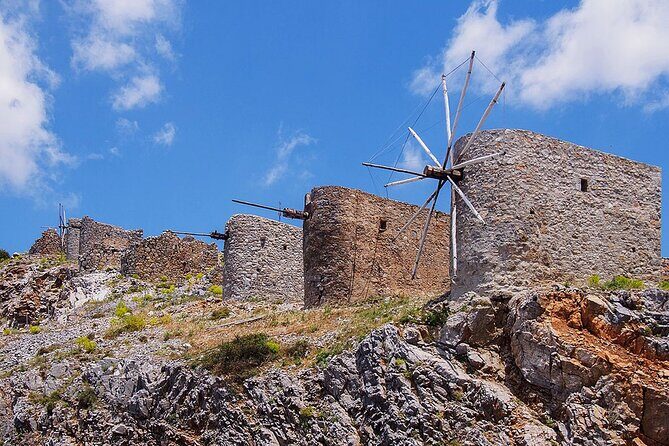
Next up is the Windmills of Lasithi Plateau. From a distance, it’s scenic and unusual: windmills standing against rugged mountains. Up close, the story is what makes it special. These were practical machines. They helped pump water from underground up to where crops needed it, and other mills were used for grinding grain to make flour.
This is exactly the kind of place that makes you rethink what “infrastructure” meant in the past. It wasn’t hidden. It was built into the landscape, visible because it had to work every day.
It’s a good stop if you like geography and human problem-solving. And if you hate standing still for long, don’t worry: it’s set up as a focused visit that fits cleanly into the flow of the day.
Krasi and the Platanus tree: village walking with a big trunk story
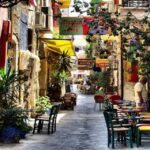
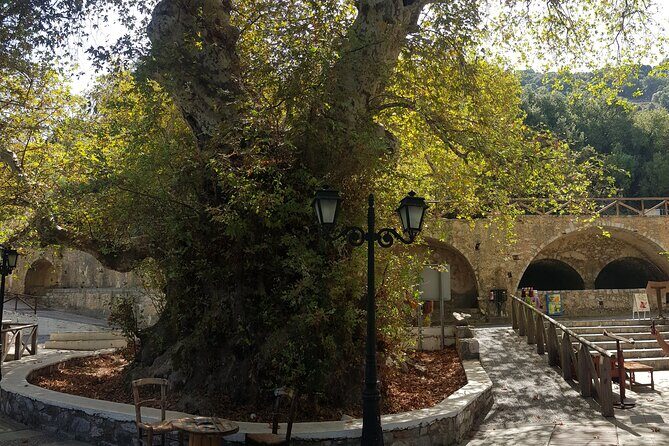
You’ll spend time in Krasi village (often paired with the stop for the Platanus Tree). Expect stone-paved, narrow lanes and traditional Cretan house shapes. It’s not a theme park village. It’s the kind of place where you can take a slow walk, look at doorways and textures, and feel how the village life is built around the street plan.
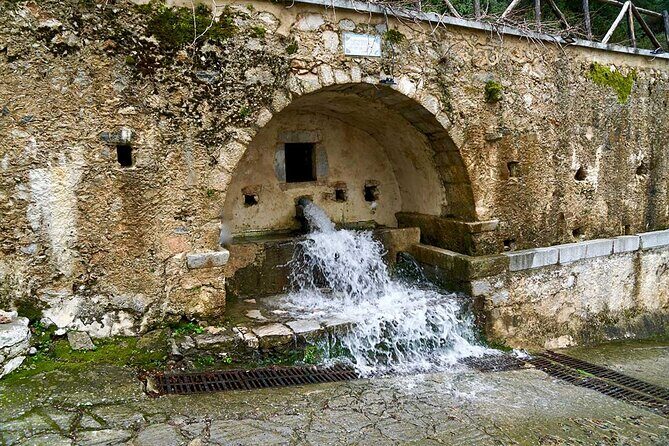
The star is the oldest and biggest Platanus tree in the area, plus you’ll see an old aqueduct nearby. That combo matters. A giant shade tree tells you where people gathered. An aqueduct tells you where the water came from. Together, they explain how comfort and survival worked in the same place.
This is also one of the stops where your timing flexibility helps. If you arrive ready to wander, you’ll squeeze more out of it than if you treat it like a quick photo stop.
Aposelemis canyon and the monastery pass: quick views, no pressure
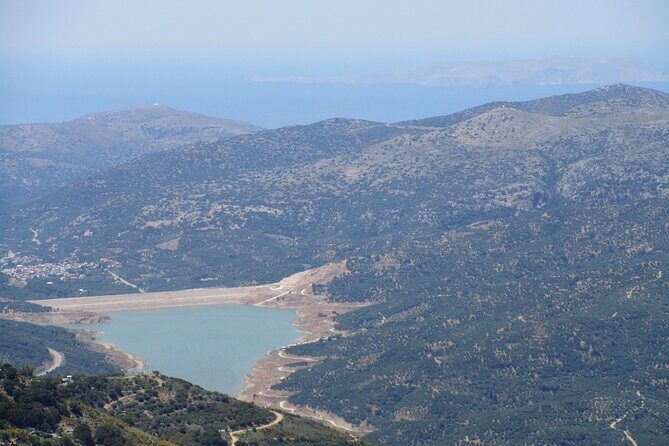
After Krasi, the plan includes a short photo stop near the Aposelemi dam at the canyon. This part is brief, but it’s useful. You get a scenic break from constant driving and a chance to see how the plateau-and-mountains region funnels into water and valleys.
There’s also a quick pass by an old monastery. It’s short, so don’t expect a deep visit here. Think of it as a “glimpse and glance” moment—enough to notice the architecture and keep moving.
If you’re the type who hates rushing, you’ll probably like that the itinerary doesn’t demand every second at every site. You get photo time and then back on the road.
Mochos: a church-and-square pause that feels real

The stop in Mochos is built around the village center: a church and a square. You get about an hour to wander, reset your legs, and watch village life for a bit.
What I like about this kind of stop is that it breaks the day’s rhythm. After olive oil, windmills, and canyon views, a village square gives you something simple: people, shade, and a slower pace that’s still part of the bigger story of Crete.
Wear comfortable shoes. Even if this is not an intense walking village, stone streets can add up across a full day.

Zeus Cave (Psychro / Diktaean): the stairs and the legend
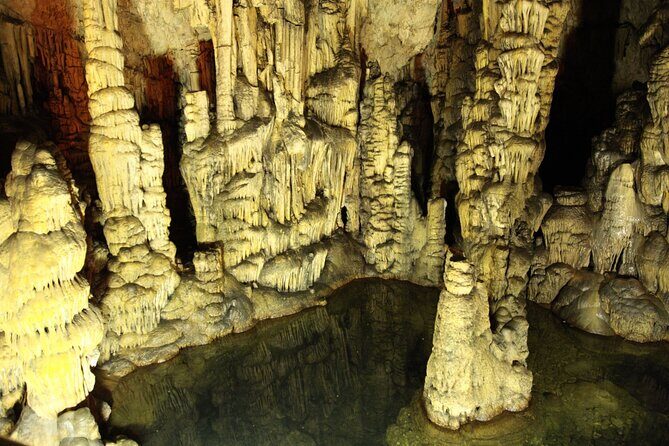
This is the big myth moment: Psychro Cave, also known as the Diktaean Cave, tied to the birthplace legend of Zeus. If it’s open on your day, it’s one of the most dramatic stops on the route.
Here’s what to expect. The cave sits high above the Lasithi Plateau, and the approach is part of the experience: you’ll go up by a paved path or a traditional donkey ride, depending on what’s available. Then you’ll descend into the cave where it feels cooler and more atmospheric right away.
Inside, you’ll see multiple illuminated chambers with stalactites and stalagmites formed over millions of years. The standout formation is the massive curtain-like stalactite often called the Mantle of Zeus, hanging above an underground lake area. You’ll also learn about ancient offerings left by Minoans at the site, tied into the legend.
Practical note: there’s a hike uphill of about 10 to 15 minutes, and then about 180 steps down once you reach the cave, with handrails. If stairs make you nervous, bring that up early to your guide and plan to take it slow.
Important planning detail: Zeus Cave may be closed until April and further notice. When closures happen, the schedule can change, and you might see that Zeus Cave gets removed from the plan. If Zeus Cave is your top priority, I’d treat it as a bonus rather than guaranteed.
Knossos Palace: what you can do with or without an official guide
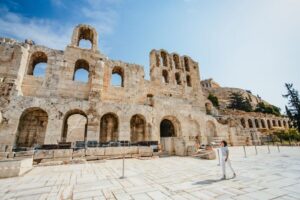
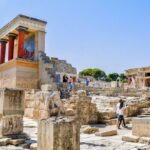
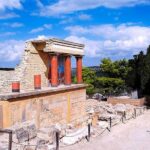
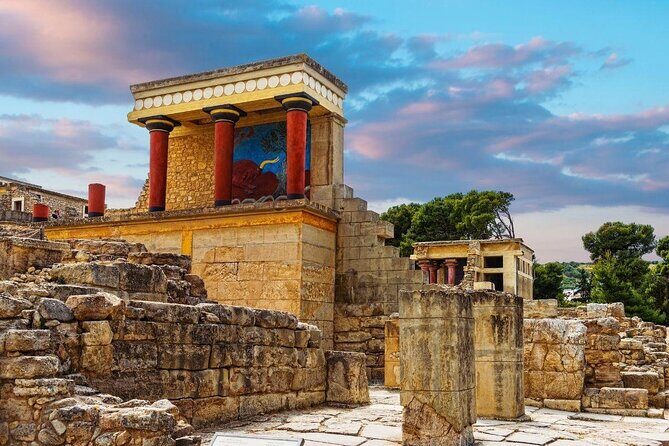
Knossos is your final major history anchor. The key thing here is that you’ll have time to explore on your own at the archaeological site. If you want more depth, you can arrange for an official licensed tourist guide inside Knossos Palace for an extra charge.
Expect Knossos to feel like a mix of must-see ruins and your own pacing. Without a licensed guide, you’ll still be able to walk the site and get your bearings. But if you love mythology, Minoan culture, and want names and explanations tied to each area, an official guide can turn “cool ruins” into a stronger story.
Entrance is not included. Knossos Archaeological Site costs 20 euro for adults and half price for kids (according to the information provided). So it helps to budget for that up front.
Also keep in mind: this day is designed to fit a lot in, so you won’t get a slow, wandering “half-day museum” pace. It’s more of a smart hit-list visit.
Lunch at Restaurant Tzanakis Michael: local food, extra cost
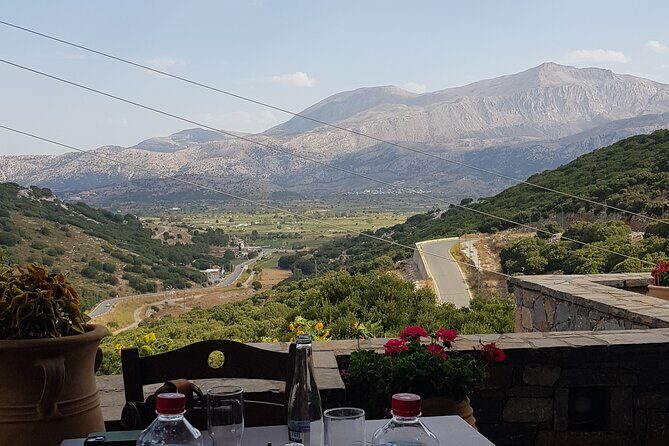
Lunch happens at Restaurant Tzanakis Michael. Lunch itself is not included, and you’ll order traditional Cretan and Greek food on site. The good news is that you get an actual local restaurant stop, not a random roadside meal.
One reason I like this approach: it keeps the day moving and gives you a chance to eat without hunting for a place after hiking and visiting caves.
If you’re picky about meal timing, you’ll also want to know that the full day structure means lunch is one of the blocks you shouldn’t treat as flexible. It’s built into the route.
Price and value: what you’re really paying for
The tour price is $109.42 per person for about 7 to 8 hours. On paper, that sounds like “a full-day day trip.” In practice, the value comes from what’s included.
Included items: pickup and drop-off from the Heraklion area (shared option), an English-speaking local driver guide, liability insurance, plus water, coffee, olive oil, and raki tasting. You also travel with a small group capped at 10 people, which can make the day feel lighter and less stuck.
Not included: Knossos entrance, any official licensed guide inside Knossos, and lunch. Zeus Cave entrance is also not included. So the total cost depends on whether Zeus Cave is open and whether you add the Knossos official guide.
For cruise schedules, there’s a built-in reality check: if you start later than 09:00 from a cruise, you may need to skip one or more sites to be back in time. Your guide adjusts the order based on priorities, which is exactly what you want when the ship is a hard deadline.
Pickup, shared vs private, and staying on schedule
Pickup is part of the convenience. For hotel stays, the pick-up is right in front of your reception area. For cruise passengers, the guide meets you at Heraklion port holding a sign with your name at the shuttle drop-off point.
If you choose the shared tour, pickup covers specific Heraklion-area spots, and it can extend to Agios Nikolaos and Elounda if there are more than 6 people. If there are fewer, a meeting point may be set instead.
Either way, the day is designed to return you to your pick-up/meeting point area at the end. If you’re sensitive about timing, you’ll be safest if you’re ready right when your guide expects you at the pickup location.
One more practical tip from real-world experience: if you’re on a cruise, give yourself buffer time. It’s easy to lose 15 minutes without meaning to, and the whole day then has to squeeze tighter. The guides on this route tend to be focused on getting you back on time, but your punctuality still matters.
What to pack: shoes, layers, and step-friendly confidence
Even in warm months, the mountains can feel chilly. Bring a light jacket and long trousers, especially if you run cold.
For Zeus Cave, you’ll want step-ready footwear. The approach includes uphill walking and then a substantial stair descent with handrails, so comfortable shoes beat anything fashionable.
Also bring water awareness into your plan. You do get water during the included tastings and breaks, but it’s still a long day with multiple stops.
Who this tour suits best
This tour fits you if you want a single day that combines food culture, working-land tradition, village atmosphere, and a serious archaeology finale.
It’s also a good match if you like learning from a guide who tells stories in plain language. Guides on this route often bring extra energy, with examples like Mike, who’s known for weaving together island geography, botany, and mythology into the drive, and Stavros, who has a fun, comedian-like style while still keeping things on track. If you end up with Michalis, you can expect a similar mix of culture, history, and practical pacing. For honeymoon-style or custom pacing (in private situations), Dimitri is mentioned as someone who adjusts the day to your tempo and priorities.
If you’re the type who wants a long, slow archaeological crawl, you might find the schedule intense. But if you want a “best mix” day, this hits the brief.
Should you book? My straight answer
Book it if your ideal Crete day looks like this: olive oil tastings, mountain villages, a plateau with windmills, and then a legend stop plus Knossos. The small group size and the included tastings make it feel more personal than many big-bus alternatives.
Hold off or double-check expectations if Zeus Cave is the main reason you booked. It can be closed for renovations and may get removed from the plan. Also budget for Knossos entrance and expect lunch to be extra.
If you want a myth-and-agriculture day that still feels grounded in everyday Crete, this is a strong choice.
FAQ
How long is the tour?
It runs about 7 to 8 hours.
What’s included in the price?
You get pickup and drop-off from the Heraklion area for the shared option, an English-speaking local driver guide, liability insurance, and tastings that include water, coffee, olive oil, and raki.
Are Knossos and Zeus Cave tickets included?
No. Knossos Archaeological Site entrance is not included (20 euro for adults, half price for kids). Zeus Cave entrance is also not included.
Is lunch included?
No. Lunch at Restaurant Tzanakis Michael is included as a stop, but the meal itself is not included.
Will I definitely see Zeus Cave?
Not always. Zeus Cave is closed until April and further notice, so it may be skipped depending on the situation on your date.
How hard is the walk to Zeus Cave?
There is an uphill hike of about 10 to 15 minutes to the entrance, and then about 180 steps down into the cave with handrails.
Is this tour a small group?
Yes. The group size is capped at a maximum of 10 travelers.