REVIEW · ATHENS
Make your Own Ancient Antikythera Mechanism A … laptop from the antiquity
Book on Viator →Operated by SpecialTy Tours - Greece · Bookable on Viator
The cleverest part of this Athens experience is the hands-on workshop. You do not simply look at ancient tools behind glass. You assemble a working piece of the Antikythera Mechanism, an ancient Greek calculating device, from metal and plexiglass. I like that the museum visit gives the workshop context, and I like the way the tour connects science with everyday Athens at Syntagma Square and the National Garden.
The main drawback is the price: $160.80 per person is a serious sum for a four-hour walking activity. It makes the most sense for families, private groups, and anyone with a real interest in science or ancient technology. The afternoon schedule also means you should plan around the 3:00 pm start.
In This Review
- Key points at a glance
- Why the Antikythera workshop is the heart of the tour
- Inside the Kotsanas Museum of Ancient Greek Technology
- What you actually make and take home
- Syntagma Square and the Evzones at Parliament
- A quieter finish in the National Garden
- Is $160.80 a fair price?
- Who will enjoy this most?
- Practical details before you book
- My take: should you book it?
- FAQ
- Where does the tour begin?
- What time does the experience start?
- How long does the tour last?
- Is the tour private?
- Is an English-speaking guide included?
- What do I build during the workshop?
- Can I take the mechanism part home?
- Does the tour include the changing of the guard?
- Is the National Garden included?
- What happens if I need to cancel?
Key points at a glance
- Build your own working mechanism: Assemble a functional Antikythera Mechanism part from metal and plexiglass, then take it home as a decoration.
- See ancient technology in action: The Kotsanas Museum visit covers calculating devices, telecommunications, physics, and the famous Antikythera device.
- A good family option: An 11-year-old stayed engaged during the museum visit, with questions explained in an easy-to-follow way.
- Catch the Evzones: The route includes the theatrical changing of the Greek Presidential Guard at Parliament.
- End among trees and ruins: A guide leads you through the maze-like National Garden, with archaeological remains tucked among the plants.
- Private and English-speaking: Only your group participates, and the experience includes an English-speaking guide.
Why the Antikythera workshop is the heart of the tour

Athens has plenty of museum tours where you listen, look, and move on. This one asks you to make something. Under the guidance of museum staff, you work through the ideas behind ancient Greek calculating machines and assemble your own functional part of the Antikythera Mechanism.
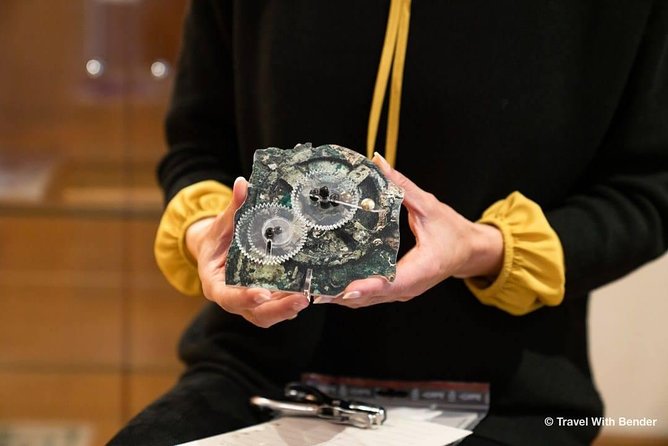
That hands-on step matters. The device can seem mysterious when you meet it as a finished object. Working with its parts gives you a clearer sense of how ancient engineers used gears and mechanical principles to calculate and represent information. You are not taking home a full replica, but you do receive a working metal-and-plexiglass piece that can serve as a decoration.
The workshop lasts about one hour. That is long enough to feel like a real activity, but short enough to keep a family schedule moving. You should expect guidance rather than a completely free-form craft session. The museum’s staff lead you through the process and explain the mechanism as you work.
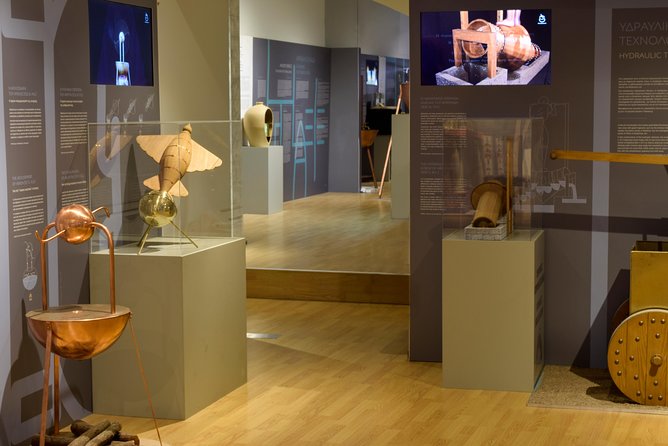
The tour also introduces other inventions, including the calculator of Salamina. The stated focus is not just on one famous machine, but on the way ancient Greek thinkers approached calculation, physics, and communication. The discussion of air, water, and related principles can be especially interesting if you enjoy the connection between philosophy and practical science.
You can also read our reviews of more tours and experiences in Athens.



Inside the Kotsanas Museum of Ancient Greek Technology
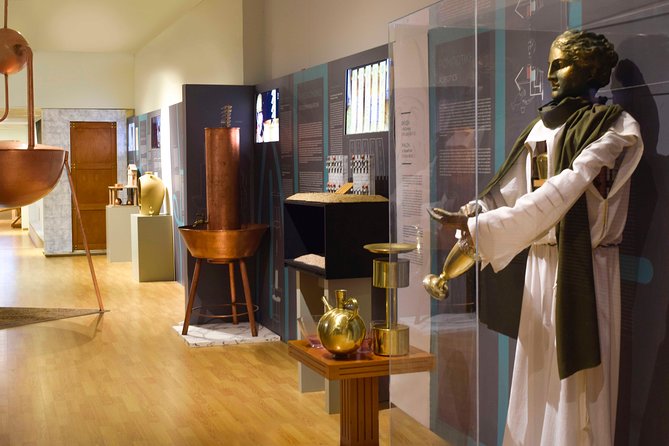
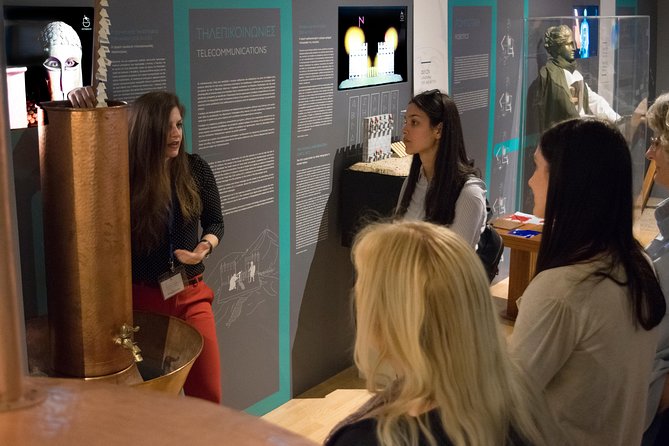
The tour begins at the Kotsanas Museum of Ancient Greek Technology on Pindarou 6 in Athens. The museum visit comes before the workshop, which is the right order. You first see the ideas and devices, then use that background while building your own mechanism.
Expect a guided visit rather than a quick stop. The museum focuses on the technological achievements of ancient Greece and includes exhibits that show how people calculated, communicated, and used physical principles. You may find the material especially rewarding if you like the history of science, engineering, or mathematics.
The family-friendly design is one of the strongest reasons to consider this activity. A child around 11 years old was kept engaged during the museum visit, and the guide answered questions in an easy-to-understand way. That detail is useful because museums about ancient technology can sometimes feel too abstract for children. Here, the workshop gives younger participants something concrete to do.
Your guide can also help bridge the gap between technical terms and real objects. Eva, one of the guides associated with this experience, was praised for her enthusiasm and ability to make the subject lively. Guide quality can vary by departure, but the experience is specifically designed around an English-speaking guide and museum staff support.
What you actually make and take home
The included gift is a functional part of the Antikythera Mechanism made from metal and plexiglass. You use it as a decoration in your home, so the souvenir is more meaningful than a standard museum shop purchase.
Keep your expectations sensible. The activity does not say that you build the entire Antikythera Mechanism. You create one working part. That distinction is important, especially if you are booking because you expect to leave with a full calculating computer.
Still, the project has real value. You will have handled the materials, followed the mechanical logic, and created something linked to the subject of the museum visit. For a child, it becomes a take-home reminder of the day. For an adult, it is a conversation piece with a better story than a mass-produced magnet.
The workshop also gives the tour a useful rhythm. A long museum explanation can tire younger visitors. A craft session breaks up the listening and lets everyone focus on a task. If your group includes mixed ages, this may be the part that keeps the experience together.
Syntagma Square and the Evzones at Parliament
After the museum and workshop, the tour moves toward Parliament, also called the Old Palace, at Plateia Syntagmatos. Here you watch the changing of the Greek Presidential Guard, the famous Evzones.
This is a very different sight from the museum. The workshop is quiet and technical. The guard change is formal, theatrical, and tied to modern Greek public life. Including both gives the afternoon more range than a museum-only activity.
The precise timing of the guard change is not provided, so you should not assume that every tour includes the largest ceremonial version. The experience does promise an opportunity to observe the change of guard. Your guide can place the ceremony in the setting of Parliament and explain what you are seeing.
Syntagma Square is also the practical center of the final part of the tour. It is a useful place to finish because you are close to central Athens and can continue to dinner or another evening plan. Dinner is not included, so leave room in your budget for a meal afterward.
A quieter finish in the National Garden
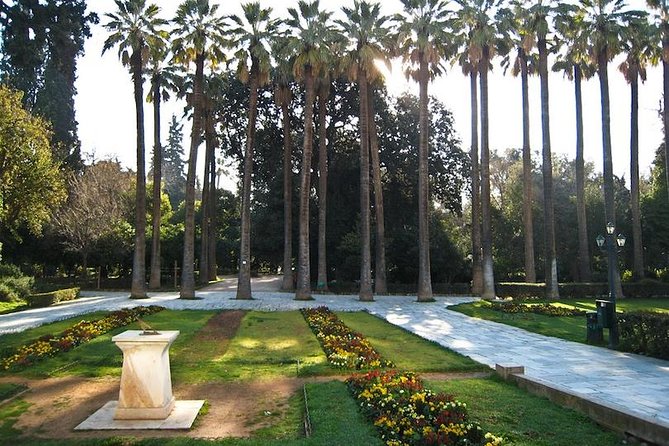
From Parliament, you walk into the National Garden. The tour describes its paths as maze-like and points out archaeological treasures among the plants. Your guide shares stories in the shade as you walk.
This section should not be treated as filler. After an hour of technical exhibits and a busy public ceremony, the garden gives you time to slow down. You are still in central Athens, but the setting becomes calmer and more spacious.
The archaeological details add a layer of surprise. You are not only walking through planted paths. You are also looking for traces of the past within a modern public garden. The tour does not specify which archaeological remains you will see, so the exact route and discoveries may depend on the guide and conditions.
The walk ends at Syntagma Square. The full activity lasts about four hours, and the route is on foot. Wear comfortable shoes and be prepared for an afternoon that shifts between indoor museum time and outdoor walking. The experience requires good weather, so poor conditions can lead to a different date or a full refund.



Is $160.80 a fair price?
At $160.80 per person, this is not a budget sightseeing walk. You are paying for a private activity, an English-speaking guide, museum admission and guidance, a one-hour workshop, the take-home mechanism part, and the National Garden walk. All fees and taxes are included.
The private format changes the value calculation. Only your group participates, so you can ask questions without trying to catch a guide’s explanation in a large crowd. That can be especially useful during the mechanical workshop, where you may need help with the assembly or want a simpler explanation for a child.
For a family, the cost may compare well with buying several separate museum tickets, a craft activity, and a guided city walk. The included gift also has practical value, though the tour price remains substantial. For a solo visitor or couple with only a passing interest in technology, the cost is harder to justify.
I would also consider how much you value structure. The tour takes care of the afternoon plan, combines three different settings, and gives you a guide throughout. If you prefer to visit the museum quickly and explore Athens independently, you can probably spend less. If you want a focused private experience with an activity built in, the price becomes easier to understand.
The activity is often booked about 73 days ahead. That suggests you should not leave it until the last minute, particularly if your dates are fixed or you need a private departure for your family.
Who will enjoy this most?
This tour suits families with school-age children, especially children who like machines, puzzles, or making things. The workshop gives them a clear role, while the garden and guard change add visual variety.
It is also a good fit for adults interested in the history of science and technology. The discussion goes beyond famous monuments and brings attention to the Greek use of calculation, mechanics, communication, air, and water. You do not need to be an engineer, but curiosity helps.
Private groups may get the best value because the guide can adjust explanations to the group. A family can ask basic questions without feeling out of place. A group of science-minded adults can spend more time on the mechanism and technical ideas.
You may want to skip it if your main goal is ancient sculpture, major archaeological sites, or a relaxed café afternoon. The museum is the central attraction, and the tour asks you to spend time thinking about how devices work. It is not a general introduction to all of Athens.
Practical details before you book
The starting point is the Kotsanas Museum of Ancient Greek Technology, Pindarou 6, Athens 106 71. The listed start time is 3:00 pm, and the activity lasts about four hours.
The tour ends at Syntagma Square, although the meeting details also describe the activity as ending back at the meeting point. Because those descriptions differ, confirm the exact end location when you book. The itinerary itself places the final walk at Syntagma Square.
A mobile ticket is provided, and confirmation is sent at booking. Most people can participate, but the experience is conducted on foot, with time in the museum, at Parliament, and in the National Garden. Good walking shoes are sensible.
Free cancellation is available up to 24 hours before the start time for a full refund. Changes or cancellations inside that 24-hour window are not accepted for a refund. Cut-off times follow local Athens time. If the minimum number of participants is not reached, you can choose another date or experience, or receive a full refund.
My take: should you book it?
I would book this if you want an Athens activity that combines science, making, and city sightseeing rather than another standard monument tour. The Antikythera workshop is the reason to choose it. The Evzones and National Garden make the afternoon feel rounded, but the museum and the chance to build a working part are the true draw.
Families should give it serious thought, especially with children around 11 and up who ask questions and enjoy practical projects. Adults who love the history of science should also find plenty to hold their attention, particularly with an enthusiastic guide such as Eva.
At $160.80, it is best viewed as a private half-day experience, not a cheap museum visit. Book ahead, confirm the ending point, wear comfortable shoes, and choose it only if the technical subject appeals to you. For the right group, it offers something rare in Athens: a souvenir you make yourself, a clearer understanding of ancient calculation, and a pleasant walk through the city afterward.
FAQ
Where does the tour begin?
It begins at the Museum of Ancient Greek Technology Kotsanas, at Pindarou 6, Athens 106 71, Greece.
What time does the experience start?
The listed start time is 3:00 pm.
How long does the tour last?
The experience lasts approximately four hours.
Is the tour private?
Yes. Only your group participates in the activity.
Is an English-speaking guide included?
Yes. An English-speaking tour guide is included, along with guidance from museum staff during the workshop.
What do I build during the workshop?
You build a functional part of the Antikythera Mechanism from metal and plexiglass.
Can I take the mechanism part home?
Yes. The finished functional part is included as a gift and can be used as a decoration.
Does the tour include the changing of the guard?
Yes. The itinerary includes an opportunity to watch the Greek Presidential Guard, known as the Evzones, change at Parliament.
Is the National Garden included?
Yes. The tour includes a guided walking tour through the National Garden, ending at Syntagma Square.
What happens if I need to cancel?
You can cancel up to 24 hours before the start time for a full refund. Cancellations or changes made less than 24 hours before the start time are not accepted for a refund.