REVIEW · MILOS
Milos Island: Archaeology & Culture Tour
Book on GetYourGuide →Operated by MTM Experiences · Bookable on GetYourGuide
Milos feels like it has layers, like a coastline that kept talking long after the sea calmed down. This Milos Archaeology & Culture Tour strings those eras together in just four hours, from prehistoric Phylakopi to the dramatic Sarakiniko shore.
What I like most is that you’re not just seeing places—you’re getting the why behind the views, geology, and everyday life on the island.
Two standouts for me: the stop at Papafragas (those deep-sea inlets and sea caves feel surreal), and the photo-famous walk at Sarakiniko without the hassle of organizing your own route.
One possible drawback: you’ll do some walking on uneven ground, so plan for comfortable shoes and don’t count on long sit-down breaks between sites.
In This Review
- Key Highlights You’ll Really Notice
- Four Hours That Actually Works for Milos
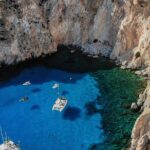
- Start at Papafragas, the Volcanic Swimming Pool Feeling
- Phylakopi: Where Milos’s Prehistory Becomes Real
- Sarakiniko’s Lunar Landscape Walk and Photo Mission
- Plaka’s Cobblestone Streets: Culture Without the Pressure
- The Roman Amphitheatre: Marble Proof of “Long-Time-Back” Life
- How the Walking and Driving Feel (And How to Prep)
- Guides Matter: Names You’ll Hear and What They Tend to Do
- Price and Value: Is $103 Worth It for Four Hours?
- Who Should Book This Tour (And Who Might Want Another Option)
- Practical Strategy: How to Get More Out of Each Stop
- Should You Book This Milos Archaeology & Culture Tour?
- FAQ
- How long is the Milos archaeology and culture tour?
- What’s included in the price?
- Where does the tour start?
- What are the main stops and sights?
- Are entrance fees included?
- Is food or snacks included?
- What should I bring?
- Is the guide English speaking?
- Is pickup provided?
- What if the start time changes?
Key Highlights You’ll Really Notice
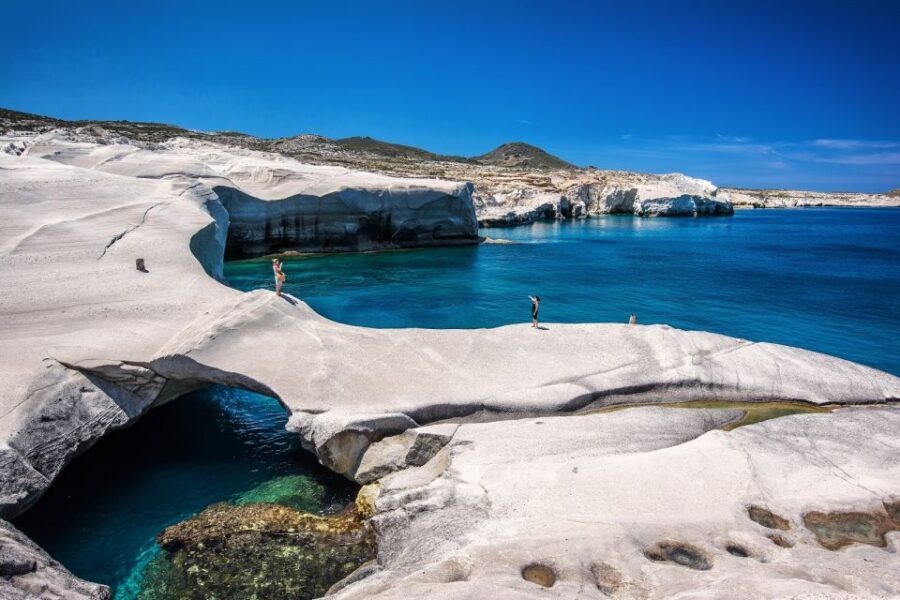
- Sarakiniko’s lunar coast: a long-ish photo walk that actually helps you understand the geology
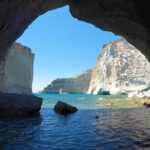
- Papafragas sea caves: the “volcanic swimming pool” vibe is immediate, even before you learn the story
- Phylakopi prehistoric site: you’ll connect Milos’s Cycladic past to what you see today
- Plaka’s cobbled streets and alleys: a slower stretch with traditional buildings and sea views
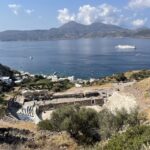
- Marble Roman Amphitheatre: a clear jump from myth-era settings to Roman-era public life
Four Hours That Actually Works for Milos
Milos can overwhelm you in the best way. The island’s famous beaches are far apart, and if you’re only here for a few days, it’s easy to miss the parts that explain how the island got shaped—geologically and culturally.
This tour is built for a tight window: 4 hours with transport included, an English-speaking guide, and water along the way. The itinerary is also designed to move from big “wow” scenery (Papafragas, Sarakiniko) to history that makes those views meaningful (Phylakopi and the Roman Amphitheatre), then back into town life in Plaka.
You can also read our reviews of more tours and experiences in Milos.
Start at Papafragas, the Volcanic Swimming Pool Feeling
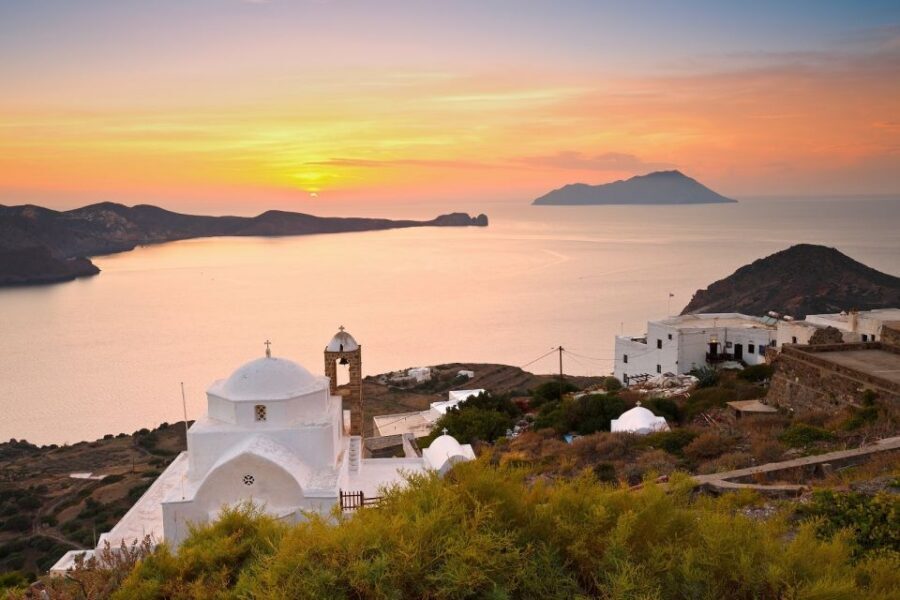
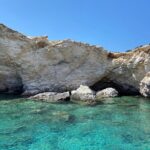
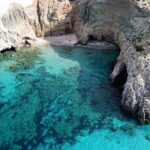
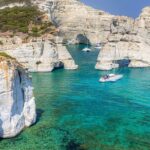
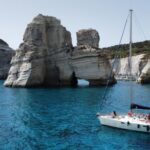
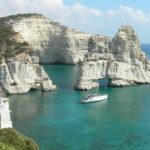
Your tour kicks off at Papafragas. It’s called the volcanic swimming pool for a reason: you’ll be looking down into clear turquoise water with deep inlets and sea caves nearby. Even if you’re not planning a swim, the place works as an instant mood-setter. You get the sense that the sea has carved a lot more than just shorelines.
What you can expect in practice: some lingering time to take it in and orient yourself. The guide’s job here is to tie the scenery to Milos’s volcanic character, so Sarakiniko later won’t feel random.
One tip: wear footwear you trust on rocky edges. Papafragas is scenic, but you don’t want to baby your steps while trying to get a good look over the water.
Phylakopi: Where Milos’s Prehistory Becomes Real
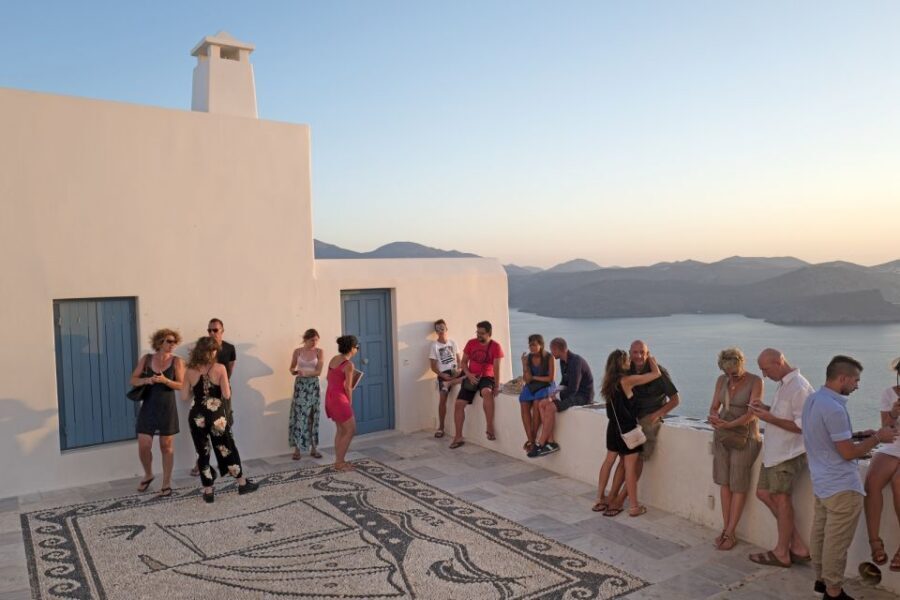
Next comes Phylakopi, a major prehistoric settlement tied to Cycladic history. You’ll get an introduction to what was going on here—how Phylakopi stayed an active center until 1000 BC, which is a huge chunk of time to wrap your head around.
This stop is valuable because it changes how you see the island. Milos isn’t just a set of beaches. The island’s history connects to its geology and resources, which is one reason the story keeps showing up in modern conversations about mining and the island’s economic past.
Even without going deep into museum-level detail, the guide framing helps. When you later stand on Sarakiniko’s strange rock forms, you can better connect the dots between the island’s formation and why people cared.
Sarakiniko’s Lunar Landscape Walk and Photo Mission
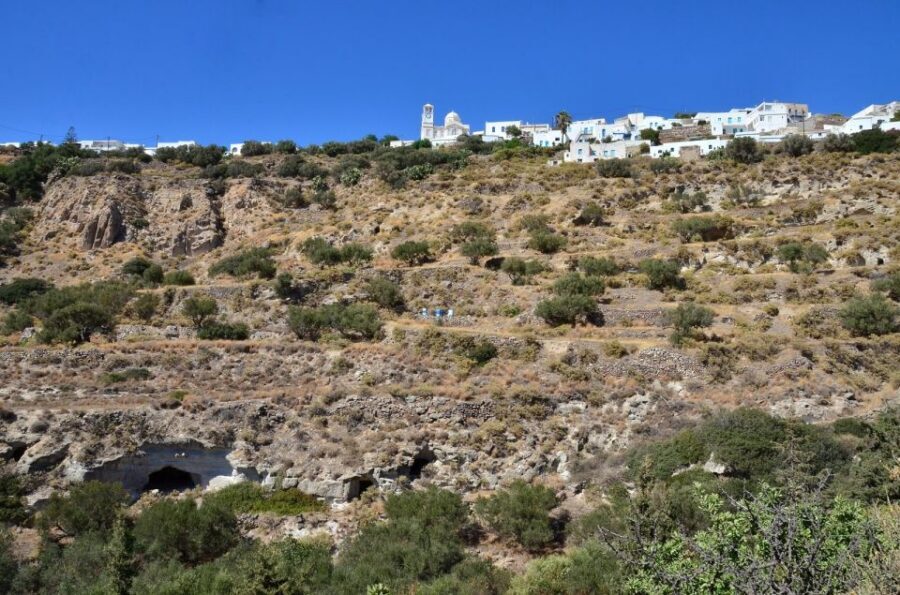
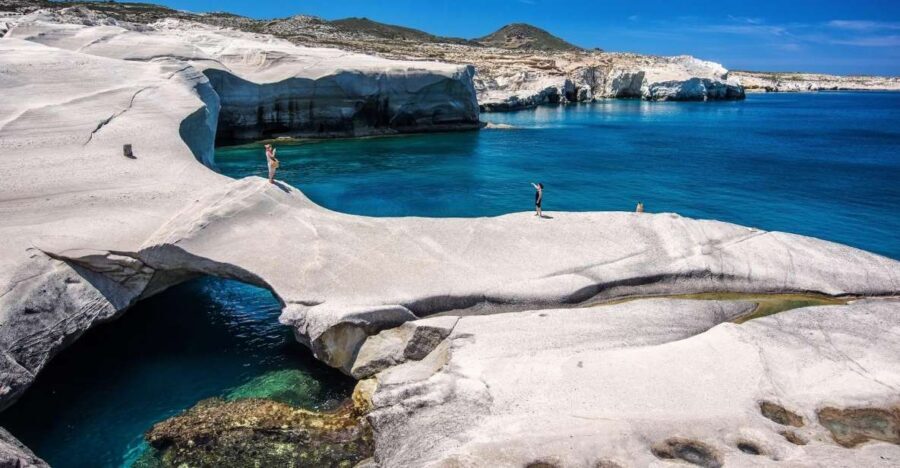
Then it’s off to Sarakiniko, often described as the island’s lunar landscape and the most photographed spot in the Cyclades. This is the stop most people aim for, but the tour makes it more useful than a quick drive-by.
You’ll take a walk down toward an inlet so you can experience the beach area in a more human way—less of a distant viewpoint, more of a “you are here” moment. Bring your camera if you’re into photos, but also bring patience with the walking. The magic is partly the angles, and angles happen when you’re willing to move a little.
A practical note: Sarakiniko can be bright. If you’re the kind of person who gets eye strain, sunglasses help. And if you’re tempted to dip your feet in, keep in mind the surface can be uneven.
Plaka’s Cobblestone Streets: Culture Without the Pressure
After the geology-and-history hits, the pace shifts in Plaka, Milos’s main town. You’ll stroll cobbled streets and alleys with traditional architecture and a sea-view payoff.
One specific highlight here is the veranda of Panagia Korfiatissa, where you can admire the view. This is the part of the tour that feels less like a checklist and more like sampling daily island life—where the architecture and outlook matter because Milos is built around the sea.
If you like wandering, this is your window. The guide will point out what to notice, but Plaka also gives you space to slow down and enjoy the streetscape.
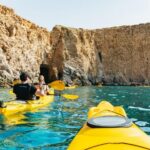

The Roman Amphitheatre: Marble Proof of “Long-Time-Back” Life
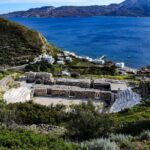
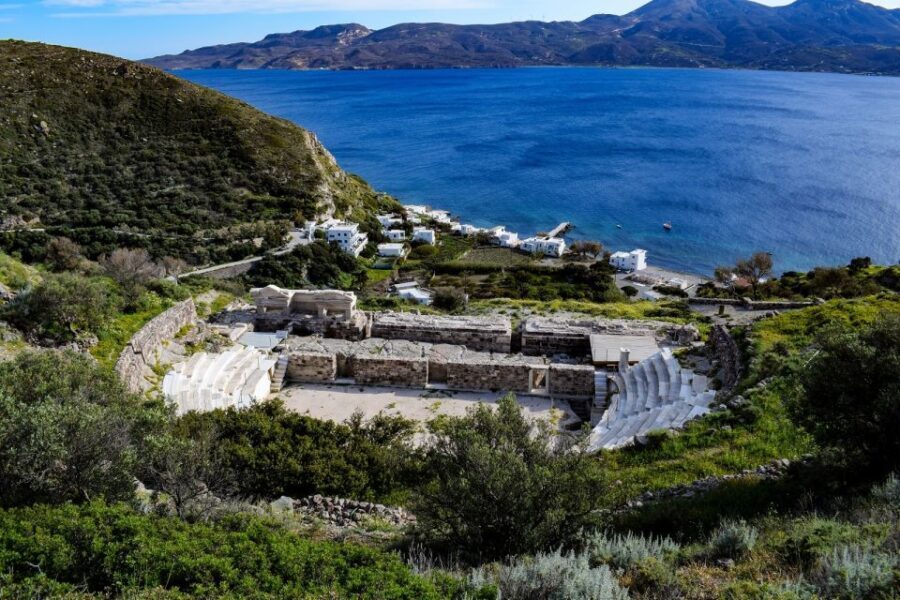
Next is a jump forward to the marble Roman Amphitheatre. It’s one of those sites that makes the timeline feel physical. You’re not only hearing about eras—you can stand in a place built for public gatherings and realize how long the island was part of wider Mediterranean movement.
What I like about including the amphitheatre right after Plaka is contrast. You get town scale, then you get a stone structure meant for crowds, then you land back in the reality of how public life changed over centuries.
Practical advice: this stop is better if you can slow your pace for a few minutes and look upward and around. With Roman ruins, the details in the structure and the setting are what make it worth lingering.
How the Walking and Driving Feel (And How to Prep)
This tour is short, but it’s not a full-on sitting tour. You’ll be on your feet for several parts: viewpoints at Papafragas, the walking at Sarakiniko, and streets around Plaka. One reason many people rate it so highly is that the pace feels adjusted to the day and the group.
From the way small groups show up in September and other times, you might find it’s more friendly than big-bus tourism. Some departures have felt informal and easy, and guides sometimes tailor the route slightly—like swapping in another beautiful spot when it fits.
What to bring is simple and important:
- Comfortable shoes (the #1 must)
- Comfortable clothes (layers help if it’s windy near the coast)
If you want a swim at Papafragas, you might also consider bringing swim gear and a towel. The tour itself includes water, not a full beach setup, so plan to be self-sufficient.
Guides Matter: Names You’ll Hear and What They Tend to Do
This is where the reviews really shape expectations. Guides like Marios/Marios, Laura, Giannis, Yannis, Janice, Leo, and Jason come up again and again for a reason: they connect sites to the island you see today.
The best part isn’t just facts. It’s story shape. One guide will focus on archaeology and how geology drives ancient settlement choices. Another will mix in mythology and contemporary life, so Milos feels like it has a living voice instead of being locked behind glass.
A fun detail you may run into: you might get small local food moments, like a stop where you can try something such as watermelon pie (and similar snacks). Since food isn’t included, treat it as a chance to add a bite on your own.
Price and Value: Is $103 Worth It for Four Hours?
At $103 per person, this tour isn’t the cheapest way to get around Milos. But it often hits strong value because you’re paying for three things that are hard to DIY well on a small island:
1) Transport between scattered highlights
2) An English-speaking guide who can explain what you’re seeing (and why it matters)
3) Water, plus a map, which helps you make better choices after the tour
Also, entrance fees are not included, so you’ll want to keep some extra cash or a card ready if there are paid sites during your specific departure. That said, the core value is the guided order of stops—especially the logic that ties Papafragas and Sarakiniko back to prehistoric and later cultural layers.
If you’re on Milos for a short stay, this is often a smart first booking. You get a mental map fast, then you can explore the rest of the island on your own with less guesswork.
Who Should Book This Tour (And Who Might Want Another Option)
This tour is a great match if you:
- want a history-and-geology orientation without renting a car
- enjoy walking but don’t want to plan a full self-drive day
- like photo stops, but also want explanations that make photos more meaningful
It may be less ideal if you:
- hate walking on uneven surfaces
- want long, leisurely beach time with minimal site-hopping
- expect food to be included (it isn’t)
For families, there’s good news in the details: children under 2 can join for free. That said, parents should still plan for the fact that this is an active, multi-stop outing.
Practical Strategy: How to Get More Out of Each Stop
Here’s how I’d approach the day if you want the best payoff:
- At Papafragas, take a moment to scan the water and the cave openings before you rush for photos. The view is part of the lesson.
- At Phylakopi, resist the urge to treat it like only ruins. The point is to understand why settlement mattered there and how long the site stayed active.
- At Sarakiniko, give yourself time to walk a bit rather than staying at the first perfect photo angle. The inlet area rewards movement.
- In Plaka, enjoy the shift. Use the town time to reset your legs and grab quick photos of the architecture and sea view from Panagia Korfiatissa.
- At the Roman Amphitheatre, slow down and look around. Amphitheatres are designed for crowds, so the setting helps you picture the past.
And one more thing: you’ll likely hear myth stories and connections to current Milos life from the guide. If you like asking questions, this is a tour where a quick question tends to get a good answer.
Should You Book This Milos Archaeology & Culture Tour?
If you want Milos in a single, organized thread—Papafragas to Sarakiniko to Plaka to the Roman Amphitheatre—I think this is an easy yes. The best reason is that it balances big scenery with real context. You won’t just collect photos; you’ll leave with a clearer sense of how Milos formed and why people kept returning.
Book it if you’re on a tight schedule, hate the logistics of routing yourself, or want a guide-led day that still feels personal thanks to the small-group vibe on many departures.
Just be honest with your body: bring comfortable shoes, expect walking, and remember that entrance fees and food are on you. Do that, and four hours on Milos can feel like a full chapter of discovery.
FAQ
How long is the Milos archaeology and culture tour?
The tour lasts 4 hours.
What’s included in the price?
Transportation, an English-speaking guide, a map, and water are included.
Where does the tour start?
The trip begins from Papafragas or the volcanic swimming pool area, depending on the pick-up details provided.
What are the main stops and sights?
You’ll visit Papafragas, Phylakopi, Sarakiniko, Plaka, Panagia Korfiatissa for views, and the Roman Amphitheatre.
Are entrance fees included?
No. Entrance fees are not included.
Is food or snacks included?
No. Food or snacks are not included.
What should I bring?
Bring comfortable shoes and comfortable clothes.
Is the guide English speaking?
Yes, the tour includes an English live guide.
Is pickup provided?
Yes, pickup is included. You should arrive at the pick-up point 5 minutes early.
What if the start time changes?
The start time might change to 13:30 (in that case you’ll be informed accordingly). You’ll also receive an email with the exact pick-up time and location.