REVIEW · ATHENS
Small Group Tour: Balkans & Central Europe from Athens to Vienna
Book on Viator →Operated by Choose Balkans · Bookable on Viator
The great appeal here is scale: in 21 days, you move from ancient Greek sanctuaries to Ottoman bazaars, Adriatic towns, war-scarred Sarajevo, Danube capitals, and Vienna. Few trips cover this much of southeastern Europe without asking you to arrange every hotel, border crossing, and transfer yourself.
I like the small maximum of 10 people, which should make a long road journey more personal and easier to manage. I also like the balance of major sights and local experiences, from Byrek and Qofte in Tirana to wine in Rahovec and Sremski Karlovci. The main drawback is the pace: several days involve long drives and one-hour visits, so this suits you if you value range over lingering in one place.
In This Review
- Key points to know before booking
- Why this route works for curious, energetic visitors
- From Delphi to Meteora on day one
- Ioannina and Gjirokaster reveal Ottoman-era character
- Berat, Onufri, and the living castle
- Lake Ohrid and the border into North Macedonia
- Tirana adds food, markets, and recent history
- Kruja and Kosovo: bazaars, mosques, and monasteries
- From Shkoder to Kotor and Mostar
- Sarajevo and Belgrade carry the heaviest history
- Northern Serbia, Budapest, and the final Danube cities
- What the $7,734 price really covers
- Who should book this Balkan road journey?
- FAQ
- How long is the tour from Athens to Vienna?
- How many people can join the small group?
- What accommodation is included?
- Is single-room accommodation available?
- Are meals included beyond breakfast?
- What is included in the transportation and sightseeing?
- Should you book it?
Key points to know before booking
- Ten countries in 21 days: You cover Greece, North Macedonia, Albania, Kosovo, Montenegro, Bosnia and Herzegovina, Serbia, Hungary, Slovakia, and Austria.
- A genuinely small group: The tour has a maximum of 10 people, with a private transportation vehicle and a tour leader.
- UNESCO sites come thick and fast: Delphi, Meteora, Gjirokaster, Berat, Ohrid, Deçan, Mostar, Kotor, and Buda Castle are among the major stops.
- Food is part of the experience: Try Albanian Byrek, Qofte, Gjize, Raki, Hungarian dishes, and regional wines, but lunches and dinners are usually your own expense.
- Hotels are three-star: Accommodation and breakfast are included, with twin, double, triple, or quadruple occupancy. A single room costs an additional 45 euros per night.
- The route ends in Vienna: Pickup is provided at your Athens hotel, and the tour leader drops you at your Vienna hotel at the end.
Why this route works for curious, energetic visitors
This is not a relaxing resort holiday. It is a moving cultural journey with a new town, border, or landmark almost every day. That can be thrilling if you like waking up unsure what architectural style, language, or local dish you will meet next.
You begin in the classical world of Greece, then move into the layered cultures of Albania, North Macedonia, Kosovo, Montenegro, Bosnia and Herzegovina, Serbia, Hungary, Slovakia, and Austria. The route makes sense geographically, but it is ambitious. You will often have a focused visit rather than a full day at a site.
The tour is especially useful in the Balkans, where public transport between smaller historic towns can be awkward and border crossings add planning headaches. Having one vehicle and one tour leader keeps the route practical. You still need patience, though. Roads, traffic, and border procedures can affect a day, and the schedule leaves little room for major detours.
You can also read our reviews of more tours and experiences in Athens.



From Delphi to Meteora on day one
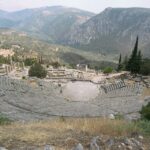
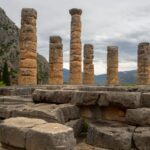
Your first day starts with hotel pickup in Athens, then heads north to Delphi. The ancient sanctuary is one of the strongest openings to the trip. You see the Temple of Apollo, the Treasury of the Athenians, the theatre, the stadium, and the museum, including the famous Charioteer of Delphi and the statue of Antinoos.
The listed visit is about an hour, so prepare for a brisk introduction rather than a slow archaeological study. Wear shoes suited to uneven ground and bring water, especially in warmer months. Delphi rewards some prior reading because the stones alone do not explain the sanctuary’s importance.
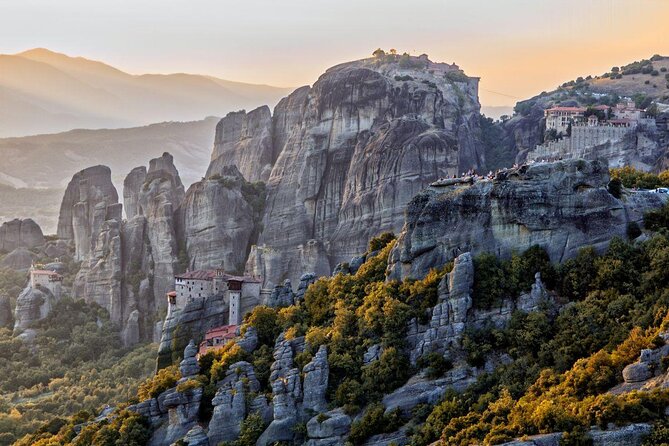
The day continues to Meteora, where monasteries sit atop tall rock formations. The two-hour stop is timed for the area’s famous sunset, which gives you a memorable visual finish. This is one of the route’s best pairings: Delphi connects you with ancient Greece, while Meteora shifts the mood toward Orthodox faith and mountain scenery.
Ioannina and Gjirokaster reveal Ottoman-era character
Day two trades major ruins for Ioannina, a city with Byzantine and Ottoman traces. You walk the old town, visit Ioannina Castle, and have free time around the city hall and nearby cafes. The castle visit adds useful context to the region’s long borderland story.
You then cross into Albania and spend the night in Gjirokaster. The next morning is devoted to the Stone City, a UNESCO-listed town of steep lanes and fortress-like houses. Its medieval bazaar is a good place to browse handmade crafts, though the sloping streets can be tiring.
The visit to Skenduli House is particularly worthwhile because the interiors remain original and show how wealthy families lived in these stone homes. I would give Gjirokaster more time if possible, but the schedule gives you a solid taste of the town’s architecture, crafts, and domestic life.
Berat, Onufri, and the living castle
Berat is another highlight of the Albanian section. Known for its stacked windows, the town climbs the hills above the Osum River and is protected as a UNESCO site. The old houses make the nickname Town of 1001 Windows easy to understand.
Inside Berat Castle, people still live among old churches, mosques, stone lanes, and homes. That living quality matters. You are not just walking through a preserved monument; you are seeing a neighborhood that remains part of daily life.
The National Iconographic Museum Onufri adds a different layer. It focuses on the work of the church painter Onufri, known for a distinctive reddish color. The Gorica Bridge and neighborhood then give you a pleasant lower-town walk and views back toward the hillside homes.
The castle streets are uneven and steep in places. Allow for a slower pace, and do not treat this as a quick photo stop. Berat is one of the towns where an extra free hour would be welcome.
Lake Ohrid and the border into North Macedonia
Before entering North Macedonia, the route pauses at Drilon National Park and Tushemisht. Springs feed a small lake surrounded by greenery and willow trees, making this a quiet break after several historic-town visits.
The next stop is the Monastery of Saint Naum, beside Lake Ohrid and the source of the Crni Drim River. The monastery belongs to Galicica National Park, and the clear spring water and mountain setting make it one of the most scenic stops of the trip.
Day six gives you a longer visit in Ohrid, one of Europe’s oldest settlements and a UNESCO-listed city and lake. You see the church of Saint John, Saint Nicholas, and the Halveti Hayati Tekke, while learning about Ohrid’s role as an Orthodox center. The claim of 365 churches, one for each day of the year, captures the city’s religious importance, even if you will see only a few.
Ohrid is the sort of place where I would use your free time for a lakeside walk or a quiet cafe. The formal visit lasts three hours, enough to get oriented without exhausting the town’s possibilities.
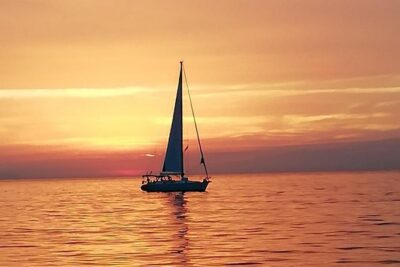
- All Day Cruise -3 Islands to Agistri,Moni, Aegina with lunch and drinks included
★ 5.0 · 4,958 reviews




Tirana adds food, markets, and recent history
Tirana is handled differently from the ancient and medieval towns. You meet a local companion and explore through food. At Tregu Çam, you try Byrek, a filled pastry commonly made with cheese, meat, or spinach.
At Pazari i Ri, the food continues with Qofte, bread, Albanian Gjize for vegetarians, and a taste of Raki. These are simple dishes, but they give you a better connection to everyday Albania than another pass by a grand monument would.
Bunk’Art 2 is the serious stop. The museum occupies a former Cold War nuclear bunker built for Enver Hoxha and senior communist officials. Its exhibits cover the communist army and ordinary life under the regime. The visit is short in the schedule, so use your time carefully.
This food-focused day is one reason the trip feels more personal than a standard sightseeing circuit. You are not only checking capitals off a map. You are also learning how people eat, shop, and remember the past.
Kruja and Kosovo: bazaars, mosques, and monasteries
Kruja sits on a rocky mountainside and is tied to Albanian resistance against Ottoman expansion. Its old bazaar is among the most useful stops for souvenirs, with carpets, jewelry, and handmade goods.
The castle visit includes paths once used by locals to leave the fortress unseen. That kind of detail makes the site easier to picture than a simple walk around ruined walls.
After crossing into Kosovo, you reach Prizren, a city shaped by Illyrian, Byzantine, and Ottoman influences. The river, stone bridges, old houses, and craft shops make it one of the most appealing urban stops on the route. The Sinan Pasha Mosque is known for its colorful interior patterns, while Kalaja Fortress gives you a fine view over the town.
The following day includes Gjakova’s rebuilt bazaar, Deçan Monastery, and Rahovec Valley. Deçan remains home to Orthodox monks and is known for its 14th-century frescoes. At Rahovec, the focus shifts to wine production, with vineyards cultivated in the area for roughly 2,000 years.
Border crossings and security procedures can take time in Kosovo, so keep your schedule flexible. Your tour leader handles the practical side, but you should not plan a fixed evening activity based on the advertised arrival time.
From Shkoder to Kotor and Mostar
The farm stop at Mrizi i Zanave gives the route a welcome rural pause. You learn how the agrotourism project uses local products and adapted former communist buildings for storage. You can eat lunch or buy farm goods, though the meal is not included in the tour price.
Shkoder follows, with a visit to Rozafa Castle and broad views toward the lake and rivers. The city’s Venetian influence and long history make it a good transition from inland Albania to the Adriatic coast.
Montenegro begins with a viewpoint over Sveti Stefan. The former fishing village is now an exclusive resort and cannot be visited as part of this stop, so treat it as a scenic photo break rather than a full attraction.
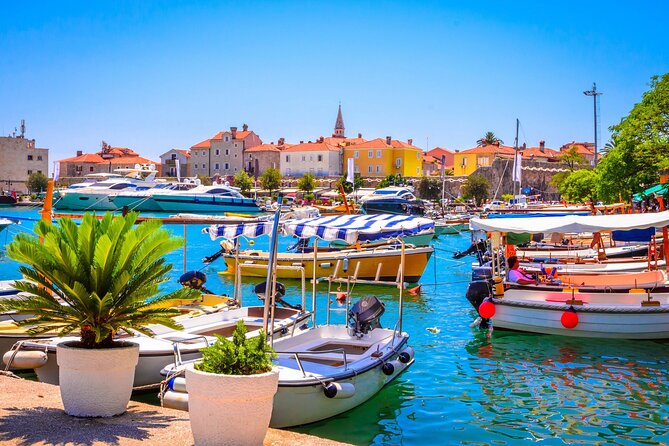
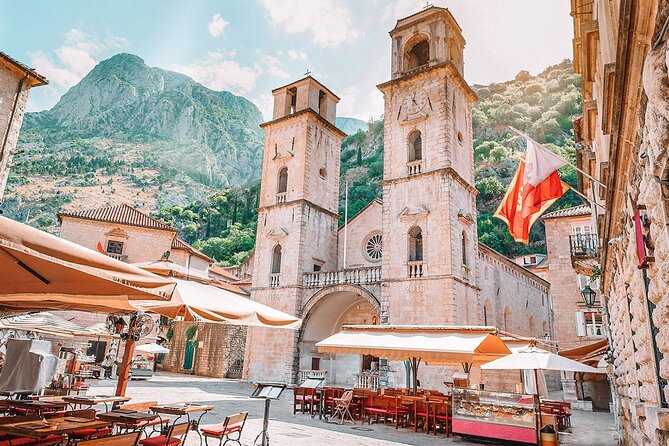
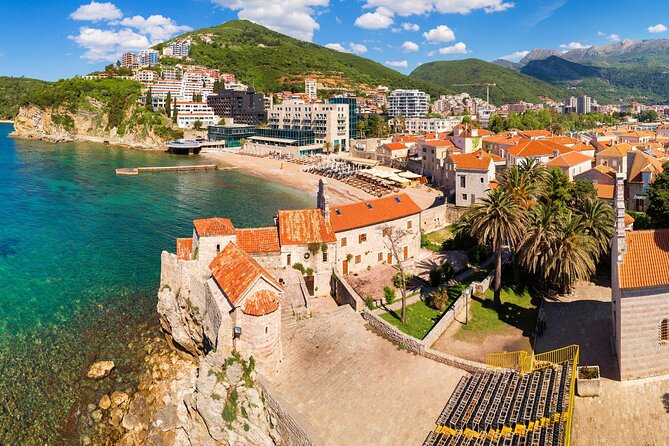
Budva offers a compact old town, medieval churches, beaches, and a more modern resort area. Kotor then returns you to fortified streets and UNESCO-listed stone buildings. The visit centers on the old town and Saint Luke’s Church, but the schedule does not allow much time for the demanding climb above Kotor.
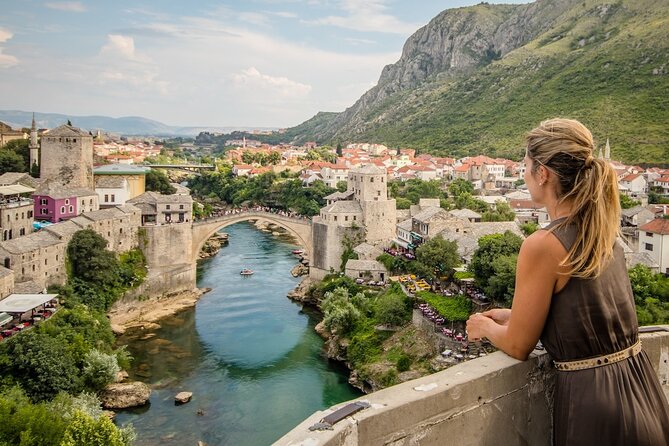
Mostar is one of the trip’s essential stops. Stari Most, the 16th-century Old Bridge, links a lively bazaar of stone lanes, shops, mosques, and cafes. The phrase Do not forget appears around town as a reminder of Mostar’s wartime destruction. Blagaj Tekija, beside blue spring water and a cliff, adds a quieter spiritual setting outside the city.
Sarajevo and Belgrade carry the heaviest history
Sarajevo needs more than a quick glance, but the route gives you a focused walking tour. You see Ottoman markets, Austro-Hungarian streets, mosques, churches, and synagogues, along with bullet holes and cannon marks left by the Yugoslav War.
Latin Bridge is the key historical stop. Here you learn about the 1914 assassination that helped trigger World War I. The city also offers excellent local food, especially meat dishes and desserts, so use the free time for a proper meal rather than rushing back to the hotel.
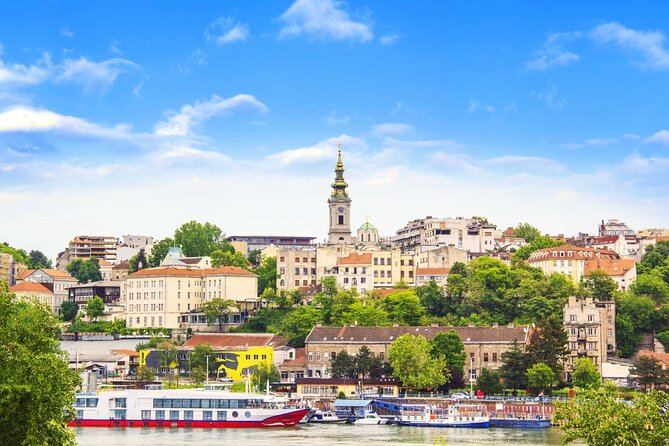
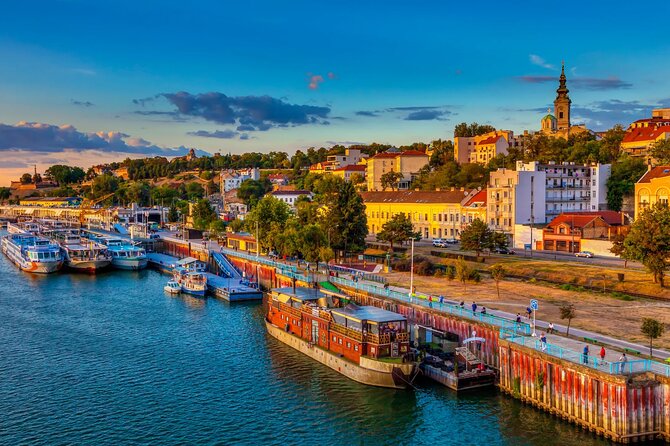
The next day brings Zvornik on the Drina River and then Belgrade. Kalemegdan Park and Belgrade Fortress sit above the meeting point of the Sava and Danube, with wide views and plenty of open space. The walk continues along Knez Mihailova to Republic Square, giving you a quick sense of the Serbian capital’s social center.
Northern Serbia, Budapest, and the final Danube cities
Sremski Karlovci is a pleasant change of rhythm. Its Baroque center, wine cellars, and Four Lions Fountain connect architecture with regional tradition. You have time to taste local wines, but wine purchases and other personal expenses are not included.
Novi Sad combines Austro-Hungarian and Ottoman influence, with pedestrian streets, Baroque buildings, and Petrovaradin Fortress above the Danube. The two-hour visit leaves some room to explore independently.
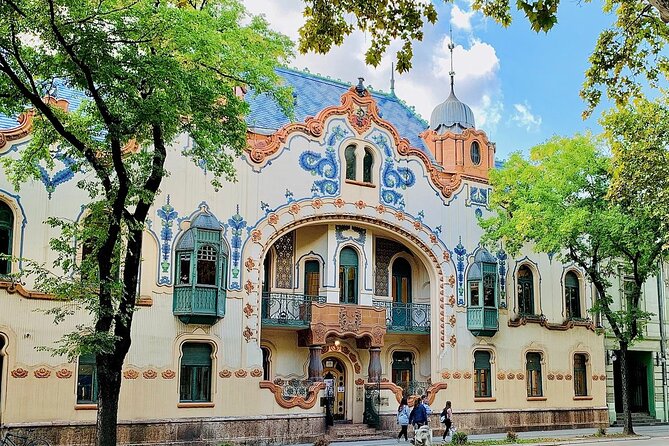
Subotica is another architecture stop, known for colorful buildings, multicultural character, food, and wine. It is a good final look at Serbia before crossing into Hungary.
Budapest receives a fuller day. You pass Saint Stephen’s Basilica, the Opera, Parliament, Heroes’ Square, and Fisherman’s Bastion, then visit Buda Castle. The evening is free, and you should save energy for a night walk because the Danube views are especially rewarding after dark.
Győr, Bratislava, and Vienna finish the journey. Győr offers Baroque streets, the town hall tower, the Cathedral of the Virgin Mary, the synagogue, and cafe-lined Baross Gabor Street. Bratislava brings Michael’s Gate, the Old Town, traditional coffeehouses, and Bratislava Castle above the Danube.
On day 21, the tour leader drops you at your Vienna hotel. Vienna itself is not toured, so plan extra nights if you want to see its palaces, museums, and cafes.
What the $7,734 price really covers
At $7,734.19 per person, this is a major purchase. The price includes 20 breakfasts, 20 hotel nights in three-star accommodation, private transportation, a professional tour leader, hotel pickup in Athens, hotel drop-off in Vienna, tourist taxes, fuel, road taxes, international vehicle insurance, and listed entry fees.
That package has real value for a route with many borders and small towns. Booking separate hotels and transfers across this region would take considerable time, and transport costs could rise quickly.
The value is less clear if you prefer luxury hotels, slow travel, or independent meals. Lunches, dinners, drinks, snacks, souvenirs, and personal spending are excluded. Room pricing is based on shared double, twin, triple, or quadruple occupancy, while a single room adds 45 euros per night.
Who should book this Balkan road journey?
I would recommend it to an energetic person who wants broad regional coverage, likes history and food, and does not want to handle the transport puzzle. Couples, friends, and first-time visitors to the Balkans should appreciate the built-in structure and small group.
I would hesitate if you want long museum visits, relaxed beach days, or several nights in each capital. The itinerary is full, and some visits last only 30 minutes or an hour.
The five published ratings are all at the top level, with praise focused on friendly staff, comfortable accommodation, personal guiding, good restaurants, and the feeling of a hands-on experience. One couple took the journey as a honeymoon, while another account praised the way the guide shared personal stories and helped connect the food and places. Those strengths fit the design of the trip, but the route still depends heavily on the individual tour leader.
Because the experience is non-refundable and cannot be amended after booking, check your dates, room choice, border requirements, and tolerance for long road days before paying.
FAQ
How long is the tour from Athens to Vienna?
The tour lasts approximately 21 days. It begins with hotel pickup in Athens and ends with hotel drop-off at your hotel in Vienna.
How many people can join the small group?
The tour has a maximum of 10 travelers. A private tour option is also available when booking.
What accommodation is included?
The package includes 20 overnight stays in three-star hotels with breakfast. Pricing is based on double, twin, triple, or quadruple room occupancy.
Is single-room accommodation available?
Yes. Single occupancy is available for an additional 45 euros per night per person in three-star accommodation.
Are meals included beyond breakfast?
Twenty breakfasts are included. Lunches, dinners, drinks, snacks, and personal food purchases are not included.
What is included in the transportation and sightseeing?
Private transportation, fuel, road taxes, international vehicle insurance, tourist taxes, a professional tour leader, and entry tickets for the listed sites are included. The tour begins at 9:00 am.
Should you book it?
Book this tour if you want to see a wide slice of the Balkans and Central Europe in one carefully connected journey, and if convenience matters more to you than slow travel. The small group, private vehicle, local food stops, and UNESCO sites make the high price easier to justify.
Skip it if you want luxury, flexible pacing, or time to settle into each city. For the right kind of explorer, though, this is an efficient and unusually varied way to move from Delphi’s ancient stones to Vienna’s grand Central European finish.