REVIEW · ATHENS
Argolis – Extended Full Day Trip from Athens
Book on Viator →Operated by Timeless Athens Tours · Bookable on Viator
The most impressive part of this day is how much of the Peloponnese you can see without renting a car. In about 10 hours, you pass from the Corinth Canal to the Bronze Age citadel of Mycenae, the old capital of Nafplio, and Epidaurus with its remarkable theater acoustics.
I like the private vehicle and door-to-door pickup, which keep a long day simple. I also like the mix of famous ruins and a pleasant coastal town, rather than spending the whole day at one archaeological site. The tradeoff is clear: this is a lot of ground in one day, and entrance fees, lunch, and a licensed guide are not included.
In This Review
- Key points to know before booking
- Why this private Peloponnese day works
- The Corinth Canal: a sharp start to the day
- Ancient Corinth rewards a longer visit
- Mycenae and the world of Agamemnon
- The Treasury of Atreus adds a second Mycenae
- Nafplio gives the day breathing room
- Epidaurus and the famous theater test
- What the $682.52 group price really covers
- The long day and the practical tradeoffs
- Who should book this day trip
- Should you book the Argolis extended full-day trip?
- FAQ
- How long does the Argolis tour last?
- Where does pickup take place?
- Is this a private tour?
- What transportation is provided?
- Are entrance fees included?
- Is lunch included?
- Is a licensed guide included?
- What level of fitness is needed?
- Can I cancel for a full refund?
Key points to know before booking
- The Corinth Canal makes a quick but memorable first stop, with a chance to see the narrow waterway linking the Gulf of Corinth and the Saronic Gulf.
- Ancient Corinth receives more time than a quick photo stop, including its Agora, museum, and the Vima associated with Paul.
- Mycenae brings the great Bronze Age centerpiece, with a separate short stop at the Treasury of Atreus.
- Nafplio adds a welcome change of pace, with its harbor, Bourtzi fortress, Palamidi Castle, and role as Greece’s first modern capital.
- Epidaurus ends the sightseeing with one of Greece’s great theaters, famous for acoustics that carry a voice without microphones.
- The private format suits a small group of up to three, especially if you value flexible attention more than the lower cost of a shared bus tour.
Why this private Peloponnese day works
This tour is built around distance. The Peloponnese is close enough to reach from Athens, but the main sights are spread across the northeastern part of the peninsula. Doing them independently means handling the roads, parking, tolls, directions, and timing yourself.
Here, pickup is available from any Athens location, and the price includes private transportation in an air-conditioned vehicle. Tolls, parking, fuel surcharge, and baggage charges are also covered. That matters on a full day with several stops, since small driving costs can add up and parking near major ruins is one less thing to think about.
The vehicle is private for your group, with a maximum of three people. That is a very different experience from a large coach. You do not have to wait for dozens of people at each stop, and you can ask practical questions as you go. Keep in mind, though, that a licensed guide is an extra service. The driver provides transportation, but the tour price does not promise a formal archaeological explanation at every site.
The day is scheduled for about 10 hours. The listed sightseeing stops total roughly four hours and 45 minutes, leaving the rest for driving between Athens, Corinth, Mycenae, Nafplio, and Epidaurus. Lunch is not included, so your actual break will need to fit into the day.
A few more Athens tours and experiences worth a look
- All Day Cruise -3 Islands to Agistri,Moni, Aegina with lunch and drinks included
★ 5.0 · 4,958 reviews

The Corinth Canal: a sharp start to the day
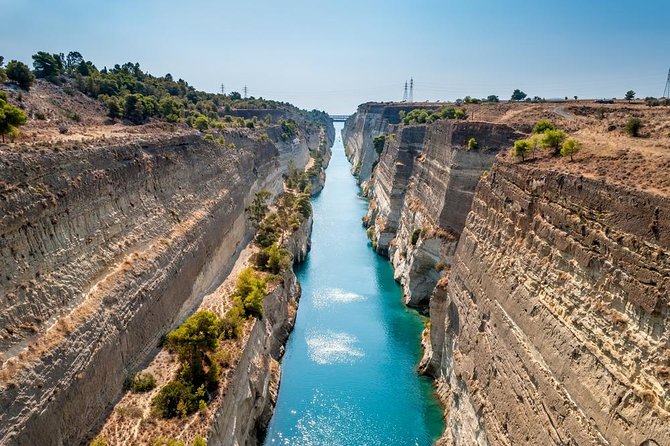
The Corinth Canal is a brief stop, about 20 minutes, but it gives you an immediate sense of the geography. The channel cuts through the narrow Isthmus of Corinth and connects the Peloponnese with mainland Greece. It also links the waters of the Aegean and Ionian seas.
Do not expect a long visit or a guided canal cruise. This is a viewpoint stop. You get time to look down into the channel, take photographs, and understand why this narrow strip of land mattered so much to ships and armies.
One especially nice detail is the canal bridge. Depending on timing, you may see the old bridge being lowered or raised, an unusual mechanical sight that makes the stop more than a quick look at blue water and concrete walls. Keep your expectations modest: 20 minutes is enough for orientation, not a full exploration.
Ancient Corinth rewards a longer visit
The tour allows about 70 minutes at Ancient Corinth, also called Archaia Korinthos. That is useful because the archaeological area is larger than it may first appear. You are not simply stopping for one temple and a photograph.
The remains include the Agora, the local museum, and the Vima, the location associated with Paul’s judgment. The Agora helps you picture Corinth as a major city-state, with public, commercial, and civic activity spread across a broad open area. The museum gives context to the stones outside, though the exact pace of your visit will depend on how much time you spend walking and reading.
The Vima adds a personal connection for visitors interested in early Christian history. It is one of those places where a short historical reference becomes easier to understand because you are standing at the actual site.
Entrance to Ancient Corinth is not included, so budget for a separate ticket. This is also a place where a licensed guide could add real value. Without one, you can still see the site, but the ruins require some imagination and background knowledge. If you want a detailed explanation of the Agora, museum, and Vima, arrange the guide as an extra service before the day begins.
Mycenae and the world of Agamemnon
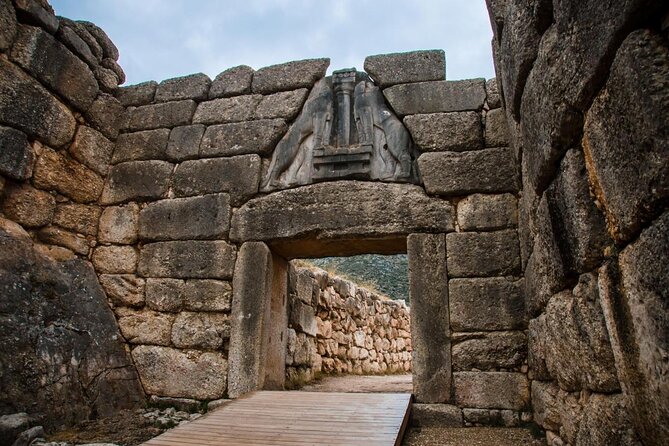
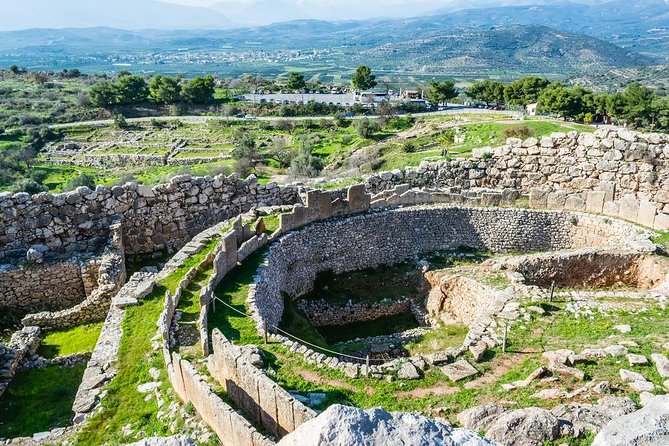
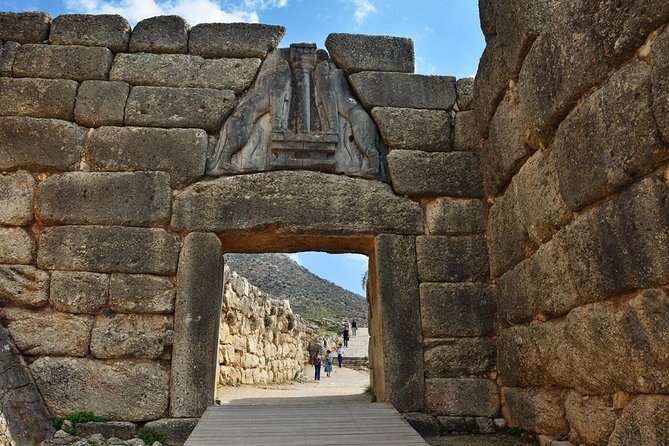
Mycenae is the major archaeological stop of the day. Located in the northeastern Peloponnese, about 90 kilometers southwest of Athens, it is tied to the Bronze Age world of kings, fortified citadels, and the legends of Agamemnon.
You have about 75 minutes at the Archaeological Site of Mycenae. That gives you enough time for a focused visit, but not an unhurried archaeological study. The site is important because it lets you see the remains of a powerful prehistoric center in its own setting, rather than only viewing objects in a museum.
The citadel and its massive defensive walls are the visual heart of the visit. The stones make the place feel older and more formidable than the polished ruins closer to Athens. This is also where the famous Lion Gate belongs, although the supplied schedule does not list a separate time for each feature, so you will need to manage your own priorities within the 75-minute stop.
The ground at Mycenae can require moderate walking, and the tour specifically recommends a moderate level of physical fitness. Wear practical shoes and expect some uneven surfaces. The entrance fee is not included.
The Treasury of Atreus adds a second Mycenae
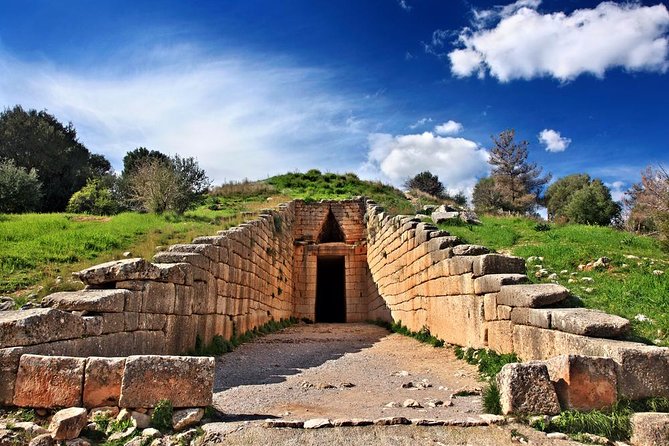
The short 15-minute stop at the Treasury of Atreus, also known as the Tomb of Agamemnon, works well as a companion to the citadel. This large tholos tomb was built during the Bronze Age, around 1250 BC, on Panagitsa Hill.
The beehive-shaped interior is the main reason to go inside. The scale and shape are striking, especially when you consider how early the structure was built. You do not need a long visit to understand why this tomb is one of the most memorable remains connected with Mycenae.
The time is tight, so treat this as a concise architectural stop rather than a second full archaeological visit. The schedule lists admission as free for this stop, while the main Mycenae entrance is not included.
A few more Athens tours and experiences worth a look




Nafplio gives the day breathing room
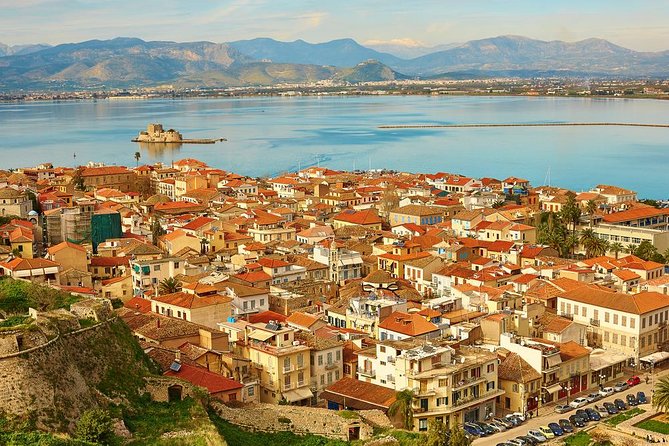
After the ruins, Nafplio provides a change of rhythm. You have about an hour at the port, where you can walk around the waterfront and take in the town’s best-known sights.
Nafplio is associated with two fortifications: Bourtzi, the small fortress floating in the harbor, and Palamidi Castle above the town. The tour does not include a separate climb or admission visit to either one, so plan on seeing them from the port area unless your timing and arrangements say otherwise.
Nafplio was the first capital of modern Greece, which gives the town a different character from the archaeological sites earlier in the day. You can spend this hour walking, taking photographs, and getting a feel for the harbor rather than studying another set of ruins.
I see Nafplio as an important part of the tour’s balance. Ancient Corinth and Mycenae demand concentration. Nafplio lets you slow down for a while. An hour is enough to enjoy the setting, but not enough for a full town visit, a castle climb, and a relaxed meal. Since lunch is excluded, ask about the day’s timing if you want to eat in Nafplio rather than elsewhere along the route.
Epidaurus and the famous theater test
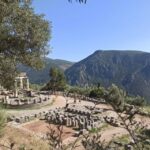
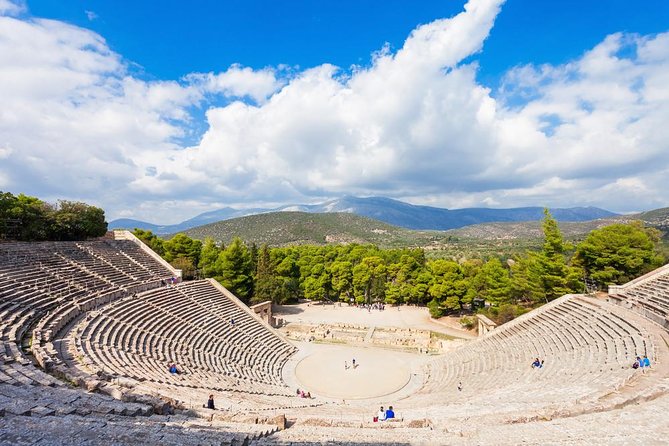
The final listed stop is the Ancient Theatre of Epidaurus, with about 45 minutes provided. The theater is known for acoustics so clear that performers can be heard across the seating area without microphones. The most useful way to understand this is to test it yourself if the site permits: stand at the lower performance area while someone else speaks from the stage or another designated point.
The theater could hold about 13,000 spectators. Its purpose was tied to the worship of Asklepios, the healing god, so Epidaurus was more than an entertainment venue. It formed part of a place connected with healing and religious practice.
Forty-five minutes is enough to see the theater and appreciate its design, but it does not allow a long visit to every part of the wider sanctuary. Admission is not included. If you are most interested in ancient medicine, worship, or the full archaeological setting, a licensed guide would make this stop more useful.
Ending at Epidaurus gives the day a strong final image. The theater is easy to appreciate even if you are not an expert in Greek archaeology, because the acoustics turn the site into a hands-on experience.
What the $682.52 group price really covers
The listed price is $682.52 per group of up to three people, not per person. For three people, that works out to about $227.50 each. For two people, the per-person cost is higher, and a solo booking would carry the full group price.
That is not a budget day trip. The value comes from the private vehicle, Athens pickup, and the amount of ground covered in a single day. You are paying to avoid a rental car, navigation, parking decisions, tolls, and the problem of linking several far-flung places by public transportation.
The price also includes parking fees, fuel surcharge, baggage charges, and private transport in an air-conditioned vehicle. Entrance fees, meals, drinks, and a licensed guide are extra. I would calculate those additions before booking, especially if you want a guide at all three archaeological sites.
This makes the tour most sensible for a small group that wants convenience and has limited time in Athens. If you are traveling alone or as a couple on a tight budget, compare the total cost against a shared tour. If you are three people splitting the fee, the private setup becomes easier to justify.
The long day and the practical tradeoffs
Ten hours is a serious outing. You will spend much of the day on the road, with several stops that require walking, standing, and attention. The tour is not a gentle half-day excursion.
The schedule also moves quickly. Ancient Corinth receives 70 minutes, Mycenae 75 minutes, Nafplio one hour, and Epidaurus 45 minutes. Those allotments are fair for highlights, but you will need to keep an eye on the clock. Mycenae and Epidaurus, in particular, can reward more time than this schedule allows.
The private format helps. A small group can receive more direct service than a large coach group, and the vehicle avoids the stress of self-driving. Still, private does not mean unlimited flexibility. You are trying to reach five major areas and return to Athens in one day.
Moderate physical fitness is recommended. The tour details do not provide a specific accessibility plan, so anyone concerned about walking conditions should ask the provider before booking. Confirmation is sent within 48 hours, subject to availability.
Free cancellation is available if you cancel at least 24 hours before the start time. Changes or cancellations made less than 24 hours ahead are not accepted for a refund.
Who should book this day trip
I would choose this tour if you want to see several famous Peloponnese sights from an Athens base and do not want to drive. It is also a good fit for a group of three, since the fixed group price spreads more favorably across the people in the vehicle.
History-focused visitors will appreciate the combination of Ancient Corinth, Mycenae, the Treasury of Atreus, and Epidaurus. Nafplio helps keep the day from becoming a sequence of ruins, adding a harbor, fortresses, and the story of Greece’s first modern capital.
I would think twice if you prefer slow visits, long lunches, or detailed time inside each archaeological site. You should also allow extra money for entrance tickets, food, drinks, and a guide. The tour delivers range, not a leisurely study of one place.
The provider, Timeless Athens Tours, has a perfect rating from the three ratings supplied for this experience. The strongest praise centers on the guide and the surprise that Ancient Corinth was larger than expected. That matches my main advice: do not treat Corinth as a quick photo stop, and confirm in advance who will provide the historical explanation if you want more than transportation.
Should you book the Argolis extended full-day trip?
Book it if your priority is seeing the Corinth Canal, Ancient Corinth, Mycenae, Nafplio, and Epidaurus in one organized day from Athens. The private air-conditioned vehicle, included tolls and parking, and pickup from an Athens location remove much of the day’s practical strain.
Skip it if the $682.52 group price feels high, if you need a relaxed pace, or if you want extensive guided time at each ruin. For a small group with limited Athens time, though, this is a strong way to reach the northeastern Peloponnese without taking on the roads yourself.
FAQ
How long does the Argolis tour last?
The tour lasts approximately 10 hours.
Where does pickup take place?
Round-trip pickup is available from any location in Athens.
Is this a private tour?
Yes. Only your group participates, with a maximum group size of up to three people.
What transportation is provided?
The tour uses a private, air-conditioned vehicle. Private transportation, fuel surcharge, tolls, parking fees, and baggage charges are included.
Are entrance fees included?
No. Entrance fees for Ancient Corinth, Mycenae, and Epidaurus are not included. The Treasury of Atreus stop is listed with free admission.
Is lunch included?
No. Lunch, drinks, and meals are not included.
Is a licensed guide included?
No. A licensed guide is available as an extra service.
What level of fitness is needed?
A moderate level of physical fitness is recommended.
Can I cancel for a full refund?
Yes, if you cancel at least 24 hours before the experience start time. Cancellations or changes made less than 24 hours before the start time are not refunded or accepted.
You Might Also Enjoy



More 1-Day Tours in Athens
More Full-Day in Athens
- All Day Cruise -3 Islands to Agistri,Moni, Aegina with lunch and drinks included
★ 5.0 · 4,958 reviews