REVIEW · ATHENS
Athens: Full-Day Meteora Tour with Local Guide & Greek Lunch
Book on GetYourGuide →Operated by Meteora Trip · Bookable on GetYourGuide
Meteora feels like a different planet. This full-day trip from Athens takes you up to the UNESCO rock towers of Meteora with a local guide, real cave history, and plenty of stops for photos.
What I like most is the way the tour turns big sights into a readable story. I also love the practical setup: an air-conditioned bus with on-board Wi‑Fi and USB chargers makes the long day feel manageable.
One thing to plan for: it’s a 14-hour day with lots of stairs and walking, plus extra monastery entrance fees that are cash only.
Key highlights that matter
- All monasteries seen from the Meteora circuit, with interiors of three you can visit
- Hermit caves, including the St. George Mandilas cave, explained in context
- Multiple panoramic photo stops to get angles you can’t do on a quick self-guided ride
- Kalambaka time in the foothills (and optional Greek lunch if you choose it)
- Comfort on the road: Wi‑Fi + USB chargers, plus scheduled rest stops
- Free audio guides in many languages, with the live guide adding color in English
In This Review
- Why Meteora’s monasteries are so hard to top
- Getting there from Athens: 7:45 AM departure and a long but comfortable drive
- Monastery circuit: what you’ll actually see up on the rocks
- Stepping inside three monasteries (and why that matters)
- The hermit caves: St. George Mandilas and why monks chose these spots
- Kalambaka time: the foothills break that keeps the day from feeling insane
- Panoramic photo stops and sunset timing
- Dress code and cash-only entrance fees: how not to lose time
- Audio guides and live storytelling: why guides like Maria and Katrina matter
- Price and value: is $82 a smart use of your time?
- Who this tour suits best (and who might struggle)
- The bottom line: should you book this Meteora day trip?
- FAQ
- What time does the bus leave Athens?
- Where is the meeting point?
- How long is the tour from start to finish?
- Do I have to pay entrance fees for monasteries?
- How many monasteries can I visit inside?
- Is Greek lunch included?
- What languages are available for the guide and audio?
- What do I need to use the audio guides?
- What should I wear for the monasteries?
- Is this tour suitable for mobility impairments?
Why Meteora’s monasteries are so hard to top
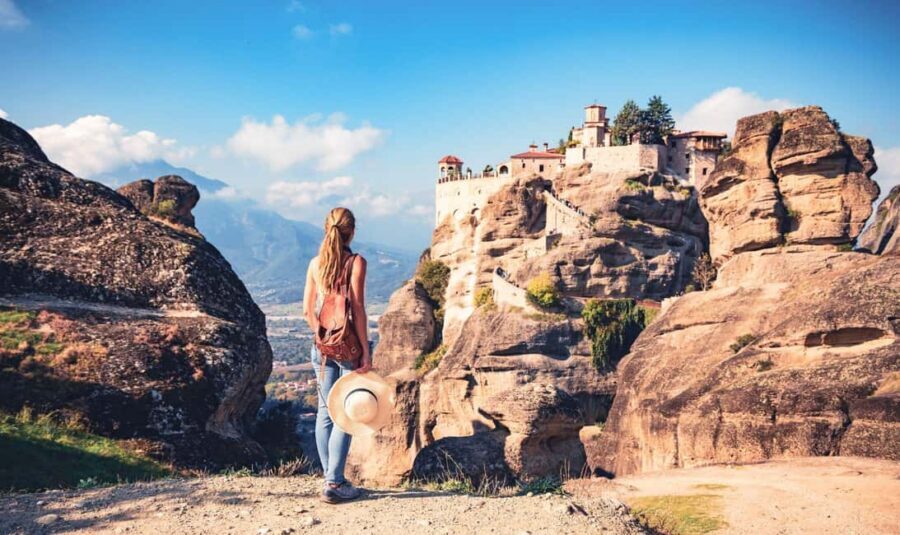
Meteora’s magic is that it’s not just one view. You get a whole system of monasteries perched on rock spires, connected by footpaths, stairs, viewpoints, and cliffside chapels. From the start, your guide frames why hermits chose these places—isolated caves high above the valley—and how the monks built a community around faith in an extreme landscape of stone.
The best part is that you don’t just “look up.” You actually experience it in layers: first with panoramic viewpoints, then with guided stops, and then with the chance to step inside three monasteries for interior time. On top of that, the tour includes the less-obvious caves—like the St. George Mandilas cave—where the story shifts from cliff monasteries to the hermit life that came before them.
Getting there from Athens: 7:45 AM departure and a long but comfortable drive

Your day starts early: the bus departs at 07:45 AM from the street across Stathmos Larisis (Central Railway Station). It’s privately owned and air-conditioned, with Wi‑Fi and USB chargers, which is a big quality-of-life win when you’re staring at a road for hours.
The ride itself is part of the experience. You’ll pass through mainland scenery and stop along the way at local shops for breaks. That matters because Meteora is far enough from Athens that a “quick morning out and back” isn’t realistic—so you’ll be grateful for the built-in rest points and the chance to grab a snack or use the restroom without losing time with extra logistics.
A practical note: a few people describe the bus time as long (and it is). Still, when you’re doing Meteora in a day, this is one of the least stressful ways to get there because you don’t have to handle finding parking, navigating routes, or coordinating with monastery ticket timing.
You can also read our reviews of more guided tours in Athens

Monastery circuit: what you’ll actually see up on the rocks
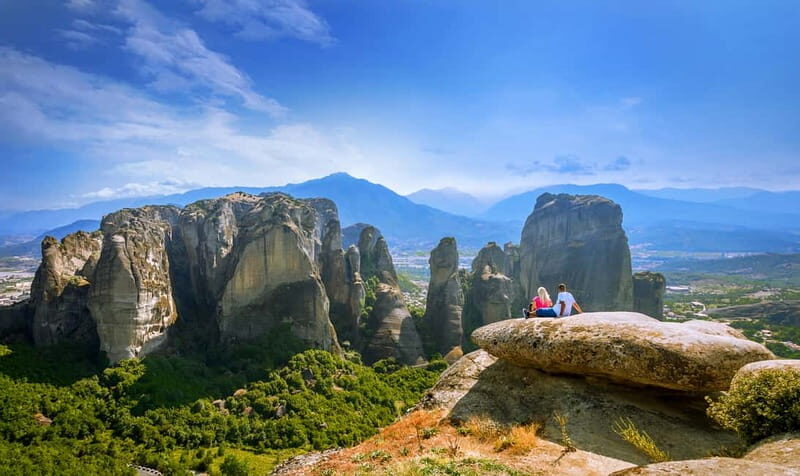
Once you arrive around noon, your English-speaking local guide meets you and runs the Meteora portion. The guided portion is about 5 hours inside Meteora, with sightseeing, photo stops, and structured monastery visits.
Here’s the core monastery lineup you’ll stop at:
- Monastery of St. Nicholas Anapavsa
- Monastery of Rousanou
- Great Meteor Monastery
- Monastery of Varlaam
- Holy Trinity Monastery at Meteora
- Monastery of St. Stephen
You’ll also get panoramic stops along the route—often the difference between seeing Meteora and really understanding how the towers sit in the rock field. These stops are where you’ll likely spend the most time lifting your camera, because the monasteries look different from each angle: closer, wider, and sometimes framed by valley mist or weather.
Stepping inside three monasteries (and why that matters)
A highlight is that you can visit the interior of three monasteries. Even if you’re not a “church history” person, interiors are where you notice the details—small chapels, icon traditions, and the feel of a place built for devotion in isolation.
Two caution points:
- Entrance fees are not included. There’s an entrance fee to each monastery, and it’s €5 per person, cash only.
- A guided tour inside the monasteries is not included. Your guide will explain and set context, but you’ll still want to pay attention once you’re inside and read what you can.
If you want the full effect, wear shoes you can walk in comfortably. Meteora rewards steady feet more than fast ones.
The hermit caves: St. George Mandilas and why monks chose these spots
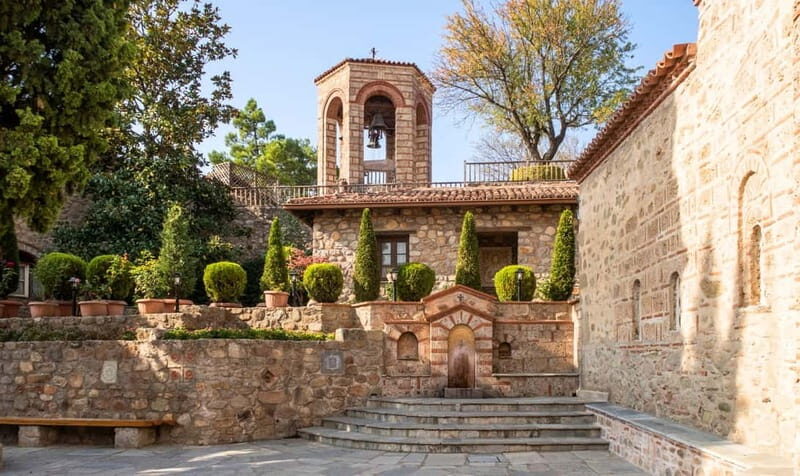
This tour goes beyond the obvious monastery look by including the story of hermits who settled in the caves. That’s where the tour becomes more than scenic sightseeing—it becomes understanding.
The St. George Mandilas cave is specifically mentioned, and your guide explains why hermits chose these imposing cliff caves about a thousand years ago, plus what the monks accomplished after. It’s a shift from “wow, buildings on rocks” to “why these rocks made sense for a life of seclusion.”
This cave portion also helps you connect Meteora’s timeline. You see the monasteries and then realize they’re part of a longer rhythm: first isolation in stone, then organized monastic life.
Kalambaka time: the foothills break that keeps the day from feeling insane

Between the long bus ride and the staircase-heavy monastery circuit, you need a breather. That’s where Kalambaka comes in.
You’ll get a solid stop in Kalambaka (in the foothills of Meteora). If you choose the lunch option, you’ll eat at a local restaurant, with a meal that includes fresh salad, a choice of traditional main dish, freshly baked bread, and water. Vegetarian and vegan options are available.
If you skip lunch, you’ll still have free time in Kalambaka to explore cafés, restaurants, and local shops—or just relax under the towering rock formations.
This town stop is also practical. It gives you a chance to regroup before the monastery circuit or after it, and it helps you see Meteora as a living place, not only a set of monuments.
A few more Athens tours and experiences worth a look
- All Day Cruise -3 Islands to Agistri,Moni, Aegina with lunch and drinks included
★ 5.0 · 4,958 reviews



Panoramic photo stops and sunset timing

You’ll make multiple panoramic stops for extraordinary views and photography. These are spaced so you don’t feel rushed between sites, and they give you a chance to find your favorite angles—some viewpoints are wider, others frame the monasteries more tightly.
There’s also a seasonal sunset element: Meteora sunset is included from November to February. If you’re traveling in those months, it’s worth planning your stamina around the idea that you’ll stay through evening light. In other seasons, you’ll still get viewpoints during the main visit window, but sunset is specifically flagged for those winter months.
Dress code and cash-only entrance fees: how not to lose time
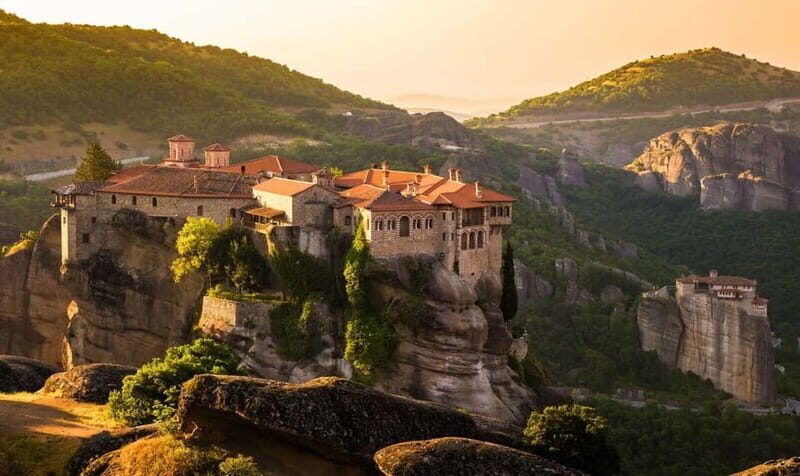
Meteora monasteries have rules, and they’re not negotiable.
Dress code essentials
- Men: long trousers and a shirt with sleeves
- Women: skirts that fall below the knee; shoulders must be covered
- Women can use a long scarf wrapped around the waist as an alternative method to meet the requirement
If you show up underdressed, you may lose time fixing it—or you may get turned away. Pack for it or buy something simple nearby if needed.
Cash-only fees
Entrance fees to monasteries are €5 per person, and it’s cash only. That means you’ll want small bills ready before you start climbing. Your best move: keep the cash accessible so you’re not hunting your wallet while the group is waiting.
Audio guides and live storytelling: why guides like Maria and Katrina matter

The tour includes free audio guides in several languages: Spanish, French, German, Italian, Japanese, Chinese, and Korean. You’ll need your smartphone and earphones to use them.
But the live guide is the real driver of the experience. Multiple guides are described as bringing humor and strong local context—for example, guides like Maria and Katrina are praised for mixing monastery details with stories about hermits, mythology, and how monastic life shaped the region. If you speak English, you’ll likely appreciate the way the guide connects each stop so it doesn’t feel like a checklist.
Also, a heads-up from real-world experience: some indoor sections can limit where you can point a camera. It’s not always a problem for great photos because many of the best views are outside at the panoramic stops, but do follow signs and your guide’s timing.
Price and value: is $82 a smart use of your time?

At $82 per person for a 14-hour day, this tour is mostly paying for three things:
1) Round-trip transportation from Athens (private, air-conditioned bus)
2) Expert local guidance for the Meteora circuit and cave story
3) Time management: all the major stops plus interior access to three monasteries, plus photo breaks
Compared to doing Meteora solo, the value is strongest if you don’t have a car or you don’t want to plan transport and timing. You’re also getting comfort basics built in—Wi‑Fi and USB chargers—plus a free water bottle and scheduled rest stops.
The optional lunch is a bonus rather than a heavy lift. The meal is structured (salad, main choice, bread, water) and vegetarian/vegan options exist. Some people describe lunch as tasty and filling, and that matters because Meteora is physically demanding. When you’re paying for a day trip, feeding yourself should be simple.
One extra cost to budget for: monastery entrance fees (€5 each, cash only). So, your total out-of-pocket can be higher than the base price depending on how many entrances you use. Still, for most visitors, paying the cash fees on-site feels manageable once you realize the guide is coordinating the whole sequence.
Who this tour suits best (and who might struggle)
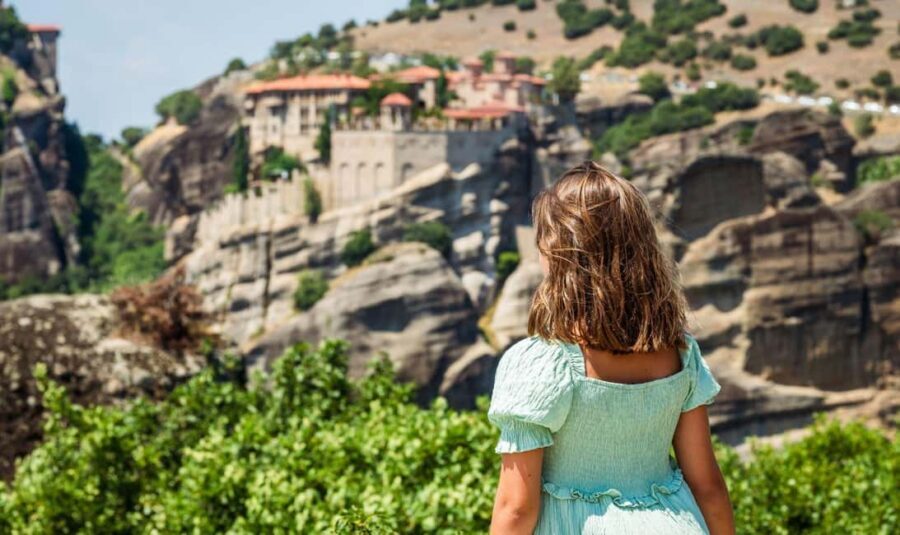
This Meteora day trip fits best if you:
- Want to see a lot of Meteora in one go from Athens
- Like having a local guide explain why the hermit caves and monasteries exist together
- Prefer structured stops, photo pauses, and reduced hassle vs self-planning
- Can follow a dress code and walk stairs without trouble
It is not suitable for people with mobility impairments. The route involves monastery access and the reality of cliffside sites—so plan accordingly if you use a mobility aid.
The bottom line: should you book this Meteora day trip?
If your goal is a smooth, guided Meteora day without renting a car, I’d book it. The combination of transport, a local guide who connects monastery + hermit cave history, and time in Kalambaka (with optional lunch) makes the long day feel organized instead of chaotic.
I’d hesitate only if you:
- Don’t want to walk stairs or spend many hours on-site
- Are uncomfortable with cash-only entrance fees and monastery dress-code rules
- Expect everything to feel relaxed and unhurried, because this is a full-day schedule and you’ll be moving through multiple stops
If you’re checking Meteora off your Greece list, this is one of the practical ways to do it. Just pack for the rules, bring the cash, and plan your energy for a day that runs from morning to late evening.
FAQ
What time does the bus leave Athens?
The bus departs at 07:45 AM from the street across Central Railway Station (Stathmos Larisis).
Where is the meeting point?
You board the private air-conditioned bus on the street across Stathmos Larisis. It’s marked with a Meteora Trip sign in the front window.
How long is the tour from start to finish?
The total duration is listed as 14 hours, with the Meteora guided tour taking about 5 hours.
Do I have to pay entrance fees for monasteries?
Yes. Entrance fees to monasteries are €5 per person and are cash only.
How many monasteries can I visit inside?
The tour includes time to visit the interior of three monasteries.
Is Greek lunch included?
Lunch is optional. If you select it, you’ll have a traditional Greek lunch at a local restaurant with salad, a choice of main dish, bread, and water. Vegetarian and vegan options are available.
What languages are available for the guide and audio?
The live guide is English-speaking (and languages listed include French and Spanish). Free audio guides are offered in Spanish, French, German, Italian, Japanese, Chinese, and Korean.
What do I need to use the audio guides?
Bring your smartphone and earphones so you can listen to the free audio guides.
What should I wear for the monasteries?
Men need long trousers and sleeved shirts. Women need skirts below the knee and covered shoulders (trousers are not permitted). A scarf wrapped around the waist is an alternative option for women.
Is this tour suitable for mobility impairments?
No. It is listed as not suitable for people with mobility impairments.