REVIEW · ATHENS
From Athens: Mycenae and Epidaurus Private Tour
Book on GetYourGuide →Operated by SIGHTS OF ATHENS-GRAY LINE · Bookable on GetYourGuide
Mycenae gives this day its dramatic heart. You pass through the Lion Gate, walk beside walls so massive that later Greeks credited them to Cyclopes, and enter the world of Agamemnon, the legendary king of Homer’s Trojan War. At Epidaurus, a quiet word spoken in the theater’s center can carry to the highest seats. Ancient engineering gets its due at the Corinth Canal, too.
I like the private vehicle and hotel pickup, which save you from a large group and make an ambitious Peloponnese day easier to manage. I also like the pairing of Mycenae’s Bronze Age ruins with Epidaurus’s graceful Classical theater. The main drawback is the long road time: eight hours includes roughly four hours in the vehicle, and entrance fees, meals, and drinks are extra.
In This Review
- Key points
- Why Mycenae is worth the long ride
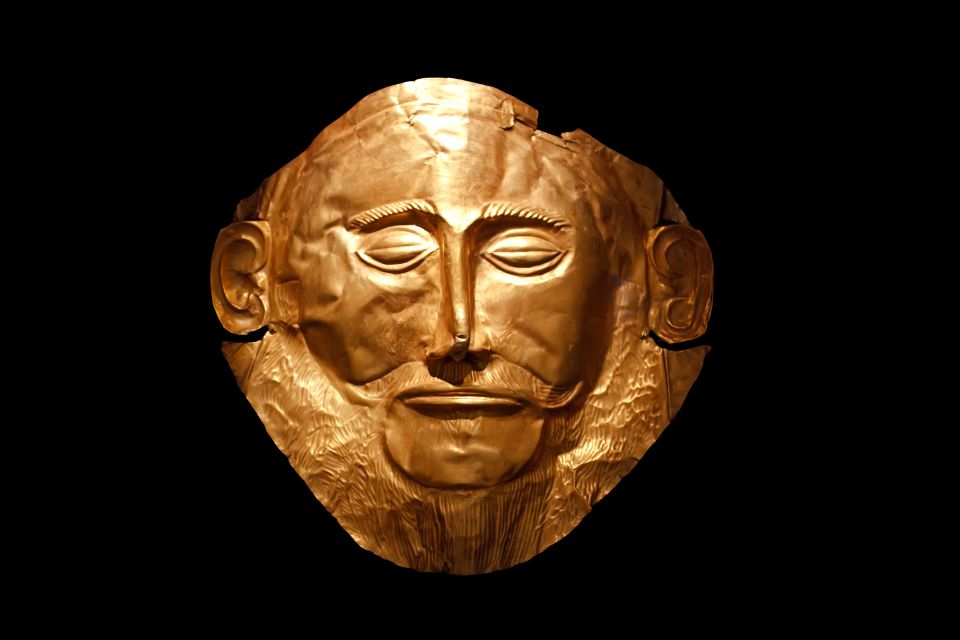
- Finding Agamemnon beneath the beehive tomb
- The Corinth Canal makes a good first stop
- Epidaurus and the theater built for sound
- What the private vehicle changes
- Eight hours sounds generous, but the day moves
- Is $414 good value for four people?
- Who should book this Peloponnese day trip?
- Should you book it?
- FAQ
- How long is the tour?
- Where can pickup and drop-off take place?
- Is the tour private?
- What transportation is provided?
- Is a guide included?
- Are entrance fees included?
- How long is the stop at the Corinth Canal?
- What should I bring?
Key points
- Mycenae in depth: Allow about two and a half hours for the acropolis, Lion Gate, Cyclopean walls, royal tombs, and museum.
- Agamemnon’s tomb: Enter the huge beehive-shaped Treasury of Atreus, traditionally linked with the legendary king.
- Epidaurus theater: See a remarkably preserved fourth-century BC venue that seated up to 14,000 people.
- A useful Corinth Canal stop: Spend 15 minutes photographing the cut that links the Aegean and Ionian seas.
- Private transport: Travel with only your own group of up to four in an air-conditioned car or van.
- Flexible departure points: Pickup and return are available in Athens, Glyfada, and Piraeus.
Why Mycenae is worth the long ride
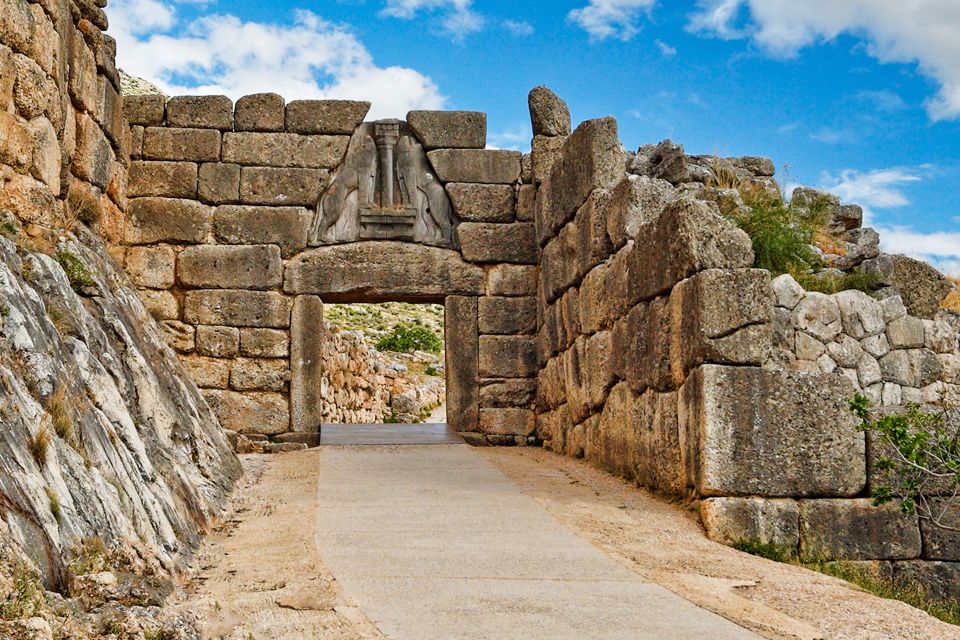
Mycenae is not simply another pile of Greek stones. It was the center of a powerful kingdom from about 1600 to 1200 BC, long before the Classical Athens most people picture when they think of ancient Greece. The remains let you see an older, rougher age of Greek civilization, one built around fortified hilltop centers, royal power, and monumental tombs.
The approach is part of the appeal. Mycenae sits above the surrounding countryside, and the defensive position becomes clear as you walk toward the entrance. The site is compact enough to cover in two and a half hours, but uneven ground and stone paths mean you should wear proper shoes.
The Lion Gate is the famous first encounter. Two stone lions, or lion-like creatures, are carved into a triangular relief above the gate. Their heads are gone, but the relief still gives the entrance a royal, almost theatrical quality. This was not a modest doorway. It announced power.
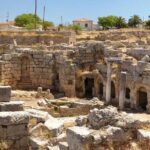
Beyond the gate, you follow the remains of the acropolis and the Cyclopean walls. The stones are huge, irregular, and tightly fitted. Later Greeks could not imagine ordinary people moving blocks of that size, so they credited the work to the Cyclopes, the one-eyed giants of myth.
That old explanation tells you something useful. Mycenae was already ancient to the Greeks who told the stories of Agamemnon. The legends are not a simple historical record, but they give the ruins a strong human frame. You are looking at the kind of fortified royal center that helped inspire tales of rival kings, war, betrayal, and revenge.
You can also read our reviews of more private tours in Athens



Finding Agamemnon beneath the beehive tomb
The tomb traditionally called the Treasury of Atreus, often linked with Agamemnon, is just outside the main citadel. It is one of the most memorable parts of the visit, even though the interior is empty.
You enter through a long passage cut into the hillside, then step into a tall circular chamber formed from carefully laid stone courses. The room has the shape of a beehive, and its scale is surprisingly grand. There is no furniture or treasure to see today, but the architecture does the work. The tomb feels less like a burial chamber and more like a monument to royal status.
The nearby tomb traditionally associated with Clytemnestra adds another layer to the story. She was Agamemnon’s wife and one of the central figures in the myths surrounding the royal house. Keep in mind that these names come from tradition, not a confirmed identification of the people buried in each tomb.
Your two and a half hours at Mycenae also allow time for the Archaeological Museum of Mycenae. The museum helps put the bare walls and stones into context. Objects from the excavations show the craft, burial customs, and wealth of the Mycenaean world.
One useful planning note: the museum in Mycenae is not the same as the National Archaeological Museum in Athens. A German-speaking participant specifically appreciated seeing the Mycenaean finds in Athens after the excursion, but that is a separate visit and is not part of this tour. If you have time in Athens, the two sites work well together: Mycenae gives you the setting, while a museum gives you more of the objects.
The Corinth Canal makes a good first stop
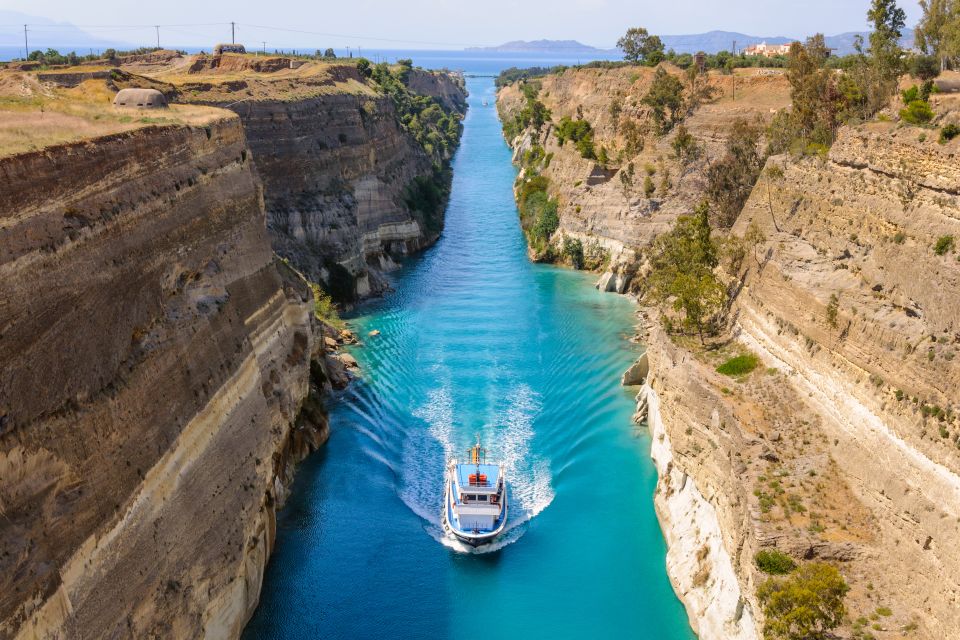
The road from Athens to Mycenae takes about an hour before the short visit to the Corinth Canal. The stop lasts about 15 minutes, so think of it as a photo break rather than a full canal visit.
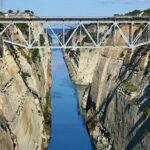
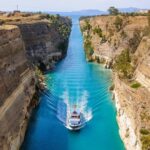
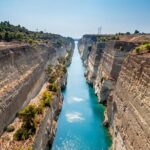
The canal is an impressive piece of engineering. It cuts through the narrow Isthmus of Corinth and connects the Aegean and Ionian seas. From the viewpoint, you can appreciate the straight, steep-sided channel and the scale of the excavation.
Fifteen minutes is enough to stretch your legs, take photographs, and get your first look at the Peloponnese. It is not enough for a long walk or a detailed exploration, so you should keep expectations modest. Its main value is that it breaks up the first hour in the vehicle and gives the day an early visual landmark.
Epidaurus and the theater built for sound
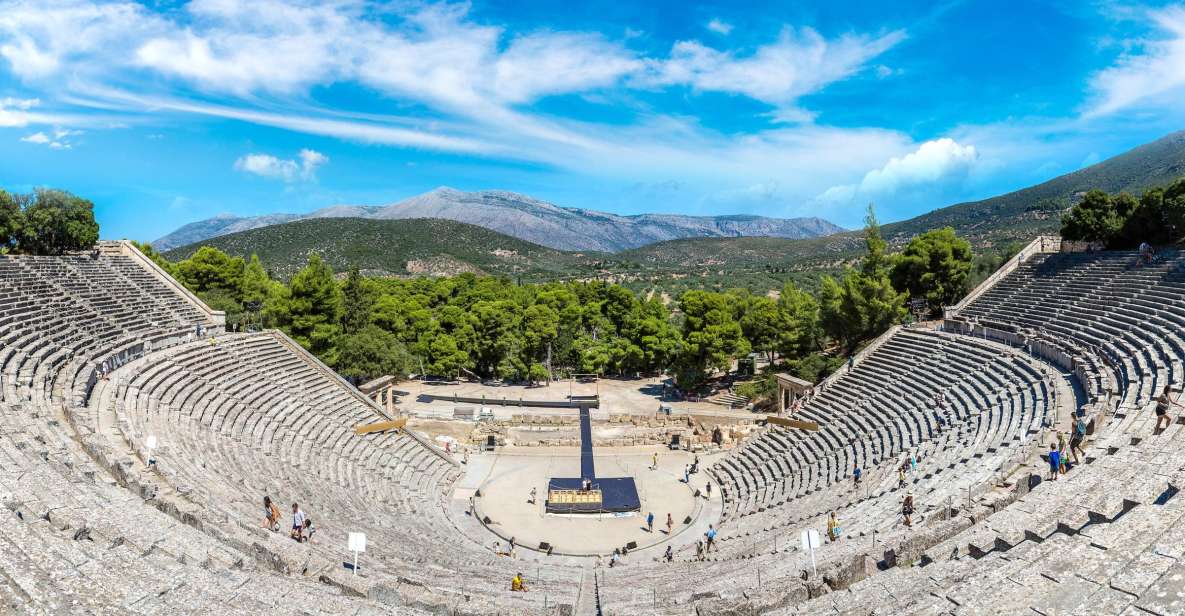
After Mycenae, the drive to Epidaurus takes about 45 minutes. You then have roughly two and a half hours at the archaeological area, with the ancient theater as the clear highlight.
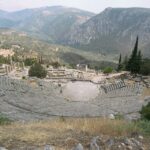
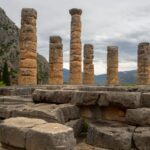
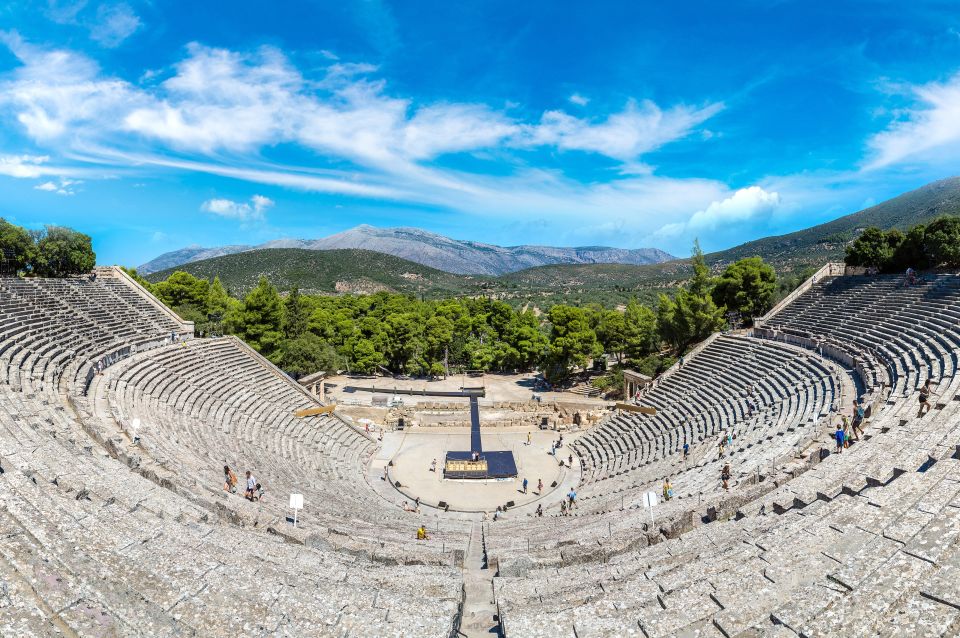
The theater dates from the fourth century BC and is made of limestone. Its curved rows rise in a broad fan around the circular orchestra. The venue could hold up to 14,000 people, a reminder that ancient Greek theater was public life on a large scale, not a small performance for an elite room.
The famous acoustic test is simple: stand at the center and speak, clap, or drop a coin. Sound can carry remarkably well to the upper seats. The theater’s shape, materials, and careful construction all play a role, though the tour description uses the coin drop as the classic example. You may not have a coin or be able to test it in a crowded setting, but even a quiet spoken word can make the design feel clever.
Look at the entrance, too. Restored Corinthian pilasters frame the approach, while the foundations of the ancient stage remain beyond the orchestra. The theater is still used for performances of ancient Greek drama during the annual Hellenic Festival. That living connection gives the site more meaning than a monument viewed only behind a barrier.
Epidaurus was also an important ancient center connected with healing, but the supplied schedule and description focus on the theater and archaeological area. Plan your time around the theater rather than expecting a full guided study of every part of the sanctuary.
What the private vehicle changes
This is a private group experience for up to four people. Pickup can be arranged from any hotel, accommodation, or central point in Athens or Piraeus, with Glyfada also listed as a pickup and drop-off area.
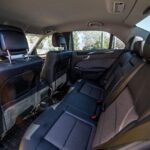
The vehicle is a private VIP van or car with air-conditioning. That matters in the Peloponnese, where the day includes outdoor walking, open ruins, and several drives. You can keep your own bags in the vehicle and avoid coordinating with a large group at every stop.
The schedule is fixed enough to cover three major places, but the private format gives the day a more personal feel than a coach excursion. An English-speaking driver handles the route. One booking specifically praised a driver named Akis for being friendly and offering useful information, but you should not assume he will be your driver on every departure.
There is also an audio guide in German, English, French, Spanish, Russian, Polish, Chinese, Japanese, Italian, and Portuguese. The live service is in English. This is important for your expectations: the experience includes an English-speaking driver and multilingual audio support, but the driver is not described as a dedicated archaeological guide.
If you want detailed interpretation at every stone, you may prefer to hire a licensed guide separately or use the audio guide carefully. If you mainly want reliable transport, site access, and a driver who can provide useful background, the arrangement is a practical middle ground.
- All Day Cruise -3 Islands to Agistri,Moni, Aegina with lunch and drinks included
★ 5.0 · 4,958 reviews






Eight hours sounds generous, but the day moves
The advertised duration is eight hours. The schedule includes about one hour from Athens to the canal, 45 minutes from the canal to Mycenae, 45 minutes from Mycenae to Epidaurus, and two hours for the return drive. That is about four hours on the road.
The remaining time is planned for 15 minutes at the canal, two and a half hours at Mycenae, and two and a half hours at Epidaurus. This is a full day, not a slow rural outing. You will see the major sights, but you should not expect long café stops, wandering through villages, or time for extra attractions.
The route works best if you want two major archaeological sites in one day. Mycenae needs enough time to feel substantial, while Epidaurus gets an equal amount of attention. The balance is good, but the return to Athens can feel tiring after walking in the sun.
Bring comfortable shoes, sunglasses, a sun hat, and a camera. These are exposed archaeological sites, and the supplied information specifically advises comfortable footwear. Food and drinks are not included, so carry what you need or ask the driver about suitable arrangements during the day. Do not forget your passport or ID card.
Is $414 good value for four people?
The price is $414 per group of up to four, not per person. For four people, that works out to $103.50 each before entrance fees. For two people, the per-person cost is much higher, but you are still paying for a private vehicle, private pickup, fuel, tolls, and a full day on the road.
The value depends heavily on group size. A family or group of four can get a reasonable private day compared with booking four separate seats on a small-group outing. You also avoid the wasted time that can come with collecting many passengers from different hotels.
Entrance fees to the monuments are extra, as are food and drinks. Add those costs to your calculation before booking. The price includes taxes, tolls, and fuel, which makes the final transport cost easier to understand.
I would see this as a convenience-focused purchase rather than a bargain archaeological tour. You pay for door-to-door transport and a private setting. If your priority is the lowest possible price, public transport or a large group tour may cost less. If your priority is fitting Mycenae and Epidaurus into one day from Athens without driving yourself, the price is easier to justify.
Who should book this Peloponnese day trip?
I would recommend it most strongly to first-time visitors based in Athens who want to see important mainland sites without renting a car. It also suits families and small groups that can divide the $414 cost among four people.
History fans will get the most from Mycenae, especially if they enjoy connecting archaeology with Greek mythology. Epidaurus is a good counterpoint, offering a more complete and elegant structure after Mycenae’s heavy fortifications and tombs.
This may not be the best choice if you dislike long drives or want a relaxed day. The schedule is efficient, but it is not leisurely. It may also disappoint you if you expect a full-time professional guide at each monument, since the listed service is an English-speaking driver plus audio guides.
The experience has a strong rating of 4.8 from three bookings, with particular praise for the attentive driving and the interest of Mycenae. That is a small sample, so I would treat it as a positive signal rather than a guarantee. The clearest practical lesson is to confirm your language needs, understand that admission is extra, and use the private format to ask questions during the drive.
Should you book it?
Book this tour if you want Mycenae and Epidaurus in one efficient private day and can share the cost with up to three companions. The Corinth Canal stop is brief, but it is a useful extra, and the air-conditioned vehicle makes the long route manageable.
Skip it if you want a slow day, a deep archaeological lecture, or the lowest-cost way to reach the Peloponnese. For most small groups staying in Athens, though, the combination of royal tombs, Bronze Age walls, a world-famous theater, and private pickup makes this a sensible use of one day.
FAQ
How long is the tour?
The tour lasts eight hours, including transportation between Athens and the Peloponnese sites.
Where can pickup and drop-off take place?
Pickup and drop-off are available in Athens, Glyfada, and Piraeus. Pickup can be arranged from any hotel, accommodation, or central point in Athens or Piraeus.
Is the tour private?
Yes. It is a private group experience for up to four people.
What transportation is provided?
You travel in a private VIP air-conditioned van or car. Taxes, tolls, and fuel are included.
Is a guide included?
An English-speaking driver is included. Audio guides are also available in German, English, French, Spanish, Russian, Polish, Chinese, Japanese, Italian, and Portuguese.
Are entrance fees included?
No. Entrance fees to the monuments are not included in the tour price.
How long is the stop at the Corinth Canal?
The stop at the Corinth Canal lasts about 15 minutes.
What should I bring?
Bring your passport or ID card, comfortable shoes, sunglasses, a sun hat, and a camera. Food and drinks are not included.