REVIEW · ATHENS
Private Walking Tour- 3000 years of History around the Acropolis Rock
Book on Viator →Operated by SpecialTy Tours - Greece · Bookable on Viator
The most appealing part of this private Athens tour is its route around the Acropolis Rock, not simply a quick stop at the Parthenon. Over four hours, you walk from the Acropolis Metro Station through the Hill of the Muses, Socrates’ Prison, the Pnyx, Thissio, and Monastiraki, following Athens through roughly 3,000 years of history.
I like the personal pace and the chance to stop for photographs instead of being pushed along with a large group. I also like the range of the walk: pine-shaded hill paths, ancient meeting places, views across Athens, and the lively old lanes around Monastiraki. The main consideration is the walking itself. Hills, uneven paths, and several hours on foot may be tiring, and the listed price of $331.62 per person is high unless you value a private guide and customized attention.
In This Review
- Key points to know before booking
- A private way to understand the Acropolis area
- Hill of the Muses and the paths of Dimitrios Pikionis
- Socrates’ Prison and a quiet hilltop pause
- The Pnyx, where Athenian democracy took shape
- From Thissio’s pedestrian road into old Athens
- Roman and Ottoman traces around Monastiraki
- What the $331.62 price means
- Timing, pickup, and the physical effort
- Who will get the most from this walk
- Should you book this private Athens tour?
- FAQ
- How long is the private walking tour?
- What time does the tour start?
- Where does the tour begin?
- Is hotel or port pickup available?
- Is this a private activity?
- What places does the route visit?
- Is admission included?
- Is lunch included?
- Are service animals allowed?
- Can I cancel for a full refund?
Key points to know before booking
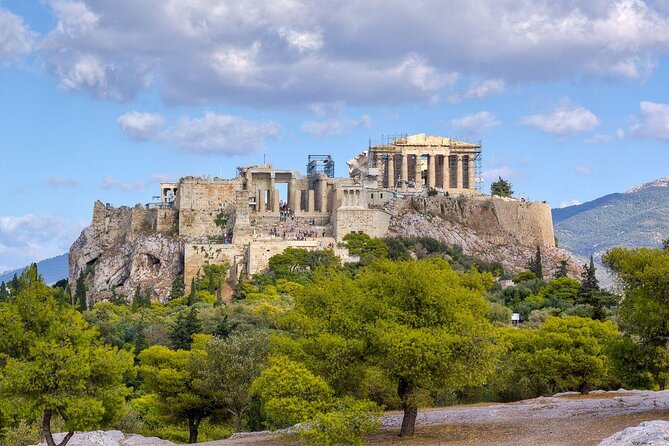
- A private four-hour route: Your group tours alone with the guide, allowing time for questions, photos, and personal interests.
- The Acropolis from outside its famous monuments: The route begins near the Acropolis but focuses on the surrounding hills and historic districts.
- Socrates’ Prison and the Pnyx: You visit two atmospheric sites linked with ancient Athens, including the birthplace of democratic debate.
- Pikionis-designed walking paths: The Hill of the Muses route uses paths created by architect Dimitrios Pikionis.
- A strong city-view component: The hills and pedestrian roads offer good points for looking across Athens.
- A practical finish in Monastiraki: The walk ends among Roman and Ottoman remains, flea-market lanes, and Avyssinias Square.
A private way to understand the Acropolis area
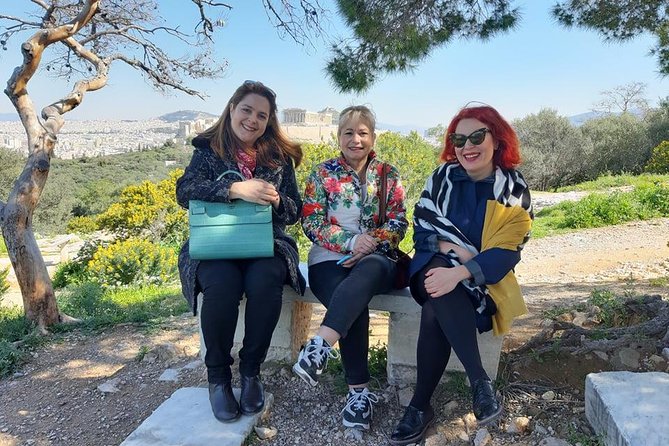
Many Athens sightseeing walks hurry straight toward the Acropolis entrance. This one takes a different approach. You begin at Acropolis Metro Station at 10:00 a.m. and follow the pedestrian road toward the Hill of the Muses, passing in front of the Acropolis Rock.
That opening gives you time to get oriented. Instead of seeing the Acropolis as a single monument, you begin to understand it as the center of a much larger historic area. The rock rises above the surrounding neighborhoods, while the roads and hills around it provide a useful sense of how Athens is arranged.
Because this is a private activity, the guide can adjust the emphasis. You might spend more time on ancient politics, photography, the walking paths, or the later Roman and Ottoman remains. The experience is advertised as customizable, which matters here because four hours can feel either generous or short depending on your interests.
The reviews supplied for this experience give particular praise to Nancy. She is described as highly organized, warm, clear in English, and especially good at explaining Athens across the ages. If Nancy is your assigned guide, those details suggest a tour that depends heavily on storytelling and conversation rather than a fixed script.
One point needs clear explanation. The itinerary lists the Acropolis area as a stop, but the actual route described is around the rock and through nearby hills and districts. The included service is a walking tour. Lunch is not included, and the provided information does not list admission to the Acropolis monuments themselves.
You can also read our reviews of more walking tours in Athens



Hill of the Muses and the paths of Dimitrios Pikionis
The first section takes about 30 minutes. From the Acropolis Metro Station, you walk along the pedestrian road toward the Hill of the Muses, passing in front of the Acropolis Rock.
This is a useful start for anyone who wants more than a monument checklist. The route lets you look at the Acropolis from the outside while moving through the setting around it. You can pause for photographs and ask questions before the longer uphill section begins.
The paths on the Hill of the Muses were designed by the architect Dimitrios Pikionis. Their inclusion gives the tour an artistic layer that many basic ancient-site walks miss. You are not only moving between archaeological points. You are also walking through a carefully designed route intended to frame Athens and its ruins.
The first section is free of a separate admission charge according to the tour details. Still, wear shoes suited to walking. The tour is four hours, and the next stop involves hiking uphill.
Socrates’ Prison and a quiet hilltop pause
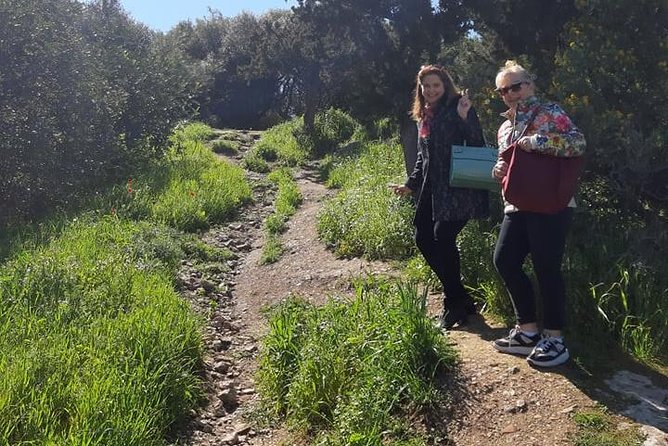
The walk then reaches the place known as Socrates’ Prison. The planned stop lasts about an hour, making it the longest pause on the route.
You first rest for a few minutes in front of the site, then continue up the hill. At the top, you rest under pine trees. This sounds like one of the more relaxed parts of the experience, but it is also where the physical demands become clear. The route includes a hill climb, and the paths may feel more demanding than a flat city stroll.
The value of this stop is its atmosphere. A site associated with Socrates sits away from the traffic of central Athens, and the pine trees offer a break from the hard stone and busy streets below. The setting gives your guide room to discuss ancient Athens in a quieter place, with fewer distractions.
I would especially like this part for a private group because you can control the pace. If someone in your party wants to linger, take photos, or ask about the site, there is no larger group waiting to move on. On the other hand, visitors wanting a short, easy overview may find an hour here longer than necessary.
The tour details call the site Socrates’ Prison, but they do not provide a fuller account of the site’s archaeological interpretation. That is another reason the guide matters. Ask questions and let the explanation add context to what you are seeing.
The Pnyx, where Athenian democracy took shape

After the Hill of the Muses, you continue toward the Pnyx. The planned time here is about 30 minutes.
The Pnyx is presented as the place where the heart of ancient democracy beat. That makes it one of the most important stops conceptually, even if it is less visually famous than the Acropolis. This is where the tour shifts from monuments and views to the political life of ancient Athens.
A private guide can make this stop more useful by connecting the physical setting with the idea of public debate. You are standing on a hill associated with citizens gathering and speaking, while the Acropolis remains nearby as a reminder of the city’s religious and civic power.
From the Pnyx, the route continues to the Hill of the Nymphs and passes in front of the National Observatory. The observatory is identified as the first research foundation of modern Greece and one of the oldest in southern Europe. That detail helps the tour move beyond antiquity. Athens is presented not as a city frozen in the classical period, but as a place with later chapters in science, government, religion, and daily life.
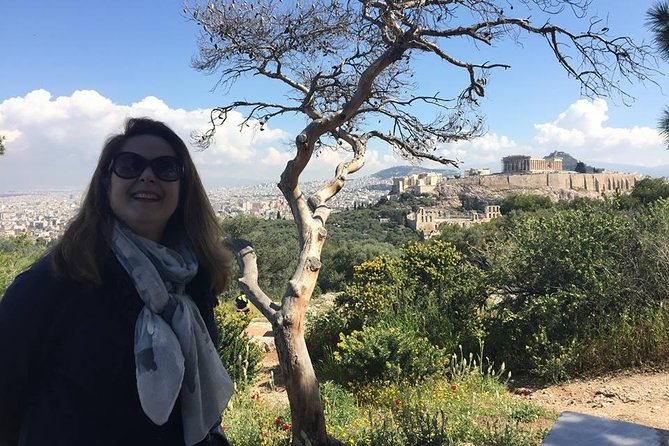
This is also another point where views matter. The hills around the Acropolis give you angles across Athens that you do not get from a crowded street. Bring a camera, but leave time to listen. The route is designed for both scenery and explanation.
From Thissio’s pedestrian road into old Athens
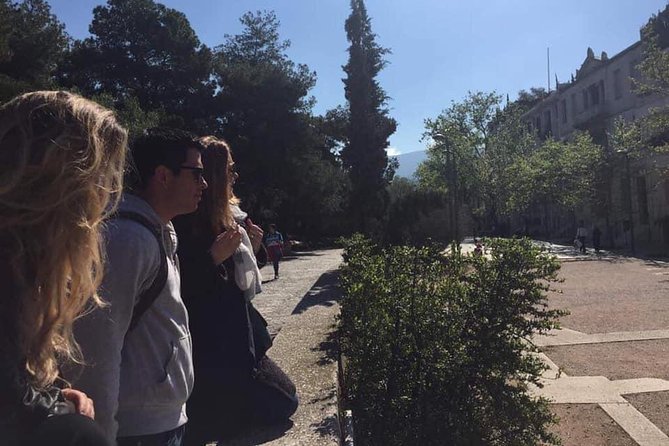
The walk turns onto Apostolou Pavlou pedestrian road as it descends toward the Thissio neighborhood. This section takes about 30 minutes.
The change in mood is part of the appeal. You move from hill paths and archaeological ground into a more urban setting, following one of the main pedestrian routes around the Acropolis. The walk remains connected to the ancient center, but cafes, streets, and everyday city life become more visible.
You then take busy Adrianou Street toward Monastiraki Square. This is where the tour feels less like a hill walk and more like a guided introduction to central Athens. Your guide can help you read the area rather than simply pass through it.
The transition also helps you judge the tour’s overall design. It is not focused on one monument. It links several nearby areas into one walk, so you spend less time arranging transport between stops. The tradeoff is that the experience gives you a broad route rather than a long, detailed visit inside any single museum or archaeological enclosure.
The four-hour length works best if you want a first look at the historic core and plan to return later to places that deserve more time. It is less suitable if your main goal is an in-depth visit to the Acropolis monuments themselves.
You can also read our reviews of more private tours in Athens





Roman and Ottoman traces around Monastiraki
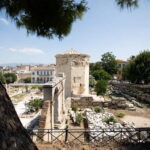
The final stop is Monastiraki, with about 30 minutes planned for the area. Before entering the market lanes, you pause near remains from the Roman and Ottoman eras.
This is a valuable finish because Athens did not stop being important after classical antiquity. Roman and Ottoman traces sit close to the modern shopping streets, and the tour uses them to show how the city changed over time.
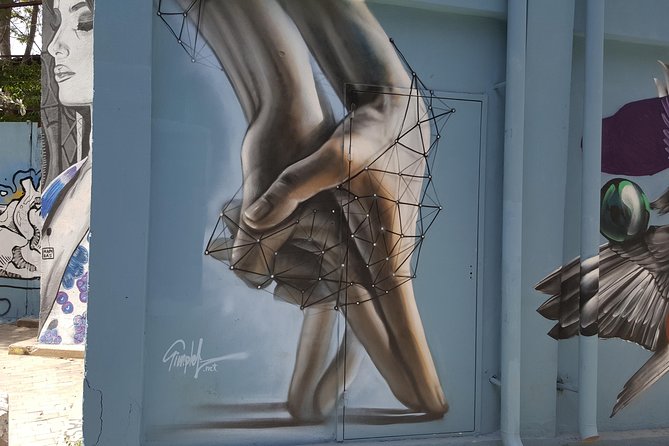
You then enter the alleys of the Monastiraki flea market and reach Avyssinias Square. The area is known for antiques, and the tour frames the stalls as a journey through different periods of the city. The market is not just a shopping stop. It is also a place where old objects, later buildings, and modern street life sit side by side.
Do not expect lunch to be part of the tour. No meal is included, so you can plan to eat before or after the walk. Ending in Monastiraki is convenient for continuing your day, but the tour details do not promise a specific restaurant or shopping time.
I like this ending because it leaves you in a part of Athens where you can keep exploring on your own. If you want to browse antiques, watch the street activity, or find a meal, you have options nearby. If you prefer a quiet finish, Monastiraki may feel crowded and energetic compared with the pine trees on the Hill of the Muses.
What the $331.62 price means

At $331.62 per person, this is not a budget walking tour. The price makes the most sense for a small private group that wants dedicated attention, a flexible pace, and a guide who can shape the discussion around the group.
For one person or a couple, the cost is a serious consideration. You are paying for privacy and personal service, not for a long list of included attractions. The tour information lists only the walking tour as included. Lunch is extra, and no separate Acropolis admission is listed.
The value improves if your group includes several people and the provider offers a group discount. The supplied information confirms that group discounts are available, but it does not state the discount amount, so check the final booking price before deciding.
I would compare this with the cost of joining a larger walking tour and with your own plans for the Acropolis. If you want a guide focused only on your group, the private format may justify the premium. If you mainly need basic directions and a few historical facts, a less expensive group option could be better value.
Timing, pickup, and the physical effort
The published start time is 10:00 a.m. The meeting point is Acropolis Metro Station, and the tour details also say pickup and drop-off can be arranged at your hotel or port. Since both details appear in the information, confirm the exact pickup plan when booking.
The route is near public transportation, which makes the Acropolis Metro Station a practical starting point. A mobile ticket is offered, and confirmation is received at booking.
You should expect several hours of walking, including an uphill section on the Hill of the Muses. The tour details say most people can participate, and service animals are allowed. No special accessibility information is provided, so ask the operator directly if anyone in your group has difficulty with hills, uneven paths, or extended walking.
A 10:00 a.m. start gives you a full morning and early afternoon. Athens can be hot, so bring water and sun protection, though those items are not listed as inclusions. Since the tour includes open hills, pedestrian roads, and market streets, comfortable footwear is more important than dressing for a formal sightseeing visit.
Who will get the most from this walk
I would recommend this experience to a family or small group that wants a private introduction to Athens rather than a narrow monument tour. It suits people who enjoy asking questions, stopping for photos, and changing the pace when a place catches their attention.
It also fits first-time visitors who want to connect the Acropolis with the surrounding historic neighborhoods. The route covers ancient political life at the Pnyx, a site associated with Socrates, modern Greek science at the National Observatory, later Roman and Ottoman remains, and the market culture of Monastiraki.
The tour may be less suitable for anyone who wants to spend most of the morning inside the Acropolis archaeological complex. It may also disappoint visitors seeking a completely easy walk, since the route includes a hill climb and lasts about four hours.
The strongest reason to choose it is the guide. The supplied feedback gives Nancy special credit for excellent English, warm Greek hospitality, strong organization, and explaining Athens across the ages. Those qualities are exactly what a private historical walk needs. Ask if Nancy will lead your tour, since guide assignments can matter as much as the route.
Should you book this private Athens tour?
Book it if you want personal attention, a broad route, and a guide who can connect ancient Athens with Roman, Ottoman, modern, and market-era Athens. The Pnyx, Socrates’ Prison, Pikionis’ paths, and the views from the hills give the tour more range than a simple walk around the Acropolis.
Think twice if you are focused on entering the Acropolis monuments, need a low-cost activity, or prefer minimal walking. At $331.62 per person, the tour earns its price only when privacy and a strong guide are important to you. Confirm pickup, ask about your guide, and check what admission arrangements you need before booking. For a private group that values a flexible, story-led introduction to Athens, it can be a very good use of half a day.
FAQ
How long is the private walking tour?
The tour lasts approximately four hours.
What time does the tour start?
The stated start time is 10:00 a.m.
Where does the tour begin?
The published meeting point is Acropolis Metro Station.
Is hotel or port pickup available?
Pickup and drop-off at your hotel or port are offered. Confirm the exact arrangement when booking.
Is this a private activity?
Yes. Only your group participates in the private tour.
What places does the route visit?
The route includes the Acropolis area, Hill of the Muses, Socrates’ Prison, the Pnyx, Hill of the Nymphs, National Observatory, Thissio, Adrianou Street, and Monastiraki.
Is admission included?
The listed inclusion is the walking tour, and the itinerary shows no separate admission charge for the stated stops. Admission to Acropolis monuments is not specified, so confirm before booking.
Is lunch included?
No. Lunch is not included.
Are service animals allowed?
Yes. Service animals are allowed.
Can I cancel for a full refund?
Yes. You can cancel at least 24 hours before the experience start time for a full refund. Cancellations or changes made less than 24 hours before the start time are not accepted for a refund.