REVIEW · ATHENS
3-day classical Spanish guided tour in Peloponesse & Delphi
Book on GetYourGuide →Operated by ARTYTOURS · Bookable on GetYourGuide
Ancient Greece makes more sense when you see its sacred places, theaters, tombs, stadiums, and temples in one connected journey. This three-day route takes you from the Corinth Canal and Mycenae to Olympia, birthplace of the Olympic Games, then on to Delphi, the spiritual center once called the Navel of the Earth.
I like the Spanish-speaking licensed guides, who stay with you through the trip and explain mythology, customs, and ancient life in clear terms. I also like the practical value: two hotel nights, two breakfasts, two dinners, admission fees, headsets, WiFi, and coach transport are included. The drawback is the pace. You cover a lot of ground in three days, with optional lunches and long road stretches between major stops.
In This Review
- Key points at a glance
- Why this three-day route works
- Corinth Canal begins the journey
- Mycenae shows Greece before classical Athens
- Epidaurus lets you hear ancient theater design
- Olympia turns sport into ritual
- Delphi connects prophecy, myth, and power
- What the $506 price really covers
- Hotels, meals, and coach comfort
- The pace, walking, and what to bring
- Who will get the most from this tour
- Should you book this Spanish-language Greek tour?
- FAQ
- Is the tour conducted in Spanish?
- How long does the tour last?
- What destinations are included?
- Are entrance fees included?
- Are hotel stays included?
- Are breakfast and dinner included?
- Is lunch included?
- Where is the meeting point?
- What extra accommodation tax must I pay?
- Is the tour suitable for wheelchair users?
Key points at a glance
- Hear the ancient world in Spanish: Licensed Spanish-speaking guides accompany you throughout the route, with headsets to make explanations easier to follow.
- Test Epidaurus acoustics: The ancient theater is famous for how clearly sound carries across its stone seating.
- Walk where the Olympics began: Ancient Olympia includes the original stadium and an archaeological museum.
- Connect Mycenae, Olympia, and Delphi: Three major sites show different sides of Greek civilization, from royal power to athletic worship and prophecy.
- Sleep and eat along the route: Two hotel nights, breakfasts, and dinners are included, while lunch and drinks remain your responsibility.
- Travel with fewer ticket worries: Entry fees, skip-the-line access, air-conditioned coach transport, onboard WiFi, and guide headsets are part of the package.
Why this three-day route works
I see this tour as a good answer to a common Greece problem: Athens has the Acropolis, but the ancient world did not end at the city limits. Mycenae, Epidaurus, Olympia, and Delphi each tell a different story, and reaching all four independently would require several hotel changes and careful transport planning.
The route begins in Athens and loops through the Peloponnese before reaching Delphi on the mainland. You spend the first night in Olympia and the second in Delphi, then return to Athens after the final visit. That structure keeps you moving, but it also means you should arrive ready for full sightseeing days rather than a slow holiday.
The tour is conducted exclusively in Spanish. That matters more than it may seem. Archaeological sites can look like piles of stone without context, but a good explanation can show you the palace, ritual, athletic, and political world behind them. The guide stays with you throughout, so you are not piecing together several unrelated site visits.
A guide named Faneri received specific praise for precise, lively, and educational explanations, along with the sense of safety created by the guide and driver. You cannot assume she will lead every departure, but you can ask about the assigned guide before booking if her style matters to you.
You can also read our reviews of more guided tours in Athens



Corinth Canal begins the journey
The first stop is the Corinth Canal, which cuts through the narrow Isthmus of Corinth. It is a quick but useful introduction to the geography of the trip. The canal separates the mainland from the Peloponnese, and crossing it helps you understand why Corinth has long mattered as a link between different parts of Greece.
Do not expect a long visit here. It functions mainly as a scenic and geographic pause before the archaeological stops. Have your camera ready, but save your energy for Mycenae and Epidaurus.
The coach is air-conditioned and includes WiFi, which helps on a route with substantial road time. The supplied information does not give exact departure times or group size, so you should check the date-specific schedule when booking. The meeting point is in front of the Melina Mercouri monument, near the Acropolis metro station.
Mycenae shows Greece before classical Athens
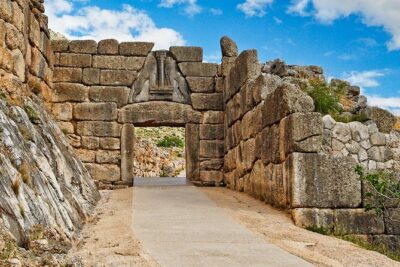
Mycenae takes you into the Bronze Age, long before the classical period associated with Athens, Plato, and Pericles. You visit the archaeological site and museum, where the remains connect with the powerful Mycenaean culture that shaped later Greek stories and legends.
The site is especially useful early in the trip because it broadens your idea of Ancient Greece. You are not looking only at marble temples from the fifth century BC. You are seeing a much older royal center, with massive stone construction and a setting tied to tales of kings, war, and the Trojan cycle.
Your guide adds the value here. Without context, the walls and foundations can be hard to read. With an explanation of the people, rituals, and political world behind them, Mycenae becomes a place of power rather than a collection of ruins.
The visit includes the museum and entrance fee. Wear sturdy, comfortable shoes. The tour is not suitable for wheelchair users or people with mobility impairments, so anyone who finds uneven archaeological ground difficult should think carefully before booking.
Epidaurus lets you hear ancient theater design
Epidaurus is one of the best stops on the route for a simple reason: it gives you something to experience, not just look at. The ancient theater is famous for its acoustics, and the tour gives you the chance to appreciate how clearly sound can travel through the seating area.
The theater also explains the place of drama in Greek culture. Performances were not merely entertainment. They were tied to civic life, religious festivals, and ideas about human behavior, fate, and the gods. Your Spanish-speaking guide can connect the physical design of the theater with those larger themes.
The visit follows Mycenae, and an optional lunch is available afterward. Lunch is not included, and neither are drinks, so bring money for both. Since no restaurant or menu is specified, you should treat the meal as a convenient pause rather than a guaranteed culinary highlight.
I like the contrast between the two morning stops. Mycenae gives you fortified royal power, while Epidaurus gives you public performance and healing culture. You see how varied the ancient Greek world was before heading toward Olympia.
Olympia turns sport into ritual
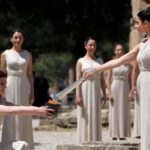
On the second morning, you tour Ancient Olympia’s archaeological site and museum. This is where the ancient Olympic Games were held, and the original stadium is the star attraction for many visitors.
The stadium helps you picture the games as a religious gathering as much as an athletic contest. Ancient athletes competed in honor of Zeus, and the event formed part of a wider sacred festival. Your guide’s explanations about mythology, customs, and ancient society are especially useful here because the stones alone cannot explain why the games mattered so much.
The museum adds objects and context to the outdoor ruins. Together, the site and museum help you connect the stadium with temples, votive offerings, and the wider sanctuary.
You have an optional lunch after the visit, then begin the bus journey to Delphi. This is one of the longer travel sections of the tour, so plan your expectations accordingly. The reward is that you do not need to arrange a separate transfer or find your own way across the country.
Dinner and the second overnight stay are in Delphi. Hotel category is listed as three or four stars, with the specific property dependent on the booking arrangement. The included dinner makes the evening simpler after a full day on the road, though the tour does not specify the restaurant or menu.
A few more Athens tours and experiences worth a look


Delphi connects prophecy, myth, and power
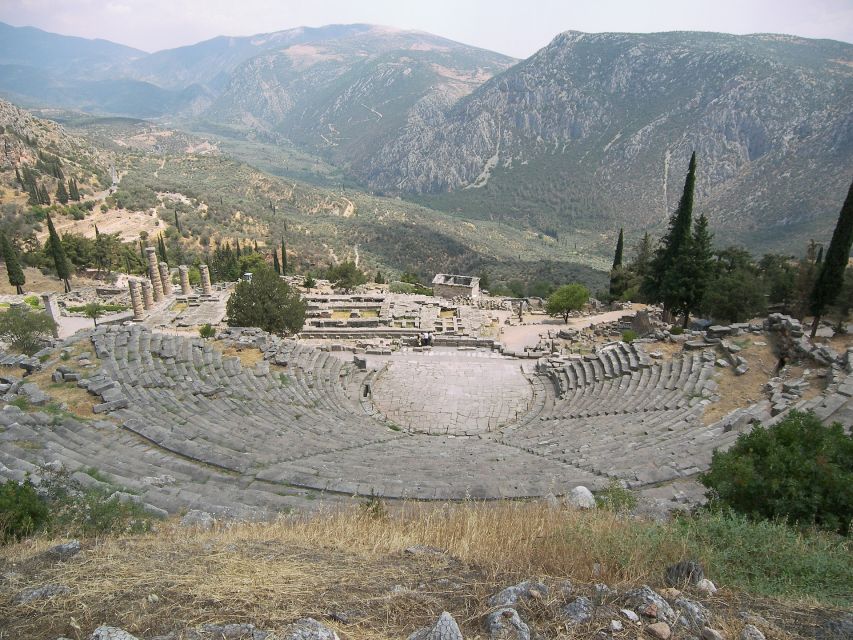
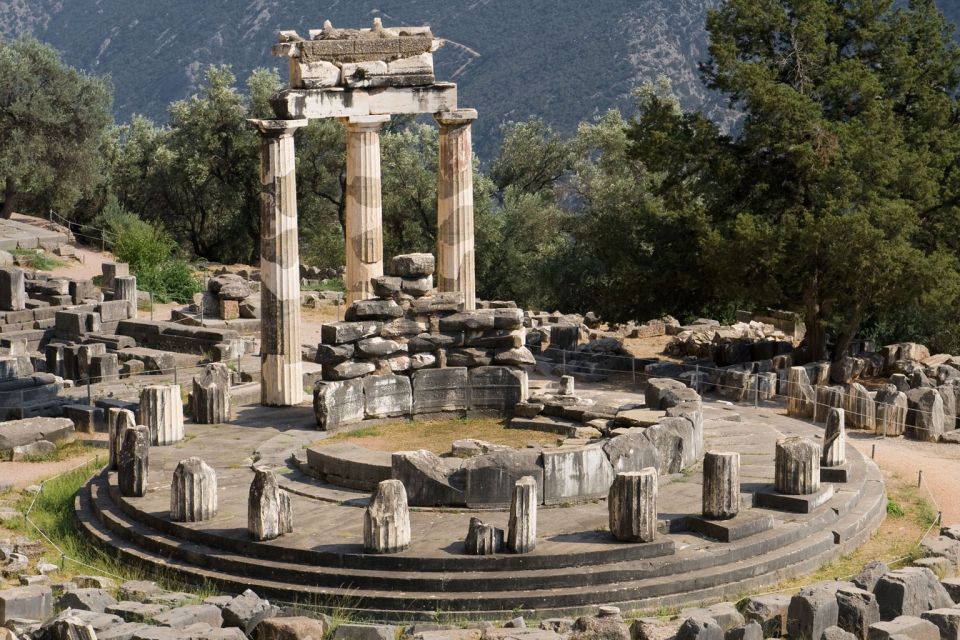
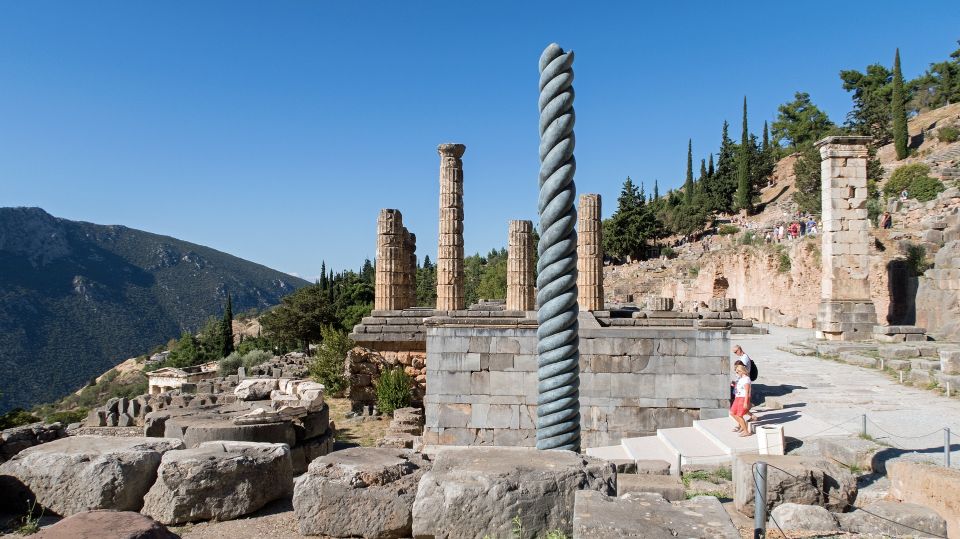
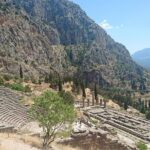
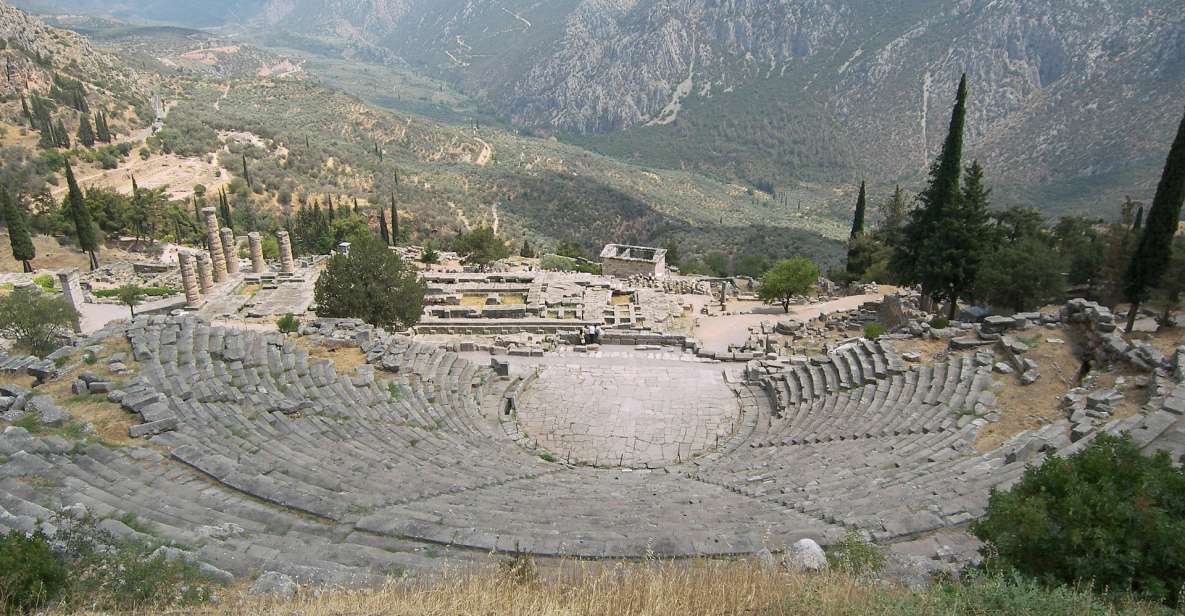
The final sightseeing day centers on Delphi’s archaeological site and museum. Ancient Greeks considered Delphi the Navel of the Earth, a symbolic center of the Greek world. The sanctuary was dedicated to Apollo, and people came to consult the oracle, whose high priestess was known as Pythia.
This stop has a different mood from Olympia. Olympia focused on public competition and worship through sport. Delphi focused on prophecy, political choices, personal fears, and the relationship between mortals and the gods.
Your guide explains the oracle, Apollo, Pythia, and the role of Delphi in Greek life. This is one place where a Spanish explanation can be particularly valuable because the site’s meaning is layered. You are not simply viewing a temple. You are learning how ancient communities sought divine advice before making important decisions.
The archaeological site and museum are included, along with admission and skip-the-line access. Afterward, you can have an optional lunch in a traditional Greek tavern before the return to Athens. The journey back takes about two and a half hours.
That return time is useful when planning your evening. Avoid booking a tight connection, formal dinner, or event immediately afterward. The stated journey is about two and a half hours, but road travel can still vary.
What the $506 price really covers
At $506 per person, this is not a bargain-basement coach trip, but the price covers more than transport. You receive two nights in three or four-star hotels, two breakfasts, two dinners, all listed archaeological entrance fees, professional Spanish-speaking guides, headsets, air-conditioned coach travel, onboard WiFi, and skip-the-line access.
The value is strongest if you want a guided cultural trip and would otherwise need to arrange hotels, intercity transport, site tickets, and several guided visits yourself. It also removes the work of navigating between Athens, the Peloponnese, Olympia, Delphi, and Athens again.
The price is less attractive if you prefer to spend hours at one site, choose your own restaurants, or travel at your own pace. You will have optional lunches rather than included midday meals, and drinks and personal spending are extra.
There is also a small accommodation tax paid at the hotel reception. From April through October, it is €5 per room per night at a three-star hotel or €10 per room per night at a four-star hotel. From November through March, the amounts are €1.50 per room per night for three-star accommodation and €3 per room per night for four-star accommodation.
The tax is charged per room, not per person, according to the supplied information. Keep a little cash or another payment method available at check-in.
Hotels, meals, and coach comfort
Two breakfasts and two dinners are included, which takes care of the most important meals during a busy itinerary. Lunch remains flexible, with optional stops after the major morning visits in Argolis, Olympia, and Delphi.
That arrangement suits you if you like choosing how much to spend during the day. It also means you need to budget for three lunches, drinks, snacks, and personal expenses. The tour does not state the price of the optional meals, so ask your guide or local representative for current details.
The coach has air conditioning and WiFi. Headsets are supplied so you can hear the guide during site visits. Those small features matter because archaeological tours often involve standing outdoors while a guide speaks to a group.
The hotels are listed as three or four star, with breakfast and dinner included. The exact names are not provided, so I would not book this expecting a particular hotel style or room view. Think of the accommodation as a practical overnight base that breaks up the route.
The pace, walking, and what to bring
This is a sightseeing-heavy trip. You move through several archaeological sites, museums, theaters, and a stadium, then spend time on the coach between destinations. Comfortable shoes are essential, and a hat is useful at exposed outdoor ruins.
Bring a passport or ID card, as requested in the tour information. I would also carry water and sun protection, although only comfortable shoes, identification, and a hat are specifically listed as items to bring.
The tour is not suitable for people with mobility impairments or wheelchair users. Archaeological sites can include uneven surfaces and walking routes, and the program does not promise adapted access. If you need accessibility support, contact the provider before paying rather than assuming the coach or sites can accommodate you.
The lack of exact start times means you should check availability for your chosen date. The meeting point is in front of the Melina Mercouri monument, with the Acropolis metro station the nearest public transport stop. Representatives meet you there and board you onto the bus to meet the guide.
Who will get the most from this tour
I would recommend this route to Spanish-speaking visitors who want Ancient Greece explained in their own language and who prefer one organized trip to several separate bookings. It suits first-time visitors to Greece who want to see more than Athens but have limited time.
It is also a strong fit if you care about historical context. The guide’s role is central, and the itinerary covers mythology, history, customs, the Olympic tradition, and the oracle at Delphi. The supplied experience with Faneri points to the kind of detailed, approachable guiding you should hope for.
I would be more cautious if you dislike early starts, long coach rides, or fixed schedules. The itinerary is efficient, but efficiency has a cost. You will see a lot, yet you will not have unlimited time to wander, sketch, photograph, or sit quietly at each site.
Families with young children should consider the three-day pace and the amount of walking. The tour data does not provide a child age policy or special family arrangements, so ask before booking if that is important to you.
Should you book this Spanish-language Greek tour?
Book it if you want a well-organized route through four major ancient sites, prefer explanations in Spanish, and value having hotels, dinners, tickets, and transport handled together. At $506, the package offers solid value for a three-day cultural trip because the costly and time-consuming parts are bundled in.
Skip it if you want a relaxed schedule, included lunches, or complete control over hotels and meals. You will need to pay for lunch, drinks, personal expenses, and the small hotel tax, and the archaeological walking may not suit anyone with limited mobility.
For the right person, this is a practical way to connect Mycenae’s royal world, Epidaurus theater, Olympia’s sacred games, and Delphi’s oracle in one Spanish-speaking journey. Ask about the guide assigned to your date, confirm the hotel category, check the starting times, and arrive at the Melina Mercouri monument ready for three full days.
FAQ
Is the tour conducted in Spanish?
Yes. The live tour guide service is provided exclusively in Spanish, and professional Spanish-speaking guides accompany you throughout the journey.
How long does the tour last?
The tour lasts three days, with two overnight stays.
What destinations are included?
The route includes the Corinth Canal, Mycenae and its museum, Epidaurus ancient theater, Ancient Olympia and its museum, and Delphi’s archaeological site and museum.
Are entrance fees included?
Yes. Entrance fees to the listed archaeological sites and museums are included, along with skip-the-line access.
Are hotel stays included?
Yes. Two nights of hotel accommodation are included in a three or four-star hotel.
Are breakfast and dinner included?
Yes. The package includes two breakfasts and two dinners.
Is lunch included?
No. Lunch is not included, but optional lunch stops are available after the visits in Argolis, Olympia, and Delphi.
Where is the meeting point?
Meet in front of the Melina Mercouri monument. The closest metro station is Acropolis, and representatives will board you onto the bus there.
What extra accommodation tax must I pay?
The hotel tax is paid at reception. From April through October, it is €5 per room per night at a three-star hotel or €10 per room per night at a four-star hotel. From November through March, it is €1.50 per room per night at a three-star hotel or €3 per room per night at a four-star hotel.
Is the tour suitable for wheelchair users?
No. The tour is not suitable for wheelchair users or people with mobility impairments.