REVIEW · ATHENS
3-Day Ancient Greek Archaeological Sites Tour from Athens
Book on GetYourGuide →Operated by Key Tours · Bookable on GetYourGuide
Greek ruins in three days can work. This 3-day ancient Greece route packs the big names you expect, from Epidaurus to Olympia and Delphi, with a carbon-neutral approach and a guide keeping the myths straight. I especially love pairing the theater at Epidaurus with the tomb of Agamemnon at Mycenae, because you get both the arts and the power plays of the ancient world. The potential drawback is simple: it’s a lot of time on the road, and the site days can feel sunny and fast if you’re not ready for long outdoor walks.
What makes it feel worth it is how the itinerary links places that were never separate in ancient Greece. You also get real breaks for stretching and snacks, plus dinner at your hotel stops—so you’re not just seeing ruins; you’re settling into the towns that sit around them. One more consideration: wheelchair access isn’t supported.
In This Review
- Quick Hits
- Why This 3-Day Ancient Greece Circuit Works
- Day 1: Epidaurus Theater, Nafplia-Style Town Time, and Mycenae’s Citadel
- Corinth Canal, Tripolis, Megalopolis, and the Road Stops That Make the Tour Human
- Day 2: Olympia’s Temples, Stadium Remains, and the Olympic Flame Altar
- The Nafpaktos-Coastal Road and Arachova Reset Before Delphi
- Day 3: Delphi’s Apollo Temple, Oracle Atmosphere, and the Theatre for Thousands
- Hotels, Meals, and the Pace You Should Plan For
- Guide Energy and Bus Comfort: Where the Tour Really Becomes Yours
- Price and Value: Is $506 Fair for Three Days of Ancient Greece?
- Who This Tour Fits Best (and Who Should Think Twice)
- Final Call: Should You Book This Tour?
- FAQ
- How long is the tour?
- Where is the tour located?
- What’s included in the price?
- What’s not included?
- Is pickup available from Athens hotels?
- How much is the hotel tax?
- Is this tour suitable for wheelchair users?
Quick Hits
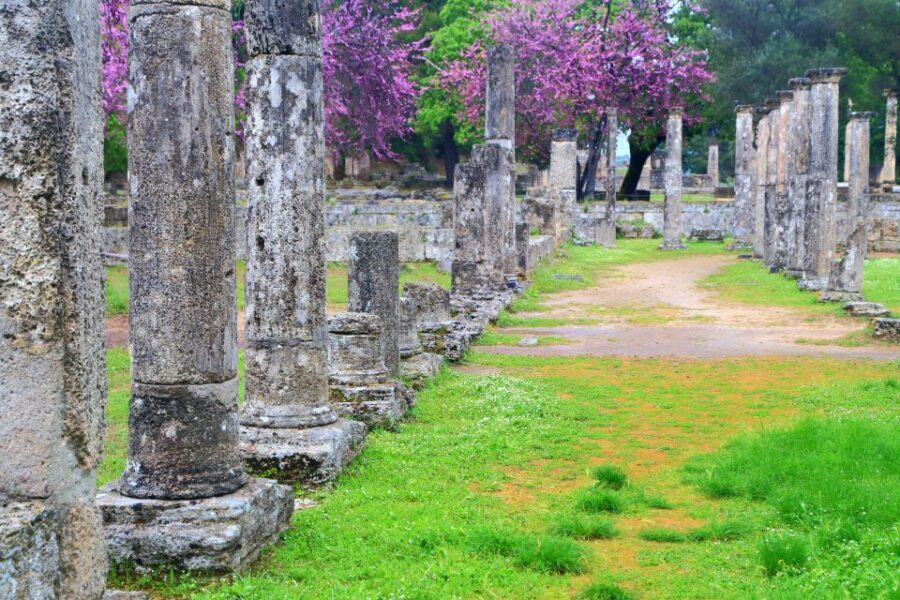
- Epidaurus theater acoustics: a rare moment where art and engineering meet.
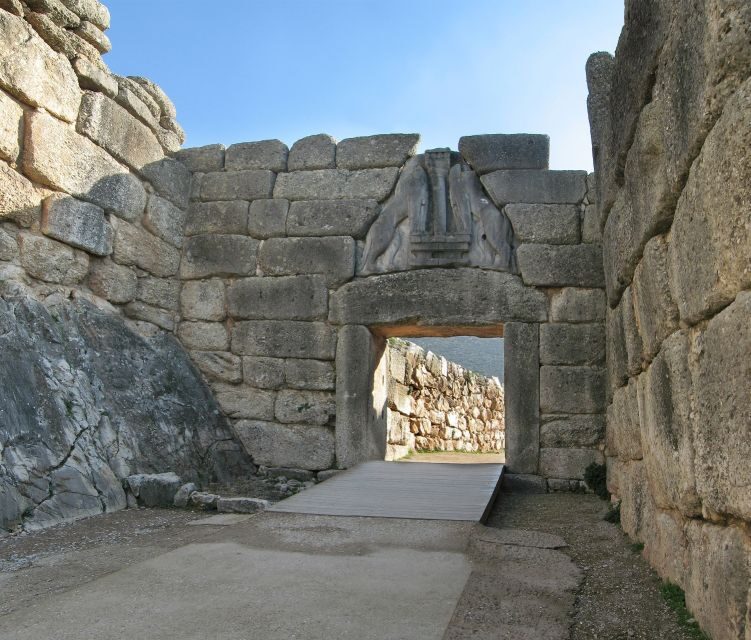
- Mycenae and the Tomb of Agamemnon: you’re not just looking at stones, you’re standing inside a story.
- Olympia’s sacred lineup: temples, stadium remains, and the altar of the Olympic flame.
- Delphi’s big day: Apollo, the Oracle atmosphere, and a theater built for thousands.
- Corinth Canal and the bridge crossing: scenic engineering stops that reset the drive.
- Guides who keep myths practical: from Anna and Panos to Marianna Tsigaridou and Dimitris, the explanations tend to be clear and fun.
Why This 3-Day Ancient Greece Circuit Works
If you want a greatest-hits introduction to classical Greece, this plan has the shape you need. You hit Mycenae, Delphi, and Olympia, with Epidaurus added as the arts-and-performance highlight. The carbon-neutral framing also matters to me, because it signals the tour is designed around efficient routing—not constant extra hops.
You also get a guide and a full bus-based transfer setup. That means you’re not trying to problem-solve public transport while you’re exhausted from climbs and heat. From what I’ve seen in strong versions of this kind of trip, the best part is context: the guide helps you connect myths, politics, worship, and everyday life so the ruins make sense fast.
The main trade-off is pacing. This isn’t a slow museum crawl. You’ll be moving, and you’ll want to use shade, water, and breaks like they’re part of the itinerary.
A few more Athens tours and experiences worth a look


Day 1: Epidaurus Theater, Nafplia-Style Town Time, and Mycenae’s Citadel
Day 1 is built for first impressions, and it starts with the kind of stop that sets your expectations. After departing Athens, you’ll make a photo-and-walk break at the Corinth Canal, then continue to Epidaurus.
At Epidaurus, the headline is the ancient theater and its reputation for standout acoustics. Even if you don’t plan a speech in the seats, you’ll feel why this place became famous for performance. I like that the guide typically gives you enough framing to “read” what you’re seeing before you’re free to look around.
From Epidaurus you roll on to Nafplia (often called the former capital vibe), where you get time to arrive, reset, and enjoy the town mood before the heavier ancient site day. Then it’s Mycenae, where the ruins of the citadel sit above a landscape of power. You’ll visit the Tomb of Agamemnon and walk through the site with the guide tying it to the myths you’ve heard since school days.
Practical note: Mycenae and Delphi days can bring crowds. If you want photos without getting stuck behind a cluster, start early during your allotted exploration time and keep moving between angles.
Corinth Canal, Tripolis, Megalopolis, and the Road Stops That Make the Tour Human
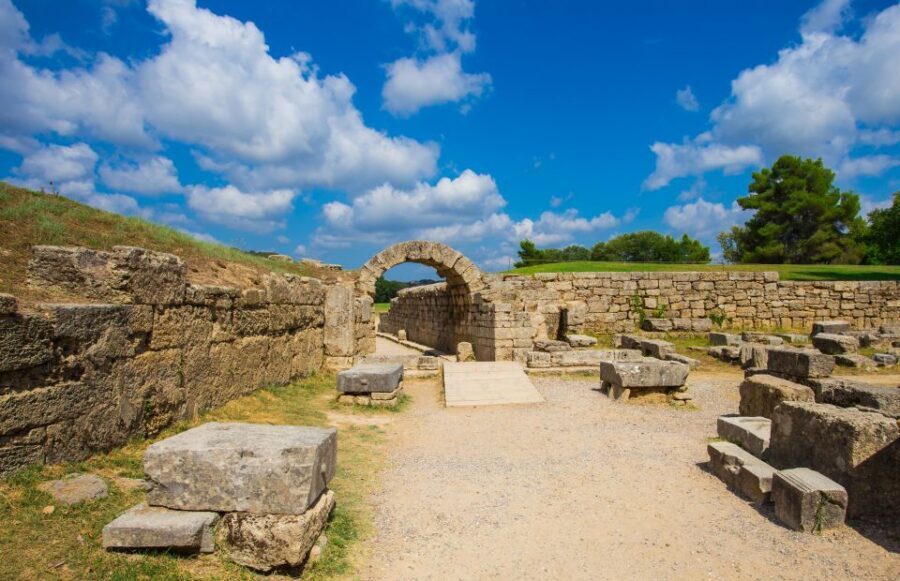
The route doesn’t pretend the distances are short. Instead, it uses the drive to keep you from going stir-crazy.
You’ll see the 19th-century engineering feat of the Corinth Canal, plus a later bridge crossing over the Corinthian Bay (Rion to Antirion). Those stops break up the “sit and stare out the window” problem and give your legs a chance to stretch.
On the way to Olympia, you also pass through Tripolis and Megalopolis. The tour calls them short stops, so don’t expect a deep dive, but it’s enough to reposition yourself and take care of small needs. I like these minor breaks because they reduce that weird end-of-day fatigue where you’re still alert but your focus is gone.
Another road-moment that helps is the coastal town of Nafpaktos during the transition toward Delphi. Even a brief look at a harbor town is a good reminder that this is a living region, not just an open-air classroom.
Day 2: Olympia’s Temples, Stadium Remains, and the Olympic Flame Altar
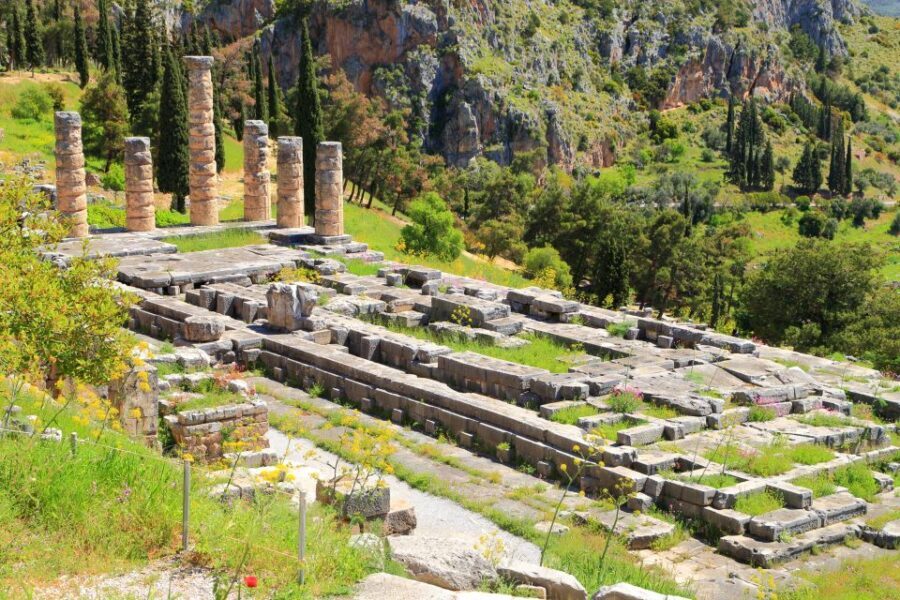
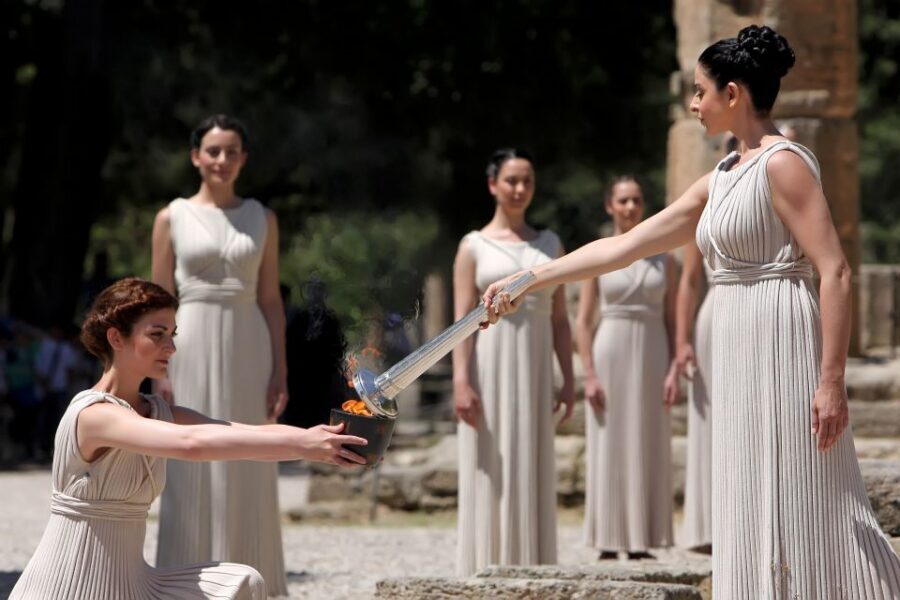
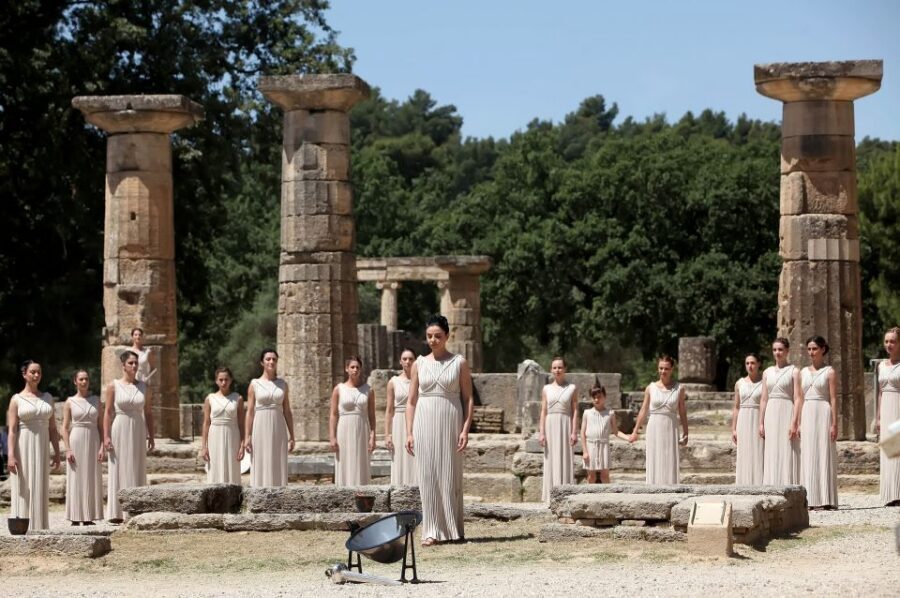
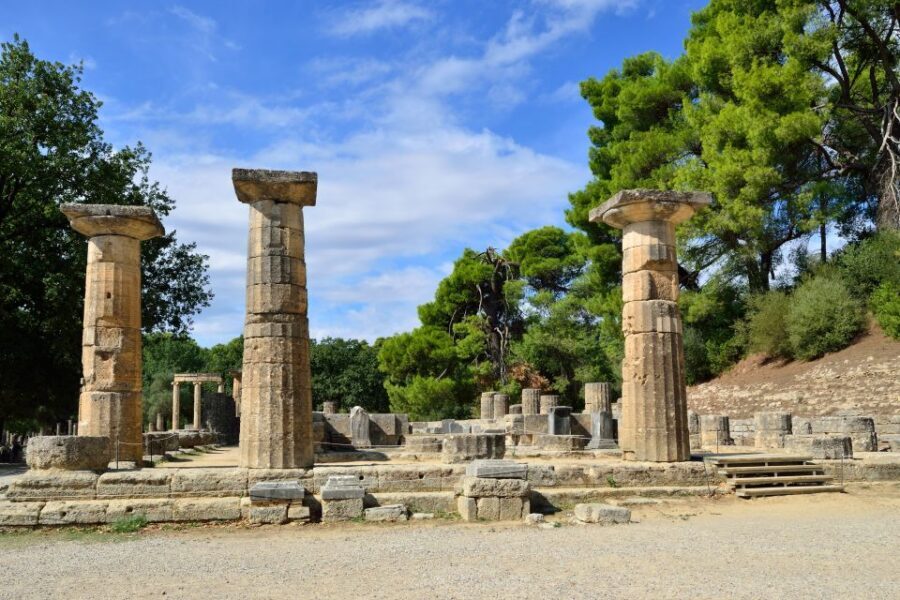
Day 2 focuses on Olympia, the sacred sports center of classical Greece. You’ll tour the archaeological remains of the site and see major structures connected to Zeus and Hera, including Doric columns. You’ll also visit the stadium area and then head to the altar of the Olympic flame, which is the kind of detail that makes the place feel both ancient and still alive in today’s imagination.
What I find valuable here is how the tour usually balances big stone monuments with the quieter spaces where you can stand, look, and let the scale sink in. Olympia isn’t just “what’s left”—it’s the setting for a festival idea that shaped identity for generations.
After the site visit, you’ll go to the Archaeological Museum of Olympia, which sits right opposite the ruins. Museum stops matter on tours like this because they stop you from relying only on your imagination. When the artifacts are in front of you, the myths and daily life behind the stones become easier to picture.
Then you travel onward via Rion/Antirion, crossing the Corinthian Bay on the bridge. You’ll drive along the coast past Nafpaktos and then head to Delphi, with a scenic mountain village stop at Arachova on the slopes of Parnassus.
If you’re sensitive to heat, plan to use Arachova time wisely. In summer, the long sun exposure at Olympia and Delphi can be intense, and shade becomes your best friend.
The Nafpaktos-Coastal Road and Arachova Reset Before Delphi
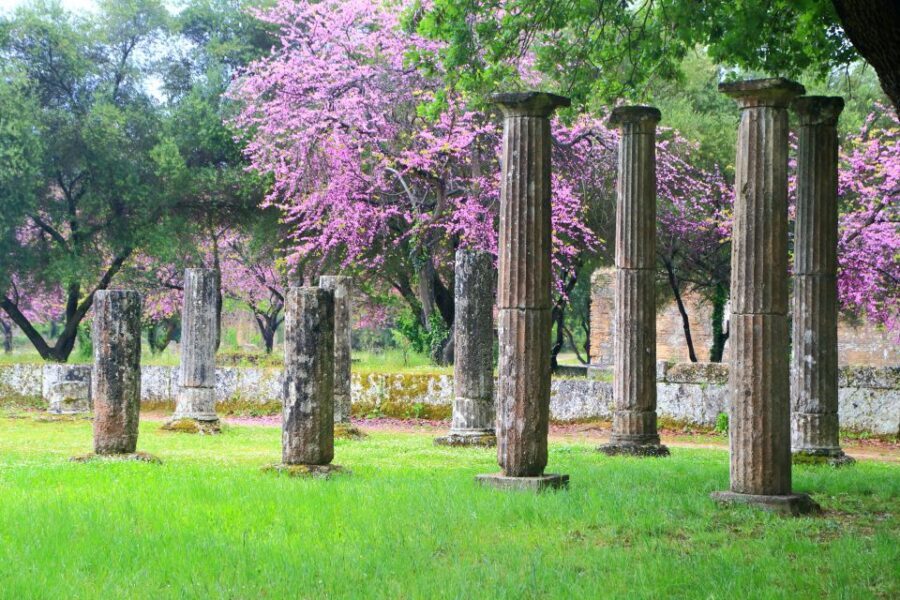
The transition into Delphi is half logistics and half mood-setting. You’ll leave Olympia, cross the bay via the newer bridge, then enjoy coastal driving with Nafpaktos as a charming harbor stop.
This matters because Delphi sits high on the Parnassus Mountains, and the “you’re getting closer to the oracle” feeling starts before you reach the archaeological site. That shift—from low coastal roads to mountain air and views—helps your brain switch from travel mode to visitor mode.
Arachova is the reset point. The tour builds in time to reach a mountain village stop in the afternoon, which gives you a chance to stretch and grab something without rushing. I also like that this kind of stop breaks the emotional rhythm: Olympia is heavy with sacred monuments, and Delphi needs a calmer runway.
When the day ends in Delphi, you’re set up well for an early start on Day 3. Delphi’s site experience is better when you’re not already drained.



Day 3: Delphi’s Apollo Temple, Oracle Atmosphere, and the Theatre for Thousands
Day 3 is Delphi in full focus. The site sits high above the valley, and the feeling is hard to fake even if you’ve studied it before. Delphi was seen as a world center in antiquity, tied to worship traditions that the guide will explain as you walk.
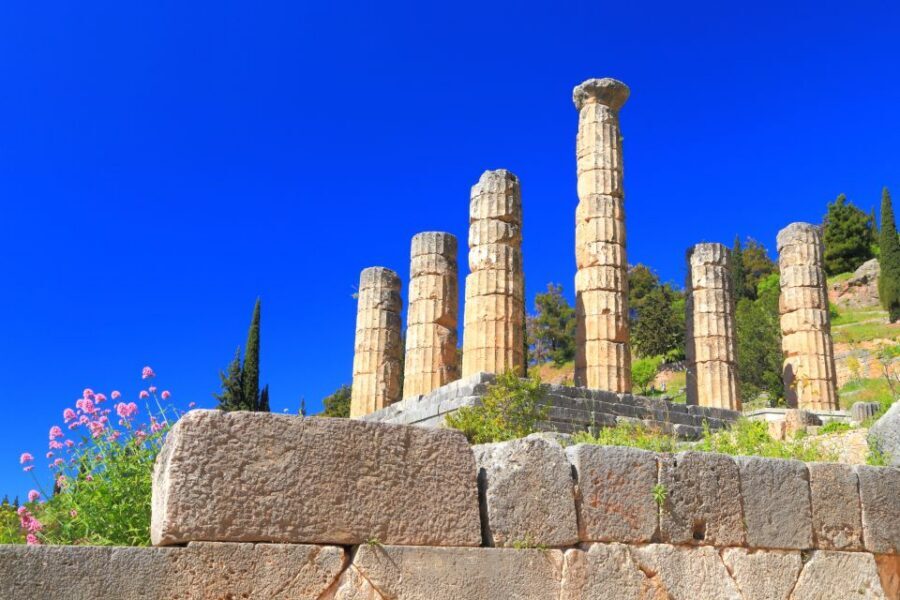
You’ll visit the Temple of Apollo and learn about the Oracle of Delphi, including the myths that framed it. Even with modern explanations, the location does a lot of work for you. The slope, the views, and the sacred layout all reinforce the idea that this was a place where people came to ask serious questions.
Then you’ll head to the theater, which could hold up to 5,000 spectators. That scale changes how you look at performance and festivals. You stop thinking only about ruins and start thinking about crowds, voices, poetry, and public life.
After the site walkthrough, you’ll check out the Archaeological Museum of Delphi. Museums here are crucial because they show how much the ancients built and decorated, even when much of what you see outdoors is fragments. Delphi’s artifacts help you read the site with fewer blanks.
On the drive back to Athens, you’ll go through the Parnassus hills and the Valley of Phocis, which is a fitting finish. It turns the trip into more than a checklist. You’re seeing how the region connects.
Hotels, Meals, and the Pace You Should Plan For
Accommodation is in a 3-star or 4-star hotel depending on your option, and breakfast plus dinner are included. Lunch is on you, so you’ll want to keep a little cash or card ready for quick stops or on-the-road bites.
The hotels are typically part of the value, not just a place to sleep. In past experiences with this itinerary style, the Olympia hotel days have gotten extra praise for service and dining comfort, including rooftop-style meals. That’s the sort of detail that makes the second half of the tour less stressful.
Still, don’t ignore pace. This tour moves efficiently, which is great for coverage, but it can feel like a sprint at the hottest hours. On scorching days, Olympia and Delphi can mean long stretches in direct sun, with limited shade spots when you first arrive.
If you’re doing this in summer, bring big hat energy. Sunglasses help. And an umbrella can be handy if you’re the type who does better with a personal shade plan.
Guide Energy and Bus Comfort: Where the Tour Really Becomes Yours
The guide experience is the secret sauce here. Different guides have led these trips, including Anna and Panos, Marianna Tsigaridou, Mando and Giannis, Dimitris, Evangelist, and Christine, and the common thread is how they turn the ruins into a story you can follow.
A strong guide doesn’t just talk. They set clear meet-up points, keep you on schedule, and explain what you’re looking at before you’re left to explore. People also mention how the guide finds shade during explanations and helps you pace your energy across the day.
Another practical win: the bus ride is handled by a professional driver who knows how to navigate winding roads. You’ll cross different terrains and still arrive intact enough to enjoy the sites.
Group size also affects your feel. Some versions run with smaller groups that make it easier to connect with other passengers and ask questions without waiting for a crowd to shift.
Price and Value: Is $506 Fair for Three Days of Ancient Greece?
At $506 per person for three days, you’re paying for a bundle: guide time, entrance fees, hotel nights, and air-conditioned transfers. That’s not just sightseeing; it’s also logistics handled for you. If you’ve ever tried to stitch together Mycenae + Olympia + Delphi on your own, you’ll know how fast the planning load turns into wasted energy.
The value improves if you want the full route. With this itinerary, you get several signature sites plus museum time and multiple scenic driving stops, and you return to Athens on Day 3 without extra overnight logistics.
You’ll still pay a few extras. Drinks aren’t included, and lunch isn’t included. Hotel taxes do apply at check-in—€10 per room per night for 4-star, €5 for 3-star. If you’re aiming for a single room, you’ll need to book for that one-person setup separately.
Who This Tour Fits Best (and Who Should Think Twice)
This tour is a great fit if you:
- want an efficient first trip to classical Greece
- like myths explained alongside what you can see
- prefer having someone handle the transfers and entrance timing
- enjoy museum stops where artifacts put the ruins in context
It might be less ideal if you:
- need wheelchair accessibility (this one isn’t set up for it)
- hate long days outside, especially in peak heat
- want lots of unhurried time at one site only
Also, if you’re the type who expects every monument to look intact, bring imagination. Some sections of archaeological sites can look like piles of stones until the guide frames them. That’s normal here, and it’s exactly why a good guide matters.
Final Call: Should You Book This Tour?
If you want a structured, high-impact introduction with Olympia, Delphi, and Mycenae as the core, I’d say book it. The combo of sites, museums across the way, and a guide-led myth-to-ruins connection is the kind of value that’s hard to replicate cheaply on your own.
If you’re heat-sensitive or you crave slow wandering, consider traveling in cooler months or plan to treat shade breaks as part of your strategy. And if you have strict dietary needs, it’s smart to mention them ahead of time since meals are part of the package.
Overall, this is the kind of tour that does a lot right: it keeps you moving without turning it into chaos, and it gives you enough context to enjoy the sites instead of just staring at them.
FAQ
How long is the tour?
It lasts 3 days.
Where is the tour located?
It covers the Peloponnese area of Greece and includes stops in key ancient sites like Mycenae, Olympia, and Delphi.
What’s included in the price?
The tour includes a live English guide, accommodation in a 3-star or 4-star hotel (depending on the selected option), entrance fees, transfers by luxury air-conditioned bus, and breakfast plus dinner.
What’s not included?
Lunch, drinks, personal expenses, and the hotel tax are not included.
Is pickup available from Athens hotels?
Yes. Pickup is available from most centrally located hotels in Athens on request, about 1 hour before departure. You can also meet at the tour supplier’s office 15 minutes before departure.
How much is the hotel tax?
Hotel tax is paid directly to the hotel: €10 per room per night for 4-star hotels and €5 per room per night for 3-star hotels.
Is this tour suitable for wheelchair users?
No, it isn’t suitable for wheelchair users.