REVIEW · ATHENS
Greek Mythology Storytelling Walk
Book on Viator →Operated by Alternative Athens · Bookable on Viator
Greek gods, jealous lovers, heroic quests, and political power come alive on this two-hour storytelling walk through Athens. Instead of hearing mythology in a classroom, you follow it through Plaka, past major ancient sites, and up to the Pnyx, where Athenian citizens once gathered to make decisions.
I like the live performance element, and I like the route itself: it connects the narrow streets below the Acropolis with the birthplace of democratic assembly. The main consideration is that you hear the sites from outside rather than entering them, so this works best as a mythology and city walk, not as a substitute for Acropolis tickets.
In This Review
- Key points
- Why Greek mythology works best on foot in Athens
- Starting in Plaka at 9:30 a.m.
- Plaka turns mythology into street theater
- Passing the Acropolis Museum without entering
- The ancient theater at the foot of the Acropolis
- Finishing at the Pnyx, where citizens gathered
- What the $53.52 price gets you
- Group size, walking comfort, and practical planning
- Who will enjoy this walk most
- Weather, cancellation, and booking timing
- Should you book the Greek Mythology Storytelling Walk?
- FAQ
- How long does the Greek Mythology Storytelling Walk last?
- What time does the experience start?
- Where does the walk begin?
- Where does the walk end?
- Does the experience include Acropolis admission?
- Does the experience include food or drinks?
- What is included in the price?
- How many people can join the walk?
- Is the activity suitable for service animals?
- Can I cancel for a full refund?
Key points
- Greek myths told in the streets: Professional storytellers bring tales of Zeus, Athena, Dionysus, gods, and heroes into the places connected with ancient Athens.
- A useful route through central Athens: The walk begins in Plaka, passes the Acropolis Museum and an ancient theater, then finishes at the Pnyx.
- A small maximum group: No more than 20 people can join, which should make it easier to follow the performance and stay with the group.
- A strong morning start: The 9:30 a.m. departure gives you a cooler time of day for walking and leaves much of the afternoon free.
- A performance rather than a standard lecture: The storytelling is the main event, adding drama, humor, and a human voice to familiar myths.
- Good value for mythology fans: At $53.52 per person, the price covers the storytellers, tour leader, and guided walk, but not food, drinks, or admission to sites.
Why Greek mythology works best on foot in Athens
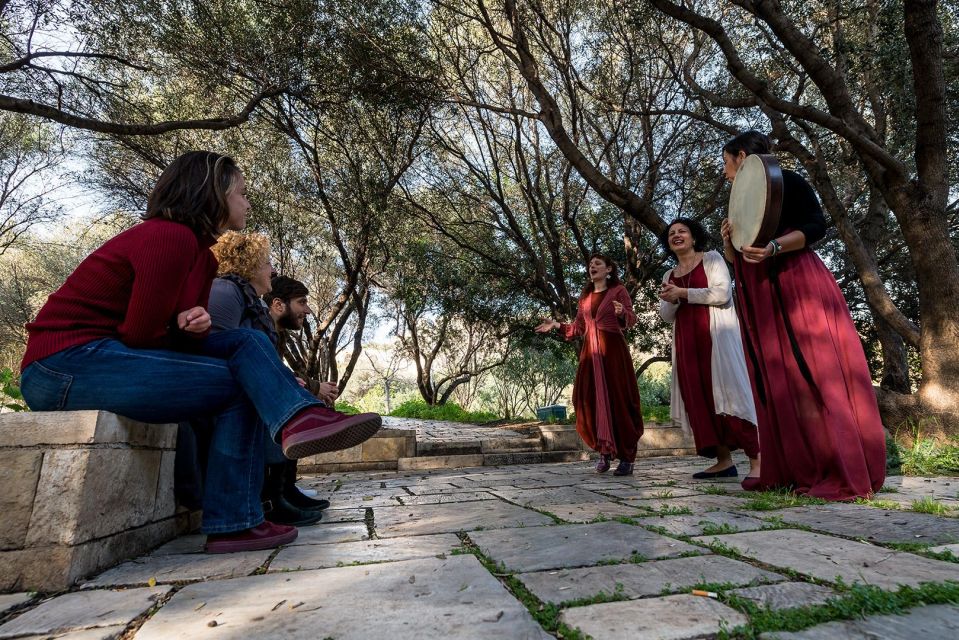
Greek mythology can feel like a long list of difficult names when you meet it only in a book. Zeus, Athena, Dionysus, heroes, monsters, family feuds, and divine revenge become easier to remember when you hear them while walking through the old center of Athens.
This experience uses performance to give the myths a pulse. You are not simply told that Athena mattered to Athens. You hear about the gods and heroes while moving through the city below the Acropolis, where ancient monuments and modern street life share the same tight space.
I especially like the contrast between the playful subject matter and the serious places on the route. Zeus may be behaving badly, Dionysus may be drinking again, and Athena may be offering gifts, but the walk also leads to the Pnyx, where the city developed a lasting political tradition.
The format should suit you if you enjoy history with a bit of theater. It is less suitable if you want a formal archaeological lecture, long time inside monuments, or a carefully measured tour of the Acropolis itself.
You can also read our reviews of more walking tours in Athens



Starting in Plaka at 9:30 a.m.
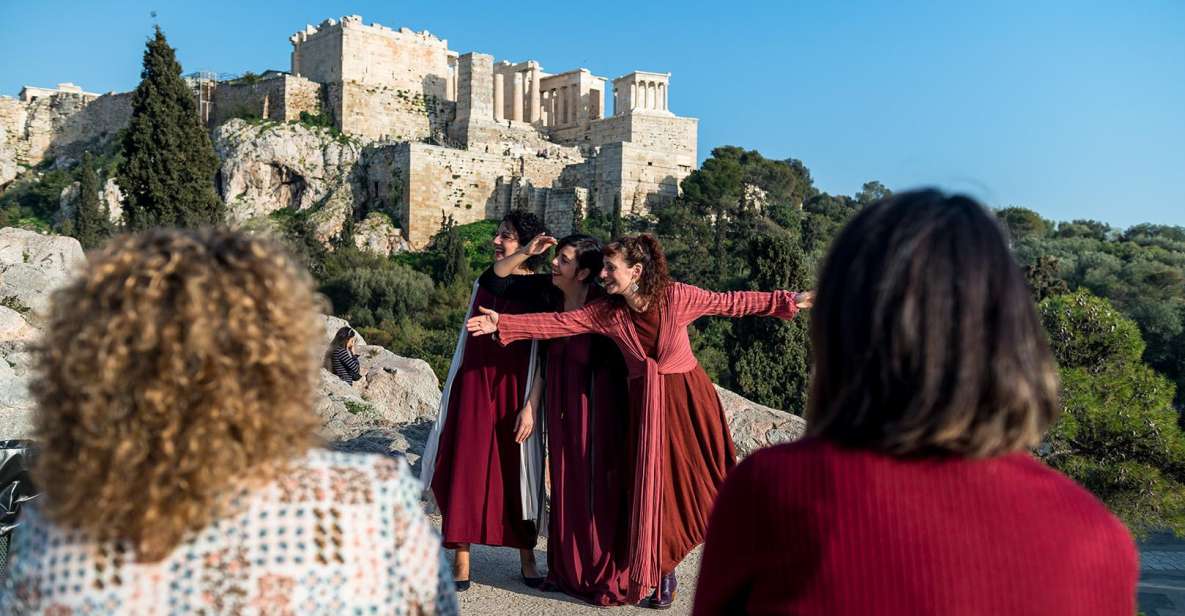
The meeting point is at the corner of Nikis and Kidathineon streets in Plaka, Athens 105 57. Plaka is the oldest area of the modern city and one of the most visited parts of Athens, with narrow lanes, souvenir shops, ancient remains, and the Acropolis rising above it.
This is a practical place to begin because the neighborhood gives you an immediate sense of Athens as a layered city. You can be walking beside a shop selling postcards and handmade items, then pass an ancient monument a few steps later. The route does not ask you to wait for the past to appear. It is already mixed into the streets.
The start time matters. A 9:30 a.m. departure gives you an early beginning before the strongest heat of the day. It also leaves time afterward for the Acropolis, the Acropolis Museum, lunch, or more exploring around Monastiraki and central Athens.
Arrive with your mobile ticket ready. The ticket is mobile, so you do not need a printed voucher. The provided details do not name the storytellers, so you should book for the format and subject rather than expecting a particular performer.
Plaka turns mythology into street theater
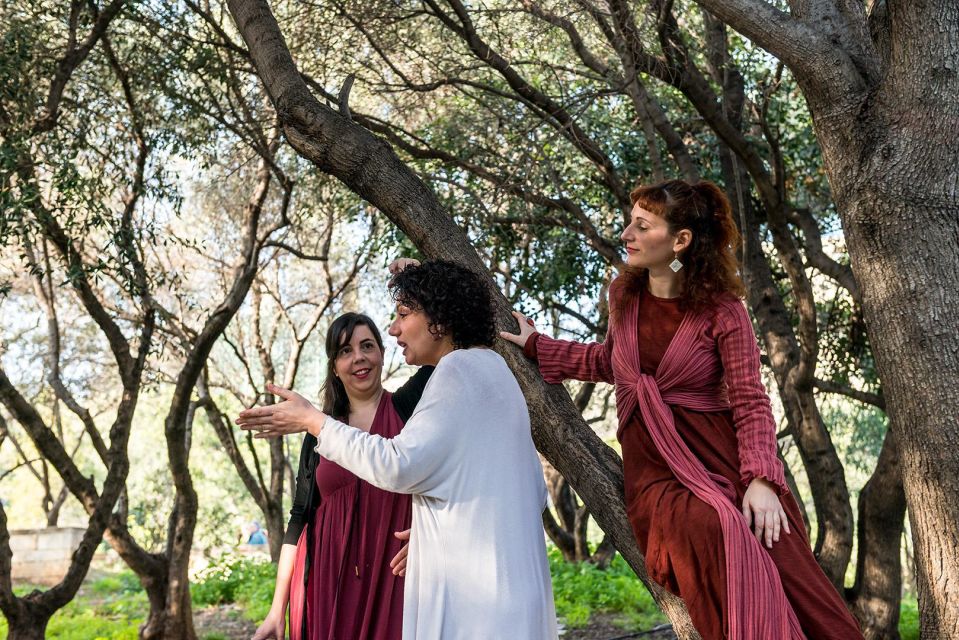
The opening hour takes place in and around Plaka. The neighborhood is more than a convenient backdrop. Its narrow alleys and ancient remains create a setting where stories about gods and heroes feel connected to the city rather than separated from it.
The storytellers focus on foundational Greek myths. Expect stories involving Zeus, Athena, Dionysus, and famous heroes, with the gods presented as dramatic characters rather than distant symbols. The tone appears designed to be entertaining as well as educational, which is useful if you are traveling with children, teenagers, or adults who find traditional museum talks too dry.
The performance can also help you sort out the basic roles of the Greek gods. Athena is linked closely with Athens. Zeus is the powerful ruler of the gods. Dionysus brings a very different energy, connected with celebration and theater. These stories are not only old tales. They shaped art, literature, drama, political ideas, and much of the Western imagination.
A published five-star comment describes the experience as both fun and educational, with storytelling done in shady areas during the walk through the old streets and toward the Acropolis. That detail is useful. You are not necessarily standing in full sun for the entire hour, but shade is not guaranteed at every point, so wear a hat, use sunscreen, and bring water.
The tradeoff is street noise and the normal movement of central Athens. A live story told outdoors can feel lively and immediate, but it may not have the quiet or acoustics of an indoor theater. Stay close to the guide and storyteller so you do not lose a key part of the tale when the group moves between stops.
Passing the Acropolis Museum without entering
The route passes outside the Acropolis Museum on the way to the next storytelling stop. This is a helpful orientation point, especially if you are visiting Athens for the first time and want to understand how the museum, Acropolis, Plaka, and ancient theater fit together.
Do not confuse passing the museum with a museum visit. Admission is not included, and the experience does not provide time inside the galleries. If you plan to visit the museum separately, this walk can help you recognize its location and decide how to fit it into your day.
The outside view also reinforces one of the walk’s strengths: it connects places rather than treating each monument as an isolated stop. You move through the city while the stories provide a thread between ancient religion, civic life, theater, and heroic legend.
The ancient theater at the foot of the Acropolis
You also pass by an ancient Greek theater located at the base of the Acropolis. The provided details do not specify the theater’s name or promise an entry, so plan to see it from outside during the walk.
Even a brief look is meaningful in this context. Greek mythology and theater belong together. Many stories of gods and heroes survived because they were performed, adapted, and retold. A theater near the Acropolis makes a fitting setting for professional storytelling, even when you are not seated for a full performance.
This part of the route adds a useful layer to the walk. The experience is not only about divine family drama. It also points toward the way Athenians presented stories to a public audience. The professional storytellers echo that tradition in a modern, mobile form.
Keep your expectations in check. You will not receive a full archaeological examination of the theater, and the walk does not include a separate site admission. Think of this stop as visual context for the performance, not a detailed monument tour.






Finishing at the Pnyx, where citizens gathered
The walk concludes at the Pnyx, the ancient Athenian gathering place for the democratic assembly. Citizens met there to take part in decisions affecting the city-state, making this one of the most significant final stops on a route through Athens.
The ending gives the experience a stronger shape than a simple loop through tourist streets. You begin with gods, heroes, and stories of divine behavior, then finish at a place connected with human debate and civic choice. The contrast encourages you to think about how Athens moved between religion, drama, politics, and public life.
The Pnyx also gives the route a clear destination. You are not simply returned to the same starting corner. The walk ends in a different part of Athens, near the Acropolis area, so you should be ready to continue on foot or arrange your next stop from there.
The provided details do not promise an extended lecture at the Pnyx, so the final hour should be understood as part of the walking performance rather than a standalone political history lesson. Still, it is a fitting place to pause and connect the myths of the city with the civic ideas that made Athens famous.
What the $53.52 price gets you
At $53.52 per person, this is not the cheapest way to walk around central Athens. The value comes from the live storytelling, the professional storytellers, the tour leader, and the planned route through several important areas.
If you only want directions between Plaka, the Acropolis Museum, and the Pnyx, you can walk those areas independently. You are paying here for interpretation and performance. That can be worthwhile if you want help remembering the gods and heroes, or if you prefer stories to lists of dates and building names.
The price does not cover food, drinks, or admission to attractions. Budget separately for those needs. Since the route lasts about two hours, bring water before you start rather than counting on a food or drink stop during the performance.
I see the best value for first-time visitors, families, mythology fans, and people who want a lively introduction before visiting museums and archaeological sites. Repeat visitors may also enjoy it if they want a different angle on familiar places, but anyone seeking detailed excavation facts may find the performance light on technical archaeology.
Group size, walking comfort, and practical planning
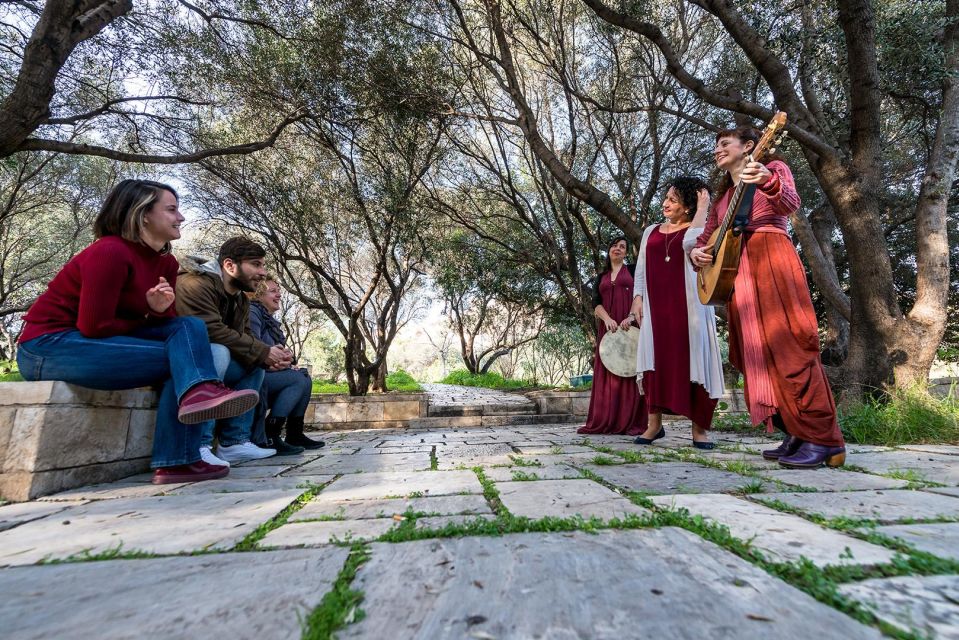
The maximum group size is 20 people. That is small enough to keep the storytelling personal, though the experience still takes place outdoors in active city streets. You will need to listen while walking and remain aware of the group.
Most people can participate, and service animals are allowed. The tour is near public transportation, which makes reaching the start point easier, though the supplied details do not identify a specific station or route.
Wear comfortable shoes. Plaka has narrow streets, and the route rises toward the Acropolis area and ends at the Pnyx. The experience is only about two hours, but Athens can be hot, and the walk includes outdoor stops.
The earlier departure is a real advantage in warm weather. Shady storytelling areas are used along the route, but you should still prepare for sun. Water, a hat, sunscreen, and light clothing make sense.
Because the walk ends at the Pnyx rather than the starting point, plan your next activity before you set out. You might continue toward another Acropolis-area sight, meet friends elsewhere, or use public transportation from the surrounding central Athens area.
Who will enjoy this walk most
I would choose this experience for you if you want mythology presented with humor, drama, and movement. It is especially useful when your group includes people with different interests, since the route offers architecture, city atmosphere, performance, and ancient stories at the same time.
Families may appreciate the accessible format. The gods are easier to remember when they are presented as characters with rivalries, romances, tempers, and bad habits. The two-hour length is also manageable for an introduction to Athens.
It suits adults who want a lively orientation before tackling the Acropolis or museum collections. After hearing the main myths, you may recognize Athena, Zeus, Dionysus, and heroic scenes more easily in sculpture, pottery, and paintings.
I would hesitate to recommend it if you dislike theatrical presentation or want every minute devoted to monuments. You also need to understand that the main attractions are seen from outside. The walk adds meaning to the surroundings, but it does not replace paid entry to the Acropolis Museum or other archaeological sites.
Weather, cancellation, and booking timing
This experience requires good weather. If poor weather causes cancellation, you are offered another date or a full refund. It also requires a minimum number of participants, so a cancellation for that reason comes with the choice of another date or experience, or a full refund.
You can cancel for a full refund up to 24 hours before the start time. Changes or cancellations made less than 24 hours before departure are not accepted, and the amount paid is not refunded.
The activity is booked, on average, 75 days ahead. That does not guarantee that every date sells out, but it suggests that you should reserve early if your Athens schedule is fixed. Confirmation normally arrives at booking. If you book within one hour of departure, confirmation comes as soon as possible and depends on availability.
Should you book the Greek Mythology Storytelling Walk?
Book this walk if you want Athens explained through memorable stories rather than a standard site-by-site lecture. The live performance, shady storytelling points, Plaka lanes, Acropolis views, ancient theater, and final stop at the Pnyx create a thoughtful two-hour introduction to the city.
Skip it if your priority is entering monuments, studying archaeology in detail, or keeping costs as low as possible. You will need to pay separately for food, drinks, and attraction admissions.
For most first-time visitors who enjoy history with a little theater, I think the $53.52 fee is fair. You get a focused route, professional storytellers, a tour leader, and a clear sense of how Greek myth fits into Athens. Book it early, start with water and sun protection, and treat the walk as a lively opening chapter, not the whole Athens story.
FAQ
How long does the Greek Mythology Storytelling Walk last?
The walk lasts approximately two hours.
What time does the experience start?
The start time is 9:30 a.m.
Where does the walk begin?
It begins at Nikis and Kidathineon, Athens 105 57, Greece.
Where does the walk end?
The walk ends at the Pnyx in Athens, postal code 117 41.
Does the experience include Acropolis admission?
No. The walk passes outside the Acropolis Museum and an ancient Greek theater, but attraction admission is not included.
Does the experience include food or drinks?
No. Food and drinks are not included.
What is included in the price?
The price includes a storytelling performance, professional storytellers, and a professional tour leader.
How many people can join the walk?
The maximum group size is 20 participants.
Is the activity suitable for service animals?
Yes. Service animals are allowed.
Can I cancel for a full refund?
Yes. You can cancel at least 24 hours before the experience start time for a full refund. Cancellations made less than 24 hours before the start time are not refunded.