REVIEW · KARTEROS
Minoan Theater – Dance Performance
Book on GetYourGuide →Operated by Amnisiades Park - Minoan Theater · Bookable on GetYourGuide
The most striking part of this Crete experience is the bull-leaping performance, presented through dance and acrobatics rather than a museum display or lecture. Phaedra, daughter of King Minos, welcomes you into a ritual world of goddesses, athletes, sacred bulls, and the Minotaur.
I like the clear link to Minoan beliefs, especially the libation to the Earth Goddess and prayer to the Great Mother Gaia. I also like the mix of costumes, music, dance, and physical theater, which gives children and adults something to follow. The main thing to consider is timing: the actual show lasts 35 minutes, while the booked activity is listed as 1.5 hours, so ask what fills the remaining time.
In This Review
- Key points
- What the Minoan Theater show is really offering
- Phaedra opens the door to the Minoan world
- Bull-leaping and the drama of the sacred bull
- Dance, costumes, and the feeling of a ceremony
- The Minotaur and the final ritual
- How to fit it into a day at Knossos
- Is $24 a fair price?
- Who will enjoy this most?
- A practical way to judge the performance
- Should you book the Minoan Theater performance?
- FAQ
- How long is the Minoan Theater performance?
- How much does the experience cost?
- What does the performance include?
- Where is the meeting point?
- What languages are available?
- Can I cancel the booking?
Key points
- A 35-minute theatrical show: The main performance combines Minoan dance, acrobatics, ritual, and sports.
- Bull games with a dramatic twist: Bull-leaping and the sacred bull are central parts of the story.
- Phaedra welcomes you: The daughter of King Minos acts as your entry point into the Minoan world.
- A ritual centered on the Great Mother: Libation, prayer, and dance honor Gaia, the Earth Goddess.
- Easy to add to a Crete sightseeing day: The short performance can follow a visit to Knossos or the Heraklion Archaeological Museum.
- Practical booking terms: Admission costs $24 per person, cancellation is free up to 24 hours ahead, and the venue is wheelchair accessible.
What the Minoan Theater show is really offering
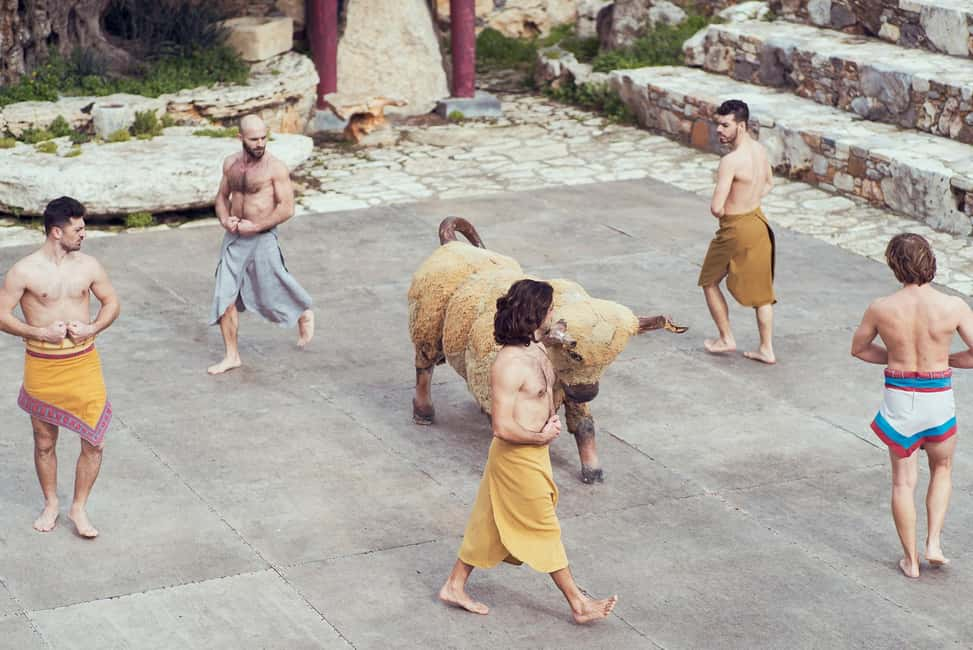
This is not a guided archaeological tour of the Palace of Knossos. It is a stage production inspired by Minoan culture, using movement and symbolic scenes to tell its story.
That distinction matters. You will not spend 35 minutes listening to a detailed lecture about pottery, palace administration, trade, or excavation work. Instead, you watch a dramatic sequence built around ritual and performance. The show aims to make the Minoan era feel immediate through bodies in motion.
The central idea is a ceremonial gathering in honor of the Great Mother, identified here with nature and the Earth Goddess Gaia. Men and women dance together, suggesting equality and affection within the ritual. The bull games then bring strength, stamina, intelligence, and danger into the story.
I find this format useful after a morning at Knossos. Archaeological ruins can be hard to picture, especially for younger visitors. A theatrical presentation gives you a visual sense of how dance, ceremony, athletic skill, and religious belief may have worked together in the Minoan imagination, even though the show itself is an artistic interpretation rather than a confirmed recreation.
You can also read our reviews of more tours and experiences in Karteros.
Phaedra opens the door to the Minoan world
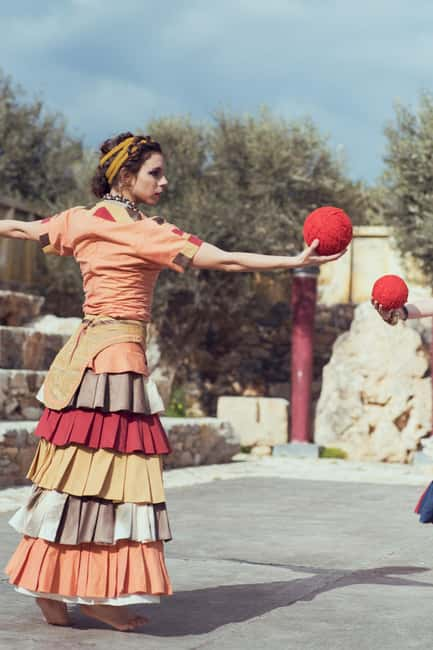
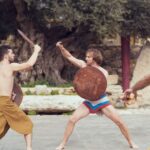
The performance begins with Phaedra, daughter of King Minos, welcoming you. Her role gives the production a simple human guide. Rather than dropping you into a string of unrelated dances, the show frames the scenes around a royal and religious setting.
Phaedra is not listed as a tour guide. She is a character in the theatrical production. That is worth knowing because the experience is driven by performance rather than spoken explanation.
The story then turns toward a libation to the Earth Goddess. In ancient religious practice, a libation generally means offering liquid as part of a ritual. Here, it helps establish the tone of the show: you are watching a ceremony, not just a folk-dance program.
The religious material may appeal to you most if you have already seen Minoan symbols at Knossos or in the Heraklion Archaeological Museum. If you arrive without that background, the broad themes are still easy to grasp: nature is honored, men and women participate, and athletic contests become part of a sacred event.
The production promises a sense of wonder, but it does not replace historical interpretation. I would treat it as a lively companion to Crete’s archaeological sites, not as a stand-alone lesson in everything scholars know about the Minoans.
Bull-leaping and the drama of the sacred bull
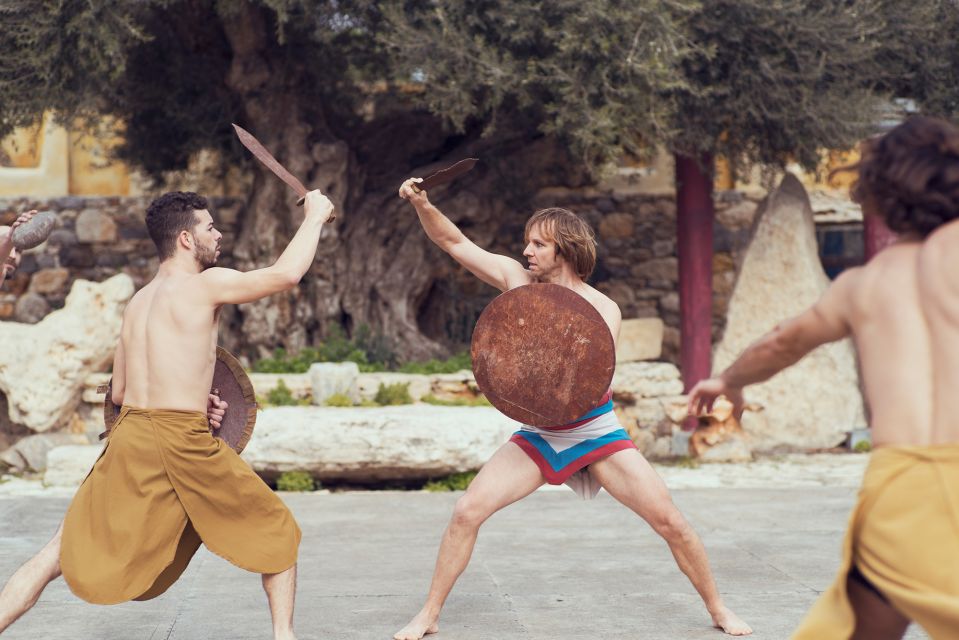
The bull games form the most memorable part of the program. Bull-leaping is closely linked with modern ideas about Minoan Crete, and the show presents it through dance and acrobatics.
The story describes the games as a test of strength, stamina, and intelligence. It also stresses the fatal risks involved in facing the sacred bull. That gives the athletic scenes a serious edge. The bull is not simply a prop for a cheerful dance. It represents danger, power, and a connection between human beings and the divine world.
You should expect stylized theater rather than a sporting event. The acrobatics serve the story and the ritual mood. The show presents the bull games in a fresh way, but it does not provide a technical explanation of how ancient bull-leaping may have been performed.
This is one reason the program works well for a mixed-age group. Children can focus on the movement and suspense, while adults can connect the bull imagery with the religious and artistic themes seen around Crete. The short running time also helps keep the action from becoming tiring.
If you are uncomfortable with staged danger or expect a calm museum-style presentation, this section may feel more theatrical than educational. The show is designed to create drama, not to settle every historical question about the bull games.
Dance, costumes, and the feeling of a ceremony
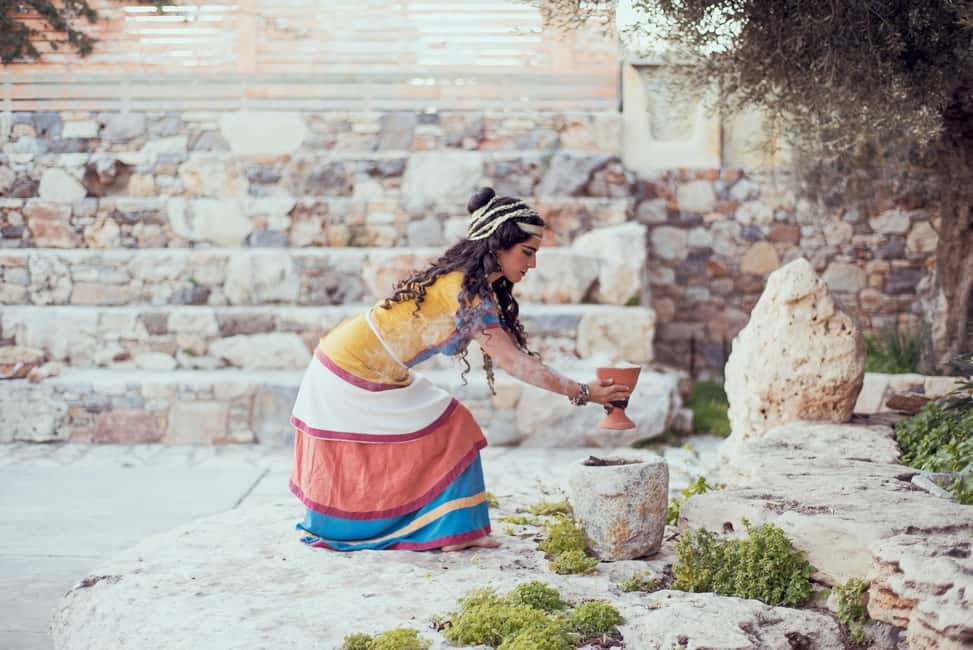
The Minoan ladies dance with the men to honor the goddess. Their union is presented as a symbol of equality and love. This is one of the production’s most distinctive ideas, since it places social harmony beside athletic competition.
The dancing is supported by costumes and atmosphere, two elements that shape the show as much as the story. A performance about an ancient civilization needs visual cues, and clothing helps signal that you have entered a different time and place.
The staging also gives the event a ceremonial rhythm. First comes the welcome. Then the libation and prayer. The dancers honor the goddess before the games begin. The sequence helps you follow the production even if you do not catch every word.
English and German host or greeter service is available. The show itself is primarily a movement-based performance, which makes language less of a barrier than it would be on a lecture-heavy tour. Still, you should not expect a long bilingual historical talk unless that is separately confirmed.
The overall audience rating is 4.4 out of 5 from eight ratings. That is a positive sign, though it is a small sample. The strongest praise centers on the dancing and atmosphere. One booking was used as a birthday surprise, with the show paired with a small meal beforehand, and the combination of ambience, costumes, and performance was considered worth the cost. The meal is not listed as part of this $24 activity, so confirm separately before counting on it.
The Minotaur and the final ritual
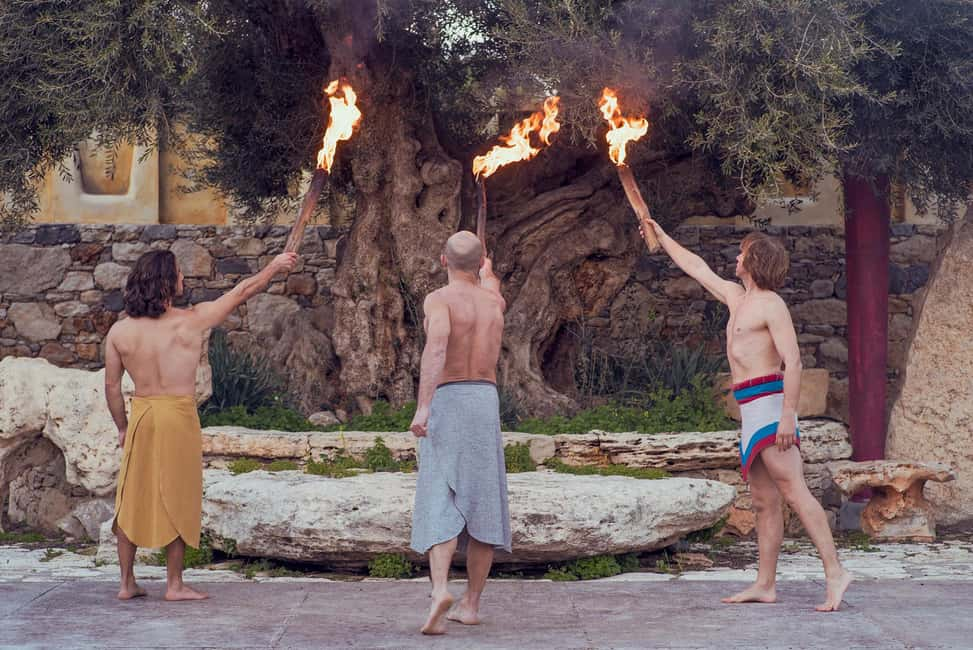
Near the end, the high priestess embraces the Minotaur in a ritual dance. This scene shifts the story from athletic display to mythic symbolism.
The Minotaur is one of the best-known figures connected with the legends of King Minos and Crete. In the performance, the figure appears within a religious dance rather than as a simple monster in a storybook. The high priestess and the Minotaur are brought together in a ceremonial moment.
You may find this scene more interpretive than the earlier athletic sections. The production does not claim to reconstruct an ancient myth word for word. Instead, it uses familiar Cretan symbols to create a final image of ritual, mystery, and human contact with the sacred.
The show closes with prayer to the Great Mother Gaia. That return to the goddess gives the performance a clear shape. It starts with welcome and offering, moves through dance and risk, then ends in prayer.
I like this structure because it keeps the production from becoming a collection of unrelated numbers. You get a beginning, a central contest, and a ritual ending. At the same time, you should keep your expectations in check. The 35-minute performance can introduce the ideas, but it cannot explore Minoan religion or the Minotaur legend in great depth.
How to fit it into a day at Knossos
The short performance is easiest to use as part of a larger Heraklion-area day. It can follow a visit to Knossos Palace, the Heraklion Archaeological Museum, or another related site.
That pairing makes sense. At Knossos, you encounter the physical remains and famous imagery associated with the Minoan world. At the theater, you see those themes turned into movement. The museum gives you objects and evidence. The show gives you mood and performance.
The activity is listed as lasting 1.5 hours, but the theatrical production itself lasts 35 minutes. This is the most important scheduling point. The shorter show means it can fit neatly after a palace visit or museum visit, but the full booking window is longer than the stage performance.
I would leave enough room in your day for arrival, the show, and whatever time the venue uses before or after the performance. The supplied details do not explain the remaining time, so check the starting schedule and ask whether it includes seating, welcome activities, a meal, or other programming.
You will find the meeting point by looking for the sign at the entrance to the Minoan Theater. No pickup or transport service is specified, so do not assume that a transfer from Heraklion, Knossos, or your hotel is included.
Is $24 a fair price?
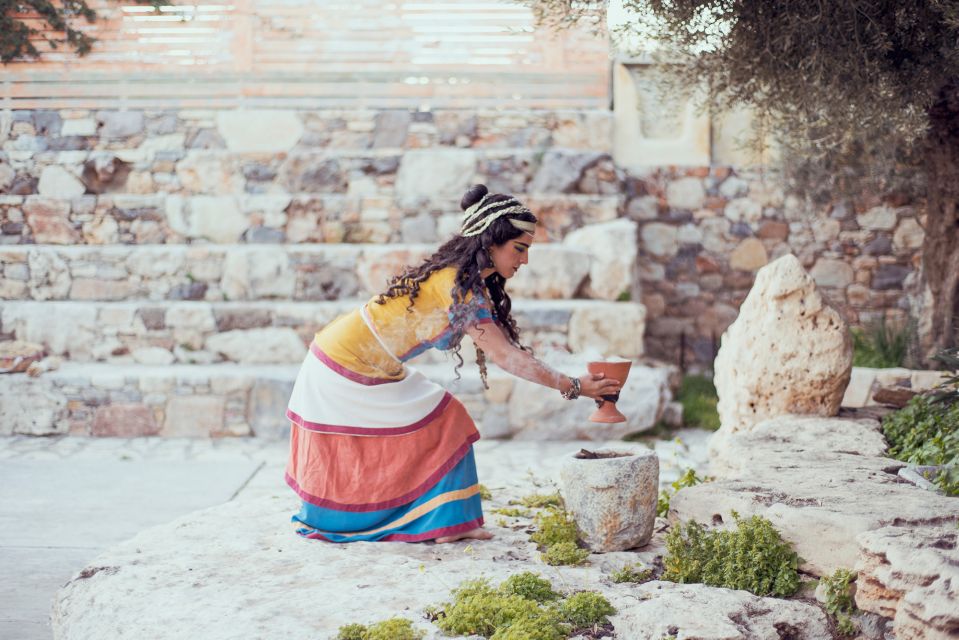
At $24 per person, this is reasonably priced if you want a focused cultural performance rather than a full-day tour. You are paying for a staged dance and acrobatics production with costumes, ritual scenes, bull-leaping, sports, and a mythic ending.
The value depends on how you use it. If you are already visiting Knossos or the museum, the show adds a different kind of context without taking up an entire afternoon. If you expect a full historical tour, a meal, or a long performance, $24 may feel less attractive.
The 35-minute show is short enough to suit people with limited time, but the listed 1.5-hour duration makes the price harder to judge without knowing what else is included. I would confirm the full schedule before booking, especially if you are arranging transport or planning a tight sequence of sights.
A small meal may be available in connection with some visits, based on the birthday booking described above, but it is not included in the stated inclusions for this activity. Treat food as separate unless the provider confirms otherwise.
Who will enjoy this most?
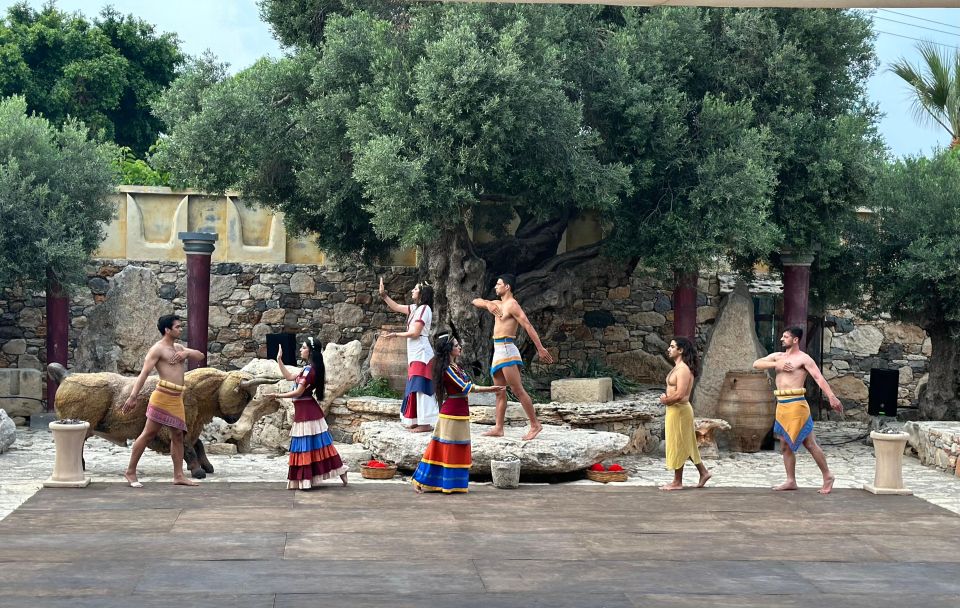
I would recommend this for you if you like history brought to life through theater. It suits families, couples, and anyone who finds ruins more meaningful after seeing the people, rituals, and stories associated with them.
It is also a good choice for a birthday surprise or a relaxed cultural evening, particularly if you can pair it with food. The costumes and atmosphere give it more ceremony than a standard dance demonstration.
You may want something else if you prefer detailed archaeology, a long expert explanation, or a strictly documented reconstruction. The show presents Minoan themes through artistic storytelling. That is its strength, but also its limit.
The wheelchair-accessible venue makes the activity possible for visitors with mobility needs. You should still confirm any personal seating or access requirements when booking, since the available information does not describe the exact layout.
Bring your passport, as it is specifically required. The host or greeter can assist in English or German. The ticket line is skipped, which is useful when you are fitting this into a busy sightseeing day.
A practical way to judge the performance
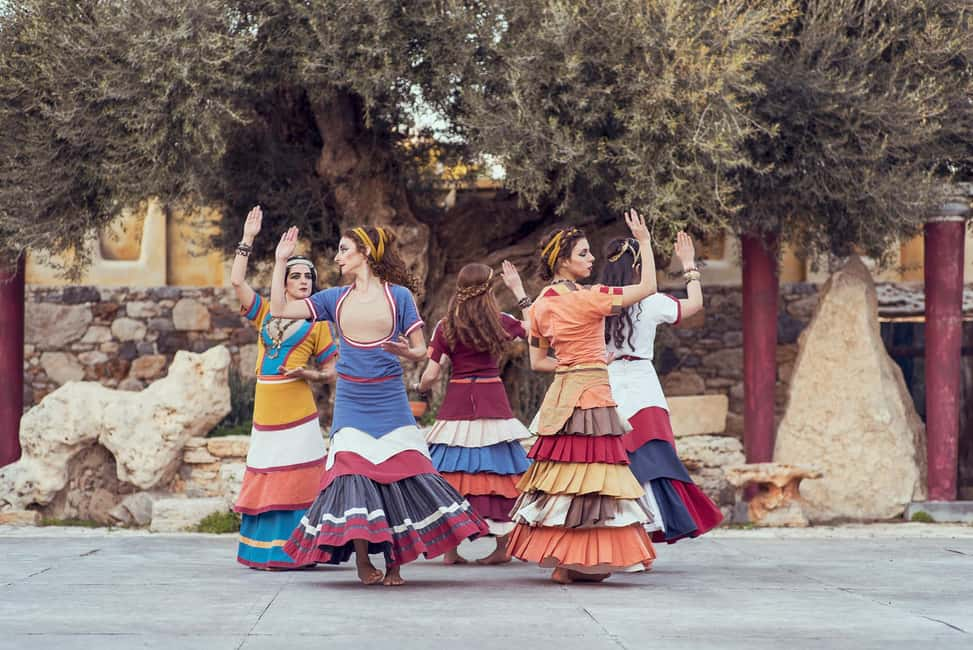
Think of this as a cultural add-on, not the main archaeological event of your Crete holiday. See Knossos or the Heraklion Archaeological Museum first if you can, then use the theater to give the Minoan world a human and physical dimension.
The strongest reasons to book are the compact length, the unusual bull-leaping theme, and the blend of ceremony and acrobatics. The best moments should be the opening welcome from Phaedra, the dancers honoring the Great Mother, the bull games, and the high priestess’s ritual dance with the Minotaur.
The main caution is the gap between the stated 1.5-hour activity and the 35-minute performance. Ask what is included in the remaining time. Also confirm whether any meal is part of your chosen booking, since it is not listed among the inclusions here.
Should you book the Minoan Theater performance?
Book it if you want a short, colorful introduction to Minoan themes and plan to visit Knossos or the Heraklion Archaeological Museum. At $24, it offers good value when you view it as a theatrical companion to those sites, especially if you enjoy costumes, dance, and acrobatics.
Skip it if your priority is detailed archaeological information or a longer evening show with dinner included. Before paying, check the full 1.5-hour schedule and food arrangements. If those details suit your plans, this is a lively way to give Crete’s ancient stories some movement and human feeling.
FAQ
How long is the Minoan Theater performance?
The theatrical production lasts 35 minutes. The total activity duration is listed as 1.5 hours, so the full schedule includes more time than the performance itself.
How much does the experience cost?
The listed price is $24 per person.
What does the performance include?
It includes a theatrical dance and acrobatics production featuring Phaedra’s welcome, a libation to the Earth Goddess, bull-leaping, Minoan sports, prayer to the Great Mother Gaia, and a ritual dance involving the high priestess and the Minotaur.
Where is the meeting point?
Meet at the entrance to the Minoan Theater. You will see a sign identifying the meeting point.
What languages are available?
The host or greeter service is available in English and German.
Can I cancel the booking?
Yes. You can cancel up to 24 hours in advance for a full refund. You can also reserve now and pay later to keep your plans flexible.