REVIEW · NAFPLIO
Nafplion: Mycenae and Epidaurus Day Tour
Book on GetYourGuide →Operated by Unique Greek Tours · Bookable on GetYourGuide
Two ruins, one well-paced van day. This Mycenae and Epidaurus tour from Nafplion pairs the Cyclopean fortifications of Agamemnon’s world with the famous Epidaurus theatre. I also like the fact that roundtrip transport is handled, so you can focus on ruins and photos instead of logistics. The main catch: there’s a moderate amount of walking over uneven ground, so it is not a great match for wheelchair users.
What keeps this from feeling rushed is the driver style. On recent trips, people have highlighted friendly, early pickup, air-conditioned vehicles, and drivers such as Nikos, Kosis, Toso, and George who stay willing to answer questions and help you make the most of your time on site. Heat is real in the Peloponnese, so I’d expect comfort to matter—especially since some drivers bring cold bottled water on warm days.
Value-wise, this is a solid option if you want big archaeological hits in about 6 hours without renting a car. Just plan for what is not included: site entrance tickets and food/drinks are on you, so bring water and a simple snack plan.
In This Review
- Key things that make this tour worth your time
- Nafplion pickup and the van ride that sets the day up
- Mycenae: Lions Gate, Cyclopean walls, and royal tombs
- The drive toward Epidaurus and why the context matters
- Epidaurus Sanctuary of Apollo: a place built for ritual and visitors
- Asclepieion of Epidaurus and the ancient theatre with famed acoustics
- Time on the ground, comfort, and what to bring (so your feet don’t complain)
- Price and logistics: what you’re paying for (and what you still need to budget)
- Who this Mycenae and Epidaurus tour suits best
- Should you book the Nafplion Mycenae and Epidaurus day tour?
- FAQ
- How long is the Nafplion to Mycenae and Epidaurus day tour?
- Where does pickup happen?
- What are the main stops on the tour?
- How much time do you spend at each site?
- Is food included?
- Are entrance tickets included?
- Is flash photography allowed inside the tombs?
- Is this tour suitable for wheelchair users or mobility impairments?
Key things that make this tour worth your time
- Lions Gate and Cyclopean walls at Mycenae, plus the royal tombs area
- Epidaurus Sanctuary of Apollo and the Asclepieion of healing
- A famous ancient theatre built around 330 BC, with seating for about 13,000
- Roundtrip Nafplion transport in a van, with helpful on-route context
- Practical pacing that gives you about 1.5 hours at each site
Nafplion pickup and the van ride that sets the day up
You start right from Nafplion—pickup from any hotel in town is part of the deal. Then you’re on the road by van for about 30 minutes before your first stop. That drive time matters because it helps you arrive with your head already in “ancient Peloponnese” mode, instead of treating this like a quick photo sprint.
The tour timing is straightforward. After Mycenae, you head toward Epidaurus with roughly 45 minutes of driving, then finish with a short final transfer back to Nafplion (around 20 minutes). For many people, that structure is exactly what they want: two anchor stops, a comfortable ride between them, and enough time to actually walk the sites.
One small but important note: you’re in a van day. That’s good for stress-free transport, but it also means you’ll feel the rhythm of a day trip—arrive, walk, see, repeat. If you tend to get antsy when you’re parked for too long, you’ll probably still enjoy the flow since the on-site time is about 1.5 hours at each location.
You can also read our reviews of more tours and experiences in Nafplio.



Mycenae: Lions Gate, Cyclopean walls, and royal tombs
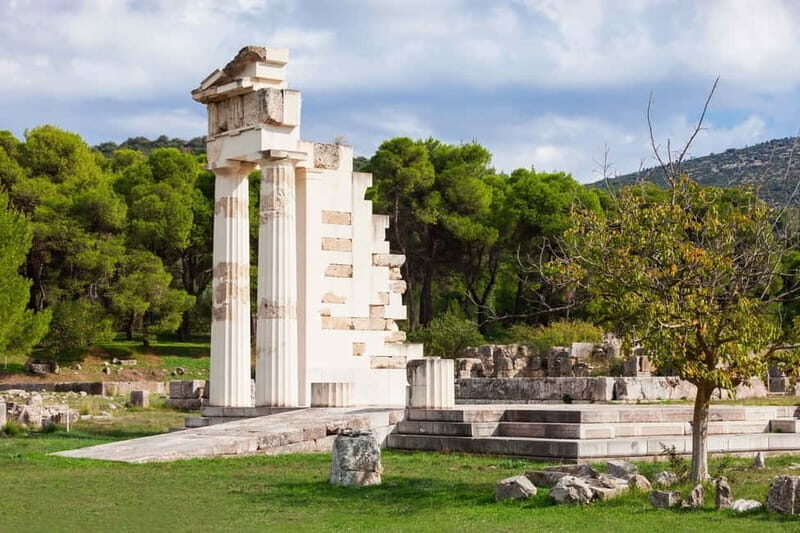
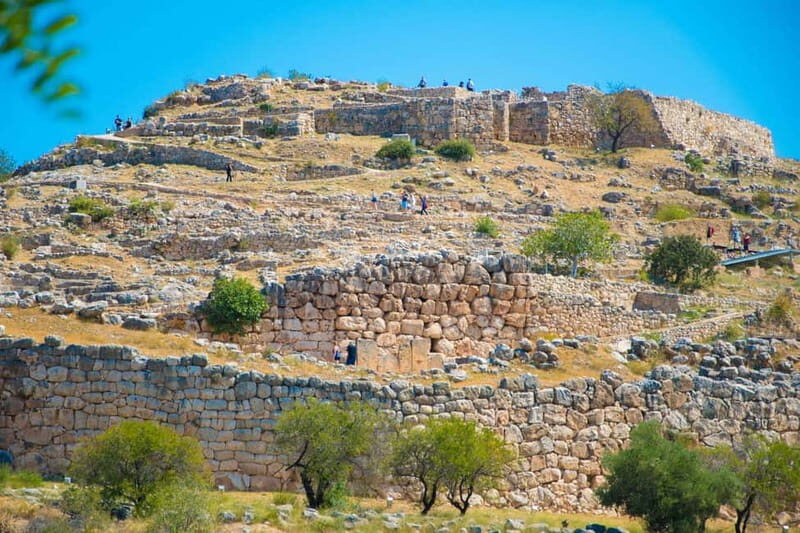
Mycenae is the first major hit, and it’s one of those places where the scale grabs you fast. You’ll get about 1.5 hours here, which is enough to see the headline features without feeling like you’re being dragged past everything.
Look for:
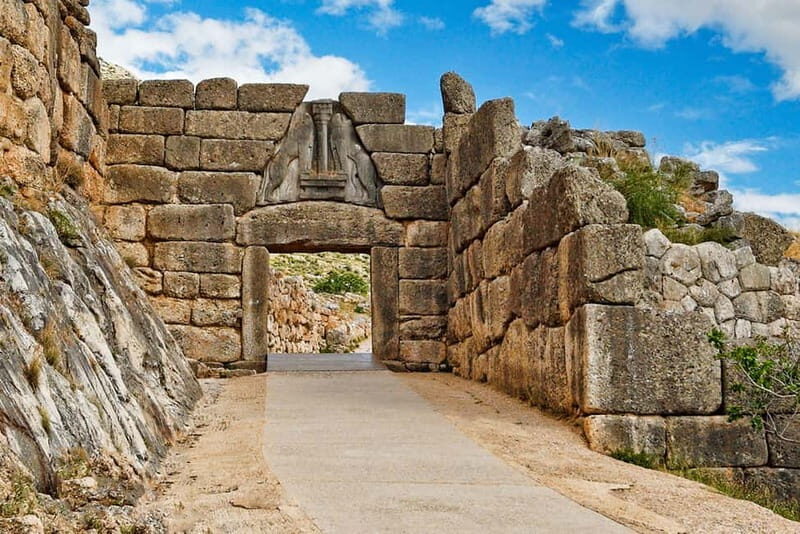
- The Lions Gate, the monumental entrance people come to see again and again
- The Cyclopean walls—those thick fortifications that make the site feel fortified, not just ruins
- The monumental palace entrance area
- The tombs of Atreus and Clytemnestra
This is also where the tour’s theme becomes real: the Mycenaean civilization and the legendary Kingdom of Agamemnon. You’ll get historical context while you’re standing in the exact spots where that story and culture are tied to the landscape.
The most practical consideration at Mycenae is the walking. Surfaces can be uneven, and you’re going to move at a natural walking pace to connect the main points. Wear comfortable shoes you don’t mind getting dusty or warm-weather sweaty. If you’re thinking about a flash photo, note that flash is prohibited inside the tombs.
If you like ruins that feel like real engineering—walls, entrances, defensive design—Mycenae will hit your interest buttons. If you only care about one quick view, you might feel the time pressure here. But at 1.5 hours, you’re given enough room to linger at the most dramatic sections.
The drive toward Epidaurus and why the context matters
Between Mycenae and Epidaurus, you’ve got about 45 minutes of van travel. I like this window because it’s long enough to settle in, grab water, and let the background connect the two sites.
Epidaurus is a different mood from Mycenae. Mycenae is about power—fortresses, monarchy, and monumental stone. Epidaurus shifts toward religion and care for the sick. The tour frames this with the Sanctuary dedicated to Apollo (founded around 800 BC) and the later healing complex linked to Asclepius.
That context changes how you read the space. Instead of just seeing “another ancient site,” you start noticing how a sanctuary works: the idea of pilgrims, ritual spaces, and a place designed for people seeking cures.
If you’re the type who likes to understand what you’re seeing while you’re still looking at it, you’ll probably appreciate how the drive time supports the site narrative. If you want silence and scenery, it can still work—just bring your own listening plan.
Epidaurus Sanctuary of Apollo: a place built for ritual and visitors
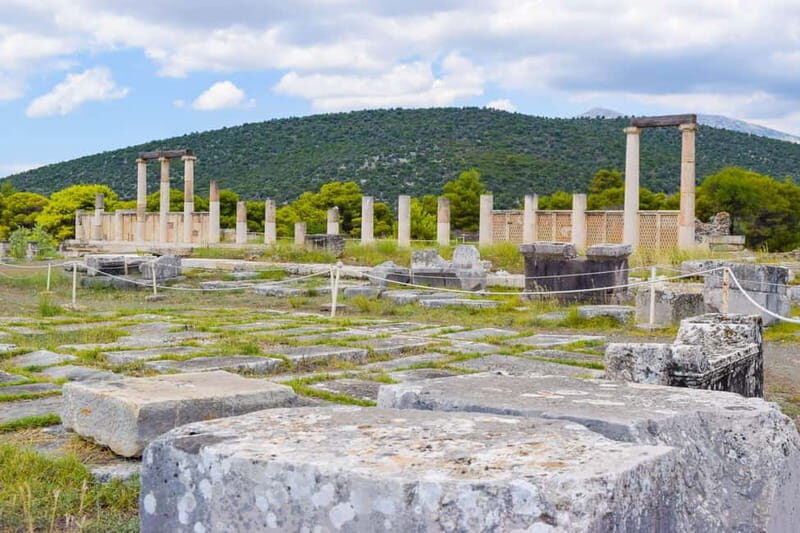
When you arrive at Epidaurus, you get about 1.5 hours on site. The first stop is the broader archaeological setting tied to the Sanctuary of Apollo, founded around 800 BC. This isn’t only about one building. It’s about how the whole area functioned as a recognized sacred destination.
You’ll also get a sense of how Epidaurus was a magnet for people. The Asclepieion portion is known for healing, and the complex attracted a large number of pilgrims and patients. That matters because it explains why the theatre, sanctuaries, and other spaces belong to the same overall ecosystem of ancient life.
You’ll want sun protection here. Epidaurus is outdoors, and you’re walking in a heat-and-stone environment. The tour’s own packing advice is practical: bring a hat and sunscreen, and keep water within reach. If you forget those, you’ll feel it fast.
Also, plan your attention. In a single visit, you can’t absorb everything. So I’d aim to prioritize the three big anchors: Apollo sanctuary areas, the healing temple complex, and the theatre. When you move in that order, your visit feels coherent.
Asclepieion of Epidaurus and the ancient theatre with famed acoustics
This is the part most people remember. The Asclepieion of Epidaurus was dedicated to gods with healing powers, including a healing temple associated with serious diseases in ancient Greece. The emotional tone is different from Mycenae: less about conquest, more about hope and care.
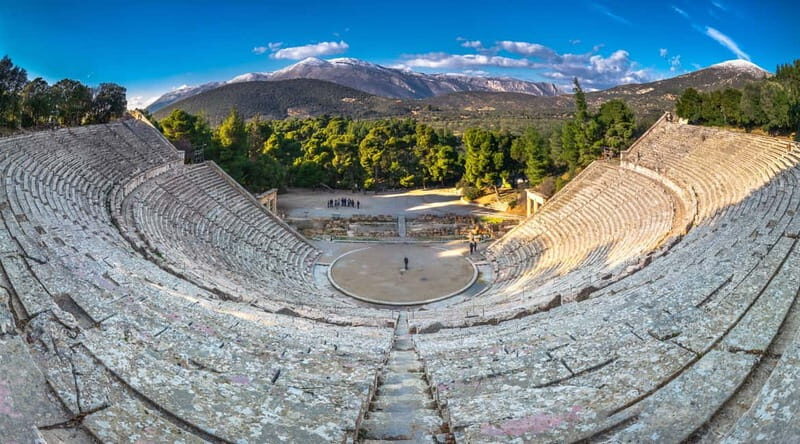
Then comes the theatre. This ancient theatre sits within the archaeological site of the Sanctuary of Asklepios. It was built toward the end of the Classical era, around 330 BC, and is famous for its elegant design and perfect acoustics. The seating capacity is about 13,000, which gives you a sense of how major this venue was, not just a charming ruin.
One of the most concrete reasons to plan your time here is the UNESCO listing. In 1988, the theatre and the Asclepius complex were added to the UNESCO World Heritage List. That kind of recognition isn’t just branding. It usually tracks that the site has stayed meaningful and intact enough to teach people how ancient design worked.
Practical advice for enjoying the theatre:
- Slow down and choose your viewing area before you start snapping photos.
- If you’re sensitive to heat, use the theatre area as a mental “cooldown” moment—you can sit and refocus.
- Bring water, because the theatre isn’t an indoor break.
If you care about architecture and sound, this is your payoff stop. Epidaurus isn’t a random stop on a map. The theatre is the reason the area still gets talked about, and the surrounding sanctuary context explains why people came here.






Time on the ground, comfort, and what to bring (so your feet don’t complain)
This tour is built for a comfortable day-trip pace: about 6 hours total, with roughly 1.5 hours at each site. That’s a helpful balance—long enough to see the highlights, short enough to avoid feeling trapped.
Still, don’t underestimate the walking. The tour notes call it moderate, with uneven surfaces. That’s manageable for many people, but it’s also why it’s not suitable for wheelchairs or mobility impairments.
I’d bring:
- Comfortable shoes you’ve broken in
- Hat and sunscreen for sun exposure
- Water (and ideally a small snack plan since food isn’t included)
- A camera, plus be mindful of flash restrictions inside tomb areas
One review detail worth trusting: on hot days, drivers have been described as bringing cold bottled water and keeping the ride comfortable in an air-conditioned van. You can’t assume every departure includes that, but it lines up with good on-the-ground planning for summer in the Peloponnese.
If you’re traveling with family, this is also one of those tours where everyone can find something. Mycenae offers dramatic gates and walls. Epidaurus offers a sanctuary story and a theatre that makes the ancient world feel real.
Price and logistics: what you’re paying for (and what you still need to budget)
The price is listed at $106 per person for a 6-hour day trip. For that, you get:
- Transportation to and from Nafplion
- An English-speaking driver
- Liability and taxes
What you don’t get:
- Food and drinks
- Entrance tickets to the sites
- A professional licensed guide
So how is this good value? You’re paying for the hardest part for most people: not the ruins, but the transport and smooth timing between two major destinations. You avoid the stress of driving, parking, and route-finding on a day when you want your energy for walking and seeing.
Also note: the tour description says skip the ticket line. That can be a big deal at famous sites, because time spent waiting is time you can’t spend reading stones. Even so, the entrance fees themselves are not included, so you should still plan on paying for tickets directly.
My practical suggestion: budget for a simple lunch or snack and buy/prepare for the site entrances separately. Then the $106 makes sense as a “get me there and back with a competent driver and a workable schedule” price.
Who this Mycenae and Epidaurus tour suits best
This day trip works best if you:
- Want to see Mycenae and Epidaurus without driving yourself
- Enjoy ancient sites with clear highlights like Lions Gate and the Epidaurus theatre
- Prefer a tour format that keeps things moving while still giving you time at each stop
- Like having an English-speaking driver share context as you travel between sites
It’s also a good fit for first-time visitors to Nafplion who only have a short window in the Peloponnese. Two sites in one day is a classic strategy when you’re limited by flight times or other plans.
Where it doesn’t fit well:
- If you use a wheelchair or have mobility limits that make uneven walking difficult
- If you want minimal walking and maximal downtime
- If you’re expecting a professional licensed guide experience specifically (this includes an English-speaking driver, not that type of guide)
Should you book the Nafplion Mycenae and Epidaurus day tour?
If you want a straightforward way to hit the biggest ancient names near Nafplion—Mycenae’s fortifications and Epidaurus’s Apollo sanctuary, healing complex, and famous theatre—this is an easy yes for many people. The schedule is practical, and the driver experience seems to matter a lot on these trips, with names like Nikos, Kosis, Toso, and George described as friendly and helpful, including during hot weather.
I’d only pass if your mobility needs make uneven surfaces a problem, or if you dislike spending a full day on a structured route with limited food included. Otherwise, book it, lace up your shoes, and bring sun protection—because the ancient world is beautiful, but it doesn’t slow down for your sunscreen.
FAQ
How long is the Nafplion to Mycenae and Epidaurus day tour?
The duration is listed as 6 hours total.
Where does pickup happen?
Pickup is included from any hotel in Nafplion.
What are the main stops on the tour?
You’ll visit the Archaeological Site of Mycenae and then the Epidaurus archaeological area, including the Sanctuary of Apollo, the Asclepieion, and the ancient theatre.
How much time do you spend at each site?
The schedule lists about 1.5 hours at Mycenae and about 1.5 hours at Epidaurus.
Is food included?
No. Food and drinks are not included.
Are entrance tickets included?
No. Entrance tickets to the sites are not included.
Is flash photography allowed inside the tombs?
No. Flash is prohibited inside the tombs.
Is this tour suitable for wheelchair users or mobility impairments?
No. It is not suitable for mobility impairments or wheelchair users due to moderate walking on uneven surfaces.