REVIEW · NAXOS
Naxos:Half-day cooking class at Basiliko
Book on Viator →Operated by Basiliko Naxos Cooking Lessons · Bookable on Viator
One half-day. A real Greek farm day. You’ll learn Naxos-style cooking with organic ingredients and then eat what you make in the countryside with dancing. The best part is the farm-to-table setup: you’re working with what grows right there, not mystery produce.
Two things I like a lot: you get a hands-on class that includes farm and village context (the hosts, like Anna and Jack, explain how everything fits together), and the experience ends as a full feast with wine and music. The main drawback to plan for is the countryside setting, with walking on uneven ground and a steep approach for some parts.
If you want a purely sit-in-the-kitchen lesson with no outdoor time, this may feel like too much movement. But if you’re up for garden picking, short hikes, and a fun dinner celebration, it’s a strong use of your time on Naxos.
In This Review
- Key highlights before you go
- A farm-to-table cooking class at Basilikó Tavern (rural Naxos, not a kitchen studio)
- What you’ll cook: organic produce, herbs, and a few local surprises
- The 4-hour flow: farm tour, garden picking, cooking, then feast and celebration
- The farm walk: why the “extra time” is the point
- Dinner and the party ending: wine, music, dancing, and plate breaking
- Group size, timing, and who this fits best on Naxos
- Price and logistics: does $120.93 feel fair?
- Getting there smoothly: steep roads, parking, and comfortable shoes
- What to pack (small things that make the day nicer)
- How this helps you cook Greek food at home (without pretending it’s identical)
- Should you book Basiliko Naxos Cooking Lessons?
- FAQ
- How long is the Basiliko half-day cooking class?
- Is the class offered in English?
- What is included in the price?
- Where does the experience start and end?
- How many people are in the group?
- Do I need to worry about weather?
- Is there a cancellation window?
Key highlights before you go
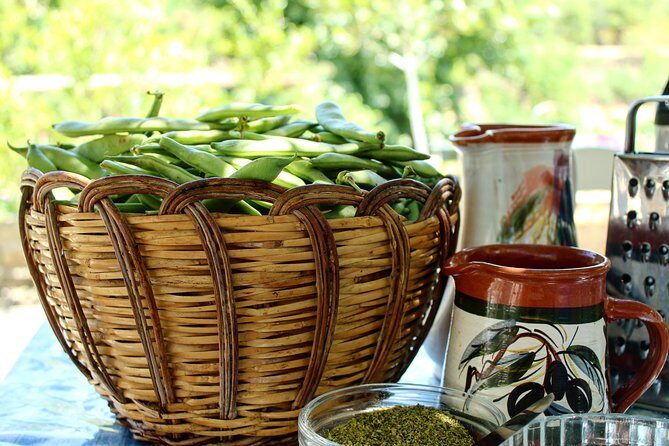
- Pick what you cook on a working family farm, then turn it into your meal
- Herbs and aromatic plants are a big focus, not just recipes
- Small-group vibe with a maximum of 15 people for a more personal feel
- Farm and village walk that adds context to why the food tastes the way it does
- Greek music, dancing, and plate breaking to close out the night on a high note
A farm-to-table cooking class at Basilikó Tavern (rural Naxos, not a kitchen studio)
This isn’t a cooking class that starts and ends in one room. Your day centers on Basilikó Tavern in the village area of Naxos, then shifts into the rhythms of a real farm and rural life. Expect a mix of cooking work and storytelling, with the hosts showing you how the ingredients actually get grown and used.
What makes the setting special is that you’re not just learning dishes. You’re learning the thinking behind them: how locals season, what herbs matter, and how seasonal produce drives what ends up on the table. It feels like you’re borrowing a family kitchen, only it comes with animals, garden paths, and plenty of conversation.
You can also read our reviews of more cooking classes in Naxos

What you’ll cook: organic produce, herbs, and a few local surprises
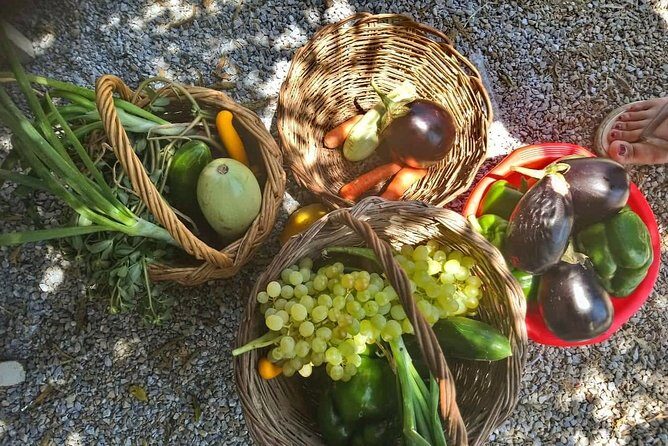
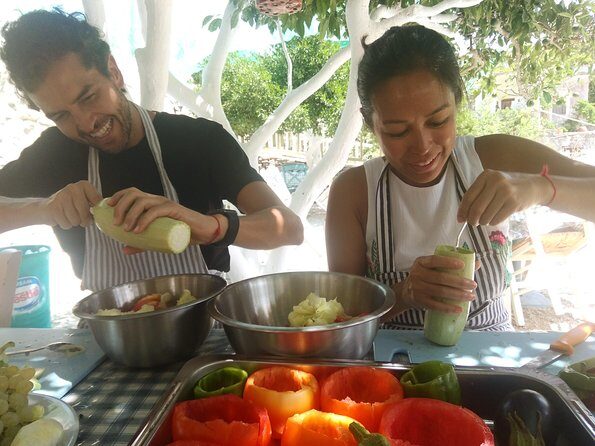
The cooking itself is built around locally-grown organic produce. You’ll cut vegetables and fruit, and you’ll also learn about herbs and aromatic plants that go beyond what you usually see in a basic recipe card.
Depending on the group and flow of the day, you might experience extra hands-on traditions—some sessions mention making cheese together with villagers, or at least learning how local dairy fits into the broader food culture. Even when you don’t do cheese-making directly, the ingredient focus is the point: you’re using things that taste like they belong on Naxos.
The class is also described as not overly intense in a hands-and-knife-for-hours way. You still do real prep work, but the day is balanced with instruction, farm touring, and time walking while things cook.
The 4-hour flow: farm tour, garden picking, cooking, then feast and celebration
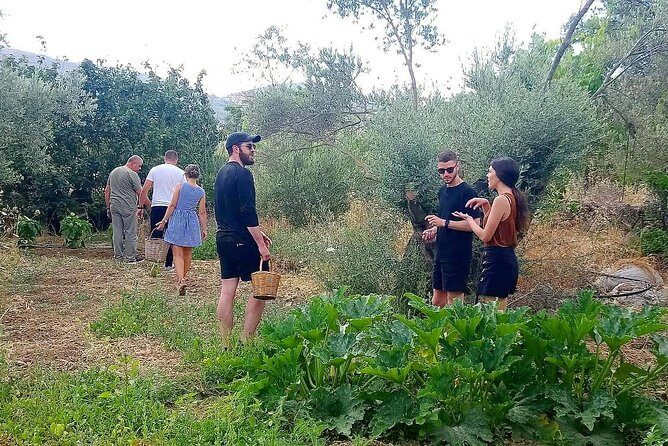
Think of the schedule as a loop: see it, pick it, cook it, then eat it—plus a village walk and a lively finale.
1) Arrival and orientation at the start point
You start at Basilikó Tavern (near Λυραδο, Naxos 843 00). From there, the experience moves into the farm portion of the day.
2) Farm and garden time
You’ll tour the property and see how the family farm operates. You may meet animals and walk through garden areas where the day’s food is coming from.
3) Picking your ingredients
You’ll pick the vegetables and herbs you’ll later cook with. This is where the whole farm-to-table idea becomes real: once you’ve harvested it, chopping and seasoning feels different.
4) Cooking lesson
You’ll work through the prep for multiple dishes. The teaching style is more than steps. Hosts explain the role of aromatic plants and local flavor logic, so you understand what makes the food taste right.
5) Walking time while food cooks
While dishes are cooking, you may take a walk along the river and through parts of the village area. This is a nice rhythm break and it gives you cultural context that pure cooking classes often skip.
6) Feast: dinner plus wine, music, and dancing
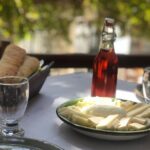
After you cook, you sit down to the meal. Local wine is part of the experience, and the day often finishes with Greek music, dancing, and the fun tradition of plate breaking.
The farm walk: why the “extra time” is the point
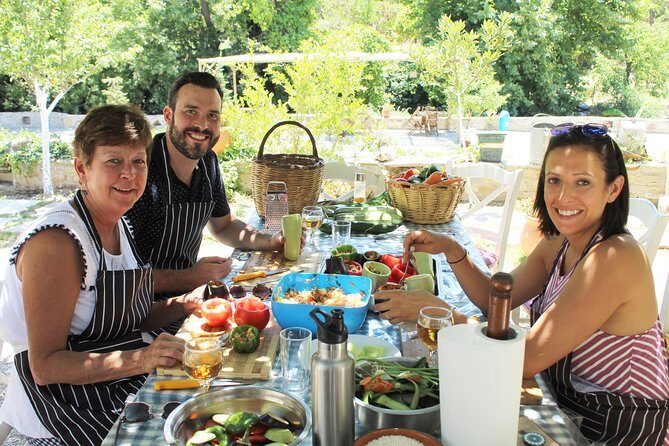
Some people worry the farm tour will eat time that could be spent chopping more. In practice, it adds value because the food makes more sense after you see where it comes from.
The strongest pattern you’ll feel is this: the hosts connect agriculture to food. When you hear how the farm is run and what grows where, you stop thinking of Greek cooking as a list of dishes and start thinking of it as seasonal choices and flavor habits.
Hosts like Anna are often highlighted for family-history context and upbeat hosting energy, while Jack is also mentioned as leading groups and explaining the property. Even if you only catch a few stories, you’ll leave with more than a menu—you’ll leave with a sense of place.
Dinner and the party ending: wine, music, dancing, and plate breaking
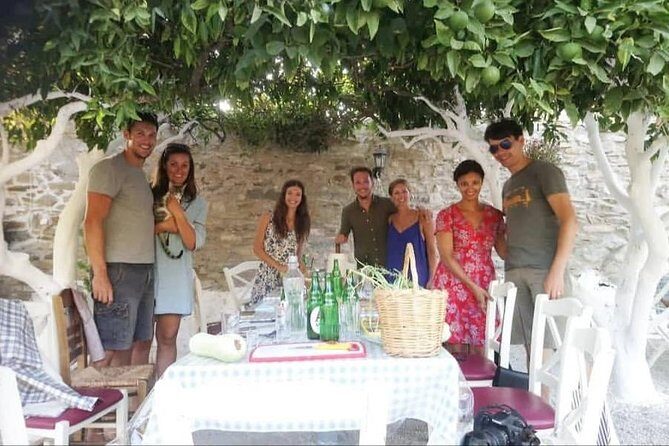
This is one of those experiences where the meal isn’t a side quest. It’s the payoff.
After cooking, you eat what you made along with more dishes as part of the feast. Local wine is included, and many people report that the wine flow is generous. Some reviews also mention extra local drinks like Kitron and raki, but the only “guaranteed” item listed is local wine.
Then comes the celebration: Greek dancing and plate breaking. If you’re worried you’ll feel out of place, don’t. The vibe is typically playful and communal. People often end the evening smiling, with that slightly chaotic, good-time feeling that you only get when the night includes music, movement, and a tradition you can participate in.
A few more Naxos tours and experiences worth a look
Group size, timing, and who this fits best on Naxos
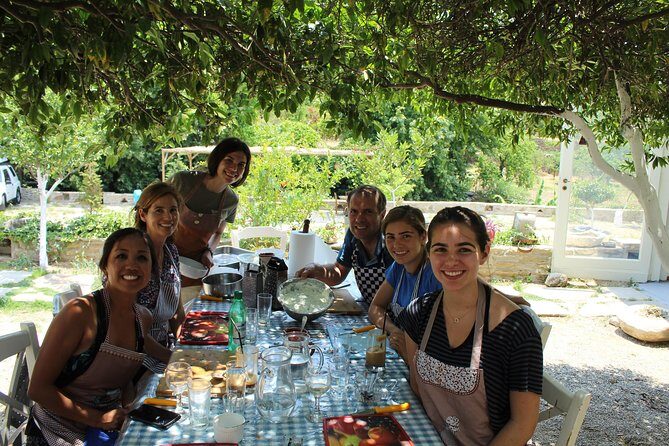
You’ll be in a group of up to 15. That smaller size matters. It means you’re not just watching while others cook, and it’s easier to ask questions about ingredients and technique.
The class is offered in English. Also, the experience notes that groups can be small or large depending on scheduling, and couples and families may be accommodated with agreement on timing and days you choose. Practically, that means it’s a flexible option if your plans don’t line up with the most common tour slots.
This is a good fit if you:
- want a hands-on Naxos activity (not just a tasting)
- like farm-to-table travel with real stories behind the food
- enjoy social evenings with music and group fun
It’s less ideal if you:
- want minimal walking or zero outdoor time
- get motion-sick easily during rural transfers and walking
- prefer a quiet, museum-style day
Price and logistics: does $120.93 feel fair?
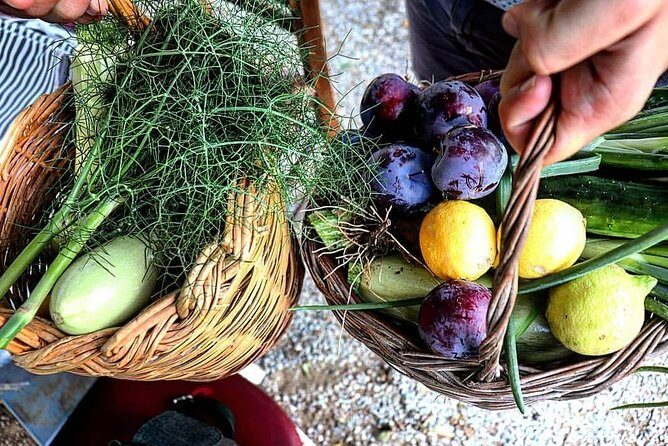
At $120.93 per person for about 4 hours, it’s not a cheap snack-class. But the value logic is solid: your ticket is built around ingredients, instruction, meals, and the full farm-and-culture program.
Here’s what you’re paying for, in practical terms:
- Organic local ingredients you pick and use
- Hands-on cooking time plus explanation of herbs and aromatics
- Meals included (lunch and dinner are listed), so you don’t need to plan another big food stop
- A full experience package that extends beyond cooking into farm touring, village walking, and celebration
Transportation is listed as an added cost, and private transportation isn’t included. The good news: the property is out in the countryside, and many people find it’s easiest to arrange a ride rather than stress over rural roads on your own.
Getting there smoothly: steep roads, parking, and comfortable shoes
The biggest logistics lesson: you’re dealing with countryside access. Reviews point out steep approaches and narrow roads, and one common tip is to park down near the property, not at the top. That alone can save you from an unpleasant climb.
I strongly suggest you show up with comfortable shoes. You’ll likely do walking on farm paths and some uneven areas, plus a walk while cooking is happening.
If you’re driving, use an app for directions (Waze is specifically mentioned as helpful). If you’re not driving, plan ahead for the extra transportation charge so you don’t lose the best parts of your afternoon to transit stress.
What to pack (small things that make the day nicer)
The experience is outdoors for parts of the day, so pack like you’re doing a short rural walk plus dinner afterward.
Bring:
- Comfortable shoes for farm paths
- A light layer in case evenings feel cooler once you’re outside
- Any basics you’d want for a walk in the village area
Leave behind:
- Anything that’s precious or slippery. Plate breaking is part of the tradition, and the night stays active and playful.
How this helps you cook Greek food at home (without pretending it’s identical)
You won’t leave with only a written recipe. The main learning is technique and flavor logic: how herbs and aromatic plants work, and how locally-grown ingredients shape taste.
Even when you don’t feel like a different cook right away, the day gives you a menu you can recreate and, more importantly, the reasons behind it. The next time you’re cooking Greek flavors at home, you’ll know what to pay attention to: freshness, herb choice, and the way seasoning builds.
If you’re shopping for ingredients, you’ll also have a better sense of what matters. It’s easier to buy with intention after you’ve picked the plants and prepped them yourself.
Should you book Basiliko Naxos Cooking Lessons?
Book it if you want the best kind of Naxos combo: farm-to-table cooking, real local context, and a joyful evening finish. This is also one of the more memorable options if you’re the type who likes experiences with people—hosts who share family stories, plus time to meet others in a small group.
Skip it only if your priority is a low-movement cooking class in a kitchen setting. The experience includes outdoor farm time, walking, and a celebration that’s meant to be fun, not quiet.
If you’re deciding based on value: the price makes more sense when you factor in the meals, the ingredient picking, the farm tour, and the party-ending tradition. For many people, it’s the highlight of their trip for a reason.
FAQ
How long is the Basiliko half-day cooking class?
It’s listed as approximately 4 hours.
Is the class offered in English?
Yes, the experience is offered in English.
What is included in the price?
Lunch and dinner are included, along with local wine as part of the feast at the end. Transportation is available for an extra charge, but private transportation is not included.
Where does the experience start and end?
It starts at Basilikó Tavern (Λυραδο, Νάξος 843 00, Greece) and ends back at the meeting point.
How many people are in the group?
The experience has a maximum of 15 travelers.
Do I need to worry about weather?
Yes. The experience requires good weather. If it’s canceled due to poor weather, you’ll be offered a different date or a full refund.
Is there a cancellation window?
Free cancellation is offered up to 24 hours in advance of the experience start time for a full refund. After that cutoff, refunds aren’t available.