REVIEW · ARCHAEOLOGICAL SITE OF OLYMPIA
Private Guided Tour of Ancient Olympia
Book on GetYourGuide →Operated by Gästeführerin Olympia - Tour guide Olympia · Bookable on GetYourGuide
Ancient Olympia feels personal when a guide maps it for you. This private walking tour covers the sacred grove of Zeus and the key buildings that explain how the sanctuary worked, not just what it looked like. I love that you walk the oldest sports stadium while your guide connects it to the origins of the Games. I also like the focus on the Site Museum, where original statues tied to the Temple of Zeus help the story click. One thing to consider: it’s almost 2.5 hours of walking, so if you want lots of slow time for photos and lingering, you may feel a bit pressed.
You’ll spend time in the places tied to athletics and ritual at a site built for unity, competition, and religious ceremony. The pacing is tight, but the guide’s explanations of what happened here in different eras helps you see Olympia as an institution, not a pile of ruins. The tour is private for a group (up to 7), and it runs with an English, German, or Greek speaking guide. If your biggest goal is collecting tickets and wandering at your own rhythm, you might prefer a self-guided visit—this is best when you want guided clarity.
Highlights worth marking on your mental map
Sacred grove of Zeus with religious and auxiliary buildings in one coherent loop.
Oldest stadium experience focused on the Games, not just architecture.
Temple of Zeus area linked to the ancient Seven Wonders.
Olympic Fire location tied to the modern Games every four years.
Site Museum visit to see original Temple of Zeus statues on-site.
Private group up to 7 with live English, German, or Greek guiding.
In This Review
- Ancient Olympia in a 2.5-hour walking plan
- Sacred Grove of Zeus: why the sanctuary matters more than the ruins
- The oldest stadium: the Games feel real when you stand where they began
- Temple of Zeus site: the Wonder connection and what to notice
- Olympic Fire location: linking ancient ritual to the modern Games
- Site Museum and original statues: where the temple becomes understandable
- Private guiding style: languages, group size, and how to get the most out of it
- Price and value: is $294 per group a good deal?
- Who should book this Ancient Olympia private tour?
- Should you book this tour?
- FAQ
- How long is the Private Guided Tour of Ancient Olympia?
- Where do we meet for the tour?
- Is the museum included?
- Will we have to wait in ticket lines?
- What languages are the guides available in?
- Is this tour private?
- Is the tour wheelchair accessible?
- Can I choose the tour time of day?
- Can I cancel for a refund?
- Is pay later available?
Ancient Olympia in a 2.5-hour walking plan
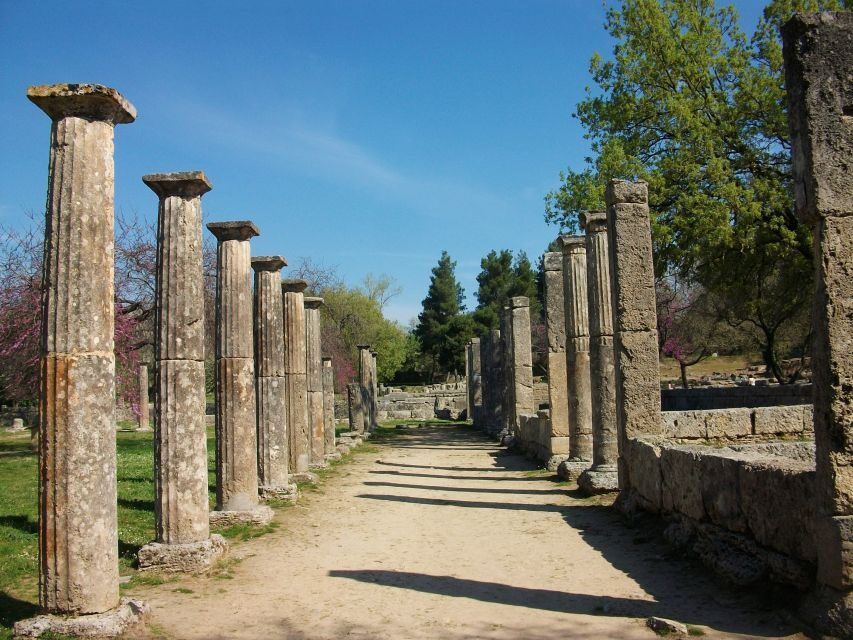
This is a one-day private tour built around a walking route inside the archaeological site. The guided portion runs almost 2.5 hours, which is a sweet spot for Olympia: long enough to understand the sanctuary layout, short enough that you still have energy for the rest of your day.
You’ll start at the ticket booth of the archaeological site and move through the grounds with a guide who keeps the story moving. One practical win: the tour includes skip-the-ticket-line, which matters here because the site can get busy and your time is fixed to the tour duration.
The tour is private for your group (up to 7 people). That matters because Olympia is easy to misread on your own. A guide can point out what’s ceremonial versus what’s athletic, and what each building likely meant to people in that era.
Sacred Grove of Zeus: why the sanctuary matters more than the ruins
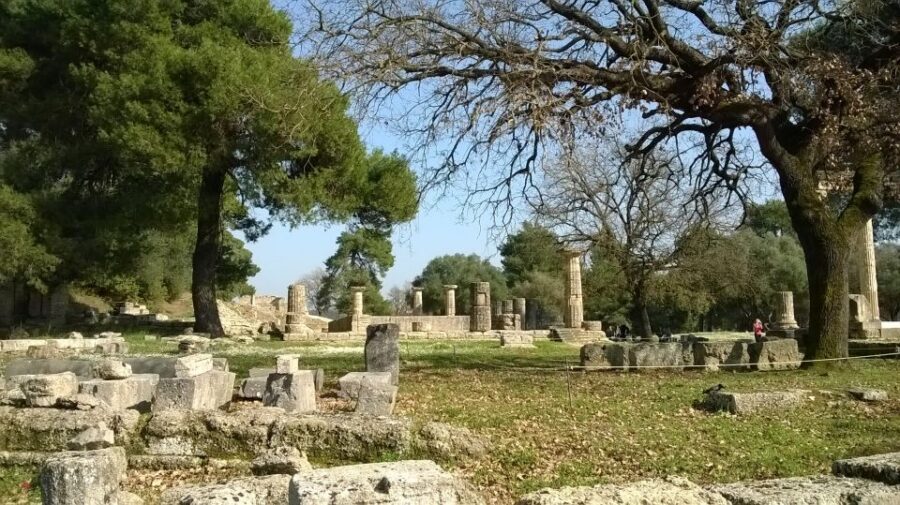
The heart of the experience is walking through the sacred grove of Zeus, along with the religious and supporting buildings that shaped daily life in the sanctuary. You’re not just looking at stones—you’re learning how Olympia functioned as a place where ritual, myth, and community identity blended.
Your guide frames Olympia as a living institution that grew over time. In the earliest period tied to the Games (dating back to 776 BC), it started with a local festival tone. Over the next centuries, it became panhellenic, meaning it attracted Greeks from across the wider Greek world. That shift changes how you should read the site. It stops being a regional gathering spot and becomes a shared cultural meeting ground.
As the sanctuary’s role expanded in the classical era (around the 5th century BC), Olympia became a place where people connected religion, heroes and myths, sport, and sacrificial ceremonies. That idea of harmony between body and mind is what makes the Zeus grove feel meaningful instead of random.
Practical note: Olympia has uneven ground and lots of foot traffic during peak hours. The “almost 2.5 hours” format keeps you from getting stuck in the hardest parts of the site without context. Still, if you’re sensitive to walking time, plan to wear comfortable shoes.
You can also read our reviews of more guided tours in Archaeological Site Of Olympia
The oldest stadium: the Games feel real when you stand where they began
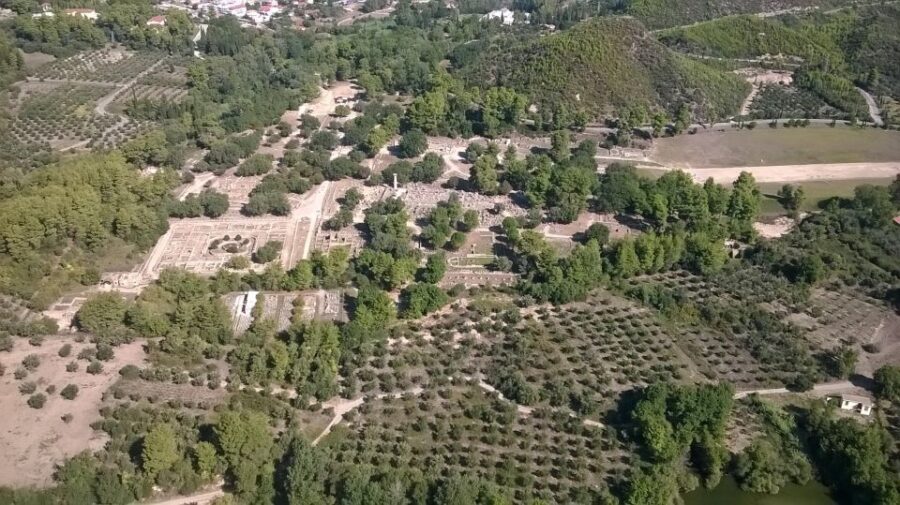
One of the biggest draws here is the chance to walk in the oldest sports stadium, the kind of place where the early Games would have felt both intense and communal. Even if you don’t know a lot of athletics history, the guide’s explanation makes the stadium more than an architectural feature.
Why it works: stadium design tells you how sport was experienced. You get a sense of the scale, the linear focus, and how the crowd would have moved attention toward the competition. Your guide ties it back to the idea of the Games as a cultural and religious event, not a standalone sporting fixture.
Also, this is one of those stops where a guide can help you visualize what you’re seeing. Olympia’s remains can look fragmentary. A good guide gives you the missing mental picture—where people likely stood, how the event rhythm would have run, and how the stadium fit into the sanctuary day.
Temple of Zeus site: the Wonder connection and what to notice
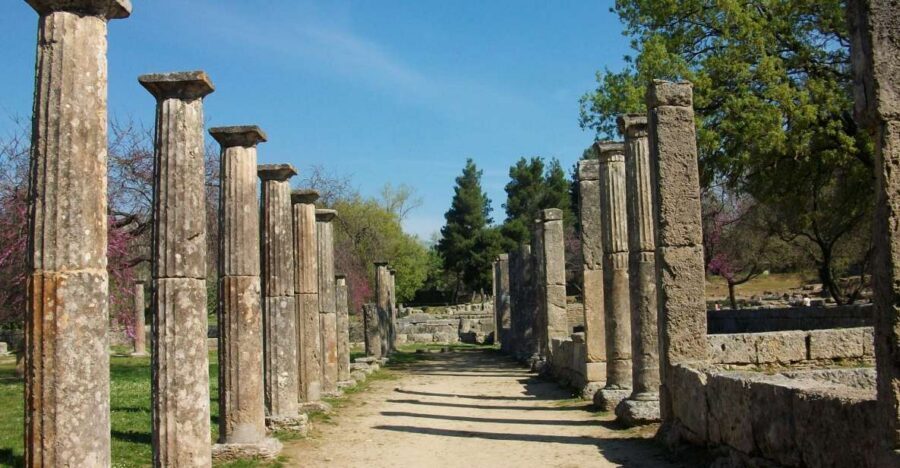
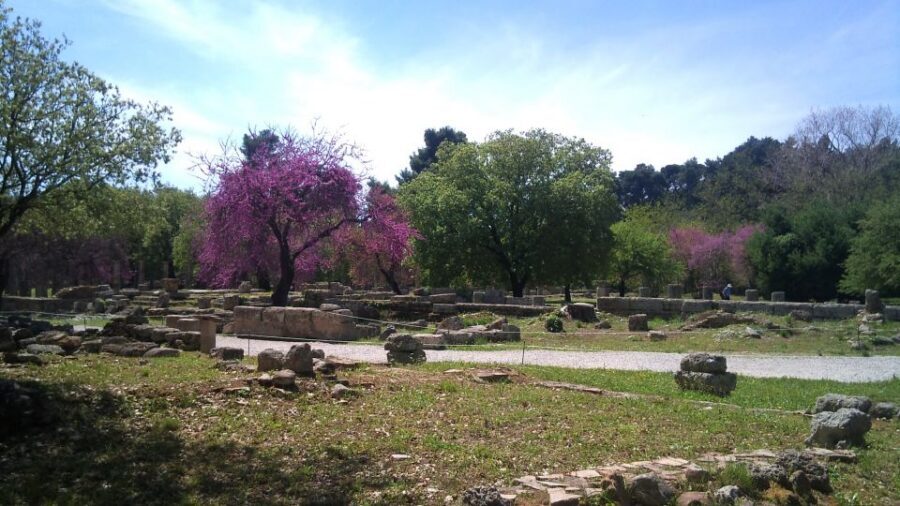
You’ll visit the location of the Temple of Zeus, tied to one of the ancient world’s Seven Wonders. Even without seeing a fully intact temple, the stop is valuable because it gives you a fixed reference point for everything else you’ve walked through.
Here’s how you can get the most from this moment: don’t treat it like a photo stop. Look at how the site’s layout directs you toward the sacred center. Then listen for how your guide explains what the temple represented and why it mattered to the sanctuary’s identity.
This is also where you’ll start understanding that Olympia wasn’t only about sport. The temple anchored the divine presence, and the festival’s competition had a religious layer. That’s the big meaning shift. Once you grasp that, the stadium and the ritual buildings stop feeling like separate chapters.
One consideration: the temple area can feel like you’re standing in the outline of something. If you’re the type who needs complete reconstructions to feel satisfied, set expectations now. The payoff is in the museum, where the story gets more tangible.
Olympic Fire location: linking ancient ritual to the modern Games
A standout inclusion is the spot where the Fire of the modern Olympics is lit every four years. This is a neat bridge between eras, and it adds energy to the visit because you can understand why people still care about Olympia today.
Even if you’re not catching an Olympic year, the presence of that modern connection helps your brain lock onto the sanctuary’s original purpose: a place where something symbolic is shared and renewed. The guide’s framing helps you see the continuity—ritual, identity, and competition—rather than treating it as a random modern marker placed on ancient ground.
If you like meaning beyond monuments, you’ll enjoy this stop. It’s a reminder that Olympia still functions as a stage for human ideas: unity, fair competition, and celebration.
Site Museum and original statues: where the temple becomes understandable
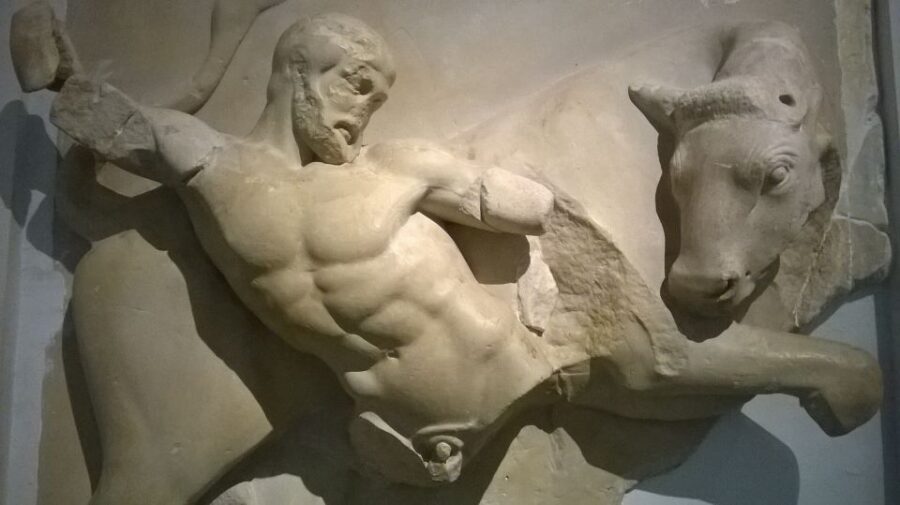
The tour includes a visit to the Site Museum, and the museum stop is one of the strongest parts of the experience because it focuses on original art tied directly to the Temple of Zeus. Seeing originals on-site changes the feel of the whole sanctuary. You can walk from the temple location to the museum and connect the dots.
Your guide helps you connect what you see in the museum to what you learned walking the site. The museum holds original statues that decorated the Temple of Zeus, so you’re not only learning about the temple in theory—you’re meeting the artistic expressions that helped communicate myth and divinity.
Why this matters for your experience: ruins can be visually confusing. Statues add texture, personality, and meaning. They give you a sense of what the temple space would have expressed to worshippers and visitors. You’ll likely leave with a stronger mental picture of how the sanctuary felt in its working days.
Practical note: museum entries are not included. You’ll want to budget for admission, because the guide experience depends partly on access to museum galleries and objects.
Private guiding style: languages, group size, and how to get the most out of it
This is a private group tour for up to 7 people, with a live guide in English, German, or Greek. If you’re traveling with family, it’s an easy way to keep everyone on track without forcing a larger group pace.
The reviews highlight a consistent theme: the guide explains things with clarity and adds extra context that makes the site feel bigger and more complete. In particular, Maria gets repeatedly praised for being sharp on the details and for speaking very well in German, with explanations that go past surface-level facts. If you pick a language you’re comfortable with, you’ll get more from the museum and the ritual stops, not less.
Tip from the way the tour is structured: bring questions. Ask what each building likely did and why it was placed where it was. A private guide can tailor responses to your pace, which helps if you’re more interested in sports history, religious context, or the art side.
Price and value: is $294 per group a good deal?
The price is $294 per group (up to 7) for a day that includes guided site walking and a museum visit. For a private tour, that can be a strong value—especially because you aren’t paying per person for the guide time. If you’re traveling with a small group or you can split costs with friends, the math gets friendlier fast.
What you should factor in:
- Museum entry tickets are not included, so you’ll pay that separately.
- You’re buying time with a guide plus the structured route and line-skip advantage.
Where it feels worth it: Olympia is one of those famous places where a guide can save you confusion. Instead of guessing what the stadium, temple area, and ritual spaces were for, you’ll walk away with a connected story of how Olympia worked across time—local beginnings to a panhellenic sanctuary, and the enduring symbol carried into the modern Olympics.
Who this tour suits best:
- You want a guided explanation, not just a walk.
- You like the mix of sport, religion, and art.
- You’re short on time and want to cover the essentials without missing the key links.
Who should book this Ancient Olympia private tour?
Book this if you want a guided walk that makes Olympia feel logical. You’ll especially enjoy it if you care about how the sanctuary expressed ideas like unity, peace, fair competition, and the blend of athletics with religious ritual. The museum stop with original Temple of Zeus statues is a big reason to choose this tour over a simple self-guided route.
Skip it (or consider a different format) if:
- You dislike guided pacing and prefer unstructured wandering.
- You’re visiting with minimal interest in the story connecting stadium + temple + museum.
- Your day is so tight that you can’t handle nearly 2.5 hours of walking.
If you’re on the fence, think about your goal. If your goal is understanding, this is a practical way to get it.
Should you book this tour?
I’d book it if you’re the kind of traveler who wants famous sites to make sense fast. The combination of walking the Zeus sanctuary, standing in the oldest stadium, visiting the Temple of Zeus site, then finishing at the Site Museum with original statues is a strong path to understanding. Add the private group and the line-skip, and it’s a clean, efficient way to spend a day in Olympia.
If your budget is tight, price it against other options that include guidance. But if you can afford a private guide for a group up to 7, the structure here does real work for your brain.
FAQ
How long is the Private Guided Tour of Ancient Olympia?
The guided walking tour lasts almost 2.5 hours.
Where do we meet for the tour?
Meet at the ticket booth of the archaeological site.
Is the museum included?
The tour includes a guided tour in the site and the museum, but museum entry tickets are not included.
Will we have to wait in ticket lines?
The tour includes skip-the-ticket-line.
What languages are the guides available in?
The guide is available in English, German, and Greek.
Is this tour private?
Yes. It’s a private group tour for your group (up to 7 people).
Is the tour wheelchair accessible?
Yes, the tour is wheelchair accessible.
Can I choose the tour time of day?
Yes. You’ll need to let the supplier know which time of day you want, and you’ll be contacted via email (check your spam folder).
Can I cancel for a refund?
Yes. Free cancellation is available up to 24 hours in advance for a full refund.
Is pay later available?
Yes. You can reserve now and pay later.