REVIEW · OIA
Private organic vineyard visit with liqueur tasting
Book on GetYourGuide →Operated by Santorganics organic farm · Bookable on GetYourGuide
Santorini’s best-known views come with crowds, but this private organic farm visit takes you into a quieter part of the island’s food culture. You’ll walk a few meters from the road to Oia through dry-stone walls and volcanic ground, then see how local black raisins are grown, harvested, dried, and turned into liqueur.
I like the personal format, with only your private group and an English-speaking guide. I also like the simple tasting of black raisin liqueur, dried raisins, and almond rusks, which gives the visit a clear local flavor rather than padding it with unrelated products.
The main consideration is the terrain and uncertain timing. The visit is not suitable for people with mobility, heart, respiratory, or balance problems, and the stated duration varies between one and two hours, so confirm the schedule before you set out.
In This Review
- Key points to know before you book
- A farm visit beyond Santorini’s postcard views
- Walking from the Oia road to the organic vineyard
- Volcanic soil and Santorini’s unusual farming methods
- Inside the traditional cave and drying area
- The tasting: black raisin liqueur and almond rusks
- How the private format affects the experience
- Is $22.58 a fair price?
- Best time to plan this visit
- Who should book this farm experience?
- What to confirm before you go
- Should you book the Santorganics visit?
- FAQ
- Where does the organic vineyard visit start?
- How do I confirm the meeting time?
- How long does the activity last?
- Is transportation included?
- What will I taste?
- Is the tour private?
- What language is the tour in?
- Are bathroom facilities available?
- What should I wear?
- Can wheelchair users or people with mobility impairments join?
Key points to know before you book
- Walk through volcanic soil: See the ash, lava, and pumice that support Santorini’s unusual dry-farmed crops.
- Visit the traditional cave: Learn how the cave and natural drying area are used in raisin production.
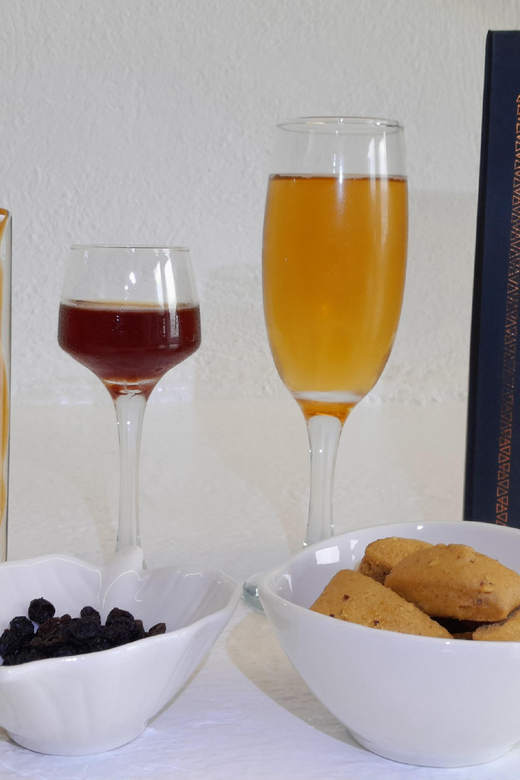
- Taste a rare local liqueur: The tasting includes organic black raisin liqueur, dried raisins, and almond rusks.
- Private from start to finish: Your group is the only group taking part in the farm visit.
- Bring proper shoes and sun protection: The route includes walking outdoors on cobbled surfaces and dry ground.
- Confirm your meeting time: Heat and strong winds can lead to a changed start time.
A farm visit beyond Santorini’s postcard views
Santorini is famous for white houses, blue domes, and sunset terraces. Yet the island has another identity, one tied to stubborn farming in dry volcanic soil. This visit focuses on that side of Santorini.
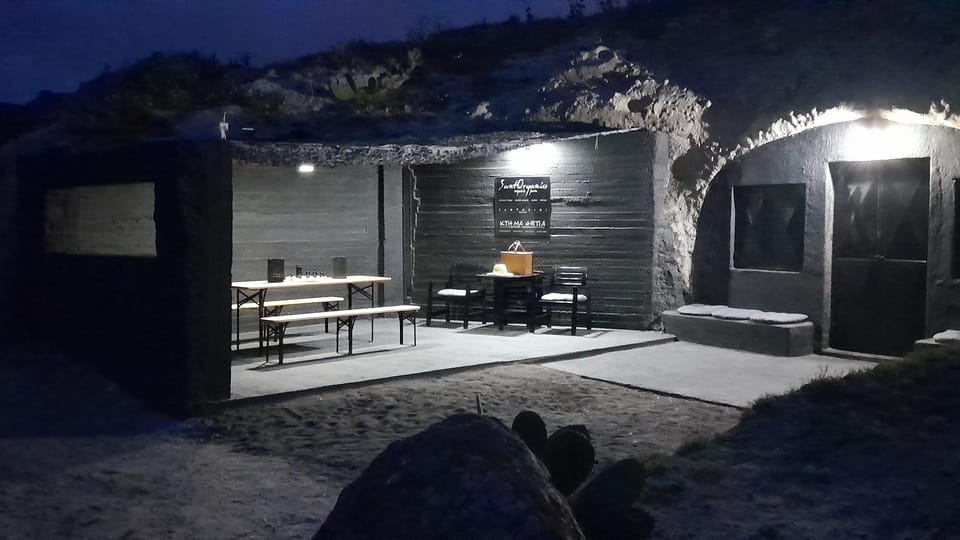
At Santorganics organic farm, you’ll see a traditional family property set among ash, lava, and pumice. The setting is not a polished tasting room or a large commercial estate. The appeal comes from seeing a small agricultural operation and learning how a crop survives in a place with strong sun, limited water, and frequent wind.
The product at the center of the visit is described as an organic black raisin or black currant. The wording varies, but the experience consistently focuses on black raisins grown on Santorini, then dried and used in a local liqueur. That makes this a useful choice if you want more than another scenic stop.
You are not simply shown a bottle and offered a sample. The guide explains the full chain from cultivation and harvest to drying and extraction. For a one-hour visit, that clear focus is a strength.
You can also read our reviews of more food & drink experiences in Oia
Walking from the Oia road to the organic vineyard
The meeting point is on the lower central road going toward Oia, in front of a label marked with the letter S. Your guide is due to meet you there holding hiking batons and wearing a black T-shirt. Before the visit, confirm the exact time by email at [email protected] or through WhatsApp at 00306970985958.
The location code provided for the meeting point is 8G87FCG7+3FF. Since the instructions also refer to a sign with the letter S, use both details and confirm before leaving. This is especially important because there is no private transportation included.
From the meeting point, you’ll walk a few meters along cobbled streets bordered by dry-stone walls. The route is short, but it is still an outdoor walk rather than a fully paved, step-free attraction. Wear closed-toe sports shoes with a firm sole.
Hiking batons are provided, and bottles of water are included. Still, the batons do not remove the need for reasonable fitness. The activity is not suitable for wheelchair users, electric wheelchair users, mobility scooter users, or people with vertigo. It is also not recommended for people with heart or respiratory conditions, epilepsy, recent surgery, other pre-existing medical conditions, or a low level of fitness.
Volcanic soil and Santorini’s unusual farming methods
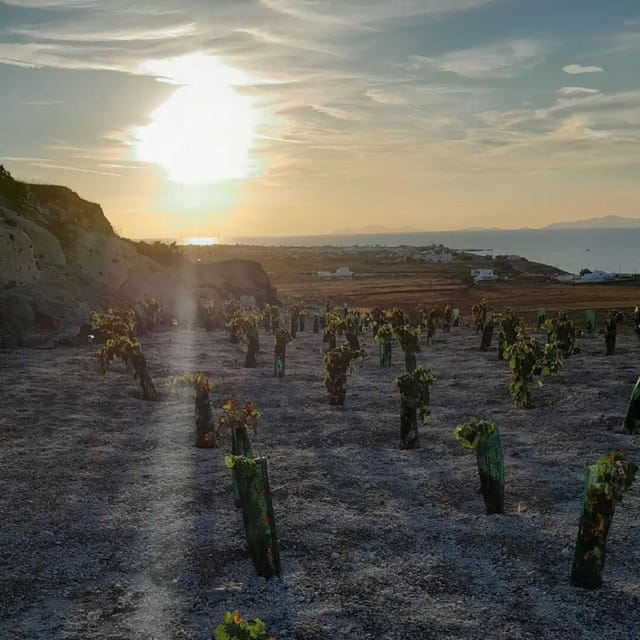
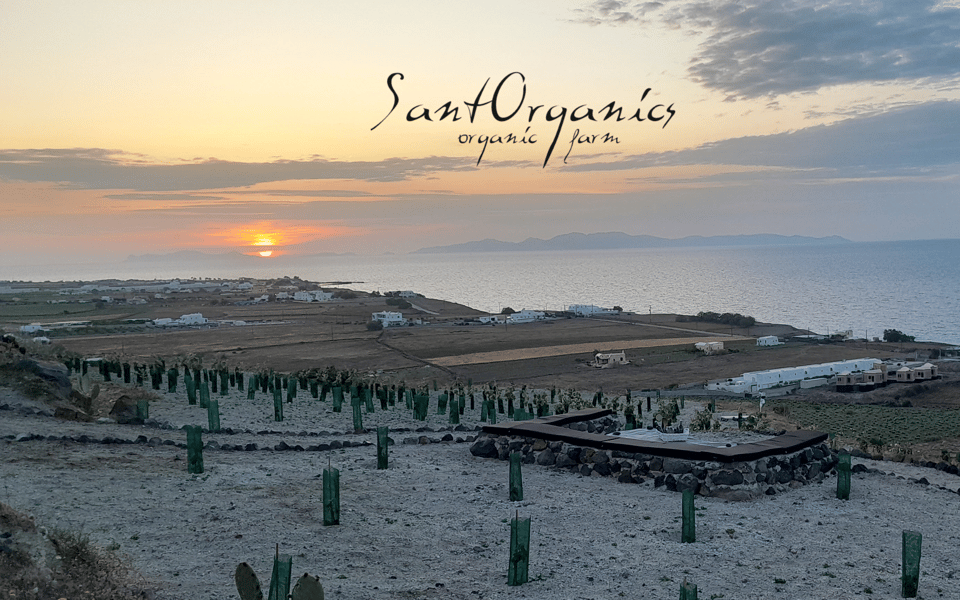
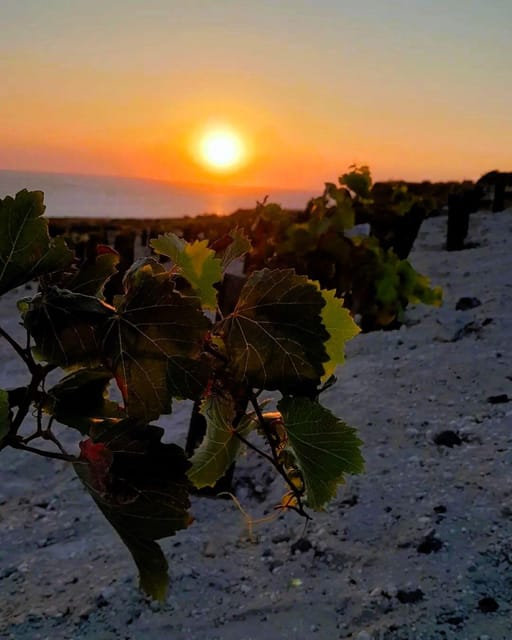
The first major lesson is the soil beneath your feet. Santorini’s ground is described as a blend of ash, lava, and pumice. It looks harsh and dry, but it is central to the island’s agricultural character.
The vineyard is presented as the first and unique organic black currant vineyard in Santorini. The important point for you is not just the claim of rarity. It is the chance to see a crop that is closely tied to the island’s volcanic conditions instead of hearing only about wine grapes.
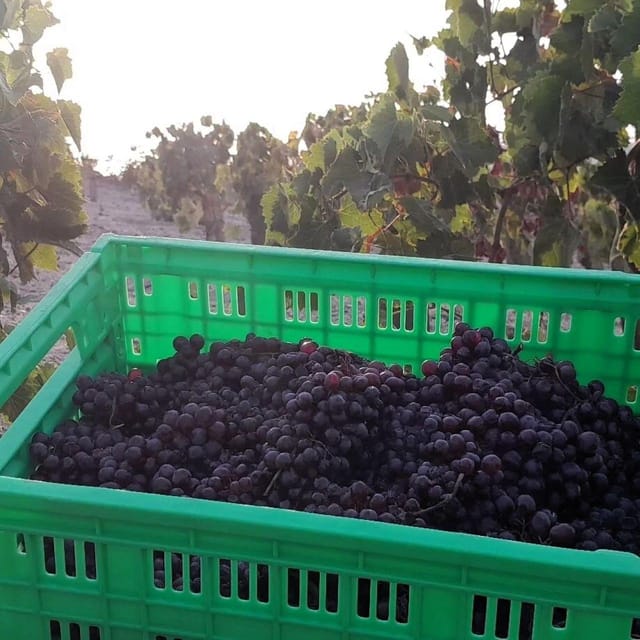
Your guide explains how the raisin crop grows, how it is harvested, and how it is prepared for drying. This helps connect the farm to the wider Cycladic setting. Santorini’s powerful sun and wind are not merely scenic details here. They affect how plants are cultivated and dried.
The farm’s organic approach is another reason to pay attention. The experience centers on locally cultivated produce and traditional handling rather than industrial processing. You’ll get a better sense of the work behind a small bottle of liqueur or a handful of dried fruit.
Inside the traditional cave and drying area
The route continues to Santorini’s traditional cave, where the production story becomes more specific. The cave is used as part of the explanation of the raisin-making process, along with the natural area where plants are dried.
This is likely to be the most distinctive part of the visit. Many food tours end with a tasting, but here you first see the spaces linked to cultivation, drying, and extraction. The cave gives the experience a strong connection to local building traditions and farm work.
The provided information does not specify how much time is spent in each part of the cave or exactly which tools you’ll see. I would therefore treat this as a guided introduction, not a full working-farm workshop. You will learn the stages of production, but there is no promise that you will harvest fruit or make liqueur yourself.
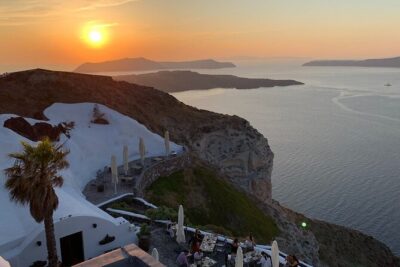
The farm also advertises time for photos and videos, with sunrise or sunset views over Oia depending on the chosen start. That timing matters. If you want the softest light and the best chance of capturing the village views, ask the farm which start time matches sunrise or sunset.
Strong wind and hot weather can lead to an adjusted starting time. This is sensible on an exposed Cycladic farm, but it means you should not build a tight connection around the original time without confirming first.
The tasting: black raisin liqueur and almond rusks
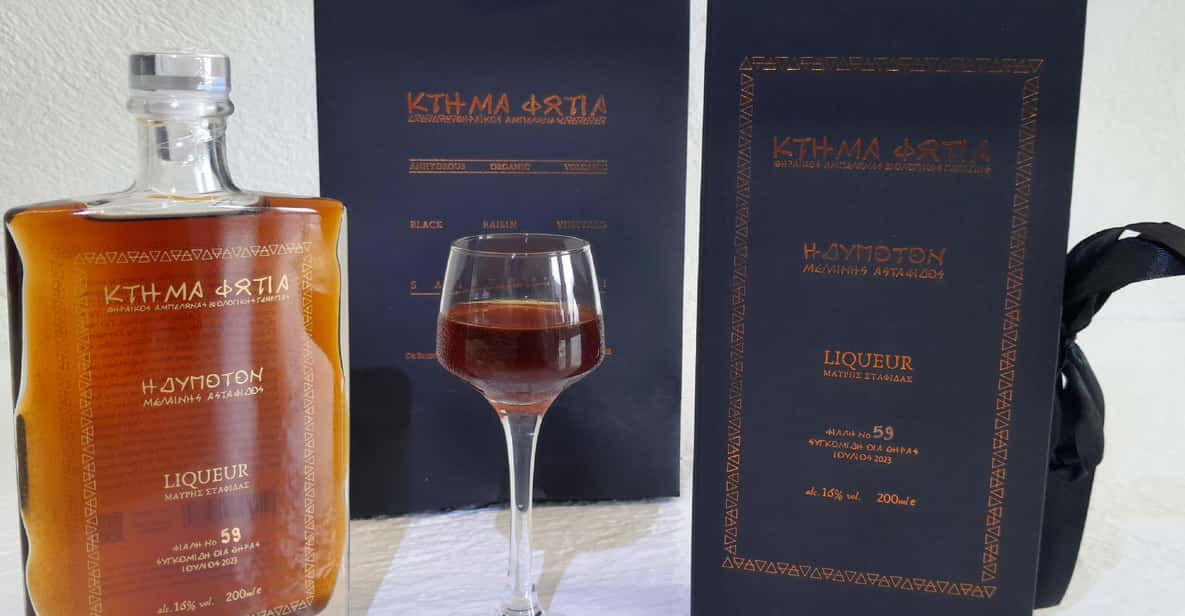
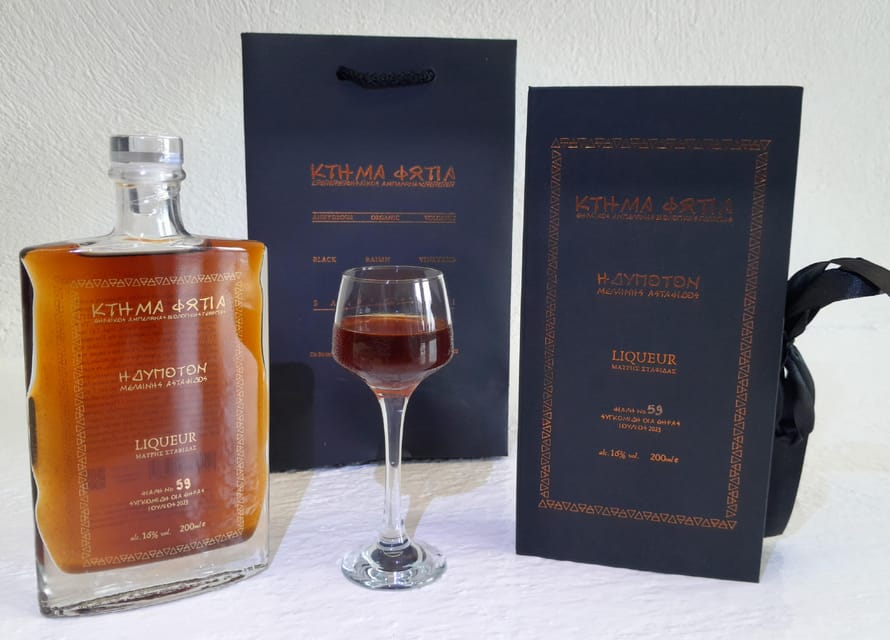
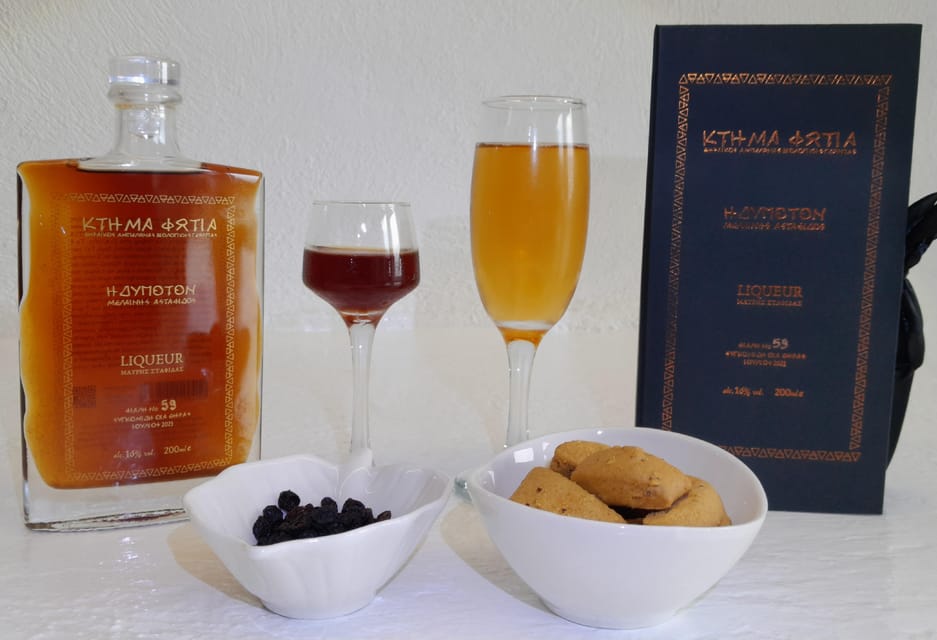
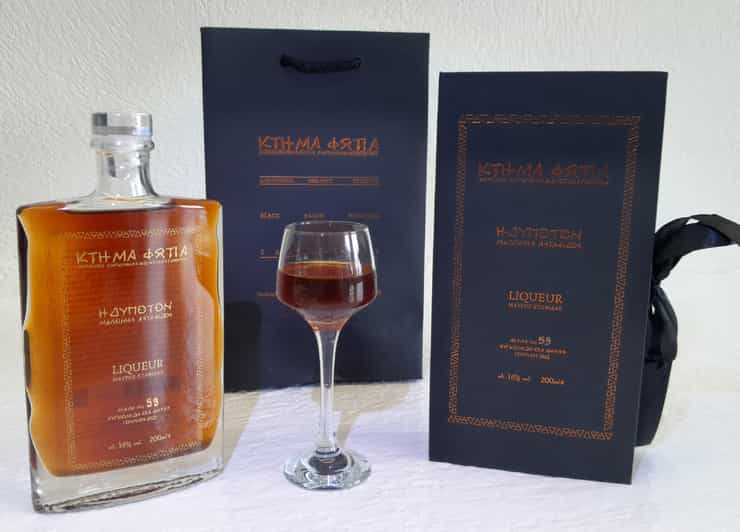
The visit ends with a small but well-matched tasting. You’ll try the organic black raisin liqueur, organic black raisins, and organic almond rusks.
The tasting is modest rather than a full meal. Almond rusks give you something crisp and savory-sweet to eat with the liqueur, while the dried raisins let you compare the original fruit with the finished drink. If you are looking for a long wine tasting or a large spread of Cycladic dishes, this is not that kind of outing.
What makes the tasting useful is the link between the farm and the glass. You have just heard about growing, harvesting, drying, and extraction, so the liqueur is not an isolated souvenir sample. It represents the final stage of the process explained during the visit.
Alcohol is part of the activity, but smoking, alcohol or drugs beyond the supplied tasting, indoor smoking, loud behavior, parties, and fire-making are not allowed. The setting calls for a quiet, respectful visit rather than a drinking session.
You can also read our reviews of more private tours in Oia



How the private format affects the experience
This is a private group activity, which changes the pace. You can ask questions about the vineyard, drying process, cave, or liqueur without waiting for a large group to catch up. It also gives you more control over photos and the amount of time you spend looking at particular parts of the farm.
The private format is especially useful for couples, families with older children, or small groups interested in food and farming. It may also suit photographers who want time around the farm and Oia views, although the exact amount of photo time is not stated.
There is no named guide provided in the booking information. You can expect an English-speaking guide, but you should not book this expecting a specific person. The guide waits at the meeting point with the hiking batons and leads the walk back to the same place.
The activity ends where it begins. That is convenient if you are already near the road to Oia, but less so if you need a ride from another part of Santorini. Since transportation is not included, plan your route to and from the meeting point separately.
Is $22.58 a fair price?
At $22.58 per person, this is priced as a short, focused introduction rather than a full-day farm or food tour. For the price, you receive a private 60-minute visit, an English-speaking guide, instruction about the crop and production process, water, hiking batons, and three tasting elements.
That is good value if you care about local agriculture and want a small-scale experience. The private group matters here. You are not paying only for a sample of liqueur. You are paying for access to a family farm, an explanation of a rare crop, and a walk through the production spaces.
The value is less clear if your main goal is a long tasting, a substantial meal, or included transportation. The tasting is limited to raisin liqueur, dried raisins, and almond rusks, and there are no bathroom facilities included. You should also account for the time and cost of reaching the meeting point yourself.
The duration needs special attention. The activity is described as lasting one hour, while the route information refers to a guided tour and walk lasting two hours. That difference may reflect travel time, a longer version of the walk, or a simple inconsistency in the schedule. Confirm the expected length before booking, especially if you are planning another Oia activity afterward.
Best time to plan this visit
You can request a starting time by checking availability, but the farm asks you to confirm the time by email or WhatsApp. Heat and strong winds may cause a change, so keep your schedule flexible.
Sunrise and sunset are specifically highlighted for photos and videos. A sunrise visit may suit you if you want cooler conditions and an early start. A sunset visit may fit better with an Oia sightseeing day, but the wind can be stronger and the road may be busier.
The information does not promise a particular sunset viewpoint or guarantee clear weather. Think of the views as an added benefit, not the main reason to book. The strongest part of the experience is the farm and production story.
Bring sunglasses, a sun hat, comfortable outdoor clothing, sports shoes, water-friendly practical layers, and closed-toe shoes. Water is supplied, but Santorini’s sun makes sun protection worth taking seriously.
Who should book this farm experience?
I would recommend it to you if you want a short, personal introduction to Santorini’s food traditions. It fits well for people who enjoy local products, organic farming, small family businesses, photography, and walks with a clear purpose.
It is also a good choice if you have already seen Oia’s main viewpoints and want something more connected to the island’s working life. The cave, drying area, volcanic soil, and raisin liqueur offer a different angle on Santorini.
I would not choose it if you need a fully accessible route, dislike outdoor walking, or have a medical condition affected by heat, wind, uneven ground, or exertion. It is not suitable for wheelchair users, mobility scooter users, people with vertigo, or people with low fitness levels.
It may also disappoint you if you expect a major meal, a winery tour centered on wine grapes, or private transport. This is a raisin-focused farm visit with a small tasting, not a broad Santorini food circuit.
What to confirm before you go
Send a message before the visit so you have the correct starting time and can identify the guide at the sign marked S. Ask specifically whether your booking is expected to take one hour or closer to two.
Also confirm the effect of weather on the schedule. The farm may adjust the starting time during periods of strong heat or wind, and you do not want to arrive at the wrong time on an exposed road.
Since there are no WC facilities included, plan accordingly before you meet the guide. Bring suitable shoes, sun protection, and clothes for outdoor conditions. Smoking, fires, loud behavior, parties, and bare feet are not allowed.
Free cancellation is available up to 24 hours before the activity for a full refund. You can also reserve and pay later, which helps if your Santorini plans depend on weather or changing ferry arrangements.
Should you book the Santorganics visit?
Book this if you want to understand Santorini through one unusual local crop rather than only through its famous views. The private format, short walk, traditional cave, drying area, and raisin-based tasting make it a focused experience with a clear sense of place.
Skip it if you need easy access, a bathroom on site, transportation, or a large food tasting. Before committing, confirm the meeting time and the true duration. For a modest price, it offers good value to curious food-minded visitors who are comfortable walking outdoors and want a quieter side of Oia.
FAQ
Where does the organic vineyard visit start?
The guide meets you on the lower central road going toward Oia, in front of a label marked with the letter S. The location code provided is 8G87FCG7+3FF.
How do I confirm the meeting time?
Contact Santorganics by email at [email protected] or by WhatsApp at 00306970985958. Confirmation is requested before the visit.
How long does the activity last?
The activity is listed as one hour, but the route information also refers to a two-hour guided tour and walk. Confirm the expected duration before you go.
Is transportation included?
No. Private transportation is not included, and the activity ends back at the original meeting point.
What will I taste?
The tasting includes organic black raisin liqueur, organic black raisins, and organic almond rusks.
Is the tour private?
Yes. The activity is for a private group.
What language is the tour in?
The live guided tour is in English.
Are bathroom facilities available?
No WC facilities are included.
What should I wear?
Wear comfortable closed-toe shoes or sports shoes, comfortable outdoor clothing, and sun protection such as sunglasses and a sun hat.
Can wheelchair users or people with mobility impairments join?
No. The activity is not suitable for wheelchair users, mobility scooter users, or people with mobility impairments. It is also not suitable for people with vertigo, heart or respiratory problems, epilepsy, recent surgery, low fitness, or other pre-existing medical conditions.