REVIEW · RHODES
Rhodes: Filerimos Hill and Butterfly Valley Bus Trip
Book on GetYourGuide →Operated by Kariba Travel · Bookable on GetYourGuide
Half-day trips can still feel like a lot. This one pairs Filerimos Hill views (and peacocks that wander right near the action) with the Valley of Butterflies walk through a canyon full of water and bridges.
I love the way Filerimos gives you archaeology and religious sites in a way that’s easy to plan—especially once you reach the big cross and look out over Rhodes. I also love the Valley of Butterflies scenery: lakes, water-lilies, rock walkways, and that 1 km trail where nature does most of the talking.
One watch-out: the butterflies depend on season. If you go outside June–September, you might get a beautiful hike with fewer or no butterflies, and you’ll want sensible shoes because the paths have steps and uneven ground.
In This Review
- Key things you’ll actually notice
- Filerimos Hill in Rhodes: ruins, monastery views, and wild peacocks
- The walk to the cross: what’s usually free vs what isn’t
- Butterfly Valley: the 1 km canyon trail with lakes, bridges, and waterfalls
- Upper and lower routes: how to use your time wisely
- Transport and timing: what a 6-hour day feels like
- Price and value on this Rhodes nature-historic combo
- What to pack: shoes, sun protection, and small practical wins
- Who this trip suits best (and who should skip it)
- Should you book this Rhodes bus trip?
- FAQ
- How long is the trip?
- What’s included in the price?
- Is there a tour guide?
- Are entrance fees included for Filerimos Hill or the Butterfly Valley?
- When can I expect to see butterflies in Butterfly Valley?
- What should I bring?
- Is the trip suitable for people with mobility impairments?
Key things you’ll actually notice
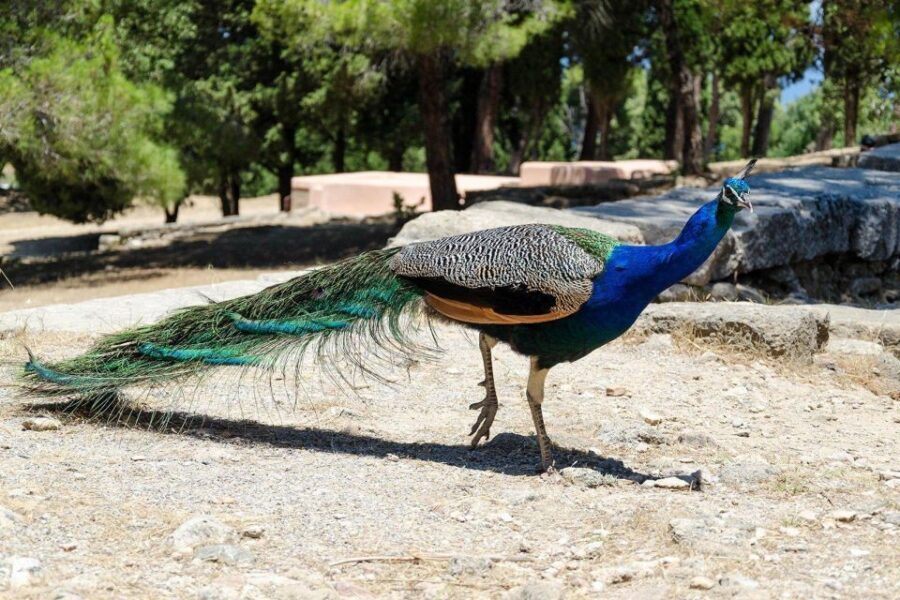
- Peacocks at Filerimos show up close to the viewpoints, so they feel less like an attraction and more like part of the place
- A self-guided setup with an English map means you can walk at your own pace after the driver drops you off
- The Valley trail is about walking, not staring from a bench, with upper and lower sections to explore
- Butterflies are seasonal, so plan for the hike first and the spectacle second
- Extra costs are common (church and valley entry), so budget a little beyond transport
Filerimos Hill in Rhodes: ruins, monastery views, and wild peacocks

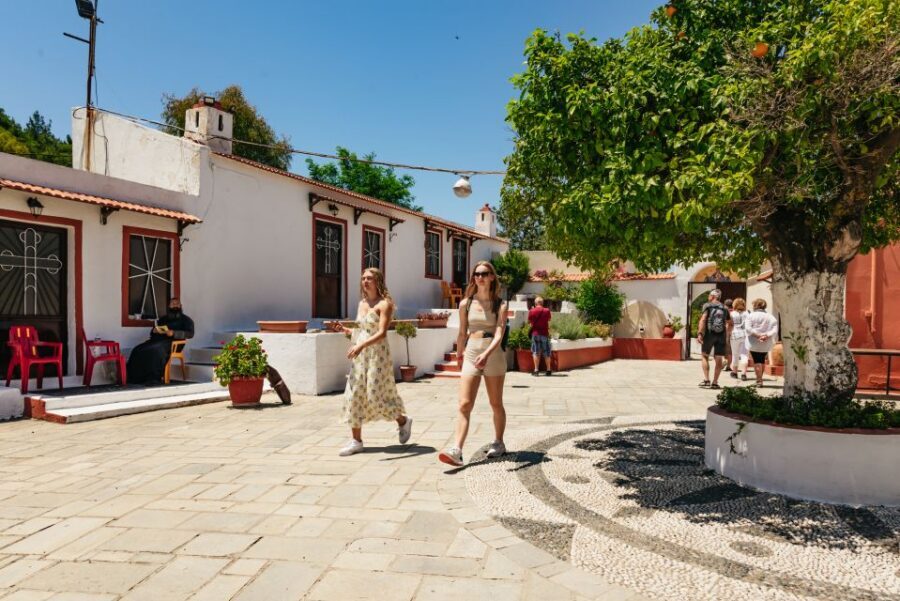
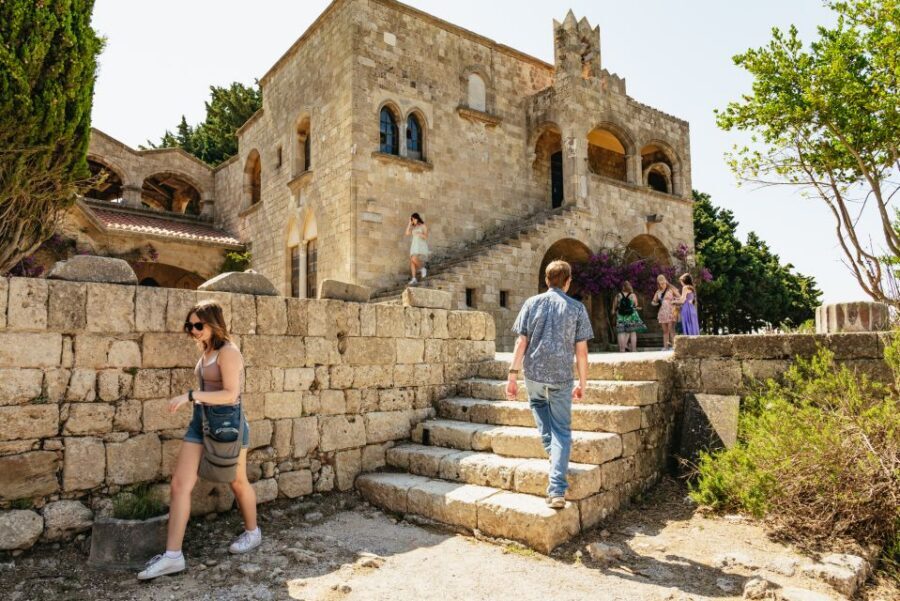
Filerimos Hill is the kind of stop that makes Rhodes feel more layered than just beaches. You’ll move through ancient Ialyssos ruins and the Acropolis area, then head toward the monastery of Our Lady.
The pathway experience is part of the fun. The Golgotha pathway includes shrines connected to the Holy Passion, leading up toward the big cross area with sweeping views.
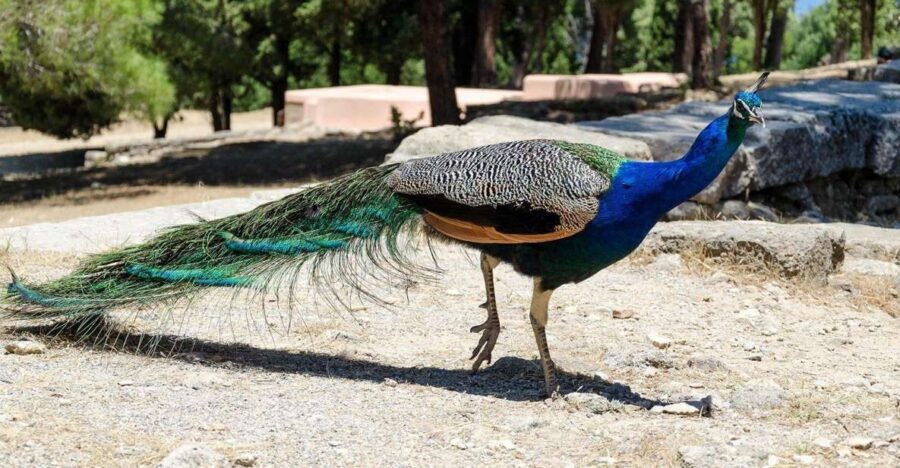
And yes, the peacocks really are part of the story. When you’re climbing and wandering around, you’ll see them on the footways and viewpoints, including the area near the cross. It’s a goofy, wonderful contrast: ancient stone steps plus birds strutting around like they own the place.
Timing matters here. With about 1 hour on site, you’ll want to prioritize: quick walkthrough of the ruins/monastery area, then head up to the cross for the best panoramas. If you’re the type who likes lingering in every corner, that hour can feel short.
You can also read our reviews of more tours and experiences in Rhodes.



The walk to the cross: what’s usually free vs what isn’t
The walk up to the cross is a key part of the experience, because the views reward your effort. In practice, you can often get the big viewpoint without paying for every optional building inside the complex.
Still, church or monastery entry may cost extra, so don’t assume it’s included in your bus ticket. Plan to pay on the spot if you want interior access, and keep a little cash or card handy. People have noted that it’s easy to be short on time if you don’t pay immediately.
Practical move: go to the cross viewpoint first, soak in the panorama, then circle back to any paid interiors if you still have time.
Butterfly Valley: the 1 km canyon trail with lakes, bridges, and waterfalls
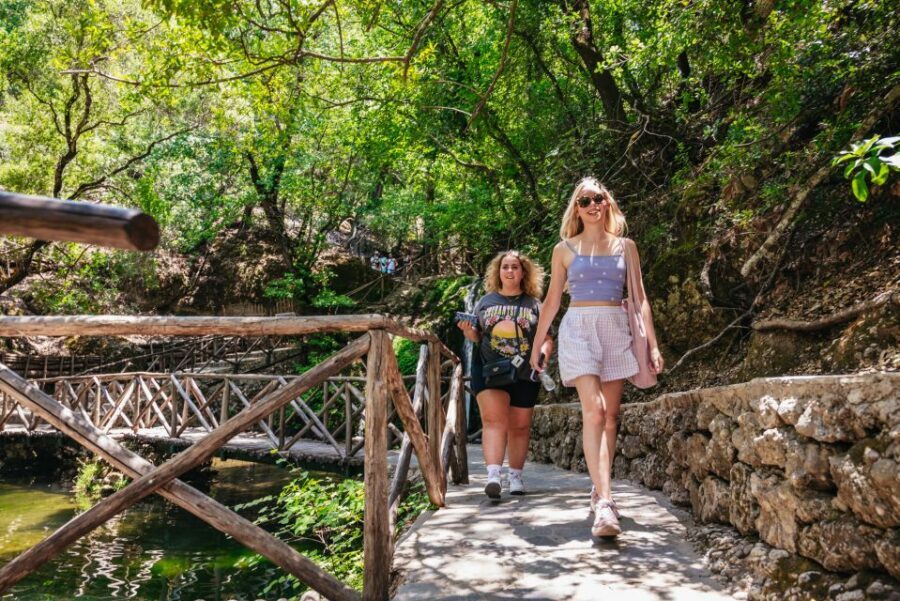
The Valley of Butterflies lives up to its name in a very physical way—you walk through it. The route is described as a 1 km path through a canyon, with rock walkways and spots that feel like little nature sets.
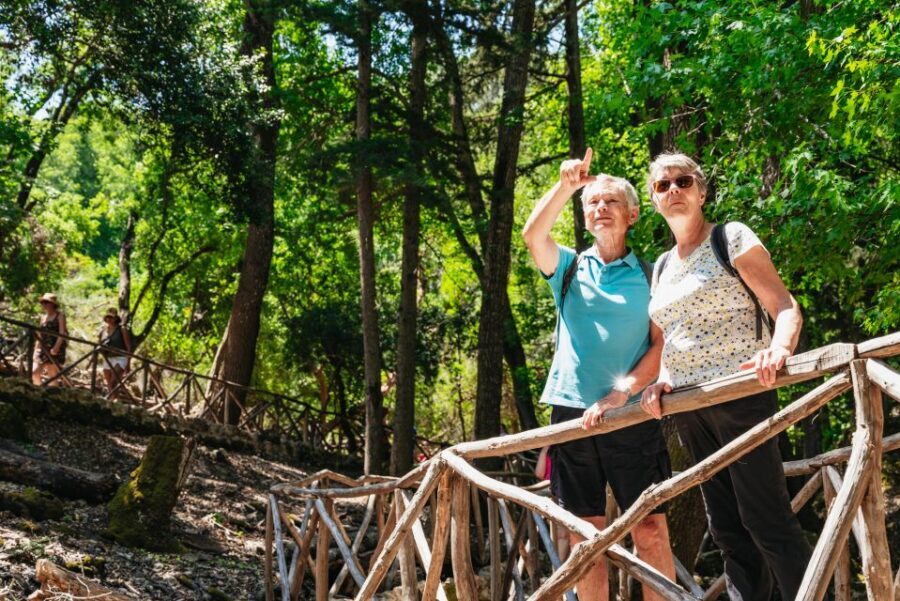
Expect lakes with water-lilies, rustic bridges, and waterfalls (or waterfall sections) along the way. The whole place is designed for strolling, with areas that let you stop, look, and watch what’s happening in the vegetation and on the ground.
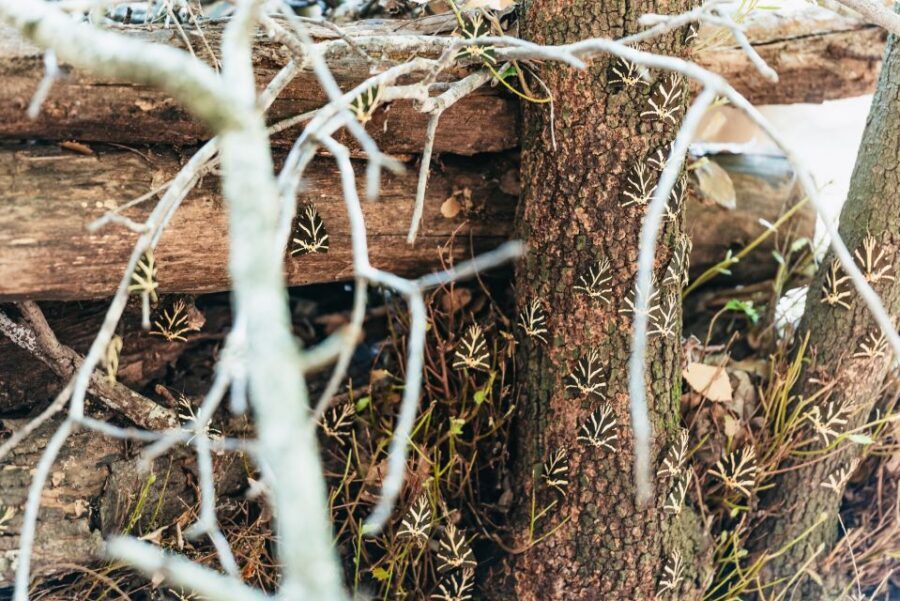
Now for the honest bit: butterflies are seasonal. The spectacle—thousands of brown-red butterflies—tends to show up during reproduction season, mainly June–September. If you visit earlier or later, you may still see occasional insects (and lots of birds-of-place vibes), but the “thousands” moment won’t be guaranteed.
If you’re butterfly-focused, your best bet is going when locals and regular visitors are most likely to see lots of them: summer into early fall. If you’re nature-focused, you’ll still likely enjoy the walk even when butterflies are quiet.
Upper and lower routes: how to use your time wisely
You’ll get roughly 2 hours in Butterfly Valley, which sounds generous until you’re climbing steps and finding the best spots for photos. The valley has more than one section (people talk about upper and lower routes), so you’ll need to choose how much distance you want to cover.
My approach would be: start with the section that looks most direct to the butterfly areas, take your time at the best viewing points, then go down/up the second route only if you’re still feeling energized. That way you don’t end up rushing at the end just to catch the bus.
Also, bring water and take breaks in the shade where you find it. Rhodes can run hot, and the valley is walk-first, shade-second.
Transport and timing: what a 6-hour day feels like
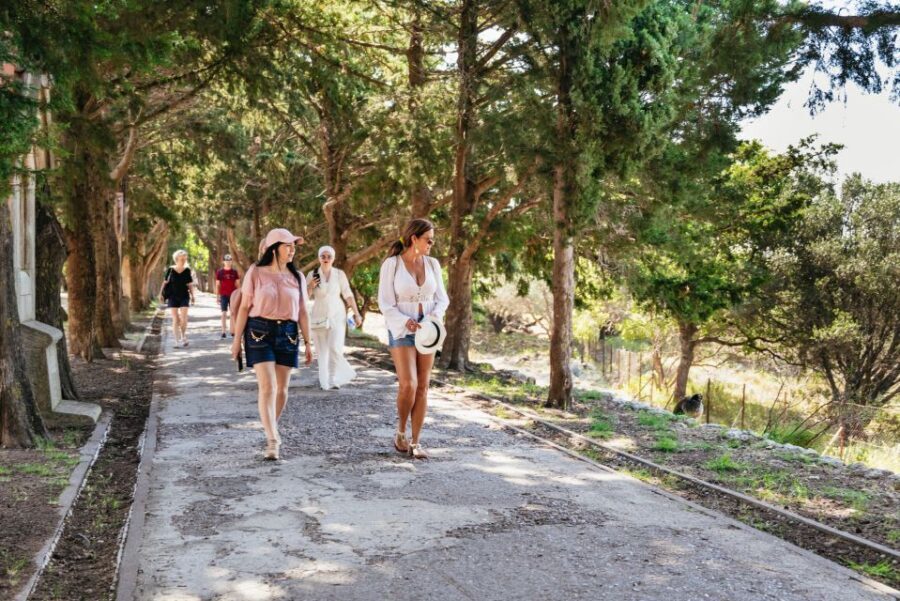
This trip is built around efficiency. You’re picked up from a long list of hotels and meeting points in northern Rhodes, then transferred to the hill and valley by air-conditioned coach or minibus.
The travel times are short enough that the day doesn’t feel like one long commute. Expect around 35 minutes between stops, then roughly 45 minutes to get back toward your drop-off points.
The trade-off is pacing: you’re not doing a slow, deep exploration. With about 1 hour at Filerimos and about 2 hours in Butterfly Valley, you should plan to enjoy the highlights rather than try to “do everything.”



Price and value on this Rhodes nature-historic combo
The headline price is around $31 per person for a 6-hour half-day, including transport and hotel pickup/drop-off. For Rhodes, that’s a solid value if you want the convenience of not driving and the ability to see two different parts of the island in one shot.
The cost to watch for: attraction entrance fees are not included. In real-world terms, you should budget extra for Filerimos church/complex entry and Butterfly Valley entry, and you may pay small fees for facilities like toilets at certain points.
Does that ruin the deal? Not usually. The transport alone can be worth it if you’re staying in a spot with limited bus options. Plus, you’re getting the kind of outing that’s hard to replicate easily with a rental car in half a day—especially the butterfly valley access and trail experience.
What to pack: shoes, sun protection, and small practical wins

This is a walking trip with uneven ground. You’ll be on steps, slopes, and rockier paths, so skip flip-flops. Comfortable shoes are the difference between enjoying the valley and counting minutes.
Also bring sun protection. Sunglasses and a hat help a lot, and a camera is a must because both stops give great viewpoints and photo opportunities.
For longer days, I also like having a water bottle even if you find cafes. There are places to buy drinks and snacks, but having water ready keeps you from getting stuck waiting in hot sun.
Who this trip suits best (and who should skip it)
This is a good fit if you want a half-day nature-and-history break without organizing transport. It also works well for people who like self-paced sightseeing, because the included English map helps you get oriented quickly.
It’s less ideal if you have mobility limitations. The valley includes steps and uneven sections, and the general walking demands make it tricky for anyone who uses mobility aids.
Should you book this Rhodes bus trip?
Book it if you want an easy, efficient way to see Filerimos Hill’s viewpoints and monastery area plus a walk through Butterfly Valley scenery within one half day. It’s especially worth it if you travel without a car or you want the comfort of pickup/drop-off and air-conditioned transport.
Skip or temper expectations if you’re traveling outside June–September and you’re only coming for the big butterfly spectacle. In the off-season, you may still enjoy the canyon walk, water, bridges, and a tranquil stream scene—but the “thousands of butterflies” moment won’t be reliable.
If you do book, do two things: plan your time so you hit the cross viewpoint at Filerimos, and wear shoes that handle uneven ground in heat.
FAQ
How long is the trip?
It’s scheduled for about 6 hours total, with time at Filerimos Hill and Butterfly Valley plus travel between the sites.
What’s included in the price?
You get hotel pickup and drop-off, transportation during the activity, and an English map for Filerimos and the Butterfly Valley. Attraction entrance fees and food/drinks are not included.
Is there a tour guide?
A tour guide is not included. You’ll have a self-guided experience using the provided English map, with the driver handling transport and basic information.
Are entrance fees included for Filerimos Hill or the Butterfly Valley?
No. Entrance fees for attractions are not included, so you should expect to pay on site if you want interior access and valley entry.
When can I expect to see butterflies in Butterfly Valley?
Butterflies are mainly reported during the June–September period. Outside that season, you might still enjoy the walk, but you should not count on the big butterfly spectacle.
What should I bring?
Bring comfortable shoes, sunglasses, a sun hat, and a camera.
Is the trip suitable for people with mobility impairments?
It’s not suitable for people with mobility impairments due to walking and uneven terrain.